
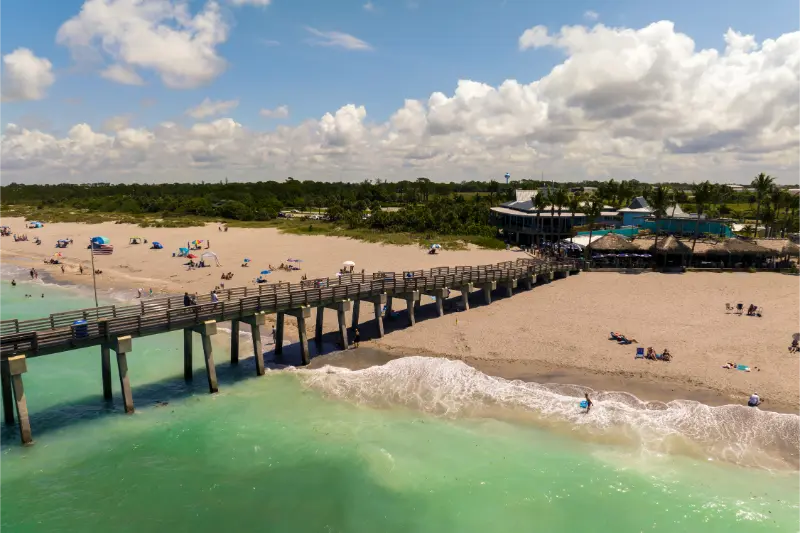
You do not need a boat to experience Florida’s fishing culture. Coastal piers offer a chance to watch experienced anglers, learn about local species and, where permitted, try fishing with a rental rod or simple tackle. They can also be rewarding places to enjoy a waterfront view if you never cast a line. The difficulty for a first-timer is knowing which pier is actually open, whether you need a license, and how to handle fish safely. Rules differ by location, and pier access has changed at several prominent sites.
This guide suggests three separate pier experiences rather than implying they are all close enough for a single weekend. You can choose one base near Tampa Bay, another near Venice or an Atlantic example around Juno Beach. Each is a possible one-day model. Combining all three would involve significant driving, so most visitors should select the region that matches the rest of their vacation.
First decision: fish or simply watch?
A spectator visit needs only comfortable shoes, shade and any pier admission fee. You can observe how local anglers bait hooks, use landing nets and talk about tides without handling equipment. This can be a perfect introduction for a young child or older visitor who does not want a full charter excursion. If you plan to cast a line, however, you must investigate licenses and regulations before arrival. In Florida a license can be required even for catch-and-release fishing, unless a valid exemption applies. Being a tourist does not create an automatic exemption.
The Florida Fish and Wildlife Conservation Commission says non-resident anglers age sixteen and older generally need an appropriate license, but fishing from a pier with a valid saltwater pier license can be an exemption. Verify that the particular pier holds such a license. Never generalize from one pier to all others. Florida’s free resident shoreline license is not an option for non-residents. Some species require additional permits or have strict seasonal, size and possession rules. If in doubt, observe or take an introductory lesson rather than fishing illegally.
Pier option one: the Skyway experience near St. Petersburg
Skyway Fishing Pier State Park uses portions of the former Sunshine Skyway bridge approach over Tampa Bay. It has long been associated with fishing from a structure that allows visitors to be close to deep water without a separate boat. But current access is important: the official park site reports that, following structural inspections, vehicle and pedestrian access beyond the bait shop has been restricted since late 2025. As of 2026, the park also posted a notice about limited power and lighting on the south pier. Check these notices again before planning a night visit.
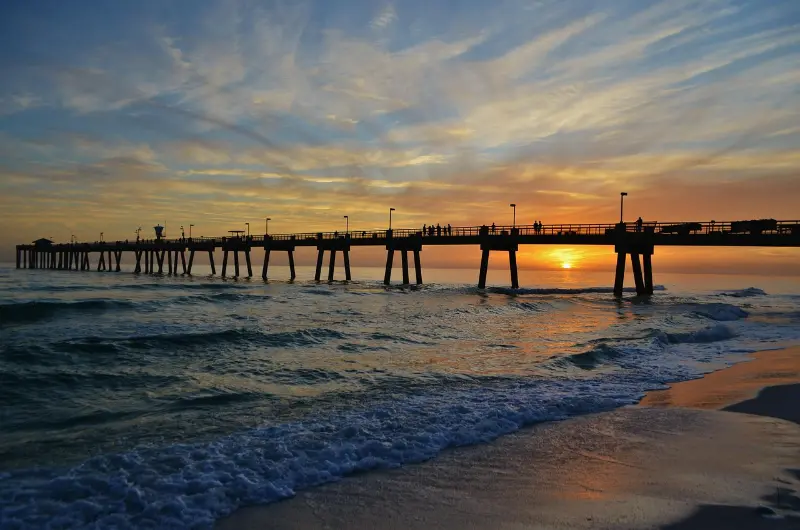
Another detail makes this a poor place to improvise: the park states that anglers must complete its annual online education course to fish from Skyway Pier. Review the requirement, access rules, fees and current open portions before taking children there. This is not a place to let youngsters wander near railings or hooks while an adult is distracted. Even if you only come to see Tampa Bay, wind exposure can be greater than expected. Keep small items secured and supervise children near edges and moving vehicles.
Pier option two: a slower Gulf Coast afternoon around Venice
Venice has a recognizable fishing-pier tradition and a pleasant wider coastal setting. A visitor interested in an easy fishing-themed afternoon can combine a waterfront walk with a local lunch and time looking at anglers. However, do not assume that a photograph of a pier from several years ago proves every section is open. The city has carried out coastal work and beach nourishment activity, and storms can affect structures or access. Confirm current pier condition with the City of Venice before driving there specifically for fishing.
For beginners, a smaller, supervised first attempt is more useful than spending an entire day waiting for a big catch. Ask local staff or a reputable tackle shop where fishing is authorized and what equipment is appropriate. Children might prefer watching seabirds, comparing boats and learning to identify fish from signage. Parents should explain why discarded fishing line is dangerous to pelicans and other wildlife. Put used line in a designated monofilament recycling container or take it home for proper disposal; never leave tangled line or hooks on a public pier.
Pier option three: Juno Beach Pier on the Atlantic
Juno Beach Pier is associated with Loggerhead Marinelife Center and provides an Atlantic Coast experience with fishing, views and conservation education nearby. The operator’s pier information states that it holds a pier fishing license covering anglers fishing directly from the licensed pier, subject to all other rules. It has offered rod rentals, bait and instruction, making it appealing for first-time visitors. However, the center also reports a major refurbishment project beginning June 2026, with construction updates continuing into the fall. Availability of fishing areas and services must be confirmed before planning your trip.
For families, the chance to connect fishing with marine conservation is a strong reason to consider this area. Combine the pier visit, if open, with a separate educational stop at Loggerhead Marinelife Center rather than treating sea turtles as an attraction to chase on the beach. Pier spectators should keep a safe distance from anglers casting lines, particularly with young children or strollers. If work temporarily reduces access, switch to a coastal conservation visit and return to the pier on another trip.
A three-day introduction without exhausting yourself
If you want three days devoted to learning rather than three geographically distant piers, stay in one coastal area and follow this pattern. On day one, visit a pier as a spectator, learn its operating hours and talk to staff about beginner programs. On day two, try a scheduled lesson or a carefully prepared short fishing session where legally authorized, preferably in the morning. On day three, visit an aquarium or conservation center to learn more about the fish, seabirds and habitats you encountered. This sequence gives children and first-timers context instead of turning the vacation into a competition to catch something.
A short session may be particularly suitable for seniors, people with limited stamina or families whose children have never used a fishing rod. Check benches, accessible parking, railing height, restrooms and protection from sun. Some piers have long exposed stretches with little shade. The best experience may be just an hour near the entrance followed by lunch in town. You are not obligated to stay because you paid admission.
Basic equipment: what to rent, buy or leave at home
A simple rod and reel, tackle suited to the local pier, a landing net if required and a safe method to handle fish are the starting point. Ask staff what tackle is recommended that day, taking into account local conditions and legal restrictions. Do not buy a large tackle box before knowing the intended species. Gloves do not make it safe to handle every fish, and some marine animals have sharp spines or stingers. If you cannot identify a catch, avoid bare-hand contact and ask trained staff for guidance.
Bring water, a wide-brimmed hat, polarized sunglasses, closed-toe shoes and a towel for hands. Keep hooks inside a secure container and out of children’s reach. If you rent a rod, inspect it, ask what replacement costs apply and learn where to return equipment. For visitors traveling by plane, carrying tackle with sharp items can introduce airline-security complications; local rental is often simpler. Never bring glass containers or alcohol without confirming local pier rules.
Fishing responsibly around protected wildlife
Pelicans, sea turtles, dolphins and other marine animals can be harmed by fishing gear. Do not feed birds or let them steal bait, and do not cast toward birds or other animals. If wildlife becomes entangled or hooked, seek trained assistance rather than putting yourself or the animal at risk. A struggling pelican can injure someone, and attempting an improvised rescue may worsen the situation. The FWC provides guidance on responsible fishing and wildlife incidents; save relevant contact information before the outing.
Understand the difference between keeping a fish and releasing it. Limits and seasons are species-specific and can change; identification matters. A fish that looks similar to another may have different regulations. If you cannot meet the regulations or handle a catch humanely, watching a pier activity or joining a professionally supervised lesson is the better choice. Children can help keep the area clean, identify birds and record weather conditions even without participating in the actual fishing.
Safety for kids, non-swimmers and older visitors
The combination of hooks, railings, strong sun and water deserves a plan. Young children must remain within direct adult supervision near pier edges, and no one should climb railings or stand on equipment. Check whether flotation devices are recommended or required for particular ages and locations; do not assume every pier provides or rents them. People who cannot swim should stay well away from unstable edges, even if the surface appears broad and flat. A stroller’s brake should be engaged when stationary, but it is not a substitute for keeping the stroller away from the railing.
For people with limited mobility, ask whether parking leads to a level entrance and how far it is to the fishing or observation area. Wind can make walking uncomfortable, and there may be limited seating. Avoid fishing during thunderstorms or heavy surf. Stop promptly when lightning threatens and follow site personnel’s instructions. Keep the emergency number available and learn how to describe your pier location if assistance is needed.
Budget comparison for a beginner
| Cost to check | Why it matters | Budget-friendly approach |
|---|---|---|
| Pier admission | Visitor and angler charges may differ | Decide whether you only want to observe |
| Fishing license | Pier license exemptions are location-specific | Verify before buying an individual license |
| Rod and tackle | Rental may cost less than buying | Request a basic beginner setup |
| Parking | Separate fees may apply | Check official lot and payment method |
| Lessons | Helpful for rules and safe technique | Book one short introduction rather than a full day |
| Food and water | Exposed piers can be tiring | Bring permitted water and simple snacks |
Do not rely on an undated travel blog’s price list. Operators can change hours, construction access, ticket rates and fishing rules. Build your budget with current published rates and make the first outing short enough that you can quit happily if nobody gets a bite.
Frequently asked questions
Do I need a Florida fishing license on a pier?
Often yes, unless a valid exemption applies. Fishing from a pier that has a qualifying saltwater pier license may exempt anglers from purchasing a separate license, but species-specific regulations and other permits can still apply. Confirm with FWC and the particular pier.
Are the Skyway and Juno Beach piers fully open in 2026?
Both have posted construction or access notices. The Skyway site restricts access beyond the bait shop, while Juno Beach reports refurbishment work. Check the latest official updates rather than assuming full availability.
Can a child enjoy a fishing pier without fishing?
Absolutely. Watching boats, birds and local anglers, learning fish identification and visiting a conservation center can make a rich outing. Keep children safely away from hooks, casting areas and edges.
Reliable official sources
Check the FWC visitor licensing guide, FWC saltwater regulations, Skyway Fishing Pier State Park and Juno Beach Pier’s operator updates. For Venice, verify active projects on the City of Venice website.
Leave a Reply