
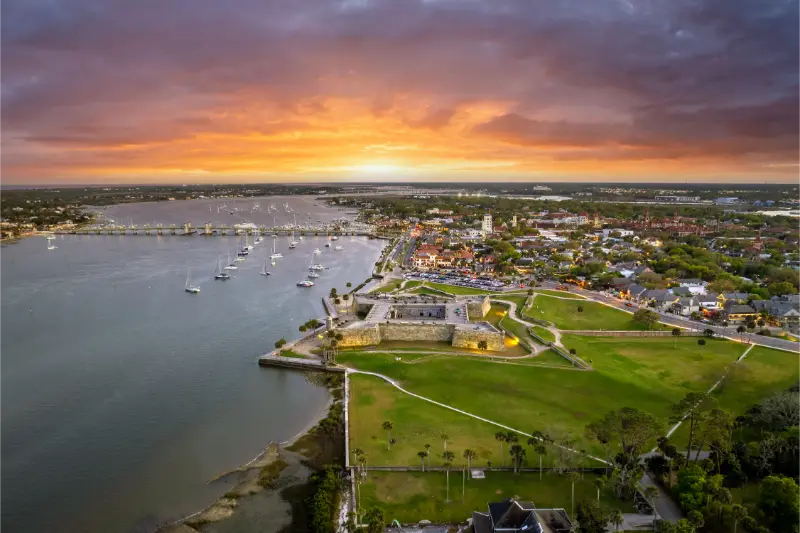
St. Augustine is one of Florida's most rewarding historic destinations, but its age creates a challenge that polished travel photographs often conceal. Cobblestones, uneven paving, older interiors, narrow doorways, and staircases can make a seemingly short outing difficult for wheelchair users, visitors with walkers, parents pushing strollers, or anyone who prefers not to climb. A good trip is still possible. The key is to build the visit around verified accessible attractions and attractive ground-level alternatives, rather than assuming that every famous viewpoint can be reached by all visitors.
In this guide
- Start at the Visitor Information Center
- Where to park without an unnecessary long walk
- Day one: Castillo de San Marcos, with realistic expectations
- Making the fort interesting for children and adults
- An afternoon by the historic waterfront
- Day two: choose one museum, not five
- Alternatives for travelers who prefer a quiet day
- How to choose lodging in the historic area
- Transport and seasonal crowd planning
- Costs and admissions without paying for unusable activities
- The easy two-day plan at a glance
- Frequently asked questions
Quick planning table
| Day | Main experience |
|---|---|
| 1 | Visitor Information Center and accessible Castillo lower level |
| 2 | One verified museum, waterfront and relaxed meals |
This two-day plan begins with the city's official Visitor Information Center, then uses the Castillo de San Marcos and the historic waterfront as central anchors. It deliberately excludes promises of step-free access to every historic property. Even when a particular museum has an accessible entrance, a restroom, upper gallery, or route from parking may differ. Contact the venue with the exact features you require and treat current on-site advice as more reliable than a generic 'accessible' label online.
Start at the Visitor Information Center
The City of St. Augustine's Visitor Information Center is a useful first stop rather than a place to collect brochures at the end. It is next to the Historic Downtown Parking Facility and provides maps, restrooms, event information, and advice about attractions. The center's staff can help orient visitors before they enter the busier old streets. It is especially worthwhile when a wheelchair user needs to identify a practical route or a family wants to know which areas have the least uneven walking.
Ask for the best way to reach the Castillo and waterfront from your arrival point and whether construction or events have altered pedestrian routes. If using a stroller, ask about curb ramps and streets that become particularly crowded. The center is a place to confirm information, not a guarantee that all historic paths will be easy. On a warm day, getting these answers before carrying equipment into a crowd can save considerable frustration.
Where to park without an unnecessary long walk
The city's Historic Downtown Parking Facility provides a large centralized parking option near the Visitor Information Center. Its published rates differ by time of day, and special events may change peak periods; verify the current fee before leaving the hotel. A garage can be convenient, but an available space might still be far from the elevator or pedestrian exit. If someone has a recognized accessible parking permit, follow posted space restrictions and ask the garage about the appropriate accessible access routes.
For a traveler who cannot comfortably walk several blocks, central parking is not automatically the ideal solution. A prearranged drop-off near a destination, where lawful and safe, may reduce the walking distance. Do not stop in a travel lane or at a blocked curb ramp while unloading. Keep a clear plan for the return journey, especially if afternoon heat or fatigue will make the same route harder later. A few minutes spent organizing arrivals can determine whether the history outing is enjoyable.
Day one: Castillo de San Marcos, with realistic expectations
Castillo de San Marcos National Monument is the city's best-known historic fort and a compelling place to learn about Spanish colonial Florida, changing military control, and the people who lived in the region. The National Park Service states that the parking lot, lower level, theater, bookstore, and restrooms are wheelchair accessible. This is significant: a visitor who cannot climb can still see major interior portions of the fort and explore interpretation of its history. The monument is not simply a staircase with an inaccessible attraction waiting at the top.
The distinction is the upper gun deck, which can only be reached by stairs. NPS offers virtual interpretation for that level; use it rather than expecting a staff member to provide an alternative physical route where none exists. Some outside pathways in the moat and covered way have sand or crushed-shell surfaces. Before arrival, ask about the condition of the precise path your group wants to use. For a visitor with low vision or hearing needs, NPS also describes audio descriptions, captioned video, braille resources, and the park app's offline content.
Making the fort interesting for children and adults
Children do not need to memorize every change of military control to appreciate the Castillo. Invite them to notice the shape of the fort, the material used in its walls, and the difference between defensive design and a modern building. Teenagers may be interested in how strategic location shaped trade and conflict. Older visitors could enjoy a slower look at the interpretive rooms and the waterfront position of the structure. Family members can explore at different paces and meet at a prearranged ground-level point, subject to park rules.
If demonstrations are scheduled, ask about sound levels and viewing positions. Cannon-related activities can be startling for someone with sensory sensitivity or hearing equipment. The NPS sensory guidance acknowledges that sound and vibration may be noticeable from different areas. Do not make a demonstration the unavoidable centerpiece for every traveler. A quieter self-guided visit can offer better historical understanding for someone who dislikes crowds or loud events.
An afternoon by the historic waterfront
After the fort, choose a manageable waterfront stroll on the side of the city where the route is practical for your group. Look toward Matanzas Bay and consider how waterways influenced St. Augustine's growth. Keep the outing short enough to allow a seated drink or early lunch. Paving, curb ramps, and street crossings differ from block to block, so select a route with the help of current local information instead of assuming a continuous smooth promenade exists everywhere.

St. George Street is famous for historic shopping, but its pedestrian crowds and older building entrances can be difficult for someone using a mobility aid. It can still be appreciated from appropriate sections without visiting every shop. If a storefront requires steps, skip it and use the group's energy for a more accessible experience elsewhere. Restaurants in historic buildings also vary: ask specifically whether there is an accessible entrance and restroom, and whether table access is possible without navigating a tight corridor.
Day two: choose one museum, not five
St. Augustine has many historical attractions, but trying to visit them all in a day quickly becomes tiring. Decide on one cultural venue based on its actual accessibility and your interests. A history museum with accessible exhibits may work well in wet weather; a historic house may be less convenient if it includes stairs or narrow rooms. Do not buy a bundle of attractions before verifying that each one is usable for the member of your group with the greatest access needs.
A good second morning may begin with a museum visit and continue with a relaxed lunch. If the group wants another outdoor activity, choose an accessible waterside or garden route only after confirming its condition. People traveling with very young children may prefer another short waterfront stop and hotel rest instead. The historic city is still enjoyable when you leave out some famous ticketed attractions; depth of experience matters more than the number of entries stamped.
Alternatives for travelers who prefer a quiet day
Historic destinations can be noisy and crowded, particularly on weekends, during school visits, and at festivals. If a family member is sensitive to sensory overload, visiting the Castillo early on a weekday may help, although demonstrations and special events have their own schedules. The city's Visitor Information Center has staff training relevant to autistic visitors and can be a useful place to discuss a low-stimulation approach. Pack headphones or comfort items if they are part of the traveler's usual routine.
Sometimes the best alternative is a long seated break rather than another attraction. Choose a shaded cafe or hotel lounge, review the next day, and see whether the traveler feels like going out again. A short visit to a waterfront overlook can replace an ambitious walking tour without turning the day into a disappointment. Do not assume that age, disability, or diagnosis alone tells you which activities someone will enjoy; ask the individual and remain flexible.
How to choose lodging in the historic area
A charming historic inn may have lovely photographs and an awkward staircase. A modern hotel farther from the oldest streets may provide elevators, accessible bathrooms, and predictable parking, but it can add a transfer to each day. Compare the two honestly. If step-free access is essential, ask the property about the exact reserved room, entry threshold, bathroom doorway, shower layout, grab bars, elevator, and parking route. General accessibility icons are not a substitute for these details.
For families with a stroller or baby, a ground-floor or elevator-served room and a refrigerator can make outings simpler. For older travelers, a comfortable sitting area and short distance to meals may outweigh an impressive historical address. Avoid changing hotels during a two-day stay. A return drive after a calm morning may be less tiring than several cobblestone walks between attractions chosen only because they are geographically close.
Transport and seasonal crowd planning
Driving and parking conditions vary with special events, and the city sometimes offers event-specific park-and-ride shuttles. The official municipal page describes accessible shuttle service for selected high-traffic occasions, but that does not mean a free shuttle runs every day. Check the exact event date, pickup point, hours, and wheelchair accommodation before relying on it. An ordinary weekday visit may require a different transport plan.
The city can become hot and humid, and afternoon storms can interrupt a walking itinerary quickly. Plan the most important outdoor stop early, then keep lunch and indoor interpretation later. During large festivals, expect busier crossings and longer wait times. A traveler who needs room to maneuver a wheelchair may be better served by a quieter day than by a crowded event even when the event is advertised as accessible.
Costs and admissions without paying for unusable activities
The principal costs are accommodation, parking, any fort admission, other museum tickets, food, and local transfers. Check current National Park Service entrance fees and pass acceptance before visiting the Castillo. Pass eligibility can differ by residency or visitor category, so don't assume every U.S. disability or senior discount applies to an international tourist. Some attractions sell combination tickets, but those are only good value if your group can and wants to access all the included venues.
Set aside a small contingency amount for an accessible taxi or unplanned parking change. If an old building advertises a tour, ask whether the entire tour is step-free or whether an alternative program exists. Paying less for a tour you cannot attend is not a bargain. If the accessibility answer is vague, choose an attraction with clearly described routes and a better match to your group's needs.
The easy two-day plan at a glance
On day one, arrive at the Visitor Information Center, clarify the route, and visit the accessible lower level of the Castillo. Eat lunch nearby and take a short waterfront walk only if conditions are comfortable. On day two, book one verified museum or cultural venue, leave time for a relaxed meal, and use the afternoon for rest or an optional outdoor view. The itinerary is intentionally flexible because parking, paving, weather, and individual energy vary.
This is also a useful structure for a traveler aged ninety or more who enjoys history but dislikes standing in lines, or a family pushing a stroller. It does not promise that the entire city is step-free; it identifies an achievable core visit and shows how to replace unsuitable sections. St. Augustine deserves to be experienced at a pace where visitors can appreciate what they see rather than spend the day confronting unexpected barriers.
Frequently asked questions
Can a wheelchair user visit Castillo de San Marcos?
Yes, important lower-level areas and restrooms are accessible, according to NPS. The upper gun deck is accessible only by stairs; check the official virtual interpretation for that part.
Is the historic downtown parking garage available every day?
The city lists a central garage operating 24 hours, but fees, events, and space availability vary. Confirm the current rules and the accessible pedestrian route.
Does the city offer a free accessible shuttle?
For selected events, yes. It is not necessarily a daily service. Verify event dates, routes, and hours before planning around it.
Official resources
Start with the St. Augustine Visitor Information Center, the municipal parking garage, the event shuttle guidance, and the NPS Castillo accessibility information.