
A family visiting Tampa Bay does not need an expensive wildlife excursion every day to enjoy Florida nature. County conservation parks, local preserves and Florida State Parks can provide wetlands, shady paths, beaches, picnic areas and birdwatching. Yet the differences in facilities, admission, road access and operating alerts are important. A county park may offer a convenient playground and restroom stop, while a state park protects a more extensive habitat or coastal landscape. This guide compares the two options through real Tampa Bay examples, with practical choices for toddlers, teenagers, seniors and visitors who need short, comfortable walks.
What counts as a county conservation park?
County parks are managed by local governments, and their facilities reflect local priorities. In Hillsborough County, conservation parks may include staffed entrances, trails, shelters, boat ramps and nature interpretation. Many charge a small vehicle admission fee. In Pinellas County, parks may offer free parking, playgrounds and boardwalks, while some beach parks have separate parking charges. There is no single statewide county-park pass or fee that works everywhere. Check the exact county’s official site rather than assuming policies from a neighboring city or state park apply.
A local park can be ideal when you have only two hours between other vacation activities. Families often appreciate a predictable restroom, shaded tables and an easy place to let children move around. But amenities can close temporarily for boardwalk repairs, habitat restoration or storms, even while the park itself remains open. Read the latest park update and look at a current map. An attraction described in a years-old blog post may not be usable this week, and a short path may contain rough roots or steps unsuitable for a particular mobility aid.
What makes a Florida State Park different?
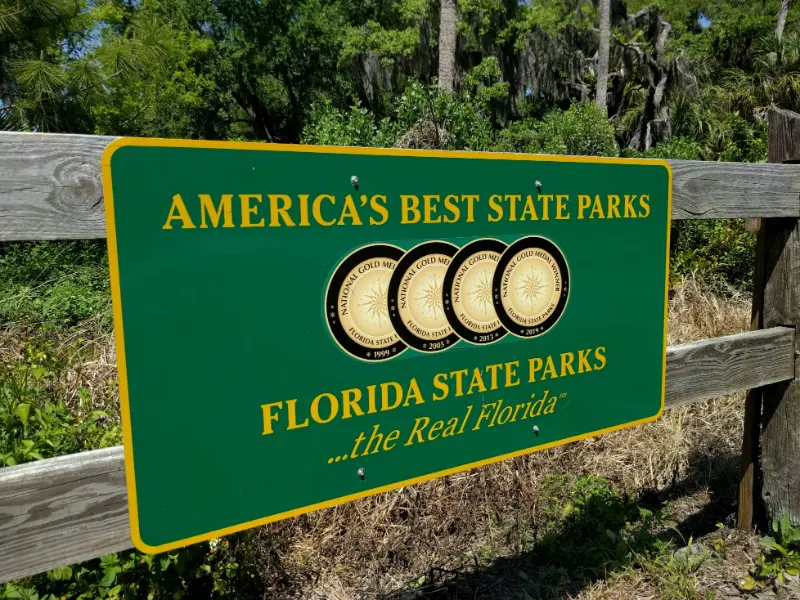
Florida State Parks preserve natural and historical resources under a state-managed system. In the Tampa Bay area, destinations include Honeymoon Island State Park and Hillsborough River State Park, among others. Different parks emphasize different experiences: a Gulf beach, a river environment, a historic structure or a network of trails. Some include ranger programs or overnight camping. Fees, reservations and accessible facilities vary by location, and annual passes have terms that visitors should verify before assuming they cover every activity.
A state park is not automatically larger, more interesting or better for children than a county park. Nor does state-park status guarantee lifeguards, swimming facilities or easy stroller routes. Read each park’s conditions, not just its photographs. Visitors arriving with elderly relatives or toddlers should know the walking distance from parking to the main feature and whether there are restrooms near the intended stop. A beautiful nature preserve with a remote entrance may be less pleasant for a group needing frequent breaks than a simpler local park with shaded seating.
Lettuce Lake: a useful park with important repair alerts
Lettuce Lake Conservation Park in Tampa is known for its floodplain habitat, paved walking possibilities and boardwalk areas along the Hillsborough River. It can be a rewarding place to notice wetland vegetation and wildlife without venturing far from the city. But official Hillsborough County notices in 2026 identify repairs affecting parts of the boardwalk, the observation tower and the canoe or kayak launch. The park should not be described as if every famous feature were fully available at all times.
Before planning a visit, check the county’s current alert for which sections remain open and whether shelters or rentals are operating. If the observation tower is the only attraction your group wants, verify access before driving across town. Families can still enjoy available trails and picnic spaces when conditions permit. For a traveler using a wheelchair or stroller, confirm which sections are paved and which detours would be required. A partly closed boardwalk is a strong reason to select an alternative park, not to cross barriers or look for informal shortcuts.
Practical comparison at a glance
| Consideration | Choice or stop | What to know |
|---|---|---|
| Park system | County conservation parks | Local facilities, some small entry fees |
| Park system | Florida State Parks | Site-specific admission and passes |
| Visit style | Short walk or picnic | Distinct habitats and attractions |
| Check before travel | Boardwalk and parking closures | Flooding, erosion and park alerts |
John Chesnut Sr. Park: a different family experience
John Chesnut Sr. Park in Palm Harbor sits beside Lake Tarpon and offers trails, boardwalk areas, picnic shelters and playgrounds. Official county information also includes wildlife habitat, a dog park and boating facilities. Its character is different from Lettuce Lake: the lake setting and family amenities may be more appealing for a relaxed afternoon when children want to play and adults want to watch the water. Verify the current park map and any restoration alerts, particularly if you hope to visit a particular pond or boardwalk.
Swimming is prohibited inside John Chesnut Sr. Park, so it is not a substitute for a public beach even on a hot day. The county has described aquatic vegetation management work in 2026, which is another reminder to distinguish an open park from unrestricted access to every feature. Bring a picnic and use designated areas rather than approaching wildlife or entering water. Do not feed birds, turtles or alligators. Wildlife is healthiest when it remains wild, and human food can cause problems for animals and other visitors.
Honeymoon Island: a state park with a coastal focus
Honeymoon Island State Park near Dunedin offers Gulf Coast scenery, birdwatching, a nature center and beach opportunities. It also has different practical issues from an inland county park: beach conditions, dune access, erosion and limited parking during popular periods. As of October 2026, official state notices describe temporary parking-lot closures related to flooding and caution about the northern sandspit, where erosion has changed the shoreline. Those alerts matter more than a generic claim that the park has miles of sand.
Check current entrance and parking information before departure. Choose an appropriate open area rather than attempting to cross water separating parts of the sandspit. Strong currents and changing depths make such shortcuts dangerous. If you are traveling with a child who cannot swim, prioritize designated areas and observe lifeguard or local warnings when available. Visitors who do not want to enter the sea can enjoy the nature center, scenic views and short walks within their capabilities. A state beach day can be rewarding without becoming a swimming excursion.
Why the cheapest admission is not always the best value
An inexpensive county park may cost less at the entrance but be far from your accommodation. A state park may offer a distinctive landscape worth a slightly longer journey. Compare the total outing: vehicle admission, parking, fuel, travel time, any required reservations and the number of hours the family expects to enjoy the place. A park with a playground and sheltered picnic tables could be better for a toddler than a remote coastal trail. A birdwatcher might prefer a quieter preserve even with fewer services.
Annual passes require additional care. Hillsborough County’s conservation-park pass is not a statewide Florida State Parks pass, and boat-ramp programs can be separate. Some resident discounts have eligibility conditions that international visitors cannot assume they meet. For a week-long vacation, buying one-day admissions may be simpler than purchasing an annual product. Calculate how many eligible visits you will actually make; an annual pass only saves money when its access privileges match your itinerary.
A three-day nature plan with different energy levels
Use one day for a nearby conservation park, one for a Pinellas County lake or wetland setting and one for a state-park beach or river landscape. For example, a Tampa-based group might begin at Lettuce Lake if sufficient paths are open, visit John Chesnut Sr. Park on the second day, and choose Honeymoon Island on the third when current access permits. These are not three consecutive mandatory stops; they are distinct experiences that can be swapped for weather and traveler preferences.

Limit each day to one main park and perhaps a meal in a nearby town. A family that attempts three parks before lunch will spend more time parking and moving people than appreciating nature. Leave the afternoon free for rest, especially in humid weather. If someone finds the first visit tiring, replace the next long walk with a shorter picnic or an indoor nature-center exhibit. A flexible plan respects a six-year-old’s attention span and a ninety-year-old’s energy level equally.
Trails, wheelchairs, strollers and benches
The word “easy” on a trail map does not necessarily tell you whether a route is step-free, shaded, smooth or equipped with benches. Some natural trails contain sand, roots or narrow boardwalk sections. Ask the park about exact surfaces and how far it is from the parking area to a restroom or main viewpoint. If a visitor uses a mobility scooter, find out whether its size and weight are suitable for the intended route. A stroller may handle pavement well but struggle on wet dirt or soft sand.
Do not be embarrassed to choose the shortest available trail. Wildlife often appears close to parking areas, boardwalks and nature centers, though sightings are never guaranteed. Bringing binoculars may create more enjoyment than covering an additional mile. If a park offers accessible picnic shelters, check whether they need reservation. Older travelers may appreciate a quiet place to sit while grandchildren explore a nearby playground with another adult. Planning for different paces can make the outing inclusive without forcing everyone into the same physical activity.
Wildlife viewing: what to do and what to avoid
Florida parks can host alligators, turtles, birds, snakes and many smaller creatures. Enjoy sightings from a distance and never feed wildlife. Alligators may be present in lakes, canals and wetlands even when you cannot see one. Do not let children approach the water’s edge or assume that a calm pond is suitable for splashing. Follow park signs for designated fishing, paddling and boating areas. If a park explicitly prohibits swimming, the rule applies regardless of the weather or how inviting the water looks.
For better wildlife viewing, arrive earlier on a comfortable morning, stay relatively quiet and allow animals to move naturally. Keep pets on permitted routes under the park’s rules and recognize that some wildlife or nature areas exclude animals. Birds can react to people approaching nesting spots, so never chase them for a photograph. A child who learns to watch a heron patiently may remember the experience longer than one who is told to collect selfies with every animal on a trail.
Restrooms, weather, snacks and accessible transport
Public parks can differ substantially in water fountains, changing facilities and restroom locations. Bring water and a few suitable snacks, particularly when traveling with small children or older relatives who need meals at predictable times. A picnic can save money and reduce time spent in a car. Check whether food is allowed in the chosen area and whether grills or shelters require advance reservation. Never leave food accessible to wildlife, and clean the picnic table afterward.
Florida thunderstorms can develop quickly. Stop outdoor activities when thunder is heard and follow staff guidance; a covered picnic shelter is not necessarily safe protection from lightning. During extreme heat, shorten walks and move to an air-conditioned venue if anyone becomes unwell. A scenic outdoor trip should never become a test of endurance. If the group relies on rideshare or public transit, confirm that the park entrance is actually reachable and that a return ride will be available; many parks are much easier by car than their map location suggests.
Which park should you actually choose?
Choose a county park if you want a short, flexible nature outing close to other plans, especially when picnic and playground facilities matter. Choose a state park when its specific habitat, beach or historic feature is the main reason for the day’s trip. Then narrow the selection by current closures, distance, accessibility, weather, admission cost and the ages of the travelers. No category automatically wins. A place that is perfect for a birdwatcher may be a frustrating choice for a toddler who needs shade and an accessible bathroom.
Before leaving, open the individual park’s official alerts and hours page. Confirm the features you plan to use rather than relying on last year’s travel post. At Honeymoon Island, pay particular attention to flooding and sandspit warnings; at Lettuce Lake, review boardwalk repairs; at John Chesnut, check any restoration notices. With those small checks completed, county and state parks give Wonderful Florida visitors some of the most enjoyable and affordable opportunities to experience the state’s landscapes across generations.
Frequently asked questions
Is a county conservation-park pass valid at Florida State Parks?
No. County and state park systems have separate passes and eligibility rules. Check the authority managing each destination.
Can visitors swim at John Chesnut Sr. Park?
No. Pinellas County states that swimming is prohibited inside the park.
Is Honeymoon Island fully open in October 2026?
Official state notices describe temporary flooding-related parking closures and shoreline safety alerts. Check the current park update immediately before visiting.