Category: Central Florida

  • Three Days in Kissimmee, Celebration and Davenport: A Family-Friendly Central Florida Base Beyond the Parks

    Three Days in Kissimmee, Celebration and Davenport: A Family-Friendly Central Florida Base Beyond the Parks

    Many visitors know Kissimmee and Davenport mainly as places to sleep while visiting Walt Disney World, but these communities can also support a three-day holiday of their own. Celebration's planned town center, Kissimmee's lakefront and the surrounding natural landscapes offer a different tempo from long attraction queues. This itinerary is particularly useful for families staying in a vacation home, groups with grandparents and travelers who want one optional high-energy activity without building the entire trip around a theme park. Distances matter: a Davenport rental, downtown Kissimmee and Celebration are not interchangeable addresses, even if all are advertised as 'Orlando area' accommodations.

    Three-day summary

    DayMain planComfortable alternative
    1Celebration town centerLake views, cafés and easy walking
    2Kissimmee Lakefront ParkPaved paths, playground and local history
    3Nature excursion or resort restEthical wildlife outing or quieter alternative

    Make the right base decision among three different communities

    Kissimmee is a large city, not one compact tourist district. Downtown near Lake Tohopekaliga has a local waterfront character, while lodging corridors closer to theme parks include resorts, motels and vacation rentals. Celebration is a planned community with walkable sections around its town center, but those streets should not be confused with the layout of every nearby hotel. Davenport is popular for vacation houses and resort-style communities farther west and southwest of the busiest Orlando visitor districts. Compare the actual road route from each property to your chosen daily outings before booking.

    A family rental may provide multiple bedrooms, laundry and a kitchen, which can make shared travel easier. However, vacation-home communities can impose gate procedures, parking limits, pool-heat fees, trash rules and cleaning charges. Confirm these before paying. If one member of the party uses mobility equipment, examine door widths, bathroom layouts and whether the bedroom is on the ground floor. A cheap nightly price can lose its advantage when the drive to every activity is long and fuel, tolls and parking add up. For three days, choose one fixed base and make the day's activities fit that location rather than moving lodging to follow each destination.

    Day one: begin at Celebration's walkable center

    Start with a gentle visit to Celebration's town center. The planned streets, lakefront setting and cafés provide a contrast to the surrounding major roads and attraction parking lots. Choose a modest walking loop near the lake and take time to explore without assuming every picturesque corner is a public tourist attraction. Residential areas deserve normal privacy, and private facilities may have access restrictions. A relaxed coffee, a few shops and a waterfront view can make a satisfying first morning, particularly after a travel day. Check for special events that may change parking or crowd levels.

    Families can enjoy the sense of place without requiring small children to walk endlessly. Strollers can be useful on paved sections, but accessible routes and restrooms should be checked for the exact area you plan to visit. If afternoon heat builds, return to your accommodation rather than making a shopping detour just to remain busy. A teenager might enjoy photography or a leisurely lunch; grandparents may prefer a bench with a view. Celebration works well for one focused outing, not as a guarantee of all-day entertainment. Treat an evening meal as optional according to your energy and remember that restaurant booking may be helpful on weekends.

    Day two: discover Kissimmee Lakefront Park and local history

    Kissimmee Lakefront Park beside Lake Tohopekaliga is a logical place to spend an unhurried morning. Its public green spaces and waterfront environment differ from a theme park setting. Choose an appropriate paved path or seating area, bring a picnic if conditions allow and watch waterbirds from a respectful distance. Never encourage children to approach the water's edge to photograph an alligator or other animal. Florida freshwater should not be treated as a safe swimming area merely because it looks attractive. The lakefront can be hot and exposed by midday, so plan a shorter visit in summer.

    Kissimmee Florida Residential Neighborhood Aerial

    Pair this outing with a simple downtown meal and, if genuinely interesting to the group, a local historical stop. Check opening days rather than assuming a museum or visitor facility operates daily. Families with young children may get more enjoyment from a playground break and lunch than from multiple ticketed attractions. Adults interested in local heritage can investigate how Kissimmee developed around cattle, rail and regional commerce, using public interpretation rather than invented historic claims. In the afternoon, return to your accommodation for a swim in a properly maintained pool if available. This is one of the advantages of choosing a comfortable family base rather than spending every day away from the property.

    Day three: choose one nature or adventure experience

    Use the final day for a contrast to parks and town centers. The broader Kissimmee area includes lakes, wetlands and opportunities to observe Florida's wildlife with trained operators. An airboat excursion may appeal to visitors interested in wetlands, but it is not automatically suitable for babies, people with hearing sensitivities or anyone uncomfortable with noise and motion. Check the provider's rules on ages, safety equipment, mobility access, cancellation and wildlife viewing. An experienced guide should respect animal behavior and avoid promising close encounters. Choose a reputable, appropriately licensed operator and treat any wildlife sighting as a possibility, not a guarantee.

    If boats are not right for your party, select a suitable nature park or another cultural activity instead. An easy trail, a shaded botanical area or a repeat of a favorite waterfront stop may offer more enjoyment than a high-speed outing. Ask about bugs, exposed sun, walking surfaces and restrooms before planning a wilderness excursion. Travelers with physical limitations can often join the broader day by enjoying a nearby interpretive center or public scenic viewpoint while others take a tour. Keep the afternoon free for packing or a final shared meal. The point is to experience a less commercial side of Central Florida without sacrificing safety or comfort.

    Decide how much Disney or other major attractions really belong here

    Walt Disney World and other large Orlando-area attractions are a powerful reason many visitors choose this region. Yet a short three-day stay can disappear into transport, queues and ticket costs if you attempt too much. If your main objective is a major theme park, replace the day-three nature activity with one properly planned park day rather than trying to squeeze the park into an evening. Check official opening hours, reservation policies where applicable, current tickets and age-specific attractions. A child who wants two favorite experiences may not need an expensive multi-park itinerary.

    A family with very young children or older adults might prefer to visit the park on a separate day in a longer vacation and keep these three days for easier outings. Davenport properties marketed as close to Disney can still involve meaningful driving at busy times. Celebration is also a town, not an entrance to a Disney theme park. Evaluate expected door-to-gate journey, parking and walking after arrival. Don't mistake a short distance on a road map for a predictable commute. Some groups are happiest alternating one energetic day with one gentle day; others would rather avoid park tickets entirely and enjoy the lakes and town centers.

    Kissimmee Florida Residential District and Lakes Aerial

    Understand car use, tolls and vacation-home access

    Most travelers will find a car practical in Kissimmee and Davenport because lodging and attractions can be spread out. Rideshares can work for selected transfers, but large families need vehicles with sufficient seats and proper child restraints. Read rental-car toll policies carefully, as some companies charge daily fees or processing charges beyond the toll itself. If your home is within a gated community, obtain the exact arrival instructions and check whether after-hours entry requires a code, permit or contact with management. Do not rely on an incomplete map pin shared by an accommodation website.

    Build buffers for traffic around major theme park entrances, shopping roads and interstate junctions. Avoid planning a late-night grocery stop on the assumption that every store near a resort will be open. Choose one practical supermarket and one pharmacy near your actual property. Parking at Celebration and Kissimmee public spaces has its own posted rules; use the official signs rather than assuming the same policy as a shopping plaza. If you are staying with several generations, keeping one vehicle and a shared departure time often saves confusion, but allow family members to skip an outing when rest would serve them better.

    Plan meals and accommodation life for a multi-age group

    One advantage of a vacation home is the ability to eat breakfast in pajamas, prepare familiar food for a child and allow different sleep routines. Before arrival, ask whether the kitchen has basic pans, a kettle or coffee maker, enough plates and a safe place to store food. Don't assume a large refrigerator means the home is stocked. Plan a grocery stop for the first evening, taking account of flight delays. Families with dietary needs should locate suitable stores and restaurants rather than relying entirely on menus aimed at theme park tourists. A well-planned first meal prevents an exhausting start.

    For groups with babies, check the availability and condition of cribs, stair gates and high chairs before booking, and bring essentials that cannot be guaranteed. Older adults may appreciate a ground-floor bedroom, a quiet seating area and shade around the pool. Pool alarms, door locks and adult supervision matter whenever children are present; a private pool is not a lifeguarded facility. Discuss household rules with the group so that one person is not left managing cooking, cleanup and every outing. A family holiday should make shared time easier, not transfer hotel responsibilities onto a single traveler.

    Compare the real cost of a resort hotel and a rental house

    A three-night vacation home can seem inexpensive when divided among several people, but compare the final bill. Cleaning fees, service charges, pool heating, resort facilities, parking and taxes may change the result. Hotel rooms may offer simpler check-in and maintenance support, while a rental may offer more living space and the ability to cook. Check cancellation policies, management contact details and whether the property description matches the beds and bathrooms you actually need. Avoid paying through unverified listings or outside a platform's secure checkout process.

    Budget separately for groceries, restaurant meals, one optional tour and fuel or rideshares. If you plan a theme park day, admission and food may become the largest variable; price that experience before choosing accommodations around it. Travelers arriving internationally should also understand mobile connectivity, credit-card deposits and the need for appropriate driving documents. Do not invent an average daily cost for all families, because party size and travel season make the range too broad. The better method is to compare two genuine sample plans for your dates: a three-day low-key vacation and the same stay with a paid park or airboat experience added.

    Build weather and accessibility into the daily rhythm

    Central Florida afternoons can be extremely hot and humid, with thunderstorm risk in warmer months. Start outdoors early, keep water accessible and plan shade or indoor time during the most uncomfortable period. Lightning is a reason to leave lakeside paths, open pool decks and exposed platforms. During Atlantic hurricane season, watch official forecasts and protect flexibility in hotel and tour reservations. In winter, mornings can be cooler than visitors imagine, especially for airboat rides or exposed lakefront walks. A light layer can be useful even during an otherwise sunny holiday.

    Accessibility varies widely between lodging types and attractions. Confirm exact bathroom facilities, bed location, steps, transport arrangements and the accessible route from parking to a planned waterfront stop. A rental home described as 'single story' may still have entrance steps, and a resort shuttle may not accommodate every mobility device. If an airboat or another ride is unsuitable, have a land-based alternative that remains part of the group's day rather than leaving someone alone without a plan. For children, teenagers and seniors alike, predictable rest breaks often do more to improve a holiday than adding attractions to an already full calendar.

    Final itinerary checklist and the easiest way to enjoy the area

    Save the address and gate instructions for your accommodation, check the real driving route to Celebration and downtown Kissimmee, and identify the day-three experience you can cancel if weather makes it unsafe. Pack sun protection, water, snacks, comfortable shoes and any car seats or mobility aids required. Confirm whether pools or resort amenities are included and open, and choose groceries that make breakfast easy. If your flight arrives late, postpone sightseeing until the next morning. A short celebration-area dinner is enough for the first evening.

    The recommended rhythm is Celebration on the first day, Kissimmee's lakefront on the second, and one wildlife or leisure activity on the third. Replace an outing with Disney only if the group genuinely wants that experience and the ticket price and travel time make sense. A holiday here does not have to imitate a theme park schedule to feel worthwhile. With a well-chosen base, accurate driving expectations and room for different ages to rest, three days can reveal the everyday landscapes and slower pleasures of Central Florida that visitors often miss when their only destination is a park entrance.

    Frequently asked questions

    Is Celebration part of a Disney theme park?

    No. Celebration is a planned community with its own town center, not an entrance to Walt Disney World.

    Does a Davenport vacation rental require a car?

    Often yes. Many rental neighborhoods are separated from shopping and attractions by roads rather than walkable streets.

    Can you enjoy Kissimmee without buying theme-park tickets?

    Yes. Lakefront parks, historic streets, nature experiences and accommodation leisure can form a relaxing three-day holiday.


    Official information and useful resources

    Explore the area on an interactive map

  • Winter Haven Without Theme Parks: Four Days Among Central Florida’s Lakes and Local Life

    Winter Haven Without Theme Parks: Four Days Among Central Florida’s Lakes and Local Life

    Winter Haven is often associated with a famous brick-building theme park, but its real geographic identity is the Chain of Lakes. The city reports dozens of lakes within or bordering its limits, including connected systems that have shaped local recreation and waterfront life. A four-day holiday here can focus on easy lakeside walks, local history, cafes and a quiet Central Florida atmosphere. It works particularly well for couples, older travelers and families who want a base that feels different from Orlando without committing to expensive theme-park tickets.

    Quick planning table

    DaySuggested plan
    OneDowntown Winter Haven and a public waterfront
    TwoOne Chain of Lakes area
    ThreeGardens or regional culture
    FourQuiet lakeside morning and departure

    The Chain of Lakes is a landscape, not one attraction

    Winter Haven's waterways are a collection of individual lakes and connected sections, not a single enclosed boating lagoon. The city's official information identifies northern and southern chains and other lakes with hydrological connections. This matters for travel planning because each waterfront park may have different facilities, views and rules. A pleasant shoreline on one lake does not guarantee there will be a continuous walking route or public swimming access around the next.

    Learn the basic layout before choosing accommodation. A hotel described as 'near the lakes' may be on a highway rather than beside a safe pedestrian promenade. Look at the exact waterfront you want to visit and verify whether access is public, whether parking is available and how long you would walk from the room. A rental car is usually useful for reaching multiple points over four days.

    Buenaventura Lakes Orlando Florida Suburban Community Aerial

    Where to stay and how to get around

    Downtown Winter Haven is convenient if you enjoy cafes, local businesses and public events, but lodging availability there may differ from the larger hotel clusters closer to the area's highways. A suburban hotel may offer easier parking and lower rates, while a lakeside vacation home can provide a pleasant setting but also cleaning costs and strict rules. Compare each option using actual taxes, parking charges and cancellation terms. Families should consider safe balconies and any private water frontage carefully.

    Public transportation alone may not serve the exact sequence of lakes and gardens you plan to visit. If you are not driving, design a smaller itinerary around your hotel's location and confirmed local transport rather than assuming every waterfront stop is a short walk away. Florida's midday heat also makes a long road walk uncomfortable even when the distance seems modest on a map.

    Day one: discover downtown and a welcoming waterfront

    Spend the first day arriving, exploring a manageable downtown area and enjoying a nearby public lakefront park. Central Park and the surrounding streets offer a starting point for local life, subject to any current event or construction changes. Walk for as long as you comfortably can, stop at a cafe and notice how historic downtown buildings coexist with modern shops. This is not a trip that needs to begin with a ticketed attraction.

    For children, a simple lake observation activity can be fun: watch waterbirds, count boats from a legal viewpoint and talk about why people build towns beside water. For seniors or travelers with a stroller, prioritize shaded benches and reliable restrooms. Do not treat a lakeshore as a swimming beach. Only enter water at a designated, currently authorized location after checking health and safety information.

    Day two: choose one section of the Chain of Lakes

    Use the second day to discover a public access point on either the northern or southern chain. The goal is to understand how canals and lakes relate to each other, not to visit every lake. Consult city maps, recreation information and boat-ramp rules before arriving. A guided tour by a licensed local operator may suit confident boat travelers if a suitable, currently operating service is available; it should remain optional, since some visitors get seasick or cannot transfer safely into a vessel.

    Land-based visitors can enjoy a short shore walk, picnic or birdwatching stop instead. Keep children away from unsupervised water edges, which may have uneven banks and wildlife. For anyone considering paddling, check winds, boat traffic, visibility and access rules. A connected waterway does not mean every route is appropriate for a beginner kayak or that every canal is passable year-round.

    What the lakes reveal about local ecology

    Freshwater lakes in Central Florida support birds, fish, aquatic vegetation and complicated water-management needs. They also collect runoff from surrounding neighborhoods and streets. The city's Natural Resources division publishes information about its lakes and their condition. Looking at this material can turn a casual visit into an engaging introduction to Florida's watershed system. Winter Haven lies near the headwaters of the Peace River watershed, which connects inland water management with distant coastal environments.

    Talk with children about how rain in one city may affect wetlands far away. A visible algae bloom, cloudy water or fish warning is a reason to follow official advice, not to step closer for a photograph. Swimming rules and water quality must be checked independently for each site. The safest activity for many travelers is simply observing lakes from managed public areas.

    Day three: local gardens and nearby heritage

    Choose one regional garden, history destination or museum for the third day. The nearby Lake Wales area has well-known gardens and cultural sites, but these are separate destinations with their own pricing and opening times. Do not squeeze two major paid attractions into one day merely because they are on the same map. A garden visit can provide shade, colorful plants and a change from open shoreline. Check the walking surfaces and whether wheelchairs or strollers can reach your intended stops.

    For families, pair a morning educational visit with an open afternoon in Winter Haven. If rain begins, use the hotel as a base and look for a currently open indoor attraction, library event or local cultural venue. Some small museums operate limited schedules and should not be promised without a live check. The purpose is to balance local identity with practical comfort.

    Day four: enjoy the lake at a different time

    An early visit to a public waterfront can show a different side of Winter Haven from a midday stop. Light is softer, birds may be active and temperatures can be more manageable. Keep to permitted paths and avoid blocking residential driveways for a closer view. If you have found a favorite cafe, returning for breakfast creates a pleasant sense of place without spending more on new attractions.

    After checkout, plan your onward drive with time for traffic and a rest stop. If your next destination is Orlando, resist turning the departure morning into a last-minute theme-park visit. Leaving in good time is especially important when a family needs to return a rental car at the airport. A relaxed four-day break should end with the same calm pace it began with.

    Choosing activities for different generations

    Preschoolers tend to enjoy short lakeside outings with frequent snacks and a playground when available. Older children may be interested in identifying waterbirds or understanding canals. Teens might prefer photography, kayaking with a qualified operator or local events. Adults can enjoy the cafes and waterfront, and older travelers may appreciate a short walk followed by a long shaded rest. Group members can share breakfast and a central outing while choosing different afternoon activities.

    For anyone with a mobility aid, ask about the exact approach from parking to the lakefront, which may be uneven, sloped or sandy. Public parking and an accessible restroom are more important than an impressive aerial photograph. A waterfront restaurant is also not necessarily accessible from the shoreline; verify its actual entrance before arranging a group meal.

    Food and budget without inflated promises

    The city offers ordinary shops and restaurants rather than only tourist-oriented dining. That can make a relaxed holiday affordable, but costs still depend on the dates and the standard of your lodging. Compare three-night hotel quotes, local transport, actual admission fees and meals. A lakeside vacation house might be economical for a larger group, yet taxes and cleaning charges can change the comparison. Avoid assuming a restaurant will be open during a holiday or at the end of a long nature visit.

    Bring water and snacks for outside stops, but also plan a full sit-down lunch when temperatures are highest. A family with young children may benefit from a room with a refrigerator or kitchenette. Insects can be present near freshwater; repellent and appropriate clothing are sensible. If choosing fish at a restaurant, use the venue's current menu rather than assuming local catch is always available.

    Safety near freshwater is different from beach safety

    At coastal beaches visitors commonly focus on rip currents and tides, but freshwater lakes present their own risks. Alligators may be present, underwater visibility can be poor, and steep banks or boat traffic can create hazards. Never feed wildlife or permit children to play at a water's edge without close supervision. Follow posted rules about boating and swimming. If a lake has a health advisory, respect it even if other lakes nearby look inviting.

    Heat and lightning remain important. Avoid long open-lake walks during the hottest hours, and leave exposed areas when thunder sounds. A shaded picnic shelter is not safe lightning protection. Bring a phone with offline directions and identify where the nearest public facilities are located. A little planning helps the day remain enjoyable instead of requiring improvised responses to obvious risks.

    When to travel

    Winter months may offer more comfortable weather for lakefront walking, with potential cool mornings. Spring often combines pleasant outdoor conditions with active local events, but lodging rates can rise around school holidays. Summer has long days and frequent thunderstorms. Autumn can be attractive yet still falls within the Atlantic hurricane season. There is no single perfect month for every traveler; choose based on tolerance for heat, desired events and whether you prefer to avoid crowds.

    Check the city's events calendar if a downtown market or festival interests you. Conversely, if quiet is the priority, a major festival weekend may bring road closures or parking pressure. Always confirm current park access before leaving the hotel. A pleasant lakefront can occasionally have maintenance or work that changes your planned route.

    Optional boating: useful questions before you pay

    A boat tour may provide a fresh perspective on the connected lakes, but evaluate it as a separate activity. Ask about the operator's license, departure point, vessel size, life jackets, shade, weather cancellation policy and whether assistance is available for someone with limited mobility. Parents need age-appropriate life jackets for children. A small open boat can be uncomfortable during heat or strong wind, and not every outing is appropriate for an infant.

    If a tour is sold out or conditions are poor, the vacation still works as a land-based lake holiday. Do not improvise a boat rental if no adult in the group is comfortable navigating unfamiliar freshwater. One good waterfront viewing place and a relaxed afternoon are a perfectly satisfactory substitute.

    Make this an introduction to inland Florida

    Winter Haven is an effective base for travelers who have spent most of their Florida time on the coast. It reveals how freshwater, canals and community life influence the state's geography. There is pleasure in small distinctions: the way trees frame a lake at morning light, the movement of birds along reeds and the changing activity of a downtown street through the day. Those moments are easier to notice when the itinerary leaves room for them.

    Four days allow a coherent experience without exhausting anyone. One day for arrival, one for the Chain of Lakes, one for a regional cultural stop and one for the final lakeside morning is plenty. If you discover a favorite place, return rather than searching endlessly for something bigger. The city's strength is its local character, not the need to compete with a theme park.

    Frequently asked questions

    Is Winter Haven worth visiting without LEGOLAND?

    Yes. Public lakes, downtown streets, nearby gardens and regional history provide a quieter trip with a different focus.

    Can you walk around the entire Chain of Lakes?

    No. It consists of multiple lakes with different access conditions, not one continuous public promenade. Choose specific parks and paths.

    Is swimming permitted in Winter Haven's lakes?

    Rules and water quality differ by lake and access point. Use only authorized, currently safe locations and follow official local guidance.

    Official information

    The City of Winter Haven's lakes overview explains its lake systems and watershed, while the City of Winter Haven publishes parks and community information.

  • Three Days in Sanford and Lake Mary: Historic Streets, Lake Monroe and a Relaxed Central Florida Weekend

    Three Days in Sanford and Lake Mary: Historic Streets, Lake Monroe and a Relaxed Central Florida Weekend

    Sanford and Lake Mary offer an alternative to the busier Orlando vacation corridor. Sanford's historic downtown sits near Lake Monroe and the St. Johns River, with brick streets, local businesses and access to waterside scenery. Lake Mary is more suburban, useful for comfortable accommodation and a quieter evening after day trips. Three days here can combine a downtown walk, river surroundings and a flexible nature or heritage activity. The itinerary is well suited to couples, older travelers and families who enjoy an unhurried weekend, but it also helps visitors arriving at Orlando Sanford International Airport build a short stay that does not require daily travel to a major theme park.

    Three-day summary

    DayMain planComfortable alternative
    1Historic downtown SanfordShort heritage streets and local cafés
    2Lake Monroe and RiverWalkRiver views or suitable licensed boat tour
    3Lake Mary or nearby natureSimple suburban stop or carefully chosen park

    Choose between staying near downtown Sanford and Lake Mary

    Stay close to Sanford's historic center if the highlight of the trip will be walking to restaurants, browsing local streets and enjoying Lake Monroe views. Historic accommodations can be appealing, but older buildings may have steps, smaller rooms or limited parking, so confirm the exact amenities you need. Lake Mary has a different feel, with modern hotels, residential neighborhoods and convenient road connections. It may be a good base for visitors traveling by car who value predictability, easy parking and access to groceries. The two towns are nearby but should not be treated as one walkable downtown district.

    When comparing hotels, look beyond the room rate to taxes, parking and whether breakfast or accessible amenities are included. A traveler hoping to explore the waterfront on foot should calculate the actual walking route from the property, not the distance to the city boundary. Families with young children may appreciate a reliable hotel pool and larger rooms, while couples may prioritize being able to go out for dinner without driving. If flying into Orlando Sanford International Airport, remember that its routes and ground transport differ from Orlando International Airport. Confirm the terminal and transportation plan before assuming a hotel shuttle will be available.

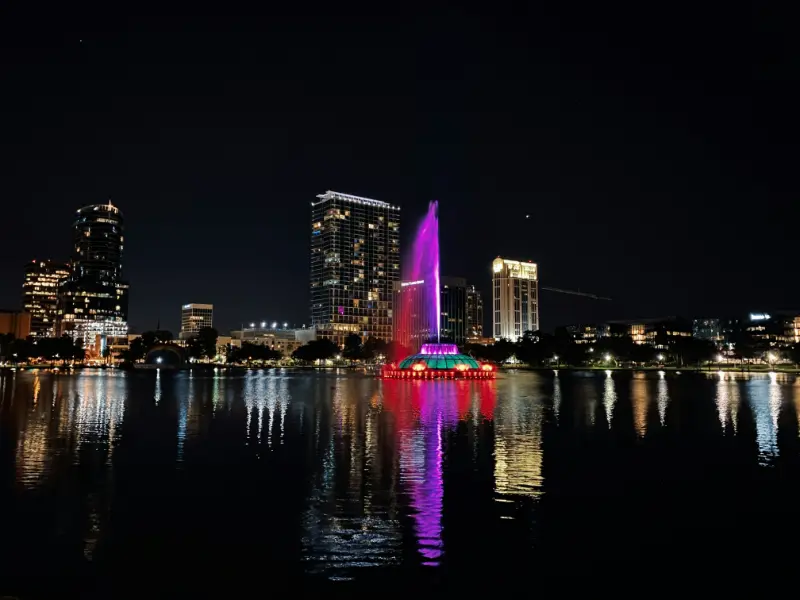
    Orlando Lake Eola Park Skyline at Sunset

    Day one: explore downtown Sanford and the historic streets

    Begin in historic downtown Sanford. The streets and restored commercial buildings invite a slow walk rather than a race between landmarks. Look into a few locally run shops, take a coffee break and notice the changes in architecture as you approach the waterfront. Sanford's historic identity is tied to railroads, river transportation and the citrus economy, yet individual buildings may now serve quite different purposes. Use an official heritage or local business guide if you want a structured route, and respect private entrances. A limited walking circuit around a few central blocks can be satisfying for visitors who do not want to stand for hours.

    Choose lunch near the historic center, then pause during the hottest part of the day. Families can plan for a playground or open public space, depending on current conditions, while travelers interested in local history may prefer a museum with confirmed hours. Weekends can bring markets or events, but do not build the whole trip around an event unless the organizer has published dates for your visit. If your hotel is farther away, decide where you will park and save the location before leaving the car. In the evening, return for a relaxed dinner if the weather is suitable. Sanford is strongest when there is enough time to watch ordinary street life unfold.

    Day two: spend time along Lake Monroe and the St. Johns River

    Lake Monroe connects Sanford to the broader St. Johns River system. Spend a morning near the public waterfront, walking a comfortable section and pausing to look across the water. The scenery can change with light and weather, making even a short visit worthwhile. Do not confuse a freshwater lakeshore with a beach prepared for swimming. Alligators and other wildlife may inhabit waterways, and swimming, fishing or boating should take place only where legally permitted and appropriately equipped. Children should remain close to adults near the water, even where barriers or paths create a reassuring urban setting.

    If you enjoy being on the river, investigate a licensed sightseeing cruise or an organized activity with clear boarding information. Ask whether the trip is suitable for wheelchairs, young children or anyone who dislikes motion or strong sun. Boat schedules, availability and weather cancellation terms can change. For land-based travelers, a comfortable waterfront viewpoint, birdwatching and a meal with a view can fill the day without tickets. Build time for an afternoon rest, particularly in summer. The St. Johns River environment is one of this area's greatest assets, and you do not have to travel far or buy an adventure package to appreciate it.

    Day three: select Lake Mary, a spring or a quieter nature stop

    On the third day, consider Lake Mary itself: its compact downtown area and surrounding community offer a calmer suburban contrast. Enjoy breakfast, take a short stroll where public paths are appropriate and use time to pack or plan the onward journey. Travelers wanting more nature can choose a regional park or spring area, but the specific attraction should match their mobility, swimming ability and available time. Central Florida springs are not all open for swimming or accessible on every day, and some require reservations or impose capacity restrictions. Verify rules with the actual park management before driving.

    If a nature excursion requires significant travel, make it the sole focus of the day. Older visitors may appreciate shaded observation areas and dependable restrooms, while families might prefer a supervised swimming facility where permitted. Rain or thunderstorms can quickly change outdoor plans; a museum, café or restful final morning is a reasonable alternative. Don't use the last day to chase Orlando attractions just because they appear within the wider metro area. A trip concentrated on Sanford and Lake Mary feels different from an Orlando vacation, and that is precisely the appeal. Keep room for a repeat of the favorite waterfront spot if the group enjoyed it most.

    Use the SunRail system thoughtfully, not as a universal solution

    Sanford and Lake Mary are served by SunRail commuter rail stations, which can be useful for certain journeys in Central Florida. However, the railway's service pattern and operating days are not the same as an all-day tourist metro. Check the official SunRail timetable, station access and last departure before relying on it for an outing or airport connection. The historic downtown and a train station may not be next to one another, so ground transport at both ends still matters. Don't recommend an evening return or weekend trip without verifying that a suitable train actually runs.

    A rental car remains useful for nature sites and flexible family travel. Compare its cost with rideshares if you mainly intend to walk in Sanford and take one excursion. Hotel parking, road tolls and gas can change the calculation. Visitors arriving through an airport should also check whether a car rental desk will be open at the time of their flight. If traveling with young children, follow local car-seat rules and confirm seats for any privately booked transfer. A practical three-day holiday should not involve repeatedly changing transport modes merely to save a few dollars if the switches make the trip more stressful or inaccessible.

    Build accessible outings around real routes and facilities

    A downtown that appears walkable on a map may include brick paving, older thresholds and occasional uneven surfaces. Wheelchair and mobility-aid users should check the exact route to a restaurant, museum or waterfront park, including crosswalks and accessible restrooms. Historic hotel buildings deserve similar care: ask about elevator access, shower type and steps at entrances. A public sidewalk is not proof that every building has step-free access. Avoid scheduling multiple long walking sections without knowing where there will be shade, seating and a place to rest.

    For multigenerational parties, establish one meeting place for each day and agree that individuals may take a shorter route or return to the hotel. Toddlers need snacks, bathroom breaks and time away from hot pavement; teenagers may prefer activities with more independence or photography opportunities. A riverboat tour can be a shared memory if boarding suits everyone, but don't assume it does. Ask operators directly about access, seating and time spent in exposed weather. A short guided experience may be more appropriate than several hours in the sun, and a land-based waterfront outing can be just as rewarding for those who choose not to board.

    Eat well without turning the itinerary into a restaurant marathon

    Sanford's local dining and café scene is a good reason to allow unstructured time. Pick one or two places that match your group's dietary needs and budget, then check current opening hours. A pleasant breakfast or lunch can be the centerpiece of a morning rather than a quick stop between tours. Lake Mary may offer practical options for families seeking familiar menus or restaurants near their hotel. If you intend to cook, choose accommodation with a genuine kitchen and locate a grocery store before arriving. Don't rely solely on ratings or old photographs when confirming whether a restaurant is currently operating.

    For travelers with children, an early dinner may work better than a late waterfront reservation. Couples can linger over a meal while others visit a nearby public area, provided the group has clear meeting arrangements. Florida dining costs vary, and the final bill may include tax and expected gratuity. Set a daily food allowance that reflects the number of meals purchased outside, rather than copying a generic 'per person' budget. Bringing water and snacks on walks is both economical and helpful in the heat. Leave at least one evening unscheduled so that the group can return to a favorite spot without feeling behind.

    Understand weather and how it affects river activities

    Spring and autumn can be comfortable for urban walks, while summer's heat and humidity call for earlier outdoor starts. Thunderstorms are common in warmer months, and a waterfront or boat deck is not a safe place to remain when lightning is nearby. Tour cancellations can occur because of wind, visibility or other safety concerns even if it isn't raining at your hotel. Ask about refunds and rescheduling before booking. Winter cold fronts can make an exposed cruise feel surprisingly cool; carry an appropriate layer rather than assuming Florida always means summer temperatures.

    During hurricane season, follow official forecasts and local instructions. Flooding and storm damage can affect riverside paths, parks and docks, so verify current access after severe weather. Mosquitoes can be noticeable near freshwater habitat, particularly around dawn or dusk; pack suitable repellent and clothing. Never feed wildlife, and maintain a safe distance from alligators. Families should also consider the length of a day: arriving on a late flight and immediately booking an early river tour may leave everyone tired. Weather flexibility and sufficient rest make an otherwise simple weekend much easier to enjoy.

    Estimate costs and decide what is worth booking

    A low-key three-day trip here can have fewer major-ticket expenses than a theme-park vacation, but accommodation, transport, dining and optional river tours still add up. Compare complete hotel prices, not only advertised nightly rates. An inexpensive hotel far from downtown can require a rental car for every activity, while a central room might reduce that expense. If your main activity is a boat tour, book it for the most flexible day and check weather terms. Consider one paid cultural activity rather than purchasing tickets for several small stops without knowing your group's energy or interests.

    Family tipFor families, compare the cost of one larger room with separate rooms or a vacation rental, including any cleaning fees and occupancy limits. Travelers arriving through Sanford airport should price airport transfers rather than assuming proximity makes them free. Parking and rail fares should be taken from current official schedules and signs. Leave a contingency amount for rain-day activities or an unexpected additional meal. The best use of money on this itinerary is often convenience: a reliable room, manageable transport, one worthwhile experience and enough flexibility to enjoy the historic center and waterfront without rushing.

    Keep a simple day-by-day plan and final checklist

    Spend the first day around downtown Sanford, the second by Lake Monroe and the St. Johns River, and the third in Lake Mary or a carefully chosen regional park. This keeps activities grouped geographically and leaves space to change the order if a cruise operates only on certain dates. Save the exact addresses of parking and river access, confirm the official SunRail timetable if using a train and check the hours of any small museum. Reserve boat activities in advance when needed, but avoid nonrefundable extras that depend on perfect weather. Bring water, sun protection and comfortable shoes.

    If an airport arrival reduces the first day, make the outing shorter rather than trying to catch up by skipping meals or rest. Don't assume an early morning flight leaves time for one last waterfront tour. Keep identification, booking details and medicines accessible during travel. Sanford and Lake Mary work best as a compact Central Florida escape with its own distinctive river setting, not as an overflow itinerary for Orlando. The combination of historic streets, broad water views and a low-pressure final day makes the trip appealing to travelers who value atmosphere, comfort and time together.

    Frequently asked questions

    Can I rely on SunRail for the whole visit?

    SunRail is a commuter service with schedules and operating days that require checking. Remote nature stops may still need a car.

    Can visitors swim along the downtown Lake Monroe shore?

    Do not assume the urban freshwater shoreline is a designated swimming area. Use approved facilities and follow wildlife warnings.

    Is Sanford airport the same as Orlando International Airport?

    No. Orlando Sanford International Airport and Orlando International Airport are different airports with different routes and ground transfers.

    Official information and useful resources

    Explore the area on an interactive map

  • Paisley, Florida for First-Time Visitors: Clearwater Lake, Forest Trails and a Quiet Ocala National Forest Escape

    Paisley, Florida for First-Time Visitors: Clearwater Lake, Forest Trails and a Quiet Ocala National Forest Escape

    Paisley is a small community on the southeastern edge of the Ocala National Forest, best known to outdoor travelers as the gateway to Clearwater Lake Recreation Area. The lake is compact, forested and developed enough for an easy first visit, with swimming, paddling, camping and a 1.3-mile nature trail. The area also connects to the 22-mile Paisley Woods Bicycle Trail, creating a more active option for mountain bikers. Paisley is not a nightlife destination; it is a place to wake up near the forest, spend most of the day outside and keep the evening simple.

    Explore this guide

    Quick planning summary

    • Best for: Campers, families, swimmers, paddlers, birders, mountain bikers, hikers and senior travelers who prefer a smaller developed lake to a large open-water boating destination.
    • Best trip length: 2 nights for Clearwater Lake and a short trail day; 3 nights if mountain biking or a second Ocala National Forest outing is important.
    • Getting around: A car is essential. Once at Clearwater Lake, many activities start from the same developed area, which reduces driving compared with more dispersed forest bases.
    • Where to stay: Camp at Clearwater Lake for maximum immersion, or use Paisley, Altoona, Umatilla or Eustis for a more conventional overnight base.

    Is this the right Florida stop for you?

    Paisley works particularly well for families and first-time forest visitors because Clearwater Lake packs several activities into one manageable site. The lake is about 32 acres, the nature trail is short and interpretive, and the campground is shaded. Stronger cyclists can use the Paisley Woods trail, while everyone else can keep the day focused on swimming, paddling and walking. The site can reach capacity on weekends, so early arrival and a backup plan are important.

    A practical first-visit rule: give each day one main experience and one secondary experience. In rural and forested Florida, two places that look close on a map can still involve slow roads, limited parking, launch logistics or a weather delay. A schedule with margin is usually more enjoyable than a plan that tries to prove its value by counting stops.

    Best things to do

    Start with the Clearwater Lake Nature Trail

    The 1.3-mile loop is an excellent orientation walk because it passes several habitat types and includes places to stop. Do it early before swimming if the weather is cool, or later when everyone wants a break from the water. The short distance makes it approachable without becoming trivial.

    Swim with a realistic plan for heat and sun

    The developed swim beach is one of the simplest family activities in the area. Bring shade, drinking water and dry clothing. Children should take breaks even when the water feels comfortable, and adults should remember that hours near reflective water can create significant sun exposure.

    Paddle the lake rather than chasing mileage

    Clearwater Lake is compact enough that a canoe or kayak outing can be about observation instead of distance. Move slowly along the shoreline, watch birds and turn back before anyone becomes tired. This is a good setting for beginners who are comfortable with basic paddling and life-jacket use.

    Florida Lake Sunset and Quiet Waterfront

    Ride the Paisley Woods Bicycle Trail only with suitable equipment

    The 22-mile singletrack connection toward Alexander Springs is a real mountain-bike experience, not a casual paved family path. Check current trail conditions, carry water and basic repair supplies, and choose a shorter out-and-back if fitness or daylight is uncertain.

    Use the campground as part of the experience

    Clearwater Lake has a shaded campground that can turn a day trip into a slower forest stay. Campers should confirm site details, quiet hours and food-storage practices, then leave enough time to enjoy the campsite rather than treating it only as a place to sleep.

    Bird from the benches instead of walking constantly

    The nature trail includes places to pause, which can be more productive for birding than covering distance quickly. Early morning is best for both wildlife and temperature. Binoculars add more value here than another mile of hiking.

    Keep a backup for capacity closures

    Official information warns that recreation sites can fill on weekends. Identify another forest stop or a town-based alternative before departure so a full parking area does not turn into an hour of improvised driving.

    Why Clearwater Lake makes Paisley especially easy for first-time forest visitors

    Many Ocala National Forest experiences require decisions about long trails, river shuttles or scattered access points. Clearwater Lake is simpler: camping, swimming, paddling and a short nature trail all begin in one compact area.

    That concentration is valuable for families and senior travelers because the group can split into different activity levels without separating across the county.

    When the 22-mile bike trail is a good idea—and when it is not

    The Paisley Woods Bicycle Trail is a strong reason for experienced mountain bikers to stay longer, but it should not be treated like a paved rail-trail. Terrain, heat, mechanical issues and navigation matter. Riders should choose a distance based on the return journey, not on the excitement of the first few miles.

    If no one in the group is an experienced off-road cyclist, skip it without regret. The lake, nature trail and forest setting already make a complete visit, and a simpler day is often better for mixed-age travelers.

    How to make the trip work for different travel styles

    Families: choose one activity that is easy to stop at any time. A short swim, pier session or nature trail is usually more successful than committing the whole day to a long paddle or hike. Couples: use the quieter morning or late-afternoon hours for the main outdoor experience, then leave time for a relaxed meal. Solo travelers: share your route for remote outings and avoid turning isolation into unnecessary risk. Senior travelers: prioritize shade, restrooms, easy parking and shorter transfers over the maximum possible number of stops.

    Where to stay: choose the base before the hotel

    The Clearwater Lake campground is the most immersive option. Travelers who do not camp can use small nearby rentals or stay in Altoona, Umatilla or Eustis. Compare the comfort of a hotel with the drive to the recreation area. Families should check refrigeration and laundry needs, while senior travelers may prioritize step-free access and predictable bathroom facilities.

    Compare lodging by the drive to the next morning’s priority, not only by nightly rate. Saving a little money can be a poor trade if it creates an hour of backtracking before a trail, lake or spring visit. Families often benefit from a refrigerator and laundry; couples may value atmosphere; senior travelers usually gain more from easy parking, step-free access and predictable check-in than from a long amenities list.

    Getting there and getting around

    A car is essential. Once at Clearwater Lake, many activities start from the same developed area, which reduces driving compared with more dispersed forest bases. Group each half-day by geography so you are not crossing the same county several times for short stops. Once you reach an activity area, park once when practical and walk rather than turning every stop into another car move.

    Florida Sunset over Lake and Oak Tree

    Keep fuel above half a tank before remote outings and save key addresses or maps offline. Mobile coverage can weaken near forests, rivers and low-density county roads. Stay on public roads and do not follow a navigation app onto a rough shortcut simply because it appears faster. After heavy rain, an unpaved road that is normally easy can become a very different drive.

    Families, teenagers, seniors and accessibility

    Children can combine the short trail with swimming and a picnic. Teenagers may enjoy paddling or mountain biking if experienced. Senior travelers can walk only part of the nature trail and spend more time birding from benches or the lakeshore. Anyone with a specific accessibility requirement should verify current site conditions directly.

    With children, a reliable rhythm is one active block, a real meal and one lower-effort stop. Teenagers often enjoy a trip more when they have a role such as navigation, photography or wildlife spotting. Senior travelers should protect the coolest hours for walking and use midday for lunch, a scenic drive or rest. When a specific accessible restroom, paved route or step-free entrance is essential, confirm it directly before travel.

    Best time to visit

    Fall through spring is ideal for walking and camping. Summer is attractive for swimming but requires early arrival and storm planning. Weekends can be busy enough for capacity limits, so weekday visits or early mornings are safer bets. After heavy rain, trail surfaces and forest roads may change quickly.

    North-Central and Central Florida have more seasonal contrast than Miami or the Keys. Winter mornings can be genuinely cool, while summer humidity makes modest walks harder than the mileage suggests. Warm-season thunderstorms can build quickly. For forests, rivers, springs and lakes, recent rainfall, fire conditions, hunting seasons and temporary closures can matter as much as the general forecast.

    What to do when weather changes the plan

    Florida weather is part of the itinerary, not an interruption to it. If thunderstorms build, move off open water early. If heat becomes uncomfortable, shorten the trail instead of trying to “finish what you started.” A three-day stay is often better than a one-day dash because you can move the main outdoor activity to the next morning. Keep one lower-effort alternative ready: a scenic drive, a historical stop, a long lunch or simply an earlier return to the lodging.

    A realistic 3-day itinerary

    Day 1

    Arrive near Paisley, check into the campground or lodging and take a short evening walk without committing to a long activity.

    Day 2

    Walk the nature trail early, swim or paddle around midday and reserve the late afternoon for rest.

    Day 3

    Experienced riders can sample the Paisley Woods Bicycle Trail; everyone else can choose another short forest stop before continuing toward Cassia or Altoona.

    How to pace the trip so it still feels like a vacation

    Protect some unscheduled time. A late lunch, wildlife sighting, thunderstorm or longer-than-expected trail should not break the itinerary. Avoid booking timed activities back to back unless the driving time is extremely predictable.

    For a multigenerational group, choose one shared experience each day and allow optional activities around it. One person can take a longer trail while another uses a picnic area; one teenager can paddle farther while a grandparent enjoys the shoreline. A good Florida trip does not require every traveler to do every activity for the same amount of time.

    Food and local flavor

    Campers should bring simple food and enough water because a forest stay is easier when every meal does not require a drive. Day visitors can pack a picnic and eat after the main activity. Keep food secured and clean up thoroughly; leaving scraps around a wildlife-rich forest is bad practice and can create problems for animals and people.

    Locally owned restaurants are useful not only for food but for slowing the day down and giving the trip a sense of place. Keep expectations realistic: service hours may be shorter than in a resort area, and the most memorable meal may be simple rather than fashionable. When the main activity is remote, confirm dinner options before you leave reliable mobile service.

    Budget: where the money actually goes

    These smaller inland destinations can cost less than Florida’s major resort corridors, but savings depend on how you travel. Public trails, state forests and scenic drives can be inexpensive, while private rentals, equipment hire, guided fishing, specialty camping or a last-minute hotel can become the largest cost. Reserve capacity-limited experiences first, then keep secondary stops flexible.

    Moving hotels every night rarely saves enough to justify the lost time. Two or three nights in one well-positioned base can reduce fuel use, packing stress and evening driving. Bring reusable water bottles, sun protection, insect repellent and simple snacks so you are not forced into expensive or inconvenient purchases in remote areas.

    Common mistakes to avoid

    • Assuming the mountain-bike trail is a paved family route.
    • Arriving at midday on a busy weekend without a backup.
    • Forgetting sun protection because the lake is surrounded by trees.
    • Overloading a small lake day with distant attractions.
    • Leaving food unsecured at a campsite.

    How to combine this stop with the rest of Florida

    Paisley can follow Altoona. Altoona is centered on Alexander Springs; Paisley offers a smaller lake environment, a short nature trail and a stronger mountain-bike angle.

    For longer road trips, alternate environments rather than repeating the same kind of day. A forest day followed by local history, a spring day followed by a lake, or a long outdoor morning followed by a quiet town usually creates more variety with less fatigue. When weather controls the main experience, staying at least two nights in one base gives you room to rearrange the schedule.

    Practical packing and safety notes

    Bring sun protection year-round, insect repellent for wooded and marshy areas, closed shoes for uneven trails and a light rain layer in the warm season. Around rivers, springs, lakes and boat ramps, surfaces can be slippery and water depth can change quickly. Wear a properly fitted life jacket when paddling or boating, observe wildlife from a respectful distance and never feed wild animals.

    If thunder is approaching, leave open water and exposed areas early rather than waiting for rain to begin. For remote hikes or paddles, tell someone your route, download maps before losing service and note closing times. In state forests and wildlife management areas, check current hunting seasons and temporary closures before departure.

    Official resources to check before you go

    Hours, fees, trail access, launch operations, water conditions, prescribed burns, hunting seasons, storm repairs and seasonal rules can change. Check official or primary sources shortly before departure, especially when a forest, river, spring, lake or trail is the main reason for the trip.

    Final thoughts

    Paisley is most rewarding when you plan for what the place actually does well instead of forcing it to behave like a major resort. Choose one or two experiences that explain the landscape or history, leave room for weather and local rhythm, and keep driving proportional to the size of the destination. That approach works for families, couples, solo travelers and senior visitors and usually creates a more memorable Florida trip than a schedule built only around famous attractions.

  • Florida Citrus Country: A Four-Day Road Trip Through Groves, Gardens and Old Towns

    Florida Citrus Country: A Four-Day Road Trip Through Groves, Gardens and Old Towns

    Orange trees are part of Florida’s identity, but a visitor looking for a picturesque grove must know the difference between working agricultural land, a commercial roadside store, an educational exhibit and a genuine pick-your-own operation. Citrus production has changed because of disease, storm damage, weather and economics. Some places that sold fruit to visitors years ago no longer allow access; others sell citrus from different growing regions. This four-day journey explores the central Florida ridge from Clermont and Lake Wales toward Winter Haven and historic towns, with cultural stops and farm-market alternatives. It is not a promise that visitors can wander onto any grove or harvest a fruit during any month.

    Why citrus shaped this landscape

    Central Florida’s sandy, elevated ridge lands supported citrus farms, lakeside communities, packing houses and the roads that carried fruit to markets. The landscape is not a single plantation-like attraction; it is a patchwork of towns, subdivisions, remaining groves, protected habitat and businesses serving residents. Citrus history can be explored through local museums, heritage signage, market conversations and a drive that reveals the shape of the ridge. The University of Florida’s citrus-season explanation describes a broad October-to-June harvesting period, but actual fruit availability depends on variety, weather and the current crop.

    Visitor Watching Fish through Aquarium Glass

    Visitors should resist the expectation that oranges are available to pick every time the trees look green. Blossoms, developing fruit and ripe fruit belong to different stages. Diseases including citrus greening have affected production and the viability of individual operations. It is respectful to treat groves as private workplaces, not photo props. If a property offers tours, follow designated routes and purchasing arrangements. Never enter planted rows or remove fruit without explicit permission; an orchard behind an attractive fence remains private land.

    Best season and where to begin

    A cooler-season journey generally offers more comfortable walking temperatures than midsummer, and winter can be a useful time to look for fresh citrus. However, November and December are not interchangeable with March or April: varieties and availability evolve over the season. Confirm that any marketed U-pick experience is actively operating on your chosen day. Citrus harvesting is weather dependent, and farm visits may require reservations or close after a sell-out. Check location details rather than trusting an old travel blog’s list of working farms.

    Fly into Orlando if this is part of a longer holiday, then rent a car. This is a car-dependent route because farm stores and small-town attractions are dispersed. An alternative is to base yourself in Winter Haven or Lake Wales and focus on gardens, heritage and local markets without promising a live grove tour. Avoid pushing the trip into the same afternoon as a transatlantic flight. Central Florida’s short winter daylight can make an arrival-day detour less pleasant than a simple dinner and rest.

    Day one: Clermont and the Lake County ridge

    Clermont’s rolling terrain and lakes offer a first introduction to the interior Florida that differs from the theme-park corridor. Walk along a manageable stretch of waterfront before driving through the surrounding ridge landscapes. If a farm business advertises public tasting or seasonal produce, call ahead and ask whether visitors are allowed at the site, whether fruit was grown locally and whether photographs are welcome. A retail citrus stand is still a legitimate stop even when no U-pick activity exists, provided it openly describes what it sells.

    Make this day partly about geography. Compare Clermont’s hills with the flat, heavily developed roads around Orlando. Notice how lakes interrupt the ridges and how older roads sometimes pass homes, agricultural properties and preserved green space. Lunch in downtown Clermont is usually easier than depending on a rural farm kiosk. Spend the afternoon on a waterside walk or in a nearby nature area if there is no currently operating orchard tour. This gives families with small children and older travelers a satisfying day without leaving the success of the visit to fruit availability alone.

    Day two: Lake Wales and Bok Tower Gardens

    Drive toward Lake Wales, where Bok Tower Gardens provides an exceptional way to understand why the state’s central ridge is ecologically and culturally distinctive. Its landscaped grounds and historic singing tower are a destination in their own right, not a substitute for a commercial citrus farm. Follow the official Bok Tower Gardens visitor information to check admission, opening days, concert times and accessible pathways. Give the gardens several unrushed hours and enjoy views over the elevated landscape rather than making a frantic checklist of every path.

    Lake Wales also works as a base for learning about the Lake Wales Ridge’s native scrub habitat. The difference between managed citrus groves and rare native plant communities is instructive. A conservation stop can explain why protecting this landscape matters beyond crop production. Do not leave designated trails to take photographs among sensitive plants. If you are traveling with children, encourage them to compare the shapes of leaves, the birds heard in the gardens and the human-made landscape of nearby towns. A garden visit can be more educational than a superficial farm photo session.

    Day three: Winter Haven and the Chain of Lakes

    Spend day three in Winter Haven, a community shaped by lakes, tourism and its relationship to the wider citrus belt. A lakeside morning gives a comfortable beginning; later, explore the downtown commercial streets and look for locally operated food shops. Families can choose a theme-park visit at LEGOLAND Florida Resort, but this itinerary works without it. The goal is to understand regional character, not to add an expensive attraction simply because it is nearby. Ask local businesses whether any heritage exhibits, orange-themed products or farm experiences are currently available.

    The afternoon is best reserved for an activity chosen according to the weather. A lakefront walk, an indoor museum in a neighboring town or an easy boat outing may be appropriate, provided the operator and conditions are suitable. Lakes are not interchangeable with supervised swimming beaches; stay within designated recreation areas and follow signs about alligators and other wildlife. Winter Haven can also be a practical overnight base for people who prefer not to switch hotels each night. Its everyday restaurants and stores are easier to rely on than a remote tourist-only property.

    Day four: historic towns, seasonal produce and a flexible return

    Use your final day for a modest loop toward Dundee, Haines City or another nearby town that fits your departure direction. Search for legitimate local produce retailers that are currently open, and ask where their fruit originates. There is no reason to assume that every attractive market is selling citrus from its own trees; transparency is a better measure than rustic décor. A jar of regional marmalade, a citrus-based baked item or a conversation with a farm-store employee can be worthwhile without making claims about authenticity unsupported by the seller.

    Take time for one heritage stop, a town center or a small museum with confirmed operating hours. Some museums operate only on limited days and volunteer schedules. If the last day’s travel leads to Orlando, avoid an ambitious circuit that adds hours of backtracking. Road construction and rush-hour traffic can undermine plans even when distances look small. Those returning a rental car should schedule refueling and airport arrival ahead of any final attraction. A calm end to this journey is a better result than reaching one more roadside stand at closing time.

    What to ask before booking a U-pick experience

    A farm advertising visitors should be able to answer basic questions: Is public picking occurring this week? Which fruit is available? Is booking necessary? What are the admission, picking or minimum-purchase charges? Are children allowed to participate and are strollers practical on the surface? Is there drinking water, shade and a restroom? Are dogs permitted? If the farm cannot confirm the experience, make it an optional add-on rather than the foundation of your day. Avoid online photos from earlier seasons that imply current access.

    Make biosecurity part of responsible travel. Do not carry citrus plants or propagate plant material across restricted areas; agricultural transport rules can exist for pest and disease protection. Do not touch trees or equipment unless invited. In the heat, children should wear closed footwear and hats and take breaks. Agricultural ground may be uneven and unsuitable for many mobility devices, even when a shop at the same site is accessible. Ask specifically about the route from parking to the activity rather than assuming a wheelchair symbol on a general business listing means the orchard itself is usable.

    Family experiences beyond fruit picking

    For travelers with children ages four to ten, the best activities combine movement, curiosity and predictable breaks. Let children examine a fruit label, draw a packing-house sketch, compare the fragrance of citrus products in a market or learn how a garden’s plants attract pollinators. Never invite them to taste unidentified plants in gardens or on roadsides. A guided horticulture demonstration may be interesting if one is actually scheduled; the word “educational” on a business page does not guarantee daily programs.

    Teenagers may respond better to the economics and environmental story. Look at how a former agricultural town has changed, consider the role of migration and labor in the citrus industry, and ask why a product sold in Florida might have traveled a long distance. This is a good opportunity to explore where food comes from without romanticizing agricultural work. For grandparents, a seated garden concert or short heritage-museum visit might be more enjoyable than a standing farm tour. Plan these alternatives before committing everybody to the same midday activity.

    Where to stay and how much to budget

    Clermont is practical for travelers combining Orlando with Lake County, while Lake Wales and Winter Haven reduce driving for a ridge-focused journey. Choose accommodation based on parking, breakfast, mobility needs and proximity to your planned first stop. Tourist hotels can add taxes and service charges; compare the total rather than just the nightly rate. An apartment with a refrigerator is convenient for market produce, but check its location before booking. A lower-priced room far from restaurants may not save money after evening drives and parking charges.

    Expect most costs to come from accommodations, car rental, food and paid gardens rather than from fruit itself. Build a flexible amount for admission or a farm event, but do not purchase a tour until its exact date and inclusions are confirmed. Fuel use is moderate if you stay in two bases rather than repeatedly returning to Orlando. A market stop is often free to browse, though purchasing is appreciated. If a day’s planned farm visit cancels, the garden, lakes and town centers ensure the vacation remains worthwhile.

    Food and roadside safety

    Fresh fruit purchased at a roadside stand should be washed appropriately and stored according to the seller’s advice. Travelers with food allergies should evaluate processed products like citrus candy and baked goods for other ingredients rather than assuming the citrus flavor makes them simple. Avoid leaving food or drinks in a hot parked vehicle for long periods. Keep water accessible during countryside drives; some rural stops close earlier than visitors expect. If using navigation apps, confirm that they lead to a public storefront rather than a locked agricultural gate.

    Be mindful of road shoulders. Stopping beside a picturesque grove on a narrow road can be dangerous, especially near heavy agricultural vehicles. Use designated parking only and never block a farm entrance to photograph an orange tree. A sunset landscape may look appealing from the car, but safe photography requires a legal pull-off. Ask permission before photographing identifiable workers or private property. These small choices make travel more welcome in working rural communities.

    When the weather or harvest does not cooperate

    A prolonged thunderstorm, cool spell or period between harvests does not need to ruin the route. Bok Tower Gardens may change outdoor programming during severe weather, and the best substitute might be an indoor local-history stop or a leisurely lunch. Keep two flexible half-days rather than buying fixed activities for every afternoon. In summer, treat outdoor garden time as an early-morning possibility, and choose a shorter trip if heat makes long days uncomfortable. In winter, bring layers for unexpectedly cool mornings.

    Fruit availability is especially uncertain at the individual-farm level. Agriculture is not run like a theme park with a fixed opening-day calendar. Call again shortly before arrival, monitor the operator’s current notices and be prepared for seasonal closure. Visitors seeking a guaranteed tasting should look for confirmed shops, not solely U-pick farms. The deepest reason to make this trip is to understand central Florida’s changing landscape through places and people, not to collect an orange directly from a tree at any cost.

    Four-day route at a glance

    DayBase areaMain experienceFlexible alternative
    1ClermontLake County ridge and market researchWaterfront walk and town cafés
    2Lake WalesBok Tower Gardens and ridge habitatShorter garden visit and indoor break
    3Winter HavenChain of Lakes and downtown heritageLakefront meal or family attraction
    4Dundee / returnConfirmed produce stop and historic townDirect airport transfer or museum

    Frequently asked questions

    Can visitors pick oranges anywhere in Florida?

    No. Most groves are private agricultural property. Use only operations that explicitly allow public U-pick visits, confirm current dates and follow staff instructions.

    When is Florida citrus season?

    Different citrus varieties have different harvest periods; a broad October-to-June window is often cited, but local crops and visitor experiences vary considerably from year to year.

    Is this route possible without a rental car?

    It would be inconvenient. Farms, garden sites and smaller towns are dispersed, and most public transit is not designed for a citrus-country itinerary. Choose a guided excursion or a single town instead.

    Is Bok Tower Gardens a citrus farm?

    No. It is a major garden and cultural attraction on the Lake Wales Ridge. Its landscape setting makes it a valuable regional stop, but admission does not imply fruit-picking access.

    Can a wheelchair user visit a working grove?

    It depends on the individual farm and the route into the fields. Ask about surface, slopes, restrooms and the specific activity; a walkable store may be accessible when the orchard is not.

    Official resources and fact checks

    Review UF/IFAS Extension's description of Florida citrus season, the Florida Department of Citrus and Bok Tower Gardens for current educational and visitor information. Prepared October 2026; farm participation, harvest dates and operations require direct confirmation.

  • Wesley Chapel, Florida for First-Time Visitors: Cypress Creek Nature, Family Recreation and a Practical Tampa Base

    Wesley Chapel, Florida for First-Time Visitors: Cypress Creek Nature, Family Recreation and a Practical Tampa Base

    Wesley Chapel is best approached as a modern, rapidly growing Pasco County community that works best as a comfortable service-rich base paired with nearby preserves and family recreation. The point of a first visit is not to race through a generic list. It is to understand what makes this part of Florida different, choose one or two experiences that fit your group and leave enough margin for heat, rain, traffic and changing outdoor conditions.

    Explore this guide

    Quick planning summary

    • Best for: families, sports-event travelers, road trippers, visitors who want easy lodging and dining, and nature travelers who prefer a developed base after outdoor days.
    • Best trip length: A one-night stop is enough for a preserve walk and relaxed evening. Two or three nights make sense if Wesley Chapel is your base for Tampa, Land O’ Lakes, Zephyrhills or Dade City.
    • Getting around: Driving is the default. Major destinations are dispersed and road congestion can be significant at peak times. Once you reach a park or preserve, walking and cycling become much more pleasant than moving between commercial districts.
    • Where to stay: This is one of the stronger hotel bases in central Pasco County, with newer properties near major roads, shopping and sports facilities. Prioritize the side of I-75 that reduces your morning drive.

    Is Wesley Chapel worth visiting?

    Yes, if you choose it for the right reasons. Wesley Chapel is not trying to compete with Orlando’s theme parks or the resort beaches farther south. Its value comes from local landscapes, community history and the ability to build a day that feels less processed. For travelers who already know Florida’s headline attractions, these smaller places often add the context that makes a road trip more memorable.

    A useful first-visit rule: put the activity most sensitive to weather, opening hours or water conditions first. Keep the afternoon flexible for a shorter walk, a meal, a historic stop or a scenic drive. That simple choice prevents one thunderstorm, temporary closure or slow lunch from collapsing the entire itinerary.

    Best things to do in Wesley Chapel

    Use Cypress Creek Preserve for the nature day

    The preserve east of Land O’ Lakes and near Wesley Chapel is the most convincing reason to build outdoor time into a suburban stay. Paved and unpaved routes make it adaptable to walkers, cyclists and mixed-age groups.

    Build family time around Wesley Chapel District Park

    The county recreation system uses Wesley Chapel District Park for courts, fields and community programming. It is more useful for active families and longer stays than for a traveler collecting landmarks.

    Treat shopping and dining as convenience, not the whole trip

    Wesley Chapel has extensive modern retail and restaurant options. They are valuable after a long drive or outdoor day, but the strongest itinerary balances them with a preserve, park or nearby historic town.

    Tampa Downtown Skyscrapers and Canal Aerial

    Use the location strategically for sports weekends

    The community hosts youth and amateur sports activity, which can change hotel demand and traffic. If your trip coincides with a tournament, reserve early and confirm drive times before assuming two places that look close on a map are quick to reach.

    Make one east-Pasco day trip

    Dade City and Zephyrhills add older town centers, museums and conservation land. They are useful contrasts to Wesley Chapel’s newer development and help explain how quickly this part of Florida has changed.

    Keep the itinerary flexible during the rainy season

    Suburban indoor options make Wesley Chapel a practical storm-day base. Put nature in the morning and keep dining, shopping or recreation-center time available when lightning disrupts an afternoon plan.

    How to decide what deserves your time

    Small Florida communities are easiest to enjoy when you separate a defining experience from optional extras. The defining experience should explain why you came here at all: a preserve, a river, a historic site, a trail or a distinctive local landscape. Everything else should support that experience rather than compete with it.

    For a one-day visit, choose one substantial morning activity and one lighter afternoon stop. For a two-day stay, make the days different: nature on one day, history and local life on the other. Repeating the same type of trail, park or shoreline three times usually creates more fatigue than insight.

    Where to stay: choose the base before the hotel

    This is one of the stronger hotel bases in central Pasco County, with newer properties near major roads, shopping and sports facilities. Prioritize the side of I-75 that reduces your morning drive.

    Compare accommodation by the next morning’s drive, not only by nightly price. A cheaper room can cost you an hour if it places you across a congested corridor or far from the trailhead you actually want. Families may value a refrigerator, pool and laundry. Senior travelers may gain more from step-free access, simple parking and a short walk to breakfast than from a long amenity list.

    If you are carrying bicycles, fishing gear or paddling equipment, confirm storage and parking directly with the property. Coastal and river communities can also have very different flood exposure from one street to the next, so travelers arriving during tropical-weather season should understand cancellation policies and avoid assuming that a normal map view explains local risk.

    Getting there and getting around

    Driving is the default. Major destinations are dispersed and road congestion can be significant at peak times. Once you reach a park or preserve, walking and cycling become much more pleasant than moving between commercial districts.

    Save essential addresses, trail maps and official notices before leaving a strong mobile signal. Preserve entrances can be easy to miss, and navigation apps sometimes choose service roads, private drives or gates that are not public. When an app and an agency map disagree, use the agency’s directions.

    Do not judge distance only by miles. A short route through growing Pasco County can involve school traffic, construction or major intersections, while a longer rural segment may move quickly. Group activities geographically and avoid crossing the same highway corridor several times in one day.

    Families, teenagers, seniors and accessibility

    Wesley Chapel can work for a very broad age range when the itinerary has a shared core and optional extensions. Families with young children usually do better with a short wildlife walk, playground or museum session than with a forced long hike. Teenagers often engage more when given responsibility for navigation, photography, bird identification or choosing the lunch stop.

    Senior travelers should check trail surface, shade, benches, restroom locations and the distance from parking before selecting an outdoor route. “Accessible” can describe a parking space, launch or pavilion while a natural trail nearby still includes roots, sand, wet ground or uneven surfaces. Call the managing agency when a specific mobility need determines whether the visit will work.

    Heat management matters at every age. Start earlier than you think you need to, drink before you feel thirsty and use air-conditioned or shaded time in the middle of the day. A successful multigenerational trip is not the one where everyone covers the same distance; it is the one where everyone can participate without being pushed past a comfortable limit.

    Best time to visit

    October through April generally offers the easiest conditions for long walks, cycling and open-air sightseeing in west-central Florida. Winter mornings can feel genuinely cool, while afternoons are often comfortable. Spring warms quickly, and summer brings high humidity, intense sun and a regular thunderstorm pattern.

    Warm-season travel is still possible, but the schedule should change. Put outdoor activity early, carry more water, expect insects near wetlands and avoid building the day around a long exposed afternoon. Lightning is a different risk from ordinary rain: leave open water, fields and exposed shoreline before a storm is directly overhead.

    Late summer and early fall also overlap with the most active part of Atlantic hurricane season. A storm hundreds of miles away can still affect tides, flooding, tree damage or park access. Check the actual property status rather than assuming sunny weather means every trail and launch is open.

    Current conditions worth checking

    Cypress Creek Preserve can be wet seasonally and has restricted areas associated with regional water facilities. Pasco County’s recreation system currently uses online reservations and schedules for some Wesley Chapel facilities and activities, so confirm access if a specific court, class or program is central to your day. Traffic conditions can change significantly around school, commuter and tournament periods.

    Conditions can change between the date this article is written and the day you arrive. Recheck the managing agency shortly before departure, especially when one trailhead, launch, swimming area or museum is the main reason for your trip. Screenshots of an old schedule are less reliable than a current official page.

    What to do when weather changes the plan

    Treat weather as part of the itinerary rather than a late inconvenience. If thunder builds, leave open water and exposed areas early. If heavy rain has saturated a natural-surface trail, switch to a paved park, museum, downtown walk or shorter route rather than damaging the trail and your shoes for the sake of completing a plan.

    Tampa Florida Downtown Skyline Reflected over River

    A good backup is a different kind of experience, not the same activity under worse conditions. Replace a paddle with local history, a long preserve hike with a city park, or an exposed bicycle ride with lunch and a shorter evening walk. That keeps the day enjoyable instead of turning it into a test of endurance.

    A realistic 3-day itinerary

    Day 1: arrive and understand the place

    Check into your base, confirm tomorrow’s hours and choose one low-pressure orientation stop. Walk a downtown block, city park or short trail, then have an early meal. This is the day to learn drive times and exact entrances rather than racing to a remote trailhead just before sunset.

    Day 2: do the defining experience first

    Use the morning for the activity that most clearly explains Wesley Chapel. Start early enough to avoid the hottest part of the day and leave time for a real lunch break. In the afternoon, add one contrasting experience—history after nature, a paved walk after a bike ride, or a quiet meal after a busy family attraction.

    Day 3: keep the final morning flexible

    Choose a short walk, public park or local stop before continuing your road trip. If weather disrupted Day 2, use this morning for the missed priority rather than cramming it into the previous evening. Leave with enough daylight for the next destination.

    How to pace the trip so it still feels like a vacation

    Protect unscheduled time. A conversation with a ranger, an unexpected bird sighting, a slow picnic or a longer museum room should not make you feel behind schedule. Avoid booking tightly timed activities back to back when trailheads, park entrances and suburban traffic are involved.

    For a multigenerational group, choose one shared experience each day and let the rest be optional. One person can take a longer loop while another rests at a picnic area. The group can still share the same place without being forced into the same physical pace.

    Food and local flavor

    Smaller communities reward flexibility more than a rigid restaurant checklist. Locally owned cafés, diners and waterfront restaurants may have limited days or seasonal hours, while suburban corridors offer reliable backup choices. Check the day you plan to go, especially Sunday or Monday, and keep a simple snack in the car so a closed kitchen does not create a long detour.

    When possible, use the meal to break the day into two different experiences. Lunch after a morning hike provides cooling time and a chance to decide whether the afternoon plan still makes sense. Dinner close to the hotel is often better than driving an extra hour simply because a famous restaurant appeared on social media.

    Budget: where the money actually goes

    The biggest expenses are usually accommodation, fuel, food and any rental, charter or ticketed attraction. Many public preserves and trails are free or inexpensive, so you can spend selectively on the one paid experience that genuinely adds value.

    Bring reusable water bottles, sun protection, insect repellent and a small first-aid kit. If the day involves paddling or cycling, compare rental cost with the time saved by using equipment on site. Families should also check whether parking, special activities or concessions are separate from basic admission.

    Common mistakes to avoid

    • Assuming every Wesley Chapel attraction is within a few minutes because they share the same place name.
    • Spending the entire visit indoors and missing the nearby conservation landscape.
    • Beginning an unpaved Cypress Creek route without checking recent rain.
    • Booking around a sports weekend without checking hotel demand.
    • Crossing I-75 repeatedly instead of grouping activities by side of the highway.

    How to combine Wesley Chapel with the rest of Florida

    Wesley Chapel fits naturally with Land O’ Lakes, Zephyrhills, Dade City. The key is to build a directional route rather than zigzagging across Tampa Bay and Pasco County. Pair environments that feel different: a river city with a salt-marsh park, a paved rail-trail with a historic museum, or a suburban hotel base with a remote preserve morning.

    Busch Gardens Tampa Entrance Welcome Sign

    If you are continuing north toward the Nature Coast, keep the final day lighter so you can enjoy the transition instead of treating US 19 or US 301 as dead time. If you are heading south toward Tampa, schedule the metro drive outside the busiest commuter period whenever possible.

    Practical packing and safety notes

    Bring sun protection year-round, insect repellent near wetlands, closed shoes for natural trails and a light rain layer in the warm season. For paddling or boating, wear a properly fitted life jacket and check wind as carefully as rain. Around marshes, rivers and lakes, never feed wildlife and keep children close to the water’s edge.

    For remote hikes, tell someone your route and expected return time. Download the official map, stay on marked public access and turn around early if water, heat or fatigue changes the plan. Prescribed fire is a normal management practice on many Florida conservation lands; smoke or a temporary closure can be a sign of active habitat management, not a planning failure.

    Official resources to check before you go

    Hours, fees, trail access, seasonal programs, water conditions, construction and storm recovery can change. Check official or primary sources shortly before departure, especially when one park, museum, launch or preserve is the main reason for the trip.

    Final thoughts

    Wesley Chapel is most rewarding when you plan for what the place genuinely does well instead of forcing it to behave like a major resort. Choose one or two experiences that explain the local landscape, leave room for weather and changing conditions, and keep driving proportional to the size of the destination. That approach works for families, couples, solo travelers and senior visitors and usually produces a more memorable Florida road trip than a schedule built only around famous attractions.

  • Land O’ Lakes, Florida for First-Time Visitors: Conner Preserve, Cypress Creek and Quiet Nature Near Tampa

    Land O’ Lakes, Florida for First-Time Visitors: Conner Preserve, Cypress Creek and Quiet Nature Near Tampa

    Land O’ Lakes is best approached as a fast-growing suburban community whose best visitor experiences are found in large conservation preserves rather than in a traditional sightseeing center. The point of a first visit is not to race through a generic list. It is to understand what makes this part of Florida different, choose one or two experiences that fit your group and leave enough margin for heat, rain, traffic and changing outdoor conditions.

    Explore this guide

    Quick planning summary

    • Best for: hikers, cyclists, birders, equestrians, families who want outdoor space near Tampa and road trippers who prefer nature by day with suburban services at night.
    • Best trip length: One full day is enough for a preserve plus a meal. Two nights work well if you want separate days at Conner Preserve and Cypress Creek Preserve or plan to connect with New Port Richey and north Tampa.
    • Getting around: You need a car. Preserve entrances are separated by major roads, and the community is not organized around a walkable tourist center. Once inside a preserve, the experience changes completely and trail travel becomes the focus.
    • Where to stay: Land O’ Lakes has suburban lodging and vacation-rental options, while Wesley Chapel offers a larger concentration of hotels, restaurants and newer services. Choose the side of the community closest to your first trailhead.

    Is Land O’ Lakes worth visiting?

    Yes, if you choose it for the right reasons. Land O’ Lakes is not trying to compete with Orlando’s theme parks or the resort beaches farther south. Its value comes from local landscapes, community history and the ability to build a day that feels less processed. For travelers who already know Florida’s headline attractions, these smaller places often add the context that makes a road trip more memorable.

    A useful first-visit rule: put the activity most sensitive to weather, opening hours or water conditions first. Keep the afternoon flexible for a shorter walk, a meal, a historic stop or a scenic drive. That simple choice prevents one thunderstorm, temporary closure or slow lunch from collapsing the entire itinerary.

    Best things to do in Land O’ Lakes

    Hike Conner Preserve with realistic mileage

    Conner Preserve protects sandhill ridges, marshes, cypress sloughs and pine flatwoods. Its official recreation information lists roughly 17 miles of hiking routes, including a hikers-only section, so first-time visitors should choose a loop by time and surface rather than trying to see everything.

    Bring a bicycle for the multiuse network

    Conner also offers about 15 miles of designated multiuse trails for cycling. Conditions vary with rain and prescribed fire, and some sections can feel much more remote than the suburban roads outside the gate.

    Tampa Florida City Skyline with Palm Trees at Dusk

    Use Cypress Creek Preserve for paved and unpaved choices

    Cypress Creek Preserve offers a useful mix: approximately five miles of paved multiuse trail plus a much larger unpaved network. That lets mixed-ability groups share the same destination while choosing different surfaces.

    Notice why the preserve exists

    Cypress Creek is not only recreational land. Its wetlands are tied to flood protection, water quality and regional water supply. Understanding that role makes the landscape more meaningful than simply counting trail miles.

    Consider a primitive-camping night only if you are prepared

    Both the District lands and nearby preserves can offer camping opportunities, but reservations and primitive conditions are part of the experience. This is not a substitute for a serviced campground or hotel.

    Keep one suburban stop in the itinerary

    After a long trail day, the practical advantage of Land O’ Lakes is easy access to groceries, restaurants and other services. Use that convenience rather than pretending the trip needs to remain “wild” every hour.

    How to decide what deserves your time

    Small Florida communities are easiest to enjoy when you separate a defining experience from optional extras. The defining experience should explain why you came here at all: a preserve, a river, a historic site, a trail or a distinctive local landscape. Everything else should support that experience rather than compete with it.

    For a one-day visit, choose one substantial morning activity and one lighter afternoon stop. For a two-day stay, make the days different: nature on one day, history and local life on the other. Repeating the same type of trail, park or shoreline three times usually creates more fatigue than insight.

    Where to stay: choose the base before the hotel

    Land O’ Lakes has suburban lodging and vacation-rental options, while Wesley Chapel offers a larger concentration of hotels, restaurants and newer services. Choose the side of the community closest to your first trailhead.

    Compare accommodation by the next morning’s drive, not only by nightly price. A cheaper room can cost you an hour if it places you across a congested corridor or far from the trailhead you actually want. Families may value a refrigerator, pool and laundry. Senior travelers may gain more from step-free access, simple parking and a short walk to breakfast than from a long amenity list.

    If you are carrying bicycles, fishing gear or paddling equipment, confirm storage and parking directly with the property. Coastal and river communities can also have very different flood exposure from one street to the next, so travelers arriving during tropical-weather season should understand cancellation policies and avoid assuming that a normal map view explains local risk.

    Getting there and getting around

    You need a car. Preserve entrances are separated by major roads, and the community is not organized around a walkable tourist center. Once inside a preserve, the experience changes completely and trail travel becomes the focus.

    Save essential addresses, trail maps and official notices before leaving a strong mobile signal. Preserve entrances can be easy to miss, and navigation apps sometimes choose service roads, private drives or gates that are not public. When an app and an agency map disagree, use the agency’s directions.

    Do not judge distance only by miles. A short route through growing Pasco County can involve school traffic, construction or major intersections, while a longer rural segment may move quickly. Group activities geographically and avoid crossing the same highway corridor several times in one day.

    Families, teenagers, seniors and accessibility

    Land O’ Lakes can work for a very broad age range when the itinerary has a shared core and optional extensions. Families with young children usually do better with a short wildlife walk, playground or museum session than with a forced long hike. Teenagers often engage more when given responsibility for navigation, photography, bird identification or choosing the lunch stop.

    Senior travelers should check trail surface, shade, benches, restroom locations and the distance from parking before selecting an outdoor route. “Accessible” can describe a parking space, launch or pavilion while a natural trail nearby still includes roots, sand, wet ground or uneven surfaces. Call the managing agency when a specific mobility need determines whether the visit will work.

    Heat management matters at every age. Start earlier than you think you need to, drink before you feel thirsty and use air-conditioned or shaded time in the middle of the day. A successful multigenerational trip is not the one where everyone covers the same distance; it is the one where everyone can participate without being pushed past a comfortable limit.

    Best time to visit

    October through April generally offers the easiest conditions for long walks, cycling and open-air sightseeing in west-central Florida. Winter mornings can feel genuinely cool, while afternoons are often comfortable. Spring warms quickly, and summer brings high humidity, intense sun and a regular thunderstorm pattern.

    Warm-season travel is still possible, but the schedule should change. Put outdoor activity early, carry more water, expect insects near wetlands and avoid building the day around a long exposed afternoon. Lightning is a different risk from ordinary rain: leave open water, fields and exposed shoreline before a storm is directly overhead.

    Late summer and early fall also overlap with the most active part of Atlantic hurricane season. A storm hundreds of miles away can still affect tides, flooding, tree damage or park access. Check the actual property status rather than assuming sunny weather means every trail and launch is open.

    Current conditions worth checking

    Conner Preserve’s official page warns that some trails can be excessively wet at certain times of year. Cypress Creek carries the same warning and also has restricted zones around water-supply facilities. Prescribed fire is a normal management tool on both properties, so smoke, temporary trail changes or short closures can occur; check current District notices before a long outing.

    Conditions can change between the date this article is written and the day you arrive. Recheck the managing agency shortly before departure, especially when one trailhead, launch, swimming area or museum is the main reason for your trip. Screenshots of an old schedule are less reliable than a current official page.

    What to do when weather changes the plan

    Treat weather as part of the itinerary rather than a late inconvenience. If thunder builds, leave open water and exposed areas early. If heavy rain has saturated a natural-surface trail, switch to a paved park, museum, downtown walk or shorter route rather than damaging the trail and your shoes for the sake of completing a plan.

    A good backup is a different kind of experience, not the same activity under worse conditions. Replace a paddle with local history, a long preserve hike with a city park, or an exposed bicycle ride with lunch and a shorter evening walk. That keeps the day enjoyable instead of turning it into a test of endurance.

    A realistic 3-day itinerary

    Day 1: arrive and understand the place

    Check into your base, confirm tomorrow’s hours and choose one low-pressure orientation stop. Walk a downtown block, city park or short trail, then have an early meal. This is the day to learn drive times and exact entrances rather than racing to a remote trailhead just before sunset.

    Downtown Tampa Buildings and Palm Trees

    Day 2: do the defining experience first

    Use the morning for the activity that most clearly explains Land O’ Lakes. Start early enough to avoid the hottest part of the day and leave time for a real lunch break. In the afternoon, add one contrasting experience—history after nature, a paved walk after a bike ride, or a quiet meal after a busy family attraction.

    Day 3: keep the final morning flexible

    Choose a short walk, public park or local stop before continuing your road trip. If weather disrupted Day 2, use this morning for the missed priority rather than cramming it into the previous evening. Leave with enough daylight for the next destination.

    How to pace the trip so it still feels like a vacation

    Protect unscheduled time. A conversation with a ranger, an unexpected bird sighting, a slow picnic or a longer museum room should not make you feel behind schedule. Avoid booking tightly timed activities back to back when trailheads, park entrances and suburban traffic are involved.

    For a multigenerational group, choose one shared experience each day and let the rest be optional. One person can take a longer loop while another rests at a picnic area. The group can still share the same place without being forced into the same physical pace.

    Food and local flavor

    Smaller communities reward flexibility more than a rigid restaurant checklist. Locally owned cafés, diners and waterfront restaurants may have limited days or seasonal hours, while suburban corridors offer reliable backup choices. Check the day you plan to go, especially Sunday or Monday, and keep a simple snack in the car so a closed kitchen does not create a long detour.

    When possible, use the meal to break the day into two different experiences. Lunch after a morning hike provides cooling time and a chance to decide whether the afternoon plan still makes sense. Dinner close to the hotel is often better than driving an extra hour simply because a famous restaurant appeared on social media.

    Budget: where the money actually goes

    The biggest expenses are usually accommodation, fuel, food and any rental, charter or ticketed attraction. Many public preserves and trails are free or inexpensive, so you can spend selectively on the one paid experience that genuinely adds value.

    Bring reusable water bottles, sun protection, insect repellent and a small first-aid kit. If the day involves paddling or cycling, compare rental cost with the time saved by using equipment on site. Families should also check whether parking, special activities or concessions are separate from basic admission.

    Common mistakes to avoid

    • Assuming suburban surroundings mean the preserve trails are short or fully developed.
    • Starting on wet-season trails in ordinary street shoes.
    • Ignoring restricted water-facility areas at Cypress Creek.
    • Planning equestrian access without the required reservations or documentation.
    • Choosing a hotel across the county and losing time in peak traffic.

    How to combine Land O’ Lakes with the rest of Florida

    Land O’ Lakes fits naturally with Lutz, Odessa, Zephyrhills. The key is to build a directional route rather than zigzagging across Tampa Bay and Pasco County. Pair environments that feel different: a river city with a salt-marsh park, a paved rail-trail with a historic museum, or a suburban hotel base with a remote preserve morning.

    Henry B Plant Museum Tampa across Hillsborough River

    If you are continuing north toward the Nature Coast, keep the final day lighter so you can enjoy the transition instead of treating US 19 or US 301 as dead time. If you are heading south toward Tampa, schedule the metro drive outside the busiest commuter period whenever possible.

    Practical packing and safety notes

    Bring sun protection year-round, insect repellent near wetlands, closed shoes for natural trails and a light rain layer in the warm season. For paddling or boating, wear a properly fitted life jacket and check wind as carefully as rain. Around marshes, rivers and lakes, never feed wildlife and keep children close to the water’s edge.

    For remote hikes, tell someone your route and expected return time. Download the official map, stay on marked public access and turn around early if water, heat or fatigue changes the plan. Prescribed fire is a normal management practice on many Florida conservation lands; smoke or a temporary closure can be a sign of active habitat management, not a planning failure.

    Official resources to check before you go

    Hours, fees, trail access, seasonal programs, water conditions, construction and storm recovery can change. Check official or primary sources shortly before departure, especially when one park, museum, launch or preserve is the main reason for the trip.

    Final thoughts

    Land O’ Lakes is most rewarding when you plan for what the place genuinely does well instead of forcing it to behave like a major resort. Choose one or two experiences that explain the local landscape, leave room for weather and changing conditions, and keep driving proportional to the size of the destination. That approach works for families, couples, solo travelers and senior visitors and usually produces a more memorable Florida road trip than a schedule built only around famous attractions.

  • Where to Stay Near Wekiwa Springs and Apopka: Nature Trips Without Sleeping at a Theme Park Resort

    Where to Stay Near Wekiwa Springs and Apopka: Nature Trips Without Sleeping at a Theme Park Resort

    Apopka and the Wekiva area offer a completely different base from Orlando's busiest vacation corridors. Here the attraction is cool spring water, forest trails, paddling and the possibility of quieter evenings while still remaining within the greater Orlando region. Accommodation is not concentrated beside one large theme park entrance, and that makes exact location especially important. A hotel in Apopka, a rental near the Wekiva area and an apartment toward Altamonte Springs can each serve a different itinerary. This guide focuses on choosing a practical base for the places you will actually visit, including Wekiwa Springs State Park, Kelly Park and nearby communities.

    Which area should you choose?

    AreaBest forConsider before booking
    Apopka hotelsPractical park drives and groceriesCar dependence and broad city area
    Wekiva-area rentalsNature focus and larger groupsExact entrance distances vary
    Altamonte Springs hotelsRegional dining and mixed itineraryLonger drive for early park visits
    Camping or cabinsOutdoor-focused staySeparate reservations and facilities

    Apopka hotels for simple spring-day logistics

    Apopka offers everyday services and practical driving routes north and northwest of central Orlando. Conventional hotels may be useful for short trips, road travelers and families who need dependable parking and breakfast. But a property described as being in Apopka is not necessarily close to a specific park entrance. Use the addresses of Wekiwa Springs State Park and Kelly Park in a route planner, and look at the real drive from the hotel rather than trusting a listing's vague “near the springs” label.

    On days when an early start matters, a hotel offering breakfast before your departure can be more valuable than a pool you will barely use. Check whether the room has a refrigerator for snacks, whether wet towels can dry properly and whether the parking lot feels straightforward after dark. Visitors arriving after a flight should confirm late check-in and where to obtain food if nearby restaurants have already closed.

    Apopka is generally better thought of as a car-based base than a pedestrian resort. For a traveler who wants to walk to restaurants each evening, inspecting the specific block is essential.

    Wekiwa Springs State Park: reserve the visit before planning the day

    Wekiwa Springs State Park protects spring water, forest and access to the Wekiva River system. Official state-park information states that day-use reservations have been required since September 2025. This is important for visitors who might otherwise book an accommodation simply to be close to the gate and assume they can arrive whenever they like. Confirm the current reservation process, available entry windows, fees and park notices before planning the trip.

    Florida Theme Park Entrance Boulevard

    The park also offers trails and paddling opportunities, but not every experience follows the same operating arrangements. Weather, staffing, maintenance and capacity may change what is available. Do not count on renting a canoe or completing a particular trail without checking current conditions. For families, a morning visit with a lunch break can be more comfortable than stretching the outing across the hottest part of the day.

    A nearby hotel reduces the drive but cannot guarantee park admission. That is the central planning distinction. Arrange the high-priority activity first, then select accommodation that supports it without requiring an exhausting pre-dawn commute.

    Kelly Park and Rock Springs: a different outdoor day

    Kelly Park and its Rock Springs area are popular for clear water and a scenic spring-run setting. The visit involves county-park rules that differ from those at Wekiwa Springs State Park. Capacity and entry procedures can be especially important on busy days. Check Orange County's official park information for current ticketing, opening times, permitted equipment and closures. Do not assume that a reservation at one park can be used at the other.

    A family hoping to tube should plan how equipment will be obtained, where it may be used and how to return it. A child who swims confidently in a pool may still find moving spring water unfamiliar. Follow all posted age, supervision and flotation-device rules, and avoid long exposure in strong sun while waiting for entry. Carry drinking water, footwear suitable for wet surfaces and a dry change of clothes.

    If the park is full or weather deteriorates, a visit to a nearby community or an indoor activity is preferable to improvising access along an unknown bank. The springs are protected environments, not unrestricted swimming facilities.

    Altamonte Springs and nearby areas for more hotel choice

    Some visitors prefer to sleep closer to Altamonte Springs or other established suburban commercial districts, where a wider mix of lodging and restaurants may fit their budget. That can work for an itinerary combining northern Orlando attractions with one or two spring days. The trade-off is extra driving when you want to be at a park at a particular time. Compare those trips with the convenience of a simpler Apopka hotel.

    A property near a major road may be comfortable for a traveler with a rental car, but awkward for walking with children or reaching a restaurant without crossing large intersections. Examine the surroundings on the map. A listing's proximity to a shopping complex does not guarantee an inviting pedestrian route, especially during heavy rain or midday heat.

    For visitors planning several evenings in downtown Orlando, Winter Park or Maitland, a somewhat more central suburban base may make sense. Select the hotel according to the overall trip, not just one morning at a spring.

    What about vacation homes, cabins and campsite stays?

    A rental home can appeal to larger families who want a kitchen, laundry and separate rooms. Near natural areas, however, “secluded” sometimes means longer drives for groceries and fewer easy alternatives when the weather changes. Look at the exact road access and check whether the property is properly equipped for children. Swimming pools need suitable barriers, while canal or lake access requires special attention to supervision and local rules.

    Camping can offer a deeper outdoor experience where officially permitted, but facilities, reservations and camping restrictions are park-specific. Do not assume that a state-park day-use reservation includes a campsite or overnight permission. Research the actual campground, available hookups, restroom facilities and weather policies before promising a comfortable night outdoors.

    Theme Park at Night with Illuminated Buildings

    When choosing a cabin, ask about air-conditioning, mosquito screens, bedding and the location of the nearest medical or grocery services. The most photogenic rural rental can be inconvenient if it lacks ordinary necessities for a multigenerational group.

    Planning for kids, teens and older travelers

    For toddlers, a short outing beside the springs may be sufficient. Choose accommodation with space for naps and an easy place to prepare snacks. School-age children often enjoy a combination of water time and a simple nature walk; teenagers may be more interested in guided paddling or photography. Do not try to force all age groups into the same strenuous activity. Building a choice into the day gives everyone a better experience.

    For older guests and people with mobility limitations, contact the park about the precise accessible route from parking to the activity they want. Spring banks, trails and rental launch points can present very different challenges. An accessible hotel room does not solve every outdoor barrier. Check whether restrooms are reachable, whether shaded seating is available and what the transfer into a boat involves.

    Schedule time away from the sun. Even with cool spring water, walking through parking areas during a humid afternoon can be tiring, especially for visitors unused to the climate.

    The Wekiva River and paddling without logistical surprises

    The Wekiva River system offers opportunities to experience a side of Central Florida that looks nothing like the attractions around International Drive. A trip on the water requires attention to approved launches, permitted routes, equipment and pickup arrangements. Commercial tours may include return transport, while independent rentals can have different end points and deadlines. Ask what happens if the weather changes or a participant becomes tired.

    Wildlife encounters are possible but never guaranteed. Keep a respectful distance from animals, leave habitats undisturbed and never feed alligators or other wildlife. Children should remain close to adults at docks and banks. Before departing, review the operator's age, swimming ability and life-jacket requirements; a comfortable family outing may be shorter than the full route advertised to experienced paddlers.

    If your group is inexperienced, choose a guided option with transparent safety arrangements rather than assuming an attractive photograph represents calm conditions every day.

    Is Apopka a good base for Disney or Universal?

    Apopka can work for an Orlando-area vacation in which theme parks are a small component. It is not usually the most convenient choice for daily early entry at Walt Disney World or Universal Orlando, because those attractions are in different parts of the metropolitan area. Traffic and parking make the drive much more important than the straight-line distance. If you plan four theme-park days and one spring outing, choose a base near the parks instead and visit Apopka as a day trip.

    If the balance is reversed—three days of nature, a day in Winter Park and one occasional theme-park outing—Apopka or a nearby suburban hotel can be appealing. The goal is to minimize repeated cross-city transfers. Build an actual route table for your dates and account for morning congestion, tolls and the fatigue of driving after a long park day.

    Families with young children should be especially cautious about combining a full theme-park day with a long return trip to a rural rental.

    A comfortable three-day nature-focused stay

    Arrive and settle into an Apopka or nearby hotel, with a relaxed evening meal rather than another long activity. Dedicate the first full morning to Wekiwa Springs if its reservation is secured. After lunch, rest or explore a short accessible trail according to energy levels. Use the next morning for Kelly Park only after confirming its entry arrangements, or book a suitable guided paddle with a reputable operator instead.

    Leave an afternoon open for rain, changing water conditions or a simple change of pace. A stop in Winter Park or at a local café may be more enjoyable than forcing three water activities into one day. The third morning can be devoted to a short walk or leisurely breakfast before departure. The schedule is deliberately flexible so a child, a senior traveler or someone unused to heat does not have to complete every activity to enjoy the trip.

    For a week, add rest days rather than increasing the daily number of destinations. A slower nature holiday is often the best use of this region.

    Budget, booking details and the final choice

    Add up all hotel taxes, mandatory fees, parking and spring-park admission costs. For rentals, include cleaning charges and any additional guest fees. Compare room quality against the commute to your highest-priority park. A lower rate far from the entry gate may be a false saving if it adds stressful driving each morning. Read cancellation policies carefully and consider the impact of storms on outdoor bookings.

    Apopka is the sensible choice when spring visits and simple car-based services dominate the trip. A property closer to Altamonte Springs may be useful for a mixed itinerary with evening restaurants and other Orlando-area outings. A secluded rental can suit a self-sufficient group, provided the access, safety and facilities are carefully verified. No booking should be made on the assumption that nearby parks guarantee same-day entry. Check official rules first, then reserve a base that leaves time for the nature you came to see.

    Frequently asked questions

    Is day-use entry to Wekiwa Springs reservation-based?

    The Florida State Parks site currently requires day-use reservations. Check the official process for your travel dates.

    Are Kelly Park and Wekiwa Springs the same park?

    No. They are separate parks managed under different systems, with different entry rules.

    Is Apopka a convenient Disney-area resort base?

    It can work for occasional visits but is usually less convenient for repeated early Disney or Universal park days.

    Official visitor resources

  • Lakeland and Winter Haven: Four Days of Lakes, Nature and LEGO

    Lakeland and Winter Haven: Four Days of Lakes, Nature and LEGO

    Between the busy Orlando and Tampa corridors sits Polk County, where a Florida holiday can alternate wildlife trails, a LEGO theme park, elegant architecture and lakeside neighborhoods. Lakeland and Winter Haven are close enough to share a base but different enough to deserve separate days. This itinerary is designed for families without assuming everyone wants four days of rides. A couple or group of older adults can replace LEGOLAND with cultural stops and gardens while keeping the rest of the route. The key is not to underestimate how much time the large parks and natural reserves require, especially in summer heat.

    Why this route works

    Lakeland offers Bonnet Springs Park, a historic downtown and Frank Lloyd Wright’s Florida Southern College buildings, while Winter Haven is associated with its Chain of Lakes and LEGOLAND Florida Resort. Nearby Lake Wales can become a distinct optional fifth day, but trying to include Bok Tower Gardens and a full theme-park day together is a common scheduling mistake. Polk County feels more residential than the famous resort areas, so hotel selection should reflect your actual priority. Families visiting for LEGOLAND need a different base and pace from birdwatchers heading to Circle B at sunrise.

    Day 1: Downtown Lakeland and Bonnet Springs Park

    Begin downtown beside Lake Mirror, where walking paths and public spaces introduce Lakeland without demanding a long drive. If a morning market or cultural event is running, treat it as a bonus rather than a guaranteed daily feature. Move on to Bonnet Springs Park, a large revitalized landscape with trails, play opportunities and nature experiences; review the park’s current map because facilities and special events can change. The Florida Children’s Museum is a good paid add-on for hands-on learners, while adults who want a quieter day can linger in landscaped areas. Choose only a few sections of the park rather than trying to complete every route under the midday sun. A long lunch or hotel break makes sense before an easy evening in Lakeland. Families should agree on a meeting point: large multi-zone parks are not ideal places to become separated.

    Day 2: Circle B Bar Reserve and Florida Southern architecture

    Arrive early at Circle B Bar Reserve for cooler temperatures and a better chance of observing birds, turtles and other wetland animals from designated trails. Alligators live here; maintain distance, never feed wildlife and follow any route closures or high-water warnings. The reserve is not a petting zoo or a guarantee of a particular sighting. Carry water and sun protection even if you expect to take only a short walk. Later, explore the architectural legacy at Florida Southern College, home to a notable concentration of Frank Lloyd Wright work. Campus access, guided tours and interiors follow their own rules, so use the official visitor program rather than assuming buildings are open to walk into. This pairing makes a full day of two very different types of Florida heritage. If the group has young children, shorten the trail segment and substitute a playground or early hotel rest.

    Florida River Estuary Nature Reserve Aerial

    Day 3: LEGOLAND Florida Resort, thoughtfully paced

    Reserve the main part of this day for LEGOLAND Florida Resort in Winter Haven, especially if children in your party love LEGO building or gentler themed rides. Check height requirements, operating dates, water-park admission conditions and app-based ride information beforehand. An advertised attraction list does not guarantee each ride will be running. Group activities by section rather than crossing the property after every ride, and build in shade, snacks and a quiet break; young children may be happier with a shorter day than with an exhaustive checklist. Adults not visiting the park can explore Winter Haven’s downtown or arrange a separate lakeside experience with safe transport. Do not schedule Bok Tower Gardens late the same afternoon unless the group genuinely wants a rushed visit. Finish with dinner close to the hotel instead of driving back toward a distant Orlando resort.

    Day 4: Winter Haven lakes and local heritage

    Explore the Chain of Lakes area at a gentler pace. Boat tours are possible when reputable operators are running and weather allows, but lake conditions and departure points should be checked directly. Walk an appropriate lakeside path, browse downtown Winter Haven and enjoy a local meal that is not dictated by a theme-park reservation. This is also a useful day for shopping for snacks, doing laundry or simply recovering before the next leg of a Florida road trip. If the group is more interested in gardens than water, use the day for Bok Tower Gardens in Lake Wales as a substitution, not a mandatory fifth stop; allow time for the landscaped grounds and interpretive features. Visitors with limited mobility should examine distances and potential shuttle services in advance. An afternoon departure works better after a local morning than after another major theme park.

    Where to stay and how to choose a base

    Choose Winter Haven if LEGOLAND is your primary reason to visit or you want to be near the lakes. Lakeland works better for Circle B Bar Reserve, Bonnet Springs Park, downtown restaurants and Florida Southern College. The towns are linked by road but do not assume a ten-minute transfer between individual addresses. A suite or rental with a kitchen can be economical for families staying four nights, provided cleaning fees and parking are disclosed. At a resort, verify whether pools, breakfast and ticket packages are actually included. Accessible rooms should be confirmed directly; a generic “accessible property” filter is not proof that a chosen room suits every guest.

    Getting around and making the drives realistic

    A car is strongly recommended. Public-transit choices may be workable for individual commutes but are not a realistic substitute for connecting nature reserves, theme parks and multiple downtowns in a four-day sightseeing schedule. Preload park addresses because large campuses and attraction entrances can differ from mailing addresses. At Circle B, use only authorized parking and paths; arriving for wildlife at sunrise does not justify entering before a site opens. At LEGOLAND, factor parking, security and children’s bathroom needs into arrival time. If coming from Orlando International Airport, avoid planning a timed paid tour shortly after landing.

    Costs and ways to save without missing the point

    This trip can be inexpensive on its lakefront and public-park days, with LEGOLAND as the major admission cost. Families should compare one-day admission, optional water-park access and any genuine package benefits; prices change by date. Bring refillable water and plan meals around children’s appetites, because repeated snack purchases at a major attraction add up. Review whether special exhibitions at museums require an extra ticket. Cheap lodging on the wrong side of the county may cost more in fuel and stress than a slightly more expensive room near your principal outings.

    Planning for babies, kids, teenagers and older travelers

    For children under six, Bonnet Springs and LEGO-themed play may be better anchors than a strenuous wildlife trail. School-age children can compare animal habitats with architecture or try building activities at the theme park; older children may be more engaged by behind-the-scenes technology than by the smallest rides. Teenagers uninterested in LEGOLAND can spend time with art, cycling or a separately arranged lake experience. Adults and grandparents may appreciate Florida Southern architecture and shaded green spaces. At Circle B, wheelchair users should check which routes are firm and accessible; boardwalk and soil conditions can change. Always separate an educational wildlife encounter from approaching an alligator for a photo.

    When to visit and what weather changes

    Central Florida can be pleasant for walking in the cooler months, but mornings can be chilly and afternoon sunshine strong. In summer, humidity and thunderstorms make early outdoor visits the safest choice and can interrupt rides or boat outings. Attraction crowds rise around school holidays and some weekends, so use current operating calendars rather than relying on past-year schedules. Birding conditions and water levels at Circle B vary. If rain is forecast, switch the nature day with the museum or indoor portions of LEGOLAND rather than trying to push through a wetland trail in lightning.

    Smart substitutions if plans change

    If LEGOLAND is not relevant to your group, replace that day with Bok Tower Gardens and Lake Wales instead of forcing an expensive ticket. If Circle B trails are closed or too hot, focus on Florida Southern’s visitor program or a museum. If a lake cruise is canceled, downtown Winter Haven and its waterfront spaces still provide a worthwhile afternoon. Families who need a nap can divide Bonnet Springs into morning and late afternoon sessions. The best substitution respects why each traveler came: a toddler needs play, a birder needs habitat, and a visitor with knee pain needs comfortable access—not another arbitrary stop on a list.

    Mistakes that can spoil this itinerary

    Avoid treating Lakeland and Winter Haven as interchangeable neighborhoods; check exact drive times for attractions and hotels. Do not promise swimming in natural lakes, enter a reserve after closure or assume every LEGOLAND ride accepts every child. A state park, a municipal park and a privately operated attraction can have entirely different rules. Resist attaching Bok Tower Gardens to a full LEGO day without a realistic travel and walking allowance. Most importantly, never treat an alligator sighting as an invitation to move closer with children.

    At-a-glance four-day plan

    DayMain experienceTravel-planning emphasis
    1Downtown Lakeland and Bonnet Springs ParkAllow enough time and confirm opening hours
    2Circle B Bar Reserve and Florida Southern architectureCheck parking, weather and any access alerts
    3LEGOLAND Florida Resort, thoughtfully pacedPlan meals and adapt for the group
    4Winter Haven lakes and local heritageLeave a realistic buffer before departing

    Frequently asked questions

    Can we stay in one hotel for four nights?

    Yes. Choose Lakeland for nature and culture or Winter Haven for LEGOLAND and the Chain of Lakes. Both work with a car.

    Is LEGOLAND only for very young children?

    It tends to fit LEGO-loving families best, but suitability depends on individual interests and ride height rules; adults may enjoy the exhibits and themed construction.

    Is Circle B Bar Reserve safe with kids?

    Families visit, but it is a wild habitat. Keep children close, follow designated trails and all wildlife-distance instructions, and leave during unsafe weather.

    Could we do Bok Tower Gardens too?

    Yes, best by using it as a full alternative to a theme-park or leisure day rather than adding it at the end of an already full program.

    Does this work without a rental car?

    It is difficult. Local transport does not conveniently connect all four major areas; a driver or car simplifies this route considerably.

    Official resources for final trip planning

    For this Lakeland Winter Haven 4 day itinerary route, prices, operating hours, accessibility features and temporary closures may change. Review the official notices before departure and adjust each outing to the abilities and interests of your travelers.

  • Casselberry, Florida: Secret Lake Park, Lake Concord Art, and a Quiet Orlando-Area Day

    Casselberry, Florida: Secret Lake Park, Lake Concord Art, and a Quiet Orlando-Area Day

    Casselberry is part of the Orlando metropolitan area, but its identity is built around lakes, parks, and a community arts scene rather than theme-park rides. It works well as a half-day or full-day stop for travelers staying in the northeastern suburbs of Orlando, especially when they want outdoor space that does not require an expensive ticket. Secret Lake Park offers walking routes, playgrounds, and recreation facilities; Lake Concord Park adds sculpture and a cultural setting. The two are complementary, not duplicates, and a thoughtfully paced itinerary is more useful than a promise that the city fills several days of sightseeing. Families with young children, local-history enthusiasts, and older travelers may particularly appreciate the scale. This guide explains how to visit without assuming every facility is continuously available or that a pleasant lakefront path is suitable for every mobility aid in every weather condition.

    Use Secret Lake Park as the main outdoor stop

    Secret Lake Park sits among several lakes and is one of Casselberry's best-developed public recreation areas. The city lists a boardwalk and walking path, playgrounds, sports facilities, fishing piers, pavilions, and restrooms. These options mean different members of a family can enjoy the same destination in different ways: one person may prefer a short stroll, another may want a playground, and a teenager may be interested in basketball or tennis. Organize the visit around publicly available facilities rather than assuming a field will be open during a scheduled league session. The boardwalk is a place to observe vegetation and birds without entering delicate ground around the water. Take time to read park signs about fishing and aquatic wildlife. An adult must supervise children near piers and lakes even when a playground is only a short distance away. The setting suits a calm morning, but a summer afternoon on exposed sections can be uncomfortable without frequent water breaks.

    Orlando Downtown Skyscrapers Reflected on Lake at Night

    Let Lake Concord Park introduce the local arts scene

    Lake Concord Park surrounds Casselberry City Hall and serves as an artistic and civic gathering place. Its sculpture garden, fountains, landscaping, playground, and cultural connections make it different from a standard athletic park. Walking between sculptures provides an enjoyable activity for adults who want art without committing to a large indoor museum; children can compare materials, forms, and shadows in the public artwork. The city also references concerts and events, but these should never be presented as daily performances. Check the official calendar before promising a festival, jazz program, or gallery opening. The developed park may suit visitors who need predictable paths better than a rustic wetland trail, although specific accessible routes and restrooms should still be confirmed. A brief sculpture walk followed by lunch can be the core of a satisfying visit. Respect lawns, artworks, and the people using the space for their everyday community activities, and avoid treating every sculpture as something to climb.

    Explain the difference between a recreation park and an events venue

    Casselberry's public spaces have multiple uses, and that flexibility can confuse visitors who find a promotional photograph without checking its date. Secret Lake Park's courts and fields support everyday recreation, but reservations or scheduled community use can limit spontaneous access. Lake Concord Park may host concerts that temporarily change traffic patterns and parking availability. Before selecting the exact weekend, check municipal event information and pavilion rules. If an event sounds appealing, arrive prepared for crowds and noise; if your group seeks quiet, choose a different day or an earlier hour. Large families may be tempted to set up a birthday picnic under the first shelter they see, but pavilion reservations can be required for exclusive use. A small informal snack is different from a catered event. These distinctions protect local facilities and prevent awkward confrontations. The city is attractive precisely because its spaces function as real community assets, not because each has been converted into a tourist attraction.

    Plan the easiest one-day route

    Begin at Secret Lake Park in the morning, when young children usually have more energy and adults can enjoy a walk before the heat rises. Allow time for restrooms and a simple snack. Drive or arrange a ride to Lake Concord Park around late morning, then explore the sculpture area and have lunch nearby. In the afternoon, decide whether to return for more recreation, visit a local business, or end the outing. Two strong stops are enough for most first-time visitors. If you are traveling without a car, review actual bus routes and walking distances rather than assuming that neighborhoods shown close together on a map have convenient pedestrian connections. A person using a wheelchair may need a door-to-door transport plan even for a relatively short cross-town trip. Children who are sensitive to noise may prefer Secret Lake over a lively public event. The value of this itinerary is its flexibility: it can shrink to two hours or stretch to an easy day without inventing secondary landmarks.

    Add nature observation without unsafe shortcuts

    Casselberry's lakes attract birds and other wildlife, and the temptation to step closer for photographs can be strong. Remain on established paths and designated piers, particularly near soft banks or vegetation. Observe waterbirds quietly instead of feeding them; feeding can harm animals and change their behavior. Alligators are a normal possibility around Florida freshwater, even in urban parks, so children and pets must stay away from the water's edge. Do not let a picturesque dock become an unsupervised play area. Bring binoculars if you enjoy birdwatching, though many sightings are possible with the naked eye. Photograph reflections from a safe position and avoid blocking passing walkers. A cloudy day may offer softer light and a more comfortable temperature, provided there is no lightning. Nature viewing in an urban park can be meaningful without long hiking distances or specialized gear. This makes Casselberry a worthwhile alternative for families who do not want to venture into remote conservation land.

    Where to stay if Casselberry is part of an Orlando vacation

    Most visitors will not need a separate hotel solely to tour Casselberry's two main parks. Instead, choose a base based on the rest of the trip: northern Orlando suburbs can be practical if your schedule includes Maitland, Winter Park, or Sanford, while a theme-park-focused holiday may be easier farther south. Compare driving routes at realistic times, including school traffic and evening congestion. A budget hotel located across a busy roadway can be less convenient than the map suggests. Check whether breakfast, parking, accessible rooms, and a quiet sleeping environment are included. Families with children should consider proximity to grocery stores and whether an afternoon return for naps is feasible. Older travelers may value a direct route with fewer highway interchanges, even if it adds a few miles. If a concert is the reason for the visit, verify its start and finish times before booking a hotel, and plan transport after dark in advance. Lodging choices should support the overall itinerary rather than create additional driving.

    Family visits from newborns through teenagers

    A baby may not remember the sculpture garden, but parents may appreciate the ability to take a relatively brief walk and pause at nearby seating. For preschoolers, make Secret Lake Park the priority and avoid arriving at the hottest hour of the day. School-age children can use Lake Concord's public art as a game of shapes, colors, and perspectives, then compare it with natural shapes at Secret Lake. Teenagers may enjoy photography or suitable recreation equipment; whether a particular court is available should be checked on site. Bring snacks, water, and sun protection even if the trip feels like a short city outing. For caregivers traveling alone with children, choose a visible meeting place and establish clear rules near the lake. Public parks are not childcare facilities, and their activity areas can be separated by paths or vegetation. Do not put all ages on one demanding timetable; the ability to stop after a single park is a strength of this destination.

    Comfortable alternatives for older visitors and mobility needs

    For visitors who use wheelchairs or walkers, the first question is the surface and route between legal parking, bathrooms, and the specific attraction of interest. The city notes sidewalk and boardwalk features, but access can still vary during maintenance or after heavy rain. Call the parks department about current conditions when detailed accessibility is essential. A sculpture garden might be a more predictable choice than a longer loop around a lake, while a quiet bench can be as valuable as completing a circuit. People with low vision may benefit from a companion describing artworks and identifying transitions in paving. Visitors who tire easily should divide the day into one morning attraction, lunch, and an optional second stop. Bring medication and drinking water within easy reach, not in a vehicle parked far away. Wheelchair users attending a public concert should ask about seating and temporary event arrangements rather than assuming the usual park layout remains unchanged.

    Weather, cost, and the value of a low-pressure day

    Casselberry is particularly appealing when expensive entertainment is not the goal. Public park visits can be affordable, but a reserved pavilion, special event, sports program, or organized activity may have its own charges. Verify any fee with the municipality. Hot, humid summer days call for an early start and frequent shade; thunderstorms can develop quickly and make exposed piers and open recreation areas unsafe. In cooler weather, a late morning start is often comfortable, especially for older travelers. Mosquito repellent can be useful near water, and shoes with good grip help on damp paths. Avoid promising specific wildlife sightings, concert dates, or exact walking times for every visitor. A family may spend most of the morning at one playground; another traveler may want only a fifteen-minute sculpture stroll. Casselberry succeeds as a tourism stop when the itinerary respects that flexibility and treats the parks as distinct, useful places.

    Official sources and final planning checks

    Use Casselberry's official Secret Lake Park page for facility lists and location details, and the Lake Concord Park page for the sculpture garden and community arts information. Check the city calendar for concerts or temporary closures rather than relying on an old festival flyer. Confirm pavilion reservation procedures before organizing a large group. If fishing is planned, research Florida freshwater licensing and park rules separately; the presence of a fishing pier is not a blanket exemption. A weekday visit may be quieter but can also coincide with maintenance. Keep a simple backup plan for rain, such as a nearby meal or a short indoor stop in the wider Orlando area. The resulting trip requires very little complexity: two municipal parks, a realistic lunch break, and time for people of different ages to enjoy the parts of the day they prefer. That is enough to make Casselberry worth including in a slower Central Florida itinerary.

    Practical visit plan

    WhenStopPlanning note
    MorningSecret Lake ParkWalking routes and playgrounds
    Late morningBoardwalk and fishing-pier viewsKeep children clear of water edges
    LunchLocal restaurantIndoor rest when the heat rises
    AfternoonLake Concord ParkPublic art and sculpture garden

    Frequently asked questions

    Is Secret Lake Park a major tourist attraction? It is a city recreation park with walking facilities, playgrounds and lakeside views.

    Is Lake Concord Park different from Secret Lake? Yes. Lake Concord is also a cultural center with art and sculpture features.

    Are Casselberry events held every day? No. Use the city’s event calendar for confirmed concerts or activities.

    Can you fish from the public piers? Check park regulations and state freshwater license requirements before fishing.

    Is this a good Orlando rest day? Yes. Two gentle parks and a lunch break can make a low-cost, low-pressure day.

    Official sources