
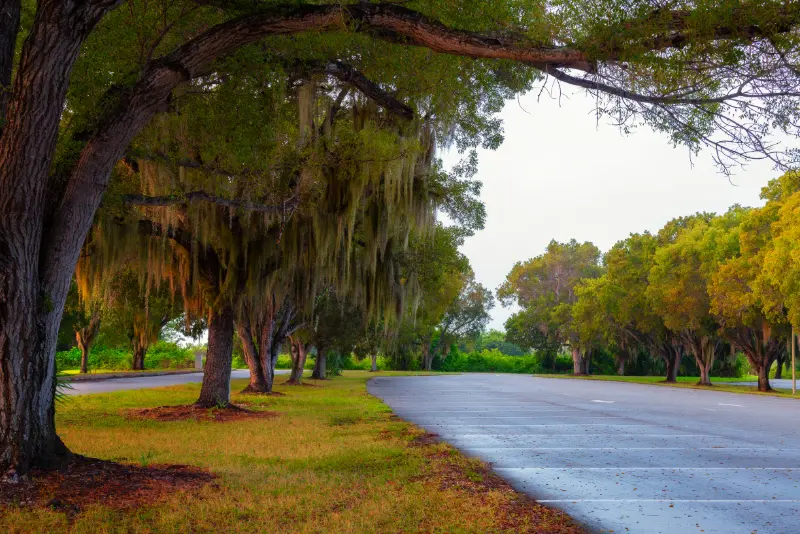
Florida road trips are often designed around the ocean. US Highway 27 offers a different way to understand the state: inland lakes, former citrus landscapes, cattle country, small-town storefronts and long views over agricultural land. This seven-day journey follows a manageable section from the western Orlando area toward South Florida, with time off the main highway for places that reward a slower visit. It is not a claim that every attraction sits directly beside US 27. That distinction matters: the best experiences may require a carefully chosen detour, and some stretches of the route are busy commercial corridors rather than scenic country roads.
At a glance
| Stop or theme | What to do | Check before traveling |
|---|---|---|
| Clermont | Lakes, first night | Check park access |
| Lake Wales | Gardens, historic ridge | Confirm programs |
| Sebring | Hammock landscapes | Camping restrictions |
| Lake Placid | Public murals | Avoid storm hours |
| Clewiston | Lake and agriculture | Check public dike access |
Choose this trip if you have already seen Florida’s famous beaches, if you enjoy local history or birdwatching, or if your family needs a trip with flexible stopping points. It works particularly well with a rental car, but not as a public-transportation itinerary. A traveler with limited mobility can substitute scenic drives and short museum visits for trails. Families with small children should plan around playgrounds, snacks and predictable restroom stops; wildlife photographers may want to reverse some morning and evening activities.
Who should take this route and when
The route works best when you are happy to spend more time exploring communities than collecting attractions. Seven days is generous for this section of highway, but the slower rhythm is intentional. In a rush, you could drive through in much less time and miss the difference between the rolling lakes near Clermont, the Lake Wales Ridge and the broad fields around Clewiston. Do not judge your itinerary by miles alone: a museum closure, afternoon downpour or unexpected roadside discovery can alter a day more than an extra twenty minutes of driving.
Late fall through spring usually gives the most comfortable temperatures for exploring inland Florida, while winter mornings can be cooler than visitors expect. Summer means strong heat, regular afternoon thunderstorms and more difficult midday walking. Wildlife activity and agricultural operations depend on season and current conditions; there is no single month when all citrus groves, gardens and boat tours operate identically. For children or older travelers, plan one indoor or shaded alternative each afternoon and keep drinking water inside the vehicle rather than relying on the next shop.
Day 1: Clermont and the rolling lake country
Begin near Clermont, west of Orlando, where hills and lake views challenge the assumption that Florida is entirely flat. Make the first morning an orientation day, not a strenuous drive. Walk a manageable section of downtown Clermont and the waterfront around Lake Minneola. The South Lake Trail and connected cycling paths are attractive, but choose a short out-and-back section if you have children, a wheelchair user or a mixed-age group. Trail surfaces, street crossings and restroom locations matter more than distance on a map.
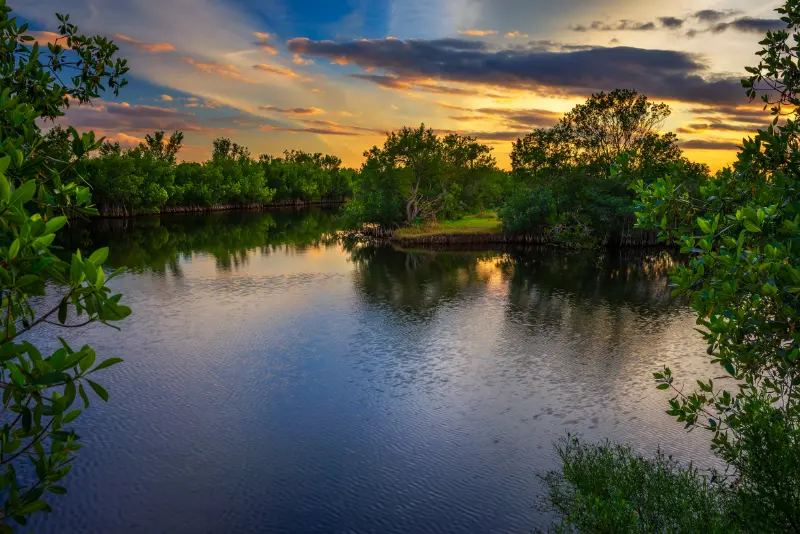
Lake Louisa State Park, a short drive south, introduces sandhills, lakes and less-developed landscapes. It is a good place to observe how dramatically the environment changes away from the Atlantic and Gulf coasts. Check the park’s official alerts for trail closures, rental availability and entry procedures. Not every lake is intended for swimming, and wildlife means keeping a respectful distance from water edges. In the evening, stay around Clermont or the southern Orlando area if you need a large choice of hotels and restaurants. Avoid assuming a lake-view property includes direct public access to the shore.
Day 2: Lake Wales and the historic ridge
Drive south toward Lake Wales, using your morning for the historic downtown or a visit to Bok Tower Gardens. The gardens are a landmark of the Lake Wales Ridge and offer a very different experience from beach tourism: formal landscapes, quiet garden paths and the Singing Tower. Check timed programming and any garden access restrictions before choosing your day. The tower is an outdoor visual landmark, not a promise that visitors can climb it, and the garden paths are not identical in length or grade.
Lake Wales is also a useful place to discuss Florida’s former citrus economy with children. Instead of advertising a random grove as open for picking, look for a verified visitor operation or an interpretive exhibition and confirm the harvest season in advance. Plan lunch before the afternoon drive; rural restaurants may keep shorter hours than an Orlando shopping district. If you have time, explore a short scenic portion of the ridge, where the higher, sandier terrain supports plant communities different from coastal mangroves. Stay in Lake Wales or continue to Sebring if you prefer a two-night base for the next section.
Day 3: Sebring, Avon Park and Highlands Hammock
This is the nature-and-small-towns day. Begin with Avon Park or Sebring, comparing their downtown character and public parks. Sebring’s circular downtown layout makes a distinctive stop, while nearby Highlands Hammock State Park preserves ancient hammock landscapes and boardwalk sections. Do not promise a particular boardwalk will be open: check posted conditions and recent maintenance notices. The park has reported restrictions affecting regular overnight camping in 2026, so a campsite must not be treated as a guaranteed lodging option.
For visitors with reduced stamina, select one short route and a scenic drive rather than multiple walks in humid weather. For energetic teenagers, an interpretive visit can become a photography challenge: look for changes in tree canopy, epiphytes, birds and the color of light under the hammock. Do not approach alligators or feed wild animals. In town, allow time for a relaxed meal and an early night; the next stages cover open agricultural landscapes where night driving can be less pleasant. Accommodation choices are more practical than resort-oriented, so check elevator access and step-free bathrooms carefully before booking.
Day 4: Lake Placid and its murals
Lake Placid is known for public murals and its small-town setting among lakes. This is a rewarding day for travelers who enjoy outdoor art without standing in museum lines. Rather than racing through every mural, select a cluster near the town center and explore the stories depicted. Some celebrate agriculture and local wildlife, and others reflect community history. Take pictures from public sidewalks without blocking businesses or stepping into traffic; Florida’s midday sun can wash out wall colors, so morning and later-afternoon light are often kinder.
A mural scavenger hunt is an easy activity for children: assign themes such as birds, early settlers, farming or water, then let each person explain a favorite. Older adults may prefer shorter walks between parking stops. A long lunch and a rest break are perfectly appropriate, because the next stage becomes more remote. Use this day to check the weather ahead and refill supplies. If a rainstorm makes outdoor art impractical, rearrange stops rather than trying to sightsee during lightning. You can overnight in Sebring again or make Lake Placid a simple one-night stop, depending on available accommodations.
Day 5: Clewiston and the Lake Okeechobee region
Follow the highway south toward Clewiston and the southwestern side of Lake Okeechobee. The landscape becomes broader, with agricultural fields, canals and huge skies. This is not a drive beside continuous lakefront scenery: dikes, water-control infrastructure and road alignments often separate the highway from open lake views. A stop in Clewiston makes sense for learning about sugar-country history and for arranging any guided experience available during your dates. Respect the difference between public viewpoints and working industrial or agricultural property.
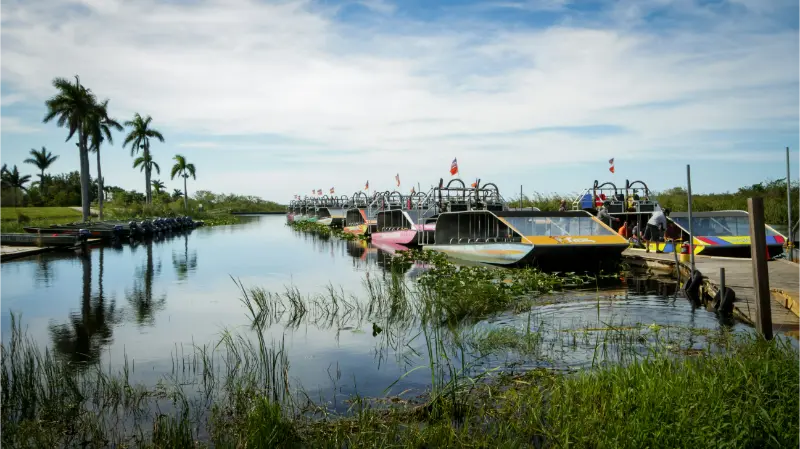
If you are interested in the Herbert Hoover Dike trail, check U.S. Army Corps of Engineers notices and local access before counting on a specific segment. Construction, maintenance and weather can change which areas are accessible. Fishing, boating or an airboat excursion are separate activities with different costs and safety requirements, not automatic parts of a highway trip. For families, focus on a simple waterside viewpoint, an educational stop and an early dinner. The lake and surrounding wetlands have ecological and water-management stories worth learning even without a boat ride.
Day 6: The agricultural transition toward South Florida
Continue toward the greater South Florida metropolitan area. This day is as much about changing land use as it is about named attractions: the countryside gives way to more traffic, large roads and dense neighborhoods. Make a carefully planned detour if you want to explore a public preserve, but do not improvise on narrow agricultural roads or stop on highway shoulders to photograph birds. A wetland viewpoint with proper parking is safer than any photograph taken beside fast-moving traffic.
There is also a practical decision to make: do you want your holiday to finish near Miami, or would you prefer to loop back toward Central Florida? An open-jaw rental car return may save time but add costs. Compare one-way fees, airport options and the burden of arriving in Miami rush-hour traffic. Travelers with limited energy should avoid scheduling a major urban museum immediately after a long driving day. Choose a hotel close to the places you intend to visit tomorrow, not one that looks near them on a map but requires crossing a congested interchange.
Day 7: Finish in Miami or add a quiet buffer day
If finishing in Miami, treat the final day as a city day rather than one more highway milestone. Little Havana, a waterfront public space or a neighborhood museum can provide an engaging contrast with the interior. Select one district for the morning and one optional afternoon activity. Parking rules vary significantly, and a car that felt liberating in Highlands County may be a burden in a dense urban neighborhood. Return it early if your plans and rental terms permit; use local transport for the last stretch.
Alternatively, keep day seven as a buffer in the Lake Okeechobee region, especially if your group includes someone who needs a recovery day after walking, driving or outdoor heat. Many good vacations are improved by leaving time unassigned. If returning north, remember that the journey back still requires energy and fuel even if it is less interesting as sightseeing. A fair comparison of routes should include total driving hours, hotel checkout times, tolls, parking, rest stops and the cost of changing your vehicle return city.
Where to stay and how to manage the budget
Clermont offers convenient first-night choices, Sebring or Lake Wales makes a practical central base, and Clewiston provides a simple final inland stop. Book an actual accessible room rather than relying on a hotel’s generic accessibility icon; request a roll-in shower, bed height information or connecting rooms directly when relevant. A kitchen or refrigerator helps families and travelers who need to eat on a regular schedule. The inland route can be less resort-driven than Florida’s beach cities, but gas, meals, admission and one-way rental charges still accumulate.
Build a daily allowance with four separate categories: accommodation, transport, attractions and food. Do not invent one universal daily price; rates swing with school holidays, big regional events and local supply. State parks may use vehicle-based admission rather than person-based admission, while gardens or guided activities price tickets individually. Leave money for a rainy-day indoor plan. Pack insect protection, footwear suitable for occasional sandy paths, sun protection and a printed itinerary in case reception fails.
Accessibility, road safety and environmental respect
US 27 is a working highway with commercial stretches, high-speed segments and changing traffic. Follow posted speeds, never stop on a shoulder for a scenic photo and use designated rest areas. Monitor weather alerts: lightning in Central Florida can develop rapidly, and flooded roadways should never be crossed. A wildlife drive is not a substitute for careful driving; animals may move at dawn or dusk, while reduced light makes road hazards harder to see.
For young children, confirm the correct car seat or booster before arrival. For older travelers, schedule morning activities with afternoon rest and ask about restroom distances rather than advertising every park as accessible. Mobility aids may perform very differently on paved paths, gravel and soft sand. Nature protection is part of the itinerary: leave plants and stones in place, stay on designated trails and choose operators who do not harass wildlife. A successful inland road trip is one in which visitors encounter different Floridas without causing damage to any of them.
Frequently asked questions
Is US 27 in Florida scenic all the way?
No. It includes interesting landscapes and small towns but also busy commercial and ordinary highway segments. Plan purposeful detours instead of expecting continuous scenic overlooks.
Can I do the itinerary without a car?
Not comfortably as written. Public transportation is limited between many of these inland stops, and the itinerary relies on moving between parks and towns at flexible times.
Is a week too long for this section?
Seven days is ideal for a slow trip. If you prefer a faster journey, combine Lake Wales and Sebring or spend less time near the lake while keeping adequate breaks.
Will I see alligators near Lake Okeechobee?
You may, but sightings are never guaranteed. Watch from designated public areas and never approach, feed or corner wildlife.
Is this suitable for travelers over 80?
Yes, with adaptations: shorter walks, step-free lodging, frequent breaks and fewer daily stops. Evaluate individual needs rather than assuming that age alone determines capability.
Official planning resources
- Florida State Parks: conditions at Lake Louisa and Highlands Hammock, park entry and accessibility details.
- Bok Tower Gardens: ticketing, program calendars and garden information.
- U.S. Army Corps of Engineers, Jacksonville District: Lake Okeechobee and Herbert Hoover Dike project updates.