
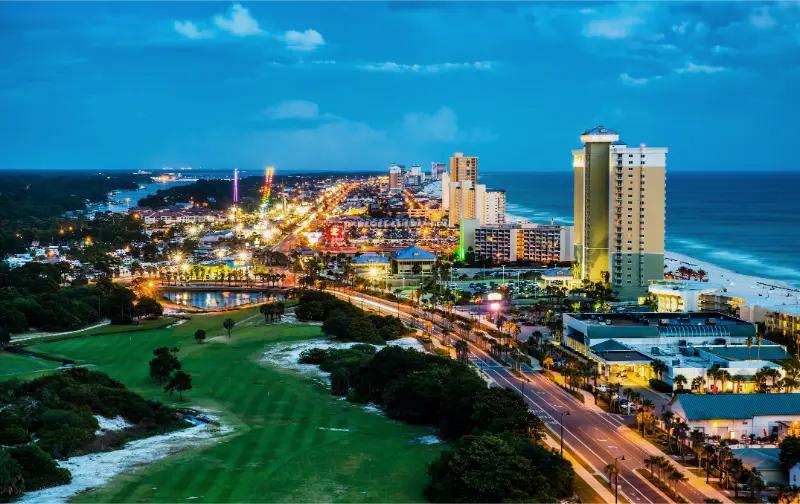
Panama City Beach can work very well for couples when the trip is not planned like a family-attraction checklist. The best version is usually simple: an early walk, a long breakfast, a few hours on the Gulf, one nature or water experience, a relaxed meal and sunset. Couples can also choose the atmosphere more precisely than a large group—quiet West End, walkable Pier Park, boating near Grand Lagoon or a condo where the balcony becomes part of the evening.
Quick planning summary
- Best for: Couples who want a beach escape with sunsets, nature, seafood and enough activity without needing a nightlife-heavy resort.
- Ideal trip length: 3–4 nights for a romantic break; 5–7 nights if combining beach time with parks and Panhandle day trips.
- Getting around: A car is useful for exploring, but a well-located stay can support several no-drive evenings.
- Most important planning point: Choose the atmosphere first—quiet, walkable, active or nature-focused—then choose the hotel and itinerary.
Pick the right base for your style as a couple
The West End can suit couples who want quieter beach time and easy access toward Camp Helen and 30A. Pier Park is better for travelers who like to walk to dinner, shops and an evening stroll. Middle Beach keeps many classic attractions central, while Grand Lagoon is useful for boating and St. Andrews State Park. The best area is not universal; it depends on what you want to do after 5 p.m.
Build the day around two good outdoor windows
A relaxed couple’s day does not need six stops. Use early morning for the beach, a walk or coffee, then leave room for lunch and rest. Return outside later for a park, boat trip, pier or sunset. This rhythm is particularly good in summer, when midday heat can make a romantic itinerary feel like a test of endurance.
Sunset is an activity, not just the end of the day
Russell-Fields City Pier, M.B. Miller County Pier, the beach in front of your accommodation and St. Andrews State Park can all create a strong sunset moment depending on the day. Do not overcomplicate it. Choose a spot close to dinner or the hotel, arrive with enough time to walk, and let the evening remain open rather than racing to another reservation.
Nature is the easiest way to make the trip feel different
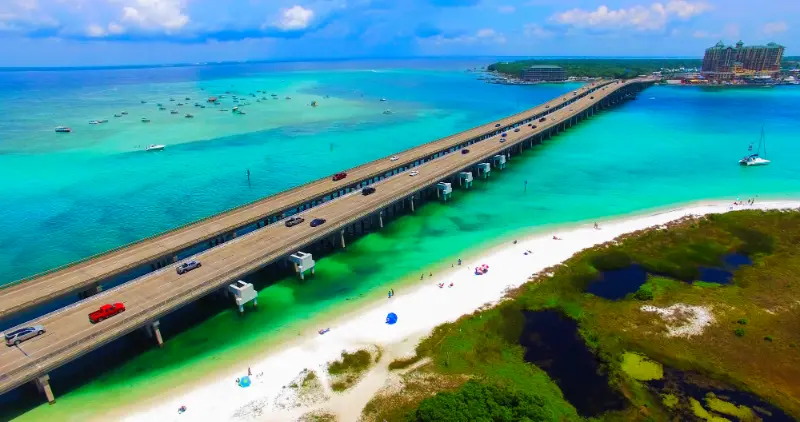
Conservation Park works for couples who enjoy walking or cycling, while St. Andrews State Park adds beaches, nature and the possibility of a Shell Island experience. These places create contrast with the resort strip and make a short trip feel broader without requiring a long road journey. Go early and keep the route realistic for the weather.
Choose one water experience together
Depending on comfort level and season, a boat trip, paddling experience, snorkeling day or Shell Island outing can become the shared highlight. Read cancellation and weather policies before booking. If one partner is less comfortable on boats or in open water, choose an activity that both people will enjoy rather than treating the most adventurous option as automatically more romantic.
Dinner is easier when geography comes first
Instead of driving across the entire beach for a highly rated restaurant every night, choose one destination meal and keep the others close to your day. A sunset dinner near Pier Park, seafood around Grand Lagoon or a casual meal after St. Andrews can all work. Reservations are useful for a special evening during busy periods, but leaving one night unplanned makes the trip feel less scheduled.
Choose accommodation for the trip you are actually taking
Panama City Beach stretches for miles, so the cheapest room is not automatically the best value. A property near Pier Park can reduce evening driving, the West End can feel calmer, Middle Beach keeps many attractions reasonably close, and the Grand Lagoon side can be convenient for boating and St. Andrews State Park. Compare the real route from the room to the beach, parking area, elevator, pool and restaurants rather than relying on the phrase “beachfront” alone.

For a couple, a balcony you will actually use, a comfortable bed, quiet at night and the ability to walk to dinner may be worth more than a large suite. Decide whether oceanfront matters enough to pay for it. If the trip is partly about privacy and rest, check reviews for elevator noise, pool noise and construction rather than focusing only on the view.
Always compare the total accommodation price. Parking, resort fees, cleaning charges, taxes and cancellation conditions can change the ranking between a hotel and a condo. For longer stays, a kitchen and laundry may save both money and time. Travelers with mobility needs should confirm the complete accessible route directly with the property, including parking, entrances, elevators, bathrooms and access to any advertised beach or pool facilities.
Driving, transit and realistic distances
The destination is long rather than compact. Front Beach Road can make a short mileage look deceptively easy on a map, especially during busy periods, so group activities by area. A car remains the simplest option for travelers who want state parks, Panama City, grocery runs and day trips, but it is not the only possibility. Bayway provides public transportation in Bay County and also operates flexible services in defined zones; schedules, service areas and fares should be checked close to travel because they can change.
If you plan to rely on walking, rideshare or transit, choose the accommodation first and then test every important trip from that exact address. A resort that works beautifully without a car for beach, dinner and Pier Park may be inconvenient for St. Andrews State Park or an early-morning boat departure. Likewise, renting a car for one or two targeted days can be more efficient than keeping one for an entire resort-focused stay when parking costs are high.
Beach safety should shape the day, not interrupt it
Panama City Beach uses a beach warning flag system, and the safest habit is to check the current flag before anyone enters the Gulf. Green still means use caution, yellow indicates a medium hazard, red indicates a high hazard, purple warns of dangerous marine life, and double red closes the water to the public. Water can look attractive from a balcony while currents remain strong, so visual impressions are not a substitute for the posted warning. When lifeguarded areas are available, they are the better choice for families, less-confident swimmers and anyone unfamiliar with Gulf conditions.
Rip currents, lightning, heat and changing surf are the hazards most likely to alter an otherwise ordinary beach day. Keep children within the level of supervision their swimming ability requires, do not treat inflatables as lifesaving devices, and move indoors when thunderstorms approach rather than waiting for the rain to become heavy. A flexible itinerary makes this much easier: if the Gulf is unsafe, switch to a park, museum, shopping block or long meal and return only when conditions are appropriate.
Food and budget planning without making the trip feel cheap
Planning tipThe easiest way to control spending is to decide which experiences deserve money before arrival. Beach time, sunset, public parks and walking can fill large parts of the day, leaving room for one paid attraction, boat trip or special meal that actually matters to the group. A condo kitchen is useful for breakfast, cold drinks, snacks and simple lunches, while a hotel traveler can still save by keeping fruit, water and familiar snacks in the room.
Avoid driving across the entire beach for every meal. Choose restaurants close to the activity you are already doing, and treat one destination meal as the exception rather than the daily rule. Families should compare children’s menus and waiting times, while couples and solo travelers may get better value from an early dinner or a casual seafood lunch followed by sunset. Prices and operating schedules change, so check current menus and ticket pages before building a day around a specific offer.
Common couple-trip mistakes
- Booking in the busiest family activity zone when you really want quiet.
- Over-scheduling romantic dinners, tours and sunset stops until nothing feels relaxed.
- Choosing every activity for one partner’s interests.
- Driving long distances for small experiences that could be enjoyed near the hotel.
- Ignoring beach flags because the day is built around a swim or boat plan.
- Paying for a luxury room but spending no time there.
Useful Wonderful Florida guides to combine with this article
Continue planning with where to stay in Panama City Beach, Russell-Fields City Pier, St. Andrews State Park and Shell Island.
Official information to check before travel
- Visit Panama City Beach
- City of Panama City Beach beach flag information
- City of Panama City Beach Leave No Trace information
Opening hours, parking arrangements, beach conditions, transportation services and local rules can change. If a specific feature is essential to the day, confirm it with the operator or public agency shortly before leaving your accommodation.
Final planning advice
For couples, Panama City Beach is strongest when you leave enough empty space to enjoy the setting. Pick the right neighborhood, choose one shared experience, keep sunset simple and let good weather decide the rest. A three-night trip can feel complete when it contains a few memorable moments instead of a long list of attractions.
One more practical planning point
A couple’s trip also benefits from one period of separate time. One person may want a long beach walk while the other reads at the pool, shops or rests. Meeting again for sunset can make the shared part of the day feel better than negotiating every hour. Travel together does not require identical energy or interests.