
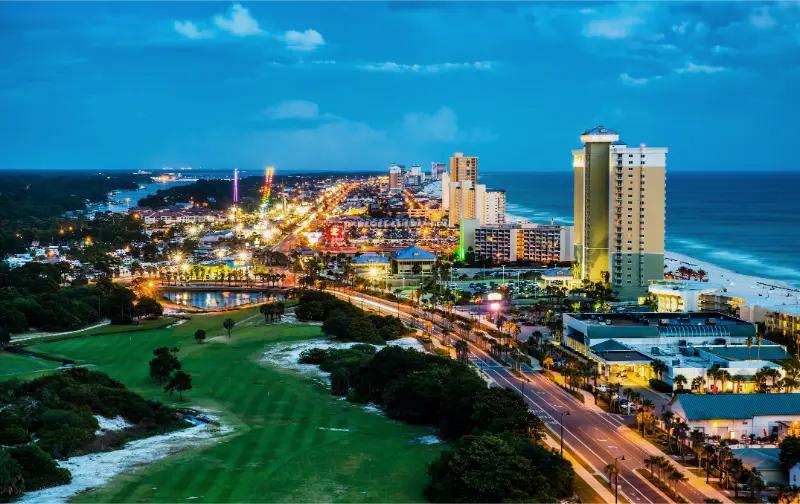
Summer is the classic Panama City Beach vacation season: warm Gulf water, long daylight, water parks, busy restaurants and a full schedule of family activity. It is also the season when heat, humidity, afternoon thunderstorms and crowds can punish an overplanned itinerary. The most enjoyable summer trips use the coolest hours aggressively—beach early, rest in the middle of the day, then return outside later—rather than trying to stay on the sand from breakfast to dinner.
Quick planning summary
- Best for: Families, school-break travelers, swimmers and visitors who want the most complete warm-weather beach experience.
- Ideal trip length: 4–7 nights gives enough time to alternate beach, attractions and weather-flexible days.
- Getting around: A car helps with groceries and parks, but choosing one activity area per day reduces summer traffic frustration.
- Most important planning point: Protect the middle of the day from heat and keep a thunderstorm backup plan ready.
The best summer beach time is often before lunch
Arrive early, choose a manageable beach-access point and let the morning carry the swimming and sand time. The sun is still strong, but temperatures and energy levels are usually easier than later in the day. Families with toddlers can leave before nap time, teenagers can return later for sunset, and older travelers can avoid the most exhausting hours.
Midday is for recovery, not proving endurance
Lunch, a shower, nap, laundry, indoor attraction or hotel pool break can turn a hot day into two good outdoor sessions. Travelers often underestimate how much fatigue comes from sun, saltwater, humidity and carrying beach equipment. A two- or three-hour reset makes dinner and evening more enjoyable and reduces the temptation to keep children outside after they are already overtired.
Thunderstorms are part of summer planning
Afternoon storms can develop quickly. Keep shoes, keys and essential items organized so the group can leave the beach without a long packing process. When thunder is heard or lightning approaches, move to a safe indoor location rather than waiting under an umbrella or pavilion. WonderWorks, the Science & Discovery Center, Pier Park dining or simply returning to the accommodation can all work as backups.
Water parks and paid attractions need pacing
Shipwreck Island can be a major family day, but it adds more sun exposure to a week that may already include several beach days. Treat it as the anchor activity, hydrate consistently and avoid scheduling another demanding evening. Indoor attractions are better saved for the hottest or stormiest part of the trip. This gives each ticket a purpose instead of using it because the itinerary is crowded.
Traffic and parking reward geographic planning
Summer driving can take longer than a map suggests. Group Pier Park activities together, put St. Andrews State Park and Grand Lagoon experiences on another day, and avoid crossing the entire resort strip repeatedly for meals. If a beach-access parking area is full, have a second option rather than circling for a long time in heat with children in the car.
Summer with babies, children and grandparents
Mixed-age groups need different exposure limits. Babies and toddlers need short outdoor windows and reliable shade, school-age children may want water attractions, teenagers can handle more independence, and grandparents may prefer mornings and evenings. One shared activity plus optional split time is usually more successful than forcing everyone through the same long day.
Choose accommodation for the trip you are actually taking
Panama City Beach stretches for miles, so the cheapest room is not automatically the best value. A property near Pier Park can reduce evening driving, the West End can feel calmer, Middle Beach keeps many attractions reasonably close, and the Grand Lagoon side can be convenient for boating and St. Andrews State Park. Compare the real route from the room to the beach, parking area, elevator, pool and restaurants rather than relying on the phrase “beachfront” alone.
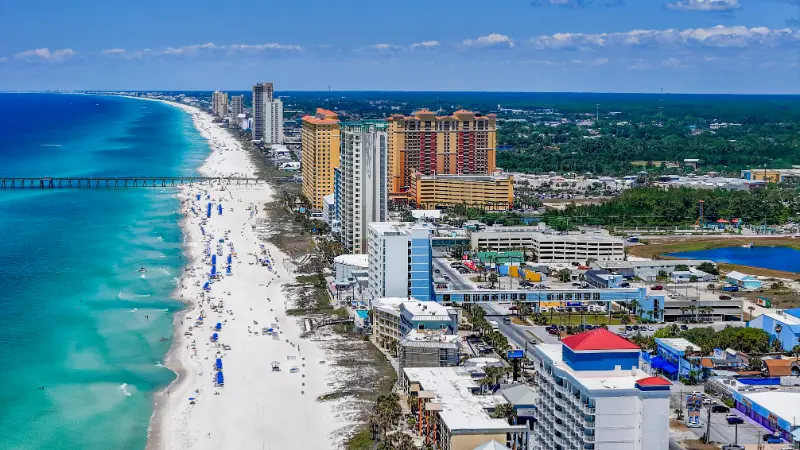
In summer, efficient beach access, reliable elevators, strong air-conditioning and enough space for wet gear matter more than they do in cooler seasons. Families should check pool rules, laundry and refrigerator space, while couples may value a property near evening dining. If the building is large, ask yourself how the elevator and parking setup will feel during a busy changeover weekend.
Always compare the total accommodation price. Parking, resort fees, cleaning charges, taxes and cancellation conditions can change the ranking between a hotel and a condo. For longer stays, a kitchen and laundry may save both money and time. Travelers with mobility needs should confirm the complete accessible route directly with the property, including parking, entrances, elevators, bathrooms and access to any advertised beach or pool facilities.
Driving, transit and realistic distances
The destination is long rather than compact. Front Beach Road can make a short mileage look deceptively easy on a map, especially during busy periods, so group activities by area. A car remains the simplest option for travelers who want state parks, Panama City, grocery runs and day trips, but it is not the only possibility. Bayway provides public transportation in Bay County and also operates flexible services in defined zones; schedules, service areas and fares should be checked close to travel because they can change.
If you plan to rely on walking, rideshare or transit, choose the accommodation first and then test every important trip from that exact address. A resort that works beautifully without a car for beach, dinner and Pier Park may be inconvenient for St. Andrews State Park or an early-morning boat departure. Likewise, renting a car for one or two targeted days can be more efficient than keeping one for an entire resort-focused stay when parking costs are high.
Beach safety should shape the day, not interrupt it
Panama City Beach uses a beach warning flag system, and the safest habit is to check the current flag before anyone enters the Gulf. Green still means use caution, yellow indicates a medium hazard, red indicates a high hazard, purple warns of dangerous marine life, and double red closes the water to the public. Water can look attractive from a balcony while currents remain strong, so visual impressions are not a substitute for the posted warning. When lifeguarded areas are available, they are the better choice for families, less-confident swimmers and anyone unfamiliar with Gulf conditions.
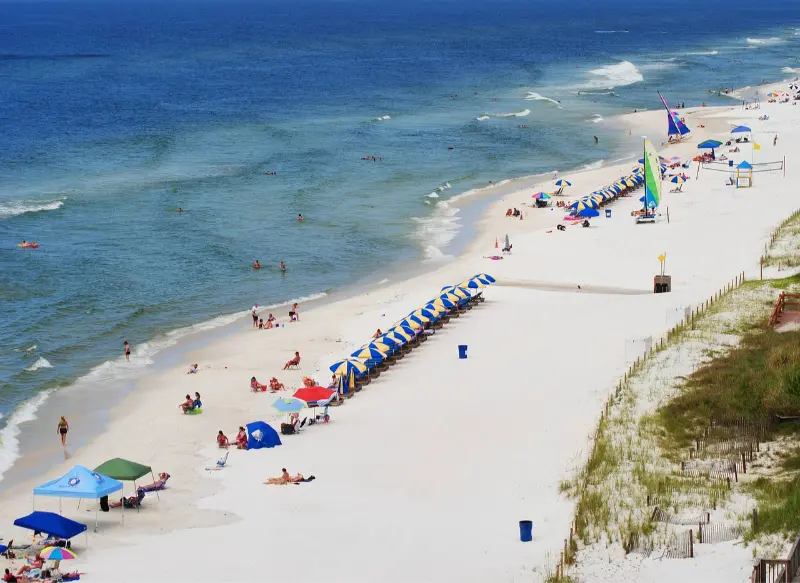
Rip currents, lightning, heat and changing surf are the hazards most likely to alter an otherwise ordinary beach day. Keep children within the level of supervision their swimming ability requires, do not treat inflatables as lifesaving devices, and move indoors when thunderstorms approach rather than waiting for the rain to become heavy. A flexible itinerary makes this much easier: if the Gulf is unsafe, switch to a park, museum, shopping block or long meal and return only when conditions are appropriate.
Food and budget planning without making the trip feel cheap
Planning tipThe easiest way to control spending is to decide which experiences deserve money before arrival. Beach time, sunset, public parks and walking can fill large parts of the day, leaving room for one paid attraction, boat trip or special meal that actually matters to the group. A condo kitchen is useful for breakfast, cold drinks, snacks and simple lunches, while a hotel traveler can still save by keeping fruit, water and familiar snacks in the room.
Avoid driving across the entire beach for every meal. Choose restaurants close to the activity you are already doing, and treat one destination meal as the exception rather than the daily rule. Families should compare children’s menus and waiting times, while couples and solo travelers may get better value from an early dinner or a casual seafood lunch followed by sunset. Prices and operating schedules change, so check current menus and ticket pages before building a day around a specific offer.
Common summer mistakes
- Planning the longest outdoor activity at midday.
- Ignoring thunder because the rain has not started yet.
- Scheduling a water park immediately after several exhausting beach days.
- Driving from one end of Panama City Beach to the other multiple times in a day.
- Choosing a condo without thinking about elevators, wet gear and laundry.
- Assuming everyone in a multigenerational group has the same heat tolerance.
Useful Wonderful Florida guides to combine with this article
Continue planning with Shipwreck Island Waterpark, Panama City Beach with toddlers and preschoolers, Panama City Beach with teenagers and rainy-day Panama City Beach ideas.
Official information to check before travel
- Visit Panama City Beach
- City of Panama City Beach beach flag information
- City of Panama City Beach Leave No Trace information
Opening hours, parking arrangements, beach conditions, transportation services and local rules can change. If a specific feature is essential to the day, confirm it with the operator or public agency shortly before leaving your accommodation.
Final planning advice
Summer rewards travelers who plan less in the middle of the day and more around the edges. Use morning for the Gulf, retreat during the hottest or stormiest hours, then return for dinner and sunset. That rhythm makes room for the classic warm-weather vacation without turning every day into an endurance test.
One more practical planning point
Hydration is easier when it is built into the day instead of treated as a response to thirst. Bring cold water to the beach, refill during the midday break and keep drinks in the room for the evening. Children and older travelers may show fatigue before they clearly say they are overheated, so pace the group by the most heat-sensitive person.