
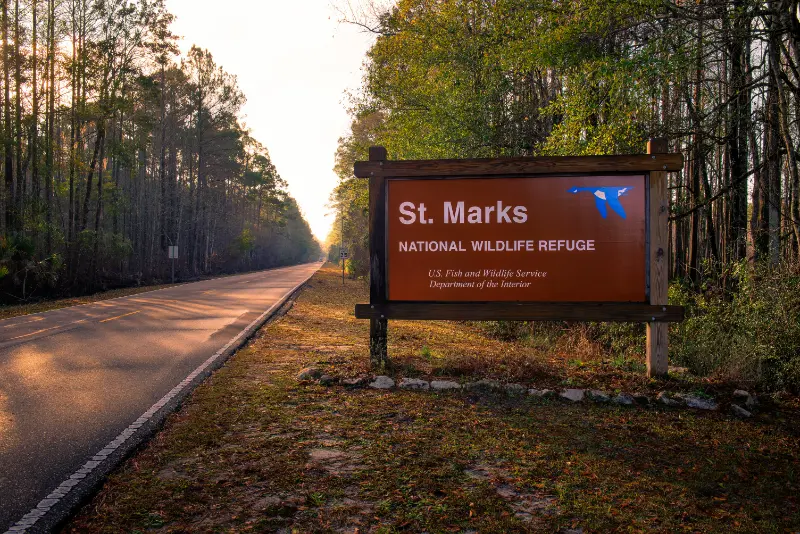
South of Tallahassee, St. Marks National Wildlife Refuge protects a meeting point of freshwater wetlands, coastal marshes, forests and the Gulf. It is a very different kind of Florida attraction from a manicured garden or an urban museum. Travelers come for the long views, birds, quiet roads, the historic St. Marks Lighthouse setting and the chance to see how a protected landscape changes with the seasons. A rewarding visit depends on respecting that this is a wildlife refuge first: some trails close to protect nesting animals or during prescribed burns, and sightings are never guaranteed.
Understanding the refuge’s landscape
The refuge covers diverse habitats where saltwater and freshwater influence what grows and which animals can live. Around Lighthouse Road, marshes and pools can attract wading birds and other wildlife, while nearby forested sections offer different experiences. Seasonal changes in water level make the landscape feel dramatically different from one visit to the next. A pool alive with birds in winter may appear quieter at another time of year, without implying that the habitat has lost its ecological value.
The U.S. Fish and Wildlife Service identifies a remarkable range of bird species associated with St. Marks, and the area appeals particularly to patient birdwatchers. You do not need binoculars worth hundreds of dollars to enjoy it, but a simple pair can help you view distant animals without disturbing them. Instead of racing from viewing point to viewing point, spend several minutes standing still. Watching behavior — a bird feeding, resting or hunting — can be more interesting than ticking another species off a list.
Directions, visitor center and entrance rules
The official refuge page gives its visitor-center address as 1255 Lighthouse Road, St. Marks, FL 32355, south of Tallahassee. The visitor center is roughly twenty-five miles from the city according to the agency’s route description, though actual driving time depends on traffic, stops and weather. Lighthouse Road leads through the refuge toward the coast. The refuge requires an entrance fee, and the outdoor areas are generally open in daylight hours; the official page notes that the Lighthouse Road gate opens at 6 a.m.
The visitor center has its own schedule, so do not assume it opens whenever the road is accessible. Before leaving your hotel, save an offline map and read current notices about roadwork, fires or protected-wildlife closures. Keep the entry receipt or pass if relevant and obey speed limits even when the route looks empty. Animals may cross unexpectedly. A car is the most straightforward way to explore many of the stops, and visitors relying on a rideshare should think carefully about return transport in a relatively remote coastal area.
The Lighthouse Road experience
Lighthouse Road is the natural starting point for a first visit. It offers a sequence of changing marsh views with designated places to stop. As you travel south, look for differences between freshwater ponds, open marsh and coastal habitats. Pull into legal parking or observation areas rather than stopping unpredictably in a lane when you spot a bird. Wildlife watchers should share viewpoints politely and leave access clear for refuge staff and emergency vehicles.

The route is especially appealing to travelers who want an outdoor experience without committing to a demanding hike. Still, driving does not remove every challenge: a short walk from a parking area can involve uneven gravel, insects or strong sun. Bring water and use a restroom when one is available. If someone in your group has mobility limitations, ask refuge staff which stops offer the safest accessible surfaces rather than assuming every trail or levee is suitable for wheelchairs.
St. Marks Lighthouse and its history
The white lighthouse at the southern end of the road provides an unmistakable focal point and connects the refuge to the maritime history of the Gulf Coast. Yet seeing the building from outside is not the same as touring its interior. The U.S. Fish and Wildlife Service warns that lighthouse access and tours are subject to schedule changes and should be confirmed through events information or the visitor center. Do not promise children that they will climb the tower based solely on an exterior photograph.
The lighthouse setting rewards slow observation even when an interior tour is unavailable. Stand in a designated area and consider why a navigational light was important along a coast with marshes, shoals and changing weather. The surrounding scenery is just as significant: look outward at the meeting of land and water, and think about how navigation, fishing, conservation and habitat restoration intersect. On windy or stormy days the exposed coast can feel very different from sheltered inland trails.
Birdwatching through the seasons
Late fall through early spring often offers more comfortable temperatures for birding and walking, and migrations can influence what visitors see. Summer brings heat, humidity, thunderstorms and biting insects; wildlife may be active, but human comfort becomes a bigger constraint. Tide, rainfall and water management also influence bird concentrations. A day with fewer visible birds is not necessarily a poor day: different habitat conditions create different opportunities to understand the refuge.
Bring binoculars, a field guide or a bird-identification app, but use technology discreetly. Playing recorded bird calls can stress animals, particularly during breeding periods, so avoid using playback to attract birds. Respect closures around nests and sensitive shorebird areas. Instead of pursuing a rare bird through vegetation, ask staff about responsible viewing opportunities. Families can compare three bird shapes, colors or feeding styles without turning the outing into a competitive count.
Choosing trails safely
The refuge lists routes such as Headquarters Pond Trail, Tower Pond Trail and Lighthouse Levee Trail, along with longer primitive routes. The shortest options can be suitable for a gentle introduction, while longer paths require realistic preparation. Route names and online distances should be verified against current official maps, because refuge trail systems can be affected by closures, storms or prescribed burns. Do not enter an administrative road or restricted levee merely because a GPS application shows a path.
Before starting, ask how much shade the route provides, whether surfaces are firm, and if the return is along the same exposed path. For a family with toddlers, an observation deck or very short walk may be more successful than a miles-long hike. Older adults should be realistic about heat and standing time; a birdwatching drive with occasional stops can be just as rewarding. Keep enough daylight for your return, and do not assume cell service will work everywhere.
Wildlife rules that visitors often miss
The U.S. Fish and Wildlife Service publishes specific refuge rules. These include no swimming, restrictions on boating in refuge pools, prohibitions on drones and bans on collecting plants, wildlife or artifacts. The agency also permits leashed pets in designated contexts, subject to the site’s rules. Regulations are not simply formalities; they protect sensitive habitats and reduce disturbance at times when nesting or migrating animals need space.

Observe alligators, snakes and other wildlife from a generous distance. Never feed animals, approach a nest, or stop on a road in a way that endangers people or wildlife. Keep pets close and prevent them from entering sensitive areas. If you find an injured animal, do not improvise a rescue; contact authorized staff. A respectful visitor may see fewer dramatic close-up scenes than someone who behaves irresponsibly, but leaves the refuge in better condition for future visitors.
Planning a day with children, teenagers and seniors
For younger children, make the outing about looking and listening. Short stops near the visitor center and a drive along Lighthouse Road may be sufficient. Explain in advance that there are no guaranteed dolphin, alligator or bird sightings, and that animals should not be chased. Provide shade, snacks and insect protection. A child who has enjoyed a museum’s interactive display may need time to adapt to a protected landscape where the reward is observation.
Teenagers interested in science or photography can keep a habitat diary noting how plants and birds change along the road. Older visitors may appreciate the slow pace, but should not be asked to walk long exposed levees without breaks. Check toilet locations before beginning the route. If a traveler depends on wheelchair access or has heat sensitivity, call the visitor center to discuss specific observation areas. The refuge is valuable precisely because it offers different ways to connect with nature without demanding the same activity from everyone.
Weather, storms and the Gulf Coast
The exposed wetlands offer little protection during a thunderstorm. Watch the forecast and turn back from open water or tall, isolated structures when lightning approaches. After periods of heavy rain or strong wind, roads and trails may be damaged or temporarily closed. Hurricanes and tropical storms can affect refuge operations far beyond the day of the storm; confirm reopening before a long drive.
In summer, heat can become dangerous even on an outing based around a vehicle. Keep extra drinking water in the car, use sun protection and never leave a child or pet inside a parked vehicle. Mosquitoes and other biting insects can be intense around marshes, especially near dawn and dusk. Long sleeves, appropriate repellent and flexible timing make the day more pleasant. If you have only one chance to visit, choose the best safe-weather window rather than rigidly following a prebooked schedule.
Suggested first-visit route
Start at the visitor center when it is open and ask about current closures. Drive Lighthouse Road slowly, stopping at one or two designated wildlife-viewing points. Choose a short trail that suits your group’s abilities, then continue toward the lighthouse area if the road is open. Save time to watch the landscape rather than driving straight to the southernmost point and back. Finish early enough to return before darkness and avoid a hurried drive through wildlife habitat.
Do not overfill the same day with unrelated attractions. The refuge can pair with a relaxed meal in the St. Marks area or a separate visit to Wakulla Springs on another day, but driving between remote sites consumes time. For those staying in Tallahassee, the refuge makes an excellent half-day or longer nature escape. The most important planning choice is selecting a manageable amount of trail walking and enough time to appreciate the road and coastal setting.
Planning table
| Topic | Practical tip |
|---|---|
| Base | Visitor center on Lighthouse Road, south of Tallahassee |
| Entrance | Fee required; verify current pass and gate details |
| Signature drive | Lighthouse Road through marshes and pools |
| Lighthouse interior | Tour access varies; confirm directly |
| Wildlife | Binoculars and patience; no guaranteed sightings |
| Safety | No swimming, no drones and no collecting |
| Best comfort | Cooler months; strong summer insect and heat precautions |
Frequently asked questions
Is the St. Marks Lighthouse always open for climbing or tours?
No. Exterior viewing and interior tour access are different. The official refuge page advises checking its events schedule or calling the visitor center for current lighthouse arrangements.
Can you swim at St. Marks National Wildlife Refuge?
No. Refuge rules prohibit swimming. This is a wildlife protection area, not a designated swimming beach.
Do you need a long hike to see wildlife?
No. Visitors can observe habitat from legal stops along Lighthouse Road and selected short routes. Longer trails are available when open, but not required for a satisfying first visit.
Are dogs allowed?
The refuge’s visitor information permits leashed pets under applicable rules. Keep pets away from wildlife and respect any signed trail or seasonal restrictions.
Is there a best time of year for birdwatching?
Late fall through early spring generally brings more comfortable walking weather and interesting seasonal bird activity. Species sightings depend on migration, water levels and daily conditions.
Official planning resources
Use the U.S. Fish and Wildlife Service’s St. Marks refuge visitor page, trail information and main refuge page to plan responsibly. St. Marks is a place to slow down: choose a clear-weather day, watch from an appropriate distance and let the coastal habitats rather than a checklist determine what makes the visit memorable.