
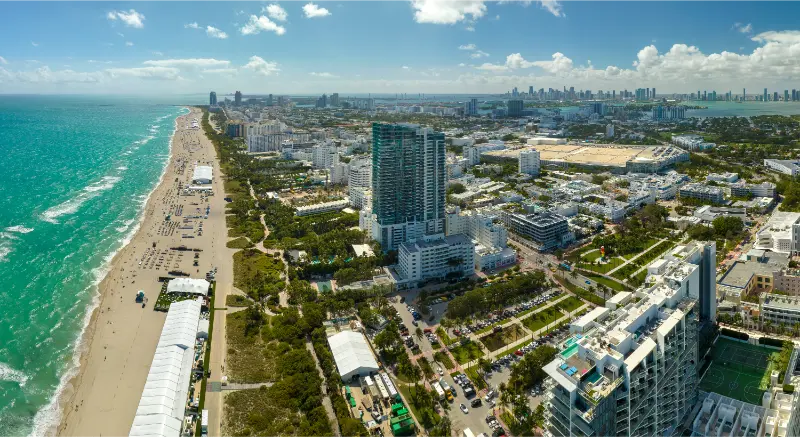
Miami Beach is not one uniform resort strip. The city has distinct neighborhoods with very different atmospheres, lodging styles, nightlife levels and daily transport needs. A hotel two blocks from a lively South Beach entertainment street can feel far removed from a calmer North Beach apartment, even though both sit on the same barrier island. Choosing a neighborhood that fits your travel companions can make a greater difference than choosing a hotel with the highest star rating. This guide focuses on the practical tradeoffs for families with babies, couples, solo visitors and travelers who prioritize walkability, rest or accessible beach access.
At-a-glance comparison
| Area | General feel | Consider if |
|---|---|---|
| South Beach | Lively, cultural and walkable | Dining and iconic sights |
| Mid-Beach | Resort and beach focused | Quiet pool and beach days |
| North Beach | More residential and relaxed | Longer stays and local rhythm |
South Beach: walkable excitement and higher stimulation
South Beach is the area’s most recognizable visitor neighborhood, with Art Deco architecture, Ocean Drive, Lincoln Road, South Pointe and a concentration of restaurants, hotels and nightlife. It suits people who want to explore on foot, enjoy an energetic atmosphere and have a wide range of dining choices without relying on a car for every outing. Yet the exact street matters. Rooms near late-night venues may be noisy, and parking or traffic can make a short-looking journey surprisingly tedious.
Visitors who prefer culture and early evenings can still enjoy South Beach by choosing a quieter inland or residential block and reading recent noise reviews carefully. Compare the path from the hotel’s entrance to the part of the beach you actually want to use. A property marketed as ‘South Beach’ may be an inconvenient walk for a person with reduced mobility. Check whether chairs, umbrellas, beach access or parking carry separate charges instead of assuming every high-priced room includes them.
Mid-Beach: a quieter hotel-centered holiday
Mid-Beach offers a different rhythm: many travelers choose it for larger resort properties, beach proximity, pools and a setting that can feel more relaxed than the busiest southern blocks. It can work well for families planning substantial hotel time, couples seeking a beach-oriented break, and visitors who enjoy a quieter base while still exploring Miami. However, fewer nearby casual dining options may be within easy walking distance of a particular hotel, and a full-service property may encourage spending on meals and amenities onsite.
Before booking, examine the walking route to a grocery store, pharmacy and bus or trolley stop. A magnificent beachfront property can become expensive if everyone needs a taxi every evening. For travelers managing accessibility, ask about the actual route from the room to the pool and beach, which may involve elevators, boardwalks or separate entrances. The hotel’s advertised ‘beachfront’ status does not answer whether a beach wheelchair or step-free access is available at that location.
North Beach: a more residential coastal base
North Beach tends to appeal to visitors seeking a less intense environment, a neighborhood feel and access to beach areas away from the center of South Beach nightlife. The mix of accommodation may include apartments and smaller properties alongside hotels. It can be a practical choice for longer stays, a trip centered on daily beach time, or a family that expects to prepare some meals. Still, quieter should not be confused with having no activity, and particular blocks vary in traffic, restaurants and noise.
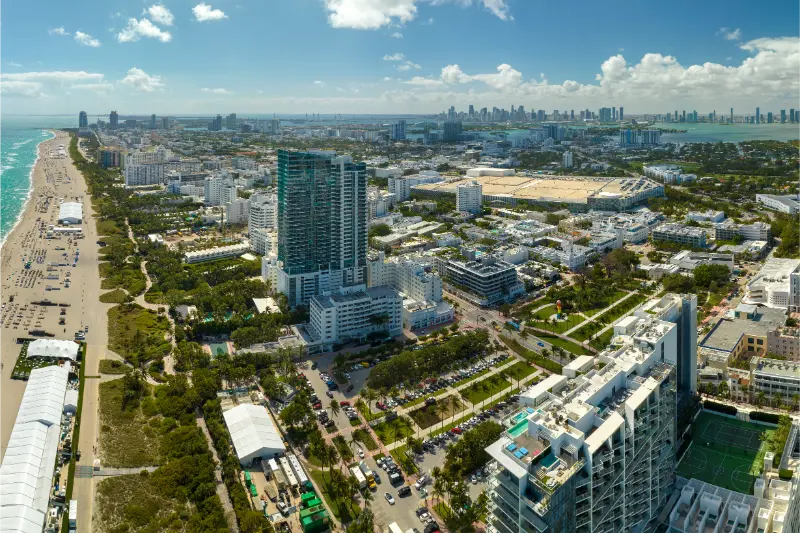
If you do not rent a car, verify the exact transport stop and walking distance from the property. The city’s free trolley network includes a North Beach Loop and a Collins Express connection, but real-world journey times, crowding and operating patterns vary. Staying farther north can add meaningful travel time to South Pointe, museums and nightlife. For visitors who expect to spend every evening in the southern neighborhood, a nominally cheaper room may not save money once transport is counted.
Which neighborhood suits your travel style?
For a first-time couple seeking restaurants, classic architecture and a lively evening walk, South Beach is the obvious starting point. For parents with a preschooler who want a pool and a calm beach-focused base, Mid-Beach may be an excellent fit if the total hotel cost works. For a longer family stay with self-catering and a slower pace, North Beach is worth comparing. Solo travelers may prefer a central, walkable property with well-reviewed security and transport. Older visitors may prioritize a lift, manageable crossings and a quiet room over proximity to late-night activity.
These are tendencies rather than fixed rules. A quiet South Beach hotel can be more restful than a busy Mid-Beach resort, and a modern North Beach apartment may be less accessible than a purpose-built hotel farther south. Compare the precise property against the needs of your travel party instead of assuming the neighborhood name guarantees a particular atmosphere.
Understand Miami Beach versus downtown Miami
Miami Beach is its own city on a barrier island, separated from mainland Miami by waterways and bridges. Downtown Miami, Brickell, Wynwood and Little Havana are not simply neighborhoods you can casually walk to from the beach. A visitor who wants mostly museums, mainland dining and business appointments may prefer accommodation on the mainland, with an occasional beach day. A visitor who dreams of sunrise walks and sand nearby may prefer Miami Beach, even if it involves crossing the causeways for an attraction elsewhere.
Think about your planned activities in groups. If you will spend three days at the beach and one afternoon in Wynwood, a Miami Beach base makes sense. If you will visit several mainland districts and leave very early for a road trip, staying in a mainland hotel may reduce repeated bridge crossings. Build realistic travel time into airport transfers, cruises from PortMiami and evening reservations rather than measuring the route in straight-line distance.
Parking, car-free travel and the trolley network
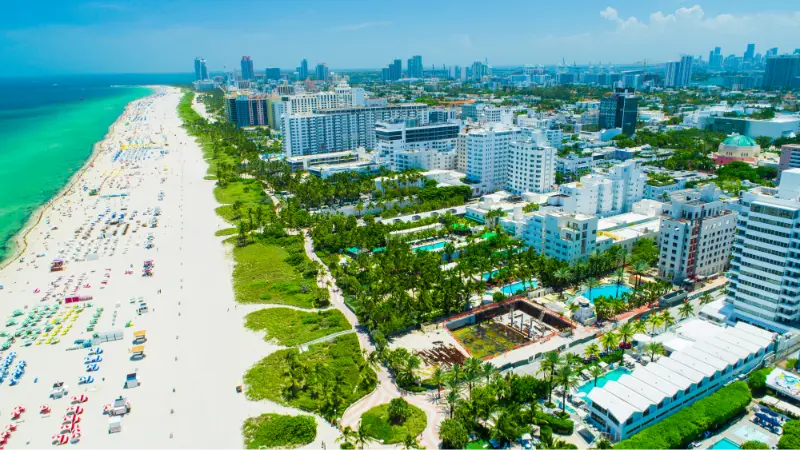
Miami Beach can be workable without a car for many visitors, especially when beach, restaurants and local walks are the priority. The City of Miami Beach operates free trolley routes serving South Beach, Mid-Beach and North Beach, with published stop maps and operating information. Use the official trolley tracker and allow extra time for connections. The city also offers other mobility options in certain service zones, but do not assume every address has a direct ride at every hour.
Rental cars bring flexibility for Everglades outings and regional day trips, yet hotel parking, public garages, traffic and tolls may offset that benefit. Before paying for a rental car over a week, calculate how many days actually require one. The cost of several local taxis may be lower than seven days of parking. If you need a wheelchair-accessible transfer or child restraint, book the correct option rather than assuming standard rideshare vehicles will be suitable.
Beach access, lifeguards and the daily experience
A beautiful beach view does not guarantee the easiest beach day. Inspect the specific access point for ramps, walkways, restrooms, lifeguard coverage and the distance to shaded facilities. Review current flags and local warnings before entering the water. Atlantic surf can be stronger than a small child or inexperienced swimmer expects; shallow-looking water and crowded conditions do not eliminate rip-current risk. Choose a guarded swimming area and ask the lifeguard about conditions rather than deciding from a photo or an old review.
For infants, shade and timing are essential. Begin early, leave the sand for the hottest part of the day and avoid assuming a beach umbrella offers complete UV protection. For older visitors, a short route from hotel to beach facilities may be much more valuable than a picturesque mile-long promenade. Ask in advance about public beach mobility equipment where needed, because location, availability and reservation procedures can vary.
Hotel fees, short-term rentals and the real nightly rate
Look at the full nightly cost, including taxes, resort or destination fees, parking, beach equipment, cleaning charges and any required security deposit. A resort with several added charges can cost more than a larger room nearby, even when the headline rate looks cheaper. If booking a private apartment or short-term rental, confirm that the building allows the stay and that the listing complies with local rules. Beware of requests to send payment outside the protected booking platform or to transfer money before seeing clear cancellation terms.
For multigenerational families, check bed configuration and sofa bed comfort rather than trusting a maximum occupancy number. A two-bedroom layout may be ideal for adults and children only if there is enough sound separation for naps and early bedtimes. If a family member uses a mobility device, confirm door widths, bathroom layout, lift reliability and parking access directly with the property.
Food and groceries by neighborhood
South Beach offers broad dining variety, but an appealing restaurant photograph tells you little about noise, queue length or kid-friendly seating. In Mid-Beach, full-service hotels can make meals convenient at a higher cost; compare nearby cafes and supermarkets before arrival. North Beach may work well for travelers who enjoy neighborhood eateries and simple self-catering. For food allergies, vegetarian needs or a strict diet, shortlist a few practical options near your actual accommodation.
Set aside time for a first-day grocery or pharmacy stop. A family arriving with a baby may need familiar snacks, water and basic supplies before sightseeing begins. Older adults who take medication at regular times should not depend on an unpredictable restaurant opening hour for every meal. If using public transport, choose groceries near the accommodation rather than buying more than your group can comfortably carry.
A four-day Miami Beach plan without rushing
On day one, explore your immediate beach and neighborhood, identify the closest reliable restaurant and watch the sunset or enjoy a quiet evening. Day two can focus on South Beach architecture, Lincoln Road and South Pointe, with a midday break. Day three might be reserved for a mainland visit to museums, Wynwood or another district, carefully allowing bridge travel time. Day four is best kept flexible for a long beach morning, pool time or an optional nearby excursion rather than forcing another complicated cross-city route.
Families with toddlers can divide these ideas into shorter outings around nap time. Couples may add a special dinner, while friends can plan nightlife without expecting every person to participate. A visitor with limited mobility can substitute a scenic short drive or accessible waterfront stop for long walking routes. This style of itinerary feels less crowded and makes it easier to adjust to weather.
FAQ: is South Beach a good choice with children?
It can be, particularly when a quieter block is chosen and the family values being close to attractions and restaurants. Look carefully at street noise, the room layout and the route to a guarded section of beach. Families who want substantial pool and resort time may prefer comparing Mid-Beach properties.
FAQ: is North Beach too far from the main sights?
It depends on your priorities. North Beach works well for a slower beach holiday, but repeated trips to southern nightlife or mainland attractions add time. Check the specific trolley route and your preferred evening transport before booking.
FAQ: should I stay in Miami or Miami Beach?
Choose Miami Beach when daily beach access is a primary purpose. Choose a mainland neighborhood when most activities are in Downtown, Brickell or other parts of Miami. Compare airport, cruise port and onward-driving journeys rather than relying on a map’s apparent proximity.
Official visitor and transport information
The City of Miami Beach describes the distinct South, Mid and North Beach neighborhoods at https://www.miamibeachfl.gov/visit-miami-beach/ and its free trolley routes at https://www.miamibeachfl.gov/city-hall/transportation/trolley/ . Check current street conditions, property-specific fees and beach safety alerts close to the date of travel.