
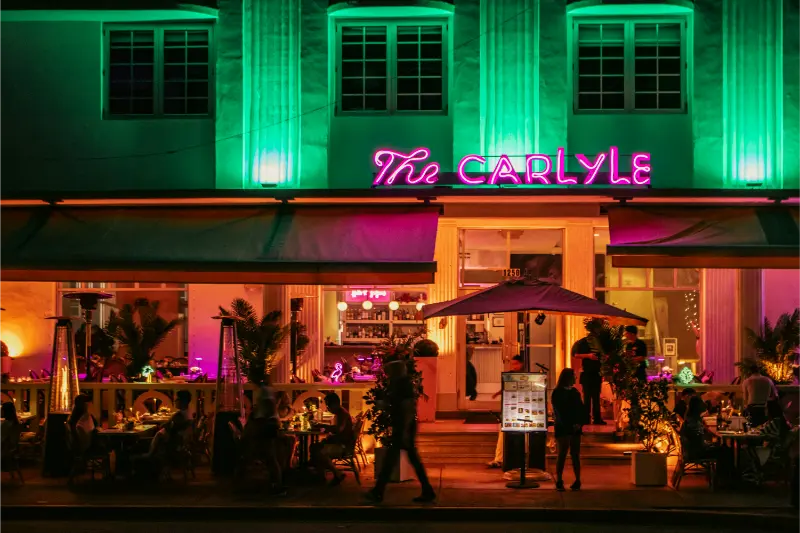
Miami rewards travelers who stop thinking of it as a single beach resort. South Beach’s Art Deco streets, the working city around Downtown and Brickell, Little Havana’s cultural landmarks, and the creative blocks of Wynwood are different places with different rhythms. Three days is enough for a persuasive introduction, but only if you group stops geographically. A day that jumps repeatedly between the beach and the mainland will feel like a sequence of rideshares. A day spent in one or two adjoining districts leaves room to taste the city, see its architecture and sit down when the heat builds.
This itinerary assumes you sleep either in South Beach, for walkable beach access, or in Downtown/Brickell, for urban transport and rail links. You do not need a rental car for these three days if you are comfortable mixing walking, public transportation and the occasional paid transfer. You should still check exact distances: the mainland city and Miami Beach are connected by bridges, not by a five-minute stroll. For children, older travelers and anyone with limited mobility, the central rule is the same: schedule one demanding block each day and reserve the rest for shorter, adjustable experiences.
Choose your hotel base before you choose attractions
| Where you stay | Best for | Trade-off |
|---|---|---|
| South Beach | Ocean walks, Art Deco buildings, lively evenings | Parking and some dining can be expensive |
| Downtown Miami | Museums, waterfront, Metromover connections | Not a beach hotel location |
| Brickell | Restaurants, modern high-rises, Metrorail and Metromover | Business-district atmosphere |
| Mid-Beach | A quieter resort-style beach stay | More transfers for mainland sightseeing |
Check the hotel’s exact entrance on a map and compare its mandatory fees before reserving. “Ocean view,” “near the beach,” and “Miami” can describe very different experiences. Also ask whether the beach chairs or umbrella pictured in the advertisement are included or billed separately. If relying on transit, choosing a room near the line you will actually use is worth more than an attractive room fifteen blocks farther away.
Day 1 morning: South Beach and the Art Deco District
Start early on Ocean Drive, when the pastel façades and palms are easier to admire before the strongest heat and busiest crowds. The Art Deco Historic District is best understood on foot rather than as a drive-by sight: look at the rounded corners, nautical motifs and geometric decorations, then turn inland toward Collins Avenue and Washington Avenue to see how different buildings relate to one another. A professionally led architecture walk can add context if that interests you; otherwise a self-guided circuit works well as long as you cross at marked intersections.
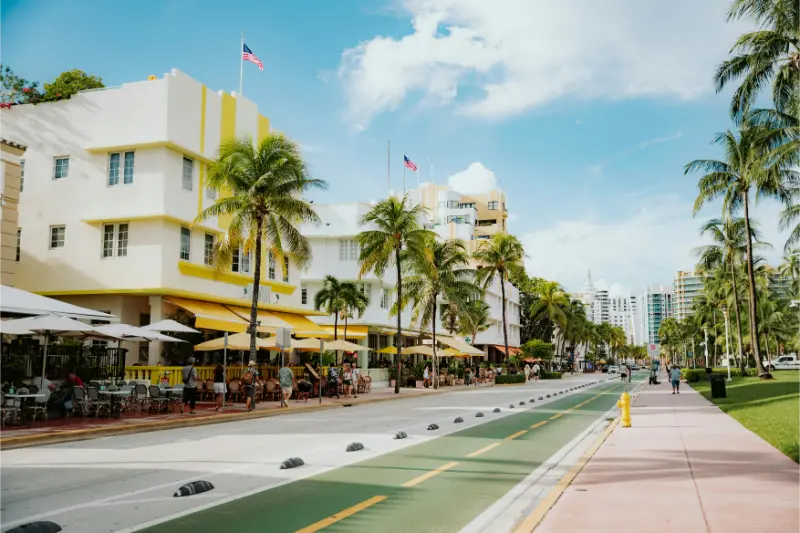
Follow the architecture walk with a short beach visit. South Beach can have strong surf or changing conditions even when the water looks inviting. Choose designated swimming areas with lifeguards if available, check beach warning flags, and protect young children from heat and sun. A day in Miami does not require spending four continuous hours in the sand. A thirty-minute swim or shoreline walk followed by a café stop can be a better fit when you also want to see the city.
Day 1 afternoon and evening: Lincoln Road or South Pointe
As the day warms up, move to an air-conditioned restaurant or a quieter indoor stop. Lincoln Road offers a pedestrian-oriented shopping and dining stretch, though specific shops change and there is no need to build the itinerary around a single store. After a break, choose one evening walk: return to the Art Deco streets when they are illuminated, or explore the area around South Pointe Park for an open coastal feeling and views of passing vessels. Sunset timing changes through the year; checking the forecast and local event calendar helps more than following a fixed clock time.
A helpful first-day rule is not to chase nightlife if you are jet-lagged. Miami has late-night energy, but families and morning-oriented travelers will find plenty to enjoy before dark. Arrange transport back to your accommodation if you are not walking. Keep phones and valuables secured in crowded places and do not leave anything visible in a parked car. The point of the evening is an easy impression of the waterfront, not one more long cross-city commute.
Day 2 morning: Little Havana with cultural context
Head inland to Little Havana and make Calle Ocho the spine of the morning. The area tells stories of Cuban migration, food, language and political history; reducing it to a single coffee and photo misses most of the interest. Look at Domino Park from the public side and observe posted rules rather than interrupting games. Explore locally owned bakeries and cafés, and consider a guided walk to understand the neighborhood’s development. Asking a shopkeeper a question with genuine curiosity works better than treating everyday residents as tourist props.
This is a practical place to eat lunch, but decide whether you want a sit-down meal before queues build. Some pavements have uneven stretches and shade varies, so a member of the group who needs a predictable walking surface may benefit from a short planned route instead of wandering for hours. If street festivals or road closures are scheduled, plan drop-off points and use current transit information. Leave time for one more mainland neighborhood, but do not overpack the rest of the afternoon.
Day 2 afternoon: Wynwood art or Coconut Grove greenery
Pick Wynwood if murals and contemporary galleries excite you. Public street art is visible on many blocks; curated venues have their own tickets and visiting rules. Outdoor mural walks can get very hot, so a compact two- or three-block circuit with breaks is more comfortable than an open-ended wandering route. Photograph art respectfully, stay aware of traffic and avoid entering private lots for a better angle. Galleries rotate programming, meaning the best visit is one based on the current exhibition list rather than a years-old recommendation.
Prefer a calmer alternative? Choose Coconut Grove and spend the afternoon amid shaded streets, waterfront views and a garden or cultural stop. It has a different mood, particularly attractive to travelers who have had enough noise for one day. Wynwood and Coconut Grove are alternatives in a three-day trip, not mandatory consecutive assignments. A family with young children may favor greenery and a playground; an art-focused couple may choose the mural district.
Day 3: Downtown museums and Biscayne Bay
Use the third day for Downtown Miami and adjacent waterfront attractions. Pérez Art Museum Miami and the Frost Museum of Science stand near each other in the Museum Park area, but both deserve proper time. With children who love aquariums and hands-on science, prioritize Frost Science and keep art as optional. With art enthusiasts, do the opposite. Check exhibit accessibility, timed admission and any special presentation reservations before leaving the hotel. Two museums in one day are feasible only if visitors enjoy a full museum day.
For a lighter afternoon, take in the waterfront at Bayfront Park or admire the city from the free Metromover. Miami’s tourism agency confirms that Metromover connects Downtown and Brickell; it does not take you to South Beach. Use real-time agency information for station works and service changes. A boat outing is another possibility, but compare boarding access, weather cancellation policies and whether the itinerary spends time in open sun. The scenic bay is not a reason to ignore thunderstorms.
Getting between Miami, Miami Beach and the airport
From Miami International Airport, the MIA Mover connects travelers to the intermodal center, where Metrorail and other ground transport are available. Metrorail serves selected mainland corridors, not every hotel. Metromover is useful for Downtown and Brickell, and local buses connect areas including Miami Beach. For the last stretch, walking or an authorized taxi or rideshare may be simpler than trying to force one transit solution to do everything. Check the official timetable the morning you travel, especially for a very early flight.
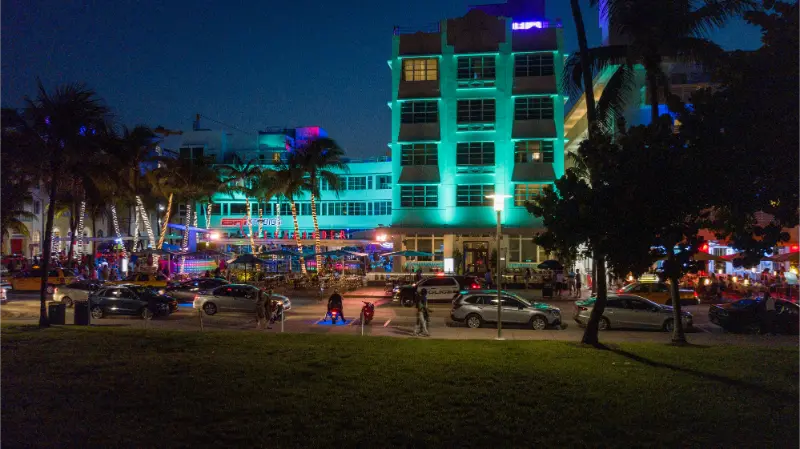
Rideshare fares can increase around events, rain and peak traffic. If you are staying at the beach but going to Downtown museums, compare one direct ride against public transit for each traveler rather than automatically assuming a rental car saves money. Parking charges can erase any advantage quickly. If you have an accessible mobility device, verify step-free entry at your chosen hotel and each exact station; “public transportation available” is not a sufficient accessibility plan.
Eating well without turning meals into tourist traps
Miami is a superb place to look beyond familiar chain restaurants. A Cuban breakfast or lunch in Little Havana, a neighborhood restaurant in Downtown or Brickell, and a relaxed evening meal near the beach give three different experiences without requiring a food tour every day. Read the menu before ordering and check whether gratuity or a service charge is already included. For families, carry water and a portable snack; lunch delays are much easier to handle when a child is not already exhausted.
Food halls and cafés are useful for groups with different diets, but confirm current vendors and hours. Ask about allergens when necessary rather than judging ingredients from menu photographs. Travelers on a tighter budget can make breakfast simple, choose one memorable restaurant meal per day and look for lunch specials. This strategy preserves room in the budget for a museum ticket or taxi at a time when fatigue makes public transport less appealing.
Optional swaps: Everglades, Vizcaya or Key Biscayne
If you have a fourth day, the Everglades are a strong option, but not a casual hour-long detour. The Shark Valley entrance west of Miami, the Homestead/Royal Palm entrance and Everglades City are separate access points without connecting interior roads. Choose one based on your hotel location and the activity you want. Reserve enough time for transport, ranger information, wildlife stops and a possible wait at the gate. Never feed wildlife or approach alligators for photographs.
Vizcaya Museum and Gardens and Key Biscayne are two other excellent substitutions within greater Miami. Vizcaya offers a heritage and garden-focused half day; Key Biscayne works for a scenic coastal outing, with park and bridge travel conditions checked in advance. Neither belongs automatically on top of the existing three-day schedule. Decide which experience matters more to you, then trade it for Wynwood or a museum visit so you still have time to appreciate it.
Miami with children, older visitors or reduced mobility
Miami can be made gentler by shifting outdoor time into the morning and leaving a generous midday interval for shade or air-conditioning. Families with strollers will want to examine the exact route across streets and beaches; travelers using wheelchairs should verify accessible entrances, restrooms and boardwalk-to-sand access at the particular beach. Some public beach access programs offer equipment or mats, but availability differs, so call the responsible agency rather than relying on general citywide claims.
Older adults do not all want the same pace: some are keen walkers, while others prefer a museum plus a seated bayfront view. Build the trip around actual preferences, not age-based assumptions. Give every traveler a choice to skip a long mural walk and rejoin the group for lunch. A three-day holiday feels fuller when no one has to spend the fourth day recovering from it.
Frequently asked questions
Do we need a car in Miami for three days?
Not for this route if your hotel is well located and you accept occasional transfers. A car can be convenient for outlying sights but creates parking costs.
Is Downtown Miami the same as Miami Beach?
No. They are separate areas divided by Biscayne Bay, with bridges and transport connections between them.
Can we visit the Everglades in half a day?
Sometimes a carefully chosen short visit is possible, but transport and park activities often justify most of a day. Choose the entrance deliberately.
Which day is best for the beach?
Day one includes a beach break, but move it to a calmer-weather day if surf or lightning conditions are unfavorable.
Is the itinerary suitable for a cruise stop?
Only partially. For one day, select a single neighborhood near your port transfer and return with a substantial embarkation buffer.