
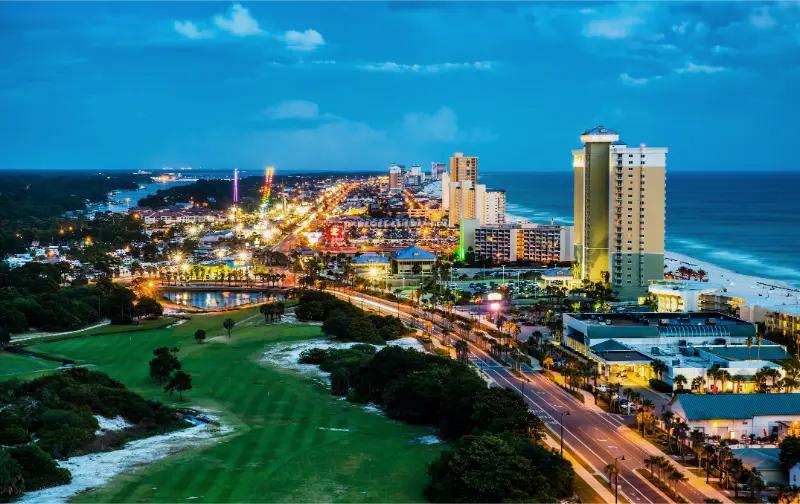
Three days in Panama City Beach gives you enough time to experience the Gulf, a natural side of Bay County and some of the destination’s family entertainment without trying to fit the entire region into one weekend. The most useful structure is to give each day a theme. Day one establishes the beach and your immediate neighborhood. Day two uses the best weather window for nature or a boat-based experience. Day three adds one attraction or a slower west-side outing. This format makes it easy to swap days when wind, rain or beach conditions change.
Quick planning summary
- Best for: First-time visitors who want a balanced long weekend without turning Panama City Beach into a race between attractions.
- Ideal trip length: Three full days plus arrival and departure time if possible.
- Getting around: A car gives the most flexibility across Panama City Beach, state parks and Panama City, but a resort-focused stay near one activity cluster can reduce driving.
- Safety priority: Check current beach warning flags before entering the Gulf and move indoors early when thunderstorms approach.
How to use this guide
First-time visitors who want a balanced long weekend without turning Panama City Beach into a race between attractions. The goal is not to create a schedule that looks impressive on paper. Panama City Beach is easiest when the most weather-dependent activity happens early, the middle of the day includes shade or indoor time, and the evening stays flexible. Travel time along Front Beach Road can be longer than the mileage suggests during busy periods, so group activities by area.

Day 1 morning: settle into the Gulf Coast rhythm
Start with the beach closest to your accommodation rather than driving immediately to a famous access point. Check the warning flags, walk the shoreline and learn how long it takes to move between your room, parking and sand. If you arrive early enough, keep the first beach session to a few hours so you still have energy for lunch and the evening. Families should use this time to test what children actually enjoy—waves, sand play, pool time or short walks—before planning the remaining days around assumptions.
Day 1 afternoon and evening: Pier Park and the City Pier area
After a real lunch and a break, use Pier Park as an easy first-day orientation. Browse, eat, let children or teenagers choose a small activity and walk toward Russell-Fields Pier for late-day views. This is intentionally not a major-ticket day. You have traveled, checked in and spent time outside; a flexible evening is enough. If your accommodation is far from Pier Park and everyone is tired, stay local and move this block to Day 3.
Day 2: St. Andrews State Park and optional Shell Island
Use the second morning for the area’s natural side. St. Andrews State Park can be a full experience by itself, while Shell Island can become the anchor for travelers who want a more undeveloped beach setting and are comfortable with the transport and weather logistics. Do not assume both must be done in one rushed sequence. Check current boat operations, park capacity and marine conditions. Bring water, sun protection and anything you need for a less-developed environment.
Day 2 late afternoon: rest before dinner
After several hours around open water and sun, take the pressure off the late afternoon. Return to the accommodation, shower, use the pool briefly or simply rest. This pause is especially important for children, senior travelers and anyone unaccustomed to Gulf Coast heat. Choose dinner on the same side of town as your hotel or next stop. A relaxed dinner can be a stronger memory than another attraction squeezed into the day because there is technically time.
Day 3: choose one paid attraction or a quieter west-side day
Families may use the final full day for Shipwreck Island, WonderWorks, ZooWorld or another attraction that suits the ages in the group. Nature-focused travelers can choose Conservation Park or Camp Helen instead. Couples may prefer a slow West End day with beach time and an early dinner. The key is to make one choice, not all of them. A three-day trip feels complete when the days are different from one another, not when every possible attraction has been checked off.
Build a weather swap into the plan
The order above is not sacred. If Day 2 has poor boating conditions but Day 3 is calm, swap them. Use an indoor attraction during thunderstorms and protect the clearest morning for the experience that depends most on weather. Check refund and rescheduling terms before booking water-based activities. This flexibility is one of the advantages of a three-day trip: one imperfect weather window does not have to ruin the vacation.
Families, age groups and different travel styles
With toddlers, shorten each morning block and return for naps. With teenagers, allow more choice around Day 3 and the evening at Pier Park. Senior travelers may prefer a pier, boardwalk or scenic drive instead of a long sand walk. Multigenerational groups can keep Day 2 as the shared anchor and split for different Day 3 activities.
For a mixed-age group, decide which activity everyone truly wants to share and let the rest of the day be modular. A vacation becomes easier when a toddler can nap, a teenager can choose an activity and an older traveler can skip a long exposed walk without the group treating those choices as problems.
Where to stay
For three days, choose one base and stay there. Pier Park works well for easy evenings, the West End for a quieter beach trip, and Grand Lagoon for boating. A central property can reduce crossing time if the plan mixes east- and west-side activities. Compare total lodging cost, parking and beach route rather than moving hotels to save a small amount per night.
Compare the total accommodation cost rather than only the first nightly rate shown. Parking, resort fees, cleaning charges, taxes and cancellation rules can materially change the value. For families and longer stays, laundry and a kitchen may save time as well as money. For travelers with mobility needs, confirm the route from parking to room to beach or pool directly with the property.
Beach safety: the rule that should shape every itinerary
Panama City Beach uses a beach warning flag system. A green flag still means use caution; yellow indicates a medium hazard; red signals high hazard; purple warns of dangerous marine life; and double red means the water is closed to the public. Conditions can look calm from a balcony while currents remain dangerous. Check the current flag status before entering the Gulf and follow lifeguard and local-authority instructions.
Rip currents are a major Gulf hazard. Swim near lifeguarded areas when possible, keep children within direct reach appropriate to their ability and do not use inflatable toys as safety devices. If lightning develops, leave the water and beach early and move to a safe indoor location. A trip can be rearranged; water and thunderstorm warnings should not be negotiated with an itinerary.
Weather, heat and the best daily rhythm
In warm months, an early outdoor block followed by lunch, indoor time or a hotel break usually works better than staying exposed through the hottest hours. Afternoon thunderstorms can be localized and fast-moving, so keep one indoor alternative available. In cooler months, mornings may require a light layer even when the afternoon is pleasant. Check the actual forecast shortly before travel instead of relying on long-term climate averages.
Sun, humidity and saltwater add fatigue gradually. Drink water throughout the day, reapply sun protection and schedule recovery time after long beach or boat sessions. This matters for children, senior travelers and visitors arriving from cooler climates, but it also affects healthy adults who underestimate how much energy a full day outside requires.
Driving, parking and getting around
Panama City Beach is long rather than compact. Before leaving, enter the exact parking area or attraction—not only the destination name—into navigation. Group stops on the same side of town, and avoid driving from east to west and back again for minor errands. During busy seasons, add buffer time for Front Beach Road and popular access points. Never park on dunes, landscaped areas or private property because a map pin appears close to the beach.
If you are flying into ECP and plan to explore state parks, Panama City, the West End or other Panhandle destinations, a rental car is usually the most flexible choice. Resort-focused travelers may be able to combine transfers or rideshare with walking, but compare the real cost against parking and rental fees before deciding.
Food and budget planning
Use geography to control both cost and stress. Eat near the activity you are already doing instead of driving across the city for every meal. A condo kitchen can make breakfast, snacks and one simple dinner inexpensive, leaving more budget for a boat trip or attraction that matters. Families should keep water and familiar snacks available, while travelers with dietary restrictions should identify a few reliable options before arriving.
Ticket prices and operating schedules can change, so compare current official prices shortly before travel. Do not assume a multi-attraction day is automatically better value. One well-chosen paid experience plus free beach time, a park walk and sunset can create a stronger day than several rushed admissions.
Common mistakes to avoid
- Booking a major ticketed attraction on all three days
- Planning Shell Island without checking transport and weather
- Skipping rest after a long sun-and-water day
- Driving across town for every meal instead of grouping stops
- Refusing to swap days when weather clearly favors a different order
- Leaving no flexibility for Gulf weather, traffic or a tired traveler.
Useful Wonderful Florida guides to combine with this article
Depending on your itinerary, continue with one-day Panama City Beach itinerary, St. Andrews State Park guide, Shell Island guide, Pier Park guide and Shipwreck Island Waterpark guide.
Official information to check before travel
Opening hours, access conditions, beach flags, parking arrangements, attraction restrictions and transportation services can change. Use official or primary sources shortly before travel when a specific feature is essential to your day.
Final planning advice
Panama City Beach is easiest to enjoy when the beach is treated as part of the schedule rather than the entire schedule. Choose one anchor experience, leave room for weather and rest, and keep the final hours of the day simple. That approach works for families, couples, teenagers, senior travelers and visitors with accessibility needs because it gives the trip enough structure to be useful without turning a Florida vacation into a sequence of deadlines.