

Rain in Panama City Beach does not automatically mean a lost vacation day. Summer showers can be short, thunderstorms can force a longer indoor break, and an occasional gray day can become the best time to use attractions that feel less appealing under perfect beach weather. The useful strategy is to decide in advance which indoor options fit your group and which reservations are flexible, so the family is not searching from a hotel lobby while everyone is already bored.
Quick planning summary
- Best for: Families, couples and multigenerational groups who want a practical backup plan for thunderstorms, heat or a full wet-weather day.
- Ideal trip length: Treat rainy-day planning as a half-day module that can be inserted into any trip length.
- Getting around: Keep indoor choices geographically close to the accommodation when storms make traffic slower.
- Most important planning point: Lightning matters more than rainfall; leave the beach early when thunderstorms approach.
First decide whether this is a shower or a storm day
A light shower and an active thunderstorm require different responses. If radar suggests a short rain window without dangerous conditions, lunch, shopping or a hotel break may be enough. When lightning is present, move indoors rather than sheltering under a beach tent or staying near the water. A full gray day is the best time to choose a museum or major indoor attraction and stop waiting for the sky to become perfect.
WonderWorks can anchor several indoor hours
WonderWorks is one of the obvious wet-weather choices because the experience is designed around interactive indoor exhibits. It can work well for school-age children, teenagers and adults who enjoy hands-on activities. Check current ticket options, attraction restrictions and hours before leaving the hotel. On a rainy day, many other visitors will have the same idea, so arriving near opening or later in the afternoon may be more comfortable than joining the busiest mid-morning rush.
Science & Discovery Center is a quieter family alternative
The Science & Discovery Center of Northwest Florida in Panama City offers a different pace from the large beach-strip attractions. It can be a useful choice for younger children, families who enjoy educational exhibits and travelers who want to combine an indoor visit with lunch or a waterfront stop in Panama City. Because it is not directly on the central resort strip, plan the drive and avoid crossing the area repeatedly for small activities.
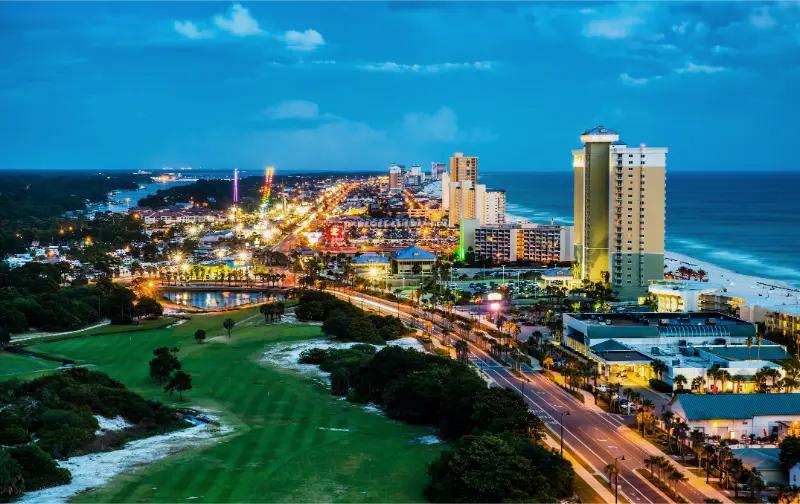
Pier Park works when the weather is mixed, not dangerous
Pier Park combines shops, restaurants and entertainment, which makes it useful when showers come and go. It is not a fully indoor mall, so it should not be treated as shelter during severe weather, but it can keep a mixed-age group occupied when the day alternates between dry and wet periods. Choose a meal, a few shops and one indoor entertainment option instead of wandering without a plan for hours.
Use Historic St. Andrews when the rain is light
Historic St. Andrews and Downtown Panama City can work on an overcast or intermittently wet day because the visit can be broken into short indoor and outdoor blocks. Browse local businesses, stop for lunch, see waterfront areas when conditions are safe and keep the schedule loose. This is a better choice for couples and older travelers than for a family that needs constant indoor entertainment during heavy rain.
The hotel can be part of the rainy-day plan
Families often overlook the simplest option: return to the room, let children nap, use an indoor pool if available, do laundry, order food and save energy for a clear evening. A vacation does not need to be productive every hour. This is particularly useful after several active beach days. A three-hour storm break can become recovery time instead of an emergency that demands an expensive attraction.
Do not turn dangerous weather into sightseeing weather
Heavy rain can create poor visibility and standing water, and thunderstorms can make outdoor waterfront areas unsafe. If local authorities or your accommodation advises staying off the roads, do that. A rainy-day list is meant to protect the vacation from ordinary weather changes, not to justify driving through severe conditions. During tropical systems or major storms, follow official emergency guidance rather than a tourism itinerary.
Choose accommodation for the trip you are actually taking
Panama City Beach stretches for miles, so the cheapest room is not automatically the best value. A property near Pier Park can reduce evening driving, the West End can feel calmer, Middle Beach keeps many attractions reasonably close, and the Grand Lagoon side can be convenient for boating and St. Andrews State Park. Compare the real route from the room to the beach, parking area, elevator, pool and restaurants rather than relying on the phrase “beachfront” alone.

If rainy-day flexibility matters, a larger room, balcony, kitchen, comfortable lobby or indoor pool can be worth more than a slightly cheaper basic room. Families staying a week should think about what everyone will do during a four-hour storm, not only how the property looks under sunshine. A central location also reduces the temptation to make long cross-town drives for indoor entertainment.
Always compare the total accommodation price. Parking, resort fees, cleaning charges, taxes and cancellation conditions can change the ranking between a hotel and a condo. For longer stays, a kitchen and laundry may save both money and time. Travelers with mobility needs should confirm the complete accessible route directly with the property, including parking, entrances, elevators, bathrooms and access to any advertised beach or pool facilities.
Driving, transit and realistic distances
The destination is long rather than compact. Front Beach Road can make a short mileage look deceptively easy on a map, especially during busy periods, so group activities by area. A car remains the simplest option for travelers who want state parks, Panama City, grocery runs and day trips, but it is not the only possibility. Bayway provides public transportation in Bay County and also operates flexible services in defined zones; schedules, service areas and fares should be checked close to travel because they can change.
If you plan to rely on walking, rideshare or transit, choose the accommodation first and then test every important trip from that exact address. A resort that works beautifully without a car for beach, dinner and Pier Park may be inconvenient for St. Andrews State Park or an early-morning boat departure. Likewise, renting a car for one or two targeted days can be more efficient than keeping one for an entire resort-focused stay when parking costs are high.
Beach safety should shape the day, not interrupt it
Panama City Beach uses a beach warning flag system, and the safest habit is to check the current flag before anyone enters the Gulf. Green still means use caution, yellow indicates a medium hazard, red indicates a high hazard, purple warns of dangerous marine life, and double red closes the water to the public. Water can look attractive from a balcony while currents remain strong, so visual impressions are not a substitute for the posted warning. When lifeguarded areas are available, they are the better choice for families, less-confident swimmers and anyone unfamiliar with Gulf conditions.
Rip currents, lightning, heat and changing surf are the hazards most likely to alter an otherwise ordinary beach day. Keep children within the level of supervision their swimming ability requires, do not treat inflatables as lifesaving devices, and move indoors when thunderstorms approach rather than waiting for the rain to become heavy. A flexible itinerary makes this much easier: if the Gulf is unsafe, switch to a park, museum, shopping block or long meal and return only when conditions are appropriate.
Food and budget planning without making the trip feel cheap
Planning tipThe easiest way to control spending is to decide which experiences deserve money before arrival. Beach time, sunset, public parks and walking can fill large parts of the day, leaving room for one paid attraction, boat trip or special meal that actually matters to the group. A condo kitchen is useful for breakfast, cold drinks, snacks and simple lunches, while a hotel traveler can still save by keeping fruit, water and familiar snacks in the room.
Avoid driving across the entire beach for every meal. Choose restaurants close to the activity you are already doing, and treat one destination meal as the exception rather than the daily rule. Families should compare children’s menus and waiting times, while couples and solo travelers may get better value from an early dinner or a casual seafood lunch followed by sunset. Prices and operating schedules change, so check current menus and ticket pages before building a day around a specific offer.
Common rainy-day mistakes
- Waiting until lightning is overhead before leaving the sand.
- Assuming every shopping area is fully indoors.
- Driving across the entire beach for a minor activity during heavy rain.
- Buying several nonrefundable tickets in advance for the same day.
- Forcing tired children into an attraction when a hotel rest would work better.
- Treating tropical-weather warnings like an ordinary afternoon shower.
Useful Wonderful Florida guides to combine with this article
Continue planning with WonderWorks Panama City Beach, Science & Discovery Center of Northwest Florida, Pier Park and Historic St. Andrews and Downtown Panama City.
Official information to check before travel
- Visit Panama City Beach
- City of Panama City Beach beach flag information
- City of Panama City Beach Leave No Trace information
Opening hours, parking arrangements, beach conditions, transportation services and local rules can change. If a specific feature is essential to the day, confirm it with the operator or public agency shortly before leaving your accommodation.
Final planning advice
The best rainy-day plan is short enough to change. Keep one major indoor attraction, one low-cost alternative and the option to simply rest. When the sky clears, return to the beach or sunset; when it does not, you will still have used the day well without turning bad weather into an expensive scramble.