

Ocala is the Central Florida destination I would choose when the trip needs more horses, springs and open landscape than theme parks. The city is the practical center of Marion County, but the experience spreads far beyond downtown: Silver Springs, horse farms, the World Equestrian Center, Rainbow River, Ocala National Forest and small communities such as Dunnellon all shape the visit. That geography means an Ocala vacation works best when you choose a theme for each day rather than driving in circles between attractions.
It is also a strong multigenerational destination. Children can ride a glass-bottom boat, teenagers can paddle or bike, adults can explore horse country and local restaurants, and seniors can enjoy gardens, scenic drives and spectator-friendly equestrian events without needing a high-adrenaline itinerary. The area can feel rural within minutes of the city, so good planning is less about tickets and more about distance, weather and the right base.
Quick planning summary
- Best for: horse lovers, springs and paddling, nature, families, active seniors, road-trippers and travelers who want a slower alternative to Orlando.
- Ideal stay: 3–4 nights for Ocala plus Silver Springs and horse country; 5 nights if Rainbow River, Ocala National Forest or longer outdoor days are priorities.
- Best base: Downtown for restaurants and local character; west/northwest Ocala for World Equestrian Center; east Ocala for Silver Springs; Dunnellon if Rainbow River is the main goal.
- Getting around: A car is essential for most itineraries. The region is broad, and the best springs, horse venues and forest recreation areas are separated by meaningful driving time.
- Planning principle: Group each day geographically: horse country, Silver Springs/east Ocala, downtown, or Dunnellon/Rainbow River.
Why Ocala deserves a place in a Florida itinerary
Ocala/Marion County’s official tourism organization presents the region around equestrian culture, outdoor adventure and springs, which is exactly how I would structure a first visit. The World Equestrian Center makes horse sport accessible even to travelers who do not own a horse, while Silver Springs and Rainbow River show the clear-water side of inland Florida.
The city itself prevents the trip from becoming purely rural. Downtown Ocala has a compact square, restaurants, public art and cultural stops; Sholom Park offers a gentler garden experience; Fort King adds local history. That balance is useful when weather or mobility makes an all-outdoor itinerary unrealistic.
Best things to do on a first trip
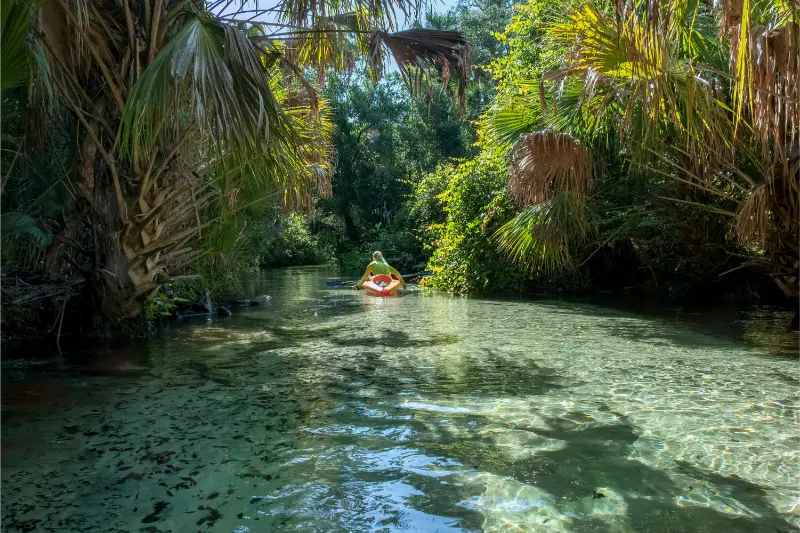
Ride the glass-bottom boats at Silver Springs State Park
Silver Springs is the signature first-time experience because the boats allow almost every age group to see the spring environment without swimming or paddling. Kayaking and trails can extend the day, but a boat ride alone can be enough for travelers who prefer a gentler pace. Check current reservations, launch rules and capacity before weekends or holidays.
See World Equestrian Center as a visitor, not only a competitor
World Equestrian Center–Ocala is a major reason the city has become more visible to leisure travelers. Many events are spectator-friendly, and the complex also has restaurants, shops and landscaped public spaces. Event calendars change constantly, so the best strategy is to check what is actually running during your dates rather than assuming a headline competition will be in progress.
Take a horse-country drive or farm tour
The horse farms northwest of the city explain why Ocala is known as horse country. A guided farm experience provides far more context than simply driving past fenced pastures. Book reputable operators, respect private property and avoid stopping on narrow roads for photographs.
Walk Downtown Ocala and the historic square
Downtown is compact enough for an easy meal-and-walk combination. Use the square, murals, local businesses and seasonal events as the relaxed part of the trip after an outdoor morning. It is also a better evening base than the forest or spring areas if you want restaurant choice without another long drive.
Add Rainbow Springs or the Rainbow River
Dunnellon and Rainbow Springs are a natural second water day. Swimming, tubing and paddling depend on season, access point and current rules, and the headsprings can be popular enough to require reservations. Treat it as its own day rather than an add-on after Silver Springs.
Use Sholom Park or Fort King for a lower-intensity block
Sholom Park works well for gardens and easy walking, while Fort King adds Seminole War and local-history context. Either can fill a shorter morning or late afternoon when the group does not want another major attraction.
Choose one Ocala National Forest experience carefully
Alexander Springs, Juniper Springs, Salt Springs and forest trails can be wonderful, but the national forest is large and conditions vary. Pick one recreation area, check road and water information, and avoid creating a day that spends more time relocating than exploring.
Where to stay: choose the area before the hotel
Where you sleep matters because Ocala is not a compact resort. A hotel near I-75 can be convenient for a road trip but less appealing for an evening walk; downtown has atmosphere but may add time to horse-country or forest days. Match the base to the two activities you care about most.
Downtown Ocala
Best for restaurants, local atmosphere and short evening walks. Good for couples and travelers who want the city to feel like part of the vacation.
West and northwest Ocala
Best for World Equestrian Center, horse farms and event-focused trips. Check event schedules because traffic and room demand can change substantially.
East Ocala and Silver Springs area
Practical for Silver Springs State Park and trips into Ocala National Forest. It is less central for west-side equestrian activities.
Dunnellon
A different base for travelers whose priority is Rainbow River, paddling and a smaller-town pace. It works well for a split stay but adds driving to central Ocala.
Getting there and getting around
Ocala is close to I-75 and works naturally on a north-south Florida road trip. Gainesville is to the north and the Orlando region is to the southeast, but the smaller roads around springs and horse country are what shape daily timing. Keep a realistic buffer for rural driving and do not rely on mileage alone.
Most visitors fly through Orlando, Tampa or another regional airport and rent a car. Ocala has local aviation facilities but is not a major commercial-airport destination. If you arrive late, consider sleeping near the airport rather than beginning a rural drive tired, especially with children or after an international flight.
Families, teenagers, seniors and accessibility
For young children, a glass-bottom boat plus a park or pool is often more successful than a long paddling itinerary. School-age children can handle short trails and spring days with planned breaks. Teenagers may enjoy kayaking, mountain biking at Santos or equestrian events more when they have a clear active role.
Seniors can experience much of Ocala through boat tours, spectator venues, gardens and scenic drives. Accessibility varies across natural surfaces, launches and trails, so confirm the exact experience in advance. World Equestrian Center and many urban attractions are easier to navigate than remote forest recreation areas, which can have uneven terrain and longer distances from parking.
Best time to visit
Fall through spring offers the most comfortable outdoor weather. Winter can be cool in the mornings, which is useful for walking and horse events but less appealing for swimming. Summer makes the springs tempting but also brings heat, thunderstorms and heavier demand around water attractions.
For spring swimming, tubing and paddling, verify water access and reservation systems shortly before travel because capacity rules can change. Equestrian calendars also create their own high-demand periods. I would rather reserve the key event or spring day first and then build the rest of the trip around it.
A realistic 3-day itinerary
Day 1 — Silver Springs and downtown
Take a morning glass-bottom boat or paddle at Silver Springs, rest during the hottest part of the day, then explore Downtown Ocala and have dinner near the square.
Day 2 — Horse country
Plan a horse-farm tour or spectator event at World Equestrian Center. Add Sholom Park only if the group still has energy rather than forcing another major drive.
Day 3 — Rainbow River or Ocala National Forest
Choose one water environment as the day’s anchor. Rainbow River suits tubing and paddling; an Ocala National Forest spring suits travelers who want a more rustic setting.
Optional Day 4 — Culture and flexibility
Use Fort King, the Appleton Museum, Santos trails or a relaxed restaurant day depending on weather and the interests of the group.
Budget: where the money actually goes
Ocala can be moderate in cost because many outdoor and cultural stops have low admission compared with Central Florida theme parks. The expensive choices are usually specialized tours, premium lodging around major horse events and equipment or guide services. Decide which one experience deserves the splurge and keep the rest of the trip simple.
If you are staying for springs, a cooler, refillable bottles and simple picnic supplies can reduce both cost and stress. Compare hotel location with fuel and driving time; a cheaper room on the wrong side of town can be a poor value when every day begins with a forty-minute cross-county drive.
Common mistakes to avoid
- Trying to see Silver Springs, Rainbow Springs and the World Equestrian Center in one day.
- Assuming every spring allows the same activities or walk-up entry.
- Driving onto rural or forest roads without checking current conditions.
- Treating World Equestrian Center as interesting only to experienced horse people.
- Booking an event-weekend hotel without checking cancellation and parking details.
How to combine this stop with the rest of Florida
Ocala works well between Gainesville and the Orlando area, and it can also connect west toward Crystal River. A nature-focused route could combine Gainesville, Ocala and Crystal River; a family route can pair Ocala with Orlando while giving everyone a quieter reset between theme-park days.
If springs are the priority, use Ocala as one base and resist changing hotels every night. Silver Springs, Rainbow River and several forest recreation areas are different enough to justify multiple days, but they are easier when luggage stays put.
Useful internal guides for planning
- Silver Springs State Park guide
- World Equestrian Center guide
- Downtown Ocala guide
- Where to stay in Ocala
- Best springs near Ocala
Official resources to check before you go
- Ocala/Marion County Visitors and Convention Bureau
- Ocala/Marion County planning resources
- Florida State Parks
Hours, admission policies, event calendars, construction work and accessibility details can change. Check official sources shortly before travel, especially when one attraction is the main reason for the trip.
Final thoughts
Ocala is strongest when you let the region be itself: horse country, clear water, forest and a walkable small-city core. Pick one geographic zone per day, protect the coolest hours for outdoor activities and leave enough flexibility for weather or event schedules. That approach produces a much better trip than trying to treat Marion County like a compact attraction district.