
Sanibel is famous for shells, but a day on the island can be much richer when it includes J.N. “Ding” Darling National Wildlife Refuge. Here the main attraction is not a captive-animal exhibit. Birds feed over tidal flats, mangroves protect shorelines and visitors move slowly through habitat used by migrating and resident wildlife. The refuge suits an unusually broad group of travelers because the four-mile Wildlife Drive can be experienced by car, on a bicycle or as part of an organized outing. The essential detail is its weekly Friday closure, something a casual search for “Sanibel nature activities” can easily miss.
At a glance
J.N. Ding Darling National Wildlife Refuge | 1 Wildlife Drive, Sanibel, FL 33957 | Best planned around four-mile wildlife drive, birds, mangroves and vehicle-free alternatives.
Contents
- What the refuge protects and why tides matter
- Wildlife Drive: driving slowly and stopping safely
- The Friday rule and visitor center planning
- Birdwatching without expensive equipment
- Bicycling, walking and tram options
- Indigo Trail, Bailey Tract and alternative habitats
- Where wildlife photography crosses a line
- Building a flexible Sanibel day
- Fees, passes and who will enjoy it most
- Preparing for a birding morning
- The role of tides and seasons in sightings
- Keeping the car-based visit comfortable
- Sanibel’s coastal recovery and changing services
- Making nature education interesting for all ages
- Practical planning table
- Frequently asked questions
- Official sources and current alerts
What the refuge protects and why tides matter
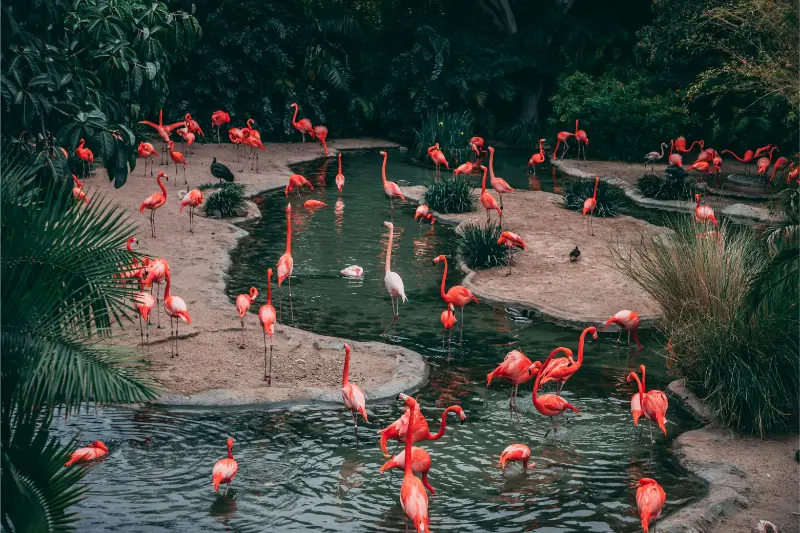
Ding Darling covers an important mangrove ecosystem on Sanibel Island. A change in tide can expose feeding flats or cover them, moving birds from one location to another even on the same day. The best wildlife visit is therefore observant rather than target-driven. Look along the water’s edge for herons and egrets, then check the tree canopy and mangrove margins. Birds need space to feed, and a vehicle slowing down is not a license to step into restricted habitat. This is a living refuge, where a quiet morning with only distant birds can still reveal the way water, plants and wildlife depend on one another.
Wildlife Drive: driving slowly and stopping safely
The official four-mile one-way Wildlife Drive uses a low posted speed limit, and drivers must follow designated stopping rules. The road is not an ordinary scenic shortcut; its purpose is to move visitors past habitat without encouraging random turns or off-road parking. Keep binoculars accessible before entering, select a safe spot before looking through a long camera lens and never stop where you obstruct traffic or a cyclist. If a child becomes restless, use an appropriate pull-off rather than opening car doors unexpectedly. Since this is one-way, check how long your group can comfortably stay aboard before beginning.
The Friday rule and visitor center planning
Wildlife Drive is closed on Fridays, even during holiday periods when a traveler might expect extra opening hours. The free Visitor and Education Center has also advertised Friday and federal-holiday closures. Because construction and storm recovery can temporarily alter visitor-center operations, verify both the drive and the center separately. The center is a useful first stop for displays, information and toilets when open, but it should not be the only purpose of a long drive unless current opening is confirmed. Families who arrive on a Friday can use the day for other Sanibel activities and return to the refuge on a different date.
Birdwatching without expensive equipment
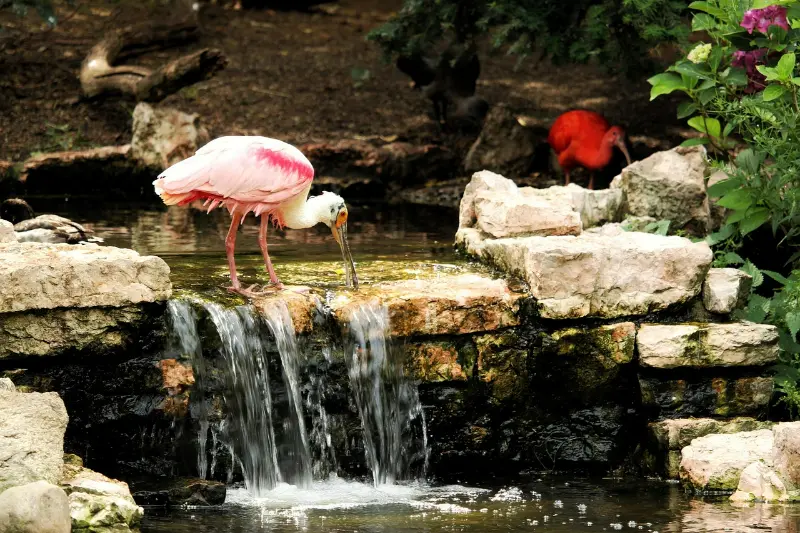
Binoculars add enjoyment, but first-time visitors do not need professional cameras. Try scanning an open area with the naked eye before using magnification. Watch how a wading bird waits, steps and strikes, or how different birds occupy the same stretch of wetland without feeding in identical ways. Children can keep a simple list of color, shape and behavior instead of trying to identify every species. A person with low vision might enjoy ambient bird sounds and plant textures at approved visitor areas, while a camera user should never pursue animals or leave established trails for the perfect photograph.
Bicycling, walking and tram options
The drive can also be visited by bicycle and on foot; the experience is slower and more exposed to sun, bugs and shifting weather than driving. An organized tram may be available through the refuge concessionaire, with schedules and tickets that should be checked in advance. Ask the provider which stops it makes, how long boarding takes and what accessibility help can be arranged. Walkers should not underestimate the distance of a four-mile one-way road, particularly when the return strategy is unclear. For a mixed-age group, the car route often offers the simplest balance of wildlife viewing and comfortable breaks.
Indigo Trail, Bailey Tract and alternative habitats
Wildlife Drive is not the entire refuge. The Indigo Trail and Bailey Tract offer opportunities to notice different habitats, although fees, Friday rules and opening arrangements differ. Bailey Tract is generally a freshwater-oriented section, so its setting contrasts with the mangrove-dominated main drive. Confirm a trail’s surface and current water conditions before choosing it for a stroller or walker. Recent rain can create muddy sections, and even a short path becomes demanding when mosquitoes are active. If the drive is the day’s main attraction, treat a trail as an optional extension rather than something everyone must complete.
Where wildlife photography crosses a line
An ethical photograph starts with distance. Never use recorded bird calls to draw an animal closer, block a flight path or approach a nesting area. For a long lens, stable support from an allowed observation point often works better than creeping toward an animal. Respect refuge restrictions on fishing, crab collection, boating and drones; access rules are habitat protections, not inconveniences to negotiate. If a bird stops feeding or repeatedly shifts away from you, increase your distance. Quiet observation teaches more about the animal than a close-up that required interrupting its normal behavior.
Building a flexible Sanibel day
Pair an early refuge outing with a calmer lunch and a separate beach walk rather than scheduling several wildlife tours without breaks. Sanibel roads can slow during peak visitor periods, and the refuge itself encourages a deliberate pace. Bring water, a small snack and sun protection even if most viewing is from the car. Travelers coming from Fort Myers should check causeway conditions and give themselves flexibility for weather. If the visitor center is closed, that does not necessarily mean that every refuge area is unavailable; read the exact facility notice rather than assuming a single status covers everything.
Fees, passes and who will enjoy it most
The refuge publishes separate information about Wildlife Drive fees, other trail access and national passes. Confirm the current rates rather than relying on an old blog screenshot. Birdwatchers can return at different tides; families with older children can make wildlife identification part of the day; someone with limited mobility may appreciate a car-based route. People hoping for a guaranteed close-up of alligators or rare species should reset that expectation. This is a protected coastal ecosystem whose value is not measured by the number of dramatic sightings. A patient visit usually beats a hurried one.
Preparing for a birding morning
A useful birding kit is small: binoculars, a field guide or downloaded identification tool, sun protection, water and a notebook. Early arrival can reduce heat and give you more time to move slowly before traffic builds. Download the refuge map because mobile coverage may be imperfect in pockets of habitat. Children can score observations by behavior rather than species names: standing, diving, feeding, gliding or calling. This avoids frustration when a bird remains too far away to identify. A quiet group is more likely to witness natural behavior than one calling loudly for wildlife to look toward a camera.
The role of tides and seasons in sightings
Tides affect how much feeding area is exposed, and migratory seasons change which birds are present. However, a prediction based on one beautiful photograph is weak travel advice. Rather than guaranteeing that a certain month always delivers spectacular bird activity, ask the refuge desk which habitats have been productive recently. Look for shorebirds on exposed mud and wading birds at shallow edges. During warmer hours, wildlife may be harder to spot or positioned farther from the road. The point is not to collect rare sightings like souvenirs, but to appreciate how the coastal ecosystem behaves at different water levels.
Keeping the car-based visit comfortable
If your group includes a person who cannot walk long distances, plan the four-mile route with careful stops and restroom timing. Check the visitor center facilities before starting, and do not drink less water merely to avoid needing a toilet. Keep the vehicle at the posted slow speed and use only permitted observation points. The camera passenger should not ask the driver to stop abruptly when a large bird appears. A slow, deliberate drive can remain enjoyable even with someone who is not passionate about birds. Build the trip around conversation and shared observations rather than forcing everyone to watch through binoculars continuously.
Sanibel’s coastal recovery and changing services
Sanibel was affected by major storms in recent years, and construction or habitat-restoration activities may alter public facilities. A refuge area can be open while a visitor building is temporarily closed. Look at the date attached to each official notice rather than relying on a search snippet or an older travel guide. If trail access changes, ask about an alternative that meets your mobility and time requirements. Avoid traveling around barricades even if you can see a familiar observation point beyond them. Maintaining sensitive habitat and repairing infrastructure are part of the long-term protection of the refuge.
Making nature education interesting for all ages
Younger children may enjoy comparing long-legged birds with compact shorebirds, while teenagers can consider why protected mangroves buffer storm impacts. Adults may be interested in the history of conservation advocacy associated with Jay Norwood “Ding” Darling. Older travelers can enjoy a quiet car-based visit with comfortable seating and the chance to see wildlife without a difficult hike. Encourage everybody to identify one new thing they learned, rather than requiring a checklist of famous animals. This shifts the outing from a contest to a shared experience and leaves room for surprise in a habitat that never follows a visitor’s script.
Practical planning table
| Question | Planning guidance |
|---|---|
| Best for | Birders, families, conservation travelers, low-walking-distance trips |
| Signature route | Four-mile one-way Wildlife Drive with safe observation stops |
| Weekly closure | Wildlife Drive is closed on Fridays |
| Alternatives | Indigo Trail and Bailey Tract have distinct rules |
| Check before travel | Visitor-center construction and holiday schedules |
Frequently asked questions
Is Wildlife Drive open on Friday?
No, the official refuge schedule lists Friday as its weekly closure.
Can you see birds without walking a long trail?
Yes. Wildlife Drive enables observation from a vehicle at appropriate stops.
Does the refuge have a free visitor center?
Yes, when open; check any construction and holiday closures separately.
Can we cycle Wildlife Drive?
Cycling is permitted under posted rules; plan for heat, insects and the one-way route.
Will we definitely see alligators or a particular bird?
No. Wildlife sightings depend on tides, season, weather and chance.
Official sources and current alerts
Information checked 10 October 2026. Hours, fees, closures, accessibility arrangements and concession schedules can change. Always confirm the current status directly before traveling.
Important current note: Wildlife Drive is closed every Friday, and the visitor center has also listed Friday and federal-holiday closures. Check any separate construction notices before visiting.