
A science-themed Florida vacation can be much more engaging than a week spent moving between ordinary museum gift shops. The state’s space history, marine ecosystems, aquifers and wildlife create a natural classroom, and children can connect a rocket engine with the physical world beyond a display case. The trick is to resist the urge to visit every science attraction in the state. Eight days is enough for a coherent journey from the Space Coast through Orlando toward Tampa Bay, with one optional museum extension depending on the route you choose.
Families with children from roughly six to fifteen are likely to find suitable stops; adults and grandparents can adapt the itinerary to their interests. It favors two-night bases and a mix of indoor learning and outdoor observation. It does not invent age restrictions for exhibits or promise that every demonstration will run every day. Before booking, review each venue’s current ticket calendar, special events and access policies. A child who needs a quiet break, a mobility aid or a short visit should be able to enjoy the trip just as much as a family determined to see everything.
Build a science trip around questions, not ticket counts
Before arriving, ask everyone to choose one question they would like to investigate. It might be how a rocket escapes Earth’s gravity, why sea turtles return to beaches, what makes lagoon water brackish or how a hurricane is tracked. Use the question as a theme connecting exhibits and natural places. A notebook or phone photo album can hold sketches and explanations. Children remember an observation they made themselves more readily than a list of ten galleries rushed through in one afternoon.
Plan a maximum of one major paid attraction per day. Science museums often offer so many interactive elements that a family can spend hours in a small portion of the building. Combine each major stop with a picnic, short walk or early evening. In summer, schedule outdoor learning in the morning and air-conditioned exhibits later, watching thunderstorm forecasts. For someone over eighty who enjoys science but tires easily, choose the core exhibits and schedule chairs, restrooms and transport before arrival.
Days 1–2: Kennedy Space Center and the meaning of spaceflight
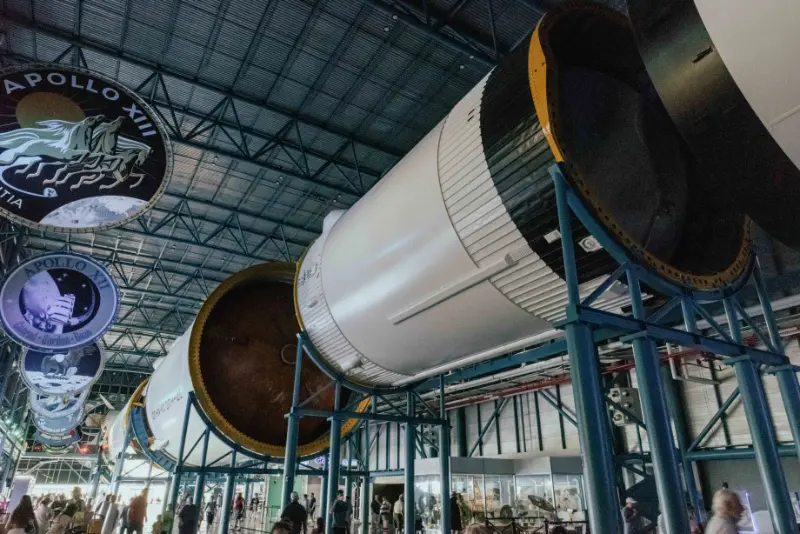
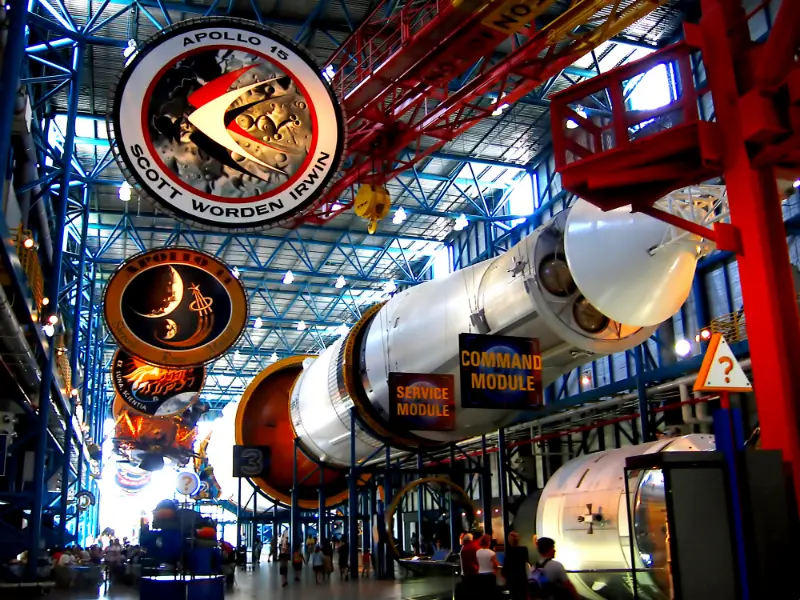
Base yourself on the Space Coast near Titusville, Cocoa or another location that suits your travel plans. Make the Kennedy Space Center Visitor Complex the main event of day one rather than a detour squeezed between beach stops. Use the site map to prioritize the exhibits that will matter to your group. Younger children may connect with the scale of a launch vehicle; teenagers may prefer engineering details and the challenge of calculating what rockets need to leave Earth. Check show schedules and any launches separately, because a launch is not guaranteed by a normal admission ticket.
Day two should slow down. Spend time discussing what you saw and choose one complementary nature activity. Merritt Island National Wildlife Refuge is near the space center and protects a remarkable estuarine landscape. Observe birds and habitats from permitted visitor roads or short trails rather than treating the refuge as another amusement attraction. NASA launch operations can restrict access, so consult the refuge’s official updates. Bring binoculars and ask the children to compare the technological landscape of the space center with the living landscape that shares the surrounding land.
Space Center accessibility and sensory planning
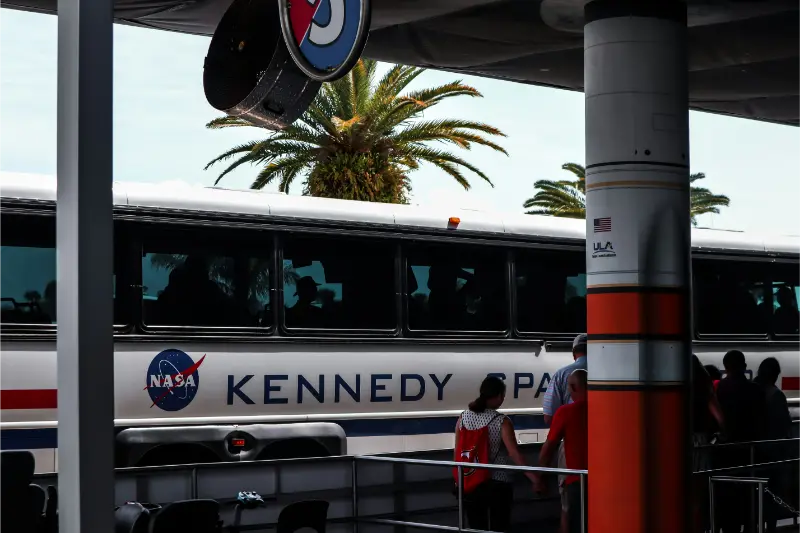
Kennedy Space Center publishes detailed accessibility information, including mobility-equipment rentals, accessible tour buses, captions and guidance for visitors with sensory needs. These services can change in availability; some require advance contact or are offered on a first-come basis. Request exactly what your family needs rather than assuming a single accessibility label covers every ride or experience. An immersive simulator may not suit every visitor, and choosing to skip it does not make the day incomplete.
Plan restrooms and rest stops before long bus tours or presentations. Ask how visitors using wheelchairs move between visitor areas, and whether a child with sensory sensitivity can access a quiet space after a loud experience. Bring familiar snacks where permitted and protect the early afternoon from over-scheduling. A grandparent who enjoys space history may prefer a slower visit focused on major historical exhibits, while a teenager might happily spend hours reading engineering displays. The itinerary can accommodate both with thoughtful meeting points.
Days 3–4: Orlando Science Center and a nature comparison
Move to Orlando for two nights rather than commuting back and forth across Central Florida. Orlando Science Center can support an absorbing hands-on day, but check operating hours and exhibition programming directly. Aim for one core question: How do scientists test an idea? Let children make predictions before an experiment and discuss whether an unexpected result is a failure or useful evidence. Avoid doing every floor in order simply because the building map suggests that sequence. Rest breaks are part of learning, not time lost from it.
On day four, add a state park or public natural area near Orlando, selected for safe trails and current access. An aquifer-focused visit can link the idea of water science with the springs and lakes that shape Central Florida. Do not promise that a spring is open for swimming or that a water rental is available without checking the park notice. The educational goal is to observe differences between clear spring water, vegetated shores and more developed urban waterways, even if no one enters the water.
Days 5–6: Tampa Bay science and the Gulf environment
Relocate toward Tampa and choose a science-oriented attraction that matches your children’s ages and interests. The Museum of Science & Industry, commonly called MOSI, is a recognizable option, but galleries and operating arrangements should be confirmed from its current site. Younger visitors may prefer tactile experimentation; older students may enjoy physical science, astronomy or how technology shapes modern life. Choose exhibits based on the questions from the beginning of the trip rather than buying every optional add-on.
Use the following day for an outdoor science comparison by the Gulf or a nearby wetland. A protected boardwalk can introduce estuary ecology without requiring a boat ride. Ask children to identify what happens where fresh water meets the sea and why some shorebirds probe mud while others feed offshore. Do not handle marine animals or remove organisms for a private collection. If a thunderstorm arrives, switch the afternoon to an indoor interpretive space or family discussion instead of trying to complete an unsafe trail.
Day 7: A citizen-science day that respects wildlife
A citizen-science activity can be as simple as photographing a plant from an approved trail and learning to identify it using reputable resources. The goal is observation, not disturbance. Use public data-collection projects only if their rules allow contributions from your location and age group; some encourage identifying plants or recording birds, while others have more specific protocols. Children should never upload precise locations of sensitive species if the program advises hiding that information. Adults should check digital privacy settings before sharing photographs that show children or a hotel’s address.
Make a small field report: location, habitat, date, weather, one observed species and one question still unanswered. Compare the report with the science-center displays from earlier days. This turns a park walk into a memorable learning exercise, and it requires no expensive equipment. For an older relative, a comfortable shaded bench and binoculars may provide a more enjoyable observation station than a lengthy hike. Photography from a legal public viewpoint is preferable to stepping into vegetation for a closer look.
Day 8: Optional Gainesville extension or a gentle final day
If your route continues north toward Gainesville, the Florida Museum of Natural History is an important learning institution, but its public exhibition building has been temporarily closed for expansion. The museum announced plans to reopen on November 23, 2026. For an October 2026 itinerary, do not assume that the Butterfly Rainforest and other public exhibitions are available. Check the museum’s official news and consider any off-site programs rather than publishing outdated opening hours. The schedule may make Gainesville an educational online resource, not a physical museum stop on your dates.
Alternatively, spend your final day revisiting a favorite idea and enjoying an easy outdoor location near the airport you will use. A trip can end with a surprising answer: a child who expected to prefer rockets may have become fascinated by mangrove roots, or someone who came for marine animals may become interested in weather science. Leave margin for packing and travel. End the vacation with a shared set of questions and observations rather than exhausted participants racing toward a flight.
Lodging, pacing and the true budget
Two-night bases reduce repeated check-ins. Choose Space Coast lodging for days one and two, Orlando for days three and four and the Tampa area for the final stretch if following the westward route. A rental car is usually the easiest method of linking the different regions, although you should compare parking charges and travel distances. Ask the hotel about connecting rooms, a refrigerator, elevators and reliable climate control rather than paying for amenities your family will not use.
The largest admission expenses may come from Kennedy Space Center and science museums. Build the budget around current official ticket prices, parking, meals, transport and optional experiences; avoid using a price from an old blog post. A basic notebook and binoculars can make a free nature day just as educational as a paid attraction. For accessibility, verify the actual routes and services at every venue. Families may travel with a stroller, wheelchair or hearing accommodation and need different arrangements at each stop.
The itinerary at a glance
| Days | Base | Learning focus |
|---|---|---|
| 1–2 | Space Coast | Rocket engineering and estuary ecology |
| 3–4 | Orlando | Hands-on experimentation and freshwater systems |
| 5–6 | Tampa area | Interactive science and Gulf coast habitats |
| 7 | Tampa area | Responsible citizen science |
| 8 | Departure or Gainesville | Review and optional museum visit when reopened |
Frequently asked questions
Is a rocket launch included in a Kennedy Space Center ticket?
No launch should be assumed. Spaceflight schedules can change; check official launch information and the visitor complex’s ticket policies separately.
Is the Florida Museum in Gainesville open in October 2026?
Its public exhibits are closed for expansion at that time, with reopening planned for November 23, 2026. Check its official page before planning a visit.
Can children of different ages enjoy the same itinerary?
Yes. Choose shared themes, then allow different depths of explanation and flexible time at exhibits. Not every child must complete every activity.
Do we need specialized scientific equipment?
No. A notebook, camera and binoculars are enough for basic observation. Follow site rules and avoid disturbing plants or animals.
Can travelers with disabilities enjoy the Space Center?
Many accommodations are available, but individual exhibits differ. Contact the site in advance for particular mobility, sensory or communication needs.