
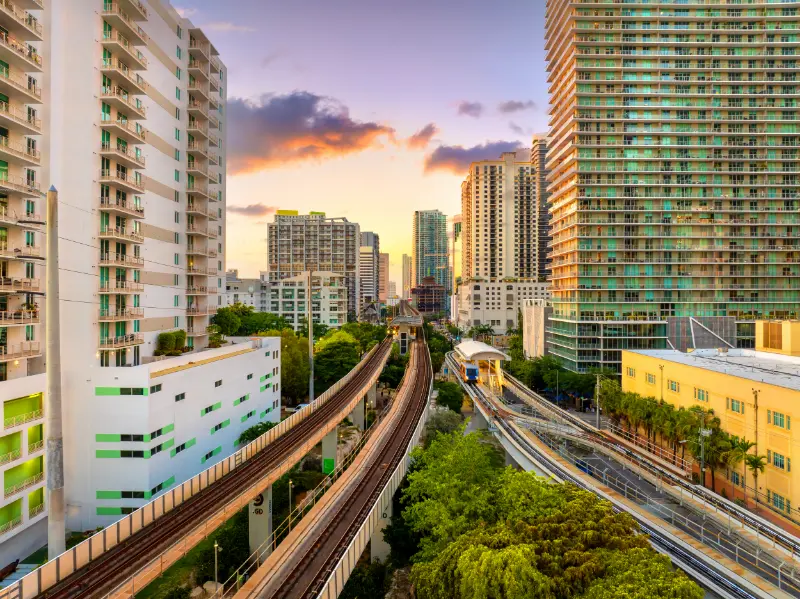
Miami is not uniformly easy to explore without a car, but Downtown, Brickell, and certain neighboring districts offer a useful mix of free local transportation and short walks. The most important distinction is that the City of Miami trolley system and Miami-Dade County's Metromover are two different networks. Both can help visitors make interesting city trips without paying for a rental car every day, but neither is a magic bus that reaches every beach, shopping district, or hotel. This three-day plan is designed around real transit boundaries, time for a meal or museum, and the needs of travelers from young children to seniors. It also explains where paid services or a taxi may still be the most sensible choice.
In this guide
- Understand which Miami you will actually be visiting
- The free Metromover: what it does best
- How the free City of Miami trolley differs
- Day one: Downtown and the waterfront at an easy pace
- Day two: Brickell and a more local urban perspective
- Day three: museums, markets, or a weatherproof alternative
- Miami Beach is a different transport decision
- Airport arrival and the cost of having no car
- Where to stay with kids, older adults, or limited mobility
- A cost-conscious plan that does not pretend everything is free
- Safety, official maps, and final checks
- Frequently asked questions
Quick planning table
| Day | Transit and experience |
|---|---|
| 1 | Metromover and Downtown waterfront |
| 2 | Brickell and optional City of Miami trolley |
| 3 | Museum, gallery or market near a transit stop |
| Important | City of Miami trolley does not serve Miami Beach |
Understand which Miami you will actually be visiting
Downtown Miami, Brickell, the Design District, Coconut Grove, Miami Beach, and Coral Gables are different areas, not interchangeable names for one compact district. A hotel advertised as 'Miami' can be far from the downtown transit loops, and a beachfront address may be in a different municipality altogether. Begin with the actual property street address and place it on an official system map. For a short trip based on free services, Downtown or Brickell often makes sense, but hotel prices may be higher than those in more distant areas. The full cost is not the room rate alone: consider arrival transfers, dining, paid connecting rides, and the physical effort required between stops.
Do not assume the City of Miami trolley reaches South Beach. The city explicitly notes that it does not operate to Miami Beach; that area has its own trolley system. Likewise, Metromover operates in the Downtown, Omni, and Brickell districts, not across the entire metropolitan area. When searching for accommodation, check the distance to a specific station or trolley stop, the conditions at street crossings, and whether the sidewalk route is comfortable in summer heat. Even a short walk can be unpleasant with a stroller, heavy luggage, or midday thunderstorms.
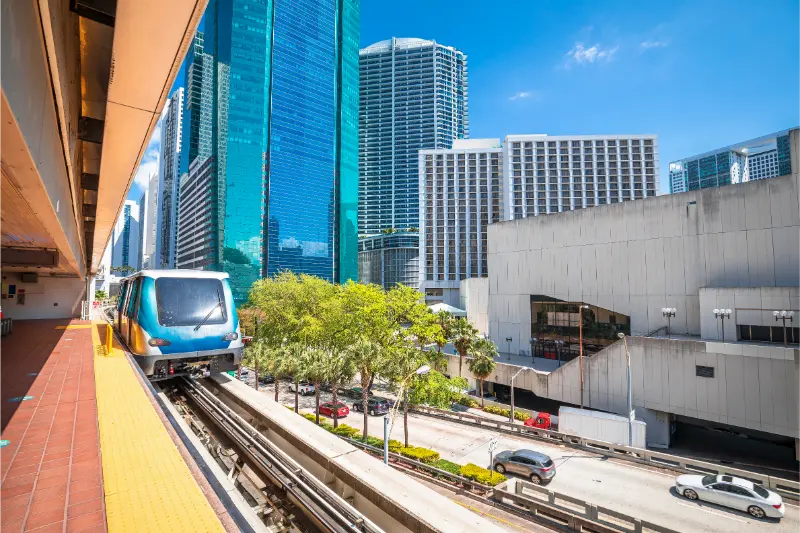
The free Metromover: what it does best
Miami-Dade Metromover is an elevated, automated system linking downtown destinations with the Omni and Brickell areas. It operates on a series of loops, so the right platform and direction matter. Riders can visit parts of the business district, connect near museums and waterfront attractions, and view downtown streets from above. Because it is free, you can comfortably make a short ride merely to reach a quieter restaurant district or reduce walking, but you should still check which stop has an operating elevator if your party cannot use stairs.
Officially published service hours and loop patterns change during maintenance and upgrade projects. In 2026 the operating schedule was adjusted while work continued, and occasional loop closures or replacement shuttles can occur. Use the current county service page on the actual day of travel, not an image of a route map saved a year earlier. If an elevator is out of service, a station that looks accessible on a map may not be usable for your particular journey. Plan a backup surface route, or choose a museum and meal that are close together on one side of the disruption.
How the free City of Miami trolley differs
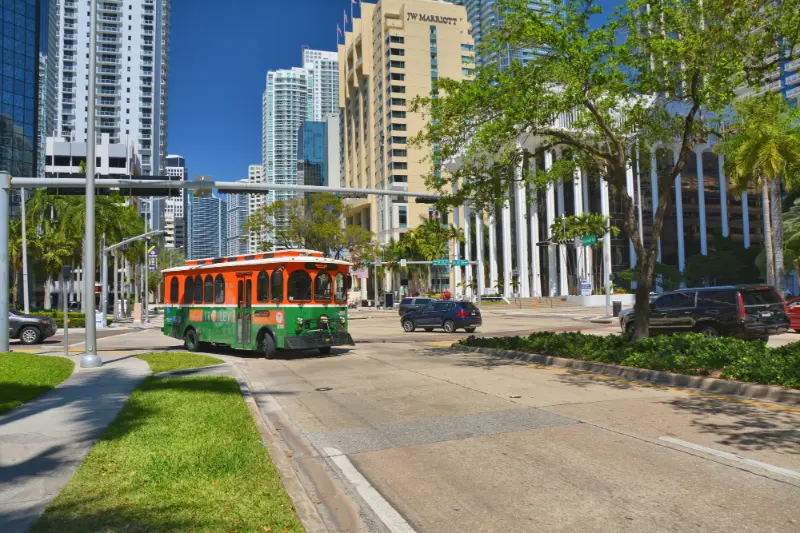
The City of Miami trolley routes run on streets, serving different neighborhoods and commercial corridors. Some lines connect with Metromover or Metrorail, but each has its own hours and alignment. A downtown tourist who boards without checking the route name could spend an hour traveling away from the intended destination. Check the sign on the trolley, ask the driver where the stop is if needed, and know the final direction of travel before sitting down. Printed maps or saved screenshots are especially helpful when phone data is unreliable.
The city describes the trolley as free and accessible. That does not mean every sidewalk near a stop has a smooth curb or that a vehicle will be immediately available. In a busy period, allow time for the next arrival rather than planning a connection with only a few minutes to spare. If traveling with a toddler, use a compact stroller and take care when boarding; keep children away from doors. If someone uses a wheelchair or mobility aid, verify how to request boarding assistance and identify a suitable return stop before beginning a longer excursion.
Day one: Downtown and the waterfront at an easy pace
Start near a Metromover station appropriate to your hotel and choose a comfortable morning loop through downtown. The elevated perspective helps make sense of where the waterfront lies in relation to the business district and major streets. Exit for a planned stop such as a public park, a museum, or a waterfront promenade, but check official operating hours and individual attraction admission fees. Free transport does not make the attractions it serves free. Pick one paid indoor attraction at most, leaving enough energy to enjoy the neighborhoods between destinations.
Lunch works best in a district where you have multiple options within walking distance. Don't assume a restaurant visible from an elevated station is a safe or direct walking route away; look for marked crossings. The afternoon can focus on a shorter waterfront visit and a rest at the hotel. Downtown Miami can become very hot, and afternoon storms sometimes arrive quickly. If a severe storm approaches, seek proper shelter in a building rather than waiting under trees, near exposed water, or on an uncovered platform.
Day two: Brickell and a more local urban perspective
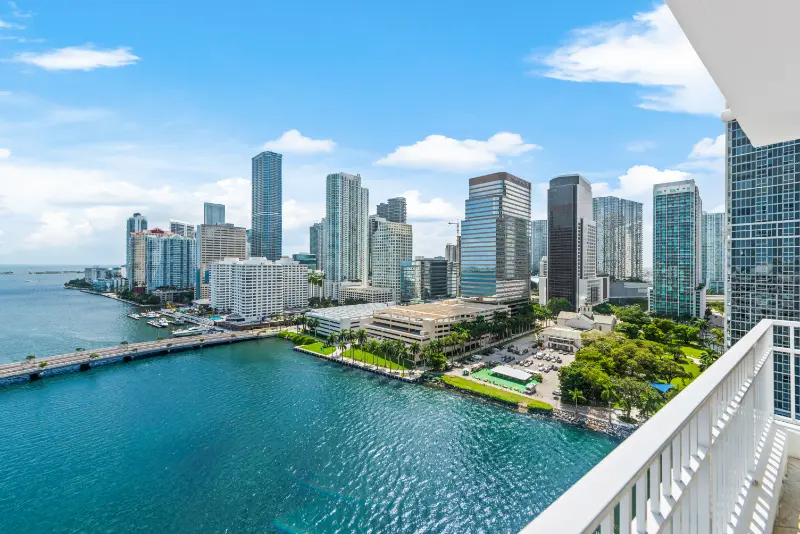
Brickell is a useful second-day area because it is connected by Metromover yet has a different rhythm from the core downtown streets. The neighborhood contains residential towers, restaurants, and busy traffic junctions, so plan the crossing points deliberately. Explore a few blocks at a time, perhaps combining a casual lunch with a shopping or coffee stop. It is tempting to fit Brickell, Coconut Grove, and Wynwood into one day because they all appear on a city map; doing so with a young child or older visitor can involve complicated connections and unnecessary time on roads.
If you want to extend the day beyond the Metromover service area, choose one extra neighborhood and inspect the City trolley map first. It may be appropriate to use a paid ride for the last portion rather than pretending the free route meets the door of every attraction. Remember that trolley service is designed partly for residents making ordinary journeys. Do not block aisles with oversized luggage or expect a tourist guide narration. Carry a small water bottle, a layer for strong indoor air conditioning, and a charged phone, but know that staff can assist with wayfinding if technology fails.
Day three: museums, markets, or a weatherproof alternative
Use the third day for an activity near a known transit stop, such as an art museum, a science center, or a market district, depending on your interests. Families with children may prefer hands-on exhibits, while travelers in their eighties may enjoy a smaller gallery with seating and a short visit. Check whether the attraction requires advance tickets, whether exhibits are suitable for the ages in your group, and whether it offers accessible restrooms. The aim is a satisfying final day that does not end with a frantic long transfer to collect luggage.
If thunderstorms make outdoor sightseeing impractical, move the main attraction to the morning or select a museum that can be reached with a short, safe walk. Do not use the free trolley as a substitute for a storm shelter if lightning is nearby. If the transit service is delayed, a direct taxi or rideshare can be a sensible emergency backup, particularly for older adults with mobility constraints or families with small children. Agree beforehand on an upper limit for paid local journeys so that convenience spending does not surprise you at the end.
Miami Beach is a different transport decision
Many visitors think of Miami and immediately imagine South Beach. You can certainly add a beach day, but it needs separate planning because neither the downtown Metromover nor the City of Miami trolley is a direct beach connection. Check Miami Beach's municipal services for current trolley routes, then find an appropriate paid bus or other transfer between the mainland and Miami Beach if needed. The most comfortable approach with children may be a single direct ride to the beach, followed by a short local trolley trip only if it genuinely adds value.
A beach outing also requires a different packing strategy from a museum visit. Bring sun protection, water, appropriate footwear, and a place to store wet items. Not all beach entrances are equally accessible, and a trolley stop near the coast can still leave a substantial distance across sand. Select a particular beach access point and check its restrooms, lifeguards, and accessible features instead of treating the island as one uniform attraction. Return earlier than the evening rush if someone in the party tires easily.
Airport arrival and the cost of having no car
You still need a realistic plan to reach your hotel from Miami International Airport or another regional airport. The airport is not on Metromover. Depending on your exact terminal and lodging, the journey may involve airport connections, Metrorail, bus services, or a direct paid transfer. Compare the price of a taxi or rideshare for your full party with the combined tickets and time costs of public transit. For three adults with heavy cases, the direct option may make sense even if the rest of the stay uses free transportation.
Families should not treat a ride-hailing booking as a guarantee that a suitable child seat will be supplied. Research child restraint requirements and arrange a service or approved equipment in advance. People using mobility equipment should check accessible vehicle availability and pickup instructions before landing. Never give a private individual cash for an unlicensed 'airport transfer' offered in the terminal. Follow posted official signs, verify vehicle and driver information, and keep everyone together when navigating pickup areas.
Where to stay with kids, older adults, or limited mobility
The best base is not necessarily the hotel beside the most exciting attraction. Look for an easy route to a transit station, an elevator that serves your floor, restaurants within a few blocks, and a reliable way back at night. If the hotel is on a steeply priced street, compare properties a little farther away only after reviewing crossing distances and transit frequency. A room with a kitchen can save meal costs, while a hotel breakfast may be more useful for a party that wants to leave early without searching for food.
For a wheelchair user, confirm that both the property entrance and the specific station elevator can be used. For a visitor with low vision, ask the hotel about street crossing options and accessible wayfinding. Noise-sensitive travelers may prefer a room facing away from a busy traffic corridor, while light sleepers should check the building's location near nightlife venues. A city holiday can be age-inclusive when the number of transfers and the amount of walking are chosen deliberately rather than left to chance.
A cost-conscious plan that does not pretend everything is free
Metromover and City trolley rides can be free while admissions, hotel rooms, meals, and cross-city transport remain substantial expenses. Make a separate line in your budget for paid connections, even if you hope to use few of them. Allocate one museum or other major attraction per day rather than stacking several ticketed stops. For meals, look at current menus and neighborhood grocery options before arriving. Miami restaurant bills may include taxes and service charges, so compare the final price rather than just the advertised dish.
Travelers can reduce costs by booking a hotel based on the complete transportation picture, not a misleading nightly rate. A bargain room requiring multiple rideshare trips may cost more than a centrally located property. Similarly, choosing every meal in a prominent waterfront tourist area can undo the savings from free transit. The most economical travel pattern is often a morning transit ride, one main attraction, a nearby lunch, and a modest evening outing. That is also comfortable for families and many seniors.
Safety, official maps, and final checks
Check the current Metromover page for loop changes, operating hours, and elevator alerts. Review the City trolley map and route updates before using a route you have not ridden before. Use well-lit pedestrian routes, obey traffic signals, and keep possessions secure as you would in any large city. Transit can be convenient without being effortless; occasional delays are normal and should be built into the plan.
Three days without a rental car work best when you embrace a small, coherent part of Miami. Downtown and Brickell provide plenty to see, and a selective trolley extension can make the stay more interesting. Do not measure success by covering the most neighborhoods. A well-chosen hotel and realistic daily walking limit create more time to notice the city's architecture, public spaces, and everyday life, while leaving you rested enough to enjoy what you came to see.
Frequently asked questions
Are Metromover and Miami trolley the same service?
No. Metromover is a free elevated system operated by Miami-Dade County, while the City of Miami trolley uses street vehicles and separate routes. Check both maps before combining them.
Can I take a free trolley directly from Downtown to South Beach?
The City of Miami says its trolley does not go to Miami Beach. Plan a separate intercity connection and check the Miami Beach trolley only after reaching that municipality.
Is Miami manageable without a car for someone who walks slowly?
It can be if you choose a central hotel, limit the daily area, verify station elevators, and allow paid rides as an alternative when heat or fatigue makes a transfer unsuitable.