
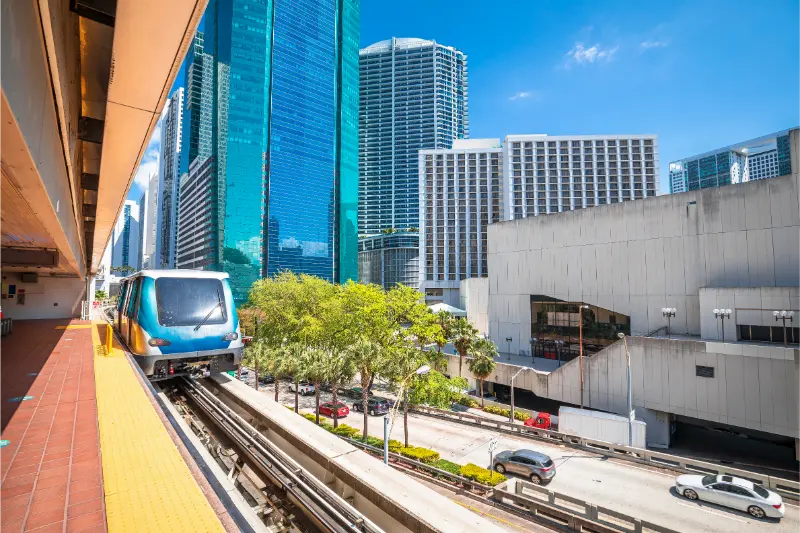
You can see a substantial part of Florida without renting a car, but only if you design the route around stations rather than trying to reproduce a driving itinerary. Brightline connects Orlando with several South Florida cities. That creates a practical eight-day trip with city walks, museums, waterfront neighborhoods and selected beaches reached by local transit or short paid transfers. It does not provide a rail line into the Florida Keys, Everglades National Park, Clearwater Beach or Kennedy Space Center. This itinerary starts near Orlando’s airport, spends time in West Palm Beach and Fort Lauderdale, and finishes in Miami. The emphasis is on realistic station transfers, sensible hotel locations and honest distinctions between a car-free city day and an excursion that still needs a shuttle or rideshare.
Understand the rail network before choosing accommodation
Brightline’s official station list includes Orlando, West Palm Beach, Boca Raton, Fort Lauderdale, Aventura and Miami. Orlando’s station is at Orlando International Airport, not in downtown Orlando or beside the famous theme parks. For travelers arriving by air this can be convenient, but a hotel across the metro area still needs a transfer. In South Florida, stations generally bring travelers closer to central districts, though the last mile is not automatically walkable. Check the address of each lodging property against the real sidewalk route and luggage load rather than trusting an approximate travel time displayed on a hotel search page.
Train times, fares, luggage allowances and promotions change. Book a departure with enough time for airport arrival, security and boarding rules instead of treating it like a subway service. A large family or group should compare total train fares with the cost of a suitable vehicle, parking and one-way rental charges. A solo traveler may find rail appealing even when the ticket is not the cheapest option. Accessible boarding and station arrangements should be confirmed if mobility equipment, a stroller or heavy bags will be part of the trip.
Day 1: arrive in Orlando with very little scheduled
The first day is best used for arriving, navigating immigration or baggage where applicable, and reaching a hotel that matches the next day’s plans. If you want an Orlando visit, a downtown or Winter Park stay may allow enjoyable neighborhood outings, but reaching those areas from the airport still requires organized transportation. If your flight arrives late, an airport hotel may be more practical. Do not buy an early train ticket that depends on an international flight landing exactly on time; delays and border processing can be unpredictable. Save the station location and transfer plan offline before departure.
Orlando’s appeal is broader than theme parks. A compact neighborhood walk, café and evening meal can make a pleasant arrival without the fatigue of major ticketed attractions. Travelers staying around Lake Buena Vista should understand that resort buses may connect to specific destinations, but they are not a general substitute for statewide transportation. Decide whether Orlando is a city you want to explore or only a place where your flight lands. Either choice is valid, and the answer determines whether two nights here represent good use of a short vacation.

Day 2: one Orlando experience with careful transfers
Select one activity that can be reached without a complicated string of connections. A downtown walk near Lake Eola and an indoor exhibition can work for travelers who prefer a city day. A theme-park visit is possible with the appropriate transfer plan, but add the cost of reaching the resort to the admission price. Theme parks may have their own internal transportation once you are within the property; that does not solve the journey from your hotel to the resort entrance. Confirm the return pickup location and transport availability after closing, especially if staying for nighttime shows.
Keep the evening light so that departure on day three remains pleasant. Pack clothing into manageable bags and avoid carrying large souvenirs that will become awkward on a train. Check your booked ticket, luggage limits and station arrival instructions. Those with mobility limitations should arrange assistance before travel and choose a room where they can access the platform transfer without heavy staircases or long walks. It is better to enjoy one Orlando destination fully than to spend the day waiting for four separate rides.
Day 3: rail to West Palm Beach and an easy downtown afternoon
Travel from Orlando to West Palm Beach on a reserved Brightline departure. Check current station details and ground transport on the official Brightline station page. Once checked into accommodation near central West Palm Beach, spend the afternoon at a modest walking pace. Clematis Street and nearby public waterfront areas offer restaurants, storefronts and places to rest. The Norton Museum of Art is a strong cultural option; verify opening days and ticket rules with the museum rather than assuming a weekday entrance is possible. Do not combine several remote beaches with a downtown day just because they share a county name.
West Palm Beach is not identical to the island of Palm Beach, and a hotel labeled “near Palm Beach” may be far from the places you want to reach. Decide whether a pedestrian-friendly downtown base matters more than immediate sand access. If an ocean beach is essential, plan the precise transit or rideshare journey in advance and check where the return pickup can happen. Hot weather makes a long unsheltered walk less attractive than a map suggests. Finish with dinner close to the hotel so you do not have to negotiate an unfamiliar transfer after dark.

Day 4: choose a Palm Beach County day that is actually reachable
The second West Palm Beach day should be built around one primary interest. Art lovers can spend more time at a museum; others may explore a neighborhood market or take an organized outing with a stated pickup point. Palm Tran provides local bus routes throughout the county, but these are not a one-step tourist shuttle to every beach or park. Check the Palm Tran trip-planning site for live schedules, detours and fare arrangements. A ride that requires a bus, a long walk and another bus may not be sensible for a visitor with an infant or limited stamina.
If traveling with children, choose a shorter outing and one indoor backup. If traveling with a wheelchair, confirm that every segment of the route is accessible, including the nearest bus stop and destination entrance. For older travelers, a half-day outing followed by an air-conditioned afternoon can be more comfortable than continuous touring. Public waterfronts change during events and construction; you need not force a visit to a closed pier or plaza. This is the benefit of a two-night stay: the day can be rearranged around actual conditions rather than a fixed timetable.
Day 5: Fort Lauderdale beyond a quick train stop
Ride south to Fort Lauderdale. The railway station is in the city, but the beach is not immediately outside the door, so choose your hotel with care. A stay around the central business district can suit restaurants, the Riverwalk and cultural stops; a beach hotel provides ocean access but may require another journey each time you want to use the train. Don’t confuse Water Taxi, city trolley, bus service and walking routes. They are different systems with different fares, routes and operating days, and not every attractive waterfront connection runs all evening.
Use the afternoon for a walk by the New River, historic streets or one museum rather than trying to cross the city several times. Check the last return journey before buying a ticket for a boat excursion. A waterfront meal can be enjoyable, but a table beside a busy dock may not suit families needing quiet space. If rain arrives, switch to an indoor cultural stop rather than remaining near open water during lightning. Give this city a genuine overnight stay instead of treating it as a transit lounge between West Palm Beach and Miami.
Day 6: Fort Lauderdale beach or a slower cultural morning
Plan one defined morning excursion to the coast, checking how to travel from your hotel to an actual public beach access. Once there, choose a comfortable patch near restrooms and lifeguard areas when available. The Atlantic may have strong currents, and a car-free vacation does not change water safety needs. Visitors who do not swim can enjoy a short promenade and waterfront breakfast before returning to the city. Avoid moving between distant beaches simply to collect names on a checklist. Time spent waiting for transportation can erase the benefit of an otherwise pleasant day.
If you prefer not to visit the beach, explore a museum, gallery or shopping neighborhood at an easy pace. Travelers with sensory sensitivities can select morning hours with lower crowds and return to the hotel before busy evening events. By afternoon, verify the next day’s rail reservation and Miami lodging. That preparation matters especially when a hotel in Miami Beach is advertised as “Miami” but lies across a bay from the Brightline terminal. Public transit can connect major areas, yet transferring with several bags may be uncomfortable; choose a legal taxi or rideshare for the difficult last mile if needed.
Day 7: MiamiCentral, Metromover and a manageable neighborhood
Take the train to MiamiCentral and focus on the downtown or Brickell area, where Miami-Dade’s free Metromover provides local connections. The county Metromover page explains the downtown, Omni and Brickell loops and publishes service updates and elevator status. The train is useful, but not a universal solution to the city. Miami Beach, Little Havana and the southern neighborhoods require other transport modes. A day mixing the waterfront, a museum and one well-chosen neighborhood is more enjoyable than attempting six unrelated landmarks.
Consider an afternoon at a cultural venue close to a Metromover stop, but verify the walking route from the platform. If an elevator is out of order, a step-free journey can change substantially. Midday heat may be uncomfortable around downtown’s tall buildings and concrete streets, so use indoor breaks. For dinner, decide whether your accommodation is in downtown Miami or across Biscayne Bay. You will save money and fatigue by staying where most of your chosen activities take place rather than repeatedly crossing the city late at night.
Day 8: Miami departure or one short bonus visit
On departure morning, keep your plan close to the airport transfer. Miami International Airport connects to Metrorail through the appropriate transit infrastructure, but the precise journey from your hotel depends on the location and current service. The Miami-Dade Metrorail information is a useful starting point. A trip on the train may be economical with light luggage, while a direct airport transfer can be more comfortable for a family with strollers or heavy baggage. Do not confuse the airport with the port used by cruise passengers.
If you have a late flight, consider a single small museum or neighborhood walk that can be abandoned without financial loss. Do not check out, head for a distant beach and assume you can recover luggage from storage without queues. Allow time for unexpected rail or road delays and airline requirements. A car-free trip should end with the same realistic pacing that made the preceding days enjoyable. A few calm city experiences often leave a stronger memory than the frustration of one missed connection.
What this itinerary cannot easily cover
Brightline does not operate to Key West, the Everglades, the major Gulf Coast beach cities or most natural springs. A traveler can still visit some of these locations using organized tours, but that changes cost, flexibility and how long the day becomes. Do not label a destination “car-free” merely because a tour bus can collect you at six in the morning. A seven-hour round-trip excursion is not equivalent to taking a tram across downtown. If nature and remote beaches are your top priorities, a short period with a rental car or a different vacation design may be more practical.
Similarly, wheelchair accessibility must be evaluated from hotel room to station, bus stop and attraction—not merely from the rail vehicle’s specifications. People with toddlers need to check child-restraint requirements for any road transfer. Travelers with service dogs should verify the operator’s reservation rules. Transport links can change with maintenance, severe weather and special events. Keep a fallback route and enough flexibility to replace an activity rather than miss the next night’s accommodation.
Budget and hotel decisions
Choose hotel locations by the total cost of the trip, not room price in isolation. A cheaper suburban room may require two expensive rideshares each day; a central property may avoid those costs but charge resort fees or higher taxes. Add train tickets, local transit, station transfers, meals, admissions and possible luggage storage into the budget. Advance rail tickets can cost differently depending on date and flexibility. For a family of four, calculate the full amount rather than assuming trains are always cheaper than driving. For a solo traveler, the ability to read or relax on the train may be worth an additional fare.
Minimize hotel changes if you need more rest: two nights Orlando, two West Palm Beach, two Fort Lauderdale and one Miami night is one option, while three nights Miami and fewer intermediate stays may suit travelers with limited mobility. A hotel within an easy walk of a station is not always quiet. Review neighborhood characteristics, room accessibility and safety of the actual pedestrian route after dark. Book a refundable room when seasonal weather uncertainty is high, and keep confirmation details available without Internet service.
Train-based itinerary table
| Day | Overnight base | Main idea | Important connection |
|---|---|---|---|
| 1 | Orlando | Arrival and local meal | Airport to hotel |
| 2 | Orlando | One city or resort activity | Local transfer |
| 3 | West Palm Beach | Brightline and downtown | Station to lodging |
| 4 | West Palm Beach | Art or selected outing | Palm Tran if useful |
| 5 | Fort Lauderdale | Rail and New River | City station transfer |
| 6 | Fort Lauderdale | Beach or museum | Local ride to coast |
| 7 | Miami | Downtown and Metromover | MiamiCentral arrival |
| 8 | Departure | Airport transfer | Metrorail or direct ride |
Frequently asked questions
Can I visit Florida without driving at all?
Yes, if you choose areas served by rail and local transit, and accept that some remote parks and beaches are impractical without organized excursions or car transfers.
Does Brightline stop at the Orlando theme parks?
No. Its Orlando station is at the airport. You need separate ground transport to a theme park or a hotel in another part of Orlando.

Can I walk from every station to the beach?
No. Fort Lauderdale and other South Florida stations are not generally beachfront. Research the last-mile transfer before choosing a hotel or planning a beach outing.
Is Miami's Metromover really free?
The county describes it as a free people mover serving the downtown, Omni and Brickell areas. Check current service alerts because maintenance can affect loops and accessibility.
Would I save money compared with a rental car?
Possibly, especially as a solo traveler, but it depends on ticket dates, group size and local transfer costs. Compare full door-to-door totals instead of headline fares.
Official planning resources
Consult Brightline stations, Palm Tran, Miami-Dade Metromover and Metrorail. This route was checked in October 2026 and should be reverified before departure.