
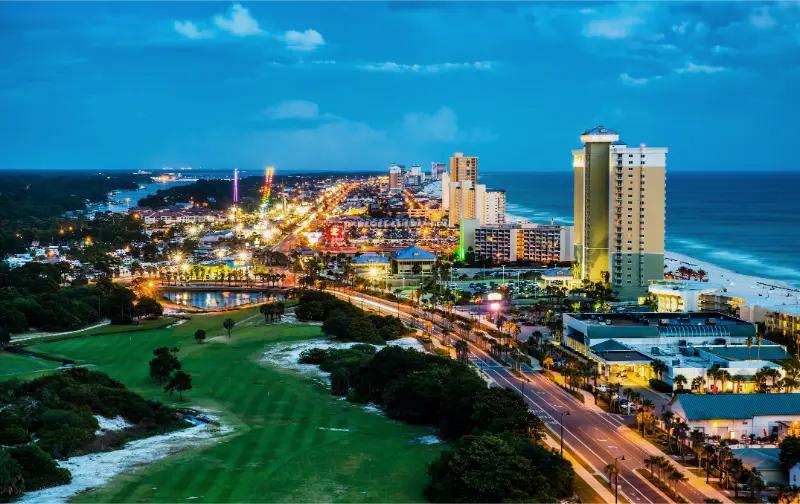
Fall can be one of the most attractive seasons in Panama City Beach because the destination often keeps a beach-vacation feel after the busiest summer weeks fade. Warm days can extend well into the season, event calendars become interesting and travelers may find more space on the sand. The tradeoff is that early and mid-fall overlap Atlantic hurricane season, so flexibility and weather awareness matter more than they do in a simple “fewer crowds” marketing description.
Quick planning summary
- Best for: Couples, retirees, families with flexible calendars and road-trippers who want a warmer Gulf Coast trip with a calmer rhythm.
- Ideal trip length: 3–6 nights works well; refundable bookings are especially valuable in the earlier part of fall.
- Getting around: A car gives flexibility for events, parks and day trips, but staying near Pier Park can simplify festival weekends.
- Most important planning point: Balance attractive shoulder-season conditions with realistic hurricane-season planning.
September, October and November are not the same
September can still feel very summery, with warm water and significant heat. October often offers a pleasant balance for many travelers, while November tends to bring cooler evenings and less reliable swimming expectations. Instead of packing for “fall,” check the short-term forecast and water expectations for your exact dates. Layers become increasingly useful later in the season.
Hurricane season changes the booking strategy
A fall trip should be built with flexible reservations and a clear understanding of cancellation or rebooking conditions. Do not obsess over long-range storm forecasts months in advance, but do pay attention as the trip approaches and follow official guidance if a tropical system threatens the area. Travel insurance may be useful when its covered reasons match your concerns; read the policy rather than assuming every weather disruption is included.
Fall is excellent for events and evening time outdoors
Panama City Beach often hosts festivals, concerts, sporting events and seasonal gatherings in fall. An event can be a great reason to choose a weekend, but it can also affect lodging demand, parking and traffic. If the event is essential, book nearby or arrive early. If it is not essential, avoid building the entire trip around a schedule that could change.
Beach days become easier to pace
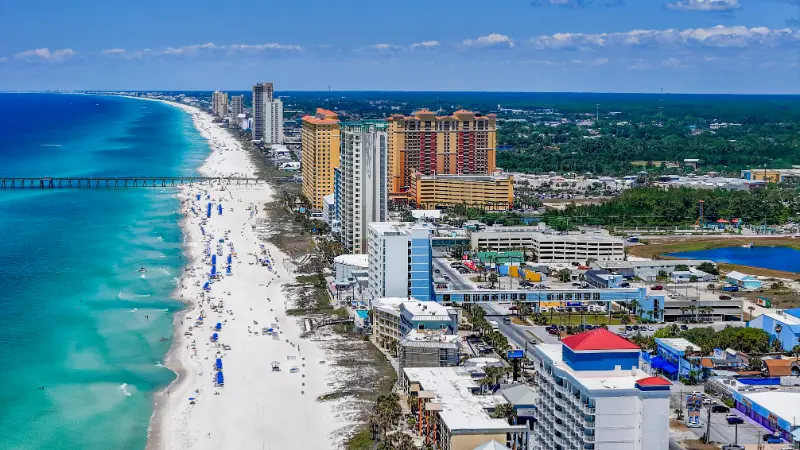
When heat begins to moderate, long walks, pier visits and late-afternoon beach time can become more comfortable. You may not need the same long midday retreat as in July, although sun protection and hydration still matter. Check beach flags every day; seasonal timing does not remove rip-current or marine-life hazards.
Nature and cycling gain value
Conservation Park, St. Andrews State Park and nearby trails are especially attractive when mornings are cooler. Cycling can also feel more comfortable than in midsummer. Bring water, insect protection appropriate to conditions and a backup plan after heavy rain. Fall sunlight and sunsets can make these simple outdoor days more memorable than a crowded attraction schedule.
Choose accommodation for the trip you are actually taking
Panama City Beach stretches for miles, so the cheapest room is not automatically the best value. A property near Pier Park can reduce evening driving, the West End can feel calmer, Middle Beach keeps many attractions reasonably close, and the Grand Lagoon side can be convenient for boating and St. Andrews State Park. Compare the real route from the room to the beach, parking area, elevator, pool and restaurants rather than relying on the phrase “beachfront” alone.
Fall travelers should compare refundable rates and pay attention to event weekends. A property with a good balcony and easy beach access can be especially valuable when the weather is comfortable enough to spend more time outside. If a tropical system is being monitored, follow the property’s communication and official local guidance rather than making decisions based on social-media rumor.
Always compare the total accommodation price. Parking, resort fees, cleaning charges, taxes and cancellation conditions can change the ranking between a hotel and a condo. For longer stays, a kitchen and laundry may save both money and time. Travelers with mobility needs should confirm the complete accessible route directly with the property, including parking, entrances, elevators, bathrooms and access to any advertised beach or pool facilities.
Driving, transit and realistic distances
The destination is long rather than compact. Front Beach Road can make a short mileage look deceptively easy on a map, especially during busy periods, so group activities by area. A car remains the simplest option for travelers who want state parks, Panama City, grocery runs and day trips, but it is not the only possibility. Bayway provides public transportation in Bay County and also operates flexible services in defined zones; schedules, service areas and fares should be checked close to travel because they can change.
If you plan to rely on walking, rideshare or transit, choose the accommodation first and then test every important trip from that exact address. A resort that works beautifully without a car for beach, dinner and Pier Park may be inconvenient for St. Andrews State Park or an early-morning boat departure. Likewise, renting a car for one or two targeted days can be more efficient than keeping one for an entire resort-focused stay when parking costs are high.
Beach safety should shape the day, not interrupt it
Panama City Beach uses a beach warning flag system, and the safest habit is to check the current flag before anyone enters the Gulf. Green still means use caution, yellow indicates a medium hazard, red indicates a high hazard, purple warns of dangerous marine life, and double red closes the water to the public. Water can look attractive from a balcony while currents remain strong, so visual impressions are not a substitute for the posted warning. When lifeguarded areas are available, they are the better choice for families, less-confident swimmers and anyone unfamiliar with Gulf conditions.
Rip currents, lightning, heat and changing surf are the hazards most likely to alter an otherwise ordinary beach day. Keep children within the level of supervision their swimming ability requires, do not treat inflatables as lifesaving devices, and move indoors when thunderstorms approach rather than waiting for the rain to become heavy. A flexible itinerary makes this much easier: if the Gulf is unsafe, switch to a park, museum, shopping block or long meal and return only when conditions are appropriate.
Food and budget planning without making the trip feel cheap
Planning tipThe easiest way to control spending is to decide which experiences deserve money before arrival. Beach time, sunset, public parks and walking can fill large parts of the day, leaving room for one paid attraction, boat trip or special meal that actually matters to the group. A condo kitchen is useful for breakfast, cold drinks, snacks and simple lunches, while a hotel traveler can still save by keeping fruit, water and familiar snacks in the room.
Avoid driving across the entire beach for every meal. Choose restaurants close to the activity you are already doing, and treat one destination meal as the exception rather than the daily rule. Families should compare children’s menus and waiting times, while couples and solo travelers may get better value from an early dinner or a casual seafood lunch followed by sunset. Prices and operating schedules change, so check current menus and ticket pages before building a day around a specific offer.
Common fall mistakes
- Assuming September will feel like cool autumn weather.
- Booking the cheapest nonrefundable rate without understanding weather risk.
- Ignoring festival dates that can change parking and lodging demand.
- Packing only beachwear for a late-November trip.
- Believing fewer crowds mean the Gulf is automatically safer.
- Treating social-media storm speculation as official emergency information.
Useful Wonderful Florida guides to combine with this article
Continue planning with best time to visit Panama City Beach, Panama City Beach Conservation Park, Pier Park and three-day Panama City Beach itinerary.
Official information to check before travel
- Visit Panama City Beach
- City of Panama City Beach beach flag information
- City of Panama City Beach Leave No Trace information
Opening hours, parking arrangements, beach conditions, transportation services and local rules can change. If a specific feature is essential to the day, confirm it with the operator or public agency shortly before leaving your accommodation.
Final planning advice
Fall is a strong choice for travelers who want warmth with a little more space, but it is not a season for rigid bookings. Choose flexible rates, watch official weather information as the trip approaches and use the cooler parts of the season for walking, cycling and outdoor events. When conditions cooperate, the Gulf Coast can feel relaxed without feeling closed for the year.
One more practical planning point
Fall road-trippers should keep fuel, medication and a small amount of food and water available when weather is unsettled, without treating every forecast as a crisis. The point is ordinary readiness. If official guidance changes, having basic supplies and flexible lodging makes it easier to alter the route calmly rather than making rushed decisions.