
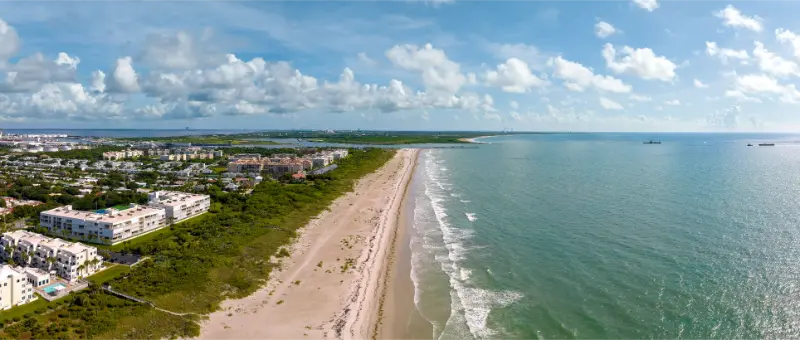
The Thousand Islands Conservation Area shows a completely different side of Cocoa Beach. Instead of surf and open Atlantic shoreline, the landscape is a network of mangrove islands, shallow lagoon water and narrow channels on the Banana River/Indian River Lagoon side of the barrier island.
Most of the conservation area is best experienced by canoe or kayak, which makes planning more important than for a normal park. Wind, heat, route familiarity, paddling ability and wildlife awareness all matter. The reward is a quiet landscape that can feel surprisingly removed from the hotels and traffic only a short distance away.
This is not the place to improvise an ambitious paddle if your group has never been in a kayak. Beginners can still enjoy the area, but a guided outing or a shorter route is a better introduction than trying to explore every channel independently.
Quick planning summary
- Best for: kayakers, wildlife watchers, adventurous families with paddling experience and travelers who want to see the lagoon side of Cocoa Beach
- How much time: 2–4 hours for a relaxed paddle; allow extra time for setup, route finding and wind or tide conditions
- Current cost: The conservation area itself is free; paddling costs depend on whether you bring or rent equipment
- Current hours/status: Day use only. Access and paddling conditions depend on daylight, weather and current site rules
- Location: Primary county-managed island access is from 599 Ramp Road, Cocoa Beach, FL 32931; a short land trail is also accessible from Fourth Street South
Why this stop is worth including
Thousand Islands Conservation Area Cocoa Beach works best when it adds a different rhythm to the rest of your Space Coast itinerary. Brevard County trips can become repetitive if every day is only beach, rockets or long drives. This stop gives you a specific reason to slow down, notice the local landscape or history, and spend time somewhere that many first-time visitors miss.
The practical question is not whether every traveler should visit. It is whether the experience solves a need in your own itinerary: wildlife, local history, a low-cost family break, easy walking, photography, shade, a waterfront view or a cultural stop between larger attractions. Matching the place to the day usually creates a better trip than collecting famous names.
I would also keep the visit flexible. Florida weather, wildlife activity, launch operations and seasonal events can change how long a stop deserves. Protect the main experience first, then decide on site whether an optional trail, exhibit or second activity is still worth your energy.
What to see and do
Launch from Ramp Road
Ramp Road is the primary access point for the county-managed islands. Organize boats, PFDs, water and sun protection before launching so you are not blocking the ramp while making last-minute adjustments.
Give this part of the visit enough time to be meaningful, but do not force every optional feature. A strong Florida itinerary leaves some energy for the next stop and some room for weather, traffic or an unexpected wildlife sighting to change the plan.
Paddle mangrove channels
The narrow channels are the defining experience. Move slowly, watch for shallow water and avoid damaging mangrove roots. A map or GPS track is useful because multiple channels can look similar from water level.
Give this part of the visit enough time to be meaningful, but do not force every optional feature. A strong Florida itinerary leaves some energy for the next stop and some room for weather, traffic or an unexpected wildlife sighting to change the plan.
Look for lagoon wildlife
Dolphins, manatees, rays, fish and many bird species may use the broader lagoon system. Sightings are never guaranteed, and the best wildlife encounters happen when paddlers give animals space rather than chasing them for photographs.
Give this part of the visit enough time to be meaningful, but do not force every optional feature. A strong Florida itinerary leaves some energy for the next stop and some room for weather, traffic or an unexpected wildlife sighting to change the plan.
Try the short land trail
Travelers who do not want to paddle can still experience a small portion of the conservation area from the Fourth Street South trail. It is not a substitute for the island network, but it adds value for mixed groups.
Give this part of the visit enough time to be meaningful, but do not force every optional feature. A strong Florida itinerary leaves some energy for the next stop and some room for weather, traffic or an unexpected wildlife sighting to change the plan.
Plan for wind, not only rain
A sunny forecast does not automatically mean easy paddling. Wind can make open lagoon crossings tiring and change the return journey. Check wind speed and direction before committing to a route.
Give this part of the visit enough time to be meaningful, but do not force every optional feature. A strong Florida itinerary leaves some energy for the next stop and some room for weather, traffic or an unexpected wildlife sighting to change the plan.
Protect phones and car keys
Waterproof storage matters here more than at a boardwalk park. Use a dry bag for keys, documents and electronics, and secure items rather than placing them loosely in the kayak.
Give this part of the visit enough time to be meaningful, but do not force every optional feature. A strong Florida itinerary leaves some energy for the next stop and some room for weather, traffic or an unexpected wildlife sighting to change the plan.
Leave extra navigation time
Mangrove channels can slow progress and create uncertainty for first-time visitors. Turn back before the group becomes tired; the return paddle still requires energy and may face different wind conditions.
Give this part of the visit enough time to be meaningful, but do not force every optional feature. A strong Florida itinerary leaves some energy for the next stop and some room for weather, traffic or an unexpected wildlife sighting to change the plan.
How much time do you really need?
2–4 hours for a relaxed paddle; allow extra time for setup, route finding and wind or tide conditions is a realistic starting point. The lower end works for travelers who prefer highlights, while the upper end suits photographers, families taking breaks, people reading exhibits carefully or visitors who simply enjoy a slower pace.
Build a clear decision point halfway through the visit. If everyone is still interested and conditions are comfortable, continue. If heat, hunger or fatigue is building, leave before the final hour becomes the part everyone remembers. On a road trip, finishing one stop with energy left is usually more valuable than completing every trail or display.
Best time of day and best season
Morning is the safest default for most Space Coast outdoor stops. Temperatures are usually easier, parking is simpler and wildlife can be more active. Indoor or mostly shaded attractions can be scheduled later, which lets you preserve the coolest hours for walking, paddling or beach access.
Winter and spring are generally comfortable for outdoor exploration. Summer brings stronger heat, humidity and afternoon thunderstorms, while hurricane season requires more attention to closures and post-storm conditions. Check the hourly forecast rather than only the daily icon, especially when wind, lightning or heat index can change the experience.
Getting there and parking
Parking for island access is associated with the Ramp Road area, while the short walking trail has separate roadside access near Fourth Street. Confirm where you are actually starting before meeting rental equipment or other members of your group.
Brevard County is long north to south, and repeated backtracking can waste much more time than it appears to on a map. Group nearby stops into a Titusville/Merritt Island day, a Cocoa/Cape Canaveral day, or a Melbourne/Palm Bay day whenever possible. Causeway traffic and launch-day demand can make short distances feel longer.
Costs, reservations and value
The current planning snapshot is: The conservation area itself is free; paddling costs depend on whether you bring or rent equipment. Treat that as a reference point, not a guarantee for a trip scheduled in 2028. Fees, pass systems, guided-tour prices and parking policies can change, and some otherwise free places charge for special programs or rentals.
For paid experiences, judge value by what the price actually adds. A guided tour may provide access you cannot obtain independently; a parking pass may be essential rather than optional; a rental can transform a waterfront visit into a paddling experience. Spend on the feature that changes the day, not on every add-on simply because it appears during booking.
Food, water and comfort
Carry water even for short nature stops. Florida humidity can make a one-hour walk feel more demanding than the same distance in a cooler climate. For beaches and paddling areas, add sun protection and a change of dry clothing; for hammocks and wetlands, insect repellent can matter just as much.
Do not assume a small sanctuary or park has a café simply because it has restrooms or an education center. If food is important for children, medication schedules or senior travelers, solve that before arrival. A simple snack and water in the car can prevent a good visit from ending early for the wrong reason.
Families with children
Older children and teenagers with paddling experience can love the mangrove channels. Younger children need properly fitted PFDs, close adult supervision and a conservative route. A guided trip can remove much of the navigation burden for families.
For preschool and early-elementary children, keep the goal concrete: one boardwalk, one wildlife search, one old building or one beach session. Older children can help navigate, compare habitats or photograph details. Giving children a small role usually works better than asking them to appreciate every adult explanation.
Teenagers
Teenagers often respond better when they can choose part of the experience. Offer two realistic options—photography versus a longer loop, beach versus boardwalk, exhibit reading versus outdoor time—and let them control one decision. A phone can become a camera, bird-identification tool or map instead of automatically becoming a distraction.
Space Coast stops also become more relevant when connected to real interests: environmental science, aerospace, surf culture, design, local history or wildlife photography. Avoid stretching a visit long after the main reason for coming has finished.
Senior travelers and multigenerational groups
For multigenerational groups, plan around the slowest comfortable pace rather than the fastest walker. Identify benches, shade, restrooms or a visitor center early, and allow more active travelers to add a short optional loop while others rest. Shared travel does not require every person to complete exactly the same distance.
Morning timing is particularly useful for older travelers who are sensitive to heat. If balance or stamina is a concern, choose the most predictable surface first and leave optional sand, rustic trail or long pier sections until you know how the group is feeling.
Accessibility and comfort
The island experience is primarily paddling-based and therefore not universally accessible. The short land trail provides a limited non-paddling option; travelers with specific mobility needs should check current surface and access conditions.
Accessibility can change with construction, storms, maintenance, water levels and temporary closures. If an accessible restroom, paved route, beach wheelchair, close parking space or step-free entrance is essential, confirm it directly with the managing organization shortly before travel rather than relying on an old review.
Wildlife and environmental responsibility
Wildlife sightings should never depend on approaching, feeding or surrounding an animal. Give manatees, dolphins, alligators, tortoises and nesting birds enough space to continue normal behavior. Use marked paths and boardwalks, and avoid trampling dune or mangrove vegetation to improve a photograph.
On the Space Coast, habitat protection is part of the travel experience. Beaches may contain sea-turtle nests, scrub supports species that occur in few other places, and lagoon shorelines are sensitive to disturbance. Small choices—staying on crossovers, packing out trash and keeping lights controlled at night—matter.
Weather and backup planning
Florida weather rewards flexible scheduling. For a mostly outdoor stop, identify an indoor museum, café or historic district that can replace part of the day if lightning or heavy rain develops. For a small indoor attraction, keep a nearby waterfront or boardwalk available in case the weather becomes unexpectedly pleasant.
During and after tropical storms, closures can outlast the rain itself. Trees, boardwalks, beaches and utility-managed sites may reopen on different schedules. Always use the current official status page if severe weather affected the area recently.
Photography tips
Early and late light is usually softer outdoors, but the best photograph is often the one that does not interfere with the experience. Carry only the equipment you will actually use, protect it from salt spray and sudden rain, and never step beyond a barrier or approach wildlife for a tighter frame.
If one person in the group wants to photograph seriously, agree on a meeting point and a time limit. That allows patience without forcing the rest of the group to wait through every angle, bird movement or change in light.
How it compares with nearby alternatives
Choose Thousand Islands over the Atlantic beach when you want calm-water exploration, mangroves and wildlife. Choose Lori Wilson Park when you want easy facilities and sand, or Merritt Island National Wildlife Refuge when you prefer wildlife viewing largely from roads and trails.
Nearby attractions are most useful when they contrast with one another. Pairing a nature stop with local history, a beach with a museum, or a structured paid experience with a free flexible park generally creates a better day than stacking three similar attractions back-to-back.
How to combine it with other Wonderful Florida guides
For a broader Space Coast itinerary, combine this stop with Merritt Island National Wildlife Refuge, Historic Cocoa Village and Brevard Zoo. All of these guides are scheduled earlier on Wonderful Florida, so the internal links do not depend on unpublished future articles.
A realistic half-day plan
Step 1: protect the main reason you came
Start with the element most dependent on good weather, low crowds, active wildlife or a fixed opening time. Do not use the first hour on a minor detour if the core experience could become less comfortable later.
Step 2: take a real break
After the primary activity, stop for water, shade, food or seating before adding anything else. This is when families often discover that children need a reset, senior travelers need rest, or the weather is changing faster than expected.
Step 3: keep the final stop optional
Make the last activity flexible. A nearby boardwalk, beach, downtown or museum is useful only if the group still has energy. Leaving an optional hour uncommitted is one of the easiest ways to make a Florida road trip feel less rushed.
Where to stay on the Space Coast
Titusville is the most practical base for northern Space Coast attractions, Merritt Island and Cocoa work well for central Brevard, and Cocoa Beach or Cape Canaveral are convenient when beach and Port Canaveral time dominate. Melbourne is better for southern Brevard attractions and often makes the next morning’s drive toward Indian River County easier.
For several nights, avoid changing hotels every day. One carefully chosen base can cover multiple nearby clusters, while constant packing, check-in and luggage management can consume more time than the extra driving you were trying to avoid.
Who may want to skip or shorten the visit
Shorten the visit if the main experience duplicates something your group already did, if weather undermines the reason you came, or if one traveler is clearly finished. A complete Florida trip does not require every attraction. Variety and energy management matter more than checking boxes.
Common mistakes to avoid
- Arriving without checking current hours, closure notices or security rules when one specific facility is essential.
- Trying to combine too many Space Coast stops and losing the best part of the day to parking, causeways and backtracking.
- Underestimating heat, sun, wind or insects because the planned walking distance looks short.
- Assuming wildlife sightings, launch views or special events are guaranteed.
- Leaving the main experience until the end and using the group’s best energy on shopping or secondary detours.
Practical questions before you go
Is this worth adding to a first Space Coast trip?
Yes when it adds something your itinerary is missing. Use the quick summary to decide whether the stop gives you nature, history, family flexibility or local culture that your larger attractions do not.
Do I need to arrive early?
Early arrival is the safest choice for outdoor areas, limited parking, hot-weather visits and launch-related days. Small museums can be more flexible, but special events may change that.
Can I combine it with the beach?
Usually yes. Put the activity with fixed hours, security or limited access first and keep beach time flexible, because the shoreline is easier to shorten or move.
Is it suitable for all ages?
Most groups can adapt the visit, but ideal duration changes by age and mobility. Young children need movement, teenagers benefit from choice, and senior travelers often appreciate shorter loops and earlier timing.
When should I recheck conditions?
Check once while building the itinerary and again 24–48 hours before arrival. For launch operations, severe weather, wildlife programs or military access, check again on the same day.
Official resource to check before you go
For current visitor information, use the official visitor page. Recheck prices, hours, reservations, closures, access rules and event schedules shortly before travel because this article is scheduled well in advance.
Final thoughts
The best way to use this stop is to focus on what makes it distinctive and then leave enough flexibility for the rest of the day. Space Coast trips are most enjoyable when the major attractions are balanced with smaller places that reveal how people, wildlife, waterways and local culture fit together.
Protect the main experience, keep expectations realistic and let weather or interest decide whether you add one more stop. That approach usually produces a better memory than an itinerary where every hour has already been filled.