
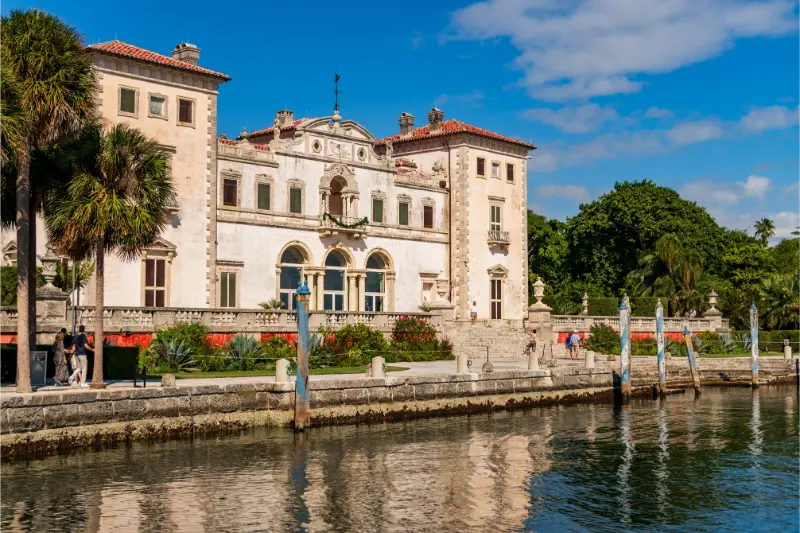
Vizcaya Museum and Gardens in Miami is not a quick photo stop disguised as a museum. It is an early-twentieth-century waterfront estate where architecture, decorative arts, subtropical gardens, and the history of Miami meet in one place. The experience works especially well for travelers who want a quiet counterpoint to South Beach or a cultural morning between outdoor adventures. Its beauty is immediately apparent, but a rewarding visit comes from understanding what you are seeing and allowing time to explore the landscape as well as the main house. This guide explains the practical decisions that matter: tickets, transport, walking conditions, weather, and how to make the estate worthwhile for different ages.
Why Vizcaya is worth visiting
Industrialist James Deering developed Vizcaya as a winter residence in the 1910s, commissioning a Mediterranean-inspired villa and formal gardens beside Biscayne Bay. It was never a traditional centuries-old European palace. It is instead a carefully composed American estate that borrowed, adapted, and reimagined European architectural traditions in a South Florida setting. That distinction makes the interiors especially interesting: antique objects, elaborate rooms, scenic transitions, and a landscape designed as an extension of the house tell a story about taste, wealth, labor, and the way Miami was changing during that era.

The most memorable aspect is the conversation between indoor and outdoor spaces. A shaded loggia may frame the bay; a formal axis may point toward a fountain; a garden path may turn the tropical sunlight into an unexpected theatrical effect. Visitors who rush from staircase to staircase often miss these details. Give yourself time to stand still, examine the relationship between rooms and terraces, and read interpretive material rather than treating every corner as a background for photographs.
Inside the main house
The main house is a decorative-arts experience as much as an architectural one. Expect highly detailed furniture, ceilings, architectural fragments, and rooms conceived with specific purposes. A useful approach is to begin by learning how the household functioned and then notice the contrast between grand entertaining spaces and the practical support that made the estate operate. This makes the visit more meaningful for older children studying history and for adults interested in design.
The building is historic, not a modern gallery built for unrestricted movement. Some areas may be closed for preservation or maintenance, and stairs or changes in floor level can affect the route. Before visiting, consult the museum’s current accessibility guidance and ask which spaces can be reached step-free. Someone who cannot access the whole house can still enjoy important parts of the estate, but it is better to choose a route deliberately than discover an obstacle halfway through the visit.
Gardens, waterfront views, and photography
The formal gardens reward slow exploration. Their geometry, sculptures, water elements, and plantings were planned as a series of outdoor rooms. Look for the different ways paths create views toward the villa and the bay. The celebrated stone barge offshore is part of the designed waterfront composition, not a normal boat that visitors can board. Its condition and permitted viewing areas may change as preservation work continues.
Morning light is usually more comfortable for walking and often more flattering for pictures than harsh midday sun. After rain, stone surfaces and steps may be slippery; during hot months, exposed paths can feel much warmer than shaded sections. Respect barriers around fragile garden elements, stay out of fountains and planting beds, and observe posted photography restrictions. Personal snapshots are different from commercial shoots: professional equipment, staged sessions, and large groups may require permission even when handheld tourist photography is allowed.
Hours, admission, and timing
Vizcaya’s published regular schedule is 9:30 a.m. to 4:30 p.m., with Tuesdays closed. The museum may operate differently for special programs, holidays, or severe weather. Admission categories and online ticket terms can change, so use the official ticket page for the actual travel date. Do not assume that an online reseller’s listing includes special tours or access beyond standard admission.
Plan roughly two to three hours if you want to see both the villa and gardens without rushing. A history-focused visitor could comfortably stay longer; a family with a toddler might prefer a shorter, earlier visit with a deliberate snack and stroller break. If you have only one hour, prioritize the main house and one garden axis rather than trying to cover every outdoor corner. Leaving a little unscheduled time helps you enjoy the estate instead of treating it like a timed checklist.
Getting there from Miami and Miami Beach
The address is 3251 South Miami Avenue, on the mainland south of Downtown Miami in the Coconut Grove area. Vizcaya offers on-site parking, but availability is not guaranteed during busy events or peak visiting periods. A rental car can be convenient when combining the estate with other mainland attractions; it can be inefficient if you are staying on Miami Beach and would otherwise avoid a car. Compare the cost of parking and driving with a taxi or rideshare before committing.
Metrorail’s Vizcaya station is in the surrounding area, but the final approach still involves walking near busy streets. Check the actual pedestrian route on the day, especially with children, a wheelchair, or limited stamina. Do not assume that a transit station name means step-free door-to-door access. In summer, schedule enough time for heat, crossings, and a water stop. If you will return by rideshare, select a legal and clearly identifiable pickup point instead of stepping into vehicle traffic to meet your driver.
Vizcaya with children, teens, and older visitors
For school-age children, frame Vizcaya as an architectural treasure hunt: ask them to find different kinds of arches, water features, decorative motifs, and ways that the garden frames the bay. Explain that touching historic objects is not allowed and that fountains are not playgrounds. Teens interested in photography may enjoy the composition of the courtyards and gardens, but should keep filming unobtrusive.

For infants, investigate the current stroller and changing-facility policies before departure. Families with preschoolers should avoid a long noon-time circuit, bring drinking water, and identify a quiet place for a break. Older adults may prefer beginning with the most important indoor spaces and then choosing shorter garden loops. Visitors with mobility limitations should contact the accessibility team for the exact route, restroom availability, and any equipment accommodations. A beautiful property can still demand considerable walking.
What to wear and bring
Wear comfortable closed-toe or supportive walking shoes rather than footwear chosen solely for photographs. Historic paving can be uneven, and the garden includes transitions between sun and shade. A small bottle of water, sun protection, and light rain protection are practical in Miami. Backpacks, food, drinks, and large bags may be restricted in parts of the museum; read the current visitor policy before packing a picnic. Keep your belongings compact and never leave valuables visible in your parked car.
Mosquito activity varies with rain and season. A visitor sensitive to heat should plan an early arrival and consider the indoor spaces as the anchor of the visit. During lightning, do not remain in exposed gardens just to finish a photo series; follow staff instructions. Some terraces or pathways may close temporarily for preservation, maintenance, or weather, and those closures are a reason to change the route, not to cross a barrier.
A practical half-day itinerary
Arrive at opening and begin in the main house while your group has the most energy for interpretive exhibits. Spend approximately an hour moving through the principal rooms, pausing for context rather than photographing everything. Next, explore the formal gardens, with a slower stop at the waterfront. Finish with a rest, look at the museum shop if it appeals, and then continue to a nearby lunch in Coconut Grove. This itinerary leaves an afternoon free for an entirely different Miami experience.
If you are combining Vizcaya with Fairchild Tropical Botanic Garden, remember that both attractions reward meaningful walking and that they are not next door to each other. Trying to compress both into a rushed morning is particularly unwise with younger children. A second possibility is to combine Vizcaya with a relaxed exploration of Coconut Grove. Choose one nearby continuation and be realistic about travel time, parking, and afternoon thunderstorms.
Costs and realistic alternatives
The entrance fee supports a historic institution, but what matters for a family is the full cost: admission for every eligible person, transportation, food, and the possibility of a shortened visit if weather changes. Check discounts from the museum itself instead of relying on old travel blogs. If the budget is tight, a free waterfront stroll elsewhere in Miami can still be enjoyable, but it does not replace the interiors and heritage interpretation at Vizcaya.
Vizcaya is best for people who appreciate architecture, gardens, and cultural history. It is less suitable as an all-day interactive attraction for toddlers, a guaranteed rainproof activity, or a place where every area is uniformly accessible. Being clear about that fit is more useful than calling it a must-see for everyone.
At-a-glance planning table
| Planning point | Practical recommendation | Confirm before leaving |
|---|---|---|
| Visit length | Allow two to three hours | Current route and room access |
| Best start | Morning, especially in warm weather | Opening hours and entry time |
| Transport | Compare car, Metrorail plus walk, and rideshare | Parking and step-free access |
| Families | Focus on house and a shorter garden loop | Stroller and bag rules |
| Reduced mobility | Request a route based on available access | Accessibility contact and restroom options |
| Photography | Use a small handheld camera respectfully | Commercial session policies |
Frequently asked questions
Is Vizcaya a real European palace?
No. It is a Miami estate created in the early twentieth century with strong European design influences. Understanding that history adds depth to its architecture and collections.
Is Vizcaya open on Tuesdays?
The museum’s published regular hours exclude Tuesdays. Check the official calendar for any date-specific changes, holiday events, or unexpected closures.
Is Vizcaya suitable for a stroller or wheelchair?
Some routes and areas can be accessible, but the historic property is not uniformly step-free. Contact the museum for current details before booking if access is a deciding factor.
Can I visit Vizcaya and Miami Beach in one day?
Yes, but plan around traffic and allow at least a couple of hours on site. It works better as a cultural morning followed by a relaxed afternoon than as one stop in an overloaded itinerary.
Can visitors take photos in the gardens?
Personal photos are generally part of a visit, subject to posted rules. Professional shoots or elaborate equipment may need permission, and all visitors should protect historic features and other people’s privacy.
Official information and final advice
Use the Vizcaya Museum and Gardens visitor page and its contact information to verify tickets, openings, accessibility, and photography conditions. A good visit is not about racing through rooms. It is about allowing the unusual meeting of Mediterranean design and a tropical Miami waterfront to become the memorable part of your day.