
Florida has state parks, state forests, national forests, national parks, and wildlife management areas. The names sound similar, but they are managed by different agencies and do not all use the same admission passes, camping systems, vehicle rules, or visitor facilities. State forests in particular can be wonderful for travelers who enjoy quiet pinewoods and long rural landscapes, but they may require more self-sufficiency than a state park with a staffed entrance and visitor center. This guide explains how first-time tourists can plan a safe day outing or overnight stay in a Florida state forest without assuming that every forest offers paved paths, cell service, or a convenient restroom.
In this guide
- State forest versus state park: the essential distinction
- Day passes, annual passes, and how the fees work
- Select a forest by experience, not by size alone
- Forest roads are not ordinary city streets
- A simple first state-forest day plan
- Trail markings and the importance of a turnaround point
- Camping is a separate decision from day-use entry
- Wildlife encounters and keeping distance
- Accessibility and the difference between permission and suitability
- Severe weather, fire, and emergencies
- Planning resources and a practical first-visit checklist
- Frequently asked questions
Quick planning table
| Before you leave | Confirm |
|---|---|
| Managing agency | Florida Forest Service, not State Parks |
| Payment | Day-use pass or relevant reservation |
| Roads | Vehicle suitability and designated routes |
| Safety | Water, weather alerts and offline directions |
State forest versus state park: the essential distinction
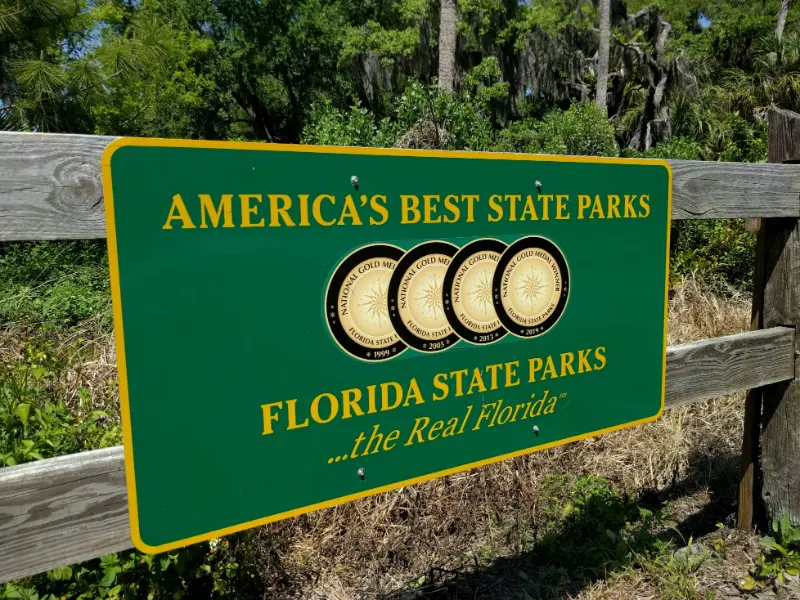
Florida's state forests are managed by the Florida Forest Service, part of the Department of Agriculture and Consumer Services, rather than by the state park system. The primary management purposes and recreation arrangements differ across individual properties. A state park may have a staffed gate, defined day-use facilities, and a concentrated group of trails. A state forest can contain large networks of designated roads, trails, working land management zones, primitive sites, and dispersed recreation. The fact that both are on public land does not mean a Florida State Parks pass grants every kind of forest entry.
Start with the official State Forest Recreation page. Select a named forest and then read the regulations for the exact activity you intend to undertake. A short nature walk, a formal group outing, a primitive overnight camp, and an off-highway vehicle trip may require different permits. Avoid copying a campsite recommendation from a national forest article into a state forest itinerary. The correct managing agency should appear on every booking confirmation and map you use.
Day passes, annual passes, and how the fees work
The state forest passes and reservations information describes day-use passes, annual passes, camping reservations, and other special permits. The published guidance specifies a low individual day-use charge, exemptions for younger children, and a separate annual pass. It also explains that the fee arrangement is different from what visitors may know from state parks. Check current pricing rather than assuming that a pass bought elsewhere applies automatically. If your plan includes multiple forests in one day, inspect the agency's specific day-pass rules instead of paying repeatedly without cause.
An annual pass may be economical for residents or long-stay visitors, but a tourist entering one forest for two hours probably does not need one. Ask whether your proposed trail, campsite, or activity has another reservation fee or a local restriction. For larger groups, formal activities can require a permit even when everyone owns a normal day pass. The agency's online payment system matters: carry a confirmed digital or offline copy of payment rather than assuming there will be a ranger collecting cash in the woods. A ticket receipt is not permission to use an area that has been closed.
Select a forest by experience, not by size alone
A large acreage figure tells you very little about whether a forest is suitable for a person with a stroller, a short-walk preference, or no outdoor experience. Instead, begin with the type of landscape and practical activity: a short signed nature route, a designated picnic area, a scenic legal forest drive, or an organized overnight campsite. Choose a property with clear trail information and a manageable journey from your accommodation. The most isolated forest is not necessarily the most rewarding first forest. A safe two-hour introduction can make a better trip than a six-hour expedition that leaves everyone overheated.
Florida's forests vary widely from dry sandhill and longleaf pine areas to wet flatwoods, swamps, and coastal vegetation. Some are managed with prescribed fire, so closed sections or signs of recent burning are not necessarily evidence of neglect. Those interventions may help maintain habitats that depend on periodic fire. Ask the specific forest office about current closures, land management, and route conditions. Never cross a prescribed-burn closure sign or enter an area where smoke makes safe driving or breathing difficult.
Forest roads are not ordinary city streets
A GPS app may show a road through a forest without indicating that it is sandy, flooded, gated, or intended for authorized operations. The Florida Forest Service says visitors must drive on designated roads and follow posted speed limits. Do not take a rental car onto an unfamiliar sand road simply because a navigation app marks a shortcut. Rental insurance and vehicle terms may exclude certain surfaces, and getting stuck can create a costly or dangerous situation. Ask the forest office which roads are suitable for ordinary passenger vehicles before the trip.
Keep enough fuel for a round trip to a known service station. Do not depend on being able to purchase fuel or food inside a large forest. Download maps and save the entrance coordinates but remember that phone navigation may become inaccurate or unavailable. If a gate is closed, turn around rather than driving beside it. A designated trailhead is different from a random clearing along a maintenance route. Park only where permitted, leaving road access clear for forestry crews and emergency vehicles.
A simple first state-forest day plan
Choose one named recreation area, confirm its use rules, and arrive in the cooler part of the morning. Start with a short route marked on the forest's official recreation map. Bring a small daypack with water, sun protection, insect repellent, an offline map, and a basic first-aid kit. Let someone outside your group know where you expect to go and when you will return if the route is remote. Do not rely on a trail being shaded simply because it passes through trees; pinewoods can be surprisingly sunny.
Spend the first part of the visit learning about the habitat. Notice whether the understory is low and grassy or dense and wet, and watch for animal signs without leaving the trail to investigate. At a suitable public picnic area, take a relaxed break before returning. Leave enough time to reach the vehicle before darkness. If the route becomes flooded or confusing, retrace your path. The goal of the first visit is to understand what a state forest experience offers and how it differs from a managed urban park, not to walk the maximum distance on the map.
Trail markings and the importance of a turnaround point
Trail routes can share sections with forest roads or other recreation uses, and intersections are not always as obvious as those in urban parks. Carry an official map, recognize the trail's blaze or marker system, and record the trailhead name. If the trip is planned for a family, decide a turnaround time before starting. The group should head back at that time even if the end of the trail appears close. A long outward walk can become difficult when temperature, fatigue, or daylight changes on the return.
Children can learn simple navigation by checking landmarks with an adult, but they should not be left to lead independently through an unfamiliar area. Older travelers may prefer a short marked loop or a viewpoint with parking nearby; steep sand, roots, and patches of standing water can be challenging regardless of the route's official difficulty label. Do not start a trail if you cannot identify its expected length or access conditions. It is acceptable to enjoy a picnic and one short path rather than a full hiking excursion.
Camping is a separate decision from day-use entry
A state forest campsite might be a developed site with selected facilities or a primitive location requiring greater preparation. Read the specific listing before reserving. Ask about water, toilets, showers, electricity, road approach, tent pads, fire rules, and distance from the entrance. Do not assume a site labeled 'campground' has the same services as a private RV resort. The Florida Forest Service reservation guidance provides the route for current camping bookings and explains that some activities require additional permits.
First-time campers should avoid improvising an overnight trip in a remote area without a suitable equipment plan. Choose a developed or clearly managed campsite and check weather, fire restrictions, and refund rules. Families with an infant may want to try one night close to essential services before committing to a multi-day remote stay. Senior travelers should confirm restroom distances and the type of ground underfoot. Never assume that campfires are allowed merely because a site has a fire ring; local fire restrictions can change rapidly in dry conditions.
Wildlife encounters and keeping distance
Forests can be home to snakes, tortoises, deer, alligators in suitable waterways, and many other animals. Watching from a distance is the right approach. Do not feed wildlife or approach a nest, den, or burrow for a photograph. Keep pets under control as required by the particular forest, and never leave them unattended in a hot vehicle. In summer, ticks, biting insects, and high temperatures can be as important to plan for as the more dramatic animals people discuss online. Cover exposed skin appropriately and perform a tick check after time in vegetation.
If you encounter a snake, give it space to move away. Do not try to identify it by approaching for a close-up photograph or attempt to handle it. Around waterways, avoid entering flooded routes or letting children play at unmarked banks. A scenic stream can have strong currents, deep spots, and submerged branches. Wildlife and water hazards are not reasons to avoid nature entirely; they are reasons to follow defined public routes and give animals their normal space.
Accessibility and the difference between permission and suitability
Some state forests provide accessible recreation facilities, but large areas are primitive and cannot be assumed to meet the needs of every mobility aid. Ask for the specific surface, parking access, slope, and restroom details at a named site. The existence of a wheelchair mobility-device policy does not turn every sandy route into a usable wheelchair path. Groups with mixed abilities may plan a shared picnic and one accessible observation point, with an optional longer trail for other members. Everyone can participate in identifying habitats and enjoying the atmosphere without completing the same walk.
Visitors with visual or hearing disabilities should plan navigation support that works away from a cellular network. Clear meeting arrangements and printed route information can be more reliable than constantly checking an app. A person who needs medication or electrical medical equipment should verify backup power and nearby emergency services before camping remotely. Travel organizers should resist describing state forests as easy for 'all ages' without specifying which facilities are actually suitable. Inclusive planning means offering realistic alternatives, not promising accessibility that has not been checked.
Severe weather, fire, and emergencies
Florida's afternoon thunderstorms can arrive rapidly, and lightning poses a risk on open forest roads and exposed trail segments. Check the National Weather Service before departing and turn back promptly when conditions deteriorate. A forest is not a place to shelter under the tallest tree. Return to a substantial building or enclosed hard-topped vehicle when safe to do so. During drought, wildfire risk and prescribed-burn operations may close recreation areas or create smoke hazards. Obey any forestry or emergency instructions without seeking a workaround.
Share your planned area with someone before a remote outing and keep a realistic return time. If you become disoriented, stop moving farther into unfamiliar terrain, consult the map, and use emergency services when appropriate. Do not rely on a phone signal everywhere. Driving around locked gates or turning onto a supposedly shorter sand road can worsen a simple navigation mistake. A safe forest day usually depends on ordinary decisions made before entering the woods rather than heroic action afterward.
Planning resources and a practical first-visit checklist
The authoritative starting point is Florida State Forest Recreation and its passes and reservations page. Identify the forest, the permitted activity, the specific entrance, and current closures before driving. Keep a confirmed pass or booking, offline directions, water, appropriate shoes, sun protection, and an emergency contact. These checks take little time but can prevent the most common first-visit disappointments.
A Florida state forest is an opportunity to see a landscape managed for conservation, forestry, and recreation on a larger scale than many city parks. You do not need expensive equipment or an ambitious distance to appreciate that difference. Choose a manageable route, observe quietly, and return safely. With a little preparation, a forest outing can be one of the most affordable and rewarding nature experiences in the state.
Frequently asked questions
Is a Florida State Parks annual pass valid in every state forest?
Do not assume so. State forests have a separate managing agency and pass system. Check the Florida Forest Service's current entry and recreation rules for the exact property.
Can I drive anywhere that appears on a forest road map?
No. Drive only on designated roads open to your vehicle type, obey gates and closures, and check whether surfaces are suitable for an ordinary rental car.
Is a state forest safe for a family with young children?
It can be when you select a managed, suitable recreation site, keep the outing short, supervise children closely, and plan for heat, weather, and limited facilities. Avoid unprepared remote trips.