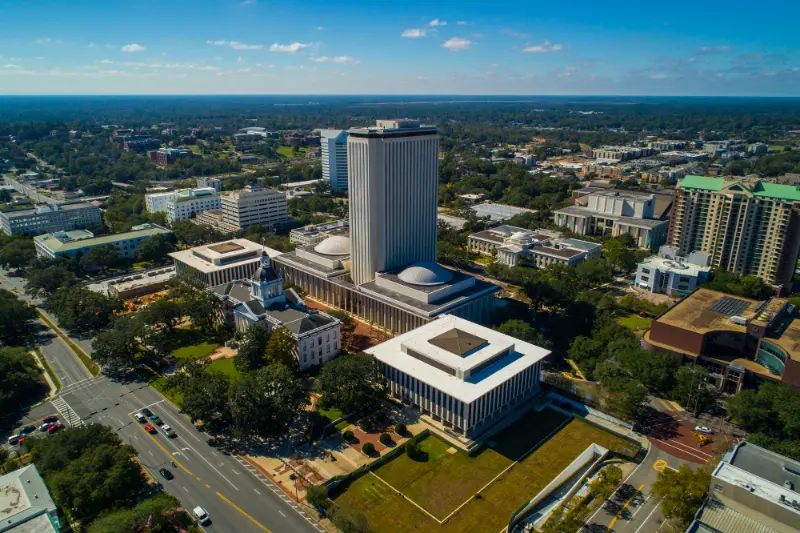
Florida’s capital is often treated as a quick stop on the way to the Gulf, but Tallahassee has enough character for a four-day holiday of its own. The city combines older neighborhoods, rolling terrain, tree-covered roads, museum collections and access to coastal landscapes. It also offers an opportunity to understand Florida as more than beaches and theme parks. A compact trip can connect the Apalachee past, Spanish colonial history, gardens, civic life and the practical pleasures of a university town without requiring a long hike every day.
Stay in Tallahassee for all four nights. This is a useful arrangement for families with small children, couples who enjoy history and older travelers who prefer a comfortable hotel base. A car gives the most flexibility for gardens and rural roads; if you are visiting only downtown, some activities may be accessible by short rides, but this itinerary deliberately moves beyond the central business district.
Four-day schedule with easy alternatives
| Day | Focus | Main visit | Lower-energy option |
|---|---|---|---|
| 1 | Capital orientation | Downtown streets and civic setting | Indoor cultural stop |
| 2 | Apalachee and Spanish history | Mission San Luis | Short interpreted grounds visit |
| 3 | Gardens and trees | Maclay Gardens and canopy scenery | Small garden walk |
| 4 | Rail and coastal history | St. Marks corridor | Brief town and trail stop |
Do not assume a museum is open simply because it is on a state-government campus. Institutional renovations, holidays and weekday closures change access. Identify one confirmed anchor stop per day and keep the rest adaptable. Tallahassee can be humid, so a day that contains an outdoor activity and an afternoon rest is often preferable to three consecutive walks.
Day 1: Discover the capital’s different layers
Begin around downtown to understand the civic landscape. Architecture, public buildings and the rhythm of government distinguish Tallahassee from a conventional resort destination. Choose an officially open museum or interpretive facility and learn how the state capital developed. Even a modest walking loop can be rewarding when you notice which buildings belong to different periods and how the city’s hills differ from the flat coastal image of Florida.
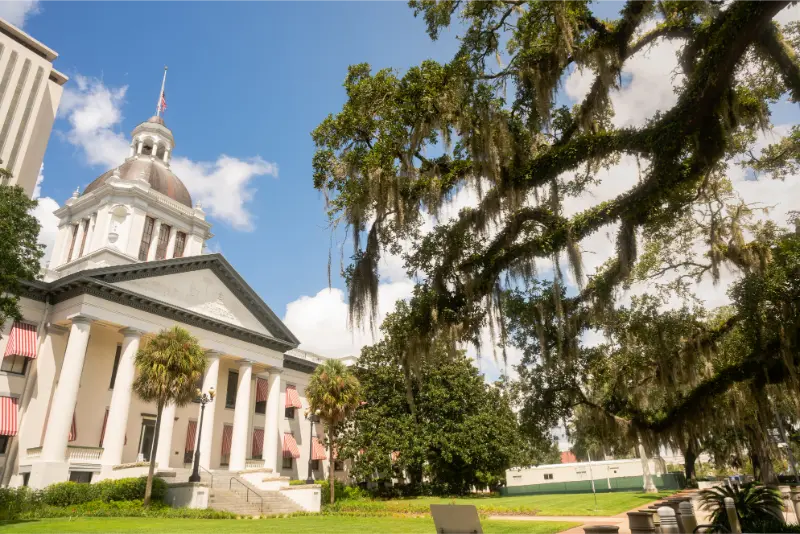
Families can give children an observation task: find architectural symbols, identify trees and explain what a capitol building is used for. Older companions may prefer a seated interpretive activity, followed by a short café stop. Do not promise access to a particular floor or government chamber without checking visiting rules. On weekends, some offices will naturally be closed, so concentrate on spaces intended for public visitors rather than normal working buildings.
Day 2: Mission San Luis, where two histories meet
Mission San Luis is a major reason to spend more than a passing afternoon in Tallahassee. The reconstructed mission site interprets the interaction between Apalachee communities and Spanish colonial life in the seventeenth and early eighteenth centuries. It is a place to approach history through more than one perspective: settlement, power, religion, trade and daily work all matter. Demonstrations and costumed interpretation may be part of the visitor experience, depending on staffing and schedule.
The mission’s official visitor notice currently directs traffic to the west entrance at 2021 Mission Road because the Tennessee Street entrance is affected by construction. Confirm that arrangement before setting off. Allow a comfortable half day, carry water and ask where shaded seating is available. Some reconstructed spaces may have thresholds or uneven approaches, so visitors with mobility devices should ask about the routes they will actually use rather than relying on a general accessibility description.
How to help children understand Mission San Luis respectfully
Instead of portraying the historic site as an adventure village, explain that it represents real people and a complicated meeting of cultures. Ask children what materials buildings were made from, what daily jobs required and whose voices might be missing from a short historical display. This keeps the visit engaging without trivializing colonization or the fate of Indigenous communities. Teenagers studying American history may be interested in how archaeology works alongside written colonial accounts.
Do not touch demonstration materials without permission, walk into staff areas or interrupt interpreters during a program. Photography may be allowed in some places and restricted in others; follow on-site signage. Leave time for questions, because a thirty-minute conversation with informed staff can be more meaningful than rushing through every reconstructed building. End with a meal and an easy afternoon rather than booking another large history attraction immediately afterward.
Day 3: Maclay Gardens and Tallahassee’s greener identity
Alfred B. Maclay Gardens State Park gives the trip a beautiful change of pace. Historic garden features, lake scenery and wooded routes make the park appealing to people who are not long-distance hikers. The official Maclay Gardens park information identifies a seasonal floral peak, but the garden is worth considering outside that window for its design and peaceful setting. Do not guarantee a particular bloom: temperature, rain and garden maintenance affect what is flowering on any given day.

Choose the shorter garden routes if traveling with someone who uses a walker or tires easily. There are also longer shared-use trails for visitors seeking a more active outing, but these are not essential to the day. Ask at the entrance which areas are smooth, which have slopes and where to find restrooms. A picnic or relaxing lunch can extend the visit without adding strenuous exercise. Families can compare native vegetation with ornamental planting and talk about why gardens need regular care.
Driving canopy roads without treating them as racetracks
The tree-lined roads around Tallahassee are part of its identity. They are attractive for a calm scenic drive, but they are still public roads with residents, cyclists, school traffic and narrow shoulders. Use a published driving route or official local visitor guidance instead of following random “scenic” shortcuts onto private lanes. Do not stop in the traffic lane beneath a pretty arch of trees. If there is no legal turnout, keep driving and enjoy the view through the window.
Driving slowly is sensible; driving unpredictably is not. Leave space for local vehicles, watch for wildlife and respect speed limits. Passengers can take photographs from a safe parking location during another stop rather than leaning out of windows. The aim is to appreciate the landscape responsibly. If you prefer not to drive, spend more time in the gardens, where the canopy can be enjoyed on foot within a managed park.
Day 4: The St. Marks corridor and old railroad history
The Tallahassee–St. Marks Historic Railroad State Trail follows a former transportation corridor toward the coast. Visitors do not have to cycle its entire length to appreciate it. Select a trailhead, explore a short suitable section and learn how rail transport connected inland agriculture with coastal trade. The Florida State Parks trail information includes maps, conditions and facilities. Parts of a trail can be open while individual playgrounds or amenities remain closed.
St. Marks itself offers a compact coastal-river-town perspective if you have time and weather allows. It is a different experience from the white-sand beaches farther west, so do not promise resort facilities or swimming. Check individual parks for access before making a long detour, especially after heavy rain or a storm. When departing the same afternoon, choose either a short trail visit or a town stop rather than trying to include a full wildlife refuge and still reach your flight.
Where to stay and how to organize the drives
A central Tallahassee hotel can be convenient for restaurants and an easier first day. Accommodation closer to major roads may simplify departures to the gardens and St. Marks corridor. Compare parking fees and cancellation terms. Travelers with a stroller or wheelchair should check the route from parking to the lift and the bathroom layout, rather than assuming all modern hotels have identical facilities. A small refrigerator is useful for families who keep snacks, milk or temperature-sensitive items in the room.
The city has traffic linked to working days, university events and football weekends. An inexpensive hotel on an ordinary date may be considerably more expensive during a major event. Check the calendar before committing to a nonrefundable rate. The advantage of keeping one base is that you can swap the outdoor and indoor days when storms threaten, without changing accommodation.
Food, costs and family-friendly budgeting
The primary expenses are lodging, fuel and meals. Admission to individual historic sites or state parks may be modest, but do not rely on outdated prices. The Mission San Luis and state-park websites publish their current admission rules, including certain age concessions. Group visits, special workshops and tours may involve separate reservations. Make a four-day budget with a buffer for one unexpected indoor activity if bad weather changes your outdoor plans.
A restaurant does not need to be historically themed to fit the itinerary. Choose comfortable places with reasonable waits and suitable menus for the people traveling with you. Young children benefit from predictable meals, and older companions may prefer an early dinner to a crowded evening dining scene. Bring water and snacks to outdoor parks, while following rules about where food is permitted near historic objects and gardens.
Best seasons and weather planning
Spring can be particularly appealing for gardens, while autumn often offers comfortable conditions for outdoor sightseeing. Summer may be hot and humid with frequent thunderstorms. Winter can be mild compared with northern states but can still include chilly mornings. Pack light layers and do not plan as though every Florida day is warm enough for shorts. Watch for lightning during outdoor activities and move to a safe building or enclosed vehicle when storms approach.
If anyone in your group has health or mobility limitations, plan two rest breaks each day and avoid extended walks during the hottest hours. A half-day in a museum and a half-day relaxing at the hotel can be a satisfying combination. Children often remember one engaging interpreter or garden experience better than four rushed institutions.
Accessibility details worth checking
Every stop has different paths. A museum might be step-free while a reconstructed historic building has uneven surfaces; a garden may have accessible restrooms but unpaved sections. Call ahead to ask about ramps, thresholds, parking-to-entrance distances and benches. For travelers with hearing or visual disabilities, ask about written guides or alternative interpretation rather than relying on improvised assistance on arrival.
Do not infer that a multiuse trail is flat everywhere merely because portions are paved. Check the exact trailhead and route you intend to use. An accessible trip is made from specific confirmed segments, not broad labels. People of any age can benefit from this more careful planning.
Responsible visiting and a sensible extension
Respect Apalachee history by using institution-approved interpretation and recognizing present-day Indigenous communities. Avoid treating historical reconstructions as proof that life was easy or uncomplicated. On canopy roads, do not enter private land. In gardens, stay on designated paths and leave plants untouched. Around St. Marks, watch wildlife from a distance and never feed animals.
With an additional day, consider a separate nature outing only after verifying current opening notices. In October 2026, Edward Ball Wakulla Springs State Park has reported temporary interruptions affecting boat tours and overnight accommodations, so it would be misleading to promise a boat excursion there without a fresh confirmation. Tallahassee itself has plenty to offer without depending on that activity. A thoughtful four-day visit combines culture, scenery and flexibility rather than treating the capital as a one-hour photo stop.
Frequently asked questions
Do we need a car for four days in Tallahassee?
A car is helpful for Mission San Luis, the gardens, canopy roads and the St. Marks corridor. A downtown-only trip is more feasible without one, but it would be a different itinerary.
Can we visit Mission San Luis on a Monday?
The official site currently lists Monday as a closing day. Check its latest schedule and use the correct entrance before traveling.
Are Maclay Gardens worth visiting outside bloom season?
Yes, for the designed landscape, trees and peaceful outdoor setting, but flowering displays change with weather and time of year.
Is the railroad trail only for cyclists?
No. Walkers can enjoy selected sections. Choose an appropriate trailhead and distance, and follow posted shared-use rules.