
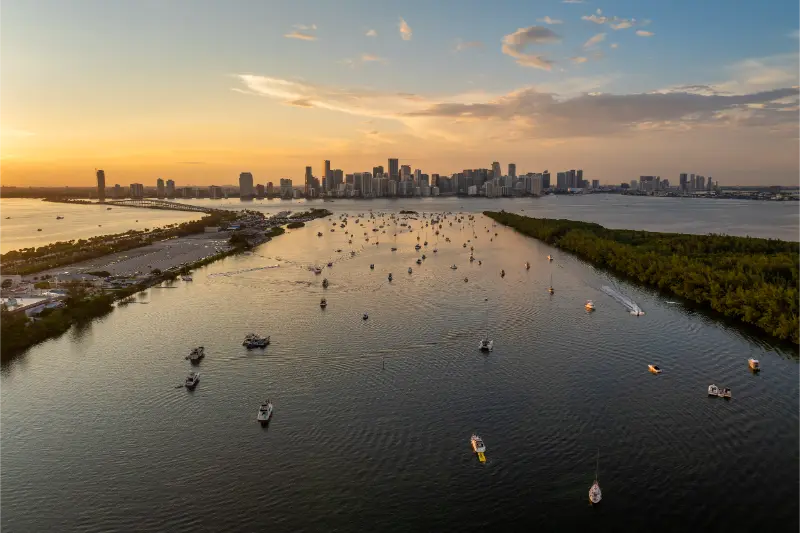
The area south of Miami offers one of Florida’s strongest contrasts: shallow tropical waters and islands in Biscayne National Park, sawgrass and freshwater wetlands in Everglades National Park, and agricultural roads through the Redland. Homestead and Florida City are useful bases for all three. Four days let you appreciate these places without pretending the national parks are next door to one another in the way attractions inside a theme park might be. This itinerary is for curious first-timers, birdwatchers and families seeking a less commercial South Florida experience, with enough backup ideas for travelers who prefer short walks or indoor stops.
Why this route works
The most important geographical detail is that Everglades and Biscayne are different national parks with different access. Everglades has a road corridor from the Homestead entrance toward Flamingo, with stops such as Royal Palm. Biscayne is predominantly aquatic: the Dante Fascell Visitor Center at Convoy Point provides a land-based introduction, but visiting islands or underwater sites requires appropriate boat access. The Redland’s farms are private businesses with changing opening seasons and rules. Treat these as separate themed days rather than buying a package that promises to “see everything” in a single rushed afternoon.
Day 1: Homestead, the Redland and a flexible arrival
Begin with a gentle orientation in Homestead or Florida City, then visit the rural Redland on roads where farms, tropical fruit growing and old South Florida landscapes appear between suburban development. Choose one farm stand or attraction that has confirmed public hours rather than stopping on private property because a fruit tree looks interesting. Fruit and Spice Park can be an educational option when open, but botanical availability and guided experiences depend on the season. If you want to see historic buildings or local collections, verify a museum’s opening day before making it the day’s centerpiece. A relaxed first afternoon gives visitors time to stock water, insect repellent and food for the national parks, where services can be sparse. Finish early and review the following day’s forecast; heat and mosquitoes matter more here than the number of attractions you check off.
Day 2: Everglades Royal Palm and the road toward Flamingo
Enter Everglades National Park from the Homestead side and begin with the Ernest F. Coe area to confirm current ranger advice and any closures. Royal Palm’s Anhinga Trail is a classic short introduction to the wetlands when open: look for wading birds, turtles and alligators from designated paths, not from the water’s edge. Gumbo Limbo Trail provides a contrasting shaded hardwood-hammock environment where conditions allow. Continue along the Main Park Road only as far as your group can comfortably travel; Flamingo is a substantial additional drive from the entrance and requires a separate allowance for stops and the return journey. Carry drinking water, food and fuel, since facilities can be limited or changed by storms. If a boat excursion is available at Flamingo, reserve through an authorized operator and confirm accessibility and weather policy. Do not add Shark Valley, which is a different entrance far from this corridor.
Day 3: Biscayne National Park above and below the water
Head to Convoy Point for the Dante Fascell Visitor Center at Biscayne National Park. Interpretive displays and shoreline views help visitors understand mangroves, coral reefs and protected islands even without booking a boat. To reach Boca Chita Key, Elliott Key or snorkeling areas, arrange a legitimate boat tour rather than assuming a ferry leaves continuously from the visitor center. Availability, tides, weather, passenger limits and snorkeling requirements all vary. A family with young children or a member who cannot board a small vessel can enjoy the land-based center and combine it with a nearby approved nature or heritage stop. Strong wind can cancel a tour without making the whole day a failure. Treat coral, seagrass and marine creatures as protected habitat; never stand on coral or approach wildlife for a photograph. Return to Homestead before a late-night long drive.
Day 4: Choose the experience you missed, not a fourth rushed park
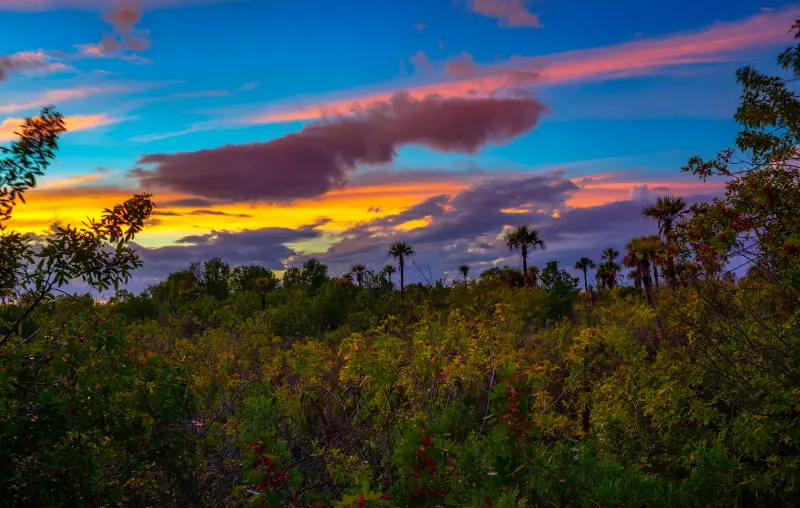
Use this day strategically. If the weather was poor at Biscayne, it provides a second opportunity for a safely operated boat excursion, subject to availability. If your party preferred dry land, return to the Redland for an open farm or explore an educational site along the local heritage corridor. Another worthwhile option is a longer Everglades drive if you deliberately avoided Flamingo on Day 2; this gives the distant part of the park a proper window. Families may instead value a hotel-pool afternoon and a relaxed dinner. Avoid squeezing in Key West, which requires a significant additional road trip along the Overseas Highway. Travelers flying out of Miami International Airport should put traffic and car return ahead of one final distant attraction.
Where to stay and how to choose a base
Homestead or Florida City can reduce driving compared with sleeping in central Miami when both national parks are priorities. Look for well-reviewed accommodations near the routes you actually intend to use, and verify onsite parking, breakfast, laundry and family-room layouts. A resort in the northern Keys may be appealing but adds traffic on the bridges for Everglades days. Remote lodges or campground options require much more preparation, especially around storm season and mosquito conditions. Do not choose a property solely from a map that makes two park visitor centers appear close: actual roads and park entrances dictate travel time.
Getting around and making the drives realistic
For this itinerary, a car is effectively essential. There is no visitor-friendly frequent transit linking Redland farms, Flamingo and Biscayne’s land entrance. Download offline maps in advance because cell coverage is limited in parts of Everglades. Fuel up before entering the longer road corridor and never stop on narrow shoulders to photograph wildlife. Buy national park admission through approved channels and distinguish a park entrance fee from the ticket for a boat tour. Navigation apps may suggest shortcuts across roads that do not connect through Everglades; use official NPS directions. For a flight day, leave a large buffer for Miami-area traffic.
Costs and ways to save without missing the point
Budget separately for Everglades admission, optional Biscayne boat experiences, an authorized Flamingo excursion and paid farms or museums. Many visitor-center and short-trail experiences cost much less than private water tours, but those tours can be the highlight for visitors who are comfortable aboard boats. Carry picnic food appropriately and respect park rules against feeding wildlife. Hotel value comes from reducing driving as much as from the nightly rate. Snorkeling equipment rental, child flotation requirements and dry bags can change the real cost of a water excursion, so request a full breakdown before booking.
Planning for babies, kids, teenagers and older travelers
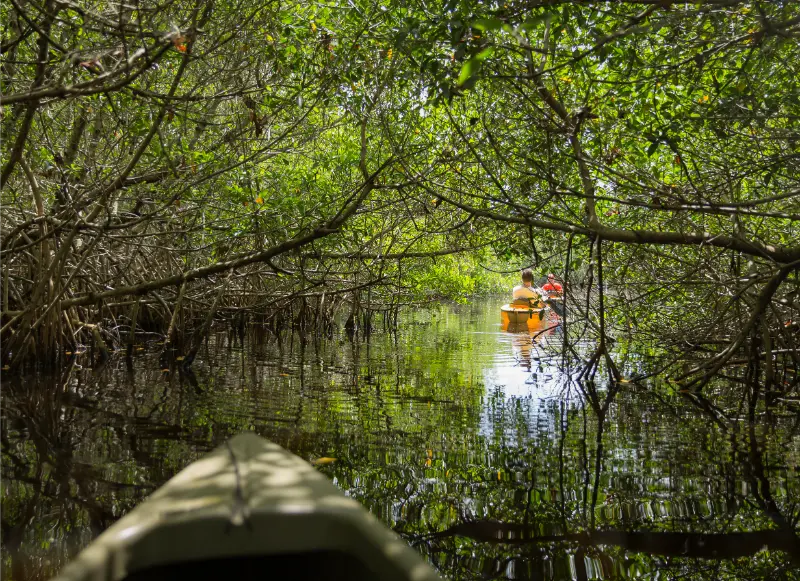
Young children often engage well with the Anhinga Trail, short boardwalks and a fruit-growing visit, but require sun and insect protection and constant supervision near water. School-age children can compare a freshwater wetland with the marine ecosystem at Biscayne; turn the trip into an observation exercise rather than a nonstop lecture. Teens may enjoy photography or guided snorkeling if conditions and skills fit. Seniors can participate through short walks and interpretive centers, with boat boarding considered individually. Wheelchair accessibility differs among trails, boats and storm-affected facilities; consult NPS access guidance for the precise feature. Alligators, crocodiles and marine animals are wild and must be observed from a respectful distance.
When to visit and what weather changes
Dry-season months generally make Everglades trails more comfortable for many visitors, but wildlife sightings remain unpredictable and popular routes can fill. Wet-season heat, storms and mosquitoes require extra care and can affect boat departures. Check hurricane forecasts, park alerts and water-tour cancellation rules. Biscayne’s boating conditions depend on wind, not simply whether rain appears in a city forecast. Build an indoor or short-walk alternative before you travel. Do not carry plastic bottles or snacks into places where regulations prohibit them; each park and tour operator may have specific conservation rules.
Smart substitutions if plans change
If Biscayne’s boat tours are canceled, visit the Dante Fascell center and reserve a different date rather than negotiating with an unlicensed operator. If a long Everglades road outing is too tiring, focus on Royal Palm and one ranger-recommended short trail. If insect activity is heavy, choose an indoor Homestead cultural stop and return to the landscape earlier the following day. Families who do not want to snorkel can prioritize habitats visible from land. A missed wildlife sighting does not need to be “fixed” by chasing animals along the highway. This vacation is strongest when observation is patient and routes remain realistic.
Mistakes that can spoil this itinerary
The cardinal error is assuming Biscayne National Park can be seen from a conventional scenic driving loop. Much of it requires boats. Equally problematic is including Shark Valley on a Homestead day without accounting for the separate entrance. Never enter closed refuge or crocodile habitat, feed wildlife, or stand on coral. Verify farm opening days and national park alerts before departure. Most importantly, take the distance to Flamingo seriously: allow a real out-and-back window rather than treating it as a five-minute extension of Royal Palm.
At-a-glance four-day plan
| Day | Main experience | Travel-planning emphasis |
|---|---|---|
| 1 | Homestead, the Redland and a flexible arrival | Allow enough time and confirm opening hours |
| 2 | Everglades Royal Palm and the road toward Flamingo | Check parking, weather and any access alerts |
| 3 | Biscayne National Park above and below the water | Plan meals and adapt for the group |
| 4 | Choose the experience you missed, not a fourth rushed park | Leave a realistic buffer before departing |
Frequently asked questions
Can we see both national parks in one day?
You can visit their land-based visitor facilities, but meaningful outings in both parks deserve separate days. A Biscayne boat tour alone can occupy much of one day.
Is Shark Valley near Homestead?
No. Shark Valley is accessed through a different Everglades entrance much farther northwest; it should not be added casually.
Can we enjoy Biscayne without snorkeling?
Yes. The visitor center and guided boat sightseeing may suit visitors who avoid entering the water, provided tour conditions and mobility requirements fit.
Where should we stay?
Homestead and Florida City are practical for this route. Confirm actual driving times to each park entrance and any boat departure point.
Are manatees or crocodiles guaranteed?
No wild animal encounter can be promised. Watch from a distance and follow NPS and FWC rules at all times.
Official resources for final trip planning
- Everglades National Park official planning
- Biscayne National Park visitor hours
- Biscayne National Park trip planning
For this Homestead Everglades Biscayne 4 day itinerary route, prices, operating hours, accessibility features and temporary closures may change. Review the official notices before departure and adjust each outing to the abilities and interests of your travelers.