
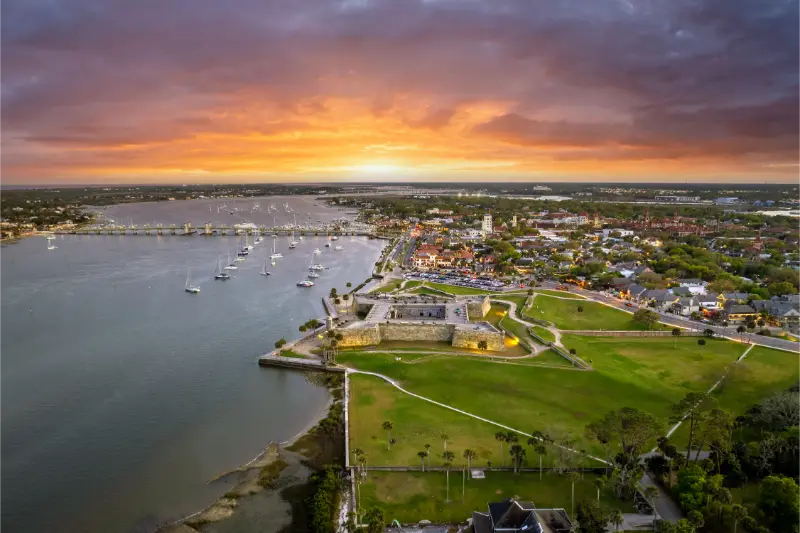
Two days is the sweet spot for many first-time St. Augustine trips. It gives you enough time to understand the historic core without turning the city into a museum marathon, and it leaves a second day for Anastasia Island, wildlife, the lighthouse and the Atlantic coast.
The key is geographic separation. Keep day one mostly downtown, where you can park once and walk. Use day two for the island and beach side, where driving between a few larger attractions is more practical. This simple split removes unnecessary backtracking and makes both days feel calmer.
The plan below works for couples, families and multigenerational groups, with optional swaps depending on weather and interests.
Quick planning summary
- Day 1: Castillo de San Marcos, St. George Street, Flagler-era architecture, one museum and evening historic district
- Day 2: lighthouse, Alligator Farm or Anastasia State Park, beach and optional Amphitheatre event
- Best base: historic district for walking or Anastasia Island/St. Augustine Beach for beach access
- Transportation: park once downtown on day one; drive strategically on day two
- Best pace: two major paid attractions per day at most, plus flexible outdoor time
Day 1 morning — Castillo and the historic core
Start at Castillo de San Marcos while temperatures are lower. Allow 60–90 minutes, then walk toward St. George Street and the colonial core.
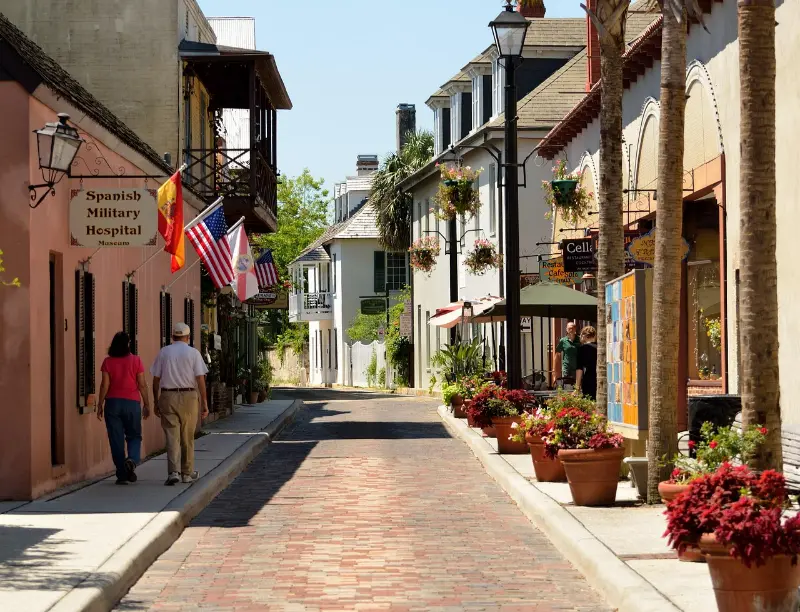
Use the morning to understand the city rather than shopping immediately. Add a short free or low-pressure stop such as Governor’s House Cultural Center if the group still has attention for exhibits.
Day 1 lunch and early afternoon — Flagler St. Augustine
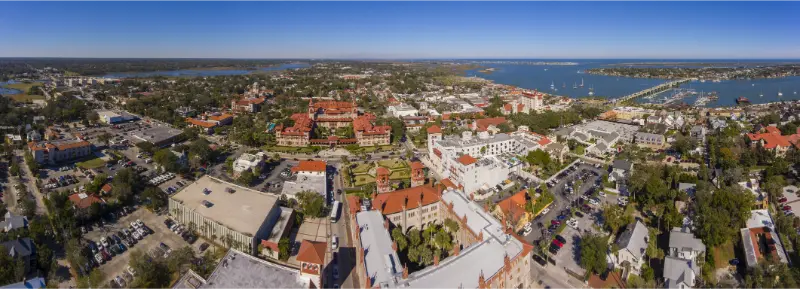
After lunch, choose Flagler College or Lightner Museum. Both explain the Gilded Age transformation of the city, but they overlap enough in time and geography that one is usually sufficient on a two-day trip.
Architecture lovers can walk the King Street area between attractions rather than immediately entering another ticketed site.
Day 1 late afternoon — one smaller interest stop
Families can choose Pirate & Treasure Museum. Social-history travelers may prefer Ximenez-Fatio House. Religious and cultural travelers can use Cathedral Basilica or St. Photios Shrine as a quieter alternative.
Day 1 evening — slow down
Have dinner in or near the historic district and walk the bayfront after dark. Do not book a late structured tour unless that experience is a priority; two full sightseeing days are easier when at least one evening remains flexible.
Day 2 morning — St. Augustine Lighthouse
Begin at St. Augustine Lighthouse. The tower climb is physically demanding enough that morning is usually better than a hot afternoon. Travelers who do not want the 219-step climb can still enjoy museum areas and grounds.
Allow 1.5–2 hours if the lighthouse is a major interest. Families with very young children should review current height, safety and climb rules before promising the tower experience.
Day 2 late morning — choose wildlife or beach nature
Choose St. Augustine Alligator Farm for a wildlife-focused family attraction, or Anastasia State Park for beach, dunes and natural scenery.
Trying to do the lighthouse, Alligator Farm and a long beach session before lunch is too much for most groups. Pick one as the main second stop and keep the other for later only if energy and weather cooperate.
Day 2 afternoon — beach time
Use a beach that fits your location and group. Anastasia State Park works naturally if you are already on the island, while St. Augustine Beach offers easier access to food and beach-town services.
A two- to three-hour beach window is enough to feel like a real coastal day without turning the afternoon into a logistics exercise.
Optional Day 2 evening — concert or relaxed dinner
If your dates align with an event at the St. Augustine Amphitheatre, the venue can be a memorable final night. Otherwise, a relaxed dinner on Anastasia Island or the historic bayfront is usually the better choice after an outdoor day.
Two days with young children
Reduce formal history. Day one can be Castillo, St. George Street, lunch and one interactive museum. Day two can be Alligator Farm, playground/hotel rest and beach. Children rarely benefit from squeezing Flagler College, Lightner Museum and multiple historic homes into the same 48 hours.
Two days with teenagers
Give teenagers one anchor to choose: lighthouse climb, Alligator Farm, beach, surf lesson, TPC Sawgrass, pirate museum or a concert. The rest of the itinerary can then balance history around that personal highlight.
Two days for senior travelers
Use day one as a compact walking zone with frequent seated breaks. On day two, drive between lighthouse, wildlife or beach stops. If the tower climb is not appropriate, substitute Lightner Museum, a scenic coastal drive or a shorter accessible beach-viewing stop.
Where to stay for a two-day trip
Stay in the historic district when evening walking and minimal downtown driving matter most. Stay on Anastasia Island or St. Augustine Beach when ocean access, pools and a quieter night are more important. Vilano works well for travelers continuing north toward Ponte Vedra.
Budget strategy
Two days can become expensive if you buy tickets continuously. Choose two to four paid attractions total and fill the rest with the fort grounds/bayfront, historic streets, churches, parks and beach time. Spend money where the experience is difficult to replicate for free.
Weather and seasonal planning
Northeast Florida is visitable year-round, but the experience changes sharply with the season. Late spring through early fall brings heat, humidity and frequent afternoon thunderstorms. Winter often has comfortable walking weather, yet cold fronts can make beaches and exposed waterfronts surprisingly cool and windy. Spring and fall usually provide the easiest compromise between temperature and daylight.
Lightning is the main reason to keep a flexible plan. At beaches, golf courses, parks and open historic sites, thunder is a cue to move indoors rather than shelter under a tree or pavilion. During hurricane season, check operating status before driving because coastal parks, bridges, beach ramps and attractions can close or alter hours even when the storm center is far away.
Rainy-weather version
Move the larger indoor attractions to the wettest periods: Lightner Museum, Pirate & Treasure Museum, Ximenez-Fatio House and other historic interiors. Preserve lighthouse, beach and Alligator Farm for the clearest weather window rather than locking every hour in advance.
Common mistakes to avoid
- Mixing downtown and island stops repeatedly on both days.
- Booking too many guided tours back to back.
- Treating beach time as a 30-minute photo stop.
- Ignoring rest after a lighthouse climb or long museum morning.
- Assuming the same itinerary works for toddlers, teenagers and senior travelers.
Official planning resources
Use Florida’s Historic Coast for maps and events, and check individual official attraction pages shortly before travel for current hours and reservations.
Extra planning notes for a smoother visit
Keep a 15–30 minute buffer between major stops around St. Augustine. Short map distances can still involve bridge traffic, event congestion, full parking lots, security lines or slow pedestrian streets. A little slack in the day prevents one delay from forcing you to skip the attraction you cared about most.
Save the official address, parking instructions and any reservation confirmation before leaving your hotel. Mobile coverage is generally good, but a group trying to navigate, find a garage and retrieve tickets at the same time can lose more time than expected.
Use official same-day notices for outdoor access. Beach driving, dune walkovers, trails and event parking can change because of tide, storms, maintenance or special events. A map app showing a place as open does not guarantee every activity or entrance is operating normally.
Comfortable shoes are more important here than they may seem. A single day can include brick streets, wooden boardwalks, grass, sand, gravel and historic floors. Choose footwear for the most demanding surface in the itinerary, not only for the restaurant or photo stop at the end.
Build one flexible element into every half day. A beach walk, café, park or scenic drive can expand when everything is running smoothly and shrink when parking, weather or fatigue slows the group down. That flexibility is especially valuable with children and senior travelers.
Think about the return trip before you begin the final activity of the day. After a beach session, concert, long museum visit or golf round, the group is less patient with restaurant queues and parking searches. Keep water in the car and know where your next practical stop will be.
Final thoughts
Two days lets St. Augustine feel like a place rather than a checklist. Keep the historic core together, keep the island and coast together, and protect one flexible block each day. That structure gives you history, architecture, wildlife and beach time without spending the trip in the car.
How to decide whether this belongs in your itinerary
A useful test is to ask what this stop adds that your other plans do not. If the day already contains two history museums, choose nature, beach or active recreation instead of a third similar attraction. If everyone has been outdoors in the heat, an indoor or seated experience may be the better use of time. Variety usually creates better travel memories than simply maximizing the number of famous names.
For this destination, the practical goal is not to follow a rigid checklist but to leave enough margin for real conditions on the day. That may mean shortening a walk, moving a meal earlier, changing parking areas or dropping a low-priority stop. A trip feels more complete when the experiences you keep are enjoyed at a reasonable pace.
Transportation reality
Northeast Florida distances can look small on a map, but bridges, beach traffic, event congestion and parking searches affect real travel time. Group nearby stops and avoid crossing the same bridge repeatedly. When an attraction has a timed tour or concert gate time, build the schedule backward from that fixed commitment and keep flexible activities around it.
For this destination, the practical goal is not to follow a rigid checklist but to leave enough margin for real conditions on the day. That may mean shortening a walk, moving a meal earlier, changing parking areas or dropping a low-priority stop. A trip feels more complete when the experiences you keep are enjoyed at a reasonable pace.
Planning for meals and energy
Meals are part of the itinerary rather than empty space between attractions. Eating slightly before peak lunch or dinner can reduce waits and protect the rest of the schedule. Families should carry simple snacks, while all travelers benefit from water in the car. After a hot beach or trail session, a long sit-down meal may be more restorative than forcing one more attraction before dinner.
For this destination, the practical goal is not to follow a rigid checklist but to leave enough margin for real conditions on the day. That may mean shortening a walk, moving a meal earlier, changing parking areas or dropping a low-priority stop. A trip feels more complete when the experiences you keep are enjoyed at a reasonable pace.
Photography without slowing the whole group
Choose two or three moments for deliberate photography instead of stopping every few minutes. Early and late light is usually softer on beaches and historic architecture, while overcast conditions can be excellent for gardens and portraits. At wildlife sites, use distance and a longer lens rather than approaching animals. At active churches, concerts and private tours, follow the specific photography rules.
For this destination, the practical goal is not to follow a rigid checklist but to leave enough margin for real conditions on the day. That may mean shortening a walk, moving a meal earlier, changing parking areas or dropping a low-priority stop. A trip feels more complete when the experiences you keep are enjoyed at a reasonable pace.
What to do when plans change
Have one backup in the same geographic area. If a beach closes to driving, use a pedestrian access rather than crossing the county for another ramp. If a thunderstorm delays an outdoor attraction, switch to a nearby museum or meal and return later. The strongest itineraries are modular: one change should not force a complete redesign of the day.
For this destination, the practical goal is not to follow a rigid checklist but to leave enough margin for real conditions on the day. That may mean shortening a walk, moving a meal earlier, changing parking areas or dropping a low-priority stop. A trip feels more complete when the experiences you keep are enjoyed at a reasonable pace.
Safety and comfort
Heat, lightning, surf and traffic are more relevant to most visitors than dramatic hazards. Use sunscreen, hydrate before you feel thirsty, respect beach flags and move indoors when thunder approaches. Never leave children or pets in a parked vehicle, even briefly. On natural trails, tell someone your route if walking alone and turn back before daylight or weather becomes a problem.
For this destination, the practical goal is not to follow a rigid checklist but to leave enough margin for real conditions on the day. That may mean shortening a walk, moving a meal earlier, changing parking areas or dropping a low-priority stop. A trip feels more complete when the experiences you keep are enjoyed at a reasonable pace.
Extra planning notes for a smoother visit
Keep a 15–30 minute buffer between major stops around this part of St. Johns County. Short map distances can still involve bridge traffic, event congestion, full parking lots, security lines or slow pedestrian streets. A little slack in the day prevents one delay from forcing you to skip the attraction you cared about most.
Save the official address, parking instructions and any reservation confirmation before leaving your hotel. Mobile coverage is generally good, but a group trying to navigate, find a garage and retrieve tickets at the same time can lose more time than expected.
Use official same-day notices for outdoor access. Beach driving, dune walkovers, trails and event parking can change because of tide, storms, maintenance or special events. A map app showing a place as open does not guarantee every activity or entrance is operating normally.
Comfortable shoes are more important here than they may seem. A single day can include brick streets, wooden boardwalks, grass, sand, gravel and historic floors. Choose footwear for the most demanding surface in the itinerary, not only for the restaurant or photo stop at the end.
Build one flexible element into every half day. A beach walk, café, park or scenic drive can expand when everything is running smoothly and shrink when parking, weather or fatigue slows the group down. That flexibility is especially valuable with children and senior travelers.
Think about the return trip before you begin the final activity of the day. After a beach session, concert, long museum visit or golf round, the group is less patient with restaurant queues and parking searches. Keep water in the car and know where your next practical stop will be.