
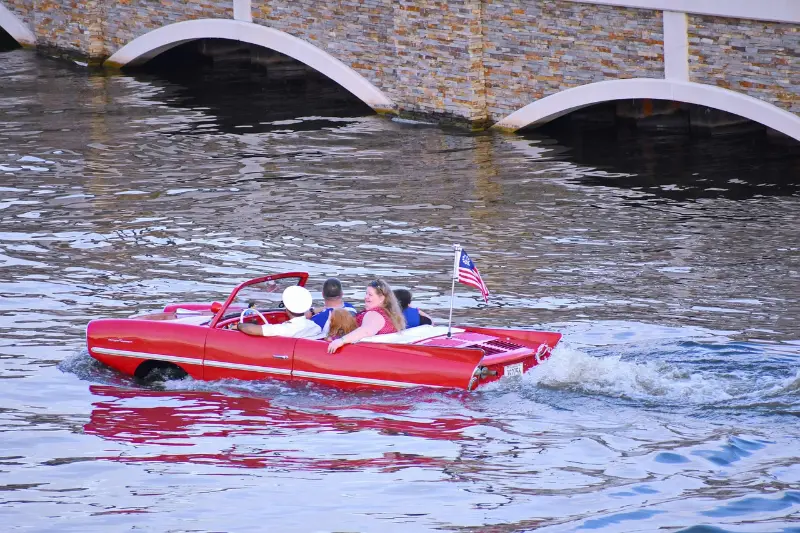
Some of Florida’s most memorable nature experiences require neither swimming nor paddling. A narrated river cruise or glass-bottom boat can reveal spring water, cypress forests, fish, turtles, wading birds, and the changing landscape from a comfortable seat. These outings are especially valuable when a family includes a confident swimmer, a nervous non-swimmer, children, and older relatives who would rather watch than enter the water.
This guide compares four distinctive freshwater experiences and shows how to choose among them. It is not one continuous road trip: Silver Springs, Wakulla Springs, Homosassa Springs, and the St. Johns River lie in different parts of the state. Use the comparison to add one worthwhile boat outing to the region you are already visiting rather than driving all day for an attraction with uncertain departures.
Compare Florida’s freshwater boat experiences
| Place | Main draw | Booking question | Key limitation |
|---|---|---|---|
| Silver Springs, Ocala | Glass-bottom view of spring system | Which departure and boat suit your group? | Visibility varies |
| Wakulla Springs, south of Tallahassee | Guided wildlife river cruise | Are tickets available for your date? | Weather affects departures |
| Homosassa Springs | Wildlife park with waterways | Is the boat shuttle operating? | Shuttle suspended under current low-water notice |
| St. Johns River operators | River scenery, birds and local history | What route and boat are offered? | Operators and services vary |
The difference between glass-bottom and wildlife cruises
A glass-bottom boat is designed to reveal what lies below the surface. Sunlight and water clarity matter, and shallow aquatic vegetation can look extraordinary when conditions are favorable. A wildlife river cruise focuses more on the banks, trees, and birds, with animals coming and going freely. Neither boat type can guarantee wildlife or perfect water visibility. Choose based on what you most want to see, not on the promise of a particular photograph.
Children who are fascinated by fish may enjoy a glass-bottom tour, while adults who like birdlife could prefer a guided nature cruise. A non-swimmer may feel comfortable on either if the vessel and conditions suit them. Someone prone to motion sickness should ask about boat motion, trip length, and cancellation policies. A river cruise usually feels different from an offshore sea excursion, but no vessel is completely motionless.
Silver Springs: a classic view into clear water
Silver Springs State Park near Ocala is famous for its historic glass-bottom boats. The park’s official experiences page describes 30-minute and longer tours, paved riverside paths, gardens, and boat reservations. This makes it a practical choice for travelers wanting one organized water-based attraction and a short land-based outing afterward.
If you use a wheelchair, do not book any departure at random: the park states that a specific boat in the fleet is wheelchair accessible and offered on selected dates. Check available departures and boarding conditions. After the tour, take a short walk along the main-entrance paths if appropriate, or enjoy a seated view. Arrive early enough to use restrooms and collect any required tickets without hurrying a child or older relative.
What you may see at Silver Springs
Clear water may reveal fish, underwater vegetation, and the spring environment; birds and turtles can appear around the river. Wild sightings vary by season and day. The landscape is important even when no large animal appears. Explain to children that river ecology is not a theme-park show: the animals do not appear on command and should not be approached or fed.
The park has separate areas and activities, so visitors should check which entrance matches their boat reservation. Do not assume that a general state-park admission covers all concession experiences. If a boat is sold out or severe weather interrupts service, a short garden or riverside visit may still be worthwhile. It is better to leave satisfied after a smaller visit than to force an expensive alternate tour at the last minute.
Wakulla Springs: a narrated river wildlife experience
South of Tallahassee, Edward Ball Wakulla Springs State Park offers a ranger-led river boat tour through a landscape of cypress trees and wetlands. The official historic tour description describes a trip of roughly 45 to 55 minutes and opportunities to observe wading birds, alligators, and sometimes manatees. These are wild animals, so do not base the value of the excursion on seeing any one species.
Reservations matter. The park explains that tour tickets are offered by reservation and that thunderstorms or unsuitable weather can prevent operation. Wheelchair-accessible boats may be available by request; contact staff well ahead of the date. Allow time to enjoy the lodge and dining options if they match your plans. This is an especially attractive half-day addition to a Tallahassee holiday rather than a hurried diversion during a cross-state drive.
Homosassa Springs: understand the present boat limitation
Ellie Schiller Homosassa Springs Wildlife State Park offers a chance to learn about Florida wildlife, including rescued animals that cannot be released and seasonal opportunities to see wild manatees around the spring environment. However, the official park notice states that its shuttle boat service has been unavailable since February 4, 2026, due to low water. Do not plan a visit around a currently operating boat transfer unless the park confirms that service has resumed.
This distinction is crucial because older tourism descriptions may still portray the boat as part of a standard visit. Ask how visitors are currently transferred between entrance facilities, which walking routes are open, and whether accessibility arrangements meet your needs. The wildlife experience can still be worthwhile even without the shuttle. It simply belongs in the category of wildlife park visits, not guaranteed active boat cruises.
St. Johns River: choose the operator, not just the river
The St. Johns is a long river, and boat experiences along it differ dramatically. Some operators focus on ecotours, others on scenic sightseeing or local history. Routes near the upper river wetlands feel different from the developed waterways near larger communities. There is no single departure point or universal ticket valid along the entire river. Search for a reputable operator close to your existing accommodation and investigate the specific itinerary.
Ask where the boat departs, whether parking is included, how long the cruise lasts, and what happens in bad weather. Some routes require a car to reach remote docks. Families need child life-jacket information, while a wheelchair user should confirm dock slopes, boarding gaps, and restroom access. A calm-looking river can still have commercial traffic and changing weather. Let the captain handle navigation and remain seated where instructed.
The best outing for babies and preschoolers
For young children, the shortest practical departure with easy boarding is often ideal. Consider nap schedules and feeding needs before reserving a long excursion. Ask whether strollers may be brought aboard or must remain on land, whether shade is available, and whether a caregiver can move to an exit quickly if the child becomes upset. A tour operator’s age policy is more useful than a broad advertisement stating suitable for all ages.
Children who are old enough to follow a ranger’s narrative may enjoy a wildlife checklist: cypress tree, heron, turtle, fish, and different leaf shapes. Treat it as a game, not a guarantee. If a baby cannot safely or comfortably be accommodated on a particular vessel, choose a waterfront path or visitor center instead. Families should never assume that a baby may be held on someone’s lap in place of required safety equipment.
Travelers over 70, mobility needs, and accessible boats
Age is not a barrier to enjoying river cruises, but specific needs matter. Before booking, ask about the exact number of steps, gangway slope, handrails, seating support, restroom availability, and distance from parking. Some attractions have accessible vessels only at selected times, while historic docks may not suit all wheelchairs. A clear telephone conversation with staff is more reliable than seeing a wheelchair symbol on a generic attraction listing.
For a visitor with limited stamina, choose one main cruise and a nearby meal rather than building a multi-attraction day. Schedule the boat at a time when everyone is most comfortable and consider heat, humidity, and glare off the water. If a person needs a personal assistant or particular mobility equipment, discuss it before paying nonrefundable fares. A well-planned seated experience can be enjoyable for visitors at many ages and ability levels.
Wildlife rules and conservation etiquette
Do not feed birds, turtles, alligators, or manatees from a vessel. Never lean over railings to touch an animal, and keep hands inside if the captain directs you to do so. Wildlife approaches must be left to the animals, not engineered by visitors seeking a close-up photograph. Flash, noise, or sudden movements can disturb animals. If you spot an alligator, observe quietly from the boat rather than encouraging others to crowd one side.
Explain to children why feeding wildlife creates problems for both animals and humans. Keep reusable bottles and wrappers secure so they do not blow into the river. The safest animal encounter is one where the visitor can appreciate the habitat without changing the animal’s behavior. Guides who talk about habitat, water quality, and conservation can add lasting value even on a day when sightings are modest.
Timing and the cost of the outing
| Cost area | What to check | Why it matters |
|---|---|---|
| Park admission | Vehicle or individual entrance | May be separate from boat fare |
| Boat ticket | Adult, child, senior categories | Each operator sets prices |
| Booking | Reservation window and fees | Popular departures sell out |
| Parking | Location and mobility drop-off | Dock may be distant |
| Food | Whether onsite meals are available | Easier than driving far afterward |
Avoid publishing a fixed statewide boat-tour price: each park and operator has its own fare structure. Look at current official pages immediately before reserving. Some tickets are weather dependent, and operators vary in how they handle changes. Morning may offer pleasant temperatures, but it does not guarantee clear skies or calm conditions. A visit that includes a good lunch and short nature stop may offer better value than buying a second cruise just because it is nearby.
Combining boat trips with existing Florida itineraries
Pair Silver Springs with an Ocala-area vacation or a drive through Central Florida. Pair Wakulla with Tallahassee and nearby historic attractions. Use Homosassa Springs as a wildlife park stop on a Nature Coast trip while treating any boat service as uncertain. Choose a St. Johns River operator according to the particular community where you are staying. These regional combinations reduce driving and leave more energy for the experience itself.
If you are planning an ambitious Florida road trip, limit the number of similar boat attractions. One excellent guided river outing can be more satisfying than several rushed and repetitive cruises. The same principle helps multigenerational groups: give each person an experience they can remember, with enough time afterward to talk about what they saw.
How to plan when weather changes
Have one indoor or land-based option near your chosen park. A museum, visitor center, garden, or comfortable café can make a canceled cruise day enjoyable. Watch for lightning and obey closures without trying to persuade staff to depart. If the forecast looks poor, ask whether your booking can be moved to another day. On a short vacation, avoid reserving a major prepaid boat excursion immediately before the flight home.
A river tour is most rewarding when you arrive informed but without rigid expectations. Water levels, wildlife, visibility, boat accessibility, and schedules change. Choosing the right type of cruise—and checking the official details shortly before arrival—lets Florida’s natural landscape be the attraction rather than an avoidable logistical problem.
Frequently asked questions
Which Florida boat trip is best for someone who does not swim?
Glass-bottom boat trips at Silver Springs and ranger-led river cruises at Wakulla can be excellent choices. Check vessel safety, boarding, and weather conditions for your group.
Is the Homosassa Springs park boat running in October 2026?
The official park notice says its boat shuttle is currently unavailable due to low water. Check directly for a service update before your visit.
Do these river tours guarantee alligators or manatees?
No. They visit natural habitats, and wildlife sightings vary. Choose a trip because the landscape and interpretation interest you, not for a guaranteed animal encounter.