
| Day | Main plan |
|---|---|
| Day 1 | Find your bearings in South Beach |
| Day 2 | South Pointe, the beach and a quieter afternoon |
| Day 3 | Downtown Miami, museums and the bay |
| Day 4 | Little Havana at a sensible pace |
| Day 5 | Vizcaya and Coconut Grove |
| Day 6 | Wynwood and the Design District—or swap in a rest day |
| Day 7 | Choose the finish that suits your group |
Miami rewards visitors who resist the urge to cross the entire metropolitan area every morning. A week can combine the Atlantic beach, Latin American food, waterfront parks, major museums and neighborhoods with very different personalities, but it becomes frustrating if every outing involves expensive ride-hailing or a long connection. This itinerary uses a deliberate split: several days around Miami Beach and several around the mainland, with one flexible day for a farther excursion. It is particularly helpful for visitors arriving from abroad, adults who prefer not to drive, families traveling with teenagers, and people who want a vacation with regular breaks. It does not assume that every trolley or train serves every neighborhood directly.
Choose a base that fits the way you will travel
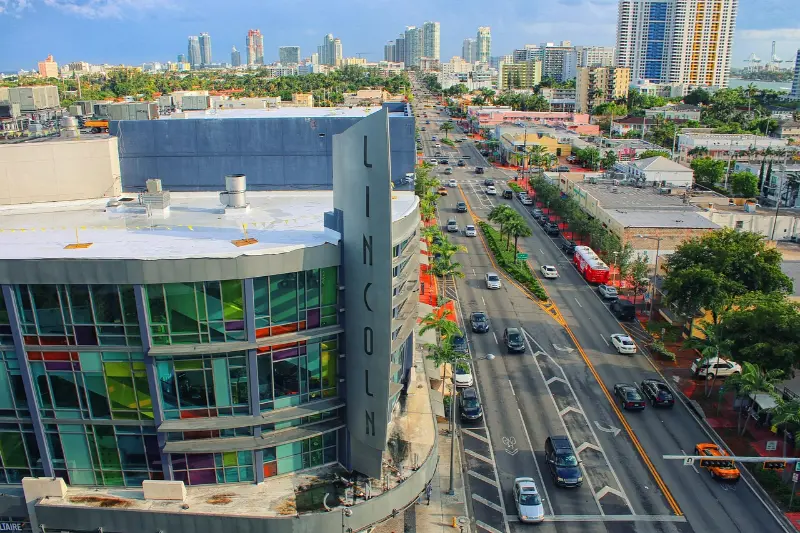
South Beach is convenient for the beach, Art Deco buildings and evening restaurants. A room near a reliable trolley stop can keep short beach days easy; a quiet side street may be more restful than a hotel in the busiest nightlife blocks. Mid-Beach tends to suit travelers who prioritize beachfront lodging and fewer late nights, although walking distances to restaurants can grow. On the mainland, Brickell works well for transit links, apartment-style accommodations and access to downtown museums; Downtown can be useful for people planning a cruise or several Metromover trips. Coconut Grove is attractive for shade and neighborhood restaurants but is not a substitute for staying on the sand. Compare the full cost of the property, including resort fees, parking you do not need, and the distance to usable transit—not just a map pin.
Day 1: Find your bearings in South Beach
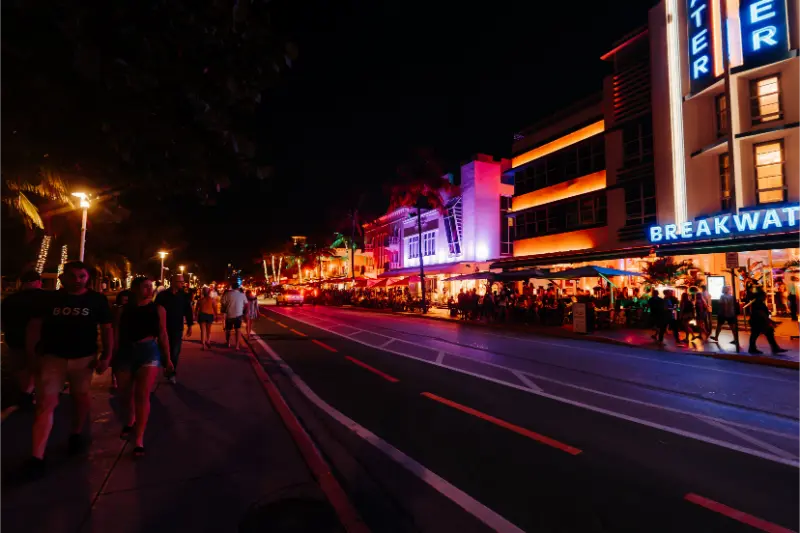
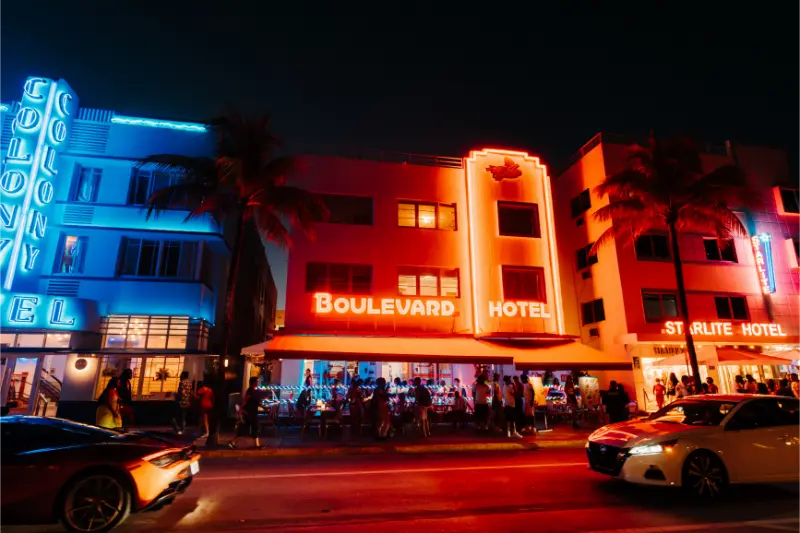
Make the first morning intentionally light. Walk a manageable section of Ocean Drive to see the Art Deco streetscape, then turn toward Lummus Park rather than trying to tour every district immediately. Look for a public beach access with facilities that meet your needs; the ocean can have strong currents and warning flags are worth taking seriously. Lunch in a nearby café creates a natural break before the warmer afternoon. If you have children, limit the first swim to the time they can comfortably handle and spend the rest of the day settling into a routine. In the evening, choose a stroll along the promenade or Lincoln Road rather than an elaborate reservation across town. Miami Beach operates its own free trolley service, but the route pattern and stop locations should be checked before leaving the hotel. Travelers with mobility limitations should choose a shorter Ocean Drive segment and ask in advance about beach-access mats and available beach wheelchairs.
Day 2: South Pointe, the beach and a quieter afternoon
South Pointe Park is an excellent contrast to busy central South Beach: passing ships, open water and a pleasant place to sit without arranging a tour. Go early enough to avoid the strongest heat, then walk only as far as the group enjoys. Families can pair the park with a nearby beach interval; adults who prefer scenery over swimming can spend more time at the promenade and watch the boats near Government Cut. Pack water, sun protection and a light layer for an air-conditioned lunch stop. Afterward return to your hotel instead of treating the afternoon as an empty slot to fill. If the weather is unsettled, switch the sequence and use a museum or indoor activity, leaving South Pointe for a clearer window. This day is also useful for people adjusting to a time difference, because it involves little transport and offers plenty of places to pause. Do not confuse a pleasant waterfront path with a guarantee of step-free beach access; individual entrances vary.
Day 3: Downtown Miami, museums and the bay
Cross to the mainland and focus on a compact cluster around downtown. The free Metromover makes some downtown connections easier, but it is not a train to Miami Beach. Choose one main museum: the Pérez Art Museum Miami is a good fit for art lovers, while the Phillip and Patricia Frost Museum of Science often appeals to families and curious teenagers. Trying to cover both thoroughly plus a long neighborhood tour can turn a pleasant day into a tiring one. Include time beside Biscayne Bay, and check whether a museum has timed-entry requirements or changing exhibition galleries. A practical lunch stop within the district prevents repeated rides across downtown. If your group includes someone who uses a wheelchair or walker, check accessible entrances, lift operations and the walking distance from the nearest stop on the day of travel. Enjoy the skyline after sunset only if return transport is clear; visitors should not assume a trolley follows the same schedule as a metro service.
Day 4: Little Havana at a sensible pace
Set aside a morning for the food, music and history of Little Havana, concentrating on a manageable stretch of Calle Ocho rather than treating a living neighborhood as one giant attraction. Stop at a Cuban bakery, explore the shops and public spaces, and look for cultural exhibits or live music if schedules align. The best experience often comes from taking time for a conversation with a local business owner rather than racing between photographs. Respect that Domino Park is a social space, not a staged performance for visitors. Families may enjoy the bright streets and snacks, though summer heat makes a midday walk demanding. Use a confirmed bus, city trolley route or ride-hail connection from your actual lodging; the Miami city trolley and the Miami Beach trolley are separate systems, and the mainland trolley does not go to the beach. For a low-mobility traveler, organize one drop-off and one pickup close to the central stops, with a seated lunch between them.
Day 5: Vizcaya and Coconut Grove
Combine two neighboring-feeling experiences without underestimating how different they are. Vizcaya Museum and Gardens invites a more deliberate visit: historic rooms, waterfront views and landscaped outdoor spaces. Check current admission, weather policies and accessible routes in advance; some historic surfaces can be uneven. Continue to Coconut Grove for a leisurely lunch and a walk near the waterfront, choosing a short loop over an ambitious circuit of the whole neighborhood. Families should allow extra time for shade and hydration in the garden, while art and architecture enthusiasts may stay longer indoors. If afternoon thunderstorms appear, prioritize the museum portion rather than committing to an exposed waterfront activity. Coconut Grove restaurants range from casual to expensive, so check menus before choosing a table. This is a day where a limited rideshare trip can be more efficient than several transfers; compare the real door-to-door time, not only the fare displayed in a transport app.
Day 6: Wynwood and the Design District—or swap in a rest day
Street art and contemporary design make a natural pairing, although the districts are not simply one continuous walking attraction. Begin in Wynwood and decide whether you want to enter Wynwood Walls or simply explore the wider streetscape, shops and galleries. Walls on private buildings change, and indoor gallery openings are not guaranteed. Then move to the Design District to see architecture, public art and carefully curated shops; browsing here does not require a luxury shopping budget. For young children the novelty of murals may last less than adults expect, so shorten the afternoon and make room for a playground or hotel pool. In summer, plan indoor breaks rather than assuming colorful streets equal comfortable walking. Travelers who are sensitive to crowds may prefer a weekday morning. If this sounds like too much after five active days, keep only one district and leave the rest of the day free. A good week in Miami has space to appreciate a place, not merely check it off.
Day 7: Choose the finish that suits your group
The final day should not be a complicated excursion with a narrow deadline, especially when a flight or cruise is involved. Beach lovers can return to their favorite stretch of Miami Beach for an early swim and a long breakfast. Families with teenagers might prefer one final museum or an outing to a park, while travelers with extra energy can consider an organized excursion farther south—only if departure times and return transport are reliable. A genuine Everglades National Park day trip is a substantial separate commitment and deserves its own plan; the national park has different entrances that do not connect by road within the park. An easy alternative is a short bayfront walk and time for packing. Ask the hotel about luggage storage, confirm the airport terminal and leave a margin for traffic. Ending the trip calmly often does more for the memory of a vacation than squeezing in another distant sight.
Getting around without a car
Think in layers: walking within compact districts, city trolley or bus where routes fit, Metromover within the downtown zone, Metrorail for selected mainland corridors, and occasional ride-hailing when transit would consume the afternoon. The City of Miami trolley is free but does not serve Miami Beach. Miami Beach has its own free trolley network, and neither should be mistaken for a frequent direct airport shuttle. Always review accessible boarding arrangements and any service disruption before depending on one connection. An airport transfer is a separate decision: public transportation can work for light luggage and flexible travelers, while a family arriving late may value a direct transfer. If you want to visit the Everglades, Key Biscayne or several scattered districts, the cost and complexity of transport changes substantially. That is a reason to plan one special day, not a reason to rent a vehicle for the entire week automatically.
Costs, reservations and a realistic daily rhythm
The largest budget variables are lodging, restaurant choices and paid attractions. Free waterfront walks can balance a major museum ticket and a special meal. Check hotel fees, room taxes, tipping expectations and any charges for umbrellas or loungers on the beach. An apartment with a kitchen can reduce breakfast costs, but only when its location does not create daily transport expenses. Buy timed museum admission only after deciding which day makes sense in the weather forecast; leave flexible beach time unbooked. As a general rhythm, plan one ticketed activity or neighborhood focus in the morning, lunch and shade at midday, then a shorter second outing. A seven-day trip with three different hotels rarely feels restful and may cost more in transfers. Use one base unless your arrival, departure or personal priorities make a split stay worthwhile.
Families, older travelers and accessibility
For infants, give the room location, kitchen access and sleep schedule more weight than the size of an attraction list. For school-age children, alternate museum days with beaches and pool time. Teenagers can help select the street-art day or a science exhibition. Adults who prefer slower travel can follow exactly the same route while shortening each neighborhood visit. Miami’s flat coastal terrain does not mean every sidewalk, boat or historic garden is equally accessible: confirm elevators, restroom availability, wheelchair-compatible beach entrances and transfer requirements directly. Keep a small weather kit with drinking water, sun protection and a light rain layer. Everyone benefits from a clear pickup point when a group splits. Parents should not assume that a free trolley has space for a large stroller at every crowded stop.
When to go and what changes with the seasons
Winter typically brings more comfortable walking conditions and strong demand for popular hotels; summer is hotter, wetter and better suited to early outdoor outings, pool breaks and indoor afternoons. Tropical-weather risks require flexible bookings during hurricane season, which runs from June through November. Never treat the weekly forecast as a safety guarantee: check National Weather Service guidance, beach flags and official local advisories. An event or major convention can change room rates dramatically. Museum schedules, trolley routes and restaurant openings also change. This itinerary therefore describes a practical shape for a week, not a promise that every attraction will be open on every selected day. Swap days freely and keep a backup close to your lodging rather than spending a rainy afternoon in traffic.
Frequently asked questions
Can I spend seven days in Miami without renting a car?
Yes, if your accommodation is in a walkable neighborhood and you group outings by district. Use local public transport and occasional booked transfers for less-connected places.
Does the free City of Miami trolley go to Miami Beach?
No. Miami and Miami Beach operate separate trolley networks; review each official route map before you travel.
Is this week suitable for older adults and families with young children?
Yes, with shorter walks, shade breaks, suitable beach access and realistic transport planning. Check the accessibility of each stop rather than assuming every neighborhood is equally easy.