
Florida history stretches far beyond a single old town. Indigenous history, Spanish and British colonial periods, forts, missions, maritime trade, lighthouses, Black history, railroads, citrus, aviation, space exploration and twentieth-century tourism all left places that visitors can still experience. The useful way to plan a history-focused trip is not to chase every marker. Choose a few sites with strong interpretation, then connect them to the landscape and communities around them.
Quick planning summary
- Start with a few well-interpreted sites instead of trying to collect every historic marker.
- St. Augustine is important, but Florida history also runs through Pensacola, Tallahassee, the Keys, Gulf Coast ports and inland towns.
- Use official heritage trails and National Register resources to add context.
- Historic forts, lighthouses and houses may have accessibility limits; check before relying on stairs or towers.
- Include Indigenous, Black, maritime, military and modern history for a fuller picture of the state.
In this guide
- Quick planning summary
- St. Augustine: the obvious starting point, not the whole story
- Pensacola and the western Panhandle
- Tallahassee, missions and state history
- Forts, lighthouses and coastal defense
- Black history and civil rights
- Indigenous history and archaeology
- Railroads, citrus, tourism and the making of modern Florida
- Using heritage trails and National Register listings
- Families, seniors and accessibility
- Budget and booking
- How to build a realistic day
- Common mistakes to avoid
- Related Wonderful Florida guides
- Official resources to check
- Final planning advice
St. Augustine: the obvious starting point, not the whole story
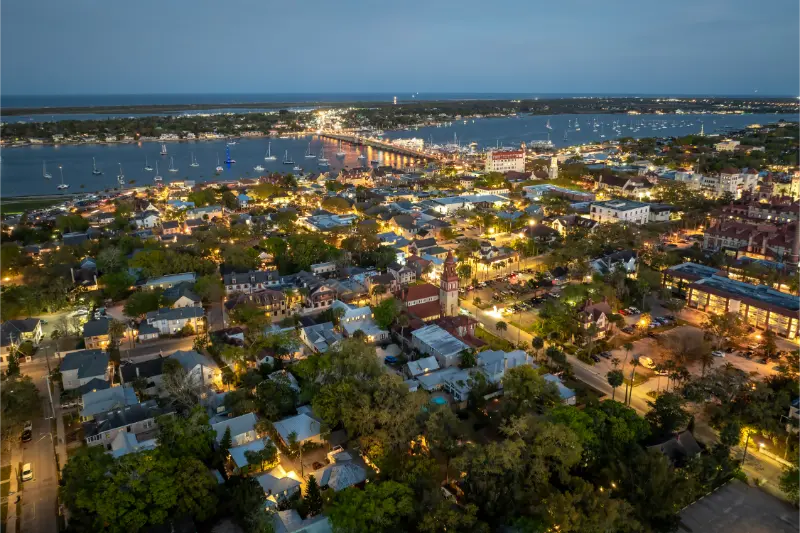
St. Augustine is the natural introduction to colonial Florida because historic streets, Castillo de San Marcos, missions, museums and architecture sit close together. It is easy to spend two days without a car once the vehicle is parked. The danger is assuming the city represents all Florida history. It tells a major story, but not the only one.
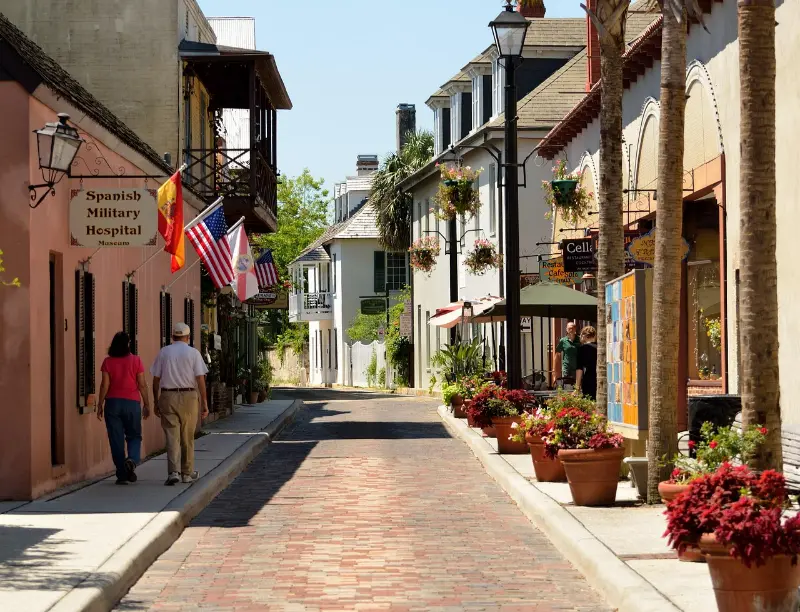
Use the historic district to understand the contest among colonial powers, Indigenous peoples, religion, trade and settlement, then connect that history to Fort Matanzas, Fort Mose and the wider region. Fort Mose is especially important for the story of free Black settlement in Spanish Florida.
Pensacola and the western Panhandle
Pensacola’s history is tied to early European settlement attempts, military strategy, naval aviation and the Gulf. Historic areas and forts help explain why this corner of Florida feels culturally connected to the broader Gulf Coast as well as to the peninsula. The National Naval Aviation Museum adds a much later layer that can anchor a full day.
Farther east, Apalachicola, Carrabelle and Port St. Joe connect maritime trade, railroads, fisheries and World War II history. Smaller museums can be valuable because they interpret local events that disappear in a statewide overview.
Tallahassee, missions and state history
Tallahassee is more than the modern capital. Mission San Luis interprets the interaction of Apalachee people and Spanish colonists, while the Historic Capitol and other museums cover government and state development. Nearby plantations, archaeological sites and civil-rights resources add difficult but essential parts of the story.
A history-focused Tallahassee visit works best with context. Choose one large museum, one historic site and one outdoor or neighborhood stop rather than moving between buildings all day. The city also connects naturally to North Florida heritage routes and small towns.
Forts, lighthouses and coastal defense
Florida’s long coastline produced forts and lighthouses that are among the state’s most visual historic attractions. Castillo de San Marcos, Fort Pickens, Fort Clinch and other defensive sites show different periods of military history. Lighthouses in St. Augustine, Ponce Inlet, Key West and elsewhere connect navigation, storms and maritime trade.
Towers and fortifications often involve stairs, heat and uneven surfaces. Visitors who cannot climb can still gain a great deal from museums and grounds, but check the individual site’s accessible route. Lighthouse climbs may have age, footwear or weather restrictions.
Black history and civil rights
Florida Black history includes free Black communities under Spanish rule, enslavement and plantation systems, Reconstruction, segregation, civil-rights activism, migration and cultural achievement. Fort Mose near St. Augustine, Eatonville near Orlando, museums in Delray Beach and other community institutions help visitors move beyond a simplified statewide narrative.
Treat these places as core history, not a separate optional category. Read the interpretation provided by the site and seek institutions rooted in the community. Some of the most important locations are small and have limited hours, so planning matters more than at a large tourist attraction.
Indigenous history and archaeology
Florida’s history begins long before European arrival. Archaeological sites, museums and state parks interpret peoples who lived across the peninsula for thousands of years, while Seminole and Miccosukee history continues into the present. Shell mounds, mission sites and preserved landscapes are cultural resources, not just scenic stops.
Do not collect artifacts or disturb archaeological material. Follow site rules and respect areas that may have ceremonial or burial significance. The Florida Division of Historical Resources and museum interpretation can provide more reliable context than legends repeated on roadside signs or social media.
Railroads, citrus, tourism and the making of modern Florida
The late nineteenth and twentieth centuries transformed Florida through railroads, hotels, citrus, drainage, highways, aviation and tourism. Historic train depots, grand hotels, planned communities and roadside attractions show how the modern vacation state developed. Palm Beach, Miami, St. Petersburg, Central Florida and the Keys each tell a different part of that story.
This is also where architecture becomes useful evidence. Mediterranean Revival, Art Deco and Mid-century buildings reveal changing ideas about climate, wealth and tourism. A walking tour can connect the history better than a list of dates.
Using heritage trails and National Register listings
The Florida Department of State publishes heritage-trail resources and maintains programs connected with historic preservation. National Register listings can help identify important districts and properties, although listing does not automatically mean a building is open to visitors. Use these resources to discover themes, then verify access locally.
A heritage road trip is strongest when it follows one story—Black heritage, Spanish colonial sites, lighthouses, architecture, railroads or military history—rather than simply linking old buildings. Theme creates meaning and keeps the route geographically sensible.
Families, seniors and accessibility
Historic sites can involve uneven brick, stairs, fort ramps, narrow historic houses or outdoor walks with little shade. Families may prefer sites with demonstrations or hands-on interpretation, while older visitors may value tours with seating. Many major sites offer accessible routes, but historic fabric can create limitations. Check the individual property when an elevator, wheelchair route, captioning or accessible restroom is essential. A shorter visit with good interpretation is usually better than trying to cover several sites in one afternoon.
Budget and booking
Public historic sites are often inexpensive, but a history-heavy itinerary can accumulate admission, parking and tour fees. Decide which places deserve a paid guided experience and which can be enjoyed through self-guided interpretation. Forts and national sites may use different fee systems from state museums. For road trips, a central hotel in a historic district may cost more nightly but save parking and repeated driving, particularly in St. Augustine and other compact destinations.
How to build a realistic day
Choose a theme for the day—colonial Florida, maritime history, Black history, space, railroads or architecture—and visit two or three connected places. Read enough background beforehand to understand why they matter, but let the interpretation on site do the deeper work. Combine indoor and outdoor stops so weather does not control the entire plan. On a road trip, avoid arriving at the final museum just before closing because earlier forts or markers took longer than expected.
Common mistakes to avoid
- Reducing Florida history to one city or one time period.
- Visiting historic sites without checking opening days and tour schedules.
- Ignoring Indigenous and Black history when building the itinerary.
- Expecting every fort or lighthouse to be fully accessible.
- Trying to fit several large museums into a single day.
- Treating historical interpretation as static instead of checking current official resources.
Related Wonderful Florida guides
St. Augustine travel guide, Pensacola travel guide, Tallahassee travel guide, Best museums in Florida, Best scenic drives in Florida.
Official resources to check
Rules, schedules, access arrangements, fees and weather-related operations can change. If a detail is essential to the trip, confirm it with the responsible public agency, attraction, venue or operator shortly before travel rather than relying on an old screenshot or third-party summary.
Trip design checklist
Before booking, write down the one experience that would make this trip feel successful, the maximum daily driving you are comfortable with, the walking or activity level that suits the group and the amount of flexibility you need for weather. Then choose accommodation and transport around those answers. This simple exercise prevents a common Florida problem: collecting attractive places on a map without noticing that they create an exhausting route. Keep one unscheduled half-day in every three or four days so the itinerary can absorb weather, laundry, a late start or an experience you discover after arrival.
Recheck the practical details a few days before travel. Confirm opening hours, parking, reservation requirements, accessibility, current advisories and any equipment you need. Save confirmations offline and share the main plan with the group. Florida rewards flexible travelers because conditions can change quickly, yet there is almost always a useful alternative nearby. The goal is not to remove uncertainty; it is to make sure a change of plan does not become a crisis.
Final planning advice
The strongest Florida trips balance ambition with flexibility. Choose the experiences that genuinely matter, keep each day geographically sensible and leave room for weather, traffic and energy to change. A little breathing space usually produces a better vacation than a schedule that depends on everything running perfectly.