The coast northeast of Jacksonville contains some of Florida’s most important stories about freedom, enslavement, business and the right to enjoy the shoreline. These are not interchangeable histories. Kingsley Plantation on Fort George Island helps visitors confront the labor and family lives of enslaved people in the plantation era. American Beach, on Amelia Island, tells a twentieth-century story of Black entrepreneurship and recreation during segregation. Jacksonville’s institutions connect both places to a larger city, its civic leaders and the changing fortunes of Black communities. A four-day trip can link these sites without turning them into a superficial photo tour.
At a glance
| Stop or theme | What to do | Check before traveling |
|---|---|---|
| Jacksonville | Museum and civic history | Research current exhibits |
| Kingsley Plantation | Plantation-era interpretation | Closed some weekdays |
| American Beach | A.L. Lewis Museum and dune | Respect private property |
| Amelia Island | Context and reflection | Confirm museum hours |
The journey calls for respect as well as practical preparation. Several sites contain private homes or sacred community spaces. Museums may have limited opening days and historic structures may not be open for interior tours. National Park Service pages make clear that the majority of American Beach remains in private ownership; visitors should not cross a yard or climb a dune in search of a better view. The itinerary is suitable for adults, thoughtful teenagers and families willing to discuss difficult subjects honestly and at an age-appropriate level.
What this history trip covers—and what it does not
Black coastal history is not one story. The experiences of enslaved people at Kingsley Plantation, people who bought land and created community institutions, and vacationers who built American Beach under segregation differed profoundly. Some of these communities have cultural connections with the broader Gullah Geechee heritage of the southeastern coast, but it would be inaccurate to label every Black heritage site in northeast Florida a Gullah Geechee attraction. Let local institutions and community voices explain their own identity and language rather than applying labels from a tourism brochure.
Approach the itinerary through three questions: who could own property, who could move freely and who had access to public leisure? A comparison across centuries reveals why a beach founded for Black vacationers was not merely a picturesque place to swim. Encourage teenagers to notice what museum displays say about commerce, churches, social organizations and family celebrations. For younger children, start with accessible ideas about fairness, work and belonging before visiting emotionally difficult exhibits. Allocate more time for conversation than for ticking locations off a map.
Day 1: Jacksonville’s history institutions and the St. Johns River
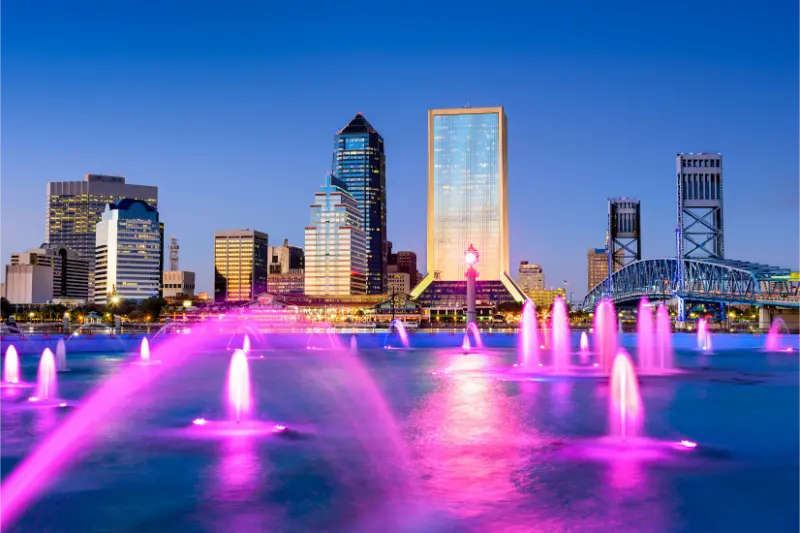
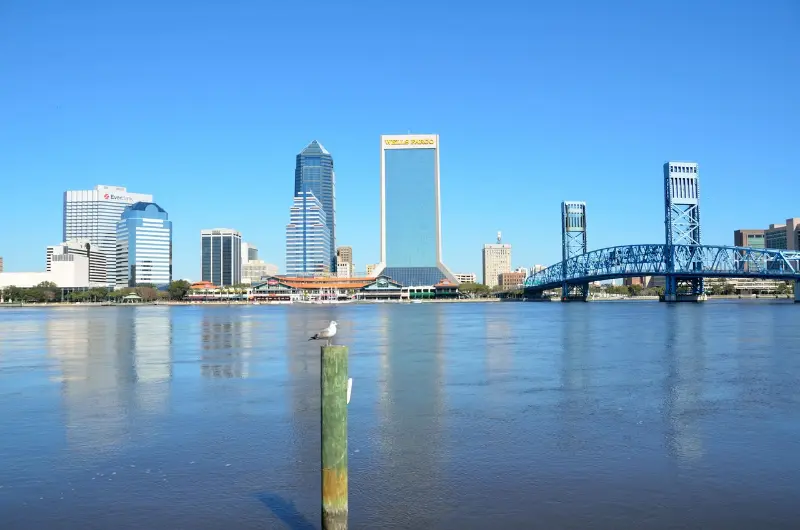
Begin with a museum, library exhibition or reputable local historical organization in Jacksonville that has a current public program on African American heritage. Research operating hours and exhibits before the trip; do not assume that an institution mentioned in an old list still offers the same permanent gallery. The city is geographically extensive, so concentrate the day in one practical area and leave time for a riverfront walk. A view of the St. Johns River introduces trade, movement and the relationship between port activity and inland communities.
A concrete option is Jacksonville’s LaVilla Lift Ev’ry Voice & Sing Heritage Trail, unveiled in June 2026 with historic markers. Check the city’s current map and route conditions before setting off; a marked heritage trail is more useful than an invented circuit through private blocks. The Ritz Theatre and Museum is another significant LaVilla institution. Its performance calendar and exhibition access can change, so consult the operator rather than assume every gallery is always open.
Choose a well-documented guided experience if one is available rather than inventing a walking trail through unfamiliar residential streets. Public history is strongest when the people who live in an area have a voice in how it is interpreted. If you visit a church or cultural organization, verify whether visitors are welcome and behave as guests, not spectators. Spend the evening reading about A.L. Lewis, the Afro-American Life Insurance Company and American Beach so the later visit has context. A hotel within easy reach of Jacksonville’s northeast side can shorten the drive toward Fort George Island tomorrow.
Day 2: Kingsley Plantation and Fort George Island
Kingsley Plantation, within Timucuan Ecological and Historic Preserve, preserves an extraordinarily important plantation landscape. The National Park Service interprets the planter’s house, slave quarters, kitchen buildings and the waterfront environment. The stories of Anna Kingsley and other people who lived and worked here illuminate the complex legal and social worlds of Spanish and later American Florida, but the economic foundation included forced labor. Visitors should not romanticize the architecture while overlooking those whose labor sustained the plantation.
The NPS currently lists regular access Wednesday through Sunday, with some structures and house access more restricted than grounds visitation. Verify current opening dates and whether a house tour is offered before driving. Use the self-guided interpretation, interpretive panels and audio resources when available. The semicircular arrangement of surviving tabby slave quarters deserves time and careful attention, not a hurried glance. Stay on designated paths and respect fragile fabric. For a visitor with limited mobility, ask rangers about route surfaces, ramps and how far the plantation’s key interpretive areas are from parking.
Day 3: American Beach and A.L. Lewis’s legacy
American Beach was established in 1935 as a place where Black visitors could enjoy the ocean during a period when segregation restricted access to most beaches. The National Park Service identifies A.L. Lewis, a leader of Jacksonville’s Afro-American Life Insurance Company, as central to the creation of this community on Amelia Island. This history turns an apparently ordinary beach landscape into evidence of organization, economic ambition and social resilience. It also provides a natural discussion of how exclusion shaped American leisure geography.
Make the A.L. Lewis Museum your first stop if its public schedule permits. The NPS lists its location at 1600 Julia Street but directs visitors to the museum for current opening information. Walk only public streets and officially accessible spaces. The NPS-managed sand dune is a protected resource; do not climb over barriers or enter private residential properties. Burney Beachfront Park is a practical place for public beach access and restroom planning. A short beach visit can conclude the historical experience, but remember that this is a living community where people should not become subjects for intrusive photographs.
Day 4: Amelia Island reflections and an optional return stop
Spend the final morning reflecting on the story of Amelia Island and its relationship to Jacksonville. You might revisit American Beach during better weather, explore a public historic district on Amelia Island or select a coastal nature stop with clear visitor access. If you have not had enough time at the museum, use today as a contingency day rather than adding a faraway attraction. Many small museums change opening hours seasonally, and a flexible fourth day protects the itinerary from one inconvenient closure.
Consider a family discussion using photographs, notes or objects from museum exhibitions rather than treating the conclusion as another shopping opportunity. What did land ownership make possible at American Beach? How did access to the shore differ from life at Kingsley Plantation a century earlier? How do interpretive sites represent people whose names were rarely recorded in historical documents? Questions like these offer more value than simply counting landmarks. Travel back to Jacksonville with extra time for bridge traffic and, if applicable, an afternoon flight. The area is not so large that every day must involve a long drive.
How to approach Kingsley Plantation responsibly
Plantations are sites of both architectural history and human suffering. Describing them as romantic southern estates erases enslaved laborers, their families and the violence that underpinned plantation wealth. Read the interpretive signs as carefully as you observe the surviving buildings. Recognize that people of African descent had different legal statuses under successive governments and that individual family experiences cannot be summarized neatly. The NPS provides historical material that can help explain these changes without reducing people to a single anecdote.
Photography should be considerate. It may be permitted outdoors in some areas, but drone use, entering restricted structures or moving archaeological objects is inappropriate. Never pose casually on a grave, historic foundation or interpreted slave cabin in a way that trivializes the site. For young children, tell an honest story using concrete details about homes, work and family rather than graphic descriptions. Adolescents can use primary sources and discuss what monuments or preserved buildings do not show. Visitors who find the subject emotionally demanding should build in quiet time and avoid scheduling other intense museums immediately afterward.
Transport, lodging, access and weather
You will need a car or a carefully arranged tour for this itinerary. Northeast Jacksonville and Amelia Island are not a compact transit-friendly heritage district. Confirm exact addresses because Timucuan Preserve is a collection of separated sites rather than one entrance gate. Local ferries, bridges and island roads can create travel variations; consult official transport notices instead of assuming a mapping app’s shortest route will always operate. Book lodging in Jacksonville for convenience, or split the stay with Amelia Island if your budget permits.
For someone with a walker or wheelchair, contact Kingsley Plantation and A.L. Lewis Museum to ask about surfaces, accessible parking and facilities. Do not assume old structures have modern interior access even when a visitor center does. Summer brings mosquitoes, intense heat and thunderstorms; shaded breaks, water and sun protection are necessary. Beach days also require attention to currents, flags and sea turtle protections. Respect residential parking signs at American Beach. A vacation can support local businesses and cultural institutions without treating a neighborhood like an amusement park.
Supporting the people who keep these stories alive
Cultural tourism is most meaningful when it strengthens community institutions. Pay admission or donate when requested, purchase books from museum shops and attend suitable public talks if scheduled. Ask which organizations maintain the historical record and whether local guides or educators lead tours. Avoid collecting artifacts or turning sensitive locations into online ‘secret spots.’ If you publish travel photographs, caption them accurately and acknowledge what the setting represents. A generic tag like ‘beautiful old plantation’ is not an adequate description of Kingsley Plantation.
For teachers or homeschool groups, contact museum staff about educational visits rather than assuming large groups can arrive without reservations. For families, let children select one question to research after the trip. History becomes memorable when visitors understand choices that individuals and communities made within restrictive laws and unequal power structures. American Beach is particularly important because it records Black self-determination and joy as well as discrimination. That fuller story is a more powerful reason to visit than a checklist of historic buildings.
Frequently asked questions
Is American Beach only a museum?
No. It is a living community and a historically significant beach area. Much of the land is private; use designated public access and museum facilities.
Is Kingsley Plantation free to visit?
The National Park Service lists general access as free, although particular tours and access conditions may vary. Confirm current hours before leaving.
Can I visit both places in one day?
It is possible by car, but a longer visit gives the interpretation the time and respect it deserves. Two separate days are recommended.
Are these sites suitable for children?
Yes, with thoughtful explanations about enslavement, segregation and community resilience tailored to a child’s age and understanding.
Are all these sites part of Gullah Geechee heritage?
There are regional cultural connections, but site histories and identities are distinct. Use the terminology of the institutions and communities involved.
Official planning resources
- Timucuan Ecological and Historic Preserve: Kingsley Plantation, American Beach and current site access information.
- National Park Service: American Beach: ownership, public facilities and museum referral.
- A.L. Lewis Museum: exhibitions, events and visiting hours.
- City of Jacksonville LaVilla heritage trail: officially documented 2026 heritage markers.