Category: Florida Travel Planning

  • Southwest Florida Travel Guide: Naples, Fort Myers, Sanibel, Captiva, Marco Island and the Gulf Coast

    Southwest Florida Travel Guide: Naples, Fort Myers, Sanibel, Captiva, Marco Island and the Gulf Coast

    Southwest Florida is best understood as a region rather than a checklist of famous stops. Its strongest mix is Gulf beaches, shelling, wildlife, boating, relaxed resort towns, Everglades gateways and winter sunshine. A first-time visitor can build a satisfying trip by choosing one or two bases, then using day trips to add contrast instead of changing hotels every night.

    I would start by deciding whether the trip is mainly about coast, nature, cities, attractions or a combination. Good bases include Naples, Marco Island, Fort Myers area, Sanibel/Captiva or a split stay. The distances are manageable when the itinerary follows one direction, but they become tiring when the same highways are repeated every day. The options suit couples, families, teenagers, senior travelers and multigenerational groups, with practical attention to accessibility and pacing.

    Quick planning summary

    • Best for: Gulf beaches, shelling, wildlife, boating, relaxed resort towns, Everglades gateways and winter sunshine.
    • Best bases: Naples, Marco Island, Fort Myers area, Sanibel/Captiva or a split stay.
    • Recommended stay: 4–7 nights for one part of the region; 7–10 nights for a broader road trip.
    • Transport: a car is usually the easiest option outside compact downtowns and selected rail corridors.
    • Best planning rule: choose fewer bases and spend more time actually experiencing each place.

    In this guide

    Naples: beaches, dining and a polished base

    Naples combines Gulf beaches with a walkable dining and shopping core, attractive neighborhoods and access to preserves. It is a strong choice for couples, senior travelers and multigenerational families who value comfortable infrastructure. Beach parking and access vary, so the ideal hotel depends on whether evenings or early beach time matters more.

    A central hotel can reduce dinner driving, while a beachfront property can justify its price for travelers who want daily sand time. Compare resort fees and parking before judging the nightly rate. For a regional trip, the practical question is not how many stops can fit on a map but how much time the group wants to spend outside the car. Cluster attractions by base, preserve one lighter half-day, and avoid moving hotels simply to save a short drive. This matters for families with small children, senior travelers and anyone who values relaxed evenings.

    Marco Island and Ten Thousand Islands

    Marco Island has a resort-oriented beach environment and easy access to boat trips into the Ten Thousand Islands. The surrounding waters are ideal for travelers interested in dolphins, mangroves, shelling and fishing. The island itself is more spread out than a compact historic town, so accommodation location influences how much driving is needed.
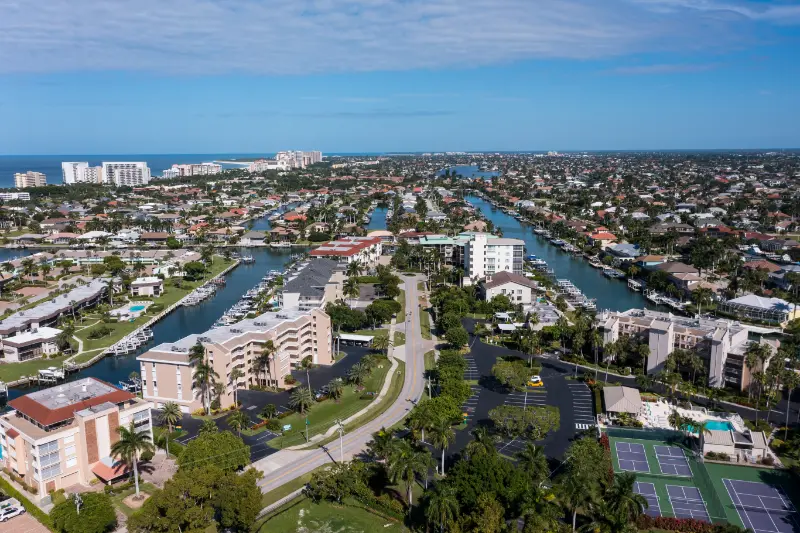
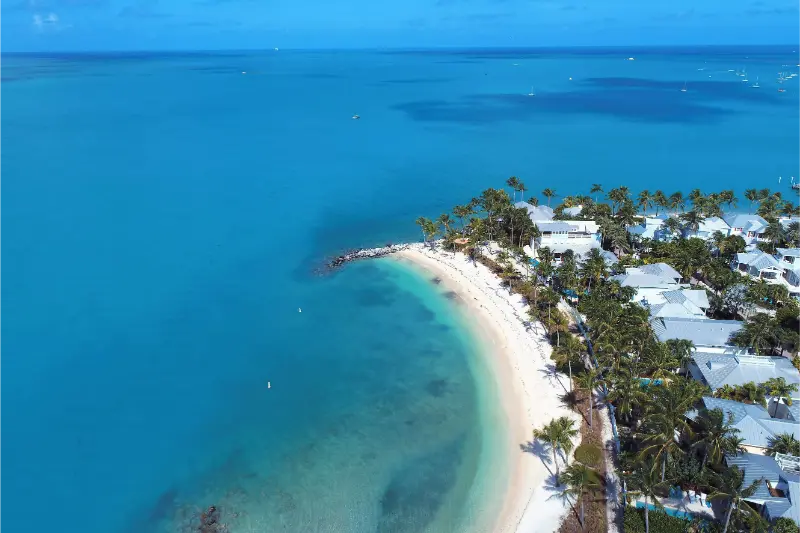
    Marco Island Florida Resort Community Aerial

    For boat days, keep the schedule flexible around wind and storms. Wildlife encounters should be treated as possibilities rather than guaranteed performances. Road-trip distances in Florida can be deceptive because bridges, beach traffic, weather and urban congestion change the real journey. I would plan around realistic door-to-door time, include a food or restroom stop, and keep a second nearby option for days when thunderstorms or capacity limits alter the original plan.

    Fort Myers and the river corridor

    Fort Myers provides museums, historic estates, a riverfront setting and practical services for the wider region. It is not the same experience as Fort Myers Beach, which is a separate barrier-island destination. The city can be an efficient base for travelers who want day trips in several directions.

    Before you goCheck current conditions and reconstruction status for specific coastal businesses or access points because Southwest Florida continues to evolve after major storms. Use official local sources close to travel dates. Accommodation location has a larger effect on the experience than a small difference in room price. Compare parking, resort fees, breakfast, laundry, kitchen facilities and the first drive of the morning. A well-located base often reduces both cost and fatigue over several days.

    Sanibel and Captiva

    Sanibel and Captiva are known for shelling, wildlife, cycling and a low-rise island atmosphere. Their appeal is strongest for travelers who enjoy mornings outdoors and quieter evenings rather than a dense nightlife scene. J.N. “Ding” Darling National Wildlife Refuge is a major nature anchor.

    Cycling can be excellent, but heat and afternoon storms affect comfort. Verify current refuge, beach and business operations, and respect live-shelling and wildlife rules. Outdoor days are easiest when they start earlier, especially in warm months. Use midday for museums, lunch, pools or rest, then return outside later when conditions improve. Florida weather can change quickly, so a flexible sequence is usually better than a rigid hour-by-hour plan.

    Everglades gateways from the west

    Southwest Florida offers access to the western Everglades and Big Cypress through Everglades City, Chokoloskee and the Tamiami Trail corridor. Boat tours, paddling and scenic drives reveal a different side of the ecosystem from the Miami approaches. Distances are significant enough that these outings deserve a full day.

    Choose experiences based on water level, season and mobility. Bring insect protection and sun protection, and do not build the plan around guaranteed wildlife sightings. When an activity depends on wildlife, water, launches, ferries or park capacity, treat the schedule as conditional. Verify the responsible agency or operator shortly before travel and plan a nearby alternative that would still make the day worthwhile.

    Beaches, shelling and Gulf conditions

    Southwest Florida beaches often appeal to families because Gulf wave energy can be lower than on exposed Atlantic beaches, but calm-looking water can still have currents, lightning and marine hazards. Shelling is a major draw on islands and passes, especially after tides and weather events.

    Never collect live animals or enter protected areas for shells. Check local beach advisories and understand that red tide or other water-quality conditions can affect individual areas at times. For a regional trip, the practical question is not how many stops can fit on a map but how much time the group wants to spend outside the car. Cluster attractions by base, preserve one lighter half-day, and avoid moving hotels simply to save a short drive. This matters for families with small children, senior travelers and anyone who values relaxed evenings.

    How long to spend in Southwest Florida

    Four nights can support one base and a couple of day trips; a week allows a more relaxed split between Naples/Marco and Fort Myers/Sanibel. A ten-day Gulf trip can add Sarasota or Tampa farther north. The region is best when daily driving is kept modest and sunsets are treated as part of the schedule.
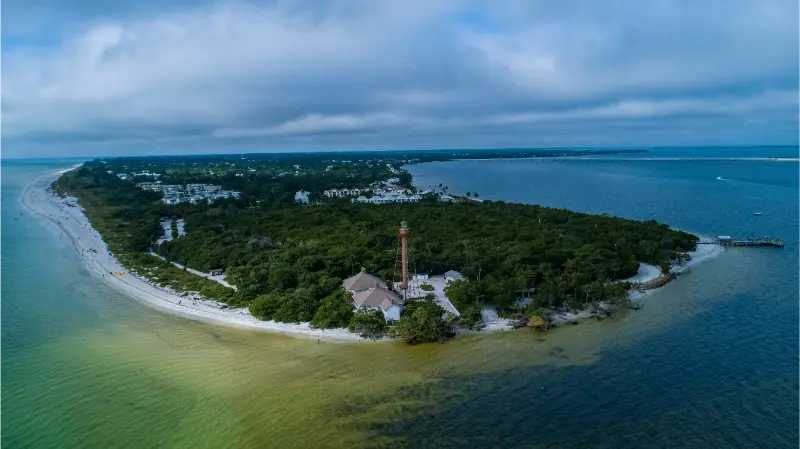
    Sanibel Island Florida Mangrove Coast Aerial

    Leave at least one unscheduled half-day. Boat conditions, beach weather and wildlife activity can shift, and flexibility often turns a disappointing forecast into a better indoor or inland day. Road-trip distances in Florida can be deceptive because bridges, beach traffic, weather and urban congestion change the real journey. I would plan around realistic door-to-door time, include a food or restroom stop, and keep a second nearby option for days when thunderstorms or capacity limits alter the original plan.

    Families, seniors and accessibility

    Southwest Florida can work extremely well for mixed-age trips if the day has one shared highlight rather than a long sequence of mandatory stops. Families with babies and toddlers benefit from short transfers, reliable restrooms, shade and accommodation where naps do not end the day. Teenagers often enjoy having one active or self-selected element such as surfing, kayaking, a sports event, shopping or a theme-park attraction. Senior travelers may prefer scenic drives, boat tours, museums and shorter walking loops.

    Accessibility should be checked at the level of the specific beach access, park, museum, boat, trail and hotel. A destination can be broadly accessible while one dune crossing, historic building or temporary route is not. Verify step-free access, beach mats or wheelchairs, elevators, accessible restrooms and parking directly when these features are essential. Build extra transition time into multigenerational days so the group does not have to move at the pace of its fastest member.

    Best time to visit

    The best season for Southwest Florida depends on the trip. Winter and early spring often bring comfortable outdoor weather but can also bring higher demand in popular coastal areas. Late spring can offer warm beach conditions before the most humid period. Summer is useful for school-holiday travel but requires earlier outdoor starts, frequent hydration and realistic thunderstorm backups. Fall can be quieter, but tropical-weather risk remains part of planning through hurricane season.

    Do not reduce the decision to a single statewide temperature chart. North Florida can feel much cooler than Miami in winter, Gulf and Atlantic water conditions differ, and inland afternoons can feel hotter than breezy beaches. For trips built around swimming, wildlife, fishing or festivals, check the seasonal pattern for that specific activity as well as the general weather.

    Getting around and airports

    A rental car is the most flexible way to explore Southwest Florida because many beaches, springs, preserves and small towns are not connected by frequent regional transit. In cities, however, parking can be expensive or inconvenient, so rideshare, trolleys, local buses or walking may be better for individual days. Build tolls, parking and one-way rental fees into the transport budget rather than treating the advertised car rate as the total cost.

    For flights, compare the airport closest to the first and last hotel rather than choosing solely by airfare. A cheaper flight that lands several hours from the actual destination may require an extra rental day, fuel and a tiring final drive. If the itinerary is linear, an open-jaw flight or one-way rental can sometimes save more time than it costs.

    Where to stay

    The strongest bases for Southwest Florida include Naples, Marco Island, Fort Myers area, Sanibel/Captiva or a split stay. Beachfront lodging is valuable when sunrise, sand access and midday breaks are central to the trip. A downtown hotel is usually better when restaurants, museums and evening walks matter more. Vacation rentals can be useful for families and longer stays, but compare cleaning fees, parking, cancellation terms and legal occupancy rules before deciding they are cheaper.

    For a regional road trip, two well-chosen bases usually beat five one-night stops. Unpacking less often protects morning time and gives the group a place to recover after a long outdoor day. I would change hotels only when it removes a substantial drive or creates a genuinely different experience, not simply because another town appears on the route.

    A realistic 5-day regional itinerary

    Day 1: arrive and explore Naples: beaches, dining and a polished base at an easy pace. Day 2: give the main beach, park or signature attraction a full day. Day 3: use Marco Island and Ten Thousand Islands for a contrasting experience. Day 4: choose Fort Myers and the river corridor or another nature-focused excursion. Day 5: finish with Sanibel and Captiva, a relaxed meal and departure without adding a distant final stop.

    If the trip lasts a week, add one unstructured weather day and one smaller town or wildlife area. If it lasts only three nights, remove a destination rather than compressing all five days. A successful regional itinerary should have enough space for a beach morning to run long, a child to need a nap, or a storm to push an outdoor plan to the following day.

    Budget and booking strategy

    The biggest cost variables are usually accommodation location, school-holiday timing, theme-park or attraction tickets, rental cars and restaurant frequency. Save by choosing the right base first, then compare a room with breakfast or kitchen facilities against a lower headline rate. Free beaches, state parks, downtown walks, scenic drives and wildlife areas can balance expensive attractions without making the trip feel cheap.

    Reserve genuinely capacity-limited experiences early, but avoid prepaying every hour of the trip. Check cancellation terms for hurricane season and for trips built around boat excursions. Prices, parking systems and reservation rules can change, so confirm the official source shortly before payment when a detail materially affects the budget.

    Common mistakes to avoid

    • Trying to cover the entire region from one hotel when the daily drive becomes repetitive.
    • Judging beach safety only by how calm the water looks.
    • Scheduling every outdoor activity for the hottest part of the afternoon.
    • Assuming every spring, refuge, ferry or boat tour operates the same way year-round.
    • Choosing accommodation by price without adding parking, resort fees and transport.
    • Planning wildlife encounters as guaranteed sightings.
    • Ignoring a weather backup and then losing a full day to thunderstorms.

    Naples travel guide, Fort Myers, Sanibel and Captiva guide, Marco Island travel guide, Florida Gulf Coast road trip, Florida wildlife guide.

    Official resources to check

    Opening hours, prices, event calendars, park capacity, water access, ferry or tour operations and storm-related conditions can change. Verify any detail that is essential to the trip with the responsible agency, attraction, accommodation or operator shortly before travel.

    Final advice

    Southwest Florida is most rewarding when the itinerary reflects what the region does best instead of trying to imitate another part of Florida. Choose a base that matches the group, protect the mornings for the experiences that matter most, and leave enough unscheduled time for weather and discovery. A slower regional trip usually creates better memories than a statewide checklist completed from the car.

  • Florida Travel Guide for First-Time Visitors: Where to Go, When to Visit and How to Plan

    Florida Travel Guide for First-Time Visitors: Where to Go, When to Visit and How to Plan

    Florida is easy to dream about and surprisingly easy to underestimate. A first trip might begin with an image of Orlando’s theme parks, Miami Beach, Key West or a white-sand Gulf Coast beach, but the state is much larger and more varied than any one of those places. Tropical-feeling islands, freshwater springs, historic towns, national parks, major cities, wildlife areas and hundreds of miles of coastline can all belong to the same vacation—but not comfortably in the same week.

    Explore this guide

    The best first Florida trip is not the one that includes the most famous places. It is the one that matches your available days, the ages and mobility of the people traveling with you, the season, your tolerance for driving and the kind of memories you actually want. This guide is the planning framework I would use before booking flights, hotels or theme-park tickets.

    Quick planning summary

    • First decision: Choose one or two Florida regions before choosing individual attractions.
    • Ideal first-trip length: Seven nights works for one concentrated region; 10–14 nights gives you enough time for a meaningful road trip.
    • Car or no car: A car is extremely useful outside compact urban stays and resort bubbles, but you do not necessarily need one every day.
    • Best planning principle: Do not build an itinerary from a list of famous names. Build it from realistic travel times and the needs of your group.
    • For all ages: Florida can work for babies, teenagers, adults and seniors when the pace, accommodation and heat exposure are planned deliberately.

    Understand Florida before choosing where to stay

    Florida is a peninsula, but that does not mean every destination feels similar. South Florida is the world of Miami, Fort Lauderdale, Palm Beach, the Everglades and the gateway to the Keys. Central Florida is dominated by Orlando’s theme parks but also includes lakes, neighborhoods, gardens and easy access to other parts of the state. Southwest Florida has Gulf Coast communities such as Naples and the Fort Myers area, while the Tampa Bay and Sarasota region combines major attractions with Gulf beaches.

    Northeast Florida brings a different atmosphere: St. Augustine, Jacksonville and Amelia Island mix Atlantic beaches with history and Southern influences. North Central Florida is known for springs, rivers, forests and university towns. Northwest Florida and the Panhandle stretch toward Alabama, with destinations such as Pensacola, Destin and Panama City Beach. The Nature Coast and Big Bend are quieter, more wildlife-focused and less resort-oriented.

    Planning tipFor a first visit, choose a region based on your main purpose. Theme parks point naturally to Orlando. Warm winter beach time favors South Florida or the Keys. A classic road trip can connect Miami, the Keys, the Everglades, Orlando and Northeast Florida. If white-sand Gulf beaches are the priority, build the trip around the Gulf rather than adding them as a rushed detour.

    Orlando Go Kart Track Aerial View

    How many days do you need in Florida?

    A long weekend can work for one city or one resort area, but it is not enough for a meaningful multi-region trip. With four or five nights, stay focused: Miami and Miami Beach, Orlando, Key West, St. Augustine, Tampa Bay or a single beach destination can all work. Trying to combine several of them usually turns the trip into airport, highway and hotel time.

    Seven nights is a useful first-trip length if you choose one anchor. Families might spend a week in Orlando with a rest day and one excursion. Couples could divide a week between Miami and the Keys. Beach-focused travelers can stay on one coast and add short day trips.

    Ten to fourteen nights changes the possibilities. You can combine different regions without repacking daily and can build in weather buffers. Two weeks is enough for a route such as Miami–Keys–Everglades–Orlando–St. Augustine, but still not enough to ‘see Florida’. Treat the state as a destination worth revisiting rather than a checklist to complete.

    Choosing the right airport

    Florida has several major airports, and the cheapest fare is not always the cheapest trip. Miami International is useful for Miami, South Florida and Keys itineraries. Fort Lauderdale can also work for the same broader region. Orlando International is the natural gateway for Central Florida and theme parks. Tampa International is useful for Tampa Bay and parts of the central Gulf Coast, while Southwest Florida International serves the Fort Myers area. Jacksonville is convenient for Northeast Florida, and several Panhandle airports serve Northwest Florida.

    For a road trip, compare open-jaw flights: arriving at one airport and departing from another. Paying a modest one-way rental-car fee can be worthwhile if it removes a six-hour return drive. Always compare the total cost, including rental car, parking, hotel nights and your time.

    International visitors should also leave the first day relatively light. Immigration, baggage, car collection and jet lag make a tight arrival schedule risky. If you land in the evening, sleeping near the arrival city and beginning the road trip the next morning is often the best decision.

    Do you need a rental car?

    For much of Florida, yes. The state is built around road travel and many beaches, springs, parks and suburban attractions are difficult to combine efficiently without a vehicle. Orlando resort areas offer transportation options, Miami has useful transit in some districts, and Key West is highly walkable, but a statewide trip becomes much easier with a car.

    You can still be strategic. In Miami Beach, expensive parking may make it sensible to spend the first days without a car. At some Orlando resorts, included transportation can reduce driving. In Key West, parking once and walking can be more pleasant than moving the vehicle repeatedly.

    When comparing rentals, include toll policies, insurance, additional-driver fees, fuel rules, child seats, one-way charges and airport surcharges. Florida uses extensive electronic tolling, and rental companies have different programs and administrative fees. Read the agreement before leaving the counter.

    If you travel with a baby or young child, check current child-restraint requirements and decide whether to bring your own seat or rent one. If you travel with a wheelchair or mobility equipment, confirm trunk space and vehicle access before booking rather than assuming a standard category will work.

    When is the best time for a first Florida trip?

    For many first-time visitors with flexible dates, late winter and spring offer an easy introduction. South Florida is especially attractive in winter, while spring can provide a good balance across a wider part of the state. The trade-off is demand: winter high season in southern destinations and spring-break periods can raise hotel prices and crowds.

    Summer is practical for school families and brings full beach-season energy, but heat, humidity, intense sun and afternoon thunderstorms should shape the schedule. Start outdoor days early, use indoor breaks and take lightning warnings seriously. Babies, small children and older adults need extra protection from heat stress.

    Autumn can offer fewer school-term crowds and warm water, but it overlaps with the Atlantic hurricane season, which runs from June 1 through November 30. Flexible bookings and official weather sources matter more than trying to predict storms months in advance. Northern Florida also cools earlier than the Keys, so the ‘best’ month depends on where you are going.

    Choosing the right Florida beach

    Florida’s Atlantic and Gulf coasts offer different experiences. Atlantic beaches can have more wave energy and are popular with surfers. Gulf beaches are often associated with calmer-looking water and soft sand, although conditions vary daily. South Florida offers warmer winter beach possibilities, while Panhandle beaches have a more seasonal pattern.

    Do not choose a beach only from a photograph. Consider parking, shade, restrooms, lifeguards, currents, accessibility, nearby food, stroller practicality and how far you are staying from the sand. A beautiful beach that requires a stressful one-hour drive and difficult parking every morning may be a poor match for a family.

    Beach safety is local and daily. Pay attention to flag systems and lifeguard advice, and never assume calm-looking water means there is no current risk. If someone in your group has limited mobility, check for accessible parking, boardwalks, beach mats or beach-wheelchair programs before arrival.

    Florida with babies and young children

    Traveling Florida with a baby or toddler is very possible, but adult-style itineraries need to be simplified. Choose fewer hotel changes, accommodation with a refrigerator and easy parking, and attractions that allow you to leave without feeling you have wasted an expensive day. Protect naps where possible and plan outdoor time around the cooler part of the day.

    Theme parks can be magical with young children, but a 12-hour park day is not required. A midday hotel break can prevent the final hours from becoming a struggle. Beaches need shade, sun protection and constant water supervision. Springs and pools can be easier than exposed beaches on very hot days, but every water environment still requires close supervision.

    Bring more changes of clothes, snacks and hydration than you expect to use. Florida rain can be brief but heavy, and air-conditioned indoor spaces can feel cold after a hot, wet afternoon. A lightweight layer and simple rain plan solve many small problems.

    Florida with school-age children and teenagers

    School-age children often enjoy a mixture of structured attractions and free outdoor time. Theme parks, space-related attractions, wildlife experiences, snorkeling, kayaking, beaches and springs can all work well. The mistake is scheduling every day at maximum intensity. Children may remember an unplanned pool afternoon as fondly as a headline attraction.

    Teenagers should have some influence over the itinerary. Let them choose a restaurant, activity, neighborhood or beach day. Miami street art, water sports, thrill rides, wildlife photography and road-trip stops can create a trip that feels different from a younger-child vacation.

    If the trip falls in summer, heat management becomes part of family logistics. Start early and accept that a long indoor lunch or hotel break is not ‘wasted time’. It may be what makes the evening enjoyable.

    Florida for seniors and multigenerational groups

    Florida can be exceptionally rewarding for older travelers because so many experiences can be adjusted to different energy levels: scenic drives, boat trips, wildlife viewing, gardens, beaches, historic districts, museums and resort stays. The key is to plan around walking distance, heat and accommodation layout.

    Ask practical hotel questions before booking. Is there an elevator? Is the bathroom accessible for the person who will use it? How far is the room from parking or the lobby? Does the resort require long outdoor walks? A highly rated property may still be unsuitable for a specific mobility need.

    In a multigenerational group, do not force everyone to do everything together. One half of the family can visit a thrill ride while another enjoys a slower attraction, then reunite for dinner. A successful shared holiday often includes planned separation.

    Theme parks: decide what matters before buying tickets

    Orlando can absorb an entire vacation. Disney, Universal and other attractions are not one compact complex; they involve multiple parks, resorts and transportation systems. Choose the experiences you care about before buying multi-day products. More ticket days are not automatically better if your family needs rest.

    Stay location matters. An inexpensive hotel can become poor value after daily parking, tolls and long drives. Resort transportation or a well-positioned off-site hotel may save significant time. Compare the complete daily routine, not only the nightly rate.

    If a theme park is only one part of a broader Florida trip, avoid putting it immediately after your longest driving day. Arrive, sleep, and start the expensive attraction rested. This simple choice improves the experience for every age.

    Nature and wildlife deserve space in a first itinerary

    Florida is much more than beaches and theme parks. Everglades National Park offers a landscape found nowhere else in the United States. Freshwater springs provide clear water and paddling opportunities. Coastal refuges, state parks, mangroves, forests and estuaries can add wildlife and quiet to a busy itinerary.

    Wildlife viewing should remain wildlife viewing. Keep appropriate distance, never feed wild animals and follow local and park rules. Alligators, manatees, sea turtles and birds are not props for photographs. The most memorable encounters are often the ones where you slow down and observe rather than trying to get closer.

    Nature activities also need seasonal planning. Heat, mosquitoes, water levels, nesting seasons and storms can change what feels comfortable. Check the managing agency’s current conditions before a long detour.

    How much should you budget?

    Florida can be done at many price levels, but a realistic budget needs more than flights and hotels. Include taxes and resort fees, rental-car charges, tolls, parking, attraction tickets, food, tips, beach equipment, insurance and a contingency amount. Theme-park days and Key West hotel nights can be particularly expensive, while nature-focused days may cost much less.

    Accommodation location is part of the budget. Saving $40 per night can disappear if the cheaper hotel adds daily parking fees and an hour of driving. Vacation rentals can be useful for families who need bedrooms and kitchens, but compare cleaning fees and cancellation terms. Hotels may be easier for short stays.

    Mix expensive headline days with lower-cost days. A theme-park day can be followed by a pool afternoon, beach day or neighborhood walk. The goal is not to minimize every dollar; it is to spend on the experiences that matter and avoid paying for friction.

    Three first-time itinerary ideas

    For a seven-night family trip focused on attractions, base yourself in the Orlando area for five or six nights and use one day for a slower Central Florida experience or the Space Coast. Avoid adding Miami just because it is famous; the extra transfer consumes valuable time.

    For a seven-night South Florida trip, combine Miami or Miami Beach with the Florida Keys. Two or three nights in Miami followed by several nights in the Keys creates contrast without excessive driving. Add the Everglades if your schedule and interests allow, but do not try to include Orlando as well.

    For a 14-day first road trip, a strong sequence is Miami, the Keys, Everglades/Homestead, Orlando, St. Augustine and Amelia Island, using different arrival and departure airports when fares permit. If Gulf beaches are your top priority, redesign the route around the Gulf rather than adding it to this itinerary.

    Common first-time mistakes

    The biggest mistake is trying to see too much. Florida’s famous destinations look close when viewed on a full-state map, but actual travel includes urban traffic, toll roads, fuel stops, parking and check-in time. A two-hour map estimate rarely means you should schedule a major attraction immediately after arrival.

    Another mistake is choosing hotels only by nightly price. Location, parking, resort fees and transport can change the real cost. Travelers also underestimate Florida sun and humidity, especially outside midsummer. Sunscreen, water and rest matter in spring and autumn too.

    Do not create an itinerary with no weather flexibility. Afternoon thunderstorms are normal in warmer months, tropical weather is possible during hurricane season, and even winter can bring cool fronts. Keep one or two activities movable.

    Finally, do not assume every member of the group wants the same pace. Babies, teenagers, adults and seniors can share a Florida holiday, but the schedule needs to acknowledge different energy levels. Build a trip that people can enjoy, not one they have to survive.

    Useful Wonderful Florida guides to read next

    Continue planning with Best Time to Visit Florida, 14-Day Florida Road Trip, Florida with Kids and Best Beaches in Florida.

    Official resources to check before you travel

    Opening hours, road conditions, park rules, transportation services, weather alerts and reservation requirements can change. Check the official source again shortly before the trip whenever a specific attraction, route or service is essential to your plans.

    Final thoughts

    A first Florida trip becomes much easier once you stop trying to fit the whole state into one vacation. Choose the region that matches your strongest interests, give yourself enough nights to enjoy it, and protect the itinerary with realistic driving times and rest. Florida works for almost every age and travel style precisely because it offers so many different experiences. The best plan is the one that leaves you excited about what you did—and already thinking about the part of Florida you will explore next.

  • Central Florida Travel Guide: Orlando, Theme Parks, Lakeland, Winter Haven, Springs and Small Towns

    Central Florida Travel Guide: Orlando, Theme Parks, Lakeland, Winter Haven, Springs and Small Towns

    Central Florida is best understood as a region rather than a checklist of famous stops. Its strongest mix is theme parks, family attractions, lakes, gardens, small towns and easy access to springs and both coasts. A first-time visitor can build a satisfying trip by choosing one or two bases, then using day trips to add contrast instead of changing hotels every night.

    I would start by deciding whether the trip is mainly about coast, nature, cities, attractions or a combination. Good bases include Orlando resort area, downtown Orlando/Winter Park, Kissimmee, Lakeland or Winter Haven. The distances are manageable when the itinerary follows one direction, but they become tiring when the same highways are repeated every day. The options suit couples, families, teenagers, senior travelers and multigenerational groups, with practical attention to accessibility and pacing.

    Quick planning summary

    • Best for: theme parks, family attractions, lakes, gardens, small towns and easy access to springs and both coasts.
    • Best bases: Orlando resort area, downtown Orlando/Winter Park, Kissimmee, Lakeland or Winter Haven.
    • Recommended stay: 4–7 nights for one part of the region; 7–10 nights for a broader road trip.
    • Transport: a car is usually the easiest option outside compact downtowns and selected rail corridors.
    • Best planning rule: choose fewer bases and spend more time actually experiencing each place.

    In this guide

    Orlando and the resort corridor

    Orlando is the region’s main gateway, but “Orlando” can mean downtown, International Drive, the Universal area, Lake Buena Vista, Kissimmee or a suburban vacation-rental zone. Each base creates a different transport pattern. The theme parks can justify a full week on their own, yet Central Florida becomes more interesting when at least one non-park day is built into the schedule.

    Colorful Universal Orlando Theme Park Street

    Choose accommodation based on the parks or neighborhoods you will visit most often, not only the nightly price. Parking fees, rideshare costs and long daily transfers can erase a small hotel saving. For a regional trip, the practical question is not how many stops can fit on a map but how much time the group wants to spend outside the car. Cluster attractions by base, preserve one lighter half-day, and avoid moving hotels simply to save a short drive. This matters for families with small children, senior travelers and anyone who values relaxed evenings.

    Walt Disney World, Universal and other major attractions

    Disney and Universal are the dominant trip planners because tickets, dining, queues and resort logistics can shape entire days. SeaWorld, Discovery Cove and other attractions add further choice. The important decision is not how many parks exist, but how many high-intensity days your group can enjoy before fatigue reduces the value of expensive tickets.

    Alternate demanding park days with pools, shopping, a small-town outing or nature. Families with toddlers and senior travelers often enjoy the trip more when every day is not an opening-to-closing marathon. Road-trip distances in Florida can be deceptive because bridges, beach traffic, weather and urban congestion change the real journey. I would plan around realistic door-to-door time, include a food or restroom stop, and keep a second nearby option for days when thunderstorms or capacity limits alter the original plan.

    Winter Park and the urban side of Orlando

    Winter Park, downtown Orlando and surrounding neighborhoods provide museums, lakes, gardens, restaurants and local events that feel very different from the resort corridor. These areas work well for couples, repeat visitors and families looking for a lighter day. A boat tour, museum visit and relaxed meal can create a strong half-day without another admission-heavy schedule.

    Check event calendars and parking before weekend visits. If using SunRail, verify current operating days and schedules rather than assuming tourist-hour service for every evening plan. Accommodation location has a larger effect on the experience than a small difference in room price. Compare parking, resort fees, breakfast, laundry, kitchen facilities and the first drive of the morning. A well-located base often reduces both cost and fatigue over several days.

    Fireworks over Orlando Theme Park at Night

    Winter Haven and LEGOLAND Florida

    Winter Haven is especially useful for families with younger children because LEGOLAND Florida and Peppa Pig Theme Park create a separate attraction cluster southwest of Orlando. The city’s lakes and Chain of Lakes setting make the area feel more relaxed than the main resort corridor. Staying locally can be smarter than commuting from Orlando for an early start.

    Compare one local overnight with the cost and fatigue of a long round trip. Attraction calendars and water-park operations can vary by season, so verify before locking in the day. Outdoor days are easiest when they start earlier, especially in warm months. Use midday for museums, lunch, pools or rest, then return outside later when conditions improve. Florida weather can change quickly, so a flexible sequence is usually better than a rigid hour-by-hour plan.

    Lakeland, gardens and architecture

    Lakeland sits between Orlando and Tampa and works as both a stopover and a destination. Lakes, swans, gardens and the Frank Lloyd Wright architecture at Florida Southern College give it a distinctive identity. It is a useful low-pressure day for travelers crossing Central Florida, especially when paired with a meal or a short downtown walk.

    Lakeland is most efficient when it fits the direction of travel. Avoid driving from the far side of Orlando solely for a brief stop if Tampa or the Gulf Coast is already on the itinerary the next day. When an activity depends on wildlife, water, launches, ferries or park capacity, treat the schedule as conditional. Verify the responsible agency or operator shortly before travel and plan a nearby alternative that would still make the day worthwhile.

    Mount Dora, lake towns and slower Central Florida

    Mount Dora and nearby lake communities show a quieter side of Central Florida, with historic streets, shops, festivals and water-oriented scenery. These towns work well for repeat Orlando visitors, couples and multigenerational groups that want an easy walking day. Festival weekends can transform a sleepy town into a busy destination.

    Check event dates before choosing a quiet-weekend plan. Parking, restaurant waits and accommodation rates can change sharply when a major art, craft or holiday event is scheduled. For a regional trip, the practical question is not how many stops can fit on a map but how much time the group wants to spend outside the car. Cluster attractions by base, preserve one lighter half-day, and avoid moving hotels simply to save a short drive. This matters for families with small children, senior travelers and anyone who values relaxed evenings.

    Springs and nature escapes from the metro area

    Central Florida’s springs, preserves and lake parks make strong counterpoints to theme parks. Depending on the base, visitors can reach paddling water, swimming areas, wildlife drives and forest trails without relocating for several nights. Capacity controls and seasonal wildlife protections can affect individual sites.

    Never rely on a single spring as the only plan for a hot weekend. Check reservation rules, arrive early where necessary and keep a second park or town option in the same direction of travel. Road-trip distances in Florida can be deceptive because bridges, beach traffic, weather and urban congestion change the real journey. I would plan around realistic door-to-door time, include a food or restroom stop, and keep a second nearby option for days when thunderstorms or capacity limits alter the original plan.

    Families, seniors and accessibility

    Central Florida can work extremely well for mixed-age trips if the day has one shared highlight rather than a long sequence of mandatory stops. Families with babies and toddlers benefit from short transfers, reliable restrooms, shade and accommodation where naps do not end the day. Teenagers often enjoy having one active or self-selected element such as surfing, kayaking, a sports event, shopping or a theme-park attraction. Senior travelers may prefer scenic drives, boat tours, museums and shorter walking loops.

    Accessibility should be checked at the level of the specific beach access, park, museum, boat, trail and hotel. A destination can be broadly accessible while one dune crossing, historic building or temporary route is not. Verify step-free access, beach mats or wheelchairs, elevators, accessible restrooms and parking directly when these features are essential. Build extra transition time into multigenerational days so the group does not have to move at the pace of its fastest member.

    Best time to visit

    The best season for Central Florida depends on the trip. Winter and early spring often bring comfortable outdoor weather but can also bring higher demand in popular coastal areas. Late spring can offer warm beach conditions before the most humid period. Summer is useful for school-holiday travel but requires earlier outdoor starts, frequent hydration and realistic thunderstorm backups. Fall can be quieter, but tropical-weather risk remains part of planning through hurricane season.

    Do not reduce the decision to a single statewide temperature chart. North Florida can feel much cooler than Miami in winter, Gulf and Atlantic water conditions differ, and inland afternoons can feel hotter than breezy beaches. For trips built around swimming, wildlife, fishing or festivals, check the seasonal pattern for that specific activity as well as the general weather.

    Getting around and airports

    A rental car is the most flexible way to explore Central Florida because many beaches, springs, preserves and small towns are not connected by frequent regional transit. In cities, however, parking can be expensive or inconvenient, so rideshare, trolleys, local buses or walking may be better for individual days. Build tolls, parking and one-way rental fees into the transport budget rather than treating the advertised car rate as the total cost.

    For flights, compare the airport closest to the first and last hotel rather than choosing solely by airfare. A cheaper flight that lands several hours from the actual destination may require an extra rental day, fuel and a tiring final drive. If the itinerary is linear, an open-jaw flight or one-way rental can sometimes save more time than it costs.

    Where to stay

    The strongest bases for Central Florida include Orlando resort area, downtown Orlando/Winter Park, Kissimmee, Lakeland or Winter Haven. Beachfront lodging is valuable when sunrise, sand access and midday breaks are central to the trip. A downtown hotel is usually better when restaurants, museums and evening walks matter more. Vacation rentals can be useful for families and longer stays, but compare cleaning fees, parking, cancellation terms and legal occupancy rules before deciding they are cheaper.

    For a regional road trip, two well-chosen bases usually beat five one-night stops. Unpacking less often protects morning time and gives the group a place to recover after a long outdoor day. I would change hotels only when it removes a substantial drive or creates a genuinely different experience, not simply because another town appears on the route.

    A realistic 5-day regional itinerary

    Day 1: arrive and explore Orlando and the resort corridor at an easy pace. Day 2: give the main beach, park or signature attraction a full day. Day 3: use Walt Disney World, Universal and other major attractions for a contrasting experience. Day 4: choose Winter Park and the urban side of Orlando or another nature-focused excursion. Day 5: finish with Winter Haven and LEGOLAND Florida, a relaxed meal and departure without adding a distant final stop.

    If the trip lasts a week, add one unstructured weather day and one smaller town or wildlife area. If it lasts only three nights, remove a destination rather than compressing all five days. A successful regional itinerary should have enough space for a beach morning to run long, a child to need a nap, or a storm to push an outdoor plan to the following day.

    Budget and booking strategy

    The biggest cost variables are usually accommodation location, school-holiday timing, theme-park or attraction tickets, rental cars and restaurant frequency. Save by choosing the right base first, then compare a room with breakfast or kitchen facilities against a lower headline rate. Free beaches, state parks, downtown walks, scenic drives and wildlife areas can balance expensive attractions without making the trip feel cheap.

    Reserve genuinely capacity-limited experiences early, but avoid prepaying every hour of the trip. Check cancellation terms for hurricane season and for trips built around boat excursions. Prices, parking systems and reservation rules can change, so confirm the official source shortly before payment when a detail materially affects the budget.

    Common mistakes to avoid

    • Trying to cover the entire region from one hotel when the daily drive becomes repetitive.
    • Judging beach safety only by how calm the water looks.
    • Scheduling every outdoor activity for the hottest part of the afternoon.
    • Assuming every spring, refuge, ferry or boat tour operates the same way year-round.
    • Choosing accommodation by price without adding parking, resort fees and transport.
    • Planning wildlife encounters as guaranteed sightings.
    • Ignoring a weather backup and then losing a full day to thunderstorms.

    Orlando first-time visitor guide, Walt Disney World guide, Universal Orlando guide, Lakeland travel guide, Florida theme parks guide.

    Official resources to check

    Opening hours, prices, event calendars, park capacity, water access, ferry or tour operations and storm-related conditions can change. Verify any detail that is essential to the trip with the responsible agency, attraction, accommodation or operator shortly before travel.

    Final advice

    Central Florida is most rewarding when the itinerary reflects what the region does best instead of trying to imitate another part of Florida. Choose a base that matches the group, protect the mornings for the experiences that matter most, and leave enough unscheduled time for weather and discovery. A slower regional trip usually creates better memories than a statewide checklist completed from the car.

  • Best Beaches in Florida: Gulf vs Atlantic, Families, Clear Water, Surfing and Accessible Trips

    Best Beaches in Florida: Gulf vs Atlantic, Families, Clear Water, Surfing and Accessible Trips

    Florida has hundreds of miles of beaches, but the phrase “best beach” is almost meaningless until you define the trip. A family with a toddler may want calm water, toilets and a short walk from parking. A couple may care more about sunsets and restaurants. Shell collectors look for very different conditions from surfers, while senior travelers may prioritize boardwalks, benches and accessible beach-entry equipment. The Gulf Coast and Atlantic Coast also behave differently, and water clarity, waves, seaweed and weather can change from one day to the next.

    Explore this guide

    There is no single beach that suits everyone; compare places by your priorities. It compares major Florida beach regions and highlights strong choices for families, clear-water expectations, shelling, surfing, couples, quieter trips and accessibility. It also explains when the Gulf or Atlantic is likely to fit your travel style better.

    Quick planning summary

    • Best for: Anyone choosing a Florida beach vacation, from families and couples to surfers, shell collectors, senior travelers and road-trippers.
    • Ideal trip length: 3–5 nights for one beach base; 7–10 nights if combining two coasts or a beach with Orlando, Miami or the Keys.
    • Getting around: Most beach destinations are easiest with a car, although compact areas such as parts of Miami Beach, Key West and some resort districts can work without one.
    • Best planning principle: Choose the beach according to your group and season, not only by a social-media photo taken on one perfect day.

    Gulf Coast or Atlantic Coast?

    The Gulf Coast is often associated with softer sand, warm water and calmer conditions, although storms and wind can still create rough surf. Destinations such as Clearwater Beach, St. Pete Beach, Siesta Key, Naples and many Panhandle beaches are popular with families and sunset lovers. The Atlantic Coast generally has more wave energy and a stronger surfing culture, with destinations such as Cocoa Beach, New Smyrna Beach and parts of the Space Coast attracting surfers.

    South Florida’s Atlantic beaches—including Miami Beach, Fort Lauderdale and Palm Beach County—combine warm water, urban services and a strong resort atmosphere. Northeast Florida, including St. Augustine and Amelia Island, offers a different experience with historic towns, broader seasonal temperature changes and long beaches. The “better” coast depends on whether your priorities are sunsets, surfing, road-trip geography, water conditions or the attractions beyond the sand.

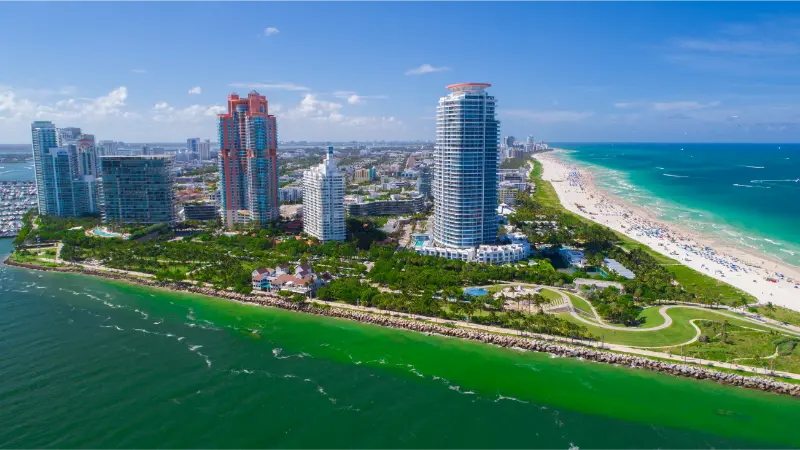
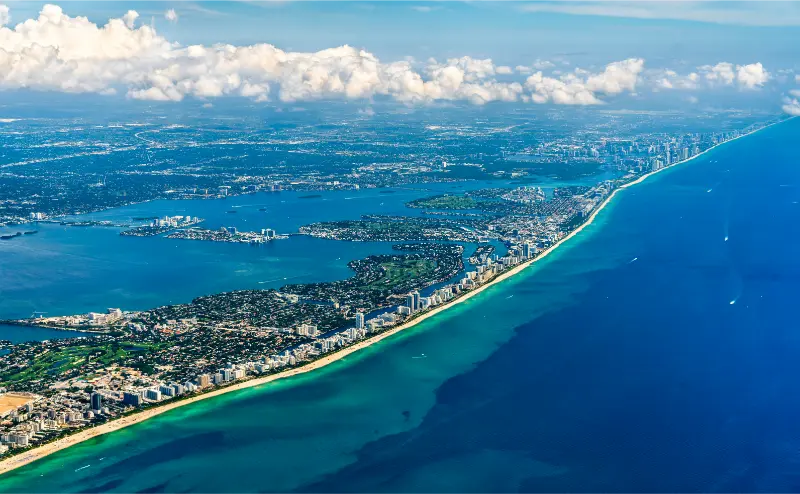
    Miami Beach Atlantic Coast Turquoise Water Aerial

    Best Florida beaches for families

    Families generally benefit from reliable parking, restrooms, lifeguard information, food nearby and an easy route back to accommodation. Siesta Key, Clearwater Beach, St. Pete Beach, Naples-area beaches and many Panhandle destinations can work well, but the exact choice should depend on lodging and daily logistics. Panama City Beach is especially strong for families wanting a large tourism infrastructure around the beach, while Amelia Island and St. Augustine combine beach time with history and town activities.

    With babies and toddlers, a beachfront or genuinely near-beach property can be worth more than an elaborate resort farther away. Short beach sessions are usually better than trying to remain outside all day. Shade, hydration and nap access matter more than the number of attractions. Teenagers may prefer destinations with watersports, surf culture, piers or walkable entertainment.

    Beaches for clear-water expectations

    Florida water clarity is dynamic. Wind, waves, rain, river outflow, tides, currents and seasonal biological conditions all affect what you see on a given day. Parts of the Emerald Coast and Florida Keys can look remarkably clear under the right conditions, while Gulf beaches farther south can also be beautiful. No destination can guarantee postcard water every day.

    If clear water is a priority, stay several nights rather than judging the trip by one afternoon. Check local beach webcams and current reports shortly before traveling. Snorkeling quality also depends on underwater habitat; a clear sandy beach is not automatically a good reef site. In the Keys, boat-based snorkeling is often more rewarding than simply entering from a hotel beach.

    Shelling and wildlife beaches

    Sanibel and Captiva are famous for shelling, while southwest Florida and some Gulf islands can offer excellent beachcombing after favorable tides and weather. Shell collecting rules vary, especially when shells contain living organisms or when protected areas are involved. The responsible approach is to learn local rules and leave living creatures where they are.

    Wildlife can be a major part of a Florida beach trip. Sea turtles nest on many beaches, shorebirds use protected areas and manatees or dolphins may appear in nearby water. Respect marked nesting zones, keep lights controlled where required and never approach wildlife for photographs. Some destinations have seasonal rules that matter more than visitors realize, particularly at night.

    Beaches for couples and relaxed trips

    Couples who want restaurants and nightlife may prefer Miami Beach, Fort Lauderdale, Clearwater, St. Pete or Key West, while those seeking quieter surroundings can look toward Anna Maria Island, parts of the Nature Coast, Amelia Island or smaller Panhandle communities. The hotel matters as much as the beach: adults-only atmosphere, balcony orientation, walkable dining and parking can shape the experience more than a small difference in sand quality.

    Saint Pete Beach Florida Gulf Coast Aerial View

    For a romantic trip, avoid over-scheduling. A morning walk, long lunch, pool time and sunset can create a better day than driving to several beaches simply to compare them. If you do want variety, choose neighboring beaches within the same region rather than crossing the state mid-trip.

    Beaches for surfing and active travelers

    Cocoa Beach and New Smyrna Beach are among the best-known surf destinations in Florida, while other Atlantic communities also develop good conditions depending on swell and wind. Beginners should use reputable surf schools and understand local currents. Strong swimmers can still be vulnerable to rip currents, and beach warning systems should be taken seriously.

    Active travelers may also enjoy paddleboarding, kayaking, kiteboarding or beach cycling where permitted. Conditions change quickly, so activity selection should follow the weather rather than force the original plan. Life jackets and local regulations matter on paddlecraft, and lightning should end water activities immediately.

    Accessible beach planning

    Florida has many beaches with accessible boardwalks, mats, beach wheelchairs or mobility equipment, but availability varies by city, county, park and season. Never assume a famous beach automatically has the exact equipment you need. Confirm parking, restroom access, boardwalk gradients, wheelchair availability and reservation procedures directly with the local authority or park.

    Senior travelers may also value benches, shade, short routes and a hotel with direct elevator access. A beachfront room is not necessarily easy access if the route includes stairs, deep sand or a long boardwalk. The complete door-to-water route matters. For multigenerational groups, choose a beach where less-mobile travelers can still enjoy views and shade without needing to cross a large stretch of sand.

    When to plan a Florida beach vacation

    South Florida and the Keys remain warm through much of winter, while northern beaches can be cool. Spring can be excellent in many regions, although school-break crowds matter. Summer is hot and humid statewide, with frequent thunderstorms, but it is also popular for family vacations. Fall can be beautiful and less crowded in some areas but overlaps with Atlantic hurricane season, which runs June through November.

    Water temperature, algae or seaweed events, red tide, beach erosion and storm recovery can all affect local conditions. These are reasons to check recent local information, not reasons to avoid Florida entirely. Flexible travelers often have the best experience because they can switch from swimming to town exploration, parks or museums when the beach is temporarily less appealing.

    A practical shortlist by travel style

    Use this shortlist as a starting point, then compare accommodation, season and current conditions.

    • Family resort atmosphere: Panama City Beach, Clearwater Beach, St. Pete Beach.
    • Soft-sand Gulf experience: Siesta Key and southwest Gulf communities.
    • Surf culture: Cocoa Beach and New Smyrna Beach.
    • Urban beach trip: Miami Beach and Fort Lauderdale.
    • History plus beach: St. Augustine and Amelia Island.
    • Shelling: Sanibel and Captiva area.
    • Island road trip: Florida Keys and Key West.
    • Nature-focused Panhandle: Cape San Blas, St. Joseph Peninsula and nearby Gulf communities.

    Common beach-planning mistakes to avoid

    The most expensive mistake is choosing a destination from one photograph without checking the wider trip. Beaches change daily, and logistics matter. The best Florida beach for your family is the one that matches your pace, budget and mobility needs.

    • Assuming calm water is guaranteed on the Gulf.
    • Ignoring rip-current and flag warnings.
    • Booking “ocean view” without checking actual beach access.
    • Expecting every Florida Keys shoreline to be a classic sandy beach.
    • Planning full midday beach days for babies or older adults in summer.
    • Failing to check local storm, seaweed, red-tide or wildlife information.

    Useful Wonderful Florida guides to read next

    Continue planning with Panama City Beach, Amelia Island, Cape San Blas and Florida Keys and Key West.

    Official resources to check before you travel

    Opening hours, road conditions, park rules, transportation services, weather alerts and reservation requirements can change. Check the official source again shortly before the trip whenever a specific attraction, route or service is essential to your plans.

    Final thoughts

    Florida does not have one best beach; it has a best beach for a particular trip. Decide whether you want Gulf calm, Atlantic energy, walkable nightlife, shelling, wildlife, family facilities or quiet nature, then choose accommodation that makes that experience easy. Current conditions matter more than rankings, so build enough flexibility into the trip to enjoy Florida even when the water is not picture-perfect.

  • Florida Keys and Key West Travel Guide: Best Islands, Overseas Highway and First-Time Tips

    Florida Keys and Key West Travel Guide: Best Islands, Overseas Highway and First-Time Tips

    The Florida Keys are a road trip, an island chain and a collection of very different vacations at the same time. Key Largo is known for diving and reef access, Islamorada for fishing and a relaxed resort feel, Marathon for family-friendly logistics and central location, the Lower Keys for quieter nature, and Key West for history, nightlife and a dense walkable old town. First-time visitors often make the mistake of thinking the Keys are one small destination. In reality, the Overseas Highway stretches for many miles, and the experience changes as you move south.

    Explore this guide

    The best Keys trip is slower than the map encourages. Bridges, water views, roadside stops and lunch can all turn a drive into part of the vacation, while traffic can make an ambitious schedule frustrating. This guide helps you decide where to stay, how many islands to combine, what to expect from beaches and snorkeling, and how to plan for families, seniors and travelers who want an easier pace.

    Quick planning summary

    • Best for: Road-trippers, couples, anglers, divers, snorkelers, families, sunset lovers and travelers who enjoy small-scale island communities.
    • Ideal stay: 5–7 nights for a first trip covering several Keys; 3–4 nights if you focus on one or two bases.
    • Getting around: A car is the practical choice for the island chain, but Key West itself is easier to explore on foot, bicycle, shuttle or local transit once the car is parked.
    • Best planning principle: Choose two bases at most for a week. Moving hotels every night wastes the slow rhythm that makes the Keys special.

    Understand the island chain before choosing a hotel

    The Upper Keys begin with Key Largo, the closest major island to Miami and a natural base for reef trips, paddling and John Pennekamp Coral Reef State Park. Islamorada is farther south and works well for fishing, watersports and a resort-style stay. Marathon sits near the middle of the chain and offers practical access to family attractions, boating and the Seven Mile Bridge area. The Lower Keys become quieter and more nature-focused before the road reaches Key West.

    Key West is the most urban and walkable part of the Keys, with historic homes, museums, restaurants, sunset crowds and nightlife packed into a small area. It is also the farthest major stop from mainland South Florida. Travelers who want reef time and Key West should usually split the trip rather than commuting back and forth. A two-base strategy—such as Islamorada or Marathon plus Key West—creates far less driving.

    Driving the Overseas Highway

    The Overseas Highway is one of Florida’s great scenic drives, but it is not an expressway. Two-lane sections, bridges, local traffic and weekend demand can make travel slower than distance suggests. The drive is part of the experience, so build in stops rather than treating every minute outside Key West as wasted time. Water views, small marinas, roadside food and state parks make the route memorable.

    Avoid scheduling a fixed boat departure immediately after a long drive from Miami. One traffic incident can disrupt the entire plan. If you fly into Miami or Fort Lauderdale, consider spending the arrival night on the mainland or in the Upper Keys rather than forcing a late drive to Key West. On departure day, leave generous buffer time before a flight. Drivers should also remember that fuel, parking and accommodations can become more expensive as you move through the island chain.

    What the Keys are really best for

    The Keys are not primarily a classic wide-sand-beach destination. Their strongest experiences are on and around the water: snorkeling, diving, fishing, paddling, boat trips, wildlife, sunsets and island atmosphere. Some excellent beaches exist, including state-park beaches, but travelers expecting uninterrupted resort beaches like parts of the Gulf Coast may be surprised. The coral and mangrove geography produces a different coastline.

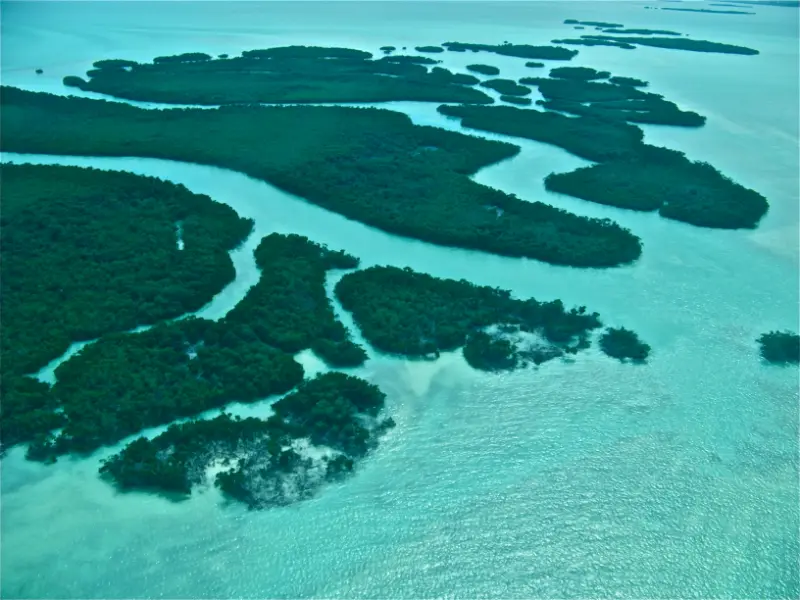
    Florida Keys Turquoise Mangrove Islands from Above

    For many visitors, a reef or sandbar trip becomes the defining memory. Choose an operator based on the exact activity, group size and swimming comfort. Families with younger children may prefer shorter boat trips and calmer-water options. Senior travelers should ask about boarding steps, shade, restroom access and how much standing is required. Anyone prone to seasickness should check conditions and consider an earlier, shorter outing rather than booking the most ambitious trip.

    Key West: what deserves time

    Key West is compact enough to explore without a car once you are settled. Old Town combines historic architecture, museums, literary history, restaurants and busy entertainment streets. Mallory Square is famous for sunset, while quieter waterfront and residential streets show a different side of the city. The strongest visit mixes famous sights with unstructured walking rather than treating every hour as a ticketed attraction.

    Families can enjoy Key West, especially with early starts, museums, aquarium-style attractions, boat trips and sunset, but the nightlife atmosphere becomes stronger in some areas later in the evening. Couples may appreciate staying within walking distance of Old Town and leaving the car parked. Senior travelers should choose a hotel that reduces walking distance in heat and confirm elevator access because historic properties can have older layouts.

    Beaches, state parks and nature

    Bahia Honda State Park is one of the best-known beach and nature stops in the Keys, while other parks protect mangroves, reefs and wildlife. State parks can become crowded during peak periods, so arriving early is often wise. Beach and water conditions change with weather, tides and seaweed, and no single beach is guaranteed to look identical every day.

    Nature-focused travelers should also consider paddling mangrove channels or visiting wildlife rehabilitation and education facilities. The Lower Keys can be especially rewarding for birding and a quieter pace. Protect coral and seagrass by following local boating and snorkeling rules, using reef-conscious behavior and never standing on coral. Wildlife encounters should be observed, not handled or fed.

    Families, teenagers and senior travelers

    With children, build each day around one main water or wildlife activity and one easy land-based stop. Toddlers need shade and nap flexibility, and car seats can make frequent hotel changes exhausting. Teenagers often enjoy snorkeling, fishing, paddling and the independence of walkable Key West. For multigenerational groups, choose accommodations with a pool and nearby food so not everyone has to join every excursion.

    Key West Old Town and Waterfront Aerial

    Senior travelers often enjoy the Keys most with two-night or three-night stays rather than one-night hops. Shorter daily drives reduce fatigue, and morning boat trips avoid some afternoon heat. Accessibility varies among historic attractions, docks and older hotels, so confirm specific routes directly. An accessible room is only one part of the trip; boat boarding, parking surfaces and beach access may matter just as much.

    Weather and hurricane-season planning

    The Keys have a subtropical climate with warm conditions much of the year. Winter and spring are popular for comfortable outdoor time, while summer is hotter, more humid and stormier. The Atlantic hurricane season runs from June through November, with the greatest climatological activity typically later in summer and early fall. That does not mean a storm will affect your trip, but it does mean flexible cancellation and awareness are sensible.

    Because the Keys are a long, narrow island chain with limited road connections, tropical-weather planning deserves extra respect. Check official forecasts before and during the trip, follow local emergency instructions and never treat evacuation orders as optional. Outside major storms, ordinary thunderstorms, wind and sea conditions can still cancel boat trips, which is why a multi-day stay is more resilient than a one-day schedule.

    Budget and booking strategy

    Accommodation is often the biggest cost, especially in Key West and during high-demand periods. Compare mainland arrival nights, Upper Keys bases and central Keys properties before assuming every night must be in the most famous location. A kitchen or refrigerator can reduce food costs on longer stays, while walkability in Key West can reduce parking and local transport spending. Boat activities should be booked based on value to your group, not just because they appear on every itinerary.

    Refundable rates are particularly useful in storm season. Also compare the total cost of a rental car kept in Key West against returning it earlier or using a hotel with included parking. Travelers arriving by air directly into Key West may not need a car for a city-focused stay, while anyone exploring multiple islands will usually want one.

    Common Florida Keys mistakes to avoid

    The Keys reward slow travel and punish over-scheduling. The most common mistake is trying to “do” the entire island chain in one day. Another is expecting every island to offer the same beaches, nightlife and services. Plan for variety rather than uniformity.

    • Driving Miami to Key West and back as a casual day trip.
    • Moving hotels every night during a short vacation.
    • Expecting Gulf-Coast-style wide beaches everywhere.
    • Booking a boat trip immediately after a long same-day drive.
    • Ignoring weather and sea conditions.
    • Choosing Key West lodging without checking parking and walking distance.

    Useful Wonderful Florida guides to read next

    Continue planning with Miami and Miami Beach, Ochopee and Big Cypress, Chokoloskee and Ten Thousand Islands and Panama City Beach travel guide.

    Official resources to check before you travel

    Opening hours, road conditions, park rules, transportation services, weather alerts and reservation requirements can change. Check the official source again shortly before the trip whenever a specific attraction, route or service is essential to your plans.

    Final thoughts

    A first Florida Keys trip should feel like a journey through islands, not a commute to Key West. Choose a limited number of bases, let the Overseas Highway become part of the experience, prioritize water activities that match your group and keep enough flexibility for weather. The slower you allow the Keys to be, the more distinctive the trip becomes.

  • Florida Theme Parks Guide: Disney, Universal, SeaWorld, Busch Gardens and LEGOLAND

    Florida Theme Parks Guide: Disney, Universal, SeaWorld, Busch Gardens and LEGOLAND

    Florida’s theme parks are a vacation category of their own. Walt Disney World, Universal Orlando, SeaWorld Orlando, Busch Gardens Tampa Bay and LEGOLAND Florida can each justify a trip, but they serve different ages, budgets and travel styles. The biggest planning mistake is assuming that ‘theme park vacation’ means everyone should visit every major resort. Most families have a better trip when they choose two or three priorities and leave room for rest.

    Explore this guide

    The practical information applies to travelers from toddlers to seniors, including multigenerational groups. Rather than ranking parks by hype, I would choose by the people in the group: height requirements, tolerance for thrill rides, interest in characters or animals, walking endurance, sensory needs and the number of full park days everyone can realistically enjoy.

    Quick planning summary

    • Best for young children: Magic Kingdom and LEGOLAND Florida are the easiest broad recommendations, with Peppa Pig Theme Park for very young visitors.
    • Best for thrill-seeking teens and adults: Universal Orlando and Busch Gardens Tampa Bay.
    • Best for immersive variety: Walt Disney World and Universal Orlando.
    • Best for marine-life attractions: SeaWorld Orlando and Discovery Cove, with different styles and price points.
    • Best strategy: One major park per day, then schedule a recovery day after two or three intense park days.

    The major Florida theme-park destinations

    Walt Disney World Resort — best all-round multigenerational resort

    Disney’s four major theme parks—Magic Kingdom, EPCOT, Disney’s Hollywood Studios and Disney’s Animal Kingdom—cover classic family rides, international food and festivals, film-based attractions and animal experiences. The resort is enormous, so hotel location and transportation matter almost as much as ticket choice. Families with small children may spend more days at Disney than at any other Florida resort because there are many low-height and non-ride experiences.

    Universal Orlando Resort — best for immersive worlds and bigger thrills

    Universal Studios Florida, Islands of Adventure and Epic Universe make Universal a multi-day destination. Harry Potter, Nintendo and other heavily themed areas appeal well beyond teenagers, but height requirements and intensity make the park mix more important with younger children. Staying at a Universal hotel can simplify transportation and may include park-related benefits depending on hotel and ticket type.

    SeaWorld Orlando — best hybrid of rides and marine-life attractions

    SeaWorld combines roller coasters with marine-animal presentations, aquariums and family areas. It can work particularly well when a group is split between thrill riders and people who prefer shows or animal environments. Aquatica adds a water-park option, while Discovery Cove is a separately ticketed, more controlled day with limited capacity.

    SeaWorld Orlando Theme Park Aerial View

    Busch Gardens Tampa Bay — best coaster-and-zoo combination

    Busch Gardens is the major Tampa theme park and combines intense coasters with large animal habitats and family attractions. It is a strong choice for teenagers and adults who want thrills, but grandparents and non-riders can still build a day around animals, shows and slower experiences. The park is not in Orlando, so do not treat it as a casual add-on without accounting for the drive.

    LEGOLAND Florida Resort — best for many children roughly 2–12

    LEGOLAND in Winter Haven is intentionally designed around younger families and is much less about extreme thrill rides than Universal or Busch Gardens. The resort also includes a water park, SEA LIFE Florida and Peppa Pig Theme Park options, so families can build a two- or three-day stay without commuting to Orlando. Official guidance positions the resort especially strongly for children in the preschool and elementary-school years.

    Fun Spot and smaller attractions — best as flexible extras

    Orlando and other cities have smaller amusement parks, observation attractions, mini golf and entertainment complexes. These can be excellent on arrival day or when one family member wants a shorter outing. They should not automatically be treated as ‘lesser’ experiences; sometimes a four-hour park is exactly what a tired family needs.

    Which parks are best by age?

    With babies and toddlers, prioritize shade, stroller logistics, nap opportunities and attractions without height requirements. With school-age children, a mix of familiar characters and first thrill rides usually works. Teenagers often care more about major coasters, immersive franchises and independence. Adults traveling without children can focus on food festivals, design, nightlife and high-intensity attractions. Senior travelers should compare walking distances, seating, climate-controlled breaks and ride transfer requirements rather than assuming the parks are only for younger visitors.

    Age is not the same as interest. A seven-year-old who loves coasters may prefer Universal to a character-heavy Disney day; a teenager who loves animals may prefer Busch Gardens or Animal Kingdom. Use the official attraction filters and height requirements for the exact people in your group before buying nonrefundable tickets.

    How many days do you really need?

    For Walt Disney World, many first-time visitors want four to six park days if the resort is the main vacation. Universal now has enough major parks for three or more full days. SeaWorld can be one full day, with Aquatica or Discovery Cove as separate days. Busch Gardens is normally a full day, while LEGOLAND is often one or two days depending on the age of the children and whether the water park or other resort attractions are included.

    I would not schedule more than three intense park days in a row for most multigenerational groups. Heat, walking and sensory load accumulate even when everyone is having fun. A pool morning, shopping afternoon, nature day or simple hotel rest can improve the second half of the trip far more than another admission ticket.

    Tickets, express systems and park apps

    Ticket systems change frequently, so buy from official sources or reputable authorized sellers and read the exact product description. Date-based tickets, multi-park access, add-ons and line-skipping products can substantially change both price and strategy.

    Download the official app for the resort you are visiting before arrival. Wait times, maps, dining, show schedules and accessibility information increasingly live in the app. A phone battery pack is one of the most practical theme-park accessories because a dead phone can now affect tickets, navigation and communication.

    Disney Theme Park Fantasyland Ride with Flowers

    Where to stay

    Stay on-site when transportation benefits, early access or the ability to return for a midday rest will materially improve the trip. Stay off-site when you need a larger apartment, kitchen, lower nightly cost or a location that serves several different resort areas.

    For split Disney/Universal trips, one hotel for the entire stay is simpler, but a split stay can reduce commuting when each resort gets several days. With a toddler or an older adult who needs a midday break, proximity can be worth more than a larger room farther away.

    Accessibility, sensory needs and mixed mobility

    Major Florida theme parks publish detailed accessibility information, including ride access, mobility-device procedures and services for guests with disabilities. Policies differ by company and can change, so do not assume a system you used at one resort applies at another.

    For sensory-sensitive travelers, review attraction warnings, show volume, crowd patterns and quiet-space options in advance. For mobility limits, look at total walking distance and transfer requirements, not only whether wheelchairs are permitted. A park day can involve many miles even when queues are accessible.

    Common mistakes to avoid

    • Buying tickets before checking height requirements for the children you are traveling with.
    • Scheduling a late arrival flight and an early full park day with no recovery buffer.
    • Trying to visit two major parks in one day on a first trip just because a ticket allows hopping.
    • Ignoring transportation time between hotels, parking lots, security and park gates.
    • Underestimating heat and dehydration, especially for children and seniors.
    • Using old social-media advice after ticket, queue or reservation systems have changed.

    Useful Wonderful Florida guides

    Official park websites

    Final thoughts

    The best Florida theme-park itinerary is not the one with the most parks; it is the one that matches the people on the trip. Choose the resorts that fit your ages and interests, leave space for recovery, and pay for convenience only where it solves a real problem. That makes the vacation feel like a holiday rather than an endurance test.

    Planning the day without overloading it

    A Florida itinerary usually works better when the most demanding activity is protected and the rest of the day remains flexible. Heat, thunderstorms, traffic and long distances can turn a theoretically efficient schedule into a tiring one. Build around one non-negotiable experience, one meal or rest block and one optional stop. This is especially valuable for families, senior travelers and anyone visiting during the warm season.

    I also avoid making arrival and departure days full attraction days. Airports, rental-car lines and hotel check-in are unpredictable enough that a flexible first evening protects the money already spent on the trip. On the final day, allow more airport and highway time than a local commuter would because visitors are also returning cars, refueling, handling luggage and navigating an unfamiliar terminal.

    Weather and seasonal flexibility

    Florida weather is local. A storm at one beach does not mean the entire region is washed out, and a sunny morning does not guarantee a dry afternoon in summer. Check radar, lightning alerts and official attraction notices rather than relying on a generic all-day icon. Outdoor plans are usually strongest early, with indoor or shaded options saved for the hottest and stormiest part of the day.

    From June through November, hurricane-season planning should include flexible cancellation rules and a willingness to change routes when official guidance requires it. Do not let hurricane season scare you away from every warm-season trip, but do not book a chain of nonrefundable hotels that leaves no room to adapt.

    A note for international visitors

    International visitors should add practical items that domestic travelers sometimes overlook: travel insurance, mobile data, electrical adapters where needed, prescription documentation, toll systems, driving rules and realistic time after a long flight. If you are not used to U.S. driving distances, build shorter first-day drives and avoid collecting a rental car after an overnight flight and immediately starting a multi-hour road trip.

    Cards are widely accepted, but keeping a second payment method is sensible. Save reservations and important addresses offline. For any timed attraction, verify the local time zone—Florida is mostly Eastern Time, while part of the Panhandle uses Central Time—before a long transfer across the state.

  • Florida with Kids: Best Destinations, Beaches, Theme Parks and Family Planning by Age

    Florida with Kids: Best Destinations, Beaches, Theme Parks and Family Planning by Age

    Florida is one of the easiest states in the United States to market as a family destination and one of the easiest to over-plan. Theme parks, beaches, wildlife, springs, space attractions, museums and boat trips can fill weeks, but children experience the trip through energy, heat, meals, sleep and transitions rather than through a parent’s checklist. The best family vacations usually include fewer major activities than expected and more time for pools, snacks, naps, playgrounds, simple beach mornings and spontaneous stops.

    Explore this guide

    This guide is built for families with children from babies and toddlers through teenagers, as well as grandparents joining a multigenerational trip. It explains how to choose destinations, how long to stay, which parts of Florida work well for different ages, and how to make transportation, weather and accommodation easier. It also treats accessibility and senior needs as part of family travel rather than a separate topic.

    Quick planning summary

    • Best for: Parents, grandparents and multigenerational groups planning a Florida vacation with children from infancy through the teenage years.
    • Ideal trip length: 7–10 nights for one region plus a second base; 10–14 nights for a wider road trip.
    • Getting around: A rental car is usually the simplest choice outside compact city or resort stays.
    • Best planning principle: Choose one main experience per day and let the accommodation, pool and meal plan support the rest of the schedule.

    Choose Florida by age, not only by fame

    Babies and toddlers often do best in destinations where the room, pool and beach are easy to reach. Panama City Beach, Clearwater-area resorts, Naples and other beach communities can work well when accommodation logistics are simple. Orlando can also be excellent, but only if the schedule respects naps and heat. Young school-age children often love the combination of theme parks, wildlife and beaches, while older children can handle longer day trips and more structured attractions.

    Orlando Resort Pool with Colorful Slides

    Teenagers may appreciate Orlando thrill rides, Miami food and art, surfing on the Atlantic, snorkeling in the Keys, paddling springs or a Kennedy Space Center day more than a traditional “kids” attraction. The best family itinerary gives teenagers some choices. Ask them to select a restaurant, activity or beach rather than expecting enthusiasm for every adult-planned stop.

    The strongest family regions

    Orlando is unmatched for major theme parks and works best when the hotel and park plan are coordinated. The Gulf Coast offers family-friendly beach bases with softer sand and sunsets. The Space Coast combines beaches with Kennedy Space Center. St. Augustine gives families history, a walkable old city and nearby beaches. South Florida adds Miami, the Everglades and access to the Florida Keys, while North Florida and the Panhandle can provide quieter nature, springs and lower-key road trips.

    You do not need to cover every region on a first vacation. A stronger seven-night trip might be five nights in Orlando and two nights on the Space Coast, or four nights in Miami plus three in the Upper Keys. A family beach week can be complete without theme parks. Florida is large enough that combining destinations should be a deliberate choice rather than an assumption.

    Traveling with babies and toddlers

    The hotel room becomes part of the itinerary. A refrigerator, microwave or kitchen, laundry, blackout curtains and a separate sleeping area can matter more than a dramatic lobby. A true beachfront location can reduce stroller transfers and make it easier to return for naps. Confirm crib availability before arrival and inspect any provided sleep equipment. Pack familiar snacks, medicines, swim gear and comfort items rather than assuming every brand will be available nearby.

    Plan outdoor time in shorter blocks. Morning beach walks and late-afternoon swims are usually easier than midday in summer. At theme parks, use indoor shows, meals and hotel breaks to manage heat. A toddler who misses a nap may not care that the family paid for an expensive evening event. Protecting routine is often the best way to protect the vacation budget.

    Elementary-age children: mix wonder with downtime

    Children roughly in the elementary years are often ideal Florida travelers because they can enjoy attractions while still finding joy in pools, wildlife and small surprises. Theme parks can be magical, but so can spotting an alligator from a boardwalk, seeing a rocket, collecting shells or watching a dolphin from shore. Build variety so the trip is not one long queue.

    Let children know the plan in simple terms: one big activity, one meal they can count on and a clear time for rest. Long drives become easier with planned stops rather than emergency breaks. On road trips, state parks, springs and small towns can create low-cost half-days between major destinations.

    Florida with teenagers

    Teenagers often respond better to autonomy than to constant family programming. Give them responsibility for navigation, photography, choosing a meal or selecting one activity. Orlando offers thrill rides and entertainment; Miami offers art, food and beach culture; the Keys offer snorkeling, fishing and boat trips; the Atlantic Coast offers surfing; springs offer paddling and swimming under the right conditions.

    Build in connectivity and charging without allowing devices to dominate every moment. A portable battery pack can prevent practical problems when tickets, maps and reservations live on phones. Agree on meeting points in crowded places and explain what to do if the group becomes separated. Older teenagers should still receive clear water-safety and driving rules rather than being treated as automatically experienced.

    Multigenerational family trips

    A Florida trip with grandparents can be excellent when the schedule includes multiple ways to enjoy the same destination. At a theme park, one group can ride attractions while another enjoys shows and meals. At a beach, some family members can swim while others use a shaded promenade or waterfront restaurant. In the Everglades, tram tours, scenic drives and boardwalks can provide wildlife experiences without long hikes.

    The key is accommodation. Elevators, walk-in showers, nearby dining and short parking routes can be more important than resort size. Do not assume grandparents want a slow trip, but do not force the entire group to match the fastest traveler. Split activities are a strength, not a failure of family togetherness.

    Walt Disney World Main Street with Visitors

    Safety: beaches, heat, storms and wildlife

    Florida family travel is shaped by water and weather. Check beach flags and rip-current information before swimming. Children who can swim in a pool are not automatically prepared for ocean currents. Use properly fitted life jackets on boats and paddlecraft. Around springs, rivers and wetlands, assume wildlife may be present and keep children close. Never feed or approach alligators.

    Heat can become a health issue quickly. Carry water, schedule shade and use sunscreen and protective clothing. Afternoon thunderstorms are common in warm months; lightning should move the family indoors rather than under a beach umbrella or isolated tree. During Atlantic hurricane season, flexible cancellation and official weather monitoring become especially important.

    Where to stay with children

    Families should evaluate total convenience: room layout, pool, kitchen facilities, laundry, parking, elevator, noise, breakfast and distance to the main activity. A cheaper hotel forty minutes from the theme parks may cost more in fuel, parking and patience. A beach condo with a kitchen can be valuable for a week, while a short city stay may be easier in a hotel with breakfast and walkable restaurants.

    For babies and light sleepers, ask about room location. Pool-view and entertainment-zone rooms can be noisy. For teenagers, separate sleeping space can reduce friction. For multigenerational groups, two nearby rooms may work better than one crowded suite. Cancellation flexibility matters during storm season and when traveling with small children who may become ill unexpectedly.

    A realistic 10-day family itinerary

    Days 1–4 can be based in Orlando with two or three major theme-park days and at least one lighter day. Days 5–6 can move to the Space Coast for Kennedy Space Center and beach time. Days 7–10 can continue to St. Augustine or a Gulf beach depending on your route and season. This is only one model, but it demonstrates the principle of moving less often and letting each base serve several experiences.

    For South Florida, a strong alternative is three nights in Miami, one night in Homestead after the Everglades and four nights in the Upper or Middle Keys. Families who mainly want beach time can ignore both examples and stay in one destination for a full week. The right itinerary is the one your children can actually enjoy, not the one that looks most impressive on a map.

    Common family-travel mistakes to avoid

    Families rarely regret leaving one attraction off the schedule; they often regret exhaustion. The biggest improvement comes from making the day simpler.

    • Changing hotels every night or two.
    • Planning full outdoor days during the hottest summer hours.
    • Assuming a child who swims well in a pool understands ocean conditions.
    • Choosing accommodation without checking room layout and parking.
    • Building every day around adults’ priorities.
    • Treating rest days as wasted time.

    Useful Wonderful Florida guides to read next

    Continue planning with Orlando, best Florida beaches, Everglades National Park and Panama City Beach with a baby.

    Official resources to check before you travel

    Opening hours, road conditions, park rules, transportation services, weather alerts and reservation requirements can change. Check the official source again shortly before the trip whenever a specific attraction, route or service is essential to your plans.

    Final thoughts

    Florida with children is easiest when the trip leaves space for childhood. Choose fewer bases, protect sleep and shade, build one main experience into each day and let beaches, pools, wildlife and simple meals count as real vacation time. That approach works from infancy through the teenage years and makes multigenerational travel much more comfortable.

  • Florida Road Trip Itinerary: 14 Days from Miami and the Keys to Orlando and St. Augustine

    Florida Road Trip Itinerary: 14 Days from Miami and the Keys to Orlando and St. Augustine

    A Florida road trip can look deceptively simple on a map. The state is long, major attractions are spread across different coasts, and driving from one famous place to another can consume much more of a holiday than first-time visitors expect. A good two-week route therefore needs to make choices. This itinerary focuses on a strong first-time sequence: Miami and Miami Beach, the Florida Keys, Everglades National Park, Orlando, St. Augustine and Amelia Island, finishing near Jacksonville.

    Explore this guide

    The route works particularly well for travelers who want a mix of beaches, cities, nature, wildlife, theme parks and historic places without changing hotels every night. It can be driven in either direction, and an open-jaw flight—arriving in Miami and departing from Jacksonville, or the reverse—can save a long return drive. Families, couples and older travelers can all use the same framework by changing the pace and the number of theme-park days.

    Quick planning summary

    • Trip length: 14 days / 13 nights is the minimum I would use for this route without making it feel like a race.
    • Start and finish: Miami to Jacksonville is efficient; reverse the route if flights or rental-car prices are better.
    • Main stops: Miami, Florida Keys, Everglades/Homestead, Orlando, St. Augustine and Amelia Island.
    • Car strategy: A rental car is useful for almost the entire itinerary. In Miami Beach, parking costs may make it sensible to collect the car after an initial city stay.
    • Best for: First-time Florida visitors who want variety rather than spending the entire holiday in one resort area.

    Why this 14-day route works

    The route moves generally north instead of zigzagging between Florida’s coasts. It begins with an urban and beach experience in Miami, slows down through the Keys, adds a major national park, then changes completely in Central Florida before finishing with the historic Atlantic coast. Each stage feels different enough that the trip develops rather than repeating the same beach-town formula.

    It also keeps the longest transfer days under control. Florida is large enough that trying to add Naples, Sarasota, Clearwater, the Space Coast, the Panhandle and every major city to the same two-week trip creates a checklist rather than a holiday. Those places deserve their own future road trips. This itinerary is intentionally selective.

    Days 1–2: Miami and Miami Beach

    Use the first two days to recover from the flight and understand Miami without immediately adding long drives. One day can focus on Miami Beach: an early walk along the ocean, the Art Deco Historic District, South Pointe and time to simply enjoy the beach. The second can move inland to Little Havana, Wynwood, Coconut Grove or another neighborhood that fits your interests.

    If you arrive from Europe or another long-haul origin, keep the first evening light. Jet lag, airport formalities and car rental queues can turn an ambitious arrival day into a poor start. Staying two nights in the same hotel gives you breathing room. Travelers who dislike city driving can postpone collecting the rental car until the morning they leave for the Keys.

    Families should choose one or two neighborhood experiences rather than trying to cover the entire metropolitan area. Older travelers may prefer an early morning and late afternoon schedule with a hotel break during the hottest hours. Miami rewards time on foot, but distances between districts are much larger than they appear on a tourist map.

    Miami Beach Palm Lined Road and Cars

    Days 3–5: Drive the Overseas Highway through the Florida Keys

    Leave Miami early for the Keys. The Overseas Highway is part of the experience, so do not treat it as a motorway transfer. Your first base can be Key Largo or Islamorada, where snorkeling, glass-bottom boats, paddling, fishing, waterfront dining and a slower island atmosphere make a useful transition from the city. A one-night stop breaks the journey and gives you time to enjoy the Upper Keys.

    On day four, continue southwest toward Key West. Stop selectively rather than at every roadside attraction. The Seven Mile Bridge area, Bahia Honda, small marinas and viewpoints can turn a normal drive into a full sightseeing day. Build margin for traffic because the highway has long sections with limited passing opportunities and a minor incident can create delays.

    Spend nights four and five in Key West. Explore Old Town early or later in the day, when walking is more comfortable. Mallory Square, historic streets, waterfront areas and sunset activities can fill the time without a car. This is one place where parking the vehicle and walking is often more enjoyable than driving repeatedly through the center.

    Family tipFor families, keep boat activities age-appropriate and check life-jacket requirements. For seniors or travelers with mobility needs, choose accommodation based on elevator access and parking rather than charm alone; many historic properties have architectural limitations. Do not assume every old building has modern accessibility.

    Day 6: Key West to the Everglades and Homestead

    This is the longest transition in the southern part of the trip, so leave Key West with realistic expectations. Rather than driving directly to Orlando, use the day to connect the Keys with Everglades National Park. Homestead or Florida City makes a practical overnight base for the park’s southern entrance and reduces the amount of backtracking.

    Choose one Everglades experience that matches the season and your group. The Ernest F. Coe entrance leads toward Royal Palm and Flamingo, while Shark Valley is a separate entrance reached from the Tamiami Trail. These areas do not connect by road inside the park, so trying to ‘see all the Everglades’ in a few hours is a common planning mistake.

    For a first visit after leaving the Keys, the Homestead side is the most logical. Short trails, visitor-center stops and wildlife observation can work well without exhausting the group. In warmer months, insect protection, water and heat management matter. Wildlife should always be observed from a safe distance and never fed.

    Days 7–10: Orlando without turning every day into a marathon

    Drive from the Homestead area to Orlando on day seven. This transfer is long enough that it should not also be a full theme-park day. Check into the hotel, use the pool, explore your resort area or have an easy dinner. Starting Orlando rested is more valuable than squeezing in a few expensive evening hours while tired.

    Days eight and nine can be your main theme-park days. Which parks you choose depends on your family, interests and ticket package; there is no universally correct combination. If your priority is Disney, stay within that ecosystem for efficiency. If Universal is central, choose accommodation that reduces transport friction. Families with toddlers and older adults often benefit from returning to the hotel in the afternoon.

    Use day ten as a flexible Orlando day. It could be a third park, a water park, a resort day, a shopping day, a neighborhood visit or a nature excursion. This buffer is important. Florida weather, fatigue or a child who simply needs downtime can disrupt a rigid schedule. A flexible day prevents one setback from affecting the rest of the road trip.

    Do not underestimate transfer time between Orlando attractions. The metropolitan area is large and road congestion is real. A cheap hotel far from the places you plan to visit can cost more in parking, tolls, fuel and lost time than a better-located property.

    Days 11–12: St. Augustine

    On day eleven, leave Orlando for St. Augustine. The drive is manageable and the change of atmosphere is immediate. St. Augustine offers historic streets, old architecture, waterfront walks and a scale that feels much calmer after several days of theme parks. Park once where possible and explore on foot or use local transportation options.

    Saint Augustine Historic Bridge of Lions Pier

    Spend the first afternoon around the historic center rather than stacking attractions. The Castillo de San Marcos area, bayfront and surrounding streets provide a strong sense of place. On day twelve, add the attraction that matters most to you—history, a museum, the lighthouse area, Anastasia Island or a beach break.

    St. Augustine is also useful for multigenerational groups because different interests can coexist. Some travelers can focus on history while others spend time near the water. The old streets can include uneven surfaces, so anyone using a wheelchair, walker or stroller should plan routes and entrances in advance rather than assuming every historic structure is equally accessible.

    Days 13–14: Amelia Island and departure from Jacksonville

    Continue north to Amelia Island for the final two days. Fernandina Beach gives the trip a relaxed finish with a walkable historic district, beach time and a less intense pace than Miami or Orlando. After nearly two weeks on the road, leaving space for a slow meal, a beach morning or a simple sunset is more valuable than adding another long list of attractions.

    Jacksonville International Airport is a practical departure point from this part of Northeast Florida. On the final day, keep enough time for the drive, fuel return, rental-car inspection and airport formalities. If your flight departs very early, consider spending the final night closer to the airport rather than creating unnecessary stress.

    If round-trip flights to Miami are substantially cheaper, you can still use this route, but the return drive south changes the character of the final days. In that case I would consider dropping Amelia Island or adding an extra night so the holiday does not end with an exhausting cross-state transfer.

    Driving, rental cars and tolls

    A rental car is the simplest way to connect these destinations. Compare not only the headline daily rate but also one-way fees, airport surcharges, additional-driver policies, child-seat costs, toll programs and fuel rules. Florida has many toll roads, especially around major metropolitan areas, and rental companies handle tolls differently. Read the rental agreement instead of assuming cash payment will always be possible.

    Keep the car free of visible luggage when stopping between hotels. On transfer days, plan sightseeing stops where you can take valuables with you or where luggage security is clear. Never leave passports, electronics or essential medicines unattended in the vehicle.

    Driving distances in Florida can be tiring even when the road is straightforward. Rotate drivers if possible and stop before fatigue becomes a problem. A two-week road trip should not require heroic driving. The purpose of the car is to create freedom, not to spend the holiday looking through a windshield.

    How to adapt the route for children, teenagers and seniors

    With babies and toddlers, reduce hotel changes. One option is to skip the Upper Keys overnight and stay three nights in one Keys base, or shorten the St. Augustine/Amelia section. Plan around naps and avoid moving hotels after a full theme-park day. A familiar bedtime routine can be more valuable than one extra attraction.

    Teenagers may enjoy more active experiences—snorkeling, kayaking, theme-park thrill rides, street art and beach time—but should still be involved in choosing the route. Giving each teenager one ‘must-do’ activity can make a family road trip feel collaborative rather than imposed.

    For seniors, prioritize hotels with elevators, easy parking, showers or bathrooms that fit mobility needs, and short walking routes. Avoid scheduling the longest drive immediately after the longest sightseeing day. The route becomes much more comfortable when every three or four busy days include a lighter day.

    A realistic road-trip budget

    The largest variables are accommodation, rental car, theme-park tickets and food. Miami, Key West and Orlando can all be expensive, but in different ways. Key West often has high hotel rates, Orlando can accumulate parking and ticket costs, and Miami can add resort and valet-parking fees. Look at the total stay cost rather than the room rate alone.

    A useful budget includes fuel, tolls, parking, hotel fees, attraction reservations, beach equipment, tips, travel insurance and a contingency amount. Grocery stops can reduce breakfast and snack costs, particularly for families, but do not design such a strict food budget that every meal becomes a logistical task.

    Book the hardest-to-replace elements first: flights, key hotel nights and major ticketed attractions. Leave some restaurant choices and minor activities flexible. A road trip benefits from having room to change plans when the weather is better somewhere else or when the group needs rest.

    What I would not add to this 14-day itinerary

    I would not add the Panhandle, Tampa Bay, Naples, Sarasota, Fort Myers, the Space Coast and the Nature Coast to the same two-week route. Each is worthwhile, but adding all of them creates long lateral drives and constant packing. Florida deserves several trips. A first itinerary becomes better, not worse, when you consciously leave excellent places for next time.

    If the Gulf Coast is a personal priority, replace Northeast Florida with Naples and the Southwest Gulf Coast rather than simply adding them. If space exploration is essential, replace one Orlando day or the Northeast section with the Space Coast. Build the trip around your strongest interests.

    Common road-trip mistakes

    The most common mistake is changing hotels every night. The second is trusting map driving times without adding fuel, food, bathroom and traffic stops. The third is scheduling a theme park on arrival after a five-hour drive. The fourth is leaving luggage visible in a parked car. The fifth is trying to create a perfect itinerary that has no room for weather or fatigue.

    Vintage Car on Ocean Drive Miami Beach at Night

    Finally, do not let the phrase ‘road trip’ pressure you into driving constantly. The best parts of this itinerary are the days when the car stays parked: walking Miami Beach, exploring Key West, spending a full day in a theme park, wandering St. Augustine or slowing down on Amelia Island.

    Useful Wonderful Florida guides to read next

    Continue planning with Miami and Miami Beach Travel Guide, Florida Keys and Key West Travel Guide, Orlando Travel Guide and One Day in St. Augustine.

    Official resources to check before you travel

    Opening hours, road conditions, park rules, transportation services, weather alerts and reservation requirements can change. Check the official source again shortly before the trip whenever a specific attraction, route or service is essential to your plans.

    Final thoughts

    Fourteen days is enough to experience several very different versions of Florida if the route is disciplined. Miami, the Keys, the Everglades, Orlando and Northeast Florida create a memorable first journey without forcing you to cross the state repeatedly. Leave space between the headline attractions, protect your rest days and accept that a good Florida road trip should make you want to return rather than make you feel you have finished the state forever.

  • Northeast Florida Travel Guide: Jacksonville, Amelia Island, St. Augustine, Beaches and History

    Northeast Florida Travel Guide: Jacksonville, Amelia Island, St. Augustine, Beaches and History

    Northeast Florida is best understood as a region rather than a checklist of famous stops. Its strongest mix is historic cities, Atlantic beaches, barrier islands, big-city dining, golf and coastal nature. A first-time visitor can build a satisfying trip by choosing one or two bases, then using day trips to add contrast instead of changing hotels every night.

    I would start by deciding whether the trip is mainly about coast, nature, cities, attractions or a combination. Good bases include Jacksonville, Amelia Island/Fernandina Beach, St. Augustine or Ponte Vedra Beach. The distances are manageable when the itinerary follows one direction, but they become tiring when the same highways are repeated every day. The options suit couples, families, teenagers, senior travelers and multigenerational groups, with practical attention to accessibility and pacing.

    Quick planning summary

    • Best for: historic cities, Atlantic beaches, barrier islands, big-city dining, golf and coastal nature.
    • Best bases: Jacksonville, Amelia Island/Fernandina Beach, St. Augustine or Ponte Vedra Beach.
    • Recommended stay: 4–7 nights for one part of the region; 7–10 nights for a broader road trip.
    • Transport: a car is usually the easiest option outside compact downtowns and selected rail corridors.
    • Best planning rule: choose fewer bases and spend more time actually experiencing each place.

    In this guide

    Jacksonville: neighborhoods, river and beaches

    Jacksonville is large enough to function as several destinations in one. Downtown and the St. Johns River offer museums and event venues, Riverside and Avondale add neighborhood dining and architecture, while Jacksonville Beach and Atlantic Beach create a separate coastal experience. The size of the city means location matters more than many first-time visitors expect.

    Choose a hotel for the activities you will do most often. Crossing the metro area repeatedly can turn a flexible city break into a driving-heavy trip, especially around commuter periods or major events. For a regional trip, the practical question is not how many stops can fit on a map but how much time the group wants to spend outside the car. Cluster attractions by base, preserve one lighter half-day, and avoid moving hotels simply to save a short drive. This matters for families with small children, senior travelers and anyone who values relaxed evenings.

    Amelia Island and Fernandina Beach

    Amelia Island combines broad Atlantic beaches with a historic downtown in Fernandina Beach. It suits couples, families and multigenerational groups because a day can be divided between beach time, a gentle downtown walk, fort history and waterfront dining. The northern-island setting feels distinct from Jacksonville even though the two can be combined in one trip.

    A central Fernandina stay reduces evening driving, while beachfront accommodation favors early beach time. Verify parking and beach-access arrangements rather than assuming every property has direct sand access. Road-trip distances in Florida can be deceptive because bridges, beach traffic, weather and urban congestion change the real journey. I would plan around realistic door-to-door time, include a food or restroom stop, and keep a second nearby option for days when thunderstorms or capacity limits alter the original plan.

    St. Augustine: the region’s essential history stop

    St. Augustine is the strongest history anchor in Northeast Florida, with Castillo de San Marcos, a compact historic core, museums, old streets and nearby beaches. It can be visited as a Jacksonville day trip, but at least one overnight lets you experience the center after day-trippers leave. Summer shade and rest breaks matter because the oldest streets invite more walking than a map suggests.

    Bridge of Lions Saint Augustine at Sunset

    Use a trolley or central parking strategy if mobility or heat is a concern. Reserve the busiest evening experiences in advance during holiday periods, but leave time for unscheduled wandering. Accommodation location has a larger effect on the experience than a small difference in room price. Compare parking, resort fees, breakfast, laundry, kitchen facilities and the first drive of the morning. A well-located base often reduces both cost and fatigue over several days.

    Ponte Vedra and the coastal corridor

    Ponte Vedra is known for golf, resort stays and a quieter beach environment between Jacksonville and St. Augustine. The surrounding A1A corridor also includes nature preserves, estuary landscapes and access points where the coast feels less urban. This is a good base for travelers who want a polished resort experience without staying inside a major city.

    Golf travelers should verify course access and tee-time policies before choosing a hotel. Beach erosion, tides and local access conditions can alter the usable shoreline at individual points. Outdoor days are easiest when they start earlier, especially in warm months. Use midday for museums, lunch, pools or rest, then return outside later when conditions improve. Florida weather can change quickly, so a flexible sequence is usually better than a rigid hour-by-hour plan.

    Guana, estuaries and wildlife

    Northeast Florida’s coast is not only sand. Estuaries, marshes, maritime forests and conservation lands support paddling, birding and quiet trails. Guana Tolomato Matanzas conservation areas are particularly useful for understanding how the barrier islands and inland waterways fit together. These landscapes are strongest early in the day when temperatures are lower and wildlife is more active.

    Bring insect protection, water and binoculars rather than expecting a manicured attraction. Check trail, launch and hunting-season notices where applicable, and keep respectful distance from wildlife. When an activity depends on wildlife, water, launches, ferries or park capacity, treat the schedule as conditional. Verify the responsible agency or operator shortly before travel and plan a nearby alternative that would still make the day worthwhile.

    Beaches from Atlantic Beach to Vilano

    The region offers very different beach moods: lively Jacksonville Beach, community-oriented Atlantic and Neptune Beaches, resort-oriented Ponte Vedra, and the sand near St. Augustine and Vilano. Atlantic surf can be stronger than many Gulf beaches, so swimming conditions deserve attention even on beautiful days.

    Use local flag and lifeguard information where available and know how rip currents work. Families with very young children may prefer a beach with nearby restrooms, shade options and a shorter walk from parking. For a regional trip, the practical question is not how many stops can fit on a map but how much time the group wants to spend outside the car. Cluster attractions by base, preserve one lighter half-day, and avoid moving hotels simply to save a short drive. This matters for families with small children, senior travelers and anyone who values relaxed evenings.

    How to combine Northeast Florida in one trip

    A five- to seven-night trip can work well with two bases: Amelia/Jacksonville in the north and St. Augustine in the south. A shorter three-night trip should pick one base and make only one major day trip. The drive times are manageable, but changing hotels every night wastes the region’s best morning and evening hours.

    For a road trip continuing south, St. Augustine is the natural final base before Daytona and the Space Coast. If flying, compare Jacksonville International Airport with the total ground journey to your chosen beach. Road-trip distances in Florida can be deceptive because bridges, beach traffic, weather and urban congestion change the real journey. I would plan around realistic door-to-door time, include a food or restroom stop, and keep a second nearby option for days when thunderstorms or capacity limits alter the original plan.

    Families, seniors and accessibility

    Northeast Florida can work extremely well for mixed-age trips if the day has one shared highlight rather than a long sequence of mandatory stops. Families with babies and toddlers benefit from short transfers, reliable restrooms, shade and accommodation where naps do not end the day. Teenagers often enjoy having one active or self-selected element such as surfing, kayaking, a sports event, shopping or a theme-park attraction. Senior travelers may prefer scenic drives, boat tours, museums and shorter walking loops.

    Accessibility should be checked at the level of the specific beach access, park, museum, boat, trail and hotel. A destination can be broadly accessible while one dune crossing, historic building or temporary route is not. Verify step-free access, beach mats or wheelchairs, elevators, accessible restrooms and parking directly when these features are essential. Build extra transition time into multigenerational days so the group does not have to move at the pace of its fastest member.

    Best time to visit

    The best season for Northeast Florida depends on the trip. Winter and early spring often bring comfortable outdoor weather but can also bring higher demand in popular coastal areas. Late spring can offer warm beach conditions before the most humid period. Summer is useful for school-holiday travel but requires earlier outdoor starts, frequent hydration and realistic thunderstorm backups. Fall can be quieter, but tropical-weather risk remains part of planning through hurricane season.

    Do not reduce the decision to a single statewide temperature chart. North Florida can feel much cooler than Miami in winter, Gulf and Atlantic water conditions differ, and inland afternoons can feel hotter than breezy beaches. For trips built around swimming, wildlife, fishing or festivals, check the seasonal pattern for that specific activity as well as the general weather.

    Getting around and airports

    A rental car is the most flexible way to explore Northeast Florida because many beaches, springs, preserves and small towns are not connected by frequent regional transit. In cities, however, parking can be expensive or inconvenient, so rideshare, trolleys, local buses or walking may be better for individual days. Build tolls, parking and one-way rental fees into the transport budget rather than treating the advertised car rate as the total cost.

    For flights, compare the airport closest to the first and last hotel rather than choosing solely by airfare. A cheaper flight that lands several hours from the actual destination may require an extra rental day, fuel and a tiring final drive. If the itinerary is linear, an open-jaw flight or one-way rental can sometimes save more time than it costs.

    Where to stay

    The strongest bases for Northeast Florida include Jacksonville, Amelia Island/Fernandina Beach, St. Augustine or Ponte Vedra Beach. Beachfront lodging is valuable when sunrise, sand access and midday breaks are central to the trip. A downtown hotel is usually better when restaurants, museums and evening walks matter more. Vacation rentals can be useful for families and longer stays, but compare cleaning fees, parking, cancellation terms and legal occupancy rules before deciding they are cheaper.

    For a regional road trip, two well-chosen bases usually beat five one-night stops. Unpacking less often protects morning time and gives the group a place to recover after a long outdoor day. I would change hotels only when it removes a substantial drive or creates a genuinely different experience, not simply because another town appears on the route.

    A realistic 5-day regional itinerary

    Day 1: arrive and explore Jacksonville: neighborhoods, river and beaches at an easy pace. Day 2: give the main beach, park or signature attraction a full day. Day 3: use Amelia Island and Fernandina Beach for a contrasting experience. Day 4: choose St. Augustine: the region’s essential history stop or another nature-focused excursion. Day 5: finish with Ponte Vedra and the coastal corridor, a relaxed meal and departure without adding a distant final stop.

    Jacksonville Skyline across Saint Johns River

    If the trip lasts a week, add one unstructured weather day and one smaller town or wildlife area. If it lasts only three nights, remove a destination rather than compressing all five days. A successful regional itinerary should have enough space for a beach morning to run long, a child to need a nap, or a storm to push an outdoor plan to the following day.

    Budget and booking strategy

    The biggest cost variables are usually accommodation location, school-holiday timing, theme-park or attraction tickets, rental cars and restaurant frequency. Save by choosing the right base first, then compare a room with breakfast or kitchen facilities against a lower headline rate. Free beaches, state parks, downtown walks, scenic drives and wildlife areas can balance expensive attractions without making the trip feel cheap.

    Reserve genuinely capacity-limited experiences early, but avoid prepaying every hour of the trip. Check cancellation terms for hurricane season and for trips built around boat excursions. Prices, parking systems and reservation rules can change, so confirm the official source shortly before payment when a detail materially affects the budget.

    Common mistakes to avoid

    • Trying to cover the entire region from one hotel when the daily drive becomes repetitive.
    • Judging beach safety only by how calm the water looks.
    • Scheduling every outdoor activity for the hottest part of the afternoon.
    • Assuming every spring, refuge, ferry or boat tour operates the same way year-round.
    • Choosing accommodation by price without adding parking, resort fees and transport.
    • Planning wildlife encounters as guaranteed sightings.
    • Ignoring a weather backup and then losing a full day to thunderstorms.

    Jacksonville travel guide, St. Augustine travel guide, Florida Atlantic Coast road trip, Florida historic sites guide, Best Florida beaches.

    Official resources to check

    Opening hours, prices, event calendars, park capacity, water access, ferry or tour operations and storm-related conditions can change. Verify any detail that is essential to the trip with the responsible agency, attraction, accommodation or operator shortly before travel.

    Final advice

    Northeast Florida is most rewarding when the itinerary reflects what the region does best instead of trying to imitate another part of Florida. Choose a base that matches the group, protect the mornings for the experiences that matter most, and leave enough unscheduled time for weather and discovery. A slower regional trip usually creates better memories than a statewide checklist completed from the car.

  • Best Time to Visit Florida: Weather, Crowds, Prices, Hurricane Season and Regional Differences

    Best Time to Visit Florida: Weather, Crowds, Prices, Hurricane Season and Regional Differences

    There is no single best month to visit Florida because the state stretches across very different climates, coastlines and travel styles. January can feel beautifully mild in Miami and the Florida Keys while northern Florida may be cool enough for a jacket. July is convenient for school-age families but brings heat, humidity and frequent afternoon thunderstorms. Spring can be almost ideal for beaches and road trips, yet school breaks and major events can raise prices and crowds. Autumn often offers warm water and lighter crowds, but it also overlaps with the Atlantic hurricane season.

    Explore this guide

    The smartest way to choose your dates is to start with the Florida experience you want rather than with a month on the calendar. A theme-park trip, a Keys escape, an Everglades wildlife visit, a Panhandle beach holiday and a multigenerational road trip do not have exactly the same sweet spot. This guide compares seasons and regions so you can choose a period that fits your priorities, your tolerance for heat, your budget and the ages in your group.

    Quick planning summary

    • Best all-round balance: For many travelers, late winter through spring offers comfortable temperatures and a good mix of outdoor activities, although school-break weeks can be busy.
    • Best for South Florida winter sun: December through March is popular in Miami, the Keys and the southern Gulf Coast because humidity is generally lower and outdoor sightseeing feels easier.
    • Best for school-age families: Summer works if school calendars dictate the dates, but plan around heat, thunderstorms, hydration and indoor breaks.
    • Best for lower crowds: Parts of late spring and autumn can be calmer outside holiday periods, but weather and hurricane-season flexibility become more important.
    • Most important rule: Choose the region first. North Florida, Central Florida, South Florida and the Keys can feel very different on the same day.

    Winter in Florida: December to February

    Winter is one of Florida’s most appealing seasons for travelers who want to spend long days outdoors without the intense humidity of summer. In South Florida and the Keys, this is prime time for walking neighborhoods, eating outdoors, boating, beach time on mild days and combining cities with nature. Miami, Key West, Naples and the Everglades are especially attractive when you want sunshine but do not need midsummer heat.

    Florida Coastal Shoreline before Storm

    Central Florida is also comfortable for theme parks because walking for hours is usually easier than in July or August. Temperatures can still vary, however, and a cool front can make early mornings and evenings surprisingly chilly. A light layer is useful even when the afternoon forecast looks warm. Families with very young children and older travelers often appreciate this season because the lower heat load makes long sightseeing days more manageable.

    Northern Florida and the Panhandle are cooler. St. Augustine, Amelia Island, Tallahassee and Pensacola can still be excellent winter destinations, especially for history, food and uncrowded walks, but they should not be treated as guaranteed hot-beach escapes. If swimming is the central goal, southern Florida is the safer winter choice.

    Winter is also important for nature travel. The Everglades’ drier season generally makes trails, wildlife viewing and mosquito management easier than during the wettest months. Manatee-viewing opportunities can also improve when cold weather pushes animals toward warmer spring-fed waters. The trade-off is demand: winter is a high season in many southern destinations, so good-value accommodation may require earlier booking.

    Spring in Florida: March to May

    Spring is one of the most versatile periods for a Florida trip. March and April often combine warm days with lower humidity than midsummer, and they work well for road trips that mix beaches, cities, parks and nature. The exact feel depends on where you go: South Florida can already be very warm, while the Panhandle and Northeast Florida may still have cooler mornings.

    The biggest planning issue is the school-break calendar. Spring break does not happen on one statewide week, and different colleges, schools and regions create several waves of demand. Beach towns, theme parks and popular nightlife destinations can become much busier. Easter and holiday weekends can add another layer of demand. Travelers who prefer a quieter atmosphere should compare local calendars rather than assuming all of March is equally crowded.

    April can be an excellent compromise for many adults, couples and multigenerational groups. Water temperatures improve, daylight is generous and the most oppressive summer humidity has often not yet arrived. May can also offer strong value, especially before Memorial Day weekend, but heat and afternoon storm patterns begin to feel more summery as the month progresses.

    For a statewide road trip, spring is particularly useful because it reduces the climate contrast between north and south. You can move from Miami and the Keys to Orlando, St. Augustine or the Panhandle without feeling as though you have crossed between two completely different seasons.

    Summer in Florida: June to August

    Summer is not a bad time to visit Florida; it is simply a season that rewards a different rhythm. School holidays make it the practical choice for many families, and the beaches, springs, water parks and resort pools are in full summer mode. The challenge is heat, humidity, strong sun and frequent thunderstorms, often developing later in the day.

    A successful summer itinerary starts earlier. Outdoor attractions, beach walks, wildlife activities and theme-park touring are easier in the morning. Midday is a good time for lunch, a museum, an aquarium, an indoor attraction or a hotel break. Evenings can become enjoyable again after a storm passes, although lightning safety always comes before a schedule.

    Hydration and sun protection matter for every age, but especially for babies, toddlers, people taking medicines that affect heat tolerance and older adults. Do not judge a day only by the air temperature; humidity and direct sun can make a moderate-looking forecast feel much harder. Build more rest into the plan than you think you need.

    Summer also overlaps with the Atlantic hurricane season, which officially runs from June 1 through November 30. That does not mean a hurricane will affect your holiday, but refundable or changeable bookings become more valuable. Follow official forecasts as the trip approaches and avoid making irreversible decisions based on social-media weather speculation.

    Florida Beach with Turquoise Water and White Sand

    Fall in Florida: September to November

    Autumn can be one of Florida’s most rewarding value seasons, but it requires realistic weather planning. September remains hot and humid across much of the state, ocean and Gulf water is warm, and many family destinations become quieter once schools are back in session. At the same time, the climatological peak of Atlantic hurricane activity falls around early September, with much of the basin’s activity historically concentrated from mid-August through mid-October.

    October often starts to feel more comfortable, particularly later in the month and farther north. Theme-park events, Halloween programming and festivals can create busy weekends even when general tourism is lighter. November is especially attractive for city breaks, road trips and outdoor sightseeing, with lower humidity becoming more common and Thanksgiving week creating a predictable demand spike.

    If you travel in fall, flexibility is more important than trying to predict a storm months in advance. Choose sensible cancellation terms, know where to find official National Hurricane Center information and keep a backup plan for indoor attractions or an altered route. Most trips will not be disrupted by a major storm, but a flexible booking strategy is still good travel planning.

    Florida’s regional differences matter more than many first-time visitors expect

    North Florida and the Panhandle have more pronounced seasonal changes than Miami or the Keys. Winter can be genuinely cool, while late spring and early autumn can be excellent for beaches without peak-summer intensity. Destin, Pensacola, Panama City Beach and the Forgotten Coast therefore have a different seasonal personality from Key West.

    Central Florida, including Orlando, is inland enough that afternoons can become very hot and stormy in summer. Winter and spring are popular for theme parks because visitors spend so much time walking outdoors. Central Florida’s freshwater springs, however, are especially appealing during hot months because their clear water provides a completely different experience from the coast.

    South Florida has a subtropical feel, with warm winters and a more distinct wet summer season. Miami, Fort Lauderdale, Palm Beach County, Naples and the Everglades are especially popular during the northern winter. The Florida Keys are maritime and breezy but can still be hot, humid and storm-prone in the warmer months.

    For a trip covering several regions, pack for variation. A January itinerary that begins in Key West and ends in St. Augustine may need swimwear, sun protection and a light jacket. A summer itinerary needs rain flexibility everywhere, but the timing and intensity of storms can differ from coast to coast.

    Best time for Orlando and the theme parks

    For Orlando, weather is only one part of the equation. School holidays, major events, new attraction openings and ticket-pricing calendars can matter just as much. Winter outside the Christmas and New Year period can offer comfortable walking weather. Spring is pleasant but spring-break weeks are busy. Summer gives families the most calendar freedom but demands an early-start, midday-break strategy. Autumn can bring lighter school-term crowds on some dates, while Halloween and holiday events create strong demand on others.

    There is no permanently ’empty’ theme-park season. Instead of chasing a mythical lowest-crowd week, choose dates that fit your family, book the most important experiences early and build enough time into the itinerary that one crowded or rainy day does not ruin the trip. For small children and seniors, shorter park days with rest periods are often better than trying to maximize every operating hour.

    Best time for Florida beaches

    Beach conditions vary by coast. The Gulf Coast is often favored by families who value generally gentler surf and broad sandy beaches, while the Atlantic Coast attracts travelers who enjoy waves, surfing and energetic beach towns. Water temperature, wind, currents, red-tide conditions, sargassum, jellyfish and local beach flags can all affect the experience on a specific day, so no month guarantees perfect water everywhere.

    Winter swimming is most reliable in far South Florida and the Keys, although individual comfort varies. Spring is a strong statewide beach season as water warms. Summer brings warm water but also intense sun and storms. Early autumn keeps the water warm, while late autumn can be particularly pleasant for shore walks and outdoor dining.

    If accessibility is important, seasonal timing can also affect comfort. Cooler months reduce heat stress on long boardwalks and parking areas. Many communities offer beach wheelchairs or mobility mats, but services vary, so confirm details directly with the municipality or beach operator before the trip.

    Hurricane season: plan without panic

    The Atlantic hurricane season officially runs from June 1 through November 30. The season covers half the year, so avoiding Florida for all six months is unnecessary for most travelers. What matters is having a plan. Choose travel insurance or flexible booking terms that you understand, especially for flights, vacation rentals and prepaid activities.

    As departure approaches, use the National Hurricane Center and local emergency-management sources rather than long-range social-media forecasts. If a storm threatens the area you are visiting, follow official evacuation orders and accommodation instructions. Rental-car availability, fuel, airport operations and bridge access can all change quickly during a serious event.

    For a normal summer or autumn trip with no active threat, simply keep weather awareness in your daily routine. Florida thunderstorms can also produce dangerous lightning and localized flooding even when no tropical system is nearby. A flexible itinerary makes ordinary weather easier to manage.

    Best time to visit Florida by travel style

    The best season changes when the traveler changes. Couples who want restaurants, neighborhoods and beach walks may love February or April. Families tied to the school calendar may prefer June but should design shorter outdoor blocks. Retirees and older travelers often appreciate January through March or late autumn for lower humidity. Wildlife travelers may prioritize the Everglades’ drier season. Surfers may watch swell patterns rather than average air temperature.

    • First Florida trip: late winter or spring is an easy introduction if your schedule is flexible.
    • Theme parks: prioritize manageable weather and your school/work calendar, then plan around known holiday peaks.
    • South Florida and the Keys: winter is especially attractive for outdoor sightseeing.
    • Panhandle beaches: late spring through early autumn offers warmer beach conditions, with summer heat and storms as the trade-off.
    • Road trips: spring and late autumn make long driving days and walking stops more comfortable.
    • Budget-focused travel: compare shoulder-season dates, but do not choose a cheaper hurricane-season rate without understanding cancellation rules.

    Common timing mistakes to avoid

    The first mistake is treating Florida as one climate zone. The second is looking only at average temperature while ignoring humidity, sun exposure, storms and water temperature. The third is assuming a low hotel rate automatically means good value; a cheaper trip can become frustrating if the weather does not suit the activities you actually want.

    Another mistake is overreacting to hurricane season by trying to predict specific storms months ahead. Plan for uncertainty instead. Finally, do not underestimate holiday periods. Christmas, New Year, Presidents’ Day weekend, spring breaks, Easter, Memorial Day, July 4, Labor Day and Thanksgiving can influence prices and crowds in very different destinations.

    Useful Wonderful Florida guides to read next

    Continue planning with Best Beaches in Florida, Orlando Travel Guide, Everglades National Park Guide and Florida Keys and Key West Travel Guide.

    Official resources to check before you travel

    Opening hours, road conditions, park rules, transportation services, weather alerts and reservation requirements can change. Check the official source again shortly before the trip whenever a specific attraction, route or service is essential to your plans.

    Final thoughts

    The best time to visit Florida is the period that matches your region, your activities and the people traveling with you. For many first-time visitors, late winter and spring offer the easiest balance of weather and outdoor time. Summer is entirely workable with a heat-smart rhythm, and autumn can offer excellent value when you preserve flexibility for tropical weather. Choose the experience first, then the month—and Florida becomes much easier to plan.