
Category: Panama City Beach Florida

  • Panama City Beach in Spring: Weather, Spring Break, Families and Shoulder-Season Planning

    Panama City Beach in Spring: Weather, Spring Break, Families and Shoulder-Season Planning

    Spring can be one of the most appealing times to visit Panama City Beach, but it is also one of the seasons when the exact week matters most. Early spring can bring cooler water and busy school-break periods; later spring often feels warmer and more settled before the full intensity of summer. Families, couples and road-trippers should look at their dates, not simply the word “spring,” because crowds, local rules, lodging prices and the atmosphere can change noticeably across the season.

    Explore this guide

    Quick planning summary

    • Best for: Travelers who want warming weather, longer beach days and outdoor activities before midsummer heat.
    • Ideal trip length: 3–6 nights works well, with extra flexibility if the trip falls during a major school-break period.
    • Getting around: A car is useful for parks and day trips; a well-located resort stay can reduce driving during busy weeks.
    • Most important planning point: Check the exact dates for events, school-break conditions and any temporary local regulations before travel.

    Early spring and late spring are different trips

    In early spring, mornings and windy days can still feel cool, and the Gulf may not match a visitor’s idea of warm swimming. Later in the season, beach conditions generally become more summer-like while humidity and afternoon heat begin to rise. Pack layers in March and early April, then shift toward stronger sun and heat planning as the season progresses.

    Spring break requires date-specific planning

    Panama City Beach has a long spring-break history, and local authorities can use special rules or temporary measures during high-impact periods. Travelers should check the current city information for their exact dates, especially if evening beach access, alcohol rules, parking or events matter to the trip. Do not rely on a rule summary from an old blog post because local measures can change from year to year.

    Families who want a quieter atmosphere may prefer dates outside the busiest school-break windows, while younger travelers should understand that a modern Panama City Beach spring trip still operates under local laws and public-safety rules. Everyone benefits from booking refundable lodging and keeping a flexible evening plan during high-demand weeks.
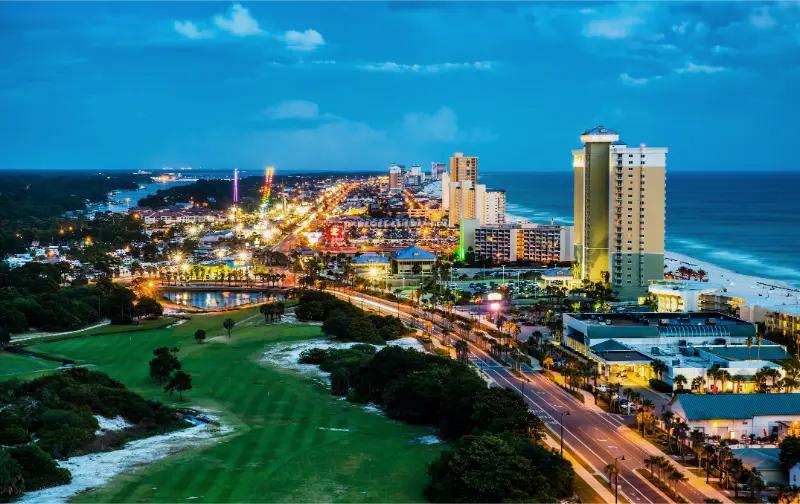
    Panama City Beach Skyline and Shoreline Aerial

    Spring is excellent for active outdoor days

    The season can be ideal for Conservation Park, St. Andrews State Park, biking and longer waterfront walks because the heat is often less intense than midsummer. Start early anyway: Florida sun is strong well before summer, and a breezy day can hide how quickly skin burns. Carry water, use sun protection and check the beach flag before swimming.

    Families can use the shoulder weeks well

    Families with flexibility may find late spring particularly appealing: water activities become more comfortable, days are long and the destination is fully awake for the season. A simple family rhythm works well—beach early, lunch and a hotel break, one attraction in the afternoon, then sunset or Pier Park. That structure leaves room for naps and weather without wasting the day.

    Book only the experiences that truly need advance commitment

    Boat trips and popular accommodations may deserve advance reservations on busy spring dates, but do not lock every hour of the trip. Wind, surf and thunderstorms can still alter water plans. Keep one or two days flexible so the best beach weather can be used for the Gulf while indoor attractions move to less favorable periods.

    Choose accommodation for the trip you are actually taking

    Panama City Beach stretches for miles, so the cheapest room is not automatically the best value. A property near Pier Park can reduce evening driving, the West End can feel calmer, Middle Beach keeps many attractions reasonably close, and the Grand Lagoon side can be convenient for boating and St. Andrews State Park. Compare the real route from the room to the beach, parking area, elevator, pool and restaurants rather than relying on the phrase “beachfront” alone.

    Spring pricing can vary sharply by week, so compare several date combinations if your schedule allows. A quieter West End property may suit families and couples, while Pier Park is useful for travelers who want evening activity without driving. If the trip overlaps a busy break period, ask about parking, noise policies and check-in procedures before booking.

    Always compare the total accommodation price. Parking, resort fees, cleaning charges, taxes and cancellation conditions can change the ranking between a hotel and a condo. For longer stays, a kitchen and laundry may save both money and time. Travelers with mobility needs should confirm the complete accessible route directly with the property, including parking, entrances, elevators, bathrooms and access to any advertised beach or pool facilities.

    Driving, transit and realistic distances

    The destination is long rather than compact. Front Beach Road can make a short mileage look deceptively easy on a map, especially during busy periods, so group activities by area. A car remains the simplest option for travelers who want state parks, Panama City, grocery runs and day trips, but it is not the only possibility. Bayway provides public transportation in Bay County and also operates flexible services in defined zones; schedules, service areas and fares should be checked close to travel because they can change.
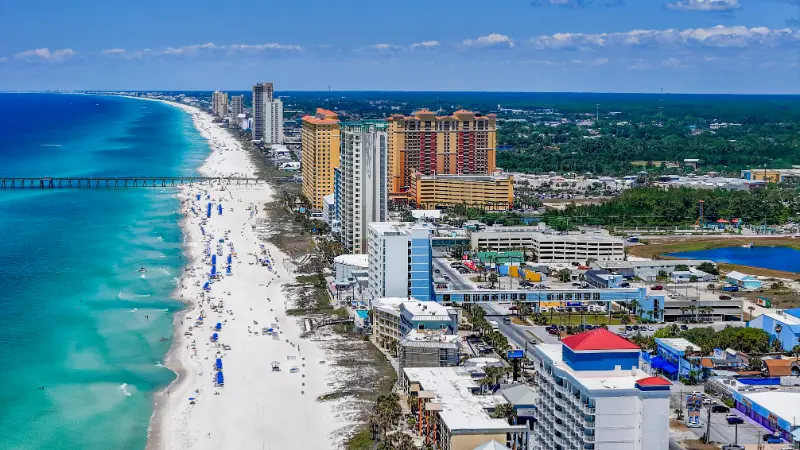
    Panama City Beach Aerial View with Turquoise Sea

    If you plan to rely on walking, rideshare or transit, choose the accommodation first and then test every important trip from that exact address. A resort that works beautifully without a car for beach, dinner and Pier Park may be inconvenient for St. Andrews State Park or an early-morning boat departure. Likewise, renting a car for one or two targeted days can be more efficient than keeping one for an entire resort-focused stay when parking costs are high.

    Beach safety should shape the day, not interrupt it

    Panama City Beach uses a beach warning flag system, and the safest habit is to check the current flag before anyone enters the Gulf. Green still means use caution, yellow indicates a medium hazard, red indicates a high hazard, purple warns of dangerous marine life, and double red closes the water to the public. Water can look attractive from a balcony while currents remain strong, so visual impressions are not a substitute for the posted warning. When lifeguarded areas are available, they are the better choice for families, less-confident swimmers and anyone unfamiliar with Gulf conditions.

    Rip currents, lightning, heat and changing surf are the hazards most likely to alter an otherwise ordinary beach day. Keep children within the level of supervision their swimming ability requires, do not treat inflatables as lifesaving devices, and move indoors when thunderstorms approach rather than waiting for the rain to become heavy. A flexible itinerary makes this much easier: if the Gulf is unsafe, switch to a park, museum, shopping block or long meal and return only when conditions are appropriate.

    Food and budget planning without making the trip feel cheap

    Planning tipThe easiest way to control spending is to decide which experiences deserve money before arrival. Beach time, sunset, public parks and walking can fill large parts of the day, leaving room for one paid attraction, boat trip or special meal that actually matters to the group. A condo kitchen is useful for breakfast, cold drinks, snacks and simple lunches, while a hotel traveler can still save by keeping fruit, water and familiar snacks in the room.

    Avoid driving across the entire beach for every meal. Choose restaurants close to the activity you are already doing, and treat one destination meal as the exception rather than the daily rule. Families should compare children’s menus and waiting times, while couples and solo travelers may get better value from an early dinner or a casual seafood lunch followed by sunset. Prices and operating schedules change, so check current menus and ticket pages before building a day around a specific offer.

    Common spring mistakes

    • Assuming every spring week has the same crowd level and atmosphere.
    • Using old information about spring-break regulations.
    • Packing for summer when early-season mornings may still feel cool.
    • Underestimating sun exposure because the air feels comfortable.
    • Booking every water activity before seeing the wind and surf pattern.
    • Choosing lodging without considering noise and traffic during a high-demand week.

    Useful Wonderful Florida guides to combine with this article

    Continue planning with best time to visit Panama City Beach, Panama City Beach with teenagers, St. Andrews State Park and Pier Park.

    Official information to check before travel

    Opening hours, parking arrangements, beach conditions, transportation services and local rules can change. If a specific feature is essential to the day, confirm it with the operator or public agency shortly before leaving your accommodation.

    Final planning advice

    Spring can deliver some of the best outdoor conditions of the year, but only if the trip is planned for the exact week. Check current local rules, pack for changing temperatures, keep water activities flexible and use the season’s milder heat for parks and long walks. That makes spring feel intentional rather than like a cheaper version of summer.

    One more practical planning point

    If your dates are fixed by a school calendar, focus on controlling what you can: choose lodging carefully, reserve only essential experiences and start beach days early. Busy periods are not automatically bad, but they reward travelers who avoid driving back and forth across the destination and who have a clear plan for meals and parking.
    One more practical planning point

    If your dates are fixed by a school calendar, focus on controlling what you can: choose lodging carefully, reserve only essential experiences and start beach days early. Busy periods are not automatically bad, but they reward travelers who avoid driving back and forth across the destination and who have a clear plan for meals and parking.

  • Panama City Beach in Summer: Heat, Storms, Crowds, Beach Safety and Family Planning

    Panama City Beach in Summer: Heat, Storms, Crowds, Beach Safety and Family Planning

    Summer is the classic Panama City Beach vacation season: warm Gulf water, long daylight, water parks, busy restaurants and a full schedule of family activity. It is also the season when heat, humidity, afternoon thunderstorms and crowds can punish an overplanned itinerary. The most enjoyable summer trips use the coolest hours aggressively—beach early, rest in the middle of the day, then return outside later—rather than trying to stay on the sand from breakfast to dinner.

    Explore this guide

    Quick planning summary

    • Best for: Families, school-break travelers, swimmers and visitors who want the most complete warm-weather beach experience.
    • Ideal trip length: 4–7 nights gives enough time to alternate beach, attractions and weather-flexible days.
    • Getting around: A car helps with groceries and parks, but choosing one activity area per day reduces summer traffic frustration.
    • Most important planning point: Protect the middle of the day from heat and keep a thunderstorm backup plan ready.

    The best summer beach time is often before lunch

    Arrive early, choose a manageable beach-access point and let the morning carry the swimming and sand time. The sun is still strong, but temperatures and energy levels are usually easier than later in the day. Families with toddlers can leave before nap time, teenagers can return later for sunset, and older travelers can avoid the most exhausting hours.

    Midday is for recovery, not proving endurance

    Lunch, a shower, nap, laundry, indoor attraction or hotel pool break can turn a hot day into two good outdoor sessions. Travelers often underestimate how much fatigue comes from sun, saltwater, humidity and carrying beach equipment. A two- or three-hour reset makes dinner and evening more enjoyable and reduces the temptation to keep children outside after they are already overtired.

    Thunderstorms are part of summer planning

    Afternoon storms can develop quickly. Keep shoes, keys and essential items organized so the group can leave the beach without a long packing process. When thunder is heard or lightning approaches, move to a safe indoor location rather than waiting under an umbrella or pavilion. WonderWorks, the Science & Discovery Center, Pier Park dining or simply returning to the accommodation can all work as backups.

    Water parks and paid attractions need pacing

    Shipwreck Island can be a major family day, but it adds more sun exposure to a week that may already include several beach days. Treat it as the anchor activity, hydrate consistently and avoid scheduling another demanding evening. Indoor attractions are better saved for the hottest or stormiest part of the trip. This gives each ticket a purpose instead of using it because the itinerary is crowded.

    Traffic and parking reward geographic planning

    Summer driving can take longer than a map suggests. Group Pier Park activities together, put St. Andrews State Park and Grand Lagoon experiences on another day, and avoid crossing the entire resort strip repeatedly for meals. If a beach-access parking area is full, have a second option rather than circling for a long time in heat with children in the car.

    Summer with babies, children and grandparents

    Mixed-age groups need different exposure limits. Babies and toddlers need short outdoor windows and reliable shade, school-age children may want water attractions, teenagers can handle more independence, and grandparents may prefer mornings and evenings. One shared activity plus optional split time is usually more successful than forcing everyone through the same long day.

    Choose accommodation for the trip you are actually taking

    Panama City Beach stretches for miles, so the cheapest room is not automatically the best value. A property near Pier Park can reduce evening driving, the West End can feel calmer, Middle Beach keeps many attractions reasonably close, and the Grand Lagoon side can be convenient for boating and St. Andrews State Park. Compare the real route from the room to the beach, parking area, elevator, pool and restaurants rather than relying on the phrase “beachfront” alone.

    Panama City Beach Skyline and Shoreline Aerial

    In summer, efficient beach access, reliable elevators, strong air-conditioning and enough space for wet gear matter more than they do in cooler seasons. Families should check pool rules, laundry and refrigerator space, while couples may value a property near evening dining. If the building is large, ask yourself how the elevator and parking setup will feel during a busy changeover weekend.

    Always compare the total accommodation price. Parking, resort fees, cleaning charges, taxes and cancellation conditions can change the ranking between a hotel and a condo. For longer stays, a kitchen and laundry may save both money and time. Travelers with mobility needs should confirm the complete accessible route directly with the property, including parking, entrances, elevators, bathrooms and access to any advertised beach or pool facilities.

    Driving, transit and realistic distances

    The destination is long rather than compact. Front Beach Road can make a short mileage look deceptively easy on a map, especially during busy periods, so group activities by area. A car remains the simplest option for travelers who want state parks, Panama City, grocery runs and day trips, but it is not the only possibility. Bayway provides public transportation in Bay County and also operates flexible services in defined zones; schedules, service areas and fares should be checked close to travel because they can change.

    If you plan to rely on walking, rideshare or transit, choose the accommodation first and then test every important trip from that exact address. A resort that works beautifully without a car for beach, dinner and Pier Park may be inconvenient for St. Andrews State Park or an early-morning boat departure. Likewise, renting a car for one or two targeted days can be more efficient than keeping one for an entire resort-focused stay when parking costs are high.

    Beach safety should shape the day, not interrupt it

    Panama City Beach uses a beach warning flag system, and the safest habit is to check the current flag before anyone enters the Gulf. Green still means use caution, yellow indicates a medium hazard, red indicates a high hazard, purple warns of dangerous marine life, and double red closes the water to the public. Water can look attractive from a balcony while currents remain strong, so visual impressions are not a substitute for the posted warning. When lifeguarded areas are available, they are the better choice for families, less-confident swimmers and anyone unfamiliar with Gulf conditions.

    Panama City Beach Aerial View with Turquoise Sea

    Rip currents, lightning, heat and changing surf are the hazards most likely to alter an otherwise ordinary beach day. Keep children within the level of supervision their swimming ability requires, do not treat inflatables as lifesaving devices, and move indoors when thunderstorms approach rather than waiting for the rain to become heavy. A flexible itinerary makes this much easier: if the Gulf is unsafe, switch to a park, museum, shopping block or long meal and return only when conditions are appropriate.

    Food and budget planning without making the trip feel cheap

    Planning tipThe easiest way to control spending is to decide which experiences deserve money before arrival. Beach time, sunset, public parks and walking can fill large parts of the day, leaving room for one paid attraction, boat trip or special meal that actually matters to the group. A condo kitchen is useful for breakfast, cold drinks, snacks and simple lunches, while a hotel traveler can still save by keeping fruit, water and familiar snacks in the room.

    Avoid driving across the entire beach for every meal. Choose restaurants close to the activity you are already doing, and treat one destination meal as the exception rather than the daily rule. Families should compare children’s menus and waiting times, while couples and solo travelers may get better value from an early dinner or a casual seafood lunch followed by sunset. Prices and operating schedules change, so check current menus and ticket pages before building a day around a specific offer.

    Common summer mistakes

    • Planning the longest outdoor activity at midday.
    • Ignoring thunder because the rain has not started yet.
    • Scheduling a water park immediately after several exhausting beach days.
    • Driving from one end of Panama City Beach to the other multiple times in a day.
    • Choosing a condo without thinking about elevators, wet gear and laundry.
    • Assuming everyone in a multigenerational group has the same heat tolerance.

    Useful Wonderful Florida guides to combine with this article

    Continue planning with Shipwreck Island Waterpark, Panama City Beach with toddlers and preschoolers, Panama City Beach with teenagers and rainy-day Panama City Beach ideas.

    Official information to check before travel

    Opening hours, parking arrangements, beach conditions, transportation services and local rules can change. If a specific feature is essential to the day, confirm it with the operator or public agency shortly before leaving your accommodation.

    Final planning advice

    Summer rewards travelers who plan less in the middle of the day and more around the edges. Use morning for the Gulf, retreat during the hottest or stormiest hours, then return for dinner and sunset. That rhythm makes room for the classic warm-weather vacation without turning every day into an endurance test.

    One more practical planning point

    Hydration is easier when it is built into the day instead of treated as a response to thirst. Bring cold water to the beach, refill during the midday break and keep drinks in the room for the evening. Children and older travelers may show fatigue before they clearly say they are overheated, so pace the group by the most heat-sensitive person.

  • WonderWorks Panama City Beach Guide: Tickets, Hours, Exhibits, Ropes Course and Family Tips

    WonderWorks Panama City Beach Guide: Tickets, Hours, Exhibits, Ropes Course and Family Tips

    WonderWorks is one of Panama City Beach’s most useful indoor family attractions because it works as both a planned activity and a weather backup. The upside-down building on Front Beach Road contains roughly 29,000 square feet of interactive “edu-tainment,” more than 100 hands-on exhibits and six themed Wonder Zones, plus activities such as an indoor ropes course and laser tag.

    Explore this guide

    The attraction is not a conventional museum where everyone moves quietly from case to case. It is active, noisy and hands-on. That makes it particularly strong for school-age children and teenagers, but it also means visitors with motion or sensory sensitivities should review the warnings before buying tickets.

    Quick planning summary

    • Best for: school-age children, teenagers, rainy days and hot afternoons
    • Current hours: Sun–Thu 10 a.m.–8 p.m.; Fri–Sat 10 a.m.–9 p.m.
    • Last ticket: currently sold one hour before closing
    • Scale: about 29,000 square feet and 100+ hands-on exhibits
    • Location: 9910 Front Beach Road
    • Time needed: about 2–4 hours for most families
    • Important: several attractions have height, health or motion restrictions

    Important 2026 information note

    This article is scheduled for 2028. WonderWorks can change hours, ticket products, included experiences and attraction restrictions before then. Use the official website for the final 2028 check.

    What WonderWorks is

    The attraction uses the fictional story of an upside-down laboratory as the setting for interactive science and challenge exhibits. The experience begins with an inversion tunnel and continues through six Wonder Zones. Rather than trying to “complete” every exhibit, let children spend longer on the experiments they actually enjoy.

    Who enjoys it most

    School-age children are the easiest audience because many exhibits combine movement, competition and simple science concepts. Teenagers often respond well to the ropes course, laser tag and more physical challenges. Adults who enjoy interactive museums can have fun too, especially in a mixed-age group where not everyone wants another beach afternoon.

    Current hours

    The official Panama City Beach page currently lists Sunday through Thursday from 10 a.m. to 8 p.m. and Friday/Saturday from 10 a.m. to 9 p.m. The last ticket is sold and doors are locked one hour before closing. Holiday and special-event schedules can differ, so do not assume those hours apply to every future date.

    Panama City Beach Skyline and Shoreline Aerial

    Tickets

    WonderWorks sells different ticket products and age bands, and online pricing can change. Because this article is scheduled well into the future, I would not build a 2028 budget around a single 2026 dollar figure. Check whether your ticket includes the activities your family considers essential and whether taxes or upgrades change the final cost.

    Indoor ropes course

    The glow-in-the-dark ropes course is one of the signature physical activities. Current rules require climbers to be at least 48 inches tall to climb alone or 42 inches to participate with an adult 18 or older. The current maximum height is 80 inches. These restrictions can change and are enforced for safety, so verify them if the ropes course is central to the visit.

    Wonder Coaster and motion experiences

    The current Wonder Coaster rules list a minimum of 48 inches to ride alone or 42 inches with a responsible rider 48 inches or taller, plus a 250-pound individual weight limit. Motion-based attractions may not be suitable for every visitor even when height requirements are met.

    Health and sensory warnings

    The official site warns that some exhibits involve flashing lights and motion and may be unsuitable for visitors with certain heart conditions, diabetes, vertigo, seizures or other light/motion sensitivities. This deserves attention before the day begins, not after a ticket is purchased. Families with sensory-sensitive visitors can contact the attraction for current guidance and decide whether the exhibit environment fits their needs.

    Rainy-day strategy

    WonderWorks is popular precisely when the beach becomes less appealing. That means a rainy forecast can also mean more families choosing the same indoor plan. If the weather is obviously poor, arrive earlier rather than waiting until every beachgoer moves indoors at the same time.

    Do not treat indoor as the same thing as storm-proof travel. Severe weather can still affect roads, power, attraction operations and opening hours. Check official alerts when a major storm system is involved.

    How long to allow

    Two hours can work for a focused visit with older children who move quickly, but three to four hours is more realistic if the group wants to repeat exhibits, use the ropes course and take breaks. Avoid scheduling a fixed dinner reservation too tightly after your entry time.

    Combining WonderWorks with other stops

    The attraction sits along the main resort corridor, so it pairs well with a beach morning or an evening around Pier Park. On a summer day, a strong plan is beach early, indoor attraction during the hottest or stormiest part of the afternoon, then dinner or sunset later.

    Is WonderWorks worth it for toddlers?

    That depends on the child and the ticket cost on your date. Younger children can enjoy visual and hands-on elements, but many signature challenges are designed around older or taller participants. Families with toddlers should compare WonderWorks with a shorter science-center or zoo visit before committing to a full-family ticket.

    Official information

    Check the official WonderWorks Panama City Beach visitor information page for current hours, tickets and ride restrictions.

    Families, teenagers and senior travelers

    Panama City Beach works well for multigenerational groups when the schedule is built around energy level rather than age labels. Families with younger children generally need shade, restroom access and shorter activity blocks. Teenagers often enjoy activities that give them some independence, whether that means fishing, interactive exhibits, water rides or a walk around Pier Park. Senior travelers may prefer the same attractions but benefit from a slower pace, more seated breaks and less time on exposed pavement or soft sand during the hottest hours.

    A practical family rule is to choose one anchor activity and one optional add-on. If everyone is still enjoying the day, add the second stop. If heat, crowds or weather have already used up the group’s energy, stop without treating the change as a failed itinerary.

    Accessibility and comfort

    Accessibility in a Gulf Coast destination is not only about ramps. Heat, glare, long walks from parking, wet surfaces, sand and sudden storms can affect how comfortable a visit feels. Travelers using wheelchairs, walkers or strollers should verify the exact route from parking to the attraction, not just whether the destination describes itself as accessible. When beach access is part of the plan, mobility mats and beach-wheelchair programs can make a major difference, but availability can change.

    Weather and seasonal planning

    Summer brings warm Gulf water, long daylight and the fullest attraction schedule, but also intense sun, high humidity and frequent afternoon thunderstorms. Spring and fall can be easier for walking and outdoor attractions. Winter is quieter and often pleasant for museums, piers and sightseeing, although water temperatures and wind may make a beach day feel very different from summer.

    Lightning is the condition that should change plans immediately. Do not wait on an exposed pier, beach or waterpark deck because a storm still appears distant. Use radar and official attraction updates, and keep one indoor backup available for days when the Gulf weather refuses to cooperate.

    Beach safety still matters

    Even when the attraction itself is the reason for the visit, many travelers combine it with the beach. Check the current Panama City Beach flag system before entering the Gulf. Rip currents are not always obvious from shore, and a calm-looking surface is not proof that conditions are safe. Lifeguard coverage is seasonal and limited to specific areas, so never assume every public access is guarded.

    Panama City Beach Hotels by the Gulf Aerial

    Budget and value

    Compare the complete day rather than only the headline ticket price. Parking, food, drinks, equipment, souvenir photos, lockers and optional upgrades can change the total quickly. A lower-cost day can pair a paid attraction with a beach walk, sunset or public park. Families often get better value by choosing one substantial paid activity instead of stacking several expensive stops simply because they are close together.

    What to bring

    • refillable water bottles
    • sunscreen, sunglasses and a hat
    • comfortable walking shoes
    • a light rain layer during the warm season
    • a portable phone charger
    • any required identification for discounts
    • a small dry bag or waterproof phone pouch when water is involved

    Common planning mistakes

    • using an old social-media post as the source for current prices or hours
    • forgetting that Panama City Beach uses Central Time locally
    • planning a long exposed activity at the hottest point of the afternoon
    • assuming parking is free because beach access itself is public
    • waiting until arrival to check height, health or participation restrictions
    • filling every hour of the day and leaving no room for weather delays

    A better daily rhythm

    Planning tipFor most visitors, the easiest rhythm is an early outdoor activity, a shaded or indoor break around midday, and a flexible late-afternoon or evening plan. This reduces heat stress and gives the schedule room to absorb traffic or a thunderstorm. If sunset matters, choose the final stop geographically before lunch so you are not crossing the entire resort strip at the busiest time of day.

    Driving and parking strategy

    Front Beach Road can move slowly in peak periods. Enter the exact attraction or parking area in navigation before leaving, and allow more time than the mileage suggests. If your group includes someone with limited mobility, use a legal passenger drop-off when possible before the driver searches for a more distant space. Never improvise parking on dunes, grass or private property.

    Continue your Bay County trip

    Use the Panama City Beach travel guide as the broader planning hub. For shopping, dinner or an easy evening, the Pier Park guide is a useful companion once it is already published. Travelers arriving from the east can also compare the resort atmosphere with Mexico Beach.

    Final planning advice

    The best version of a Panama City Beach day is usually simpler than the longest possible checklist. Decide what experience matters most, verify the current official information shortly before travel and leave enough flexibility for weather, traffic and the possibility that your group simply wants to stay longer at one place.

  • Shipwreck Island Waterpark Guide: Tickets, Slides, Wave Pool, Families and Panama City Beach Tips

    Shipwreck Island Waterpark Guide: Tickets, Slides, Wave Pool, Families and Panama City Beach Tips

    Shipwreck Island is Panama City Beach’s major traditional waterpark and a useful full-day option when a family wants more structure than an open beach day. The park covers about 15 landscaped acres and advertises more than 20 water attractions, from a lazy river and wave pool to high-speed slides and children’s areas.

    Explore this guide

    The most important planning choice is whether everyone in the group will actually use enough of the park to justify a full-day ticket. Families with swimmers of different heights can still have an excellent day, but checking restrictions before buying avoids disappointment at the ride platform.

    Quick planning summary

    • Best for: families, water-slide fans and hot summer days
    • Scale: 15 acres and 20+ water attractions
    • Location: 12201 Hutchison Boulevard
    • Season: strongly seasonal; currently closed after the 2026 season with 2027 passes on sale
    • Current 2026 single-day baseline: in-park $59.99; selected-date online tickets as low as $44.99
    • Parking: paid; online purchase is currently cheaper than in-park purchase
    • Time needed: 4–7 hours for most families

    Important 2026 information note

    This article is scheduled for 2028. Waterpark calendars, ticket prices, parking rates, ride lineup and height restrictions can change significantly from season to season. The figures and rules below are the verified 2026 planning baseline, not guaranteed 2028 prices.

    What the park includes

    Shipwreck Island lists attractions for very different comfort levels. The Lazy River is the obvious recovery ride. Ocean Motion provides a wave-pool experience. Higher-thrill options include Pirates Plunge, Raging Rapids, Tree Top Drop, White Knuckle River and Zoom Flume. Younger children have areas such as Tadpole Hole and Splash Cove, while Skull Island and the Great Shipwreck add family-oriented play.

    This variety is why the park works better as a dedicated day than a quick two-hour add-on. Moving a family between slides, food, rest breaks and children’s areas takes time even before queues are considered.

    Height restrictions

    Do not assume a child who swims well can use every attraction. The official attraction list currently shows several 48-inch minimums, while other attractions use 42-inch or 36-inch limits. Measure children before the trip if access to a particular slide is a major reason for buying tickets.

    Height rules are safety requirements rather than suggestions. Build excitement around what each child can do rather than making the day depend on one borderline attraction.

    Current ticket baseline

    The park’s current 2026 ticket page lists an in-park single-day price of $59.99, with selected-date online tickets advertised as low as $44.99. A flexible any-day ticket is listed at $54.99 online. Senior, military and first-responder discounts are currently available under specific conditions and may require identification.

    Prices are dynamic enough that advance purchase can matter. Compare the official ticket page on your actual date rather than copying a price from an old travel article. Check taxes, parking and optional cabanas before deciding what the day really costs.

    Parking and cashless planning

    The park currently promotes prepaid parking and describes itself as cashless. In 2026, standard online parking ranges from $10 on weekdays to $15 on weekends, with higher in-park rates and VIP options. Those figures can change by 2028, but the planning lesson remains useful: buy only after confirming the current calendar and parking policy.

    Wave pool, lazy river and thrill slides

    Groups do not need to move together all day. A good strategy is to identify one shared meeting area, then let stronger swimmers repeat thrill slides while other family members use the lazy river or quieter pools. Agree on a meeting time rather than relying on phones, which may be stored away or wet.

    Young children

    For preschool and early-elementary visitors, the value of a waterpark comes from age-appropriate play and frequent breaks rather than the number of slides completed. Alternate short water sessions with shade, drinks and snacks. Reapply sunscreen more frequently than you would during a normal sightseeing day.

    Teenagers

    Teenagers are often the group most likely to get strong value from a full day because they can repeat the faster attractions independently. Set rules about meeting points, hydration and storm procedures before separating. If lightning closes attractions temporarily, do not pressure staff or treat the closure as optional.

    Food and outside items

    The park currently says outside food, drinks and coolers are not permitted. Medical or special dietary exceptions may have their own rules, so contact the park in advance when this is important. Buying every drink individually can add up; compare any current refillable-cup program before arrival.

    Cabanas and shade

    Cabanas and shaded loungers can be valuable for groups with babies, grandparents or anyone who needs predictable rest. They are not automatically necessary for every family. Before paying, ask whether you need a guaranteed base for the whole day or can manage with normal seating and shorter visits.

    When Shipwreck Island is worth the price

    It makes the most sense for a group that wants several hours of active water play and has enough riders to use the attraction mix. It offers less value if only one person wants slides, if the weather is unstable, or if your family mainly wants relaxed Gulf swimming. In that case, a beach day plus one smaller paid attraction may be a better use of the budget.

    Official information

    Check the official Shipwreck Island website for the current season calendar, tickets, parking and attraction availability before travel.

    Families, teenagers and senior travelers

    Panama City Beach works well for multigenerational groups when the schedule is built around energy level rather than age labels. Families with younger children generally need shade, restroom access and shorter activity blocks. Teenagers often enjoy activities that give them some independence, whether that means fishing, interactive exhibits, water rides or a walk around Pier Park. Senior travelers may prefer the same attractions but benefit from a slower pace, more seated breaks and less time on exposed pavement or soft sand during the hottest hours.

    Panama City Beach Florida Pier over Turquoise Sea

    A practical family rule is to choose one anchor activity and one optional add-on. If everyone is still enjoying the day, add the second stop. If heat, crowds or weather have already used up the group’s energy, stop without treating the change as a failed itinerary.

    Accessibility and comfort

    Accessibility in a Gulf Coast destination is not only about ramps. Heat, glare, long walks from parking, wet surfaces, sand and sudden storms can affect how comfortable a visit feels. Travelers using wheelchairs, walkers or strollers should verify the exact route from parking to the attraction, not just whether the destination describes itself as accessible. When beach access is part of the plan, mobility mats and beach-wheelchair programs can make a major difference, but availability can change.

    Weather and seasonal planning

    Summer brings warm Gulf water, long daylight and the fullest attraction schedule, but also intense sun, high humidity and frequent afternoon thunderstorms. Spring and fall can be easier for walking and outdoor attractions. Winter is quieter and often pleasant for museums, piers and sightseeing, although water temperatures and wind may make a beach day feel very different from summer.

    Lightning is the condition that should change plans immediately. Do not wait on an exposed pier, beach or waterpark deck because a storm still appears distant. Use radar and official attraction updates, and keep one indoor backup available for days when the Gulf weather refuses to cooperate.

    Beach safety still matters

    Even when the attraction itself is the reason for the visit, many travelers combine it with the beach. Check the current Panama City Beach flag system before entering the Gulf. Rip currents are not always obvious from shore, and a calm-looking surface is not proof that conditions are safe. Lifeguard coverage is seasonal and limited to specific areas, so never assume every public access is guarded.

    Budget and value

    Compare the complete day rather than only the headline ticket price. Parking, food, drinks, equipment, souvenir photos, lockers and optional upgrades can change the total quickly. A lower-cost day can pair a paid attraction with a beach walk, sunset or public park. Families often get better value by choosing one substantial paid activity instead of stacking several expensive stops simply because they are close together.

    Panama City Beach Skyline and Shoreline Aerial

    What to bring

    • refillable water bottles
    • sunscreen, sunglasses and a hat
    • comfortable walking shoes
    • a light rain layer during the warm season
    • a portable phone charger
    • any required identification for discounts
    • a small dry bag or waterproof phone pouch when water is involved

    Common planning mistakes

    • using an old social-media post as the source for current prices or hours
    • forgetting that Panama City Beach uses Central Time locally
    • planning a long exposed activity at the hottest point of the afternoon
    • assuming parking is free because beach access itself is public
    • waiting until arrival to check height, health or participation restrictions
    • filling every hour of the day and leaving no room for weather delays

    A better daily rhythm

    Planning tipFor most visitors, the easiest rhythm is an early outdoor activity, a shaded or indoor break around midday, and a flexible late-afternoon or evening plan. This reduces heat stress and gives the schedule room to absorb traffic or a thunderstorm. If sunset matters, choose the final stop geographically before lunch so you are not crossing the entire resort strip at the busiest time of day.

    Driving and parking strategy

    Front Beach Road can move slowly in peak periods. Enter the exact attraction or parking area in navigation before leaving, and allow more time than the mileage suggests. If your group includes someone with limited mobility, use a legal passenger drop-off when possible before the driver searches for a more distant space. Never improvise parking on dunes, grass or private property.

    Continue your Bay County trip

    Use the Panama City Beach travel guide as the broader planning hub. For shopping, dinner or an easy evening, the Pier Park guide is a useful companion once it is already published. Travelers arriving from the east can also compare the resort atmosphere with Mexico Beach.

    Final planning advice

    The best version of a Panama City Beach day is usually simpler than the longest possible checklist. Decide what experience matters most, verify the current official information shortly before travel and leave enough flexibility for weather, traffic and the possibility that your group simply wants to stay longer at one place.

  • Panama City Beach in Fall: Warm Gulf Days, Quieter Weeks, Festivals and Hurricane-Season Planning

    Panama City Beach in Fall: Warm Gulf Days, Quieter Weeks, Festivals and Hurricane-Season Planning

    Fall can be one of the most attractive seasons in Panama City Beach because the destination often keeps a beach-vacation feel after the busiest summer weeks fade. Warm days can extend well into the season, event calendars become interesting and travelers may find more space on the sand. The tradeoff is that early and mid-fall overlap Atlantic hurricane season, so flexibility and weather awareness matter more than they do in a simple “fewer crowds” marketing description.

    Explore this guide

    Quick planning summary

    • Best for: Couples, retirees, families with flexible calendars and road-trippers who want a warmer Gulf Coast trip with a calmer rhythm.
    • Ideal trip length: 3–6 nights works well; refundable bookings are especially valuable in the earlier part of fall.
    • Getting around: A car gives flexibility for events, parks and day trips, but staying near Pier Park can simplify festival weekends.
    • Most important planning point: Balance attractive shoulder-season conditions with realistic hurricane-season planning.

    September, October and November are not the same

    September can still feel very summery, with warm water and significant heat. October often offers a pleasant balance for many travelers, while November tends to bring cooler evenings and less reliable swimming expectations. Instead of packing for “fall,” check the short-term forecast and water expectations for your exact dates. Layers become increasingly useful later in the season.

    Hurricane season changes the booking strategy

    A fall trip should be built with flexible reservations and a clear understanding of cancellation or rebooking conditions. Do not obsess over long-range storm forecasts months in advance, but do pay attention as the trip approaches and follow official guidance if a tropical system threatens the area. Travel insurance may be useful when its covered reasons match your concerns; read the policy rather than assuming every weather disruption is included.

    Fall is excellent for events and evening time outdoors

    Panama City Beach often hosts festivals, concerts, sporting events and seasonal gatherings in fall. An event can be a great reason to choose a weekend, but it can also affect lodging demand, parking and traffic. If the event is essential, book nearby or arrive early. If it is not essential, avoid building the entire trip around a schedule that could change.

    Panama City Beach Skyline and Shoreline Aerial

    Beach days become easier to pace

    When heat begins to moderate, long walks, pier visits and late-afternoon beach time can become more comfortable. You may not need the same long midday retreat as in July, although sun protection and hydration still matter. Check beach flags every day; seasonal timing does not remove rip-current or marine-life hazards.

    Nature and cycling gain value

    Conservation Park, St. Andrews State Park and nearby trails are especially attractive when mornings are cooler. Cycling can also feel more comfortable than in midsummer. Bring water, insect protection appropriate to conditions and a backup plan after heavy rain. Fall sunlight and sunsets can make these simple outdoor days more memorable than a crowded attraction schedule.

    Choose accommodation for the trip you are actually taking

    Panama City Beach stretches for miles, so the cheapest room is not automatically the best value. A property near Pier Park can reduce evening driving, the West End can feel calmer, Middle Beach keeps many attractions reasonably close, and the Grand Lagoon side can be convenient for boating and St. Andrews State Park. Compare the real route from the room to the beach, parking area, elevator, pool and restaurants rather than relying on the phrase “beachfront” alone.

    Fall travelers should compare refundable rates and pay attention to event weekends. A property with a good balcony and easy beach access can be especially valuable when the weather is comfortable enough to spend more time outside. If a tropical system is being monitored, follow the property’s communication and official local guidance rather than making decisions based on social-media rumor.

    Always compare the total accommodation price. Parking, resort fees, cleaning charges, taxes and cancellation conditions can change the ranking between a hotel and a condo. For longer stays, a kitchen and laundry may save both money and time. Travelers with mobility needs should confirm the complete accessible route directly with the property, including parking, entrances, elevators, bathrooms and access to any advertised beach or pool facilities.

    Driving, transit and realistic distances

    The destination is long rather than compact. Front Beach Road can make a short mileage look deceptively easy on a map, especially during busy periods, so group activities by area. A car remains the simplest option for travelers who want state parks, Panama City, grocery runs and day trips, but it is not the only possibility. Bayway provides public transportation in Bay County and also operates flexible services in defined zones; schedules, service areas and fares should be checked close to travel because they can change.

    If you plan to rely on walking, rideshare or transit, choose the accommodation first and then test every important trip from that exact address. A resort that works beautifully without a car for beach, dinner and Pier Park may be inconvenient for St. Andrews State Park or an early-morning boat departure. Likewise, renting a car for one or two targeted days can be more efficient than keeping one for an entire resort-focused stay when parking costs are high.

    Beach safety should shape the day, not interrupt it

    Panama City Beach uses a beach warning flag system, and the safest habit is to check the current flag before anyone enters the Gulf. Green still means use caution, yellow indicates a medium hazard, red indicates a high hazard, purple warns of dangerous marine life, and double red closes the water to the public. Water can look attractive from a balcony while currents remain strong, so visual impressions are not a substitute for the posted warning. When lifeguarded areas are available, they are the better choice for families, less-confident swimmers and anyone unfamiliar with Gulf conditions.

    Rip currents, lightning, heat and changing surf are the hazards most likely to alter an otherwise ordinary beach day. Keep children within the level of supervision their swimming ability requires, do not treat inflatables as lifesaving devices, and move indoors when thunderstorms approach rather than waiting for the rain to become heavy. A flexible itinerary makes this much easier: if the Gulf is unsafe, switch to a park, museum, shopping block or long meal and return only when conditions are appropriate.

    Food and budget planning without making the trip feel cheap

    Planning tipThe easiest way to control spending is to decide which experiences deserve money before arrival. Beach time, sunset, public parks and walking can fill large parts of the day, leaving room for one paid attraction, boat trip or special meal that actually matters to the group. A condo kitchen is useful for breakfast, cold drinks, snacks and simple lunches, while a hotel traveler can still save by keeping fruit, water and familiar snacks in the room.

    Avoid driving across the entire beach for every meal. Choose restaurants close to the activity you are already doing, and treat one destination meal as the exception rather than the daily rule. Families should compare children’s menus and waiting times, while couples and solo travelers may get better value from an early dinner or a casual seafood lunch followed by sunset. Prices and operating schedules change, so check current menus and ticket pages before building a day around a specific offer.

    Common fall mistakes

    • Assuming September will feel like cool autumn weather.
    • Booking the cheapest nonrefundable rate without understanding weather risk.
    • Ignoring festival dates that can change parking and lodging demand.
    • Packing only beachwear for a late-November trip.
    • Believing fewer crowds mean the Gulf is automatically safer.
    • Treating social-media storm speculation as official emergency information.

    Useful Wonderful Florida guides to combine with this article

    Continue planning with best time to visit Panama City Beach, Panama City Beach Conservation Park, Pier Park and three-day Panama City Beach itinerary.

    Panama City Beach Florida Pier over Turquoise Sea

    Official information to check before travel

    Opening hours, parking arrangements, beach conditions, transportation services and local rules can change. If a specific feature is essential to the day, confirm it with the operator or public agency shortly before leaving your accommodation.

    Final planning advice

    Fall is a strong choice for travelers who want warmth with a little more space, but it is not a season for rigid bookings. Choose flexible rates, watch official weather information as the trip approaches and use the cooler parts of the season for walking, cycling and outdoor events. When conditions cooperate, the Gulf Coast can feel relaxed without feeling closed for the year.

    One more practical planning point

    Fall road-trippers should keep fuel, medication and a small amount of food and water available when weather is unsettled, without treating every forecast as a crisis. The point is ordinary readiness. If official guidance changes, having basic supplies and flexible lodging makes it easier to alter the route calmly rather than making rushed decisions.

  • Panama City Beach on a Budget: Free Beaches, Low-Cost Days, Food and Money-Saving Tips

    Panama City Beach on a Budget: Free Beaches, Low-Cost Days, Food and Money-Saving Tips

    A Panama City Beach vacation does not have to be built around expensive attractions every day. The Gulf, public beach access, sunsets, parks and simple walks can carry a large part of the experience, while one or two carefully chosen paid activities become the memorable extras rather than the financial baseline. The biggest budget gains come from accommodation, food and transportation decisions made before arrival—not from skipping every ice cream or souvenir once you are already there.

    Explore this guide

    Quick planning summary

    • Best for: Families, couples, students and road-trippers who want a real beach vacation while keeping daily spending under control.
    • Ideal trip length: 3–5 nights is enough for a low-cost beach break; a week becomes good value when lodging includes a kitchen and laundry.
    • Getting around: A car can be economical for families and grocery runs, while a well-located stay can reduce fuel and parking costs.
    • Most important planning point: Set the lodging and food strategy first, then choose only the paid attractions that truly improve the trip.

    Start with the total room cost, not the headline rate

    Panama City Beach accommodation can look inexpensive until taxes, cleaning charges, resort fees and parking are added. Compare the final total for the exact dates and number of guests. For a family staying several nights, a condo with kitchen and laundry can offset a higher nightly price by reducing restaurant meals and paid laundry. For a short couple’s trip, a hotel near Pier Park may be better value if it removes the need to drive for dinner and evening entertainment.

    Flexibility also has a value. A slightly more expensive refundable rate can protect a vacation budget during hurricane season or when family plans are uncertain. Do not choose a nonrefundable bargain simply because the displayed rate is lower; compare what would happen if a flight changes, a child becomes sick or severe weather alters the trip.

    Use free beach time as the center of the itinerary

    The beach is not filler between attractions—it is the main reason many people visit. An early swim, a midday break and a sunset return can create a complete day without admission tickets. Public access points vary in parking and facilities, so choose the one that best fits the group rather than driving repeatedly to the most famous pier. Bring reusable water bottles, shade, towels and simple snacks, then leave the beach with all belongings under the local Leave No Trace rules.

    Low-cost nature is one of the destination’s strengths

    Panama City Beach Conservation Park is a strong choice for travelers who enjoy walking or cycling and want a break from commercial attractions. Historic St. Andrews and Downtown Panama City can also create a low-cost half day built around waterfront views, murals, browsing and one affordable meal. State parks charge fees, but a carefully planned state-park day can still be excellent value because beach, walking, wildlife and scenic time are bundled into one stop.

    Panama City Beach Skyline and Shoreline Aerial

    Choose one paid anchor experience

    Instead of buying tickets impulsively, ask which experience would be disappointing to miss. A family may choose Shipwreck Island or WonderWorks; a nature-focused traveler may prefer a boat trip; a couple may spend on one special dinner or sunset experience. Once that anchor is chosen, surround it with free or inexpensive activities. The result often feels more deliberate and less rushed than trying to “get value” from several admissions in one day.

    Food savings that do not make every meal a chore

    A budget vacation becomes unpleasant if every meal turns into a calculation. Use a simple split: inexpensive breakfast at the room, picnic or casual lunch, and one restaurant meal. Families can keep cereal, fruit, sandwich ingredients, drinks and familiar snacks on hand; couples can use the same approach and spend the savings on seafood or a sunset dinner. A grocery stop early in the trip is most efficient when it is combined with check-in rather than repeated daily.

    Transportation can quietly become the expensive category

    A distant cheap room can create more driving, parking and rideshare spending than a better-located property. If renting a car, compare the full cost including taxes, parking and fuel. If traveling without a car, estimate the likely number of rideshare trips before assuming that strategy is cheaper. For a short stay, location may save more money than negotiating every meal. For a long road trip, free hotel parking and easy highway access may matter more.

    Travel dates can matter more than coupon hunting

    Weekends, holidays, major events and school-break periods can raise lodging demand. If your schedule is flexible, compare several date combinations rather than only searching for a discount code. Late spring and fall can offer a different balance of weather, crowds and prices, while winter can be attractive to travelers who value walking and quiet more than warm Gulf swimming. Always compare actual current rates because the cheapest month is not identical every year.

    Choose accommodation for the trip you are actually taking

    Panama City Beach stretches for miles, so the cheapest room is not automatically the best value. A property near Pier Park can reduce evening driving, the West End can feel calmer, Middle Beach keeps many attractions reasonably close, and the Grand Lagoon side can be convenient for boating and St. Andrews State Park. Compare the real route from the room to the beach, parking area, elevator, pool and restaurants rather than relying on the phrase “beachfront” alone.

    Panama City Beach Aerial View with Turquoise Sea

    For budget travel, I would choose the area that minimizes the biggest recurring cost. A family with a car may value free parking and a kitchen; a couple without a car may save more by staying near restaurants and Pier Park. If a property offers a low base rate but charges large cleaning or resort fees, divide the final total by the number of nights before deciding whether it is truly inexpensive.

    Always compare the total accommodation price. Parking, resort fees, cleaning charges, taxes and cancellation conditions can change the ranking between a hotel and a condo. For longer stays, a kitchen and laundry may save both money and time. Travelers with mobility needs should confirm the complete accessible route directly with the property, including parking, entrances, elevators, bathrooms and access to any advertised beach or pool facilities.

    Beach safety should shape the day, not interrupt it

    Panama City Beach uses a beach warning flag system, and the safest habit is to check the current flag before anyone enters the Gulf. Green still means use caution, yellow indicates a medium hazard, red indicates a high hazard, purple warns of dangerous marine life, and double red closes the water to the public. Water can look attractive from a balcony while currents remain strong, so visual impressions are not a substitute for the posted warning. When lifeguarded areas are available, they are the better choice for families, less-confident swimmers and anyone unfamiliar with Gulf conditions.

    Rip currents, lightning, heat and changing surf are the hazards most likely to alter an otherwise ordinary beach day. Keep children within the level of supervision their swimming ability requires, do not treat inflatables as lifesaving devices, and move indoors when thunderstorms approach rather than waiting for the rain to become heavy. A flexible itinerary makes this much easier: if the Gulf is unsafe, switch to a park, museum, shopping block or long meal and return only when conditions are appropriate.

    Food and budget planning without making the trip feel cheap

    Planning tipThe easiest way to control spending is to decide which experiences deserve money before arrival. Beach time, sunset, public parks and walking can fill large parts of the day, leaving room for one paid attraction, boat trip or special meal that actually matters to the group. A condo kitchen is useful for breakfast, cold drinks, snacks and simple lunches, while a hotel traveler can still save by keeping fruit, water and familiar snacks in the room.

    Avoid driving across the entire beach for every meal. Choose restaurants close to the activity you are already doing, and treat one destination meal as the exception rather than the daily rule. Families should compare children’s menus and waiting times, while couples and solo travelers may get better value from an early dinner or a casual seafood lunch followed by sunset. Prices and operating schedules change, so check current menus and ticket pages before building a day around a specific offer.

    Common budget mistakes

    • Comparing nightly rates without taxes, fees and parking.
    • Buying attraction tickets before checking weather and age or height suitability.
    • Driving long distances for a “cheap” meal that saves only a few dollars.
    • Underestimating grocery, drinks and snack costs in hot weather.
    • Choosing rigid nonrefundable bookings during a season when plans may change.
    • Trying to eliminate every enjoyable expense instead of choosing a few things worth paying for.

    Useful Wonderful Florida guides to combine with this article

    Continue planning with best time to visit Panama City Beach, one-day Panama City Beach itinerary, Panama City Beach Conservation Park and where to stay in Panama City Beach.

    Official information to check before travel

    Opening hours, parking arrangements, beach conditions, transportation services and local rules can change. If a specific feature is essential to the day, confirm it with the operator or public agency shortly before leaving your accommodation.

    Final planning advice

    The best low-cost Panama City Beach trip still feels generous: plenty of Gulf time, one or two experiences you genuinely wanted, food you enjoy and enough flexibility to handle weather. Save on the parts that do not matter to you, spend intentionally on the parts that do, and let the beach carry more of the itinerary than a stack of tickets.

    One more practical planning point

    A useful budgeting exercise is to set a daily discretionary amount after lodging and transportation are already paid. That amount can cover meals, small admissions and treats without turning every purchase into a debate. If one day includes a major paid attraction, make the next day mostly beach and nature rather than trying to spend the same amount every day.

  • M.B. Miller County Pier Guide: Fishing, Parking, Beach Access, Fees and Panama City Beach Tips

    M.B. Miller County Pier Guide: Fishing, Parking, Beach Access, Fees and Panama City Beach Tips

    M.B. Miller County Pier is the practical middle-beach alternative to Russell-Fields City Pier. It offers a 1,500-foot fishing pier, six beach accesses along roughly 1,700 feet of beachfront, restrooms, mobility mats, seasonal services and a lifeguarded beach area. For travelers staying around the central portion of Panama City Beach, it can be the simplest place to combine fishing, swimming and a sunset without driving to Pier Park.

    Explore this guide

    The biggest planning difference is parking. Bay County currently uses paid parking at the county pier, and both pier use and parking are cashless. Knowing that before arrival prevents the common situation of reaching the beach with only cash and then losing time solving payment.

    Quick planning summary

    • Best for: fishing, beach time, sunset and central Panama City Beach stays
    • Current hours: 24 hours a day, seven days a week
    • Pier length: about 1,500 feet
    • Current spectator fee: $3 daily
    • Current fishing fee: $6 daily for visitors over age six
    • Parking baseline: $2 per hour or $12 per day for non-residents
    • Payment: pier and parking systems are cashless
    • Address: 12213 Front Beach Road
    • Time needed: 30–60 minutes for a walk; 2–5 hours for fishing or beach time

    Important 2026 information note

    The county fee schedule, parking system and seasonal services can change before this article’s 2028 publication date. The figures here are the official 2026 baseline and should be reconfirmed shortly before travel.

    What you find at the county pier

    Bay County lists the pier, beach-access mobility mats, restrooms, a bait-and-tackle shop, a seasonal drink stand and six beach accesses. This concentration of facilities makes the location more practical than a small neighborhood access when your group needs restrooms or a clear meeting point.

    The pier itself is long enough to create a genuine offshore feeling without boarding a boat. Spectators can watch anglers, scan for dolphins and rays, or simply use the structure for a sunrise or sunset walk.

    Current pier fees

    The official county page currently lists spectators at $3 per day and fishing at $6 for visitors over age six. Children six and under are free. Reduced $3 fishing rates are listed for disabled visitors, active military personnel and seniors 65+. The county’s 2026 fee schedule also notes a $2 charge for rods in excess of three.

    Annual passes are available and are currently honored at both the county and city piers. If you plan to fish repeatedly during a longer stay, compare the current pass price with daily fees before buying multiple day tickets.

    Parking

    Non-resident parking is currently $2 per hour or $12 for the day, paid through the Passport system. Bay County residents can apply for a free permit tied to a vehicle tag. Visitors should not assume the resident program applies to a rental car or an out-of-county vehicle.

    Parking charges can materially change the cost of a short visit. If you are only walking the pier for half an hour, the total remains modest, but a full beach day needs both the spectator or fishing fee and the parking total in the budget.

    Cashless payment

    Bay County states that pier usage and parking are cashless, with credit or debit cards accepted. On-site kiosks can convert cash into prepaid cards for visitors who need that option. Even so, carrying a payment card or a phone capable of using the parking system is the simplest approach.

    Fishing

    The pier is a serious fishing location, not just a scenic boardwalk. Seasonal catches can include mackerel, pompano, cobia, redfish and other Gulf species. Conditions, bait and target fish change through the year, so local advice on the day of your visit is more useful than a generic annual list.

    If you are new to pier fishing, keep the setup simple and leave room around experienced anglers. A busy bite can make the rail crowded. Children should stay close to an adult because hooks, carts and rods create hazards even before considering the open water.

    Beach access and lifeguards

    The county pier area has multiple beach accesses and is one of the places where seasonal lifeguards are normally stationed. Current destination information places lifeguard service around late May through Labor Day, but weather can interrupt staffing. Beach flags remain the primary safety signal and should be checked every time you enter the water.

    Mobility mats and accessibility

    Mobility mats improve access across the soft-sand transition, but they do not eliminate every beach barrier. Wheelchair users should verify the current extent of the mat, restroom access and parking layout before arrival. The pier itself provides a firm surface but is highly exposed to sun and wind.

    M.B. Miller versus Russell-Fields

    Choose M.B. Miller if your accommodation is closer to the middle of Panama City Beach, if you want a less retail-oriented setting or if the beach itself is the main purpose. Choose Russell-Fields if Pier Park is part of the same outing. Both piers are about 1,500 feet long and offer fishing and sightseeing, but the surrounding experience is different.

    Panama City Beach Skyline and Shoreline Aerial

    Best time to visit

    Early morning gives cooler temperatures and a quieter beach, while late afternoon works well for swimming followed by sunset. Midday can be useful for a full beach day but offers the least shade. Anglers should plan around seasonal conditions and the fish they hope to target rather than using a fixed tourist schedule.

    Official information

    Check the official Bay County M.B. Miller County Pier page for current fees, parking, services and operational notices.

    Families, teenagers and senior travelers

    Panama City Beach works well for multigenerational groups when the schedule is built around energy level rather than age labels. Families with younger children generally need shade, restroom access and shorter activity blocks. Teenagers often enjoy activities that give them some independence, whether that means fishing, interactive exhibits, water rides or a walk around Pier Park. Senior travelers may prefer the same attractions but benefit from a slower pace, more seated breaks and less time on exposed pavement or soft sand during the hottest hours.

    A practical family rule is to choose one anchor activity and one optional add-on. If everyone is still enjoying the day, add the second stop. If heat, crowds or weather have already used up the group’s energy, stop without treating the change as a failed itinerary.

    Accessibility and comfort

    Accessibility in a Gulf Coast destination is not only about ramps. Heat, glare, long walks from parking, wet surfaces, sand and sudden storms can affect how comfortable a visit feels. Travelers using wheelchairs, walkers or strollers should verify the exact route from parking to the attraction, not just whether the destination describes itself as accessible. When beach access is part of the plan, mobility mats and beach-wheelchair programs can make a major difference, but availability can change.

    Weather and seasonal planning

    Summer brings warm Gulf water, long daylight and the fullest attraction schedule, but also intense sun, high humidity and frequent afternoon thunderstorms. Spring and fall can be easier for walking and outdoor attractions. Winter is quieter and often pleasant for museums, piers and sightseeing, although water temperatures and wind may make a beach day feel very different from summer.

    Lightning is the condition that should change plans immediately. Do not wait on an exposed pier, beach or waterpark deck because a storm still appears distant. Use radar and official attraction updates, and keep one indoor backup available for days when the Gulf weather refuses to cooperate.

    Beach safety still matters

    Even when the attraction itself is the reason for the visit, many travelers combine it with the beach. Check the current Panama City Beach flag system before entering the Gulf. Rip currents are not always obvious from shore, and a calm-looking surface is not proof that conditions are safe. Lifeguard coverage is seasonal and limited to specific areas, so never assume every public access is guarded.

    Panama City Beach Hotels by the Gulf Aerial

    Budget and value

    Compare the complete day rather than only the headline ticket price. Parking, food, drinks, equipment, souvenir photos, lockers and optional upgrades can change the total quickly. A lower-cost day can pair a paid attraction with a beach walk, sunset or public park. Families often get better value by choosing one substantial paid activity instead of stacking several expensive stops simply because they are close together.

    What to bring

    • refillable water bottles
    • sunscreen, sunglasses and a hat
    • comfortable walking shoes
    • a light rain layer during the warm season
    • a portable phone charger
    • any required identification for discounts
    • a small dry bag or waterproof phone pouch when water is involved

    Common planning mistakes

    • using an old social-media post as the source for current prices or hours
    • forgetting that Panama City Beach uses Central Time locally
    • planning a long exposed activity at the hottest point of the afternoon
    • assuming parking is free because beach access itself is public
    • waiting until arrival to check height, health or participation restrictions
    • filling every hour of the day and leaving no room for weather delays

    A better daily rhythm

    For most visitors, the easiest rhythm is an early outdoor activity, a shaded or indoor break around midday, and a flexible late-afternoon or evening plan. This reduces heat stress and gives the schedule room to absorb traffic or a thunderstorm. If sunset matters, choose the final stop geographically before lunch so you are not crossing the entire resort strip at the busiest time of day.

    Driving and parking strategy

    Front Beach Road can move slowly in peak periods. Enter the exact attraction or parking area in navigation before leaving, and allow more time than the mileage suggests. If your group includes someone with limited mobility, use a legal passenger drop-off when possible before the driver searches for a more distant space. Never improvise parking on dunes, grass or private property.

    Continue your Bay County trip

    Use the Panama City Beach travel guide as the broader planning hub. Travelers arriving from the east can also compare the resort atmosphere with Mexico Beach.

    Final planning advice

    The best version of a Panama City Beach day is usually simpler than the longest possible checklist. Decide what experience matters most, verify the current official information shortly before travel and leave enough flexibility for weather, traffic and the possibility that your group simply wants to stay longer at one place.

  • Panama City Beach for Seniors: Easy Beaches, Nature, Comfort and Multigenerational Travel Tips

    Panama City Beach for Seniors: Easy Beaches, Nature, Comfort and Multigenerational Travel Tips

    Panama City Beach does not have to be a high-energy resort vacation. For senior travelers, the destination can be shaped around morning beach walks, scenic nature, waterfront meals, short attractions, easy evenings and enough recovery time between outings. The key is to plan around comfort rather than distance alone. A destination may look close on a map but still involve a long parking walk, hot sand, stairs or a busy transfer. Choosing the right accommodation, asking specific accessibility questions and protecting the coolest parts of the day can make the Gulf Coast far more enjoyable.

    Explore this guide

    Quick planning summary

    • Best for: Older adults traveling independently, couples who prefer a comfortable pace and multigenerational families planning around different mobility and energy levels.
    • Ideal trip length: 4–7 nights lets you avoid rushing and move outdoor activities to the most comfortable weather windows.
    • Getting around: A car gives the most flexibility across Panama City Beach, state parks and Panama City, but a resort-focused stay near one activity cluster can reduce driving.
    • Safety priority: Check current beach warning flags before entering the Gulf and move indoors early when thunderstorms approach.

    How to use this guide

    Older adults traveling independently, couples who prefer a comfortable pace and multigenerational families planning around different mobility and energy levels. The goal is not to create a schedule that looks impressive on paper. Panama City Beach is easiest when the most weather-dependent activity happens early, the middle of the day includes shade or indoor time, and the evening stays flexible. Travel time along Front Beach Road can be longer than the mileage suggests during busy periods, so group activities by area.

    Choose the easiest beach access, not just the closest

    If walking on loose sand is tiring, research the exact access point before leaving the hotel. Panama City Beach has numerous public beach accesses and an expanding accessible-travel program, including mobility-focused features at selected locations. Beach Access 22 at Edward F. Hickey Jr. Park has been promoted for accessible design, but facilities can change and every traveler has different needs. Confirm parking, ramp or mat conditions and restroom access shortly before your trip. If standing in the surf is not comfortable, a pier, boardwalk or shaded shoreline view can still provide a satisfying beach experience.

    Panama City Beach Aerial View with Turquoise Sea

    Use mornings for the most active outdoor time

    Heat and humidity can make a short walk feel much harder than expected. Plan beach walks, park visits and longer outdoor stops earlier, then use midday for lunch, rest, museums, shopping or a scenic drive. This rhythm also works for travelers taking medications that increase sun sensitivity or who simply prefer a slower pace. Carry water before you feel thirsty and use sun protection even during breezy Gulf mornings. If the forecast changes, move the activity rather than pushing through uncomfortable conditions to preserve a schedule.

    Pick nature stops with seating and flexible distance

    Conservation Park and the state parks around Panama City Beach can add quiet natural scenery, but the right route depends on mobility, temperature and surface conditions. Choose short boardwalk or observation experiences when a long trail is unnecessary. Ask park staff about current accessible routes and closures, and turn around before fatigue becomes a problem. Wildlife viewing from a comfortable location is often more enjoyable than covering many miles. Camp Helen can also provide a quieter change of pace on the west side of the destination.

    Build meals and rest into the sightseeing plan

    Senior travelers often enjoy a destination more when lunch is treated as a real stop rather than something squeezed between attractions. A seated midday meal creates shade, hydration and a chance to reassess the weather. If a restaurant is important, reserve when practical or eat slightly earlier than peak periods. Choose evening plans close to your accommodation so the day does not end with a long drive in heavy traffic. A condo kitchen can also be valuable for breakfast and light dinners when the group does not want to go out again.

    Make multigenerational days modular

    Grandparents do not need to attend every water slide, and children do not need to sit through every slow-paced activity. Choose one shared experience—perhaps a beach morning, pier sunset, wildlife visit or dinner—then allow the group to split. While younger family members spend several hours at Shipwreck Island, older adults might enjoy a relaxed lunch, a scenic drive or rest at the accommodation. Reuniting later can create a better family vacation than keeping everyone together from breakfast until bedtime.

    Plan medical and practical needs before arrival

    Travelers who rely on mobility devices, oxygen, refrigeration for medication or specific dietary needs should verify the accommodation setup directly rather than assuming a generic ‘accessible room’ answers every question. Save key addresses, insurance information and medication lists offline. Keep prescription medication in carry-on luggage when flying and bring enough for unexpected travel disruption. This preparation is not about expecting a problem; it reduces the amount of attention logistics require once the vacation begins.

    Families, age groups and different travel styles

    Age alone does not determine what someone can do. Some travelers in their seventies want long paddles and full beach days, while others need frequent seating or a mobility device. Plan around specific abilities, heat tolerance and interests. In mixed-age groups, one shared activity plus optional parallel plans is usually more successful than choosing the lowest common denominator all day.

    For a mixed-age group, decide which activity everyone truly wants to share and let the rest of the day be modular. A vacation becomes easier when a toddler can nap, a teenager can choose an activity and an older traveler can skip a long exposed walk without the group treating those choices as problems.

    Where to stay

    The West End can appeal to travelers seeking a quieter atmosphere, while Pier Park is convenient for dining, shopping and evening activity. Middle Beach keeps many services central, and Grand Lagoon is useful for boat excursions. Wherever you stay, ask about elevator access, walk-in or roll-in showers if needed, parking distance, balcony thresholds, pool access and the exact route to the beach. A ‘beachfront’ property can still involve a substantial walk from the room to the shoreline.

    Compare the total accommodation cost rather than only the first nightly rate shown. Parking, resort fees, cleaning charges, taxes and cancellation rules can materially change the value. For families and longer stays, laundry and a kitchen may save time as well as money. For travelers with mobility needs, confirm the route from parking to room to beach or pool directly with the property.

    Beach safety: the rule that should shape every itinerary

    Panama City Beach uses a beach warning flag system. A green flag still means use caution; yellow indicates a medium hazard; red signals high hazard; purple warns of dangerous marine life; and double red means the water is closed to the public. Conditions can look calm from a balcony while currents remain dangerous. Check the current flag status before entering the Gulf and follow lifeguard and local-authority instructions.

    Panama City Beach Skyline and Shoreline Aerial

    Rip currents are a major Gulf hazard. Swim near lifeguarded areas when possible, keep children within direct reach appropriate to their ability and do not use inflatable toys as safety devices. If lightning develops, leave the water and beach early and move to a safe indoor location. A trip can be rearranged; water and thunderstorm warnings should not be negotiated with an itinerary.

    Weather, heat and the best daily rhythm

    In warm months, an early outdoor block followed by lunch, indoor time or a hotel break usually works better than staying exposed through the hottest hours. Afternoon thunderstorms can be localized and fast-moving, so keep one indoor alternative available. In cooler months, mornings may require a light layer even when the afternoon is pleasant. Check the actual forecast shortly before travel instead of relying on long-term climate averages.

    Sun, humidity and saltwater add fatigue gradually. Drink water throughout the day, reapply sun protection and schedule recovery time after long beach or boat sessions. This matters for children, senior travelers and visitors arriving from cooler climates, but it also affects healthy adults who underestimate how much energy a full day outside requires.

    Driving, parking and getting around

    Panama City Beach is long rather than compact. Before leaving, enter the exact parking area or attraction—not only the destination name—into navigation. Group stops on the same side of town, and avoid driving from east to west and back again for minor errands. During busy seasons, add buffer time for Front Beach Road and popular access points. Never park on dunes, landscaped areas or private property because a map pin appears close to the beach.

    If you are flying into ECP and plan to explore state parks, Panama City, the West End or other Panhandle destinations, a rental car is usually the most flexible choice. Resort-focused travelers may be able to combine transfers or rideshare with walking, but compare the real cost against parking and rental fees before deciding.

    Food and budget planning

    Use geography to control both cost and stress. Eat near the activity you are already doing instead of driving across the city for every meal. A condo kitchen can make breakfast, snacks and one simple dinner inexpensive, leaving more budget for a boat trip or attraction that matters. Families should keep water and familiar snacks available, while travelers with dietary restrictions should identify a few reliable options before arriving.

    Ticket prices and operating schedules can change, so compare current official prices shortly before travel. Do not assume a multi-attraction day is automatically better value. One well-chosen paid experience plus free beach time, a park walk and sunset can create a stronger day than several rushed admissions.

    Common mistakes to avoid

    • Choosing lodging without checking the actual walking route to the beach
    • Scheduling long outdoor activities in the hottest part of the day
    • Assuming every public beach access has the same mobility features
    • Keeping a multigenerational group together for every activity
    • Underestimating how tiring sand, humidity and evening traffic can be
    • Leaving no flexibility for Gulf weather, traffic or a tired traveler.

    Useful Wonderful Florida guides to combine with this article

    Depending on your itinerary, continue with Panama City Beach travel guide, Conservation Park guide, Camp Helen State Park guide, Pier Park guide and M.B. Miller County Pier guide.

    Official information to check before travel

    Opening hours, access conditions, beach flags, parking arrangements, attraction restrictions and transportation services can change. Use official or primary sources shortly before travel when a specific feature is essential to your day.

    Final planning advice

    Panama City Beach is easiest to enjoy when the beach is treated as part of the schedule rather than the entire schedule. Choose one anchor experience, leave room for weather and rest, and keep the final hours of the day simple. That approach works for families, couples, teenagers, senior travelers and visitors with accessibility needs because it gives the trip enough structure to be useful without turning a Florida vacation into a sequence of deadlines.

  • Panama City Beach with a Baby: Beach Shade, Feeding, Sleep, Strollers and Easy Family Days

    Panama City Beach with a Baby: Beach Shade, Feeding, Sleep, Strollers and Easy Family Days

    A Panama City Beach vacation with a baby can be wonderfully simple when the day is designed around shade, sleep, feeding and short transitions rather than around a long attraction list. The Gulf beach is visually the main event, but infants experience the destination through temperature, noise, routines and how quickly adults can return to a cool room. That means a good plan often looks less ambitious than a trip with older children: an early beach walk, a shaded break, a calm lunch, a nap at the accommodation and one easy evening outing can be a full and successful day.

    Explore this guide

    Quick planning summary

    • Best for: Parents and grandparents traveling with an infant, especially families who want beach time without giving up naps and routine.
    • Ideal trip length: 3–6 nights gives enough flexibility for short beach sessions, weather changes and rest days.
    • Getting around: A car is useful, but a beachfront or near-beach stay can remove many daily transfers and make naps far easier.
    • Most important planning point: Protect sleep and temperature first; the vacation becomes easier when the accommodation functions as part of the itinerary.

    Pick the room before you pick the attractions

    With a baby, lodging features can matter more than the attraction list. A separate sleeping space, reliable air-conditioning, a refrigerator, microwave or kitchen, blackout curtains and easy laundry access can change the entire trip. If adults must sit silently in a dark hotel room during every nap, the stay may feel restrictive; a condo or suite with a balcony or separate living area can give the family more usable time. Confirm crib availability before arrival rather than assuming one will be waiting, and inspect any provided sleep equipment before use.

    Beachfront is valuable when it truly shortens the route between the room and the sand. Check whether the path involves stairs, a long boardwalk, several elevator changes or a large pool deck. A stroller-friendly entrance and quick indoor return are especially useful during sudden heat, feeding time or a diaper emergency. If the property is across Front Beach Road, look carefully at crossings and the exact route rather than relying on marketing distance.

    Use the beach in short, cool windows

    For infants, the best beach session is usually early in the morning or later in the afternoon, when the sun is lower and the sand is less intense. Think in short blocks: arrive, create shade, let the adults enjoy the shoreline, take a few photos, and leave before everyone becomes overheated or overtired. A baby does not need a full beach day to “get value” from a Florida vacation, and adults often enjoy the coast more when they know a cool room is nearby.

    Bring more drinking water for the adults than you expect to need, a clean surface for changes, lightweight clothing, a sun-protection plan appropriate for the baby’s age, and a way to keep sand away from feeding equipment. Shade is essential, but tents and umbrellas do not remove heat risk. Air temperature, reflected heat from sand and humidity can still build quickly, so frequent indoor breaks are part of the plan rather than a failure of it.

    Stroller, carrier or both?

    A stroller is useful at Pier Park, paved parks, the airport and long promenades, while a carrier can be easier for short transfers where sand or crowded spaces make wheels awkward. Many families benefit from bringing both, but only if they will genuinely use them; oversized travel gear can become a burden in a rental car or small condo. For evening walks, a stroller with good ventilation and a canopy can make a slow family outing easier, while a carrier works well when the baby is settled and the adult is comfortable with the temperature.

    Build the day around feeding and naps

    Trying to preserve every home routine exactly can be stressful, but abandoning all routine can be worse. Keep the most important anchors—first nap, major feedings and bedtime—then let the rest of the day move around them. Schedule the beach or a short walk before the morning nap, use the middle of the day for the longest indoor rest, and plan dinner close to the accommodation. That rhythm reduces time in the car and gives adults a predictable reset.

    If the baby uses formula, pumped milk or refrigerated food, plan storage before arrival and carry enough supplies for travel delays. Families driving from ECP should avoid scheduling a nonrefundable attraction immediately after landing. Flights, baggage collection, car-seat setup and the first grocery stop can easily take longer than expected, and a calm check-in is more valuable than rushing to meet a ticket time.

    Easy outings that work with an infant

    Pier Park can work well because adults can walk, eat, shop and return to the car without committing to a long attraction. Panama City Beach Conservation Park offers a different kind of outing when the weather is mild and the family wants quiet nature, though the route should be chosen for shade, surface and distance. A short visit to Historic St. Andrews or a scenic drive can also feel like a real change of scene without creating a long, overstimulating day.

    Panama City Beach Hotels by the Gulf Aerial

    Paid attractions are not automatically a bad choice with a baby, but they should primarily appeal to the accompanying adults or older siblings. If the family includes toddlers or school-age children, let their needs determine the attraction and keep the infant’s rest plan simple. For multigenerational groups, splitting for two or three hours can be ideal: one adult stays with the baby while others enjoy a water park or active excursion, then everyone reunites for dinner.

    Car seats, airport arrival and short transfers

    Families flying into Northwest Florida Beaches International Airport should decide before travel whether to bring a car seat, rent one or use a transportation provider that can meet their requirements. Do not assume rideshare vehicles will include infant seats. If you are renting a car, add the flight details to the reservation, allow time to install the seat correctly and keep essential baby supplies in carry-on luggage in case checked bags are delayed.

    Choose accommodation for the trip you are actually taking

    Panama City Beach stretches for miles, so the cheapest room is not automatically the best value. A property near Pier Park can reduce evening driving, the West End can feel calmer, Middle Beach keeps many attractions reasonably close, and the Grand Lagoon side can be convenient for boating and St. Andrews State Park. Compare the real route from the room to the beach, parking area, elevator, pool and restaurants rather than relying on the phrase “beachfront” alone.

    For an infant trip, I would prioritize a quiet sleeping setup, fast elevator access, a refrigerator and the shortest practical route to the beach over a more dramatic view from a harder-to-use property. A ground-level or low-floor unit can be convenient, but noise from pools, parking lots and entertainment areas should be considered. Ask about construction or renovation work when sleep quality is critical.

    Always compare the total accommodation price. Parking, resort fees, cleaning charges, taxes and cancellation conditions can change the ranking between a hotel and a condo. For longer stays, a kitchen and laundry may save both money and time. Travelers with mobility needs should confirm the complete accessible route directly with the property, including parking, entrances, elevators, bathrooms and access to any advertised beach or pool facilities.

    Beach safety should shape the day, not interrupt it

    Panama City Beach uses a beach warning flag system, and the safest habit is to check the current flag before anyone enters the Gulf. Green still means use caution, yellow indicates a medium hazard, red indicates a high hazard, purple warns of dangerous marine life, and double red closes the water to the public. Water can look attractive from a balcony while currents remain strong, so visual impressions are not a substitute for the posted warning. When lifeguarded areas are available, they are the better choice for families, less-confident swimmers and anyone unfamiliar with Gulf conditions.

    Panama City Beach Skyline and Shoreline Aerial

    Rip currents, lightning, heat and changing surf are the hazards most likely to alter an otherwise ordinary beach day. Keep children within the level of supervision their swimming ability requires, do not treat inflatables as lifesaving devices, and move indoors when thunderstorms approach rather than waiting for the rain to become heavy. A flexible itinerary makes this much easier: if the Gulf is unsafe, switch to a park, museum, shopping block or long meal and return only when conditions are appropriate.

    Food and budget planning without making the trip feel cheap

    Planning tipThe easiest way to control spending is to decide which experiences deserve money before arrival. Beach time, sunset, public parks and walking can fill large parts of the day, leaving room for one paid attraction, boat trip or special meal that actually matters to the group. A condo kitchen is useful for breakfast, cold drinks, snacks and simple lunches, while a hotel traveler can still save by keeping fruit, water and familiar snacks in the room.

    Avoid driving across the entire beach for every meal. Choose restaurants close to the activity you are already doing, and treat one destination meal as the exception rather than the daily rule. Families should compare children’s menus and waiting times, while couples and solo travelers may get better value from an early dinner or a casual seafood lunch followed by sunset. Prices and operating schedules change, so check current menus and ticket pages before building a day around a specific offer.

    Common mistakes with a baby

    • Planning full beach days instead of several short beach windows.
    • Choosing a room without checking refrigerator, crib, laundry or sleeping-space details.
    • Assuming a stroller can roll easily on every beach access.
    • Booking a long attraction immediately after a flight or during the usual nap window.
    • Carrying every piece of baby gear from home instead of choosing a small, useful travel setup.
    • Treating heat, lightning or surf warnings as something the baby can simply “push through.”

    Useful Wonderful Florida guides to combine with this article

    Continue planning with Panama City Beach with toddlers and preschoolers, where to stay in Panama City Beach, ECP airport to Panama City Beach and Panama City Beach Conservation Park.

    Official information to check before travel

    Opening hours, parking arrangements, beach conditions, transportation services and local rules can change. If a specific feature is essential to the day, confirm it with the operator or public agency shortly before leaving your accommodation.

    Final planning advice

    The most comfortable Panama City Beach trip with a baby is usually the one that leaves the most room to change plans. Use the beach in short windows, make the room easy to return to, protect the baby’s main sleep periods and give the adults one simple highlight each day. That structure still feels like a Florida vacation, but it avoids asking an infant to tolerate the pace of an older child or adult itinerary.

  • ECP Airport to Panama City Beach: Rental Cars, Transfers, Arrival Tips and Northwest Florida Planning

    ECP Airport to Panama City Beach: Rental Cars, Transfers, Arrival Tips and Northwest Florida Planning

    Northwest Florida Beaches International Airport (ECP) is the main air gateway for many Panama City Beach vacations. The airport is in the Panama City area, and the airport itself describes Panama City Beach as roughly a twenty-minute trip under favorable conditions. The transfer can take longer depending on traffic, your exact accommodation and rental-car pickup. The most important decision is whether you need a car for the entire trip. Travelers staying at one beachfront resort may use transfers or rideshare, while families planning state parks, grocery runs, 30A or other Panhandle stops usually benefit from a rental car.

    Explore this guide

    Quick planning summary

    • Best for: Fly-in visitors to Panama City Beach, families with luggage, travelers renting a car and anyone connecting a Bay County vacation with the wider Florida Panhandle.
    • Ideal trip length: Use this guide for arrival and departure planning; ECP is a gateway rather than a sightseeing destination.
    • Getting around: A car gives the most flexibility across Panama City Beach, state parks and Panama City, but a resort-focused stay near one activity cluster can reduce driving.
    • Safety priority: Check current beach warning flags before entering the Gulf and move indoors early when thunderstorms approach.

    How to use this guide

    Fly-in visitors to Panama City Beach, families with luggage, travelers renting a car and anyone connecting a Bay County vacation with the wider Florida Panhandle. The goal is not to create a schedule that looks impressive on paper. Panama City Beach is easiest when the most weather-dependent activity happens early, the middle of the day includes shade or indoor time, and the evening stays flexible. Travel time along Front Beach Road can be longer than the mileage suggests during busy periods, so group activities by area.

    Know the airport code and time zone before you book

    The airport code is ECP, and the airport operates on Central Time. This matters when travelers are comparing flights, hotel check-in and road trips toward Gulf County, where the time-zone boundary can create confusion. Save the full airport name—Northwest Florida Beaches International Airport—rather than relying on a generic search for ‘Panama City airport.’ Confirm the time shown on every flight reservation and allow normal airport buffer time even though the terminal can feel smaller and easier than a major hub.

    Rental car: the most flexible option for exploring

    ECP has rental-car service on site, and the airport’s current FAQ states that rental counters remain open after the last arriving flight for customers with reservations, subject to current procedures. Include your flight details when booking and verify the company directly if arriving late. A rental car is especially useful for St. Andrews State Park, Camp Helen, grocery stops, Panama City, the 30A corridor and any itinerary that changes beaches or neighborhoods frequently. Families should reserve child seats in advance or travel with their own if that better fits their needs.

    Transfers and rideshare can work for resort-focused stays

    If you plan to remain near one beachfront property and mostly walk to the beach, restaurants and pool, paying for a rental car plus parking may not provide much value. Compare private transfer, taxi or rideshare costs for your travel dates and group size. Large families should confirm luggage capacity before requesting a standard vehicle. Travelers using wheelchairs or other mobility devices should verify accessible-vehicle availability ahead of time rather than assuming an on-demand option will be available at arrival.

    Make the first hour after landing easy

    Do not schedule a timed attraction immediately after arrival. Baggage delivery, rental-car pickup, traffic and grocery shopping can all add uncertainty. The best arrival plan is usually airport, accommodation, essential groceries or meal, then beach only if everyone still has energy and daylight. Families with young children should keep swimwear and one change of clothes easy to reach. If luggage is delayed, having medication, chargers, basic toiletries and a lightweight outfit in carry-on baggage can protect the first night.

    Departure day needs more margin than the beach map suggests

    A short-looking drive to ECP can be slowed by traffic, fuel stops, rental-car return or a final hotel checkout issue. Work backward from the airline’s recommended arrival time and add room for your group. Families returning car seats, mobility equipment or oversized luggage should allow additional handling time. If you are driving from another part of the Panhandle, remember that time-zone changes can affect your calculation. Set the airport as the final destination the night before and confirm the route again on departure morning.

    Connecting Panama City Beach with a wider road trip

    ECP also works well for travelers beginning or ending a Northwest Florida road trip. A rental car makes it possible to combine Panama City Beach with Mexico Beach, the Forgotten Coast or communities along Scenic Highway 30A, depending on your available time. Avoid turning arrival day into a long cross-region drive after an early flight unless the driver is rested. One night near Panama City Beach at the beginning or end can make the overall trip safer and less stressful.

    Panama City Beach Skyline and Shoreline Aerial

    Families, age groups and different travel styles

    Families should plan for child seats, luggage volume and food after the flight. Teenagers can help with navigation and baggage while adults handle the rental or transfer. Senior travelers may prefer a direct transfer when the vacation is resort-centered. Travelers with mobility devices should discuss equipment dimensions, transfer needs and vehicle accessibility with the provider before arrival.

    For a mixed-age group, decide which activity everyone truly wants to share and let the rest of the day be modular. A vacation becomes easier when a toddler can nap, a teenager can choose an activity and an older traveler can skip a long exposed walk without the group treating those choices as problems.

    Where to stay

    If the flight arrives late, choose accommodation that has a clear after-hours check-in process. For a short trip, staying near Pier Park or another walkable activity cluster can reduce the need for a car. For longer trips with parks and day trips, choose the area based on your vacation priorities and keep the rental car. Do not choose a hotel simply because its marketing says ‘near the airport’ if the actual purpose of the trip is the beach.

    Compare the total accommodation cost rather than only the first nightly rate shown. Parking, resort fees, cleaning charges, taxes and cancellation rules can materially change the value. For families and longer stays, laundry and a kitchen may save time as well as money. For travelers with mobility needs, confirm the route from parking to room to beach or pool directly with the property.

    Beach safety: the rule that should shape every itinerary

    Panama City Beach uses a beach warning flag system. A green flag still means use caution; yellow indicates a medium hazard; red signals high hazard; purple warns of dangerous marine life; and double red means the water is closed to the public. Conditions can look calm from a balcony while currents remain dangerous. Check the current flag status before entering the Gulf and follow lifeguard and local-authority instructions.

    Rip currents are a major Gulf hazard. Swim near lifeguarded areas when possible, keep children within direct reach appropriate to their ability and do not use inflatable toys as safety devices. If lightning develops, leave the water and beach early and move to a safe indoor location. A trip can be rearranged; water and thunderstorm warnings should not be negotiated with an itinerary.

    Weather, heat and the best daily rhythm

    In warm months, an early outdoor block followed by lunch, indoor time or a hotel break usually works better than staying exposed through the hottest hours. Afternoon thunderstorms can be localized and fast-moving, so keep one indoor alternative available. In cooler months, mornings may require a light layer even when the afternoon is pleasant. Check the actual forecast shortly before travel instead of relying on long-term climate averages.

    Sun, humidity and saltwater add fatigue gradually. Drink water throughout the day, reapply sun protection and schedule recovery time after long beach or boat sessions. This matters for children, senior travelers and visitors arriving from cooler climates, but it also affects healthy adults who underestimate how much energy a full day outside requires.

    Driving, parking and getting around

    Panama City Beach is long rather than compact. Before leaving, enter the exact parking area or attraction—not only the destination name—into navigation. Group stops on the same side of town, and avoid driving from east to west and back again for minor errands. During busy seasons, add buffer time for Front Beach Road and popular access points. Never park on dunes, landscaped areas or private property because a map pin appears close to the beach.

    Panama City Beach Aerial View with Turquoise Sea

    If you are flying into ECP and plan to explore state parks, Panama City, the West End or other Panhandle destinations, a rental car is usually the most flexible choice. Resort-focused travelers may be able to combine transfers or rideshare with walking, but compare the real cost against parking and rental fees before deciding.

    Food and budget planning

    Use geography to control both cost and stress. Eat near the activity you are already doing instead of driving across the city for every meal. A condo kitchen can make breakfast, snacks and one simple dinner inexpensive, leaving more budget for a boat trip or attraction that matters. Families should keep water and familiar snacks available, while travelers with dietary restrictions should identify a few reliable options before arriving.

    Ticket prices and operating schedules can change, so compare current official prices shortly before travel. Do not assume a multi-attraction day is automatically better value. One well-chosen paid experience plus free beach time, a park walk and sunset can create a stronger day than several rushed admissions.

    Common mistakes to avoid

    • Searching for the wrong airport because the destination name is generic
    • Renting a car without adding flight details for a late arrival
    • Assuming a rideshare vehicle will fit a large family and all beach luggage
    • Scheduling a paid attraction immediately after landing
    • Forgetting Central Time when connecting the trip with Eastern Time parts of the Panhandle
    • Leaving no flexibility for Gulf weather, traffic or a tired traveler.

    Useful Wonderful Florida guides to combine with this article

    Depending on your itinerary, continue with Panama City Beach travel guide, where to stay in Panama City Beach, three-day Panama City Beach itinerary, Mexico Beach travel guide and Camp Helen State Park guide.

    Official information to check before travel

    Opening hours, access conditions, beach flags, parking arrangements, attraction restrictions and transportation services can change. Use official or primary sources shortly before travel when a specific feature is essential to your day.

    Final planning advice

    Panama City Beach is easiest to enjoy when the beach is treated as part of the schedule rather than the entire schedule. Choose one anchor experience, leave room for weather and rest, and keep the final hours of the day simple. That approach works for families, couples, teenagers, senior travelers and visitors with accessibility needs because it gives the trip enough structure to be useful without turning a Florida vacation into a sequence of deadlines.