Category: Florida Travel Planning

  • Getting Around Florida: Rental Cars, Tolls, Brightline, Trains, Rideshare and Driving Tips

    Getting Around Florida: Rental Cars, Tolls, Brightline, Trains, Rideshare and Driving Tips

    Getting around Florida is easy only if you choose the right mode for the exact part of the state. A rental car is almost essential for some road trips, springs and beach communities, while it can become an expensive parking problem in parts of Miami or during an Orlando resort stay. Brightline has made the Orlando–South Florida corridor much more practical without a car, but it does not replace statewide transport.

    Explore this guide

    The best strategy is often mixed: fly into the most convenient airport, use rail or rideshare for a city segment, then rent a car only when the itinerary becomes dispersed. That approach can save money and stress, especially for international visitors and families who do not need a vehicle every day.

    Quick planning summary

    • Best for road trips: rental car or personal vehicle.
    • Best rail corridor: Brightline between Orlando and South Florida, with stops including Miami, Aventura, Fort Lauderdale, Boca Raton and West Palm Beach.
    • Urban transit: useful in selected parts of Miami, Orlando, Tampa, Jacksonville and South Florida but rarely enough for a statewide holiday.
    • Tolls: electronic tolling is common; understand the rental company’s toll policy before driving.
    • Key decision: rent a car for the days you need it, not automatically for the entire vacation.

    Driving in Florida

    Florida’s major destinations are connected by interstates and turnpikes, but the state is much larger than many first-time visitors expect. Miami to Orlando is a substantial travel day, and the Florida Keys add slow two-lane sections where mileage understates travel time. Afternoon thunderstorms, beach traffic and major events can also change arrival times quickly.

    I avoid planning a nonrefundable attraction immediately after a long drive. Give road-trip days one meaningful stop and one flexible stop, then arrive before everyone is exhausted. With children or seniors, a planned meal and restroom break is part of the itinerary, not wasted time.

    Rental cars: what to check before booking

    Compare vehicle class, final taxes and fees, insurance needs, additional-driver rules, child-seat cost, fuel policy and toll program. The cheapest advertised rental can change dramatically once extras are added. Take photographs of the vehicle at pickup and return and keep fuel and return receipts until the contract is closed.

    At airports, on-site rental centers are convenient but not identical in every city. Some use trains or shuttles. If your first few days are in a walkable area, pricing a later neighborhood pickup can make sense, but only if the time and rideshare cost to reach the agency are reasonable.

    Florida tolls and SunPass

    Florida uses extensive electronic tolling, especially around Orlando, South Florida and the Turnpike. SunPass is the state’s prepaid toll program, and rental vehicles can also be handled through rental-company programs or visitor solutions depending on the trip. Read the rental contract before using a toll road because administrative charges can matter more than the toll itself.

    Do not stop in an electronic-only lane expecting a cash booth. Navigation apps can be set to avoid tolls, but the no-toll route may add significant time. For a vacation, the cheapest route is not always the best route if it turns a simple drive into an extra hour.

    Brightline: Orlando to South Florida

    Brightline currently connects Orlando with South Florida stations including West Palm Beach, Boca Raton, Fort Lauderdale, Aventura and Miami. It is most valuable for travelers who are combining city stays and do not need a car at both ends. Stations are not the same as every airport or beachfront hotel, so price the final rideshare or transit connection too.

    For a Miami–Orlando split trip, rail can remove a long highway drive and rental-car one-way logistics. For a Keys trip, however, you still need to solve the Miami-to-islands segment by car, shuttle or other service.
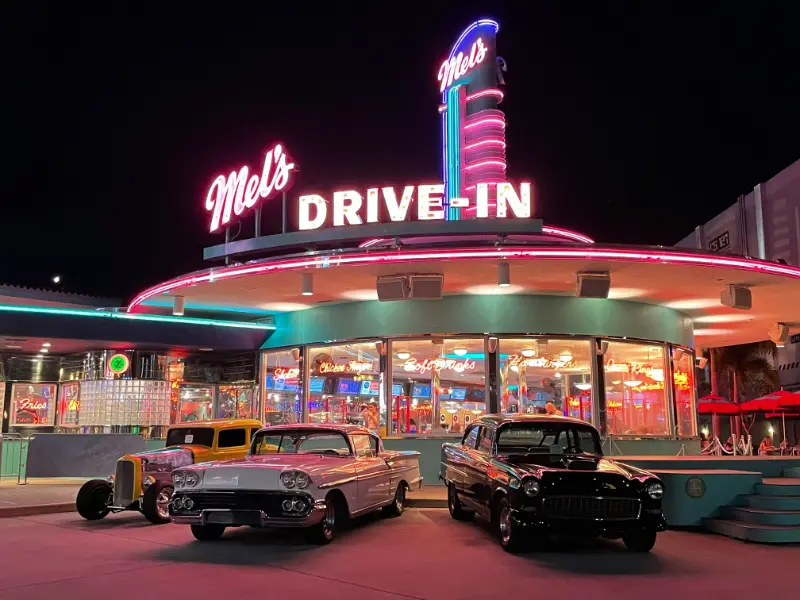
    Orlando Retro Drive In at Night with Classic Cars

    Other rail: Tri-Rail, SunRail and Amtrak

    Tri-Rail serves parts of South Florida and can be useful for regional movement, particularly when the station pattern matches your origin and destination. SunRail is a commuter-oriented Central Florida service rather than a complete tourist network, so its schedule and station locations need to be checked carefully. Amtrak serves longer-distance routes but should be evaluated by actual timetable, not by map alone.

    These services are most useful when they replace a specific drive. They are less useful when every attraction at the destination still requires multiple rideshares.

    Rideshare, taxis and local transit

    Rideshare works well for airports, nightlife and short city stays. It becomes expensive when used repeatedly across large metro areas or between Orlando theme-park zones. Local bus and rail systems can be useful, but Florida’s tourism geography is often spread across multiple municipalities rather than one dense center.

    In Miami and Miami Beach, a car can be unnecessary for a focused urban stay. In Jacksonville, Tampa Bay or Southwest Florida, a car generally becomes more valuable because attractions and beaches are spread out. In the Keys, a car is useful for an island-hopping itinerary but not always desirable once you are settled in compact Old Town Key West.

    Families, seniors and accessibility

    Families should decide whether to bring child seats, rent them or use a service that can guarantee the correct seat. Never assume every rideshare option will meet your needs. With strollers and luggage, vehicle size matters as much as passenger count.

    Senior travelers may benefit from rail or rideshare for city segments, then a car for scenic routes. Travelers with mobility devices should confirm luggage dimensions, accessible-vehicle options and station assistance in advance. Public transit accessibility is generally strong on major systems, but the final distance from stop to hotel can still be the hardest part.

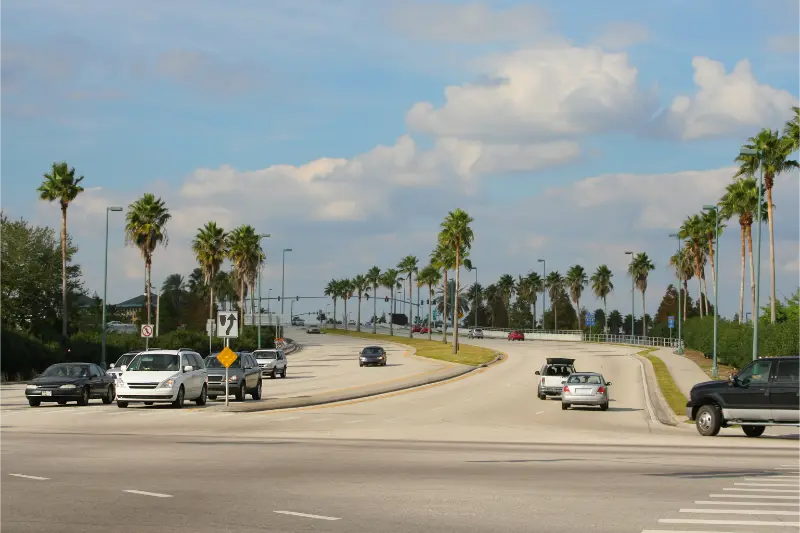
    Orlando Florida City Avenue with Cars and Palm Trees

    Best transport strategy by trip type

    • Orlando-only theme-park trip: hotel transport + rideshare may beat a rental car if you are staying on-site.
    • Miami + Orlando: compare Brightline with one-way car rental and flights.
    • Florida Keys road trip: a car is the easiest choice outside compact Key West.
    • Nature/springs trip: rent a car; public transport rarely reaches the trailhead or spring entrance efficiently.
    • Beach resort week: choose a walkable base, then rent a car only for planned day trips.
    • Statewide road trip: a car is essential; minimize hotel changes and toll confusion with a clear route.

    Common mistakes

    • Assuming Florida distances are short because destinations look close on a state map.
    • Renting a car for a week when it will sit in a paid hotel garage for half the trip.
    • Ignoring rental-car toll administrative fees.
    • Booking a train without pricing the last mile from the station.
    • Scheduling a major attraction immediately after a long drive or flight.
    • Using public transit as the default for a rural spring or state-park itinerary.

    Useful Wonderful Florida guides

    Official resources

    Final thoughts

    The right Florida transport plan is rarely one mode for the entire trip. Use rail and rideshare where density makes them efficient, rent a car when the itinerary spreads into beaches, springs and small towns, and understand tolls before the first highway day. That simple matching of transport to geography saves both money and vacation time.

    Planning the day without overloading it

    A Florida itinerary usually works better when the most demanding activity is protected and the rest of the day remains flexible. Heat, thunderstorms, traffic and long distances can turn a theoretically efficient schedule into a tiring one. Build around one non-negotiable experience, one meal or rest block and one optional stop. This is especially valuable for families, senior travelers and anyone visiting during the warm season.

    I also avoid making arrival and departure days full attraction days. Airports, rental-car lines and hotel check-in are unpredictable enough that a flexible first evening protects the money already spent on the trip. On the final day, allow more airport and highway time than a local commuter would because visitors are also returning cars, refueling, handling luggage and navigating an unfamiliar terminal.

    Weather and seasonal flexibility

    Florida weather is local. A storm at one beach does not mean the entire region is washed out, and a sunny morning does not guarantee a dry afternoon in summer. Check radar, lightning alerts and official attraction notices rather than relying on a generic all-day icon. Outdoor plans are usually strongest early, with indoor or shaded options saved for the hottest and stormiest part of the day.

    From June through November, hurricane-season planning should include flexible cancellation rules and a willingness to change routes when official guidance requires it. Do not let hurricane season scare you away from every warm-season trip, but do not book a chain of nonrefundable hotels that leaves no room to adapt.

    A note for international visitors

    International visitors should add practical items that domestic travelers sometimes overlook: travel insurance, mobile data, electrical adapters where needed, prescription documentation, toll systems, driving rules and realistic time after a long flight. If you are not used to U.S. driving distances, build shorter first-day drives and avoid collecting a rental car after an overnight flight and immediately starting a multi-hour road trip.

    Cards are widely accepted, but keeping a second payment method is sensible. Save reservations and important addresses offline. For any timed attraction, verify the local time zone—Florida is mostly Eastern Time, while part of the Panhandle uses Central Time—before a long transfer across the state.
  • St. Pete Beach Florida Travel Guide: Pass-a-Grille, Gulf Beaches, Families and Where to Stay

    St. Pete Beach Florida Travel Guide: Pass-a-Grille, Gulf Beaches, Families and Where to Stay

    St. Pete Beach is a strong choice when you want a classic Gulf beach city with wide sand, resort choices and easy access to both historic Pass-a-Grille and downtown St. Petersburg. It is not a destination that requires a packed checklist to feel worthwhile. The better approach is to identify the one or two experiences that matter most to your group, choose a convenient base, and leave enough open time to enjoy the local pace.

    For a first visit, I would plan around 3–5 nights. That gives you enough time to understand the area without turning the trip into a sequence of parking lots and short photo stops. St. Pete Beach is especially well suited to families, couples, beach-first vacations, multigenerational groups and visitors pairing Gulf sunsets with St. Petersburg culture.

    This guide focuses on practical trip design: where to stay, what deserves priority, how much driving to expect, how to adapt the trip for children or older travelers, and how to connect St. Pete Beach with the rest of Tampa Bay Gulf Coast. Hours, admission policies, road conditions and event schedules can change, so always confirm time-sensitive details on official sites before the day of your visit.

    Quick planning summary

    • Recommended stay: 3–5 nights for a balanced first visit.
    • Best for: families, couples, beach-first vacations, multigenerational groups and visitors pairing Gulf sunsets with St. Petersburg culture.
    • Main strength: a classic Gulf beach city with wide sand, resort choices and easy access to both historic Pass-a-Grille and downtown St. Petersburg.
    • Transport: a car is usually the easiest way to combine the destination with surrounding attractions, even when the central district itself is walkable.
    • Best planning rule: organize each day by area instead of zig-zagging across the region.

    In this guide

    Why visit St. Pete Beach?

    St. Pete Beach works because it gives a Florida trip a different rhythm from the state’s biggest resort corridors. You can still build full sightseeing days, but you do not need to. The destination rewards slower mornings, one substantial activity, a relaxed lunch and enough time for the setting itself.

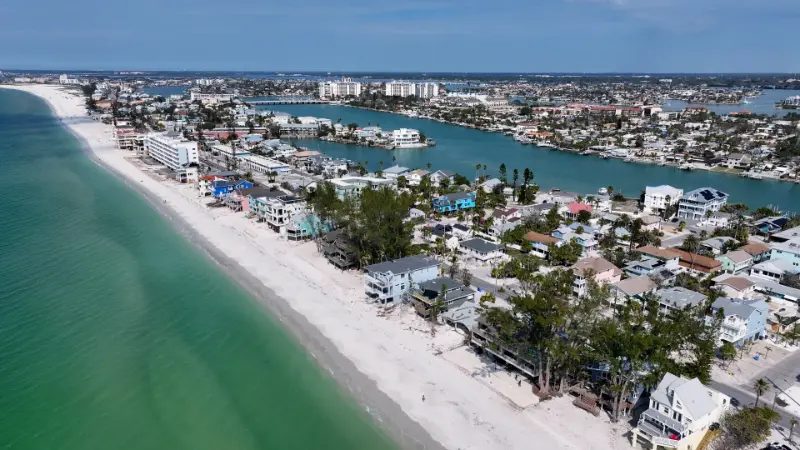
    Saint Pete Beach Florida Waterfront Resort Neighborhood

    That makes it particularly useful in a longer Florida itinerary. After several intense theme-park, city or driving days, a stop in St. Pete Beach can reset the pace without feeling like a “nothing day.” The experience is still specific to Tampa Bay Gulf Coast, but the pressure to maximize every hour is lower.

    It is also a good place for travelers with different energy levels. A teenager can choose a more active experience, younger children can focus on parks or simple outdoor time, and grandparents can stay involved through scenic stops, short walks, museums, waterfront areas or meals that do not require a major physical commitment.

    My preferred way to approach the destination is to identify one anchor experience for each day, then add secondary stops only if the group still has time and energy. That simple rule prevents the most common Florida planning problem: trying to force too much into a hot, spread-out destination.

    Where to stay in St. Pete Beach

    The best area is not automatically the most luxurious one. For most visitors, convenience matters more than a small difference in room quality. Look at parking fees, breakfast, pool hours, room size, elevator access, cancellation policy and the real door-to-door drive to your priority attractions.

    Pass-a-Grille

    Best for: best for old-Florida atmosphere, a smaller-scale beach village feel and walkable sunsets. Before booking, compare the exact route to the places you expect to visit most often. A hotel that looks close on a regional map can still create repeated driving, parking or bridge time.

    Central St. Pete Beach

    Best for: best for resort choice, restaurants and a convenient all-round beach base. Before booking, compare the exact route to the places you expect to visit most often. A hotel that looks close on a regional map can still create repeated driving, parking or bridge time.

    North St. Pete Beach / Upham Beach

    Best for: useful for travelers who want beach access with quick drives toward Treasure Island and St. Petersburg. Before booking, compare the exact route to the places you expect to visit most often. A hotel that looks close on a regional map can still create repeated driving, parking or bridge time.

    Family tipFor families, a refrigerator, laundry access and a pool can be more valuable than an elaborate lobby. Couples may prefer walkability and evening atmosphere. Senior travelers should check elevator availability, shower design, the distance from parking to the room and whether restaurants are reachable without crossing wide roads.

    If you are using a vacation rental, compare the full price after cleaning and service fees, read parking and occupancy rules carefully, and confirm whether beach equipment, bicycles or other advertised extras are actually included.

    Best things to do in St. Pete Beach

    1. St. Pete Beach shoreline

    The beach is the main attraction: broad sand, warm Gulf water and sunsets make this a destination where doing less can be the right plan. Give this stop enough time to enjoy it without immediately rushing to the next item. For mixed-age groups, it is usually better to shorten the list and leave room for breaks than to plan a full day of tightly timed stops.

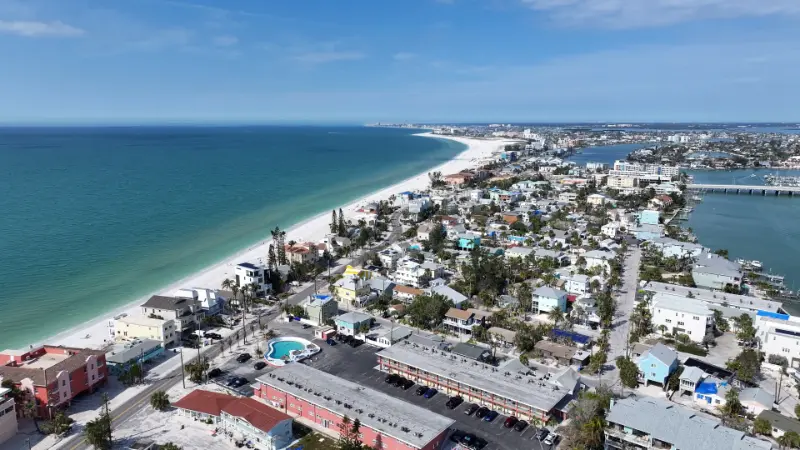
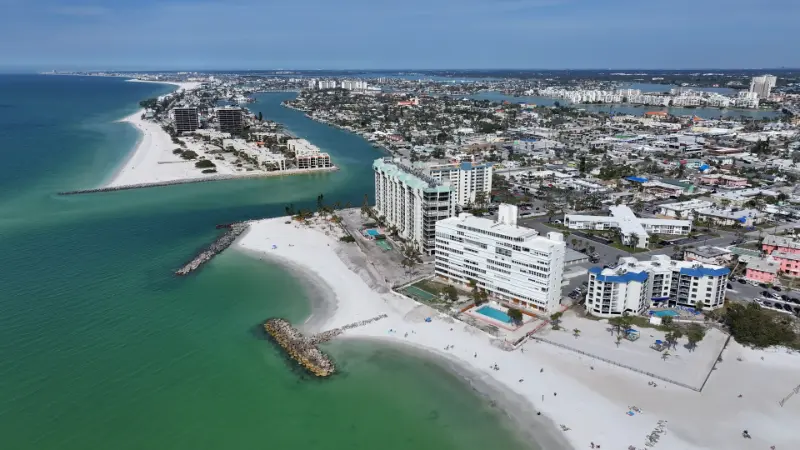
    Saint Pete Beach Florida Hotels and Shoreline Aerial

    2. Pass-a-Grille

    At the southern end of the city, Pass-a-Grille adds historic cottages, a compact street grid, small businesses and a more old-fashioned beach-town feel. Give this stop enough time to enjoy it without immediately rushing to the next item. For mixed-age groups, it is usually better to shorten the list and leave room for breaks than to plan a full day of tightly timed stops.

    3. Upham Beach

    A popular public beach option in the northern part of the city and a useful alternative when you are not staying at a beachfront resort. Give this stop enough time to enjoy it without immediately rushing to the next item. For mixed-age groups, it is usually better to shorten the list and leave room for breaks than to plan a full day of tightly timed stops.

    4. Water activities

    Dolphin cruises, paddle sports and boat trips are widely available in the region, but conditions and operators vary, so compare departure points before booking. Give this stop enough time to enjoy it without immediately rushing to the next item. For mixed-age groups, it is usually better to shorten the list and leave room for breaks than to plan a full day of tightly timed stops.

    5. Downtown St. Petersburg day

    Museums, the waterfront and dining in St. Petersburg create an easy non-beach contrast without changing hotels. Give this stop enough time to enjoy it without immediately rushing to the next item. For mixed-age groups, it is usually better to shorten the list and leave room for breaks than to plan a full day of tightly timed stops.

    Nature and outdoor time

    Beach time should be planned around sun exposure, tides, weather and the needs of your group. Families benefit from shade and shorter sessions; active travelers can add paddling, cycling and boat trips.

    Florida weather changes how an outdoor day feels. In warm months, the same trail or beach that is comfortable at 8:00 a.m. can feel completely different at 1:00 p.m. Use shade, water, sun protection and realistic walking distances, and check radar rather than assuming a forecast icon means an entire day will be lost.

    If wildlife is part of the experience, treat observation distance as part of the attraction rather than an inconvenience. Do not feed animals, block nesting areas or approach wildlife for a photograph. For beaches and waterways, follow posted flags, closures and local safety advice.

    Getting there and around

    A car gives the most flexibility, but parking can be the least relaxing part of peak-season beach days. If you stay near the beach, walk for meals when possible and use regional transit or rideshare selectively.

    When planning a Florida road trip, think in terms of actual travel time rather than map distance. Bridges, beach traffic, event crowds and parking searches can add significant time. Build at least one buffer period into each day, especially if you have a timed tour or reservation.

    For air travel, compare the total trip from the airport to your hotel rather than the flight price alone. A cheaper airport can lose its advantage once rental-car rates, tolls and a longer drive are included. If anyone in the group uses a mobility aid, confirm vehicle size before pickup.

    Best time to visit

    Winter and spring bring mild weather and strong demand. Summer is hot, humid and storm-prone but works well for travelers who start early and take a long afternoon break.

    Florida’s peak travel periods can also include school holidays, major events and winter escapes from colder states. If your dates are fixed, book the hardest-to-replace item first: a special hotel, event ticket, campground or vacation rental. Flexible travelers can often find better value by avoiding Friday and Saturday arrivals.

    During hurricane season, keep reservations and insurance terms clear. A tropical system does not mean every Florida trip will be disrupted, but refundable or changeable bookings are valuable when uncertainty increases.

    Families, teenagers, seniors and accessibility

    With babies and toddlers

    Keep the first day simple. Choose one outdoor stop, return to the room for a nap or pool break, and avoid scheduling a long dinner after a full afternoon in the sun. Shade and access to restrooms matter more than adding another attraction.

    With school-age children

    Alternate “look and learn” attractions with something active. A museum followed by a park, a historic district followed by swimming, or a nature center followed by ice cream usually works better than three educational stops in a row.

    With teenagers

    Give teenagers a role in choosing one activity, restaurant or photo stop. Destinations feel more engaging when they have some control over the day rather than simply following an adult itinerary.

    For seniors and multigenerational groups

    Plan shorter walking loops, more seated breaks and easy meal access. Avoid treating every group member as if they have the same heat tolerance. One traveler can do a longer walk while another enjoys a shaded viewpoint, museum or cafe.

    Accessibility

    Accessible facilities can vary between beaches, historic buildings, parks and private attractions. Check current accessibility pages directly, especially for beach mats, wheelchairs, ramps, elevators, companion restrooms, sensory resources and accessible parking. Historic properties may have unavoidable stairs even when part of the visit is accessible.

    A practical 3-day St. Pete Beach itinerary

    Day 1: orientation and local character

    Start with the most walkable central area and give yourself time to understand the street layout, parking and restaurant options. Choose one signature attraction for late morning or early afternoon, then keep the evening close to the hotel. The first day should establish the rhythm of the trip rather than exhaust the group.

    Day 2: the major experience

    Use the second day for the attraction or outdoor area you would be most disappointed to miss. Start early if parking or heat could become an issue. After lunch, choose a flexible secondary activity that can be shortened if weather or energy levels change.

    Day 3: nature, beach or regional extension

    Finish with a contrasting experience: if the first two days were history and dining, choose nature; if they were beach-focused, add culture or a nearby town. Keep the final afternoon light if you are driving onward, because Florida traffic often makes late-day transfers more tiring than expected.

    If you have a fourth day, use it for a larger regional day trip rather than adding more small local stops. That gives the trip a clearer structure and reduces repeated packing and hotel changes.

    Food and evenings

    Beachfront and Gulf Boulevard restaurants are convenient, while Pass-a-Grille offers a smaller village feel. For sunset dining, reserve ahead during busy periods rather than assuming a walk-in table.

    For families, an early dinner often solves several problems at once: shorter waits, easier parking and a calmer bedtime. For couples, sunset or a post-dinner walk can be more memorable than adding another paid attraction.

    Do not build the entire trip around famous restaurants seen on social media. Keep one or two priority meals, then leave space for a cafe, bakery, seafood counter or casual local place you discover while walking.

    Budget and booking strategy

    Separate your budget into lodging, transport, food and paid attractions. Beach and park time may be inexpensive, but parking, rental-car costs and resort fees can change the total quickly. Always compare the final hotel price, not only the advertised nightly rate.

    For a value-focused trip, spend on location rather than on constant upgrades. A slightly more expensive room in the right area can save fuel, parking and time. Use free outdoor attractions to balance one or two paid experiences that genuinely matter to the group.

    Book time-sensitive attractions through official sellers whenever possible. If the schedule is uncertain, prioritize flexible tickets or refundable reservations. For outdoor plans, avoid paying for multiple weather-dependent activities on consecutive afternoons.

    Best day trips from St. Pete Beach

    Downtown St. Petersburg, Fort De Soto, Gulfport, Dunedin and Clearwater Beach all fit naturally into a longer stay.

    Keep a day trip to one main destination. A two-hour drive followed by four separate attractions and another long return is rarely a good use of vacation time. Choose one anchor experience and one meal stop, then treat anything else as optional.

    If you are moving hotels after the day trip, pack the car once in the morning and avoid returning to the old base. That turns a transfer day into a useful sightseeing day without adding another long drive.

    Mistakes to avoid

    • Booking by map distance only: bridges, parking and traffic matter as much as mileage.
    • Overloading the hottest hours: schedule outdoor priorities early and keep midday flexible.
    • Ignoring event calendars: festivals, races, holidays and school breaks can change prices and parking.
    • Assuming every beach, park or historic site has the same accessibility: verify individual facilities.
    • Planning every meal in advance: reserve only the truly important ones and leave room for discovery.
    • Forgetting weather flexibility: one indoor backup activity can rescue a stormy afternoon.

    Official resources

    Use official sources for current hours, closures, event schedules, access rules and safety information before you travel:

    Frequently asked questions

    How many days do you need in St. Pete Beach?

    3–5 nights is a good first-trip target. A shorter stay works if you focus on one neighborhood or attraction, while a longer stay makes sense if you want several regional day trips.

    Do you need a car in St. Pete Beach?

    For most visitors, yes. Some central areas can be explored on foot, but a car makes it much easier to connect parks, beaches, nature areas and neighboring towns.

    Is St. Pete Beach good for families?

    Yes, especially when the itinerary is paced around the age of the youngest traveler. The strongest family days usually combine one structured attraction with simple outdoor time and a pool or rest break.

    Is St. Pete Beach suitable for senior travelers?

    Yes. Choose lodging with easy parking and elevators, prioritize shaded or seated attractions, and keep midday heat exposure under control. Confirm accessibility directly for historic buildings and outdoor sites.

    What should first-time visitors avoid?

    Avoid trying to turn the destination into a checklist. The trip is better when you choose a convenient base, group activities geographically and leave enough time to enjoy the setting instead of driving constantly.

    Travel information can change. Always verify current hours, admission, road conditions, weather alerts, beach flags and accessibility details on official websites before departure.

  • Melbourne Florida Travel Guide: Beaches, Downtown, Brevard Zoo, Arts and Where to Stay

    Melbourne Florida Travel Guide: Beaches, Downtown, Brevard Zoo, Arts and Where to Stay

    Melbourne Florida is a Space Coast base where historic districts, Atlantic beaches, a strong zoo, lagoon nature and occasional rocket launches can all fit into the same vacation. The easiest way to enjoy it is to decide what role it should play in the wider Florida trip. It can be a self-contained two- or three-night stop, a quieter base near a larger destination, or a practical part of a longer road trip. What usually goes wrong is trying to make one hotel location serve beaches, museums, nature, nightlife and distant day trips equally well.

    I would plan Melbourne Florida around two priorities: where you want to spend the early morning and where you want to be after dinner. Those two choices determine whether you should stay by the beach, near the main downtown district or in a more spacious property farther out. The destination is particularly good for families, beach travelers, space fans who want a quieter base than Cocoa Beach, arts-focused visitors and road trippers exploring Brevard County.

    Quick planning summary

    • Historic Downtown Melbourne — Downtown combines locally owned restaurants, shops, murals and nightlife in a walkable pocket.
    • Eau Gallie Arts District — Eau Gallie brings galleries, murals, events and a distinct historic neighborhood feel.
    • Brevard Zoo — Brevard Zoo is one of the region’s strongest family attractions and works even if a rocket schedule changes.
    • Melbourne Beach and the barrier island — Crossing to the beachside communities gives access to long Atlantic shoreline and a slower residential mood.
    • Best stay strategy: choose the district that matches your first and last activity of the day, not the cheapest room on a map.
    • Best pacing: one major activity plus one flexible neighborhood, beach or park stop per day.
    • For families and seniors: protect a midday rest during hot weather and verify parking, shade and accessible routes before arrival.

    In this guide

    Why visit Melbourne Florida?

    Melbourne Florida works because it offers a clear identity without forcing every traveler into the same itinerary. A beach-first visitor can spend long mornings outdoors, while someone interested in culture can build the day around museums, local districts and dining. Families can alternate active mornings with easier afternoons, and couples can keep evenings walkable instead of driving from one isolated attraction to another.

    The destination also fits a broader Florida strategy. Rather than changing hotels every night, use it as a base and make selective day trips. This is usually more enjoyable than collecting cities. The reward comes from learning the rhythm of one place: which mornings are quiet, where parking becomes difficult, when the waterfront is comfortable and how much downtime your group actually needs.

    Where to stay in Melbourne Florida

    Downtown Melbourne is useful for restaurants and evening atmosphere, while beachside communities such as Indialantic and Melbourne Beach put the ocean first. Staying near the airport is practical for short trips but less atmospheric. Choose the side of the Indian River that matches what you plan to do most often.

    Before booking, compare the full stay cost rather than the nightly rate. Parking, resort or destination fees, breakfast, beach equipment, kitchen access and the need for rideshare can change the value dramatically. A slightly more expensive hotel in the right district can be cheaper than a low room rate that requires two paid car trips every day.

    Families should also check room layout, not just occupancy. A sofa bed that technically sleeps two children may be fine for one night but uncomfortable for a week. For senior travelers, elevator reliability, walk-in showers, short routes to the lobby and shade around the property can matter more than a rooftop pool.

    Best things to do in Melbourne Florida

    Historic Downtown Melbourne

    Downtown combines locally owned restaurants, shops, murals and nightlife in a walkable pocket. It is a good first evening because it requires little planning and gives the trip an identity beyond the beach.

    Eau Gallie Arts District

    Eau Gallie brings galleries, murals, events and a distinct historic neighborhood feel. It is especially useful for travelers who want culture between outdoor days and for families looking for a shorter activity window.

    Brevard Zoo

    Brevard Zoo is one of the region’s strongest family attractions and works even if a rocket schedule changes. Some add-on experiences may require separate reservations, so decide whether the zoo itself or a specific activity is the priority before booking.

    Zoo Rhinoceros in Shaded Habitat

    Melbourne Beach and the barrier island

    Crossing to the beachside communities gives access to long Atlantic shoreline and a slower residential mood. Sea-turtle nesting is important along this coast, so nighttime lighting, distance and local wildlife rules matter during nesting season.

    Indian River Lagoon and rocket-launch culture

    The lagoon supports paddling and wildlife experiences, while launches from farther north can sometimes be visible across the Space Coast. Never build a vacation around one launch being guaranteed; schedules and weather can change. Treat a launch as a bonus unless you have several flexible days.

    Beaches, parks and outdoor time

    Melbourne makes it easy to alternate Atlantic beach time with lagoon paddling and nature. Sebastian Inlet State Park is a strong southbound day trip for surf and coastal scenery. Heat, thunderstorms and seasonal wildlife conditions should shape the day’s timing.

    Florida outdoor days are easiest when you schedule by temperature rather than by a rigid list. Put the longest walk, beach session, bike ride or wildlife activity early. Use lunch, a museum or the hotel for the hottest part of the day, then return outside later. In summer, thunderstorms can be brief but intense; in winter, a windy cold front can make an exposed beach far less comfortable than the air temperature suggests.

    Whenever swimming is part of the plan, check local flags, lifeguard coverage and current conditions. Never assume a calm-looking ocean or Gulf is risk-free, and do not build a family beach day around a tiny access point if you know you need toilets, shade and an accessible path.

    Getting there and around

    Melbourne Orlando International Airport can be convenient for the region, while Orlando’s larger airports expand flight options. A car is useful because downtown, the zoo, barrier-island beaches and Kennedy Space Center are spread out. Keep bridge crossings in mind when choosing a hotel.

    For a rental car, include parking and tolls in the budget before pickup. For a car-free or partly car-free stay, check whether the hotel is truly within comfortable walking distance of restaurants and the activities you care about. Florida heat turns a pleasant-looking one-mile map walk into a very different experience at midday.

    Airport choice should be based on total transfer time and flight convenience, not only distance. A nonstop flight to a slightly farther airport can be easier than a connection that saves twenty minutes on the ground. If your trip combines several Florida regions, consider collecting or returning the rental car only for the road-trip segment.

    Florida Zoo Tiger behind Enclosure

    Best time to visit

    For most travelers, the cooler and drier part of the year offers the easiest outdoor conditions, but it also brings stronger seasonal demand in many Florida destinations. Spring can balance warm weather with fewer winter visitors, while summer offers long daylight and family travel availability at the cost of heat, humidity and frequent thunderstorms. Fall can be quieter, but tropical weather planning matters.

    Do not choose a month only from average temperature. Think about the activities that define your trip. Beach swimming, wildlife viewing, outdoor festivals, theme parks and restaurant-focused weekends all have different ideal conditions. Check event calendars and local school-holiday patterns before paying a non-refundable rate.

    Families, teens, seniors and accessibility

    Family tipFor families with babies or toddlers, reduce the number of transitions. One beach, one lunch area and one easy afternoon stop is enough for a good day. Teenagers usually enjoy having one activity with independence or adrenaline—surfing, cycling, shopping, paddling or an evening district—rather than being moved through adult sightseeing all day.

    Senior travelers often benefit from the same strategy: shorter walks, earlier starts, reliable seating and a hotel near dinner. If mobility is limited, verify accessible parking, ramps, beach mats, wheelchairs or boarding assistance directly with the responsible attraction or local authority. “Accessible” can mean very different things depending on whether the challenge is a museum floor, soft sand or a small boat.

    Multigenerational groups do not need to remain together every hour. Plan one shared anchor each day, then allow a split. Grandparents can return to the hotel while teenagers stay at the beach; one adult can take children to a playground while another visits a museum. Regrouping for dinner is often more successful than forcing everyone to follow the most demanding itinerary.

    A practical 3-day Melbourne Florida itinerary

    Day 1: understand the center

    Check in, explore the primary downtown or visitor district and keep the first evening easy. Choose a walkable dinner and one short attraction or waterfront stop. Arrival days are the wrong time to schedule a prepaid activity that becomes stressful if the flight, rental car or traffic is late.

    Day 2: the signature experience

    Use the morning for the destination’s main outdoor or cultural priority, then take a real break at lunch. In the afternoon, choose one secondary attraction from the list above rather than trying to complete all of them. Finish in the district you most want to experience after dark.

    Day 3: nature or a selective day trip

    Use the final full day for nature, a neighboring community or a second beach. If the weather is poor, swap in a museum, shopping district or indoor family attraction. Keep the last evening simple so packing and departure do not turn a good trip into a rushed finish.

    Food and evening planning

    Downtown Melbourne and Eau Gallie have the best visitor-friendly dining concentrations, with beachside restaurants adding a coastal option. Keep lunch flexible on zoo or beach days and reserve the dinner that matters most on weekends.

    Florida Zoo Tiger Walking among Rocks

    Florida dining times can become competitive in winter and on event weekends. Reserve only the meals that really matter; too many fixed reservations can make a beach or wildlife day feel rushed. For breakfast, a hotel room with a refrigerator or small kitchen can save both money and time, especially for families.

    Budget and booking strategy

    The biggest costs are usually lodging, transport and the activities that require a ticket or boat. Build the budget in that order. Free beaches and parks do not always mean a free day once parking, rentals and food are included. Conversely, a paid attraction with included parking and several hours of entertainment can be good value for a family.

    I would compare at least three lodging scenarios: the convenient central hotel, a beach or resort property, and a larger room or rental farther out. Add parking and local transport to each. For a short stay, location often wins. For a week with children, kitchen and laundry access can justify a little more driving.

    Keep cancellation terms visible in your planning notes. Florida weather can change, and boat tours, outdoor attractions and beach days are more enjoyable when one weather delay does not threaten the value of the whole trip.

    Day trips and how to combine the region

    Cocoa Beach and Kennedy Space Center are natural northbound additions, while Sebastian Inlet and Vero Beach work southbound. For a short trip, choose one direction per day instead of zigzagging across Brevard County.

    A useful rule is to avoid more than one substantial drive on consecutive days. If you take a long day trip, make the following morning local. Florida roads can be easy when traffic is light and exhausting when weather, crashes or weekend beach traffic intervene. A slower plan usually produces more usable vacation time.

    Common mistakes to avoid

    • Booking the cheapest hotel without checking the real driving pattern of the trip.
    • Scheduling beach, museum, wildlife and nightlife priorities into the same day.
    • Ignoring parking costs or assuming every beach access has the same facilities.
    • Planning long outdoor activities at midday in the hottest months.
    • Using drive-time estimates that do not include event, bridge, theme-park or beach traffic.
    • Forgetting that a good multigenerational itinerary needs rest, shade and easy meal options.
    • Treating a weather-sensitive activity as guaranteed instead of keeping a flexible backup.

    Official resources

    Hours, parking systems, admission prices, beach rules, event schedules and construction can change. When a particular attraction or service is essential to your trip, confirm it on the official source shortly before travel.

    Frequently asked questions

    How many days do you need in Melbourne Florida?

    Two full days is enough for a focused first visit, while three nights gives you room for a beach or nature day, the main cultural district and one nearby excursion without rushing. Longer stays make sense if the accommodation itself—such as a beach resort or vacation home—is part of the vacation.

    Do you need a car in Melbourne Florida?

    That depends on the neighborhood. A central stay can reduce driving for meals and evening walks, but a car is usually helpful once you add beaches, nature preserves, family attractions or day trips. Check the actual address before deciding.

    Is Melbourne Florida good for families?

    Yes, especially when you build the day around short activity blocks and a midday rest. The strongest family trips mix one destination-specific attraction with beach, park or pool time rather than trying to entertain children continuously.

    Is Melbourne Florida suitable for senior travelers?

    Usually yes. Choose lodging close to dinner, check walking surfaces and parking, and use the cooler morning for outdoor sightseeing. Call ahead when wheelchair, scooter or accessible beach equipment is essential.

    What is the biggest planning mistake?

    Trying to use Melbourne Florida as both a relaxed vacation base and a launch point for a long drive every day. Pick a few regional excursions and protect enough local time to enjoy the destination you actually booked.

    Final advice

    Melbourne Florida is most rewarding when you let its strongest experiences set the pace. Choose the right neighborhood, protect the morning for what matters most, leave room for Florida weather and build the trip around the people traveling with you. A thoughtful two- or three-day stay will usually feel richer than a longer checklist with too much driving.

  • Kissimmee Florida Travel Guide: Theme Parks, Vacation Homes, Airboats and Where to Stay

    Kissimmee Florida Travel Guide: Theme Parks, Vacation Homes, Airboats and Where to Stay

    Kissimmee Florida is a major Central Florida accommodation base with vacation homes, theme-park access, classic roadside entertainment and genuine lake-and-wetland experiences of its own. The easiest way to enjoy it is to decide what role it should play in the wider Florida trip. It can be a self-contained two- or three-night stop, a quieter base near a larger destination, or a practical part of a longer road trip. What usually goes wrong is trying to make one hotel location serve beaches, museums, nature, nightlife and distant day trips equally well.

    I would plan Kissimmee Florida around two priorities: where you want to spend the early morning and where you want to be after dinner. Those two choices determine whether you should stay by the beach, near the main downtown district or in a more spacious property farther out. The destination is particularly good for families, multigenerational groups, theme-park visitors who want more space, travelers sharing a vacation home, and anyone combining Disney-area days with outdoor Florida.

    Quick planning summary

    • Theme-park access without staying inside a resort — Kissimmee is widely used as a base for Walt Disney World and other Central Florida parks.
    • Old Town and classic family entertainment — Old Town and nearby attractions create an easy evening when you do not want another full-scale theme-park day.
    • Lake Tohopekaliga and fishing — Lake Toho gives Kissimmee an identity beyond theme parks.
    • Airboats and the headwaters of the Everglades — Airboat-style experiences introduce visitors to wetlands, birds and alligator habitat outside the theme-park bubble.
    • Best stay strategy: choose the district that matches your first and last activity of the day, not the cheapest room on a map.
    • Best pacing: one major activity plus one flexible neighborhood, beach or park stop per day.
    • For families and seniors: protect a midday rest during hot weather and verify parking, shade and accessible routes before arrival.

    In this guide

    Why visit Kissimmee Florida?

    Kissimmee Florida works because it offers a clear identity without forcing every traveler into the same itinerary. A beach-first visitor can spend long mornings outdoors, while someone interested in culture can build the day around museums, local districts and dining. Families can alternate active mornings with easier afternoons, and couples can keep evenings walkable instead of driving from one isolated attraction to another.

    The destination also fits a broader Florida strategy. Rather than changing hotels every night, use it as a base and make selective day trips. This is usually more enjoyable than collecting cities. The reward comes from learning the rhythm of one place: which mornings are quiet, where parking becomes difficult, when the waterfront is comfortable and how much downtime your group actually needs.

    Where to stay in Kissimmee Florida

    The best area depends on the trip rather than the city label. US-192 has restaurants, attractions and many hotels. Vacation-home communities can offer bedrooms, kitchens and private pools but often require a car. Downtown Kissimmee is more local and farther from some theme-park gates. Properties near Disney may use a Kissimmee mailing address even when they feel part of the wider resort corridor.

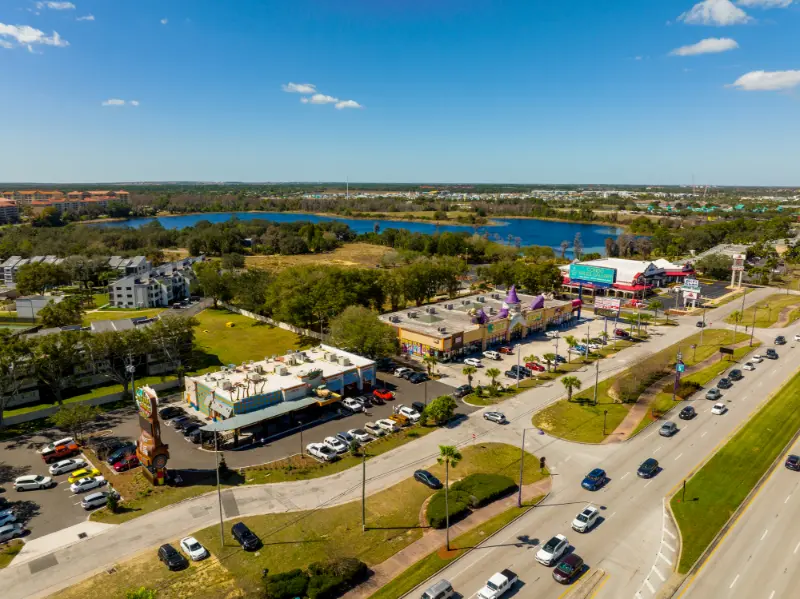
    Kissimmee Florida Tourist Attractions and Neighborhood Aerial

    Before booking, compare the full stay cost rather than the nightly rate. Parking, resort or destination fees, breakfast, beach equipment, kitchen access and the need for rideshare can change the value dramatically. A slightly more expensive hotel in the right district can be cheaper than a low room rate that requires two paid car trips every day.

    Families should also check room layout, not just occupancy. A sofa bed that technically sleeps two children may be fine for one night but uncomfortable for a week. For senior travelers, elevator reliability, walk-in showers, short routes to the lobby and shade around the property can matter more than a rooftop pool.

    Best things to do in Kissimmee Florida

    Theme-park access without staying inside a resort

    Kissimmee is widely used as a base for Walt Disney World and other Central Florida parks. The advantage is choice: hotels, condos and large homes at many price points. The disadvantage is transport. A “15-minute” map distance can become much longer at park opening or closing, so compare real routes before booking.

    Old Town and classic family entertainment

    Old Town and nearby attractions create an easy evening when you do not want another full-scale theme-park day. Rides, shops, car events and casual dining can fill a few hours without the planning intensity of a major resort.

    Lake Tohopekaliga and fishing

    Lake Toho gives Kissimmee an identity beyond theme parks. Fishing, lakefront walking and wildlife make a useful rest-day alternative. Boat activities should be matched to weather and the comfort level of children and older travelers.

    Airboats and the headwaters of the Everglades

    Airboat-style experiences introduce visitors to wetlands, birds and alligator habitat outside the theme-park bubble. Choose established operators, follow wildlife-distance rules and remember that a ride is not a guarantee of specific animal sightings.

    Celebration, shopping and slower days

    Nearby Celebration and shopping districts offer low-pressure half-days. They are useful on arrival days, after late theme-park nights or when a mixed-age group needs a break from queues and intense schedules.

    Beaches, parks and outdoor time

    Kissimmee’s lakes and wetland experiences are a major reason to keep one non-theme-park day in the itinerary. Outdoor activities are easiest in cooler morning hours, especially in summer. A rental home with a pool can also be part of the vacation rather than simply a place to sleep.

    Kissimmee Florida Residential District and Lakes Aerial

    Florida outdoor days are easiest when you schedule by temperature rather than by a rigid list. Put the longest walk, beach session, bike ride or wildlife activity early. Use lunch, a museum or the hotel for the hottest part of the day, then return outside later. In summer, thunderstorms can be brief but intense; in winter, a windy cold front can make an exposed beach far less comfortable than the air temperature suggests.

    Whenever swimming is part of the plan, check local flags, lifeguard coverage and current conditions. Never assume a calm-looking ocean or Gulf is risk-free, and do not build a family beach day around a tiny access point if you know you need toilets, shade and an accessible path.

    Getting there and around

    A car is convenient for most Kissimmee stays, especially vacation homes and multi-park itineraries. Rideshare can work from hotels but costs rise quickly with multiple daily trips. Some accommodations offer shuttles, yet schedules may not match rope-drop mornings or late-night exits. Check exactly what “theme-park shuttle” means before booking.

    For a rental car, include parking and tolls in the budget before pickup. For a car-free or partly car-free stay, check whether the hotel is truly within comfortable walking distance of restaurants and the activities you care about. Florida heat turns a pleasant-looking one-mile map walk into a very different experience at midday.

    Airport choice should be based on total transfer time and flight convenience, not only distance. A nonstop flight to a slightly farther airport can be easier than a connection that saves twenty minutes on the ground. If your trip combines several Florida regions, consider collecting or returning the rental car only for the road-trip segment.

    Best time to visit

    For most travelers, the cooler and drier part of the year offers the easiest outdoor conditions, but it also brings stronger seasonal demand in many Florida destinations. Spring can balance warm weather with fewer winter visitors, while summer offers long daylight and family travel availability at the cost of heat, humidity and frequent thunderstorms. Fall can be quieter, but tropical weather planning matters.

    Do not choose a month only from average temperature. Think about the activities that define your trip. Beach swimming, wildlife viewing, outdoor festivals, theme parks and restaurant-focused weekends all have different ideal conditions. Check event calendars and local school-holiday patterns before paying a non-refundable rate.

    Families, teens, seniors and accessibility

    Family tipFor families with babies or toddlers, reduce the number of transitions. One beach, one lunch area and one easy afternoon stop is enough for a good day. Teenagers usually enjoy having one activity with independence or adrenaline—surfing, cycling, shopping, paddling or an evening district—rather than being moved through adult sightseeing all day.

    Senior travelers often benefit from the same strategy: shorter walks, earlier starts, reliable seating and a hotel near dinner. If mobility is limited, verify accessible parking, ramps, beach mats, wheelchairs or boarding assistance directly with the responsible attraction or local authority. “Accessible” can mean very different things depending on whether the challenge is a museum floor, soft sand or a small boat.

    Multigenerational groups do not need to remain together every hour. Plan one shared anchor each day, then allow a split. Grandparents can return to the hotel while teenagers stay at the beach; one adult can take children to a playground while another visits a museum. Regrouping for dinner is often more successful than forcing everyone to follow the most demanding itinerary.

    A practical 3-day Kissimmee Florida itinerary

    Day 1: understand the center

    Check in, explore the primary downtown or visitor district and keep the first evening easy. Choose a walkable dinner and one short attraction or waterfront stop. Arrival days are the wrong time to schedule a prepaid activity that becomes stressful if the flight, rental car or traffic is late.

    Day 2: the signature experience

    Use the morning for the destination’s main outdoor or cultural priority, then take a real break at lunch. In the afternoon, choose one secondary attraction from the list above rather than trying to complete all of them. Finish in the district you most want to experience after dark.

    Day 3: nature or a selective day trip

    Use the final full day for nature, a neighboring community or a second beach. If the weather is poor, swap in a museum, shopping district or indoor family attraction. Keep the last evening simple so packing and departure do not turn a good trip into a rushed finish.

    Food and evening planning

    US-192 and the resort corridors offer enormous variety, while downtown Kissimmee feels more local. Vacation-home kitchens can significantly reduce breakfast costs for large families. Save restaurant reservations for evenings when you know the group will not be trapped in a park queue or exhausted after fireworks.

    Florida dining times can become competitive in winter and on event weekends. Reserve only the meals that really matter; too many fixed reservations can make a beach or wildlife day feel rushed. For breakfast, a hotel room with a refrigerator or small kitchen can save both money and time, especially for families.

    Budget and booking strategy

    The biggest costs are usually lodging, transport and the activities that require a ticket or boat. Build the budget in that order. Free beaches and parks do not always mean a free day once parking, rentals and food are included. Conversely, a paid attraction with included parking and several hours of entertainment can be good value for a family.

    I would compare at least three lodging scenarios: the convenient central hotel, a beach or resort property, and a larger room or rental farther out. Add parking and local transport to each. For a short stay, location often wins. For a week with children, kitchen and laundry access can justify a little more driving.

    Suburban Florida Homes Aerial View

    Keep cancellation terms visible in your planning notes. Florida weather can change, and boat tours, outdoor attractions and beach days are more enjoyable when one weather delay does not threaten the value of the whole trip.

    Day trips and how to combine the region

    Orlando’s major parks are the obvious neighbors, but Central Florida also offers Winter Park, lakes, springs and the Space Coast within day-trip range. I would not schedule a long beach drive immediately after a midnight park close. Rest days are part of good theme-park planning.

    A useful rule is to avoid more than one substantial drive on consecutive days. If you take a long day trip, make the following morning local. Florida roads can be easy when traffic is light and exhausting when weather, crashes or weekend beach traffic intervene. A slower plan usually produces more usable vacation time.

    Common mistakes to avoid

    • Booking the cheapest hotel without checking the real driving pattern of the trip.
    • Scheduling beach, museum, wildlife and nightlife priorities into the same day.
    • Ignoring parking costs or assuming every beach access has the same facilities.
    • Planning long outdoor activities at midday in the hottest months.
    • Using drive-time estimates that do not include event, bridge, theme-park or beach traffic.
    • Forgetting that a good multigenerational itinerary needs rest, shade and easy meal options.
    • Treating a weather-sensitive activity as guaranteed instead of keeping a flexible backup.

    Official resources

    Hours, parking systems, admission prices, beach rules, event schedules and construction can change. When a particular attraction or service is essential to your trip, confirm it on the official source shortly before travel.

    Frequently asked questions

    How many days do you need in Kissimmee Florida?

    Two full days is enough for a focused first visit, while three nights gives you room for a beach or nature day, the main cultural district and one nearby excursion without rushing. Longer stays make sense if the accommodation itself—such as a beach resort or vacation home—is part of the vacation.

    Do you need a car in Kissimmee Florida?

    That depends on the neighborhood. A central stay can reduce driving for meals and evening walks, but a car is usually helpful once you add beaches, nature preserves, family attractions or day trips. Check the actual address before deciding.

    Is Kissimmee Florida good for families?

    Yes, especially when you build the day around short activity blocks and a midday rest. The strongest family trips mix one destination-specific attraction with beach, park or pool time rather than trying to entertain children continuously.

    Is Kissimmee Florida suitable for senior travelers?

    Usually yes. Choose lodging close to dinner, check walking surfaces and parking, and use the cooler morning for outdoor sightseeing. Call ahead when wheelchair, scooter or accessible beach equipment is essential.

    What is the biggest planning mistake?

    Trying to use Kissimmee Florida as both a relaxed vacation base and a launch point for a long drive every day. Pick a few regional excursions and protect enough local time to enjoy the destination you actually booked.

    Final advice

    Kissimmee Florida is most rewarding when you let its strongest experiences set the pace. Choose the right neighborhood, protect the morning for what matters most, leave room for Florida weather and build the trip around the people traveling with you. A thoughtful two- or three-day stay will usually feel richer than a longer checklist with too much driving.

  • Florida EV Road Trip: Five Days from Orlando to Sarasota with Charging Stops

    Florida EV Road Trip: Five Days from Orlando to Sarasota with Charging Stops

    Driving an electric rental car from Orlando to Florida’s Gulf Coast can be easy, but it is not wise to plan the trip as if charging stations were identical to gas pumps. A five-day route from Orlando through Lakeland toward Sarasota gives first-time EV drivers enough variety to enjoy the journey while keeping distances manageable. The real challenge is not reaching a distant destination; it is understanding the rental car’s connector, the actual charging speed and what to do if the charger you expected to use is busy or broken.

    This is a practical itinerary rather than a promise that every station will be available on your travel dates. The Florida Department of Agriculture and Consumer Services regulates public charging-station registration, and charging networks publish changing details through their own apps. You should verify your car, payment method and proposed chargers shortly before departure and again on the day. A little planning makes an EV vacation feel like an ordinary road trip rather than a test of battery percentages.

    Before booking, confirm the exact vehicle class

    A rental listing that says ‘electric or similar’ does not tell you the battery size, connector type, real highway range or supported fast-charging system. Contact the rental company to ask which models are usually supplied and what substitutions may occur. An EV with a suitable fast-charging port can work well for a multi-stop route; one limited to slower charging may be frustrating if you expect to add substantial range during a quick lunch. Ask whether necessary adapters are included and permitted.

    Check how the car must be returned. Some rental agreements charge fees if the vehicle arrives below a specified battery level. Others have different rules for prepaid charging packages. Read the contract, not only the promotional page, and take photographs of the battery level and the vehicle at collection. Ask how to get help if the charge port fails or you cannot operate the equipment. The most useful rental desk question is: ‘Which network and connector can I use for rapid charging in this specific car?’

    Day 1: collect the car in Orlando and learn its controls

    Do not start with an immediate long drive after a late flight. Use the arrival day to learn the dashboard, charging controls and navigation system. Set the car to show nearby compatible stations. If you have not driven an EV before, practice parking, selecting regenerative braking modes and unlocking the charge port safely before you are tired or in a hurry. Look up the rental provider’s roadside-assistance number and save it offline.

    Stay near your first Orlando-area hotel and confirm whether its charging is genuinely available to guests, whether reservations are necessary and whether the price is separate from parking. A listing that mentions charging may refer to one shared slow charger, not a bank of rapid units. Ask if the charger is accessible overnight and whether moving the car is required after a session. You may prefer a hotel without charging if it is near a dependable public fast-charging site.

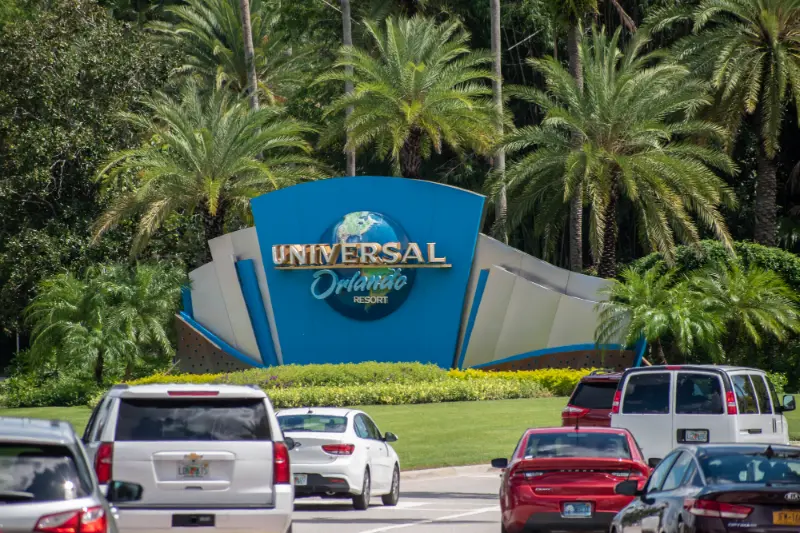
    Universal Orlando Resort Entrance Road

    Use the first evening for an easy meal and a relaxed walk. The goal is to start Day 2 with enough battery reserve that an unexpectedly busy charger does not dictate your sightseeing. Avoid leaving luggage or valuables visible in a parked car while exploring unfamiliar neighborhoods.

    Day 2: Orlando to Lakeland, with a purposeful stop

    Travel west toward Lakeland, allowing for normal traffic and unpredictable congestion on major roads. Lakeland has lakes, gardens and architecture that reward a short city visit. Park once where possible and spend a morning walking or visiting a confirmed-open attraction, rather than making several short drives that consume time. An EV does not make congestion disappear; it simply changes how the vehicle is fueled.

    Before leaving Orlando, identify a preferred charger near the route and a second independently operated option. Check live status and connector compatibility. A fast-charging station shown on a map may be out of service, reserved for particular vehicles or operating at reduced power. If you arrive and find a queue, decide whether to wait or move to your backup based on your remaining range. Do not run the battery near empty while chasing a theoretically cheaper location.

    Lakeland makes a good overnight stop if you want to explore architecture or local parks without rushing. Choose a lodging option with easy parking and confirm how overnight charging is billed. During a hot Florida afternoon, a shaded indoor attraction can be more comfortable than another walk beside an exposed lake.

    Day 3: Lakeland to Sarasota

    Continue toward Sarasota using a route selected for convenience rather than maximum scenic mileage. Choose one main activity after arrival: an art museum, a garden or a public waterfront walk. Before departure, assess remaining range against the route, current weather and air-conditioning use. Highway speeds, passengers, luggage and climate control can all affect energy consumption. The range number on the dashboard is an estimate, not a guarantee.

    If you have a hotel that offers overnight charging, call directly to confirm whether the equipment is functioning and which connector it has. A Level 2 charger may be perfectly adequate for an overnight stay but not for a brief 20-minute stop. Conversely, rapid charging may make more sense if your hotel cannot guarantee an available space. The ideal charging stop is one that fits an activity you already want to do, such as lunch—not one that forces the whole family to sit in a hot car park.

    Keep children, older passengers and pets comfortable while a vehicle charges. Never leave a child or animal alone in the car, even if a climate-control feature appears to be running. If the charger is occupied, choose a nearby indoor place to wait together rather than improvising an unsafe roadside stop.

    Day 4: Sarasota at a slower pace

    Avoid turning Day 4 into a charging scavenger hunt. You are now based in Sarasota, with opportunities for gardens, cultural visits and waterfront dining. Park in one location for a morning and travel only where the group wants to go. This is an important advantage of designing the route around a few bases rather than switching hotels every night: you can spend a day enjoying Florida instead of constantly navigating highways.

    If you plan a beach visit, check parking costs and any local water-quality advisories. Charging infrastructure near a beach may not be plentiful, and the closest unit may have usage restrictions. Do not occupy an EV charging bay after a session is complete if site rules require cars to move. For travelers with mobility needs, check accessible parking and path surfaces separately from the availability of charging spaces; one does not imply the other.

    Before dinner, check tomorrow’s return route and weather. Decide whether it is more sensible to charge in Sarasota, during the transfer, or near the rental return point. Leave enough buffer for a full station or a charger that is not operating as expected.

    Day 5: return toward Orlando or choose an open-jaw departure

    If you return the car in Orlando, keep the departure day simple. Allow for traffic, charging time and airport rental procedures. The route may look short enough for a relaxed morning, but flight times are strict and charging a car adds an extra variable. Aim to satisfy the rental company’s return-battery requirements before entering the airport approach area, unless it explicitly offers another arrangement.

    Orlando Florida Interstate Intersection Aerial

    An alternative is to fly out of the Tampa or Sarasota area, but one-way rental availability and charges vary. Compare the complete cost of that option against the extra drive to Orlando. A cheap outbound airfare can be offset by a high vehicle-drop charge. If you choose different airports, confirm that the rental agreement actually permits the intended return station.

    Charging basics without the technical overload

    There are meaningful differences among home-style alternating-current charging, public Level 2 charging and high-power DC fast charging. For a visitor, the practical questions are how long the stop will take, how much energy the car can accept, how the provider charges you and whether you can connect at all. A charging station advertised as extremely powerful does not guarantee your specific car will receive energy at that speed. Battery temperature and state of charge also affect charging performance.

    Most drivers do not need to charge to 100 percent at every rapid-charging stop. Charging can slow substantially as the battery approaches full, and the rental vehicle may recommend a different routine. Follow the car and rental company’s guidance. Think in terms of arriving with a reasonable reserve at the next reliable location, not squeezing every possible mile out of the battery.

    Public network accounts, fees and payment holds

    Some charging networks require an app or account; others support direct payment. Download the network apps you might need while you have a stable connection, and make sure your chosen card is accepted. International visitors should test their payment options before leaving the airport area. A charger may authorize a temporary hold or impose an idle fee after charging ends. Read posted terms so an apparently inexpensive stop does not produce an unexpected charge.

    Florida’s public charging framework is described by the state consumer-services agency. That information explains regulation but is not a live station-availability map. The Florida Turnpike service plaza information is useful if your route uses that road, but not every listed plaza will suit your journey. A network app or current operator listing is more useful for deciding whether a particular plug works right now. Keep a screenshot of your backup locations in case phone service drops.

    Heat, storms and power outages

    Florida heat increases the importance of air conditioning, but it does not require avoiding EVs. Plan for additional energy use when passengers need strong cooling. During thunderstorms, never approach damaged equipment, use flooded charging areas or handle connectors exposed to unsafe conditions. If a tropical system threatens, follow official emergency instructions and avoid an itinerary that depends on a single charging location in a potentially affected area.

    Do not use a storm evacuation as an opportunity to test maximum range. Charge early when possible and reassess your route according to public safety guidance. Gas stations can also fail during outages, so the sensible lesson is redundancy and advance planning rather than assuming one fuel type is always immune to disruption.

    Compare route costs honestly

    An EV can save on energy, but the total vacation price includes vehicle rental, insurance, charging, parking, tolls and any one-way return charge. Some rapid chargers are expensive, and paid hotel parking can offset energy savings. Make a simple spreadsheet with estimated charging sessions and actual provider prices after you know the car’s likely efficiency. Avoid publishing one universal cost per mile, because prices and equipment vary widely.

    If the trip includes many short local drives, a slower charger at the accommodation may be convenient. If you plan a full day’s drive, a reliable DC stop is more valuable. Families can make charging a natural meal break, while travelers who want to minimize waiting may prefer a vehicle with a stronger supported rapid-charging rate. Choose based on the whole itinerary.

    Five-day route summary

    Day Main activity Charging priority
    1 Orlando arrival and vehicle orientation Verify car, account and first reliable station
    2 Drive to Lakeland Use a confirmed charging backup if needed
    3 Continue to Sarasota Match charge type to lunch or hotel stay
    4 Sarasota culture or beach Keep enough reserve for next day’s route
    5 Return or one-way departure Meet rental return requirements with buffer

    A final pre-departure checklist

    Confirm connector compatibility, two charging options per transfer, rental battery-return rules, payment method, reliable mobile data and weather alerts. Check live status before each long move. Once those basics are in place, a five-day EV holiday can focus on lakes, art and Gulf Coast scenery instead of worrying about every percentage point.

    Frequently asked questions

    Must I book hotels with chargers?

    No. A nearby reliable public charger can work well, but verify access and cost. Hotel charging is convenient only if the equipment is compatible and available when you need it.

    Can a non-Tesla EV use every Tesla charger?

    No. Access varies by vehicle, adapter, charger generation and network permissions. Verify compatibility for the exact rental model and location.

    Is it wise to rely on one fast charger on a Florida road trip?

    No. Always identify a backup, leave reasonable battery reserve and reassess the plan during storms or outages.

  • Bradenton Florida Travel Guide: Riverwalk, Arts, Nature, Anna Maria Island and Where to Stay

    Bradenton Florida Travel Guide: Riverwalk, Arts, Nature, Anna Maria Island and Where to Stay

    Bradenton is one of the most useful Gulf Coast bases for travelers who want both a real city and easy access to island beaches. The Manatee River gives downtown a strong waterfront identity, while the western side of the city opens toward preserves, bays and Anna Maria Island. I would choose Bradenton when you want more than a resort stay: culture, nature, local food and beach days can all fit into the same trip without changing hotels every night.

    For a first visit, I would plan Bradenton Florida around two questions: what do you want to do before lunch, and where do you want to be after dinner? Those choices determine whether a central hotel, a beach-side base or a more practical inland property will save the most time. The destination is easier when you protect mornings for the priority experience, use the hottest part of the day for lunch or an indoor stop, and leave enough flexibility for Florida weather.

    Quick planning summary

    • Bradenton Riverwalk — The riverfront path is the easiest introduction to the city.
    • The Bishop Museum of Science and Nature — A strong indoor anchor for hot or rainy weather, especially for families and multigenerational groups interested in Florida history, science and regional wildlife.
    • Village of the Arts — A colorful live-work arts district where galleries, studios, restaurants and periodic art walks give Bradenton a creative side that feels very different from the beach corridor.
    • Robinson Preserve — One of the best nature stops in the area for walking, biking, paddling and birding through mangrove and salt-marsh habitat.
    • Best pacing: one major activity plus one flexible neighborhood, park or beach stop each day.
    • Who it suits: couples, families, senior travelers and multigenerational groups who prefer a balanced Florida itinerary.
    • Transport: a car is usually helpful even when one district is walkable.

    In this guide

    Why visit Bradenton Florida?

    Bradenton is one of the most useful Gulf Coast bases for travelers who want both a real city and easy access to island beaches. The Manatee River gives downtown a strong waterfront identity, while the western side of the city opens toward preserves, bays and Anna Maria Island. I would choose Bradenton when you want more than a resort stay: culture, nature, local food and beach days can all fit into the same trip without changing hotels every night.

    The strongest reason to stay rather than rush through is the ability to experience different parts of the day. Morning light, lunchtime heat and the evening waterfront or downtown atmosphere can completely change a place. An overnight also lets you choose the best weather window for a beach, boat, trail or wildlife activity instead of forcing it into one fixed hour.

    I would not use Bradenton Florida as a base for a long drive every day. It works better when at least half the trip is genuinely local. Pick two or three regional excursions, keep the rest close to the hotel, and allow enough unstructured time for a park, café, sunset or local event you did not know about before arrival.

    Where to stay

    Downtown Bradenton

    Best for Riverwalk, restaurants, events and a short walk to the river. It is the easiest choice for travelers who like an evening stroll and do not need to wake up on the sand.

    West Bradenton

    A practical base for Robinson Preserve, Palma Sola, De Soto National Memorial and the drive toward Anna Maria Island. It works especially well with a rental car.

    Anna Maria Island

    Choose the island instead if sunrise-to-sunset beach time is the main reason for the trip. Rates can be higher and traffic slower, but you gain the atmosphere of a true beach stay.

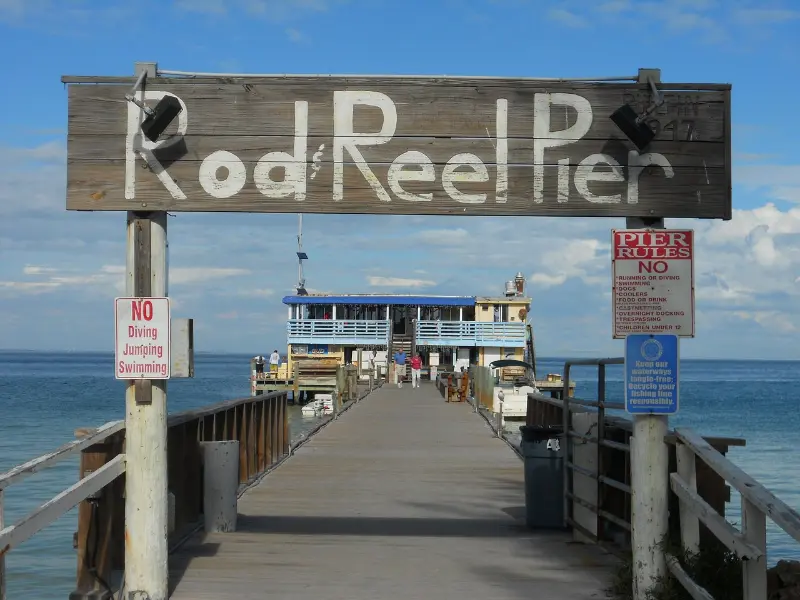
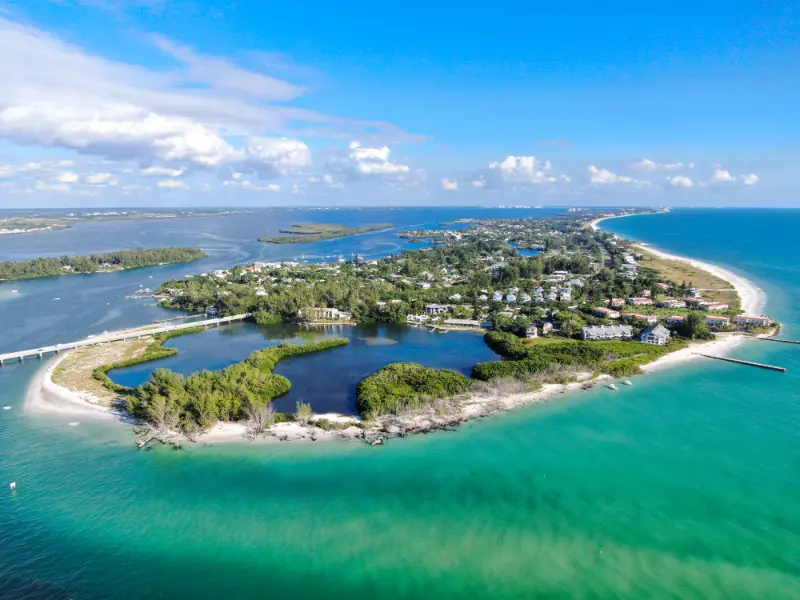
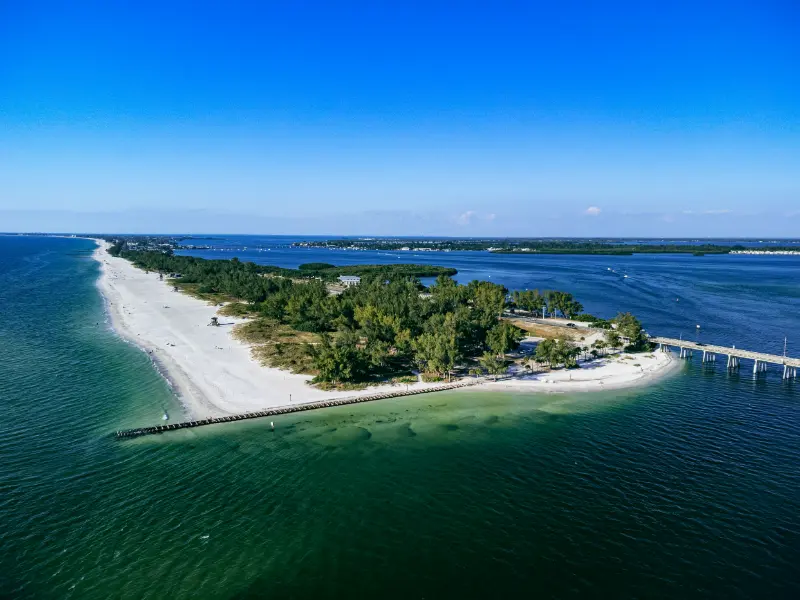
    Anna Maria Island Waterfront Restaurant and Pier

    Before booking, compare the total trip cost. A centrally located room can cost more per night but save parking, fuel and rideshare. A larger room farther out can be better for a family if it includes a kitchen, laundry and free parking. Senior travelers should check walking distance, elevator access and bathroom layout; families should look beyond the advertised occupancy and consider whether everyone can actually sleep comfortably for several nights.

    Best things to do

    Bradenton Riverwalk

    The riverfront path is the easiest introduction to the city. It connects green space, public art, play areas and views of the Manatee River, and it works well for a gentle first evening.

    The Bishop Museum of Science and Nature

    A strong indoor anchor for hot or rainy weather, especially for families and multigenerational groups interested in Florida history, science and regional wildlife.

    Village of the Arts

    A colorful live-work arts district where galleries, studios, restaurants and periodic art walks give Bradenton a creative side that feels very different from the beach corridor.

    Robinson Preserve

    One of the best nature stops in the area for walking, biking, paddling and birding through mangrove and salt-marsh habitat. The observation tower is a useful orientation point.

    De Soto National Memorial and Palma Sola

    This western side of Bradenton combines history, shaded trails, bayside scenery and easy access to the coast. It is a good half-day when the beach feels too hot or crowded.

    Manatee Village Historical Park

    A compact historical stop that helps put the region in context before you head to newer waterfront districts and beach communities.

    Nature, beaches and outdoor time

    Bradenton is strongest when you mix water and land. Robinson Preserve, Emerson Point across the river, Palma Sola and the Manatee River all reward slower exploration. For a beach day, continue west to Anna Maria Island rather than expecting downtown Bradenton to function like an oceanfront resort.

    Outdoor planning in Florida works best by temperature rather than by a rigid clock. Put the longest walk, bike ride, paddle or beach session early, then use lunch and an indoor attraction for the hottest hours. Later afternoon can be excellent again, but summer storms may arrive quickly. If swimming is part of the day, check flags, lifeguard coverage and local conditions instead of assuming calm-looking water is safe.

    Wildlife encounters should stay observational. Do not feed birds, dolphins, manatees, alligators or other animals, and never block an animal’s movement for a photograph. When nesting areas, rookeries or protected habitats have seasonal restrictions, treat those rules as part of the experience rather than an inconvenience.

    Getting there and around

    Sarasota-Bradenton International Airport is the most convenient airport for many visitors, while Tampa can offer more flight options. A car is useful if your plans include preserves and beaches. Island traffic can be slow at peak times, so start beach days early and avoid scheduling a fixed dinner reservation immediately after a late-afternoon return.

    For rental cars, add parking and tolls to the budget before pickup. If you plan a partly car-free stay, verify the exact hotel address and not just the neighborhood name. A one-mile walk on a map can feel very different in midday humidity, across a wide arterial road or with a stroller. Airport choice should be based on nonstop flights and total transfer time, not only straight-line distance.

    Best time to visit

    For most travelers, late fall through spring gives the easiest combination of comfortable outdoor weather and lower humidity, although winter can also bring higher accommodation prices and busier weekends. Summer is workable if you start outside early, take a real midday break and expect afternoon thunderstorms. Shoulder-season travel can offer better value, but tropical systems and heat should stay in the planning conversation.

    Event weekends can change both prices and traffic, especially in smaller towns where one festival fills much of the hotel inventory. If a specific event is the reason for the trip, book early. If it is not, checking the calendar before choosing dates can help you avoid paying festival-weekend rates for an ordinary getaway.

    Families, teenagers, seniors and accessibility

    Family tipFor families with babies or toddlers, reduce transitions: one major attraction plus pool, park or beach time is enough for a good day. Teenagers usually respond better when the plan includes something active or independent such as paddling, cycling, shopping or a waterfront district. Senior travelers benefit from the same pacing—shorter outdoor blocks, dependable seating and a hotel close to dinner. If accessibility is essential, confirm ramps, beach mats, accessible restrooms, boat boarding and parking directly with the operator or local authority before arrival.

    Multigenerational trips do not need to keep everyone together every hour. One shared morning anchor, followed by optional afternoon choices, often works better than forcing the youngest child and oldest adult through the same pace. Regrouping for dinner can turn a difficult schedule into an easy one.

    A practical 3-day itinerary

    Day 1: learn the center

    Arrive, check in and explore the main downtown or waterfront district. Choose one short attraction and an easy dinner within a few minutes of the hotel. Avoid expensive prepaid activities on arrival day because flight delays, rental-car lines and traffic can turn them into stress.

    Day 2: signature outdoor experience

    Use the morning for the destination’s strongest beach, preserve, boat, trail or cultural activity. Take a real lunch break, then choose one secondary attraction from the list above. Finish with a sunset or neighborhood dinner rather than adding another long drive.

    Day 3: culture, nature or a selective day trip

    Choose the experience you skipped on day two or make one regional excursion. If the weather is poor, switch to a museum, shopping district or indoor family attraction. Keep the final evening simple so departure does not become a rushed ending to the trip.

    Food and evening planning

    Downtown and Village of the Arts are good for independent restaurants, while the beach route adds seafood and casual waterfront stops. Build one meal around local seafood, but keep the rest flexible so traffic or weather does not dictate the day.

    For families, breakfast in the room and one planned restaurant meal can make the day easier. For couples, a walkable dinner district is often worth paying slightly more for the hotel. In winter and during special events, reserve only the meals that really matter; too many fixed bookings can make outdoor days feel rushed.

    Budget and booking strategy

    The largest costs are usually lodging, transport and paid experiences. Compare the full stay, not only the room rate: parking, resort or destination fees, breakfast, beach equipment and rideshare can change the real price. Free parks and beaches still create parking and food costs, while one well-chosen paid attraction can deliver several hours of useful family time. Keep at least one flexible day so poor weather does not force you to waste a prepaid outdoor booking.

    A useful budget test is to compare three lodging scenarios: the central hotel, the resort or beach property, and a larger room or rental farther out. Add parking, breakfast, local transport and the amount of driving each requires. The cheapest nightly rate is not always the cheapest trip.

    Best day trips and regional combinations

    Anna Maria Island is the obvious beach day. Sarasota adds museums and dining to the south, while St. Petersburg can work as a longer cultural day if you do not mind bridge traffic.

    Anna Maria Island Florida Barrier Island Beach Aerial

    Avoid stacking substantial drives on consecutive days. If you take a long day trip, make the following morning local. Florida roads can be easy when traffic is light and exhausting when crashes, storms, bridge delays or weekend beach traffic intervene.

    Common mistakes to avoid

    • Booking the cheapest hotel without checking the actual daily driving pattern.
    • Trying to combine a full beach day, a major attraction and a long-distance day trip in one schedule.
    • Ignoring afternoon heat or thunderstorms when planning outdoor time.
    • Assuming every beach access or park has the same parking, lifeguards and restroom facilities.
    • Building every evening around a fixed reservation when boat tours, traffic or weather can run late.
    • For multigenerational groups, keeping everyone together all day instead of planning one shared anchor and optional split time.

    Official resources

    Hours, admission prices, beach access, parking systems, ferry schedules, construction and storm-recovery conditions can change. If a specific attraction or service is essential to your trip, confirm it with the official source shortly before travel.

    Frequently asked questions

    How many days do you need in Bradenton Florida?

    Two full days is enough for a focused introduction, while three or four nights gives you room for the signature outdoor experience, the main cultural district and one nearby excursion without rushing. Stay longer if the hotel, beach or boating itself is a major part of the vacation.

    Do you need a car?

    For most visitors, yes. One central district may be walkable, but beaches, preserves, airports and day trips are easier with a car. A partly car-free trip can work when you deliberately choose a central hotel and limit regional excursions.

    Is Bradenton Florida good for families?

    Yes, especially when you keep days simple. One destination-specific attraction plus beach, park or pool time is usually more successful than filling every hour. Check age, height and boarding requirements before paying for water activities.

    Coquina Beach Bradenton Florida Aerial

    Is it suitable for senior travelers?

    Usually yes. Choose lodging close to dinner, schedule outdoor sightseeing in the cooler morning and verify accessibility details when they are essential. Boat steps, soft sand and long boardwalks can matter more than an attraction’s general “accessible” label.

    What is the biggest planning mistake?

    Trying to use the destination as a launch point for a long drive every day. Protect enough local time to enjoy the place you actually booked, and treat day trips as optional additions rather than the whole vacation.

    Final advice

    Bradenton Florida is most rewarding when you let its strongest experiences set the pace. Choose the right base, protect the morning for what matters most, leave room for Florida weather and build the itinerary around the people traveling with you. A thoughtful three-night stay usually feels richer than a longer checklist with too much driving.

  • Florida by Electric Car: An Eight-Day Road Trip from Orlando to the Keys

    Florida by Electric Car: An Eight-Day Road Trip from Orlando to the Keys

    Driving an electric vehicle in Florida can work beautifully, but it is not simply a matter of replacing gas stops with a charging icon on a map. Distance, charger connectors, hotel parking arrangements, unfamiliar payment apps and summer thunderstorms all influence a real vacation. This eight-day route starts in Orlando, follows the Atlantic side toward Miami and continues through the Florida Keys before returning north. It favors overnight charging and a manageable daily pace rather than maximum mileage. Travelers who prefer not to visit the Keys can stop in Miami and use their extra days for the Space Coast or Palm Beaches. The plan is designed for people who have never rented an electric car as well as experienced EV owners arriving from elsewhere. It does not promise that any individual public charger will be available, working or compatible on the date you travel.

    On this page

    Choose the rental vehicle before planning the itinerary

    The important detail on a rental listing is not merely the vehicle’s advertised maximum range. Confirm the precise model or likely model group, charging-port type, whether the rental includes any adapter and which cables are actually supplied. Ask whether the battery should be returned at a specified state of charge and whether returning it below that level creates a surcharge. Some networks or models can use particular fast chargers without additional equipment; others cannot. If you arrive after a long flight, an unfamiliar car with a low battery is a poor introduction to Florida. Build the first night around collecting the car, learning its navigation and charging menus, eating dinner and sleeping. Children and older passengers benefit from this calm start too. A vehicle with more luggage room may serve a family better than a nominally longer-range model with cramped seating.

    Use live tools, not a static list of chargers

    Before departure consult the U.S. Department of Energy’s Alternative Fueling Station Locator and the relevant charging network’s own app. The federal map is a discovery and route-planning resource; a network app may give more immediate operational details, but neither can guarantee that a stall will be free when you arrive. Search each charging stop by connector, DC fast-charge capability, payment procedure, hours and nearby toilets. Keep two feasible options for longer legs and check recent user reports where available. A charger shown inside a parking garage may carry a parking fee or close overnight. A station at a hotel might be restricted to registered guests, and a nominally public site could require an access code. Save addresses offline because cell reception can deteriorate on remote roads and during storm conditions.

    Day 1: Settle into Orlando

    After picking up the car at Orlando International Airport, drive only as far as your accommodation. The ideal hotel offers written confirmation of an EV charging space rather than a vague claim that electric vehicles are welcome. Ask whether parking is first-come, first-served, whether idle fees apply and whether the station can be reserved. Use the evening to identify the nearest second option in case the hotel’s unit is occupied. Orlando is a practical introduction because groceries, pharmacies and alternative charging sites are readily available. Families with an infant should confirm a properly installed child seat before leaving the garage. Travelers managing pain, fatigue or limited mobility should choose accommodation with an elevator and short parking-to-room distance. Avoid beginning with a lengthy theme-park day after a transatlantic flight.

    Orlando Retro Diner with Vintage Car at Night

    Day 2: The Space Coast without range anxiety

    Drive east toward Cocoa Beach and the Kennedy Space Center area. A Kennedy Space Center visit can absorb most of the day, so choose either the visitor complex or a beach-focused afternoon rather than racing between every stop. Check official access rules and any launch-related traffic restrictions before departing. Electric cars consume energy while cooling the cabin, especially when parked and restarting repeatedly on hot afternoons. Charging during a substantial lunch or museum visit can be more convenient than interrupting an attraction halfway through. Overnight in the Cocoa Beach or Cape Canaveral area if the lodging fits your budget and has verified charging, or return to Orlando if that works better for your route. Do not assume a launch will occur simply because one is tentatively scheduled; weather and mission requirements frequently alter the plan.

    Day 3: Indian River Lagoon and the Treasure Coast

    Continue south with time for a gentle stop around Sebastian, Vero Beach or Fort Pierce. The purpose of this day is to appreciate barrier islands and lagoon landscapes instead of treating the Atlantic coast as an interstate transfer. Choose a short publicly accessible boardwalk or a waterfront promenade, keeping pets and children away from fragile vegetation and posted wildlife areas. Charging opportunities are more uneven outside metropolitan centers, so decide on a primary stop before entering a low-service stretch. If a charger does not work, do not repeatedly restart the session while the battery is becoming critically low. Drive to your planned alternative while a safe margin remains. For a quieter itinerary, base yourself in Vero Beach and use one walkable area for dinner rather than crossing bridges repeatedly.

    Day 4: Palm Beaches, Jupiter and an overnight with charging

    The Jupiter and West Palm Beach area offers museums, parks and waterfront neighborhoods without requiring a strenuous walking day. Select one anchor attraction and one shorter outdoor stop. A morning on a shaded path makes sense in summer; an afternoon museum is a useful backup for lightning or heat. This is a good night to charge toward a comfortable level before driving farther south. Verify the hotel price including resort fees and parking, which can outweigh a modest difference in room rate. If you use mobility aids, ask about the physical placement of EV chargers: some are installed away from accessible entrances, and accessible parking does not automatically mean accessible charging. An overnight with predictable charging reduces next-day stress significantly more than an ambitious list of sightseeing stops.

    Day 5: Arrive in Miami and avoid unnecessary driving

    Choose accommodation in a neighborhood that matches your plans. Miami Beach may reduce beach transfers but parking can be expensive; mainland areas near transit may work for museums and food excursions. Miami’s traffic makes short-distance driving feel much longer than a route app initially suggests. Leave the vehicle parked for a full afternoon if possible and explore a defined neighborhood on foot, by transit or by a prearranged ride. Confirm whether the hotel valet will handle EV charging and whether it charges an extra service fee. Treat curbside chargers as options, not a reservation system. A single parking location with overnight access is much easier for families with strollers, visitors in wheelchairs or guests who cannot comfortably walk from distant municipal garages.

    Day 6: Miami, Homestead and the entrance to the Keys

    Leave Miami with a high enough charge to deal with road congestion, air-conditioning and an unexpected detour. Consider an early drive to Homestead, where you can collect supplies before committing to the Overseas Highway. Keep snacks, drinking water, medication and charging cables accessible. The Upper Keys are a sensible overnight for travelers who want to spend time snorkeling or viewing coastal scenery without driving to Key West in one day. Check that the lodging’s charging description refers to an actual working plug available to your room category. If there is no credible charging plan in the Upper Keys, remain farther north and make a day trip instead. A dependable shorter journey is preferable to arriving at a remote accommodation with very little charge remaining.

    Day 7: The Overseas Highway to Key West

    Travel slowly south through Islamorada, Marathon and the lower islands. Many drivers focus on the Seven Mile Bridge, but the practical challenges are bridge traffic, limited turn-around options and periods when roadside stops are inappropriate. Pull over only in designated areas. Plan one meaningful stop for marine ecology or Keys history and leave generous time for meals and restroom breaks. Key West is compact, and an EV can become a parking liability rather than an advantage. If you stay overnight, favor a property with explicitly confirmed parking and charging or plan to leave the car at a legal lot and walk or use local transport. Travelers with reduced mobility should review actual distances and surfaces in the historic district rather than rely on a generic claim that downtown is walkable.

    Day 8: Return route and flight logistics

    The drive from Key West back toward mainland airports is substantial, particularly with school-holiday traffic or a storm forecast. Do not combine a long Keys return, an uncertain fast-charge stop and a tight same-day international departure. A safer plan adds a night near Miami or Fort Lauderdale before flying home. Photograph the vehicle condition, verify the rental company’s requested battery level and allow time for the charging receipt to appear in the app. If the rental agency offers prepaid charging, compare the written terms with your expected use rather than assuming it is economical. Travelers continuing north can spread the return over two days. The principal luxury of electric-car travel is not saving a few minutes at each stop; it is arriving with enough energy, information and patience to enjoy the coast.

    Weather, tolls and practical cost controls

    Summer heat and fast highway speeds can reduce effective range compared with a dashboard estimate, and heavy rain requires slower driving regardless of propulsion type. Avoid standing near chargers when lightning is present. Ask how toll-by-plate charges are administered by your rental company and whether daily service fees are added. Charging prices can include energy, time, parking or idle components, so compare the total rather than an advertised per-kilowatt-hour rate alone. Record the address and network of every charge session for expense checking. Consider the needs of children, older adults and anyone using medical equipment: a planned restroom break and climate-controlled waiting space matter more than squeezing the lowest possible battery percentage out of a long stretch. Recheck routing before every significant leg.

    Who should choose a different Florida route?

    This route is not ideal for every traveler. Someone who wants only Orlando theme parks may be happier with a hotel shuttle and no rental vehicle at all. An international visitor who cannot use the necessary charging payment apps should resolve that problem before renting. A household with several children and mobility equipment might prioritize a van over a small electric sedan, even if that changes the fuel choice. People staying mostly in the Keys need to look closely at accommodations, parking and available charging before committing. You can still enjoy much of this itinerary by taking a train for Orlando to South Florida and renting a vehicle only for the coast or the Keys. The best choice is the one that simplifies the holiday rather than turns every day into a transport experiment.

    Planning at a glance

    Planning itemRecommendation
    Typical paceOne substantive activity each day; avoid stacking distant stops
    Getting aroundCheck regional distances and accessible transport before committing
    ReservationsVerify actual tours, rentals, gate times and cancellation rules
    Weather backupKeep one indoor alternative for lightning, heat or heavy rain
    Before travelReconfirm official operating notices, local rules and access needs

    Frequently asked questions

    Can I drive an electric rental car from Orlando to Key West?

    Yes, with compatible charging, planned stops and a sensible reserve; verify actual infrastructure and vehicle capabilities before departure.

    Orlando Retro Diner and Classic Car

    Should I charge to 100 percent every night?

    Not necessarily. Follow the rental vehicle guidance and your next day’s mileage needs; avoid occupying a public charger after a session is finished.

    Is an EV a good idea for a family with young children?

    It can be, especially with dependable hotel charging, sufficient luggage space and predictable restroom stops.

    Can I rely only on hotel charging?

    No. Confirm access and have a public backup; a hotel listing may not guarantee an available working connector.

    What if a hurricane warning is issued?

    Follow local official advice, reconsider travel and evacuation plans, and do not rely on charging stations staying operational during an outage.

    Reliable sources and further reading

    Travel planning note: opening hours, fees, access rules and local conditions may change. Recheck official sources before making reservations. This guide does not claim firsthand experience.

  • Hollywood Florida Travel Guide: Beach Broadwalk, Downtown, Nature, Families and Where to Stay

    Hollywood Florida Travel Guide: Beach Broadwalk, Downtown, Nature, Families and Where to Stay

    Hollywood Florida is a South Florida beach city with a retro seaside promenade, an active downtown and easiergoing atmosphere between Miami and Fort Lauderdale. The easiest way to enjoy it is to decide what role it should play in the wider Florida trip. It can be a self-contained two- or three-night stop, a quieter base near a larger destination, or a practical part of a longer road trip. What usually goes wrong is trying to make one hotel location serve beaches, museums, nature, nightlife and distant day trips equally well.

    I would plan Hollywood Florida around two priorities: where you want to spend the early morning and where you want to be after dinner. Those two choices determine whether you should stay by the beach, near the main downtown district or in a more spacious property farther out. The destination is particularly good for families, couples, beach walkers, cyclists, pre- or post-cruise travelers and visitors who want South Florida energy without making Miami Beach their base.

    Quick planning summary

    • Hollywood Beach Broadwalk — The Broadwalk is the signature experience: a long oceanfront promenade made for walking, cycling and stopping for casual food.
    • Hollywood Beach and North Beach Park — The central beach is convenient for amenities, while the northern end feels greener and more spacious.
    • Anne Kolb Nature Center — Anne Kolb adds mangroves, boardwalks, wildlife and paddling to a trip that might otherwise be only beach and restaurants.
    • Downtown Hollywood and ArtsPark — Downtown brings murals, local restaurants and ArtsPark at Young Circle.
    • Best stay strategy: choose the district that matches your first and last activity of the day, not the cheapest room on a map.
    • Best pacing: one major activity plus one flexible neighborhood, beach or park stop per day.
    • For families and seniors: protect a midday rest during hot weather and verify parking, shade and accessible routes before arrival.

    In this guide

    Why visit Hollywood Florida?

    Hollywood Florida works because it offers a clear identity without forcing every traveler into the same itinerary. A beach-first visitor can spend long mornings outdoors, while someone interested in culture can build the day around museums, local districts and dining. Families can alternate active mornings with easier afternoons, and couples can keep evenings walkable instead of driving from one isolated attraction to another.

    The destination also fits a broader Florida strategy. Rather than changing hotels every night, use it as a base and make selective day trips. This is usually more enjoyable than collecting cities. The reward comes from learning the rhythm of one place: which mornings are quiet, where parking becomes difficult, when the waterfront is comfortable and how much downtime your group actually needs.

    Waterfront Resort Buildings in Florida

    Where to stay in Hollywood Florida

    Hollywood Beach is the obvious choice if you want to step onto the sand and Broadwalk each morning. Downtown Hollywood is better for restaurants, murals and a more local evening feel. Airport-area hotels can work for a one-night transit stay, but they do not replace the beach experience.

    Before booking, compare the full stay cost rather than the nightly rate. Parking, resort or destination fees, breakfast, beach equipment, kitchen access and the need for rideshare can change the value dramatically. A slightly more expensive hotel in the right district can be cheaper than a low room rate that requires two paid car trips every day.

    Families should also check room layout, not just occupancy. A sofa bed that technically sleeps two children may be fine for one night but uncomfortable for a week. For senior travelers, elevator reliability, walk-in showers, short routes to the lobby and shade around the property can matter more than a rooftop pool.

    Best things to do in Hollywood Florida

    Hollywood Beach Broadwalk

    The Broadwalk is the signature experience: a long oceanfront promenade made for walking, cycling and stopping for casual food. It works well for mixed-age groups because everyone can move at a different pace and regroup without needing a formal attraction schedule.

    Hollywood Beach and North Beach Park

    The central beach is convenient for amenities, while the northern end feels greener and more spacious. Water conditions and lifeguard coverage vary, so choose the exact beach access by the needs of the group rather than by hotel marketing photos.

    Anne Kolb Nature Center

    Anne Kolb adds mangroves, boardwalks, wildlife and paddling to a trip that might otherwise be only beach and restaurants. It is a strong half-day for families and nature lovers and a useful reminder that Broward County has meaningful natural habitat beside dense development.

    Downtown Hollywood and ArtsPark

    Downtown brings murals, local restaurants and ArtsPark at Young Circle. It is a good evening alternative to the oceanfront and can make a beach-heavy trip feel more varied. Check event calendars if live music or public programming matters to you.

    Seminole Hard Rock and inland entertainment

    The Hard Rock complex is inland and offers a completely different kind of evening. It can be fun for adults, shows and dining, but it is not “on the beach,” so build travel time into the plan rather than treating it as a stroll from the Broadwalk.

    Beaches, parks and outdoor time

    Hollywood is strongest when you combine ocean time with the Broadwalk and mangrove nature. Rent bikes only if everyone is comfortable sharing busy recreational space, and use cooler hours for longer rides. For toddlers and seniors, the ability to return to a nearby beachfront hotel can be more valuable than chasing multiple beaches in one day.

    Florida outdoor days are easiest when you schedule by temperature rather than by a rigid list. Put the longest walk, beach session, bike ride or wildlife activity early. Use lunch, a museum or the hotel for the hottest part of the day, then return outside later. In summer, thunderstorms can be brief but intense; in winter, a windy cold front can make an exposed beach far less comfortable than the air temperature suggests.

    Whenever swimming is part of the plan, check local flags, lifeguard coverage and current conditions. Never assume a calm-looking ocean or Gulf is risk-free, and do not build a family beach day around a tiny access point if you know you need toilets, shade and an accessible path.

    Getting there and around

    Fort Lauderdale-Hollywood International Airport is close, and rideshare can work well for a short beach stay. A rental car becomes more useful if you plan to combine Hollywood with Miami, Everglades outings or multiple Broward attractions. Parking near the beach can be a real part of the budget, so compare hotel parking with a car-free plan.

    For a rental car, include parking and tolls in the budget before pickup. For a car-free or partly car-free stay, check whether the hotel is truly within comfortable walking distance of restaurants and the activities you care about. Florida heat turns a pleasant-looking one-mile map walk into a very different experience at midday.

    Airport choice should be based on total transfer time and flight convenience, not only distance. A nonstop flight to a slightly farther airport can be easier than a connection that saves twenty minutes on the ground. If your trip combines several Florida regions, consider collecting or returning the rental car only for the road-trip segment.

    Best time to visit

    For most travelers, the cooler and drier part of the year offers the easiest outdoor conditions, but it also brings stronger seasonal demand in many Florida destinations. Spring can balance warm weather with fewer winter visitors, while summer offers long daylight and family travel availability at the cost of heat, humidity and frequent thunderstorms. Fall can be quieter, but tropical weather planning matters.

    Do not choose a month only from average temperature. Think about the activities that define your trip. Beach swimming, wildlife viewing, outdoor festivals, theme parks and restaurant-focused weekends all have different ideal conditions. Check event calendars and local school-holiday patterns before paying a non-refundable rate.

    Families, teens, seniors and accessibility

    Family tipFor families with babies or toddlers, reduce the number of transitions. One beach, one lunch area and one easy afternoon stop is enough for a good day. Teenagers usually enjoy having one activity with independence or adrenaline—surfing, cycling, shopping, paddling or an evening district—rather than being moved through adult sightseeing all day.

    Senior travelers often benefit from the same strategy: shorter walks, earlier starts, reliable seating and a hotel near dinner. If mobility is limited, verify accessible parking, ramps, beach mats, wheelchairs or boarding assistance directly with the responsible attraction or local authority. “Accessible” can mean very different things depending on whether the challenge is a museum floor, soft sand or a small boat.

    Multigenerational groups do not need to remain together every hour. Plan one shared anchor each day, then allow a split. Grandparents can return to the hotel while teenagers stay at the beach; one adult can take children to a playground while another visits a museum. Regrouping for dinner is often more successful than forcing everyone to follow the most demanding itinerary.

    A practical 3-day Hollywood Florida itinerary

    Day 1: understand the center

    Check in, explore the primary downtown or visitor district and keep the first evening easy. Choose a walkable dinner and one short attraction or waterfront stop. Arrival days are the wrong time to schedule a prepaid activity that becomes stressful if the flight, rental car or traffic is late.

    Day 2: the signature experience

    Use the morning for the destination’s main outdoor or cultural priority, then take a real break at lunch. In the afternoon, choose one secondary attraction from the list above rather than trying to complete all of them. Finish in the district you most want to experience after dark.

    Day 3: nature or a selective day trip

    Use the final full day for nature, a neighboring community or a second beach. If the weather is poor, swap in a museum, shopping district or indoor family attraction. Keep the last evening simple so packing and departure do not turn a good trip into a rushed finish.

    Food and evening planning

    The Broadwalk is best for casual beach meals, while downtown broadens the choice. For a special dinner, reserve ahead on weekends. A practical strategy is breakfast near the hotel, flexible lunch by the beach and a planned dinner downtown or inland.

    Florida dining times can become competitive in winter and on event weekends. Reserve only the meals that really matter; too many fixed reservations can make a beach or wildlife day feel rushed. For breakfast, a hotel room with a refrigerator or small kitchen can save both money and time, especially for families.

    Budget and booking strategy

    The biggest costs are usually lodging, transport and the activities that require a ticket or boat. Build the budget in that order. Free beaches and parks do not always mean a free day once parking, rentals and food are included. Conversely, a paid attraction with included parking and several hours of entertainment can be good value for a family.

    I would compare at least three lodging scenarios: the convenient central hotel, a beach or resort property, and a larger room or rental farther out. Add parking and local transport to each. For a short stay, location often wins. For a week with children, kitchen and laundry access can justify a little more driving.

    Keep cancellation terms visible in your planning notes. Florida weather can change, and boat tours, outdoor attractions and beach days are more enjoyable when one weather delay does not threaten the value of the whole trip.

    Day trips and how to combine the region

    Fort Lauderdale is the easiest city pairing, while Miami works as a day trip or next stop. Dania Beach is close and often quieter. If a cruise is part of the vacation, Hollywood can be a relaxed pre-cruise base, but always leave generous transfer time for Port Everglades or PortMiami.

    A useful rule is to avoid more than one substantial drive on consecutive days. If you take a long day trip, make the following morning local. Florida roads can be easy when traffic is light and exhausting when weather, crashes or weekend beach traffic intervene. A slower plan usually produces more usable vacation time.

    Common mistakes to avoid

    • Booking the cheapest hotel without checking the real driving pattern of the trip.
    • Scheduling beach, museum, wildlife and nightlife priorities into the same day.
    • Ignoring parking costs or assuming every beach access has the same facilities.
    • Planning long outdoor activities at midday in the hottest months.
    • Using drive-time estimates that do not include event, bridge, theme-park or beach traffic.
    • Forgetting that a good multigenerational itinerary needs rest, shade and easy meal options.
    • Treating a weather-sensitive activity as guaranteed instead of keeping a flexible backup.

    Official resources

    Hours, parking systems, admission prices, beach rules, event schedules and construction can change. When a particular attraction or service is essential to your trip, confirm it on the official source shortly before travel.

    Frequently asked questions

    How many days do you need in Hollywood Florida?

    Two full days is enough for a focused first visit, while three nights gives you room for a beach or nature day, the main cultural district and one nearby excursion without rushing. Longer stays make sense if the accommodation itself—such as a beach resort or vacation home—is part of the vacation.

    Do you need a car in Hollywood Florida?

    That depends on the neighborhood. A central stay can reduce driving for meals and evening walks, but a car is usually helpful once you add beaches, nature preserves, family attractions or day trips. Check the actual address before deciding.

    Is Hollywood Florida good for families?

    Yes, especially when you build the day around short activity blocks and a midday rest. The strongest family trips mix one destination-specific attraction with beach, park or pool time rather than trying to entertain children continuously.

    Is Hollywood Florida suitable for senior travelers?

    Usually yes. Choose lodging close to dinner, check walking surfaces and parking, and use the cooler morning for outdoor sightseeing. Call ahead when wheelchair, scooter or accessible beach equipment is essential.

    What is the biggest planning mistake?

    Trying to use Hollywood Florida as both a relaxed vacation base and a launch point for a long drive every day. Pick a few regional excursions and protect enough local time to enjoy the destination you actually booked.

    Final advice

    Hollywood Florida is most rewarding when you let its strongest experiences set the pace. Choose the right neighborhood, protect the morning for what matters most, leave room for Florida weather and build the trip around the people traveling with you. A thoughtful two- or three-day stay will usually feel richer than a longer checklist with too much driving.

  • Florida Travel Insurance Guide: Hurricanes, Medical Coverage, Cancellations and Rental Cars

    Florida Travel Insurance Guide: Hurricanes, Medical Coverage, Cancellations and Rental Cars

    Travel insurance matters most when a Florida trip contains expensive nonrefundable elements: a resort week, cruise, theme-park package, rental car, private tour or long-distance flight. It is not a magic refund button, and two policies with similar names can cover very different events. The useful question is not simply whether to buy insurance but what financial risk you are trying to transfer. For a Florida trip, weather, medical emergencies, trip interruption and rental-car exposure are the areas I would read most carefully before paying for a plan.

    Quick planning summary

    • Read the policy wording, not only the marketing name of the plan.
    • Trip cancellation and trip interruption are different protections.
    • Hurricane coverage depends on the exact covered reasons and when the policy was purchased.
    • Emergency medical and evacuation coverage can matter even on a domestic trip, especially for visitors whose normal health plan has network limits.
    • Rental-car damage waivers, credit-card benefits and travel insurance can overlap, so compare before paying twice.

    In this guide

    Start with the money you could actually lose

    List prepaid nonrefundable costs before shopping for coverage. A flexible hotel that can be canceled until the day before arrival creates little cancellation exposure, while a cruise fare, vacation rental and prepaid event tickets may create thousands of dollars of risk. Insurance is easier to evaluate when you know which payments would be lost if illness, severe weather or another covered event forced a cancellation. Do not insure refundable costs as if they were nonrefundable.

    Trip cancellation and interruption solve different problems

    Trip cancellation typically addresses a covered event before departure, while interruption relates to a covered event after the trip has started. A traveler who becomes ill at home may face a cancellation claim; a traveler already in Florida who must return home for a covered reason may face interruption costs. Policies define covered reasons precisely. ‘I changed my mind because the forecast looks unpleasant’ is not the same as a covered hurricane evacuation or other specifically listed event.

    Hurricanes require attention to timing and definitions

    Florida’s hurricane season is a strong reason to understand policy details before a storm appears. Some policies may provide benefits for specific hurricane-related events such as a mandatory evacuation, significant destination damage or a covered delay, while others may exclude situations travelers assume are covered. Once a storm is known or named, buying a new policy usually cannot turn that known event into an insurable surprise. Read the weather language before booking a peak-season coastal trip.

    Medical coverage is not identical for every traveler

    Domestic travelers may already have health insurance that works in Florida, but network rules, deductibles and emergency-care terms vary. International visitors have a different problem: their home coverage may offer limited or no protection in the United States. Compare emergency medical and evacuation benefits, exclusions, deductibles and preauthorization requirements. Travelers with existing medical conditions should pay particular attention to any pre-existing-condition language and time-sensitive waiver provisions.

    Mediterranean Style Luxury Home in Florida

    Rental-car protection can overlap with other benefits

    Rental-car companies sell collision or damage waivers, some travel policies include rental-car benefits, and certain credit cards provide coverage when their conditions are met. Those products are not interchangeable. Liability, damage to the rental vehicle, loss-of-use charges and personal property can be handled differently. Before declining anything at the counter, understand what your own auto insurance, card benefits and travel policy actually cover in Florida.

    Cruises and pre-cruise nights create special timing risks

    Florida’s major cruise ports make pre-cruise planning part of the insurance decision. A missed sailing caused by a travel delay can be financially painful even if the hotel night itself was cheap. Arriving a day early often reduces risk more effectively than relying on insurance alone. Cruise-specific policies may include benefits tailored to missed connections or medical evacuation at sea, but the definitions and limits still need to be read carefully.

    Cancel-for-any-reason options are not standard cancellation coverage

    Some policies offer optional cancel-for-any-reason benefits, usually with restrictions, purchase deadlines and partial reimbursement rather than a full refund. The name sounds broad, but the details matter. Compare the additional premium with the value of the flexibility you already have through refundable hotels and changeable transport. Sometimes better booking terms reduce the need for expensive broad-form cancellation protection.

    Documentation is part of the claim process

    Keep the policy, receipts, booking confirmations, proof of payment and communications about delays or cancellations together. If a hotel, airline, cruise line or tour operator provides a refund, the insurer will normally need to know. For weather events, retain official notices or provider messages when relevant. A claim becomes much harder when travelers cannot show what they paid, what was nonrefundable and why the trip changed.

    Families, seniors and accessibility

    Families and older travelers should think about medical needs, medication replacement, mobility equipment and the cost of one person accompanying another home. Multigenerational trips also create more people whose illness or emergency could affect the plan, but whether a family member’s situation is covered depends on the policy definition. This article is general travel-planning information, not a recommendation of a particular insurance product; compare the actual contract and ask the insurer questions before purchase.

    For a mixed-age group, protect the needs that are hardest to change: heat tolerance, medication timing, mobility, naps and the ability to stand in lines. Split the group when that creates a better day instead of treating separation as a planning failure. Confirm accessibility directly with the attraction, hotel, park or operator when a specific feature is essential, because the word accessible can describe very different real-world conditions.

    Budget and booking

    Insurance should be evaluated against the amount truly at risk. A low-cost road trip with refundable motels may not need the same protection as a prepaid resort-and-cruise vacation. Compare premium, deductible, benefit limits and exclusions rather than selecting the cheapest plan. Also compare the cost of buying more flexible travel reservations. Sometimes a refundable hotel rate and earlier arrival before a cruise reduce risk more efficiently than adding another insurance feature.

    Compare total trip cost rather than headline price. Parking, resort fees, taxes, cleaning charges, rideshares, rental-car costs and food can change which option is genuinely affordable. Keep weather-sensitive elements flexible when possible, and save confirmation numbers in one place. If one experience is the main reason for the trip, secure that first before building nonrefundable lodging around it.

    Florida Resort with Circular Building Aerial View

    How to build a realistic day

    Start with one anchor activity and place it at the time when the group has the most energy and conditions are usually best. Leave enough space for parking, meals and unexpected delays rather than stacking timed reservations back to back. In warm months, a morning outdoor block followed by lunch and an indoor or shaded afternoon is often more comfortable than continuous sightseeing. On driving days, stop before fatigue becomes a problem and keep water, sun protection and a simple snack available.

    Keep one nearby backup plan that does not require crossing a major metro area. A museum, shopping district, hotel pool, scenic drive or relaxed meal can rescue a day when weather or energy changes. The goal is not to complete the maximum number of attractions; it is to finish the day with enough energy to enjoy the next one. This approach is particularly valuable for children, older travelers and anyone visiting Florida for the first time.

    Common mistakes to avoid

    • Buying a policy without calculating nonrefundable trip costs.
    • Assuming every hurricane-related cancellation is covered.
    • Waiting until a known storm appears before reading coverage.
    • Paying for overlapping rental-car benefits without comparing them.
    • Ignoring pre-existing-condition wording or purchase deadlines.
    • Throwing away receipts and cancellation documentation.

    Florida hurricane season travel guide, Florida on a budget, Florida cruise ports guide, Florida weather guide, Florida airports guide.

    Official resources to check

    Rules, opening hours, prices, transport schedules, access arrangements and weather-related operations can change. If a detail is essential to the trip, confirm it with the responsible operator or public agency shortly before travel rather than relying on an old screenshot, saved social post or third-party summary.

    Final planning advice

    The strongest Florida itineraries are clear about priorities without becoming rigid. Choose what genuinely matters, keep the day geographically compact and allow conditions to change. A trip with a little breathing room usually produces better meals, easier family decisions and more memorable experiences than a schedule that depends on perfect traffic, perfect weather and perfect energy from morning to night.

  • Florida Driving Guide for Visitors: Road Rules, Rental Cars, Tolls, Parking and Long-Distance Planning

    Florida Driving Guide for Visitors: Road Rules, Rental Cars, Tolls, Parking and Long-Distance Planning

    Driving is often the easiest way to connect Florida’s theme parks, beaches, springs, small towns and wildlife areas, but the state is larger than many first-time visitors expect. A route that looks simple on a map can involve several hours of highway driving, toll roads, bridge traffic, parking charges and a sudden afternoon storm. The best driving plan is therefore not about covering the greatest distance. It is about matching the car, route and daily mileage to the kind of vacation you actually want.

    For most visitors, a rental car gives the greatest freedom outside compact urban districts and rail corridors. It can be especially useful for families carrying beach gear, travelers combining several regions, and anyone visiting state parks or springs where public transport is limited. At the same time, keeping a car in central Miami Beach, parts of downtown Miami or some resort areas can add parking costs without adding much freedom. This guide explains when a car helps, what to check before collecting one and how to make Florida driving less tiring.

    Quick Planning Summary

    • Use a car when your itinerary includes several regions, springs, state parks or beaches away from major transit corridors.
    • Check the rental company’s toll program before leaving the counter; toll administration fees can matter more than the toll itself.
    • Plan by realistic driving time, not mileage alone, and leave buffer time around Orlando, South Florida and major holiday weekends.
    • Florida weather can change visibility quickly; slow down in heavy rain and do not build a schedule that depends on perfect traffic.
    • Choose hotels with practical parking when the car is essential, and consider car-free stays when it is not.

    In this guide

    Do you need a car in Florida?

    A car is most valuable when the trip moves between regions. Orlando to the Space Coast, Tampa to Gulf beaches, Miami to the Everglades, and a Florida Keys road trip all become easier when you control departure time and luggage. Rural North Florida, the Nature Coast and many springs are also much simpler by road. Travelers staying entirely in one walkable beach town or using Brightline between South Florida and Orlando may need a car only for selected days.

    The mistake is assuming that “Florida vacation” automatically means renting a car for every night. Add up hotel parking, resort parking, toll-program charges and the time spent retrieving the vehicle. In some cities, rideshare plus rail can be cheaper for a short stay. For a mixed itinerary, one useful strategy is to spend the urban portion without a car and collect the rental only when the road-trip section begins.

    Rental car basics

    Compare the total rental, not only the headline daily rate. Airport surcharges, additional-driver rules, fuel options, child seats, one-way drop fees, toll programs and insurance choices can change the final amount significantly. Photograph the exterior and interior at pickup, confirm the fuel policy, and know exactly where the return lane is before your departure day.

    Choose the smallest vehicle that comfortably fits people and luggage. Large SUVs can be pleasant on long highway drives but are harder and more expensive to park in historic districts and coastal towns. Families should confirm child-seat requirements before travel and reserve the correct seat if they are not bringing their own. International visitors should also check both Florida requirements and the rental company’s documentation policy rather than assuming every agency handles foreign licenses in the same way.

    Road rules and driving style

    Florida traffic follows U.S. right-hand driving. Posted speed limits, lane markings and local signs control the road, and visitors should resist copying the speed of surrounding traffic when it conflicts with signage. Right turns on red are generally permitted after a complete stop unless a sign prohibits them, but pedestrian crossings, cyclists and local restrictions still require attention. Seat belts and appropriate child restraints are part of normal trip planning, not optional extras.

    The official VISIT FLORIDA visitor-services pages summarize current road rules and should be checked before an international trip. On multilane highways, keep predictable spacing and avoid last-second lane changes around interchanges. Florida’s combination of tourists, commuters, trucks and unfamiliar rental drivers makes calm, early navigation more useful than aggressive driving.

    Tolls and expressways

    Toll roads are common around Orlando and across parts of South Florida, and many facilities use electronic collection. Before driving away from the rental counter, decide how tolls will be paid. The options may include the rental company’s toll program, an eligible personal transponder, SunPass arrangements or the Visitor Toll Pass program for qualifying Orlando International Airport rental customers.

    Orlando Retro Drive In at Night with Classic Cars

    Do not choose a toll system only by the words “convenient” or “unlimited.” Read the daily or per-use fees and compare them with the actual routes you expect to drive. A traveler using one toll road may have different needs from a family spending two weeks around Orlando. The separate Wonderful Florida toll-road guide goes deeper into these choices.

    Parking at beaches, cities and attractions

    Parking is one of the easiest Florida costs to underestimate. Theme parks, beach lots, downtown garages and resort hotels can all charge separately. Historic districts may have limited street parking, while beach access points can fill early on sunny weekends. Save the exact garage or lot location in your phone before walking away from the car; large resort and attraction lots are easy to forget after a long day.

    At the coast, check whether parking is municipal, county, state-park or private. Apps and payment methods vary by community. Never assume a sandy shoulder is legal parking simply because other vehicles are there. In busy areas, an early arrival can save both money and frustration, especially when the alternative is circling narrow streets with tired children or beach equipment.

    Fuel, charging and vehicle choice

    Gas stations are plentiful along major corridors, but long rural stretches and barrier islands deserve more planning. Do not wait for the tank to become nearly empty before leaving a populated area. Rental agreements usually require a specific fuel level at return, so identify a convenient station near the airport rather than searching under time pressure.

    Electric vehicles can work well in Florida when the route is built around reliable charging, but a spontaneous road trip through rural areas requires more advance planning than a gasoline vehicle. Verify charging compatibility, hotel charging policies and backup locations before committing to a long day. Extreme heat, traffic and air-conditioning use can affect real-world range.

    Long-distance driving without exhausting the trip

    Florida is long. Driving from the Panhandle to South Florida is not a casual transfer, and even Miami to Key West can consume much of a day when traffic is heavy. Build road trips around regions rather than zigzagging across the state. Two- or three-night bases usually create a better vacation than changing hotels every morning.

    Florida Suburban City Skyline in the Distance

    On a long driving day, schedule one worthwhile stop rather than five minor ones. A spring, historic district, beach walk or lunch town can turn a transfer into part of the trip without making arrival dangerously late. Avoid pairing a very long drive with a dawn flight, an exhausting theme-park day or a late-night event.

    Rain, thunderstorms and roadside emergencies

    Heavy rain can reduce visibility very quickly, especially during the warm season. Slow down, increase following distance and avoid driving through water when you cannot judge depth. Lightning and tropical weather can also change plans. If conditions are poor, stopping somewhere safe is more sensible than protecting an itinerary that was too tight.

    Keep water, a charged phone and the rental company’s roadside-assistance information available. On long rural routes, download maps for offline use. If a hurricane or tropical storm threatens, follow official local emergency information rather than relying on social media rumors or a navigation app that does not understand closures and evacuation instructions.

    Families, seniors and accessibility

    Driving with children works best when transfers are treated as part of the day rather than dead time. Plan restroom, food and movement breaks before the child becomes overtired. Keep one small bag accessible with water, wipes, medication, chargers and a change of clothes instead of burying everything in the trunk. Teenagers can help with navigation and parking details, but the driver should remain the only person making final decisions about safe stops and lane changes.

    Senior travelers may prefer shorter driving blocks, daylight arrivals and hotels with simple parking. For travelers with mobility needs, verify accessible parking at attractions and beaches before arrival and ask rental agencies about hand controls or other adaptive equipment well in advance. A technically accessible destination can still be difficult if the parking route is long or uneven.

    Budget and booking strategy

    A rental car can be excellent value when several people are traveling together, but compare the full cost: rental rate, taxes, fuel, tolls, hotel parking, attraction parking and one-way fees. If the car sits in a hotel garage for three days while you walk or use rail, those fixed costs may erase the convenience.

    For road trips, pay for flexibility where it matters. A slightly more expensive hotel with free parking near the next morning’s route can be better value than a cheaper room that adds a garage fee and forty minutes of urban traffic. Keep toll and parking receipts until the rental account has fully settled.

    What to check before travel

    Before travel, recheck the driver-license documentation required by your rental company, the toll program attached to the vehicle, hotel parking charges, major construction or road closures and any hurricane-related advisories. The official Florida Turnpike and SunPass sites provide current toll information, while local transportation departments are better sources for temporary closures.

    Also check the return procedure for the exact airport location. Large airports may have several rental-car return entrances, and “follow the airport signs” is less relaxing when a flight is approaching. Save the address, fuel plan and terminal information the night before departure.

    Common mistakes to avoid

    • Planning daily mileage that leaves no time for traffic, meals or weather.
    • Accepting a rental toll program without reading its administrative fees.
    • Booking hotels without checking overnight parking charges.
    • Changing lanes late because navigation instructions were followed too literally.
    • Trying to combine distant regions in one day simply because the mileage looks manageable.

    Getting Around Florida, Florida Airports Guide, Best Scenic Drives in Florida, Florida Road Trip Itinerary, Florida Travel Guide for First-Time Visitors.

    Official resources

    Rules, prices, access arrangements, reservation systems and operating procedures can change. When a detail is important to the trip, confirm it with the responsible agency, park, attraction, hotel or local authority shortly before travel.

    Final advice

    A Florida road trip is easier when the car serves the itinerary instead of controlling it. Rent only for the days that benefit from driving, understand tolls and parking before pickup, and reduce the number of long transfer days. The state rewards travelers who leave enough time to stop for a beach, spring or small town without turning every drive into a race.