A car-free Florida vacation is possible, but it succeeds only when you choose the right places. Many beaches, springs and nature preserves are difficult to reach without a vehicle. Orlando and Miami are a more workable pair because Brightline operates intercity passenger trains between Orlando International Airport and Miami, with intermediate South Florida stops. Within each destination, a carefully located hotel, walking, transit and targeted rideshares can cover a satisfying range of experiences. The important qualification is that the train solves the long intercity link; it does not magically put every attraction beside the station.
This seven-day itinerary gives three days to Orlando and four to Miami, including the travel day. It is designed for people who prefer not to drive abroad, solo travelers, couples, families and older adults who would rather avoid the stress of Florida expressways. It also makes the financial trade-off clear: no rental-car counter or parking bill, but station transfers and occasional taxis still cost money. The best itinerary is not the one with zero cars under any circumstances, but the one that avoids owning a car for a week while keeping every transfer manageable.
The itinerary at a glance
| Day | Stay | Plan | Ground transportation |
|---|---|---|---|
| 1 | Orlando | Arrival, hotel and rest | Airport transfer |
| 2 | Orlando | One attraction or resort-area day | Hotel shuttle, taxi or rideshare |
| 3 | Orlando | Local neighborhood or second selected activity | Preplanned transfers |
| 4 | Miami | Brightline to MiamiCentral, downtown orientation | Train, Metromover and walking |
| 5 | Miami | Miami Beach and Art Deco architecture | Bus, trolley where operating or rideshare |
| 6 | Miami | Little Havana and museum choice | Bus or rideshare |
| 7 | Departure | Airport transfer | Metrorail where suitable, taxi or rideshare |
If your flight home leaves very early, spend the last night near a suitable airport connection, not necessarily near the beach. For international travel, allow ample time for security and baggage. Check station and hotel locations before deciding whether to reverse the cities; the train route operates in both directions, but airline schedules may make one sequence easier.
Day 1: Orlando arrival with no rental desk
At Orlando International Airport, follow the instructions for your booked hotel shuttle, authorized transfer or rideshare pickup. Do not assume a hotel advertises a free shuttle to every theme park or runs it late into the night. Confirm exactly which services are included, whether advance reservations are needed, and how luggage, child safety seats or wheelchairs are handled. A hotel close to a particular park may still require crossing high-traffic roads unsuitable for walking.
For the first night, prioritize convenience and sleep. Check in, buy basic supplies near the hotel if accessible, and enjoy a simple meal. Car-free travel involves a little more planning for groceries and laundry, so a hotel with dependable on-site facilities can be worth more than one with an impressive view but no nearby food options. If traveling with a toddler, verify crib requests and stroller storage directly.
Day 2: One Orlando attraction, properly planned
Choose one Orlando headline experience: a theme park, a museum-focused day or a resort-area attraction that genuinely interests you. Theme parks are easier without a car if your hotel has a reliable shuttle serving the exact park you want, but read the departure and return times before buying admission. Some shuttles operate only a few trips per day. If you use rideshare, factor in pickup zones, end-of-day queues and higher fares around closing time. Arriving at the correct entrance is more important than winning a theoretical fare comparison.
A full park day can be exhausting regardless of age. Identify the top three experiences, plan rest periods and note where the group can get food and water. If accessibility is important, review the operator’s queue, mobility-device and transport information. Some hotel shuttles cannot accommodate all equipment even when the park itself can. Ask rather than assuming. You do not have to visit a theme park for the trip to be worthwhile; one major local attraction chosen well can fill the day.
Day 3: Another Orlando experience without pretending distances disappear
Use the third day for a second activity that is relatively easy to reach from your hotel. A Winter Park outing may appeal to museum and café lovers, while another resort-area attraction suits families looking for entertainment. Make the transport plan before you leave: the return trip from a beautiful but isolated attraction can be harder to arrange at night. A guided excursion can occasionally be more economical than two long rideshares, especially for a solo visitor, though you must compare full costs and cancellation terms.
Do not put Kennedy Space Center into this day automatically. It is east of Orlando and not beside the Brightline station. If space exploration is essential, consider a tour with confirmed transport and check its full itinerary, pickup location and return time. Otherwise, save the Space Coast for a future car-based trip. A car-free itinerary improves when it acknowledges limitations instead of making travelers spend much of the day solving them in real time.
Day 4: Brightline from Orlando Airport to MiamiCentral
Book the Brightline train for a departure that allows a relaxed hotel checkout and transfer. The Orlando station is beside Terminal C at Orlando International Airport, not in downtown Orlando. Give yourself time to reach it from the hotel and navigate the station. Check the operator’s baggage policy, ticket conditions and check-in guidance before paying. Brightline’s official station information lists MiamiCentral, Aventura, Fort Lauderdale, Boca Raton and West Palm Beach as South Florida stops on the route, making Miami a logical destination for this plan.
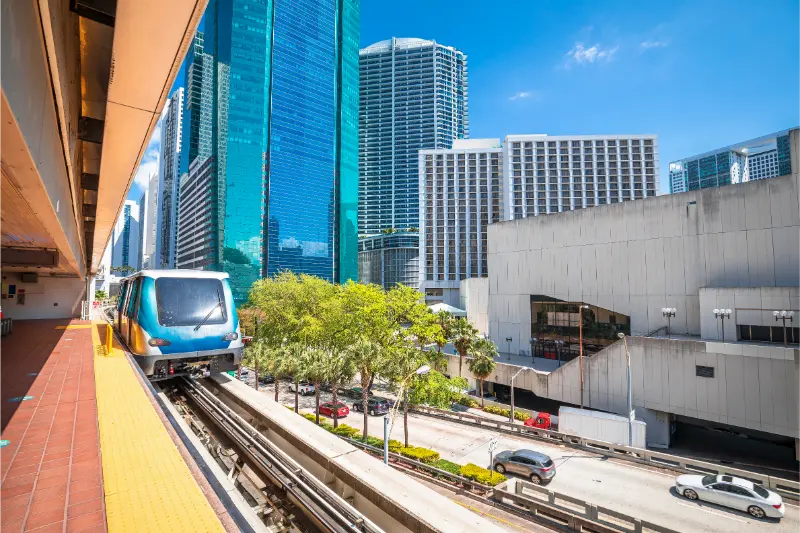
When you arrive at MiamiCentral, take a little time to orient yourself. If your hotel is Downtown or Brickell, you may be able to combine a short transfer with the free Metromover, depending on luggage and route accessibility. If staying in Miami Beach, use a bus or direct paid transfer; Miami Beach is not served by Metromover. Check how the hotel handles luggage before check-in. An easy evening waterfront walk is more sensible than crossing to three separate neighborhoods after the train journey.
Day 5: Miami Beach by transit or rideshare
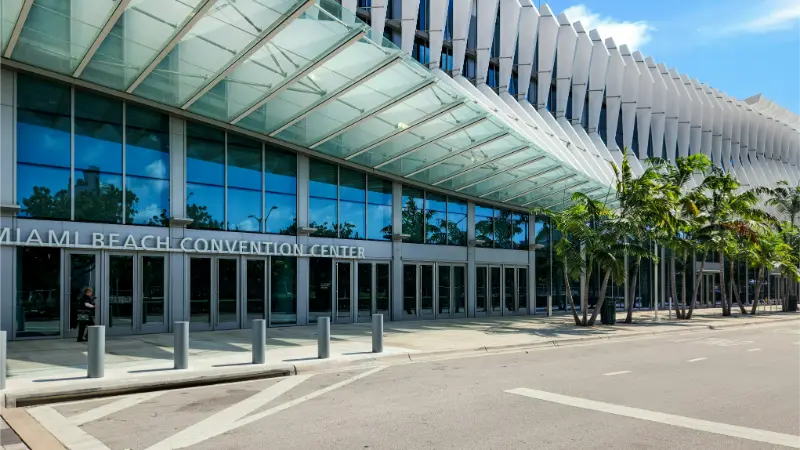
Plan a South Beach day, beginning with the Art Deco Historic District and an ocean walk. Visit in the morning if possible, when taking photographs and exploring the streets is more comfortable in warm weather. Miami Beach is geographically separate from Downtown Miami and requires a bridge crossing. Use current public-transit schedules, the city’s operating trolley services where available, or an authorized rideshare. Price the whole family’s transfer, not just a single ticket, and consider whether a direct ride will avoid a difficult stroller or mobility-device connection.

Make the afternoon deliberately light. The beach can be a main attraction, or it can be a thirty-minute shoreline visit followed by lunch and a shaded neighborhood stroll. Observe warning flags and lifeguard directions before swimming. Families should never rely on flotation toys as a replacement for close adult supervision. Finish with an early evening in South Beach or return to the mainland before traffic and fatigue build.
Day 6: Little Havana and a Downtown museum
Spend the morning in Little Havana for food, cultural context and a neighborhood walk focused around Calle Ocho. A guided interpretation can help connect landmarks to Cuban American history. Treat the area as a lived-in community and respect residents and private businesses. Rather than stacking multiple disconnected destinations, take a meal break and decide if you want an indoor attraction that afternoon. Pérez Art Museum Miami and Frost Science offer different experiences around Museum Park; one is usually enough after a full morning.
If you prefer a lower-effort day, choose just the museum and the nearby waterfront. Miami’s free Metromover can be useful between downtown areas, but routes and station service should be checked before relying on it for a timed event. Some official tourism pages publish different hours as services are updated; use the transit agency’s current alert feed as the final authority. Ask staff about accessible entrances if that matters to your party.
Day 7: Getting to the airport without a missed connection
Miami International Airport can be reached using a combination of local transport options, including a Metrorail connection through the airport’s intermodal center, but only when your hotel and luggage make that realistic. A direct taxi or rideshare may be preferable for a family with many bags or a traveler with reduced mobility. Work backward from your airline’s recommended airport arrival time, allowing time for the transfer itself and potential delays. Do not schedule a final museum visit against a tight international departure window.
If you are returning from Fort Lauderdale rather than Miami, calculate the actual airport transfer instead of assuming the cities are interchangeable. Brightline serves Fort Lauderdale city station, which is not inside the airport. Check the last mile using the operator’s current station guidance. The appeal of a car-free trip is fewer driving responsibilities, not immunity from transfer planning.
Can this trip include an Everglades excursion?
Yes, but treat it as a substantial optional replacement for a Miami day, not a quick public-bus add-on. The Everglades’ principal entrances do not connect by interior roads, and the National Park Service explains that public transit is not available within the park. A guided tour with clear pickup arrangements is the realistic option for many car-free visitors. Read precisely which entrance and experience are offered; an airboat ride at a private attraction is not identical to a National Park Service experience inside the park.
Discuss physical access and safety in advance. Wildlife viewing, tram rides and boardwalks can be wonderful for different ages, but actual boarding conditions and accessible restrooms vary. The itinerary works perfectly well without the Everglades, and it is better to enjoy Miami deeply than buy an unsuitable tour because it appears on a “must-see” list.
Comparing the real cost with renting a car
Add together the Brightline fare for your exact travel day, hotel-to-station transfers, airport transfers, local rideshares and transit fares. Compare that with the full rental-car rate, insurance or coverage choices, hotel parking, toll arrangements and fuel. A train can be especially attractive for a solo traveler who would otherwise pay every driving cost alone. For a family of five, the same calculation may favor a car, particularly if the planned hotel is far from transit. Do not use headline fares to make the comparison.
Where to sleep matters as much as the transport mode. A Downtown Miami hotel near Metromover may reduce local travel costs, while a remote inexpensive hotel can force several taxi rides each day. In Orlando, a good shuttle schedule may justify a higher room rate. When comparing options, use the total week’s budget and the number of stressful transfers, not merely the cheapest nightly price.
Who should adapt this car-free route?
Travelers with strollers should check whether a transit transfer involves elevators, accessible boarding and a manageable walk on both ends. Wheelchair users need exact access information for train boarding, hotel bathrooms and any planned shuttles. Older adults who prefer a shorter walking day might choose a central hotel and one museum per afternoon rather than the maximum number of stops. Teenagers can take responsibility for navigation while adults handle reservations and safety decisions.
For everyone, save transit maps, hotel addresses and booking references offline. Florida’s thunderstorms can slow traffic and interrupt outdoor activities, so keep nearby indoor alternatives. This itinerary demonstrates a useful principle: choose places around the transport network, rather than choosing scattered attractions and hoping a transport network will appear afterward.
Frequently asked questions
Does Brightline go to Downtown Orlando?
No. The Orlando Brightline station is at Orlando International Airport next to Terminal C, requiring a separate local transfer.

Does Brightline stop at Miami Beach?
No. Its MiamiCentral station is in Downtown Miami; Miami Beach needs an additional bus, trolley connection where suitable or paid transfer.
Can we visit the Everglades without driving?
An organized guided tour may work, but the park’s internal roads are not a public-transit network. Check the exact entrance and pickup details.
Is this suitable for visitors over 70?
Yes if individual mobility, accommodation and transfer arrangements fit the traveler. Age itself should not determine the activity choices.
Is a week enough for Orlando and Miami?
Yes for a focused introduction. Avoid adding Key West and the Gulf Coast unless you have substantially more time.