Category: Family Attractions Florida

  • Florida Theme Parks Without Roller Coasters: A Relaxed Orlando Guide for Non-Riders

    Florida Theme Parks Without Roller Coasters: A Relaxed Orlando Guide for Non-Riders

    Not everyone who visits Orlando wants to ride a roller coaster. Some visitors dislike drops or motion simulators, some are recovering from a tiring journey, and others simply prefer performances, gardens, interesting food and time with family. A visitor who chooses not to ride can still have a satisfying park day, but the day must be planned differently from an itinerary built around headline thrills. This guide explains how to choose attractions by comfort, manage mixed groups and avoid spending hundreds of dollars only to sit outside rides. It is intended for adults, teens, grandparents and families with small children who want shared experiences without pressure.

    On this page

    Decide whether a major theme-park ticket is worth it

    Start by listing what each person hopes to do. If the group wants character encounters, theatrical shows, carefully themed environments and a few gentle rides, a theme-park ticket may be worthwhile. If everyone prefers gardens, restaurants, museums and peaceful walks, consider a park-free Orlando day instead. Major park admission is costly even if you never board a high-speed ride. Compare the experiences you can comfortably enjoy with the total cost of admission, parking, transport and food before buying. Do not treat the question as a matter of being ‘brave enough.’ A vacation should meet the traveler’s interests.

    Orlando Theme Park Tower Ride

    Some groups have an enthusiastic rider and a companion who prefers not to ride. They can still share the same park day by choosing meeting points and common activities. A non-rider does not need to queue for every attraction. Agree on how long anyone is willing to wait alone, and reserve several experiences that the entire group can do together. If the outing is centered entirely on thrill attractions, it might be better for the rider to visit with another enthusiast while the non-rider enjoys a different destination.

    Magic Kingdom: atmosphere, performances and gentle attractions

    Magic Kingdom is often the most familiar choice for visitors interested in classic themed environments and family experiences. It offers rides that are generally less intense than major coasters, as well as character encounters and entertainment. However, even a ride labeled ‘slow’ can have darkness, loud sound effects, spinning or unexpected movement. Check each attraction’s current description and accessibility advisories instead of relying on the word ‘family.’ A visitor who is sensitive to motion may enjoy a live show and still find a gentle-looking boat ride uncomfortable.

    The park rewards a slower strategy: arrive with a small list of priorities, explore one area at a time and take seated breaks. If a parade or nighttime show matters, check the day-specific entertainment calendar; not every performance occurs on every date. A midday hotel break can make the evening easier for children and older guests. Factor in travel from the parking area or resort transport because a seemingly short park visit can involve a surprising amount of walking before reaching the first attraction.

    EPCOT: exhibitions, gardens and cultural spaces

    EPCOT can appeal to travelers who like gardens, architecture, exhibits and food. Its World Showcase encourages exploration of differently themed settings, and parts of the park include galleries or film experiences. This does not mean that every attraction is motion-free or suitable for every guest. Certain simulators and rides may have restrictions related to motion sensitivity or health. Use the official operator’s attraction filters for categories, heights and accessibility information before deciding which experiences belong on your personal plan.

    EPCOT is expansive, so someone who prefers short walks may need mobility support or a reduced route. A reasonable itinerary might focus on a few pavilions with a long lunch rather than trying to circle the entire park several times. Temporary festivals can add food kiosks and entertainment, but also crowds and queues. When planning for guests who need predictable meals or seating, reserve adequate time and avoid assuming that every event booth will accept the same dietary requests.

    Disney's Hollywood Studios: make the shows the main event

    Hollywood Studios offers live performances and highly themed areas alongside thrill rides. A show-focused visit is possible when you select current showtimes in advance and leave enough travel time between venues. Performances have opening and closing dates, and schedules change; a list from last year’s travel blog is not proof that the same show will be available during your visit. Some attractions marketed for families still include sudden movement, sensory effects or darkness, so reading the official advisories is essential for visitors with vertigo or anxiety about rides.

    Rather than waiting outside a roller coaster, a non-riding guest can spend time with exhibits, themed streets and entertainment, then rejoin the rest of the party for a meal. Agree on a recognizable meeting place that does not block entrances. Families with children should never leave a young child unsupervised while adults take turns riding. Ask staff about the current rider-switch procedure instead of assuming the process will be identical at every attraction.

    Animal Kingdom: observation can be the main attraction

    Animal Kingdom is an attractive option for travelers interested in habitat interpretation and animal observation. The park contains walking environments, conservation messaging and entertainment as well as attractions with significant thrills. Animal activity depends on weather, time of day and individual animal behavior, so do not promise particular sightings. Some pathways are extensive, and areas of shade can be unevenly distributed. Choosing a few highlights and taking regular rests makes the experience more manageable for mixed ages.

    A safari-style attraction may seem gentle compared with a coaster, yet vehicles can jostle and the experience may not suit everyone with back or motion concerns. Ask about boarding procedures and review the official accessibility guide. For people who would rather remain seated, consider shorter activities and performances. Visitors who are uncomfortable around crowds or loud music should map a quieter rest area early. The most rewarding part of the day may be simply watching an animal for a few minutes instead of rushing to another queue.

    Universal Orlando: check intensity instead of franchise names

    Universal’s themed lands attract visitors who love particular films and stories, but popularity does not mean an attraction is suitable for a person who dislikes motion. Some rides use large screens, rapid acceleration, tilting seats, water or elaborate effects. These can be intense even without a dramatic outdoor roller coaster. Read the actual motion and health advisory for every attraction. You may enjoy walking through a carefully designed land, visiting shops and watching an entertainment offering without boarding its signature ride.

    For a couple in which one person rides and another does not, determine whether the shared theming justifies both admissions. Park-to-park transport experiences may also have ticket requirements, which should be checked on the operator’s site. If you want mainly a meal, entertainment and an evening walk, a publicly accessible dining district might meet your needs with less expense than park admission. Check parking and event charges because not every part of an entertainment complex is free.

    Practical rider switch and mixed-age groups

    Rider switch can help a family when one adult stays with a guest who cannot or does not wish to board a ride. At Walt Disney World, the service is available at listed attractions, with rules about how parties divide and who can ride afterward. Discuss it with a Cast Member at the ride entrance; do not assume it works like a generic fast pass. A person who simply wants to skip the ride may instead be more comfortable visiting a nearby show or café. For large groups, an agreed meeting time and location reduces phone calls and confusion.

    Avoid making the non-rider responsible for all bags, children and logistical tasks without discussing that expectation. A relaxed theme-park visit should have shared decisions: who chooses lunch, when the group rests and which activity everyone attends together. Older relatives may be happy to watch grandchildren enjoy a ride, but they should have access to seats, water and restrooms. Companions with mobility limitations may need an accessible meeting point that is not up stairs or across a long plaza.

    Motion sensitivity, sensory load and accessibility

    People who experience dizziness, motion sickness, pain or anxiety with rides need not disclose private medical information to every companion. Review published warnings and ask the operator about the specific movements before boarding. A dark indoor ride can feel more intense than a visible outdoor attraction because the rider cannot anticipate turns. Some experiences combine sound, vibration, flashing lights and 3D video. Carry any usual personal supplies and consult a qualified clinician when a medical issue creates uncertainty. Do not rely on an informal internet list of ‘safe’ rides as medical advice.

    Walt Disney World publishes accessibility information and offers multiple queue-related accommodations, but eligibility and procedures vary. The Disability Access Service is not a general skip-the-line ticket for anyone who dislikes waiting. Wheelchairs, ECVs and devices such as walkers may be more useful for visitors whose difficulty is standing or walking. Guests should review the current official guidance and speak to accessibility staff when necessary. An attraction may require transfer from a mobility device to the ride seat, and boarding assistance is not uniform.

    Heat, storms and fatigue can matter more than rides

    A theme-park day involves sun exposure, paved surfaces, waiting and a lot of walking. Bring water, sun protection and clothes suited to the season. In hotter months, arrange indoor breaks and avoid assuming an outdoor queue will always be shaded. A visitor over eighty may be comfortable with a short guided tour but exhausted by hours of waiting; a teenager with sensory sensitivity may need the same rest even if physically fit. The right pace is defined by the person’s needs, not their age.

    Lightning changes the plan immediately. Outdoor queues, pools and rides may close when storms approach. Follow park instructions and seek substantial indoor shelter rather than gathering under a tree or open canopy. The National Weather Service advises staying sheltered until at least thirty minutes after the last thunder. Keep a quiet indoor alternative for periods when outdoor entertainment is delayed. If the forecast looks unpleasant for several days, an extra museum afternoon might be more satisfying than forcing another full park day.

    Food and budget for a non-rider

    A non-rider still pays for park admission, so do not assume a shorter attraction list creates a cheap outing. Decide whether the park’s atmosphere and entertainment are worth the price. Check what outside food or drinks are allowed and how mobile ordering works at the operator you select. If dining is the main attraction, you may prefer a reservation at a nearby resort or entertainment district without purchasing park admission, subject to access rules. Some resort restaurants require advance booking or parking arrangements even when the dining venue itself does not charge an admission ticket.

    For larger groups, budget separately for tickets, any express or paid line access, parking, transport, meals and souvenirs. A few well-chosen experiences will usually be more enjoyable than trying to recover admission costs by staying until everyone is irritable. If the visit includes a person with limited stamina, factor a rest day into the trip rather than scheduling back-to-back open-to-close park visits.

    Sample relaxed park day

    Begin with a comfortable breakfast and arrive after the most exhausting early-morning rush if early entry is not essential to your goals. Spend the first two hours on one or two gentle experiences and an indoor exhibit, pause for a sit-down meal, and choose one afternoon performance. Let thrill seekers use a planned window to explore separately while everyone else rests nearby. Rejoin for dinner or a shared nighttime experience only if the group still has energy. The order changes with showtimes, weather and accessibility conditions; it is a framework, not a promise about specific attraction availability.

    It is also entirely reasonable to finish in midafternoon and spend the evening by the hotel pool or at a relaxed restaurant. For many visitors the most memorable park day is the one where people could talk, notice details and enjoy being together instead of measuring success by a ride count.

    Quick comparison

    OptionGood forCheck before you go
    Magic KingdomClassic environments and family entertainmentCheck individual ride warnings
    EPCOTCultural spaces and exhibitsLong walking distances
    Hollywood StudiosShows and themed areasConfirm performance schedules
    Animal KingdomAnimal observation and interpretationHeat and possible jostling
    Universal parksFilm worlds and selected showsScreen-based motion can be intense

    Frequently asked questions

    Is Disney World worth visiting if I do not ride coasters?

    It can be, especially for performances, themed spaces and gentle experiences. Compare the activities you would actually enjoy against admission and transport costs.

    Are slow rides always suitable for motion sickness?

    No. Spinning, darkness, projections and sudden movement can affect people differently. Read the current official advisories.

    Can one adult wait while another rides with the children?

    Some attractions offer rider switch, subject to the operator’s current requirements. Ask staff at the attraction entrance.

    Which Orlando park is least tiring?

    No major theme park is guaranteed to be low-effort. The specific route, use of mobility support, weather and number of breaks matter more than the park name.

    Official sources

    Official sources and planning details reviewed in October 2026. Confirm current admission rules, accessibility, opening hours and conditions before visiting.


  • Best Museums in Florida: Art, Science, History, Space and Family-Friendly Picks

    Best Museums in Florida: Art, Science, History, Space and Family-Friendly Picks

    Florida’s museum scene is easy to underestimate because beaches and theme parks dominate the travel image of the state. Yet a well-chosen museum can explain Florida better than another afternoon of driving: art in St. Petersburg and Miami, circus and European collections in Sarasota, science centers in major cities, space history on the Space Coast and local museums that connect visitors with Indigenous, maritime, military and civil-rights stories. I would use museums as anchor experiences rather than rainy-day leftovers, especially when a trip includes children, senior travelers or several generations with different interests.

    Quick planning summary

    • Florida museums range from major art institutions to science centers, historic houses and highly specialized local collections.
    • The best museum for a family is usually the one that matches attention span and interests, not the biggest building.
    • Major cities make it easy to pair a museum with dining, a park or a walkable neighborhood.
    • Museums are excellent weather backups, but popular timed-entry venues can still require advance planning.
    • Accessibility, parking and seating vary, so check directly when those details are essential.

    In this guide

    St. Petersburg is one of Florida’s strongest art-museum bases

    The Dalí Museum is the headline attraction, but St. Petersburg works especially well because art can be combined with the waterfront, murals, restaurants and other museums without a long drive between every stop. Travelers who are not normally museum-focused often respond well to a destination where the museum is one part of a walkable day. Give a major collection at least two hours instead of squeezing it between beach activities.

    Sarasota rewards travelers who want art and architecture

    The Ringling combines art, circus history, architecture and grounds in a way that works for mixed-interest groups. Sarasota also makes it easy to pair cultural time with gardens, St. Armands or Gulf beaches. That combination is useful for couples and senior travelers who want more than a resort week, and for families whose children may enjoy circus history more than a conventional gallery visit.

    Miami and South Florida cover art, science and historic estates

    Miami offers contemporary art, science and design alongside historic properties such as Vizcaya. Frost Science is especially useful for families because it combines aquarium and science-center experiences in a modern waterfront setting. In Palm Beach County, institutions such as the Norton Museum of Art and Flagler Museum add a different perspective. Instead of crossing the entire metro area for several museums in one day, choose one geographic cluster.

    Central Florida has more than theme-park entertainment

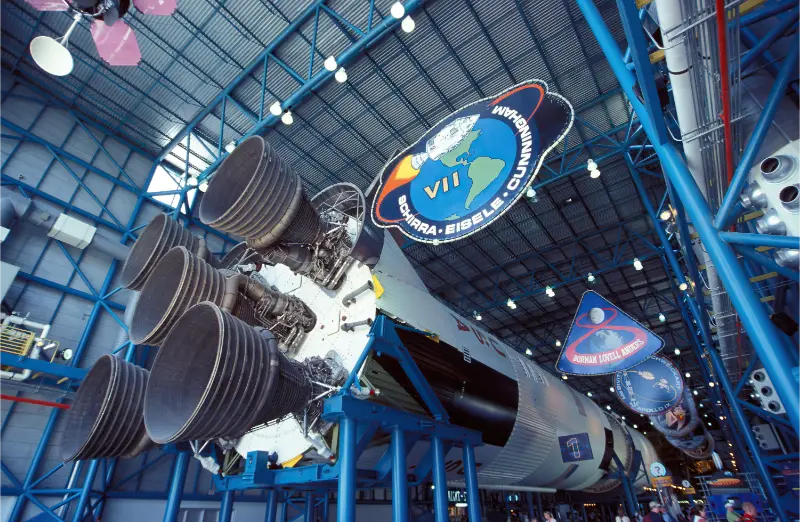
    Orlando Science Center gives families a substantial indoor day away from the parks, while nearby communities add smaller history and art museums. The Kennedy Space Center Visitor Complex on the Space Coast is larger than a conventional museum experience, but it belongs in any Florida culture-and-science plan because it combines historic spacecraft, exhibits and working spaceflight context. Give it most of a day rather than treating it as a quick indoor stop.

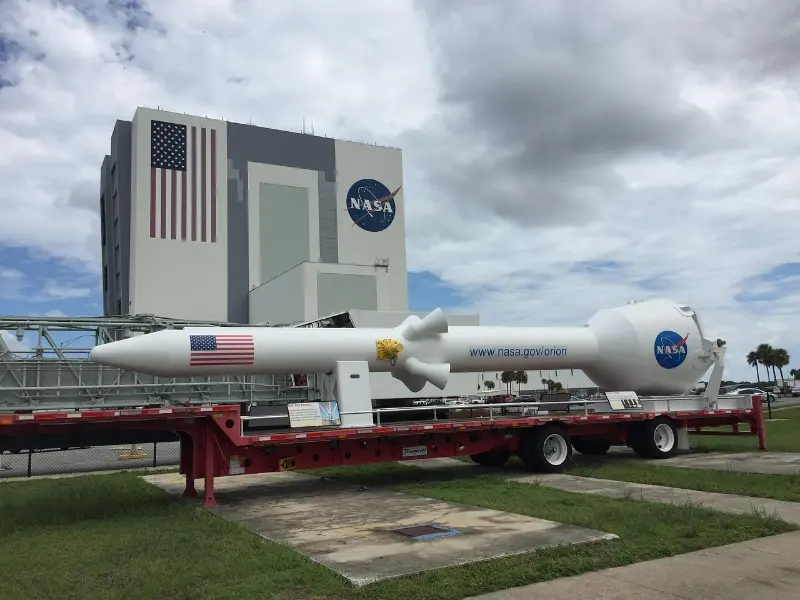
    Kennedy Space Center NASA Headquarters Building

    North Florida and the Panhandle tell different parts of the state story

    Jacksonville’s Cummer Museum combines art with riverfront gardens, while St. Augustine offers museums and historic sites tied to centuries of settlement. Pensacola’s National Naval Aviation Museum is a major aviation destination, and Tallahassee has institutions connected with state history, natural history and government. These museums are especially valuable on road trips because they give context to regions that can otherwise become only highway stops.

    Children need interactivity and pacing

    A four-year-old and a sixteen-year-old do not experience the same museum. Science centers, children’s museums, aquariums and transport or space collections often work better for younger visitors than a long sequence of quiet galleries. Teenagers may engage more with photography, design, military history, technology or an exhibit they help select. Plan a real meal or outdoor break after a long indoor visit instead of immediately adding another museum.

    Museums are strong options for heat and thunderstorms

    Florida weather makes indoor attractions strategically useful. A museum can protect a summer afternoon from heat or turn a stormy beach day into a memorable part of the trip. Keep one nearby museum or historic house saved for each travel region rather than building a statewide list you will never use. If the forecast changes, choose the closest strong option and keep the day geographically simple.

    How to choose among hundreds of institutions

    Start with subject matter, then location, then practical details. Art lovers may travel specifically for Dalí or a major exhibition; families may prioritize science and children’s museums; history travelers may prefer St. Augustine, Pensacola or Tallahassee. Check temporary exhibits, closing days, parking and timed-entry rules shortly before the visit. Smaller museums often have limited hours, which makes spontaneous arrival less reliable than at a major city institution.

    Families, seniors and accessibility

    Museums are excellent multigenerational attractions because most provide climate-controlled space, restrooms and seating, but not every gallery or historic building has the same accessibility. Confirm elevators, wheelchair routes and accessible entrances if needed. Families should identify one or two must-see exhibits before arrival and accept that younger children may not want to complete every floor. Senior travelers often enjoy a slower visit with a café or garden break rather than a museum marathon.

    Kennedy Space Center Spacecraft Exhibit

    For a mixed-age group, protect the needs that are hardest to change: heat tolerance, medication timing, mobility, naps and the ability to stand in lines. Split the group when that creates a better day instead of treating separation as a planning failure. Confirm accessibility directly with the attraction, hotel, park or operator when a specific feature is essential, because the word accessible can describe very different real-world conditions.

    Budget and booking

    Many museums charge admission, while others have free days or free permanent collections. Do not build a trip around a promotional free period without verifying the current rules. Membership reciprocal benefits can be useful for frequent museum visitors, and city attraction passes may offer value only if the included venues match your actual itinerary. Parking can be a meaningful extra cost in downtown Miami, Tampa and other urban areas, so include it in the comparison.

    Compare total trip cost rather than headline price. Parking, resort fees, taxes, cleaning charges, rideshares, rental-car costs and food can change which option is genuinely affordable. Keep weather-sensitive elements flexible when possible, and save confirmation numbers in one place. If one experience is the main reason for the trip, secure that first before building nonrefundable lodging around it.

    How to build a realistic day

    Start with one anchor activity and place it at the time when the group has the most energy and conditions are usually best. Leave enough space for parking, meals and unexpected delays rather than stacking timed reservations back to back. In warm months, a morning outdoor block followed by lunch and an indoor or shaded afternoon is often more comfortable than continuous sightseeing. On driving days, stop before fatigue becomes a problem and keep water, sun protection and a simple snack available.

    Keep one nearby backup plan that does not require crossing a major metro area. A museum, shopping district, hotel pool, scenic drive or relaxed meal can rescue a day when weather or energy changes. The goal is not to complete the maximum number of attractions; it is to finish the day with enough energy to enjoy the next one. This approach is particularly valuable for children, older travelers and anyone visiting Florida for the first time.

    Common mistakes to avoid

    • Treating museums only as emergency rainy-day options.
    • Crossing a large metro area for several unrelated museums in one day.
    • Expecting young children to enjoy the same pacing as adults.
    • Ignoring limited opening days at smaller institutions.
    • Assuming every historic building is fully step-free.
    • Buying an attraction pass without checking whether the included museums fit the itinerary.

    Florida travel guide for first-time visitors, Florida with kids, Florida in summer, St. Petersburg and Clearwater travel guide, Sarasota and Siesta Key travel guide.

    Official resources to check

    Rules, opening hours, prices, transport schedules, access arrangements and weather-related operations can change. If a detail is essential to the trip, confirm it with the responsible operator or public agency shortly before travel rather than relying on an old screenshot, saved social post or third-party summary.

    Final planning advice

    The strongest Florida itineraries are clear about priorities without becoming rigid. Choose what genuinely matters, keep the day geographically compact and allow conditions to change. A trip with a little breathing room usually produces better meals, easier family decisions and more memorable experiences than a schedule that depends on perfect traffic, perfect weather and perfect energy from morning to night.

  • Best Zoos and Aquariums in Florida: Wildlife, Marine Life and Family-Friendly Picks

    Best Zoos and Aquariums in Florida: Wildlife, Marine Life and Family-Friendly Picks

    Florida’s strongest zoos and aquariums are useful for more than rainy days. They can introduce travelers to native ecosystems before an Everglades or springs trip, give families a structured half-day between beach days, and offer older travelers an easier wildlife experience than a long humid trail. The state also has a long coastline and major conservation organizations focused on sea turtles, manatees, reefs and marine rescue.

    Explore this guide

    I would choose by region rather than ranking every facility from first to tenth. A great zoo near the route is usually a better vacation choice than a slightly larger one that creates four hours of extra driving. Accreditation, animal care, conservation work, shaded walking and realistic visit length matter more than the number of exhibits.

    Quick planning summary

    • Tampa Bay: ZooTampa and The Florida Aquarium make a strong urban wildlife pairing
    • Northeast Florida: Jacksonville Zoo and Gardens is a major full-day choice
    • Space Coast: Brevard Zoo combines animals with an outdoor Florida feel
    • Palm Beaches: Palm Beach Zoo works well with a South Florida family itinerary
    • Southwest Florida: Naples Zoo is a convenient complement to beach days
    • Marine-life planning: add reputable rescue, rehabilitation or science centers when that mission matches your interests

    Tampa: ZooTampa and The Florida Aquarium

    Tampa is one of the easiest Florida cities for a dedicated zoo-and-aquarium combination. ZooTampa at Lowry Park has a broad collection and a strong Florida-wildlife component, while The Florida Aquarium focuses on marine and aquatic environments. I would split them across two days or pair one with a lighter city activity rather than forcing both into an exhausting single day with young children.

    The aquarium is especially useful during hot or stormy weather because much of the experience is climate-controlled, although outdoor areas still matter. ZooTampa requires more walking and sun planning. If your trip also includes Busch Gardens, avoid stacking three large animal-focused attractions without giving the family a beach, pool or slower neighborhood day in between.

    Jacksonville Zoo and Gardens

    Jacksonville Zoo and Gardens is one of North Florida’s major family attractions and can justify a substantial part of a day. The “Gardens” part of the name is important: landscaping and walking through different environments make the visit feel broader than moving from cage to cage.

    Family tipFor families driving I-95, Jacksonville can be a practical stop before St. Augustine or Amelia Island. I would arrive earlier in warm months, use the hottest part of the day for indoor or shaded spaces when possible, and avoid planning a long evening drive immediately after several hours on foot.

    Brevard Zoo and the Space Coast

    Brevard Zoo fits naturally into a Space Coast trip that may already include Kennedy Space Center and Cocoa Beach. Its scale is manageable for families that want a substantial wildlife visit without turning the entire vacation into theme-park-style touring. Some experiences require separate reservations or fees, so review the official site before promising an add-on.

    Pink Flamingos at Florida Wildlife Pond

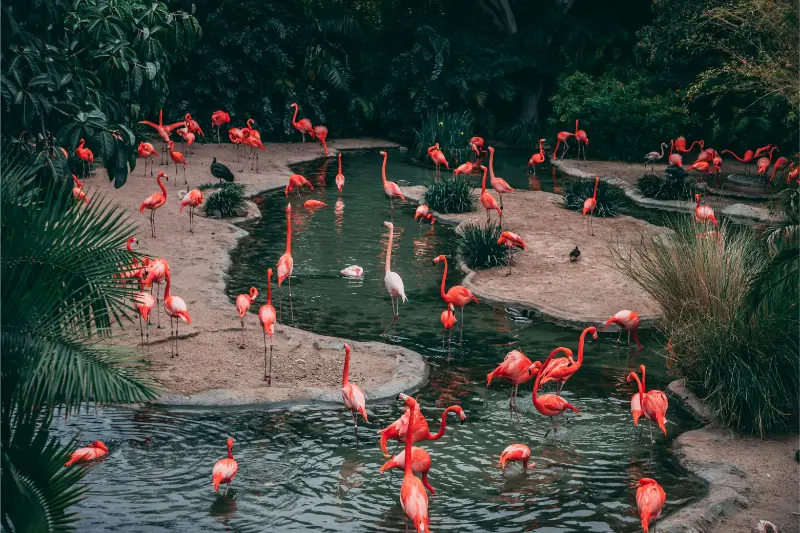
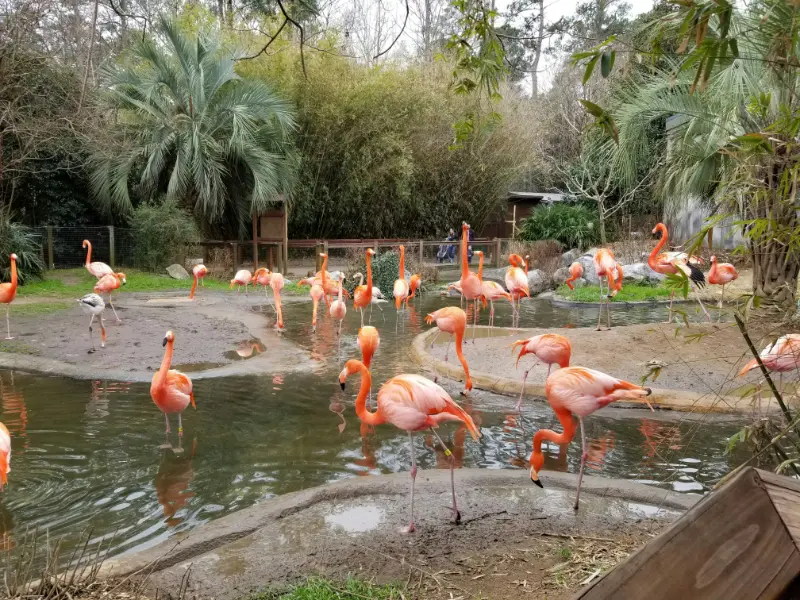
    The zoo is also a good example of why Florida wildlife attractions work best when combined with the surrounding region. One day can be focused on animals and conservation, another on space exploration, and another on the beach. That variety reduces the feeling of repeating similar exhibits.

    Palm Beach Zoo, Naples Zoo and regional favorites

    Palm Beach Zoo is an easy addition to a Palm Beaches itinerary, while Naples Zoo fits well in Southwest Florida between beach and Everglades-oriented days. Both can work for grandparents traveling with children because they offer a defined route, predictable facilities and a visit that can be shortened if the heat becomes tiring.

    Other regional zoos and wildlife centers may be excellent, but I would distinguish between accredited zoos, sanctuaries, rehabilitation centers and roadside animal attractions. The names can sound similar while the welfare standards, conservation role and visitor experience are very different. Research the institution rather than assuming every “wildlife park” operates the same way.

    Aquariums, marine science and rescue centers

    Florida has traditional aquariums as well as marine-science centers, sea-turtle hospitals and rescue-focused institutions. The Florida Aquarium is the most obvious major aquarium in Tampa, while smaller centers around the Atlantic and Gulf coasts can provide close-up education about local species, reefs, lagoons and rehabilitation work.

    For children, a smaller center with touch tanks or visible rehabilitation can be more memorable than a huge building. For adults, the mission matters: look for organizations that explain where animals came from, how rescue decisions are made and what conservation projects support wild populations.

    How to choose responsibly

    I look for clear information about accreditation, conservation, veterinary care and the origin of animals. A facility that focuses on rescue should explain why an animal cannot be released. Interactive encounters deserve extra scrutiny: the fact that an activity can be purchased does not automatically make it the most educational or animal-friendly choice.

    Also read the current visitor map. A zoo with excellent exhibits can still be a poor fit for someone who cannot walk long distances in heat. Shade, tram options, rental mobility devices, indoor breaks and accessible restrooms can be decisive for a multigenerational family.

    Families, older travelers and accessibility

    Zoos and aquariums are often easier than wilderness wildlife viewing for toddlers, older relatives and travelers with mobility limitations, but the details still matter. Check stroller rules, rental wheelchairs or scooters, sensory resources and accessible routes. Families should plan one realistic “must-see” zone rather than assuming a child will happily tour every exhibit. A shorter positive visit is better than dragging the group through the final hour.

    Pink Flamingos Standing in Florida Wildlife Park

    For multigenerational groups, I would build the day around a comfortable base and one shared priority, then let the group split for optional activities. Florida trips work better when everyone does not have to match the pace of the fastest walker or the most energetic teenager. Shade, seating, restrooms, short transfer times and an easy route back to the hotel often matter more than squeezing in one additional attraction.

    Budget and booking strategy

    Tickets for a family can be expensive, especially after parking, food and paid animal experiences. Compare city attraction passes only if they include places you already intended to visit. Pack refillable water where permitted and eat before peak lunch time. If the zoo is one stop on a road trip, a half-day can deliver better value than paying for extras just because they are available.

    Compare the total day rather than a single ticket or hotel price. Parking, tolls, resort fees, food, rentals, transport and cancellation rules can change which choice is actually cheaper. For weather-sensitive plans I prefer reservations that can be modified, even when the flexible option costs a little more.

    Best timing and seasonal planning

    Cooler mornings are usually better for outdoor zoos, while aquariums are dependable options during heat or rain. Florida summer afternoons can bring lightning, which affects outdoor animal experiences. Holiday weeks and school breaks can be busy. When an animal encounter or behind-the-scenes program is the main reason for visiting, reserve it early and confirm the schedule.

    Florida is large enough that weather and crowd patterns differ by region. Check the local forecast and official operating calendar close to the visit, especially when the plan depends on water conditions, wildlife seasons, a ferry, a boat trip or an outdoor attraction.

    A practical way to use this guide

    Start with the part of Best Zoos and Aquariums in Florida that would make the trip feel worthwhile even if the rest of the day changed. Protect that priority first, then add flexible stops around it. This keeps a weather delay, tired child or longer-than-expected drive from turning the whole itinerary into a failure.

    I also separate fixed commitments from flexible choices. Timed tickets, ferries, cruises, special tours and hard-to-get reservations belong in the fixed group. Beaches, neighborhood walks, casual meals, parks and hotel-pool time can usually move. When conditions change, adjust the flexible pieces instead of forcing the original schedule.

    Common mistakes to avoid

    • Choosing a facility only because it is closest without checking its conservation standards.
    • Trying to combine two major animal attractions in one day with small children.
    • Arriving at an outdoor zoo at the hottest part of a summer afternoon.
    • Paying for every add-on without first seeing how long the main visit takes.
    • Assuming all wildlife sanctuaries, rescues and zoos follow the same standards.
    • Ignoring accessibility maps and walking distances for a multigenerational group.

    Useful Wonderful Florida guides

    Official resources to check before you go

    Hours, reservation systems, access rules, transportation schedules and weather-related closures can change. When a specific attraction, trail, ferry or service is essential to your trip, verify it on the official source shortly before travel.

    Frequently asked questions

    What is the best Florida zoo for a first visit?

    That depends on your route. Jacksonville Zoo is strong in North Florida, ZooTampa works naturally with Tampa Bay, Brevard Zoo fits the Space Coast and Naples Zoo is convenient in Southwest Florida.

    Which Florida aquarium is best for families?

    The Florida Aquarium in Tampa is a major all-round choice, but smaller coastal marine-science centers can be better if you want local species, sea-turtle education or a shorter visit.

    Are zoos good summer attractions in Florida?

    Yes, but arrive early, use shade and indoor areas, and plan for heat and thunderstorms. Aquariums are usually more weather-resistant than outdoor zoos.

    How can I tell if a wildlife attraction is responsible?

    Look for transparent conservation and veterinary information, recognized accreditation where applicable, clear explanations of rescue animals and practices that do not prioritize close contact over animal welfare.

    Are Florida zoos accessible?

    Major facilities generally provide accessible routes and services, but terrain and walking distances vary. Check the current accessibility page and rental options before visiting.

    Final thoughts

    Florida’s best zoos and aquariums can deepen a trip rather than simply filling a rainy day. Choose a respected facility near your route, focus on the exhibits that connect with the region you are exploring, and leave enough time for children and older travelers to move at a comfortable pace.

  • Best Botanical Gardens in Florida: Tropical Landscapes, Historic Estates and Family Visits

    Best Botanical Gardens in Florida: Tropical Landscapes, Historic Estates and Family Visits

    Florida gardens are more than collections of tropical plants. They can be historic estates, conservation centers, Japanese landscapes, sculpture settings, butterfly habitats and some of the most relaxing half-days in a busy itinerary. They also reveal how different the state is from north to south: camellias and azaleas in North Florida, subtropical collections in Central Florida and genuinely tropical plant worlds farther south. I like gardens as a reset day between theme parks, beaches and long drives because they work at a slower pace and can be adapted easily for families, photographers and senior travelers.

    Quick planning summary

    • Garden character changes sharply by region, climate and season.
    • Bok Tower Gardens, Fairchild, Selby, Naples Botanical Garden and other major gardens can anchor a half-day or longer visit.
    • Morning is often the most comfortable time for walking, photography and bird activity.
    • Historic houses, conservatories and special exhibitions may have separate hours or tickets.
    • Check accessibility and tram options directly when walking distance is a concern.

    In this guide

    Bok Tower Gardens is one of Central Florida’s most distinctive landscapes

    Lake Wales offers a garden experience that feels very different from Orlando’s entertainment districts. The landscape, Singing Tower and elevated ridge setting create a calm day that pairs well with a Central Florida road trip. Families can use outdoor areas without feeling trapped in a formal museum, while couples and senior travelers can take the visit slowly. Check current programming if the carillon or a special tour is a priority.

    Fairchild Tropical Botanic Garden showcases South Florida at full scale

    Near Miami, Fairchild is a major tropical garden with extensive collections and broad grounds. It works best when treated as a destination rather than a quick photo stop. Heat and humidity matter, so an early arrival improves comfort. Pair it with one nearby South Miami or Coral Gables experience instead of driving back and forth across the metro area. Special exhibitions and seasonal events can change the character of a visit.

    Luxury Yacht Passing Florida Tropical Homes

    Naples Botanical Garden fits a relaxed Gulf Coast trip

    Naples Botanical Garden adds plant collections and outdoor space to a region often planned almost entirely around beaches and restaurants. It can be especially useful for couples, families and seniors who want a nature-focused day without a boat trip. The garden is substantial enough to deserve several hours, yet easy to combine with a slower afternoon. In hot months, arrive early and save indoor dining or shopping for later.

    Selby Gardens connects plants with Sarasota culture

    Marie Selby Botanical Gardens is closely associated with orchids, epiphytes and Sarasota’s bayfront setting. The destination works naturally with the city’s museums, downtown and barrier islands. Travelers who have a beach-heavy itinerary can use Selby as the cultural-nature counterpoint. Because exhibitions and programming change, check the official site before visiting rather than assuming a display seen online will still be present.

    Morikami offers a very different garden experience

    The Japanese gardens at Morikami Museum and Japanese Gardens in Delray Beach are not simply another tropical plant collection. The landscape, museum context and cultural interpretation create a slower and more reflective visit. It works well for adults and teenagers who enjoy photography or design, and it can fit into a Palm Beach County itinerary without requiring a full day. Respect quiet areas and avoid treating every path as a photo set.

    Orlando and North Florida have strong garden options too

    Harry P. Leu Gardens gives Orlando travelers a substantial garden close to the city, useful on a rest day from theme parks. Jacksonville, Gainesville, Tallahassee and Panhandle destinations offer arboretums, university gardens and state-park landscapes that reflect cooler winter conditions and stronger spring bloom cycles. North Florida garden travel is often more seasonal than South Florida, so bloom timing may matter more than it does in a tropical collection.

    Historic gardens are about architecture as well as plants

    Places such as Vizcaya, Cummer Museum gardens, Eden Gardens State Park and historic estates combine landscape design with buildings and local history. A visitor interested in architecture may enjoy these more than a purely botanical collection. Check whether house tours and gardens operate on the same schedule. Historic structures can also have accessibility limitations even when the garden paths are relatively manageable.

    Orlando Historic Street with Shops and Palm Trees

    Photography and heat require practical pacing

    Soft morning light, active birds and lower temperatures make early visits rewarding. Carry water, protect against sun and insects, and use benches rather than trying to complete every path at the same speed. After rain, paths can be slick or muddy. Tripods and professional photography may require special permission at some gardens, so casual visitors should verify policies before bringing extensive equipment.

    Families, seniors and accessibility

    Gardens can work very well for children when the visit has a purpose: spotting butterflies, finding a tower, following a map or choosing a favorite plant. Do not expect toddlers to appreciate a two-hour horticultural lecture. Senior travelers should ask about trams, benches, paved routes and accessible restrooms when needed. For multigenerational groups, a garden followed by lunch is often a better shared activity than a full-day attraction with long queues.

    For a mixed-age group, protect the needs that are hardest to change: heat tolerance, medication timing, mobility, naps and the ability to stand in lines. Split the group when that creates a better day instead of treating separation as a planning failure. Confirm accessibility directly with the attraction, hotel, park or operator when a specific feature is essential, because the word accessible can describe very different real-world conditions.

    Budget and booking

    Some gardens are free, others charge museum-level admission, and special events can cost more than a normal day ticket. Compare whether parking is included and whether a combined museum-and-garden ticket fits your interests. Membership can make sense for repeat local visitors, but a tourist should buy it only when reciprocal admission or multiple visits produce real value. Avoid paying for a special event if the standard garden experience is what you actually want.

    Compare total trip cost rather than headline price. Parking, resort fees, taxes, cleaning charges, rideshares, rental-car costs and food can change which option is genuinely affordable. Keep weather-sensitive elements flexible when possible, and save confirmation numbers in one place. If one experience is the main reason for the trip, secure that first before building nonrefundable lodging around it.

    How to build a realistic day

    Start with one anchor activity and place it at the time when the group has the most energy and conditions are usually best. Leave enough space for parking, meals and unexpected delays rather than stacking timed reservations back to back. In warm months, a morning outdoor block followed by lunch and an indoor or shaded afternoon is often more comfortable than continuous sightseeing. On driving days, stop before fatigue becomes a problem and keep water, sun protection and a simple snack available.

    Keep one nearby backup plan that does not require crossing a major metro area. A museum, shopping district, hotel pool, scenic drive or relaxed meal can rescue a day when weather or energy changes. The goal is not to complete the maximum number of attractions; it is to finish the day with enough energy to enjoy the next one. This approach is particularly valuable for children, older travelers and anyone visiting Florida for the first time.

    Common mistakes to avoid

    • Visiting only at the hottest part of the day.
    • Assuming every garden looks the same in every season.
    • Trying to combine distant gardens across one metro area in a single day.
    • Ignoring separate hours for historic houses or conservatories.
    • Bringing professional photography equipment without checking policy.
    • Planning a long visit without water, shade or rest breaks.

    Florida in spring, Best Florida state parks, Sarasota and Siesta Key travel guide, Naples Florida travel guide, Miami and Miami Beach travel guide.

    Official resources to check

    Rules, opening hours, prices, transport schedules, access arrangements and weather-related operations can change. If a detail is essential to the trip, confirm it with the responsible operator or public agency shortly before travel rather than relying on an old screenshot, saved social post or third-party summary.

    Final planning advice

    The strongest Florida itineraries are clear about priorities without becoming rigid. Choose what genuinely matters, keep the day geographically compact and allow conditions to change. A trip with a little breathing room usually produces better meals, easier family decisions and more memorable experiences than a schedule that depends on perfect traffic, perfect weather and perfect energy from morning to night.

  • Best Indoor Things to Do in Florida: Museums, Aquariums, Space, Culture and Rainy-Day Ideas

    Best Indoor Things to Do in Florida: Museums, Aquariums, Space, Culture and Rainy-Day Ideas

    Florida is famous for outdoor days, but some of its best experiences happen under a roof. Heat, thunderstorms, a cold front or simple travel fatigue can make an indoor plan more appealing than another beach or theme-park marathon. I like to keep one indoor option near every major overnight base because it turns bad weather into a change of pace instead of a lost day. The strongest choices are not only emergency backups: museums, aquariums, space exhibits, historic houses, galleries and performing arts can be highlights in their own right.

    Quick planning summary

    • Keep one indoor backup within 20–30 minutes of each overnight base.
    • Museums and aquariums work best when chosen for genuine interest, not only because it is raining.
    • In summer, an indoor afternoon can be useful even on a sunny day because of heat and thunderstorms.
    • Book timed-entry attractions only when they are important enough to justify losing flexibility.
    • For multigenerational groups, prioritize seating, elevators, food and easy parking as well as exhibits.

    In this guide

    Orlando: theme-park alternatives, science and resort time

    Orlando has more indoor options than most visitors need. Large theme parks include extensive indoor rides and shows, but a true weather backup can also mean a science center, aquarium-style attraction, shopping complex, bowling, interactive entertainment or simply returning to the resort for a pool-and-rest afternoon between storms. The key is geography: an indoor attraction on the opposite side of the metro area may create more stress than the weather itself.

    If a storm interrupts a park day, follow the park’s safety procedures rather than racing to another reservation. Florida thunderstorms can move quickly, and many outdoor operations resume after conditions improve. On a deliberately lighter day, a museum or indoor attraction can give children and older adults a break from long outdoor walking.

    Miami and South Florida: art, science and aquariums

    Miami, Fort Lauderdale and the Palm Beaches have enough museums and cultural venues to fill several rainy days. Art museums, science exhibits, historic estates and aquariums let a trip continue without requiring perfect beach weather. I would choose a venue near the neighborhood you already planned to visit, then combine it with lunch rather than treating rain as a reason to cross the entire metro area.

    South Florida rain can be intense and localized. A wet morning does not always mean a wet evening, so keep the second half of the day flexible. Parking garages and covered drop-off areas can make a major difference for travelers with mobility needs or families handling strollers in heavy rain.

    Space Coast: Kennedy Space Center as a major all-weather anchor

    Kennedy Space Center Visitor Complex includes substantial indoor exhibits and is one of the rare places that can justify a full destination day even when the beach forecast is poor. Outdoor elements and bus operations can still be affected by severe weather, so check current conditions, but the scale of the indoor content makes the Space Coast less dependent on sunshine than many beach regions.

    Kennedy Space Center NASA Globe Monument

    Pair the space center with a flexible Cocoa Beach plan rather than locking the day into multiple timed stops. If a launch is part of the trip, remember that launch schedules can change. Treat the launch as a bonus unless you have built enough flexibility to wait for a new attempt.

    Tampa Bay, St. Petersburg and Sarasota: museums and cultural depth

    Tampa Bay and Sarasota are particularly strong for visitors who enjoy art, history and marine life. St. Petersburg has major art institutions, Tampa has museums and an aquarium, and Sarasota adds The Ringling and other cultural venues. These are not consolation prizes for bad weather; they are among the reasons to visit the region.

    A good Gulf Coast rainy-day plan keeps one district together. Museum, lunch and a nearby gallery or shopping street usually work better than driving from Tampa to Sarasota and back because the beach is wet. If conditions clear late, finish with a waterfront walk rather than forcing a full beach session.

    St. Augustine, Jacksonville and North Florida: history indoors

    Historic houses, museums, galleries and visitor centers make North Florida easier to enjoy during cold rain or summer storms. St. Augustine is especially useful because many indoor sites sit close together in the historic core. Jacksonville offers larger museums and cultural venues, while Tallahassee combines state history, science and museums.

    Historic buildings may have stairs or narrow passages, so visitors who need step-free access should check the individual site. A compact historic district is also easier on a rainy day when the hotel is nearby; long suburban drives reduce the value of an otherwise good backup plan.

    Aquariums, wildlife centers and marine science

    Aquariums and indoor wildlife facilities can be strong choices for children, but not every animal attraction has the same conservation standards or amount of indoor space. Look for accredited institutions, clear educational programs and transparent animal-care practices. In coastal regions, smaller marine science centers can offer a meaningful two-hour visit without the cost or scale of a major aquarium.

    NASA Kennedy Space Center Spacecraft Hangar

    Weather can also affect animal programs, outdoor touch areas or boat-linked experiences. Check the day’s schedule before purchasing add-ons. The best family backup is one that still feels worthwhile if some outdoor components are closed.

    Shopping, food halls and entertainment districts

    Shopping is an obvious indoor fallback in Orlando and South Florida, but it works best when the group actually wants it. Outlets can be crowded during storms because everyone has the same idea. A local market, food hall, bookstore or neighborhood shopping street may create a more relaxed afternoon than a giant mall.

    For teenagers and mixed groups, indoor entertainment such as bowling, interactive games or cinemas can be useful after several museum-heavy days. I would keep these as flexible options rather than prebooking every hour. Sometimes the most restorative rainy-day plan is lunch, laundry and an early night.

    How to read the forecast without cancelling the whole day

    Florida forecasts often show a chance of rain or thunderstorms even when much of the day is usable. Look at hourly timing and radar, not only the weather icon. In warm months, outdoor mornings and indoor afternoons often work well. When lightning is present, follow safety guidance immediately; do not wait under a beach umbrella or open shelter for a storm to pass.

    If the weather system is widespread and persistent, commit to the indoor day and enjoy it. Repeatedly driving between beaches in search of a dry patch can waste more time than the rain itself. Keep one strong indoor choice close to the hotel and treat sunshine later as a bonus.

    Families, seniors and accessibility

    Indoor attractions are especially valuable for families with small children, older travelers and anyone who needs climate-controlled breaks. Check seating, elevators, sensory accommodations, stroller rules and the walking distance from parking. A museum that looks small online can still require several hours of standing. For mixed-age groups, choose places with multiple layers of interest so one person can focus on art or history while another prefers interactive exhibits, animals or a café break.

    Budget and booking

    Indoor attractions range from free museums and historic buildings to major ticketed aquariums and entertainment complexes. Compare the total day cost, including parking and food, rather than admission alone. If bad weather is only a possibility, avoid locking every backup option into a nonrefundable ticket. City passes can help only when you would genuinely visit enough included attractions; otherwise one carefully chosen museum and a good meal may cost less and feel less rushed.

    How to build a realistic day

    Choose one substantial indoor attraction, not four. Pair it with lunch and one flexible stop nearby. If the weather improves, add a short outdoor walk rather than crossing the city for a second reservation. When storms are moving through, keep the route compact so you are not driving repeatedly in heavy rain. A hotel pool, café or movie can be a legitimate part of the day when everyone is tired.

    Common mistakes to avoid

    • Driving across a metro area just because an attraction is indoors.
    • Buying multiple nonrefundable backup tickets before seeing the forecast.
    • Treating every rainy forecast as an all-day washout.
    • Forgetting parking, timed-entry and security requirements.
    • Choosing only child-focused venues in a multigenerational group.
    • Assuming indoor means low walking or guaranteed seating.

    Best museums in Florida, Florida botanical gardens, Florida with kids, Florida shopping guide, Florida weather guide.

    Official resources to check

    Rules, schedules, access arrangements, fees and weather-related operations can change. If a detail is essential to the trip, confirm it with the responsible public agency, attraction, venue or operator shortly before travel rather than relying on an old screenshot or third-party summary.

    Final planning advice

    The strongest Florida trips balance ambition with flexibility. Choose the experiences that genuinely matter, keep each day geographically sensible and leave room for weather, traffic and energy to change. A little breathing space usually produces a better vacation than a schedule that depends on everything running perfectly.

  • Panama City Beach Florida Travel Guide: Best Things to Do, Beaches, Families and Planning Tips

    Panama City Beach Florida Travel Guide: Best Things to Do, Beaches, Families and Planning Tips

    Panama City Beach is one of Florida’s most recognizable Panhandle destinations, but a good trip is more than simply booking a condo and walking to the nearest patch of sand. The city stretches along a long Gulf shoreline, has very different personalities from the quiet west end to the busier central resort area, and sits close to state parks, undeveloped islands, family attractions and the bayside city of Panama City. The easiest way to enjoy it is to decide what kind of vacation you want before choosing where to stay.

    Explore this guide

    For a first visit, the goal is not to collect every possible stop. Build the day around the experience that matters most to your group, then use nearby beaches, food or short walks as supporting activities. That approach makes the trip more resilient when traffic, Gulf conditions or summer thunderstorms change the schedule.

    Quick planning summary

    • Best for: beaches, families, Gulf sunsets, boat trips, shopping and easy first-time Panhandle vacations
    • Local time: Central Time
    • Public beach access: nearly 100 access points across Bay County
    • Car: useful for state parks, Panama City and west-end attractions
    • Recommended stay: 3–5 nights for a first visit

    Important current-status note

    October 2026 information snapshot: this article is scheduled for 2028. Hours, prices, construction, beach access, shuttle schedules, wildlife rules, parking systems and local ordinances can change before publication. The practical details below are a verified 2026 planning baseline, not a promise that every condition will still apply in 2028. Recheck the linked official source shortly before travel.

    Current practical baseline

    Official visitor information currently lists nearly 100 public beach access points in Bay County, and the City operates paid public parking lots near the beach. The local beach-flag system is essential: double red means the water is closed to the public, while red and yellow indicate progressively lower but still meaningful hazards. The visitor center at 17001 Panama City Beach Parkway currently publishes daily 8 a.m.–5 p.m. Central Time hours.

    How Panama City Beach is laid out

    The resort corridor is long enough that “near the beach” does not automatically mean near everything else. The west end around Pier Park and the Lake Powell/Camp Helen side tends to feel different from the central Front Beach Road zone, while the Thomas Drive and Grand Lagoon side is convenient for St. Andrews State Park and many boat departures. Choose lodging around your highest-priority activities, not around a generic map pin.

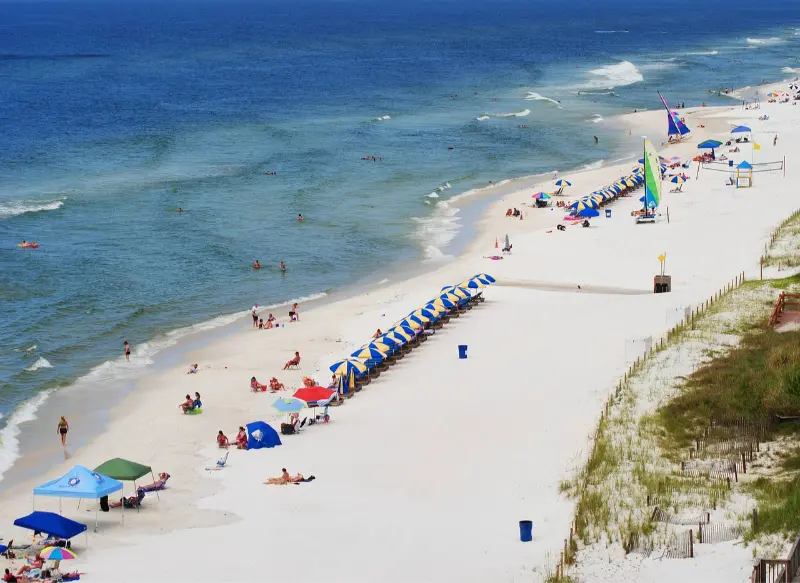
    Panama City Beach Aerial View with Turquoise Sea

    Beach access and parking

    Bay County states that its beaches are public and maintains dozens of access points. Some have parking and accessible features; many are simple walkovers without large lots. The City currently operates paid public lots at 9941 Thomas Drive, 600 Henley Drive and 11209 Front Beach Road, with a 2026 baseline of $2 per hour, $12 per day and $84 per week. Recheck rates before 2028.

    Understand the beach flag system

    Rip currents are one of the most important trip-planning realities. Flags communicate water hazards, and double red closes the water to the public. Do not treat a red flag as a challenge or assume strong swimmers are exempt from risk. Check current conditions every beach day because yesterday’s calm surf says nothing about today.

    Best things to do beyond the sand

    A first trip can combine a state-park morning, a natural island outing, shopping and dining, a family attraction, and an afternoon in Panama City’s historic districts. This variety matters on rainy or windy days because it keeps the vacation from depending entirely on perfect Gulf conditions.

    Where to stay

    Beachfront condos are practical for families who want kitchens and easy sand access. The Pier Park area works well for shopping and evening walking. Thomas Drive is convenient for St. Andrews and Grand Lagoon excursions. Travelers who value quiet more than nightlife may prefer the west end. Compare total price, parking, resort fees, beach chair policies and walking distance rather than only the nightly rate.

    How long to stay

    Three nights can cover one major beach day, one nature or boat day and one mixed attraction day. Four or five nights create a much better margin for weather. A week makes sense for families who prefer slower mornings and do not want every day to involve driving.

    Spring break and high-impact periods

    Panama City Beach applies additional rules during designated high-impact periods. Current visitor guidance says alcohol is not permitted on sandy beaches during March and highlights extra safety measures during late-March/early-April dates. Travelers should verify the exact rules for their travel year rather than relying on older spring-break habits.

    Dog beach and active travelers

    The west side of the Russell-Fields City Pier currently has a designated dog-friendly beach where dogs must be leashed. The area also supports volleyball, pier walking, fishing, biking and long beach walks. Active travelers should still schedule around heat because humidity can make a moderate route feel much harder than the mileage suggests.

    Is Panama City Beach right for you?

    Choose PCB if you want a broad range of lodging, restaurants and activities with a famous Gulf beach always nearby. If your priority is solitude, low-rise development and a small-town feel, you may prefer Mexico Beach, Cape San Blas or the Forgotten Coast and use PCB as a shorter stop rather than the entire vacation.

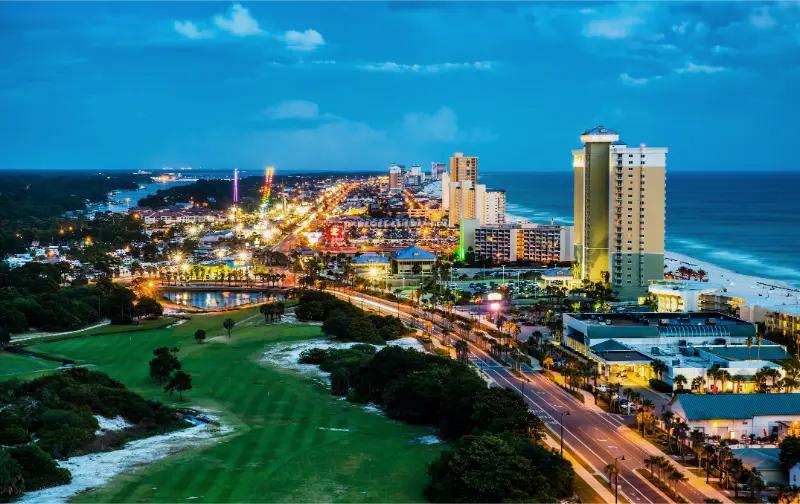
    Panama City Beach Hotels by the Gulf Aerial

    Families, teenagers and senior travelers

    Families with young children usually enjoy the area most when the day alternates between movement and recovery: beach or trail first, then lunch or an indoor stop, then another short activity later. Teenagers may prefer snorkeling, wildlife, biking, shopping or interactive exhibits over a long sequence of passive sightseeing. Senior travelers often appreciate the broad choice of scenic drives, museums and waterfront stops, but midday heat and soft sand can make apparently short distances tiring. Keep the schedule flexible enough for different energy levels.

    Weather, water and seasonal planning

    Bay County has a long warm season, strong summer sun, frequent afternoon thunderstorms and a hurricane season that can affect beaches, roads and attraction hours even when the center of a storm is far away. Summer is excellent for warm-water trips but demands more shade, hydration and schedule flexibility. Spring and fall often provide a comfortable compromise for walking, wildlife viewing and beach time. Winter can be quiet and pleasant for museums and trails, but Gulf water and wind can feel cool. Check radar, marine conditions and official beach flags before committing to swimming, boating or a long exposed walk.

    Accessibility and multigenerational travel

    Accessibility changes dramatically between paved attractions, shopping districts, boardwalks, soft sand and natural trails. A destination described as “easy” may still involve heat, uneven surfaces or a long walk from parking. Travelers using a wheelchair, walker or stroller should verify the exact route and available accessible facilities rather than relying only on distance. Multigenerational groups generally do best by pairing one higher-effort activity with one lower-effort stop, then building in a shaded or air-conditioned break during the hottest part of the day.

    Budget and value

    Panama City Beach can be as inexpensive or as activity-heavy as you make it. Public beach access and several parks cost little or nothing, while boat trips, animal encounters, equipment rentals, dining and beachfront lodging can increase the daily total quickly. Compare the full cost of an experience rather than the headline price: parking, state-park admission, equipment, food, taxes and optional upgrades may matter. Families often save money by carrying water and snacks, grouping stops geographically and choosing one paid attraction per day rather than stacking several.

    What to bring

    • refillable water and extra drinks for hot outdoor days
    • broad-spectrum sunscreen, hat and sunglasses
    • insect repellent for marshes, trails and evenings
    • comfortable walking shoes plus sandals or water shoes when useful
    • a light rain layer during the warm season
    • small power bank for navigation and beach-condition alerts
    • dry bag or waterproof phone pouch for boat and beach days

    Common planning mistakes

    • assuming calm-looking Gulf water means there is no rip-current risk
    • underestimating traffic and parking time during peak weekends
    • planning every hour with no weather backup
    • assuming every beach access has restrooms, lifeguards or large parking areas
    • relying on old social-media prices instead of the current official source
    • forgetting that Central Time applies locally even when arriving from Eastern Time areas
    • packing too many distant stops into one day instead of grouping them geographically

    A better daily rhythm

    Put the most weather-sensitive activity first. Beach time, wildlife viewing, long walks and boat trips generally work best early, while museums, shopping, lunch and other indoor stops are useful during the hottest or stormiest part of the afternoon. Leave at least an hour unassigned. That margin absorbs traffic, a longer meal, changing surf, a thunderstorm or the simple decision to stay longer at a place your group genuinely enjoys.

    Parking and driving strategy

    Front Beach Road, Thomas Drive, Panama City Beach Parkway and the routes across St. Andrews Bay can become slow at busy times. Put the exact entrance or parking lot into navigation before leaving rather than searching by a broad destination name. The City of Panama City Beach currently operates paid public lots near the beach and also maintains multiple public accesses, while individual parks and attractions use their own systems. Never create an improvised parking space on dunes, grass or private property simply because a legal space is not immediately visible.

    Food, restrooms and practical breaks

    Facilities are easy to find around the resort strip and Pier Park but become less predictable on natural beaches, islands and longer trail systems. Families should use restrooms before a remote outing, carry snacks and keep drinking water in the car. Restaurants can be busy in summer and spring-break periods, so an early lunch or dinner often produces a calmer experience. For a boat or ferry day, never assume food and shade will be available at the destination unless the operator explicitly says so.

    Continue the Panhandle road trip

    If you are arriving from the east, the transition from Mexico Beach to Panama City Beach is an easy way to see how quickly the Panhandle changes from small-town shoreline to a larger resort destination. Travelers who want a quieter comparison can also review Cape San Blas before deciding how much time to spend in Bay County.

    Central Time reminder

    Panama City Beach and Panama City use Central Time. This matters for travelers arriving from Port St. Joe, Cape San Blas and much of Gulf County, which use Eastern Time. A relatively short drive can change the clock by one hour. Confirm the local time shown on ferry departures, attraction tickets, restaurant bookings and check-in instructions rather than relying on the time zone of the place you left that morning.

    Photography and responsible visiting

    Bay County offers easy sunset, wildlife, street-art and beach photography, but access rules still apply. Stay out of dunes and nesting zones, keep a respectful distance from wildlife and never block traffic or private property for a photograph. Drone rules can differ between state parks, city property and federal or private land; verify permission for the exact location instead of assuming open sky means unrestricted use.

    If the weather changes

    Have one indoor or low-exposure backup ready. A museum, Historic St. Andrews, Pier Park, a long lunch or a short shopping stop can replace a beach or trail session during lightning or strong wind. After tropical weather, official city, county, state-park and attraction updates should take priority over old reviews because access conditions can change quickly.

    Final planning advice

    Use the guide to decide whether the experience fits your group rather than treating every attraction as mandatory. Bay County works best when you choose one anchor experience, add one or two nearby stops and leave enough room for Gulf weather, traffic and spontaneous beach time. A relaxed day with one memorable activity usually creates a better vacation than racing between five separate attractions.

    Official information

    Check the official source shortly before travel for current hours, prices, closures, event schedules, parking rules and safety notices.

  • Florida Theme Park Planning Guide: Choosing Parks, Tickets, Hotels, Rest Days and Family Strategy

    Florida Theme Park Planning Guide: Choosing Parks, Tickets, Hotels, Rest Days and Family Strategy

    Florida has enough major theme parks to fill several vacations, not one. Walt Disney World, Universal Orlando, SeaWorld Orlando, LEGOLAND Florida and Busch Gardens Tampa Bay each appeal to different ages and travel styles. The most common planning mistake is treating them as a single giant attraction and trying to fit too many parks into too few days.

    A successful theme-park trip starts with priorities. Decide which experiences would genuinely disappoint the group to miss, then build enough rest and transport time around them. This guide focuses on the planning decisions that apply across brands: how many park days to book, whether to stay on-site, how to pace families and grandparents, and where the hidden costs appear.

    Quick Planning Summary

    • Choose parks by the interests and heights of the actual travelers, not by brand recognition alone.
    • One park per day is usually enough; large resorts often deserve multiple days.
    • Build at least one lighter or rest day into a multi-park vacation.
    • Compare hotels by transport, parking, room layout and early-entry benefits—not only nightly price.
    • Check official park calendars, ticket rules and accessibility information close to travel because systems change frequently.

    In this guide

    Choose the right parks for your group

    Start with ages, heights, thrill tolerance and favorite stories or animals. A preschooler, coaster-focused teenager and grandparent may all enjoy the same vacation, but they may not share the same ideal park day. List the top three experiences for each traveler and look for overlap.

    Do not buy a ticket package simply because it includes more parks. A cheaper unused day is still wasted money. First-time visitors often benefit from fewer parks with more time inside each rather than collecting entrance scans across Orlando and Tampa.

    How many park days do you really need?

    For a short Florida trip, two or three park days can be enough when the vacation also includes beaches, nature or a cruise. A dedicated Orlando trip can easily justify five or more park days, especially when visiting more than one resort. The limiting factor is often energy rather than attractions.

    Avoid scheduling a full park day immediately after a late flight or before an early departure. Walking distances, heat and sensory load accumulate. A mid-trip pool morning, resort day or short visit to a spring can make the remaining park days more enjoyable.

    Theme Park at Night with Illuminated Buildings

    Tickets, reservations and dated products

    Theme-park ticket systems change regularly. Some products are date-based, some include multiple parks, and some optional services are purchased separately. Buy from official sellers or reputable authorized sources and understand refund, change and expiration rules before payment.

    If the park uses reservations, virtual queues, timed entry or app-based systems, learn the basics before arrival but avoid building the entire vacation around one feature that may change. Save confirmation numbers and screenshots in addition to relying on the app.

    On-site vs off-site hotels

    On-site hotels can offer transport and convenience, and some resorts provide early-entry or other benefits. Off-site hotels and vacation rentals may offer more space, kitchens or lower nightly prices. The correct comparison includes parking, resort fees, shuttle reliability and the time spent moving between room and park gate.

    Families with young children often value a short midday return to the hotel more than a larger room farther away. Groups with a car and several non-park days may prefer an off-site base. Do not assume every hotel shuttle runs frequently enough for your schedule; read the timetable.

    Transport and parking strategy

    Theme-park transport is part of the day. Resort buses, boats, trains, hotel shuttles, rideshare and private cars each have trade-offs. A family leaving after fireworks can face a very different journey from the easy morning arrival.

    If driving, save the parking section in your phone. If using rideshare, confirm the official pickup point before the end of the night. If moving between different resort complexes, budget more time than the map suggests because security, parking and walking occur at both ends.

    Heat, rain and rest days

    Florida weather should shape the schedule. Early morning can be more comfortable for outdoor queues, while midday is a useful time for lunch, indoor shows or a hotel break. Afternoon thunderstorms are common in warm months and can temporarily close outdoor rides.

    Ponchos, refillable water bottles and quick-drying clothing are more useful than trying to outsmart every forecast. If a child or senior traveler is fading, a rest is not a failure of planning; it is often what protects the evening.

    Food, dining and special experiences

    Dining reservations can add structure, but too many fixed meals can make a park day rigid. Choose one meal that matters and keep the rest flexible. Mobile ordering can save time when available, but menus and procedures change.

    Food allergies and dietary needs should be researched through official park resources. Families with babies should also identify baby-care or quiet indoor areas before the day begins. Carry a few familiar snacks when permitted so hunger does not become the reason everyone leaves a line they wanted to experience.

    Building a balanced Florida theme-park week

    A strong seven-day schedule might contain four park days, one rest or pool day, one non-park Florida experience and one flexible arrival or departure day. That is only a framework. The right mix depends on whether the group is visiting primarily for theme parks or using Orlando as one part of a larger Florida vacation.

    Florida Theme Park Entrance Boulevard

    When combining Orlando with Tampa, the Space Coast or beaches, move hotels only when it clearly saves repeated driving. Changing accommodation every night can consume the time you hoped to gain.

    A simple three-day theme-park pattern

    A useful three-day pattern is intense, light, intense. Use the first day for a headline park, the second for a slower start, pool time or a smaller attraction, and the third for another major park. This is not a rule; it is a way to protect sleep and legs when several expensive days are booked close together.

    If the group has only three vacation days total, the lighter day can still include an evening district, mini golf, shopping or a resort meal. The important part is avoiding three consecutive dawn-to-fireworks marathons unless everyone genuinely enjoys that pace. A vacation can contain fewer ride counts and still create better memories.

    Families, seniors and accessibility

    For babies and toddlers, plan around naps, shade and stroller logistics. For elementary-age children, check height requirements before creating expectations. Teenagers can help rank thrill rides and may appreciate separate time with an adult who shares their interests. Multigenerational groups should agree on a daily meeting point and allow people to split for part of the day.

    Senior travelers and guests with disabilities should use the official accessibility guides for each park because procedures differ by company and attraction. Ask about mobility-device rental, transfer requirements, companion restrooms and queue accommodations before travel. Build more seated breaks into the day than the youngest adult thinks they need.

    Budget and booking strategy

    Theme-park budgets are driven by tickets, hotels, food, parking and optional convenience products. The cheapest room can become expensive after daily parking and long rideshare trips; the most expensive on-site hotel may not be worth it if the group leaves early every day. Compare the whole package.

    Set a souvenir budget before entering gift shops with children. Reserve splurges for experiences that matter to the group rather than buying every add-on because it promises to save time. A rest day can be one of the cheapest and most valuable days of the trip.

    What to check before travel

    Recheck official park hours, ticket terms, ride closures, height requirements, accessibility programs, transportation schedules and any reservation or virtual-queue system before travel. Theme-park operations evolve rapidly, and an article written months earlier cannot replace the official app or website for day-of details.

    Also confirm hotel shuttle schedules and parking costs. Special events can change closing times and crowd patterns even when the park is open normally during the day.

    Common mistakes to avoid

    • Trying to visit too many parks in too few days.
    • Buying ticket bundles before checking the ages, heights and interests of the group.
    • Skipping rest because every day feels expensive.
    • Choosing a hotel by room price while ignoring transport and parking costs.
    • Relying on outdated app or queue instructions instead of current official information.

    Florida Theme Parks Guide, Walt Disney World for First-Time Visitors, Universal Orlando Resort Guide, Florida with Kids, Florida on a Budget.

    Official resources

    Rules, prices, access arrangements, reservation systems and operating procedures can change. When a detail is important to the trip, confirm it with the responsible agency, park, attraction, hotel or local authority shortly before travel.

    Final advice

    A Florida theme-park vacation becomes easier when every day has one clear purpose and enough margin for everyone in the group. Choose fewer parks, protect sleep and rest, understand transport, and spend money on the experiences your group will remember rather than on complexity for its own sake.