Category: Florida Road Trips

  • Quiet Central Florida Beyond Orlando: Five Days in Ocala, Gainesville and Silver Springs

    Quiet Central Florida Beyond Orlando: Five Days in Ocala, Gainesville and Silver Springs

    Orlando is often the first place travelers picture when they hear “Central Florida,” but the region reaches far beyond the theme parks. North of the resort corridor, Ocala and Gainesville offer clear springs, museums, gardens, historic town areas and landscapes that reward a slower pace. This five-day itinerary is for people who want fresh air and manageable outings rather than crowded attraction schedules. It can suit couples, older adults, families with school-age children and visitors who enjoy wildlife but prefer not to tackle long hikes.

    On this page

    The plan uses one main hotel base in the Ocala area, with an optional overnight stay in Gainesville if you prefer shorter drives. It works best with a car, since public transportation does not conveniently link every spring, state park and museum. Choose only one significant outing on most days. That leaves time to sit beside the water, talk to park staff, enjoy a meal and notice the character of places that visitors sometimes rush through on a drive between Florida’s bigger cities.

    Why this part of Florida deserves several days

    The landscape around Ocala combines springs, rivers, oak-lined roads and horse-country traditions. Gainesville offers a university-town atmosphere and cultural institutions that make useful indoor alternatives when the weather turns hot or stormy. You will find opportunities to see natural Florida without expecting a wilderness expedition. The region also has a different rhythm from the beach resort strips: many attractions are outdoors and seasonal, and museums may operate on restricted days.

    For visitors interested in ecology, a glass-bottom boat at Silver Springs provides a way to see underwater landscapes without swimming. For families, the Florida Museum of Natural History and nearby educational facilities can support a rainy-day plan, subject to the status of current exhibitions. For adults who prefer simply to relax, gardens and short scenic walks may be sufficient. The strength of this route is variety, not a long list of must-see landmarks.

    The itinerary is most comfortable when you research opening days before choosing your travel dates. Some Gainesville museums and park concessions may change hours, availability or reservation procedures. Avoid assuming that a general state-park admission covers every boat tour or rental service. Keep official links handy, and treat wildlife encounters as possibilities rather than guarantees.

    Choosing a convenient base in Ocala or Gainesville

    Ocala makes sense when Silver Springs is the main focus and you want to explore its immediate surroundings. You can choose a central hotel with restaurants nearby or a quieter property outside town, but check whether it requires driving for every meal. Gainesville provides more of a university-town setting and is a good choice if museums and cultural outings dominate. Neither city is inherently better; the more useful base is the one close to your group’s priority activities and transport needs.

    Look for dependable air conditioning, free or reasonably priced parking, a comfortable breakfast arrangement and a room layout suitable for everyone’s age and mobility. Families may prefer a suite with separate sleeping space. Older visitors should verify room accessibility, shower configuration and the walking distance from parking. Travelers planning early spring visits may value easy access to an outdoor seating area; in humid summer weather, an indoor communal space can be more useful.

    If you are staying near a rural attraction, ask about cellular coverage, late check-in and restaurant opening hours. A beautiful cabin can be inconvenient if you arrive after dark without nearby food or clear directions. Saving a few dollars is less important than arriving at a place that makes the first and last hours of each day pleasant.

    Day 1: Arrive in Ocala and explore at an easy pace

    Use the first day for travel, groceries and a short introduction to Ocala. Choose a modest outing such as an area of downtown, a public green space or a brief scenic drive. If you are interested in horse country, remember that many working farms are private properties and not open to casual visitors. Arrange any legitimate guided farm or equestrian experience in advance rather than entering driveways or assuming a paddock is publicly accessible.

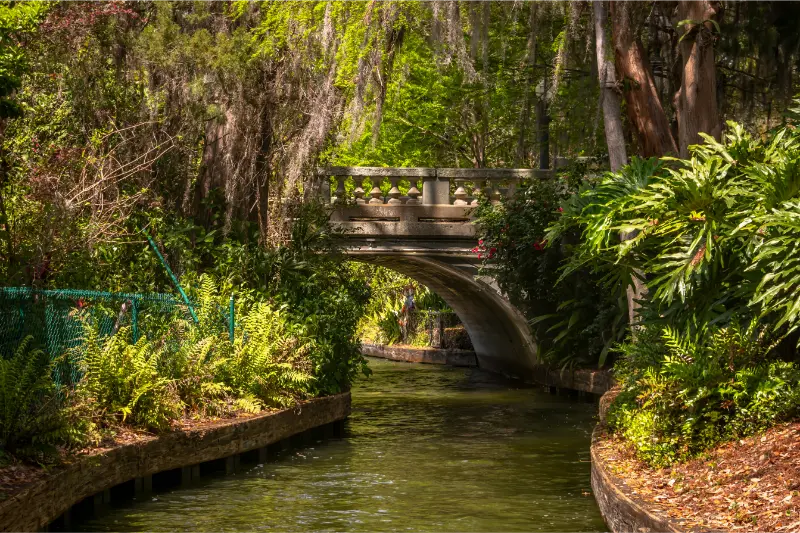
    Lake Eola Orlando Downtown at Golden Sunset

    A café lunch and time to walk a few blocks may be enough after a long flight or interstate drive. Find your nearest pharmacy, stock water and plan tomorrow’s departure time. In this region, an early start can make outdoor attractions more comfortable and may help with parking or tour availability. If traveling with children, let them settle into the hotel and choose a small activity rather than expecting instant enthusiasm for a major nature walk.

    Look at the forecast for the following days and keep the order flexible. If a stormy period is expected, reserve your preferred outdoor outing for the clearest morning and use a museum or town visit as a backup. Florida weather can change quickly, particularly in warm months, so it is wiser to have two possible days for a boat tour than a single rigid slot.

    Day 2: Silver Springs State Park and the glass-bottom boats

    Silver Springs is the natural centerpiece of this itinerary. Its celebrated glass-bottom boats allow visitors to look into clear spring water and discover aspects of the underwater environment while remaining seated aboard. The park also offers gardens, walkways and wildlife observation opportunities. Arrive early and check the official state-park information for current hours, admissions and updates before traveling.

    Boat tours are a separate service and can sell out, particularly on busy dates. The Florida State Parks amenities page explains the available glass-bottom experiences and notes that a wheelchair-accessible vessel operates on specific dates and times. Guests needing it should arrange the correct tour option rather than assuming any sailing is suitable. Ask about boarding, seating and shade, especially when traveling with infants or a member of the group who cannot remain seated comfortably for a long period.

    Do not plan to swim at Silver Springs simply because the water is inviting. Park regulations and access rules differ from those of swimming-focused Florida springs. Learn about the river ecology, look for birds, turtles and fish, and respect wildlife. Seeing an alligator is possible, so stay on designated routes and never attempt to approach an animal for a photograph.

    After the boat trip, enjoy a short garden walk or seated picnic at an appropriate place. Those with energy may explore another park feature, but the day is already worthwhile without extra mileage. Children may enjoy drawing what they saw beneath the water; adults may prefer time on a bench to absorb the scenery. Return to Ocala for a relaxed dinner rather than immediately driving to another distant attraction.

    Orlando Commercial District beside Canal

    Day 3: Gainesville’s cultural side

    Travel to Gainesville for a museum-focused day that offers an indoor change of pace. The Florida Museum of Natural History at the University of Florida is a well-known educational institution, but gallery availability, renovations and paid features may change. Check the official museum website before planning around a particular exhibit. Choose one or two available galleries rather than assuming a family will happily spend all day reading labels.

    Visitors with children can pick a theme such as fossils, local ecosystems or butterflies and allow time to ask questions. The museum experience can help explain what the family saw at Silver Springs the day before. If an exhibit is closed, do not consider the day spoiled. Gainesville also offers other cultural and garden experiences, with individual opening and reservation policies. The university area can have event-related traffic and parking restrictions, so identify an appropriate visitor parking option before arriving.

    Plan a lunch break away from the busiest academic schedule if your group prefers quieter surroundings. An afternoon café, garden visit or early return to Ocala is enough. Travelers with limited stamina may choose a single museum and call that a complete day; people who enjoy art and science can add another stop only if everyone remains comfortable.

    Day 4: Pick a spring landscape or an easy nature route

    This is the day to experience another part of north-central Florida’s freshwater landscape, but selection must be careful. Several springs have different access rules, swimming policies, parking limits and seasonal restrictions, including protections for manatees at some locations. Choose according to what you want to do: observe water, take a guided boat outing, walk a short trail or swim where explicitly permitted. Do not assume all spring parks allow identical activities.

    A relaxed option is to return to Silver Springs for the gardens or a different permitted tour. Alternatively, explore a suitable public park or nature area near Ocala, using official state or local information to verify access. For families with small children or non-swimmers, a scenic viewing day is often more comfortable than entering unfamiliar natural water. If kayaking interests older children or adults, choose a licensed operator that can describe current flow, required skill and safety equipment.

    Keep wildlife viewing ethical. Alligators, manatees, turtles and birds should be observed without disturbance. Never feed animals, and obey distance rules and marked closures. Natural spring water can look clear and gentle while having currents, deep areas or other hazards. If the day’s weather includes lightning, postpone swimming or boating and use an indoor backup.

    Day 5: An unhurried final morning and departure

    Spend the last day close to your accommodation. A local breakfast, short walk or quiet outdoor stop gives the trip a pleasant ending without risking an airport transfer. If you are driving onward through Florida, consider a carefully chosen rest stop, but avoid adding a distant attraction that requires you to hurry. Give yourself enough time to refuel a rental car and return it at the agreed location.

    If the weather has prevented an earlier activity, this is an optional make-up window for a short outing, not an obligation. Travelers who have enjoyed the itinerary’s slower rhythm may prefer to repeat a favorite garden or waterfront viewpoint. A trip does not need a new attraction on every morning to be worth remembering.

    Those continuing to Orlando should allow real travel time, including traffic approaching the metro area. Gainesville and Ocala are not theme-park neighborhoods, so a morning attraction in the north and an afternoon Disney reservation may be more difficult than the map suggests. A low-pressure final day prevents the journey from undoing the relaxed atmosphere built during the week.

    Gainesville Florida Downtown Streets at Dusk

    When is the best season for this itinerary?

    Spring and autumn often offer comfortable conditions for garden visits and short walks, but weather varies. Summer brings substantial heat, humidity and afternoon storms; outdoor mornings and an indoor afternoon plan become valuable. Winter can be pleasant for sightseeing, although north-central Florida may be cooler than the southern beaches and occasional cold nights are possible. Pack layers and check the actual forecast rather than assuming all of Florida stays tropical year-round.

    Water clarity and wildlife patterns are affected by natural conditions. There is no guaranteed month for seeing a particular animal or experiencing a specific shade of turquoise in every spring. Park managers may restrict activity to protect habitats or control visitor numbers. When flexibility is important, consider refundable accommodation and reserve the most in-demand tour once your travel dates are settled.

    Costs and transport without unpleasant surprises

    Your main costs are accommodation, a vehicle and fuel, food, state-park admission and optional boat or museum tickets. Boat tours may require tickets separate from vehicle entrance fees; check the specific conditions rather than estimating from an older blog post. Some cultural institutions offer free permanent exhibitions but charge for special experiences. Compare the total family amount before booking, including age-based admission categories where appropriate.

    A car is normally practical because the interesting stops are not arranged along one tourist shuttle route. Factor in parking and the occasional toll depending on your broader journey. If driving is not possible, a concentrated Gainesville stay with carefully planned nearby outings is more realistic than attempting the entire five-day regional route using casual ride-hailing. Rural pickup availability can be inconsistent, and a distant trailhead may not have reliable return transport.

    Accessibility, families and a comfortable pace

    A gentle itinerary does not automatically make every attraction accessible. Ask about accessible boat departures, firm surfaces, shaded seating and restrooms at the exact park entrance. A stroller may work well on a paved garden path but be unsuitable on a natural trail. Visitors sensitive to heat or with breathing limitations may prefer museum time to midday walking. Check with individual operators before buying nonrefundable tickets.

    If the group spans generations, set a shared morning activity and keep afternoon choices optional. A grandparent can enjoy a seated boat experience while teenagers explore a museum exhibit, provided the adult supervision and transport plans are clear. The five-day structure leaves room for people to be together without requiring everyone to take part in every detail.

    Quick planning snapshot

    Planning pointPractical guidance
    BaseOcala, optional night in Gainesville
    Day 2Silver Springs glass-bottom boats
    Day 3Gainesville museum and cultural time
    Day 4Second nature day chosen by current park rules
    TransportRental car usually simplest

    Frequently asked questions

    Is Ocala a good Florida base without theme parks?

    Yes, especially for travelers interested in springs, wildlife, gardens and quieter days. It works best with a car and a plan built around one significant outing per day.

    Can you swim at Silver Springs State Park?

    Do not assume swimming is permitted at its main attraction areas. Check current official park rules. The glass-bottom boats, garden areas and nature observation are primary visitor experiences.

    Are the glass-bottom boats wheelchair accessible?

    An accessible vessel is available on specified departures. Verify and book the appropriate option directly through official channels rather than assuming all boats meet the same requirements.

    Can I visit Ocala and Gainesville in one day?

    Yes, but spending several days allows a more satisfying balance of springs and museums. For visitors who prefer short outings, separate days reduce driving and avoid rushing through each attraction.


  • Jacksonville to Pensacola in Nine Days: A North Florida Road Trip Beyond the Resorts

    Jacksonville to Pensacola in Nine Days: A North Florida Road Trip Beyond the Resorts

    Most travelers imagine Florida as a choice between Orlando rides and warm southern beaches. The northern part of the state tells another story: river towns, longleaf-pine forests, natural springs, state parks, old downtown streets and a Gulf Coast with deep maritime history. This nine-day route travels from Jacksonville to Pensacola, crossing the state at a pace that allows time for places many visitors pass without stopping.

    It is a road trip for people who like mixing outdoor scenery with small-town culture. Families can focus on nature centers and easy parks; couples can enjoy local restaurants and historical streets; senior travelers can choose scenic drives and shorter walks. The route is not intended to include every Panhandle beach or national forest. Rather, it links a handful of distinctive locations and leaves enough room for afternoon storms and unplanned discoveries.

    Essential route choices before booking

    Begin in Jacksonville and finish in Pensacola. With flights into Jacksonville International Airport and out of Pensacola International Airport, check potential one-way rental fees before finalizing. If airfares make that impractical, arrange a return leg using a separate driving day; do not pretend the distance back to Jacksonville is a quick detour. A car is essential for this route, as rural public transport is limited and park entrances are spread apart.

    For a comfortable balance, stay two nights near Jacksonville or Amelia Island, two around Gainesville or High Springs, two around Tallahassee or Monticello, and two around Pensacola. The ninth day is departure. This avoids changing hotels every night and gives the trip a clear shape. Driving across Florida’s north often involves two-lane highways and small communities; look at actual road conditions rather than using straight-line distances.

    Day 1: Jacksonville’s river setting and an easy arrival

    Jacksonville is a large city with neighborhoods spread along the St. Johns River and the Atlantic coast. Arriving here gives you access to a major airport without immediately plunging into resort traffic. Once you collect the car, choose one manageable area for the afternoon. Riverside and the downtown riverfront offer different views of the city, but you do not need to drive between them repeatedly on your first evening.

    Jacksonville Main Street Bridge Illuminated Blue at Night

    If your group likes museums, consider a visit to the Cummer Museum of Art & Gardens when it fits current opening hours. Its combination of artwork and gardens makes an approachable introduction for adults and older children. Families arriving after a long flight may prefer a simple riverfront stroll and an early dinner. Jacksonville’s distances can be deceptive; an attraction that appears ‘in town’ may still be a lengthy drive from your chosen hotel.

    Pack a small day bag with water, sunscreen, medicines and snacks before setting off. This routine is especially useful for later rural days when facilities may be widely spaced. Do not leave luggage exposed in the car while exploring a busy urban area.

    Day 2: Amelia Island, Fernandina Beach and Fort Clinch

    Travel north toward Amelia Island, where Fernandina Beach has a walkable historic core and nearby Fort Clinch State Park offers a different perspective on the Atlantic coast. Choose between a full historic fort visit and a combination of short town and beach stops. A family with younger children can make a game of spotting old buildings and learning why the island’s port history mattered, while adults interested in military history may want more time at the fort.

    Fort Clinch is a state park, so review current park hours, entrance fees, fort access and any event programs before driving. Some historic sections contain uneven surfaces or stairs. Travelers with limited mobility should ask which portions of the site can be visited comfortably and plan a shorter route. Beach activities also depend on weather and surf; a beautiful shoreline is not an invitation to swim in unsafe conditions.

    Return to your Jacksonville-area hotel or stay near Amelia Island if your budget permits. Avoid packing an ambitious evening into the same day. Between beach traffic, parking and museum time, this can easily become a full outing even with relatively short geographic distances.

    Day 3: inland through Micanopy and Gainesville

    Head west and south toward Gainesville, using Micanopy as an optional historic-town stop. Its small-scale streets, old storefronts and antiques make a pleasant change from Jacksonville’s broader urban landscape. A short visit is enough to appreciate the atmosphere; there is no need to invent a full day of attractions in a village. Opening hours for local shops vary, so arrive with the understanding that some may be closed.

    Gainesville provides a convenient base with restaurants, hotels and access to nature attractions. Depending on your timing, visit the Florida Museum of Natural History or enjoy a short walk around a designated green space. Check current museum galleries and any ticketed exhibits before arrival. If the children have been sitting for a long drive, allow some time outside rather than taking them straight into another building.

    Stay in Gainesville or nearby High Springs for the next two nights. This base makes the following day’s springs visit much less stressful. A hotel pool can be a welcome amenity, but compare the rate after parking charges and local taxes rather than choosing accommodation on pictures alone.

    Day 4: North Florida springs with safety and environmental respect

    This is your freshwater day. Consider a managed spring park such as Ichetucknee Springs State Park or another appropriate site near High Springs, depending on seasonal access and what your group wants to do. Tubing, swimming and paddling are not interchangeable activities, and some parks control capacity or require reservations for particular experiences. Read official state park information and choose the simplest option for the youngest, oldest or least confident person in the group.

    Non-swimmers should not be pressured into a river or spring run. Instead, enjoy visitor facilities, scenic viewing and approved short walks where available. Clear water can appear deceptively shallow, currents can be strong and water temperatures may feel cold even in summer. Wear suitable footwear, follow designated access points and never feed wildlife. Tubing is not a substitute for swimming ability or proper supervision.

    Arrive early on busy weekends, since popular springs can reach capacity. Pack a change of clothes, waterproof storage and snacks while observing park rules. If a thunderstorm develops, leave the water and follow staff instructions. A quiet dinner after a nature day is often more enjoyable than another long drive to a distant attraction.

    Day 5: Suwannee country and the road toward Tallahassee

    Drive west through Suwannee River country, choosing a route that suits your interest in state parks, river overlooks or small historic communities. The landscape becomes a major part of the day’s appeal: oak-shaded roads, agricultural fields and stretches of forest reveal a side of Florida that feels far from the coast. Stop only where there is lawful parking and a designated viewpoint; a narrow rural shoulder is not a safe place for photographs.

    One optional stop is a state park near the Suwannee River where trails or river viewpoints are currently open. Check which facilities suit your group; an easy picnic area may be more useful than a long hike. Rural food options are less frequent than around Orlando, so know where you intend to eat and carry basic supplies. Mobile service may also be patchy in some forest areas. Download directions rather than depending solely on live navigation.

    Continue to Tallahassee or Monticello for the night. Tallahassee is the state capital and has the most extensive hotel and dining choices in this portion of the route. Monticello offers a smaller-town atmosphere but requires more attention to restaurant hours and services. Both can work well; choose the base that best meets everyone’s practical needs.

    Day 6: Tallahassee history or Wakulla Springs nature

    Make a deliberate choice today rather than trying to do every site in the region. For history-minded visitors, the Florida Historic Capitol Museum and selected downtown landmarks help explain state government and the region’s past. For nature lovers, Edward Ball Wakulla Springs State Park offers a dramatic spring setting and, when operating, guided boat tours. Tours depend on conditions and capacity; never promise a specific manatee or alligator sighting.

    Wakulla’s natural setting is appealing for children and grandparents because the experience can be structured around a boat trip rather than a strenuous hike. However, boat boarding, seating and accessibility should be confirmed before booking. Swimming rules and wildlife conditions are separate from sightseeing access. A guided tour can be canceled due to water level, weather or other operational factors, so keep a local museum or short Tallahassee activity as backup.

    If you choose the city day, consider a quiet lunch and shaded walking route. Historic sites may have limited weekend hours or special-event closures. The point is to enjoy either history or nature properly, with enough time to absorb what you see.

    Day 7: toward the Gulf through Apalachicola and the Forgotten Coast

    The coastal option from Tallahassee toward Pensacola can be scenic but considerably longer than a direct interstate transfer, especially with stops. If you have energy and time, travel south through the St. Marks or Apalachicola region before working west. Apalachicola’s working waterfront and historic character reward an unhurried meal and stroll. Conditions affecting coastal roads, bridges or public beaches should be checked before traveling, particularly after major storms.

    Do not treat seafood stops as guaranteed bargains. Prices, availability and restaurant opening days change. Visitors with food allergies should ask detailed questions about ingredients and shared cooking equipment; traditional fried seafood places may not meet every dietary need. Families traveling with toddlers may be happiest with a shorter waterfront break and a picnic rather than a long restaurant wait.

    If your group dislikes extra driving, take the more direct route to Pensacola and reserve the afternoon for a beach or a hotel rest. That is a perfectly legitimate alternative. North Florida is too large to explore well in a single week, and the best route is the one that leaves everyone able to enjoy the destination.

    Day 8: Pensacola history, beaches and Fort Pickens

    Pensacola makes a satisfying final stop because it combines historic downtown streets, a naval and maritime story, and nearby Gulf beaches. Choose between a museum-based city day and a visit to the Fort Pickens area of Gulf Islands National Seashore. The fort and surrounding landscape are fascinating, but do not assume all structures are accessible or safe to enter. Check the National Park Service’s current Gulf Islands planning information, including operating hours, weather alerts and entrance fees.

    For a family beach afternoon, choose a designated access point with appropriate facilities and observe warning flags. Gulf water can look calm while dangerous currents remain present. Do not enter closed areas or leave children unsupervised near surf. Bring shade, water and a realistic plan for rest. If the weather is poor, Pensacola has enough historical and cultural options to create a worthwhile indoor-focused day.

    This last full day should not end with another exhausting drive. Enjoy dinner near your hotel and pack calmly. A traveler’s satisfaction with a road trip depends as much on comfortable transfers as on scenic highlights.

    Day 9: departure and optional extras

    If you fly from Pensacola, leave time for hotel checkout, rental-car return and airport procedures. If returning to Jacksonville, do not underestimate the journey: it is a lengthy transfer that deserves its own driving day and appropriate rest stops. For travelers extending their vacation, nearby Gulf beach communities can provide a few relaxing nights without disrupting the route’s logic.

    You could also add a stop around Marianna or the Florida Caverns region on a longer trip, but check tour availability and weather-sensitive access beforehand. The best optional extension is not necessarily another famous attraction. It may be two nights in one comfortable hotel near the water, particularly for families with very young children or older travelers who prefer fewer packed days.

    Planning costs, timing and comfort across ages

    Accommodation rates vary considerably between inland towns and beach areas. Compare parking, breakfast, taxes and any resort fees, and consider weekday stays near popular Gulf beaches. State parks may charge entrance and separate activity fees. A rental car with enough luggage space is important when multiple generations travel together; verify child-seat requirements and who is allowed to drive before collecting the keys.

    Late fall and spring often provide comfortable sightseeing weather, but specific spring operations and park activities vary seasonally. Summer offers long days with significant heat, storms and strong demand at popular freshwater springs. Pack layers for variable inland winter temperatures and expect fewer services in rural areas outside peak periods. For medical needs, carry essential supplies and plan breaks before fatigue becomes a problem.

    Frequently asked questions

    Is this road trip good for families? Yes, provided you choose modest daily activities and treat water safety seriously. Spring activities and historic forts should be matched to each child’s ability.

    Can we drive directly from Jacksonville to Pensacola? Yes, but this guide is intended to reveal the places between them, not just transport you across the state.

    Will every state park have swimming? No. Parks have different facilities, rules and seasonal closures. Check the individual park page before arrival.

    Where should we spend an extra night? Gainesville/High Springs works for spring lovers; Tallahassee for history and nature; Pensacola for beaches and a gentler finale.

    Do we need cash everywhere? Cards are widely used, but payment arrangements and cell reception vary. Carry an alternative payment method and check park-specific requirements.

    Reliable trip resources

    Use Florida State Parks, Gulf Islands National Seashore, the Florida Museum of Natural History and official city or attraction websites for current openings, fees and access conditions.

  • St. Augustine to New Smyrna Beach in Six Days: A Relaxed Atlantic Coast Road Trip

    St. Augustine to New Smyrna Beach in Six Days: A Relaxed Atlantic Coast Road Trip

    Florida’s Atlantic coast feels very different when you stop trying to see every major city. Between St. Augustine, Flagler Beach and New Smyrna Beach, you can create a six-day road trip built around historic streets, coastal parks, casual meals and beach mornings. The route is short enough to avoid constant hotel changes, yet varied enough to give each day its own character. It suits couples, families with school-age children and older travelers who prefer comfortable stops to marathon driving.

    The idea is simple: start in St. Augustine for history, follow sections of the coastal highway south, slow down near Flagler Beach, then finish around New Smyrna Beach. You won’t be racing toward Miami or attempting to visit Orlando theme parks between beach stops. The interest lies in the details: maritime history, protected dunes, birds near an inlet and the different rhythms of small Atlantic towns.

    Two lodging bases are enough for six days

    Book the first three nights in or near St. Augustine, then move to the New Smyrna Beach area for the final three. This arrangement limits packing while making the most of the route. Families who dislike hotel changes could stay in one central area, but that creates more repeated driving, particularly if you want several short outings at opposite ends of the corridor.

    Historic St. Augustine accommodation may put you close to major sights but introduce parking charges, older-building stairs and noise on busy evenings. A property slightly outside the old town may offer easier car access. New Smyrna Beach has hotels and rentals with very different locations: some are close to the beach, some near downtown and others in quieter areas requiring a car for each meal. Check exact addresses, not just the town name.

    For older guests, ask about elevators, shower access and distance from parking. For families, a kitchenette can simplify breakfasts. Review the total costs, especially parking, resort fees and cleaning charges, before choosing a rental on the strength of a low headline price.

    Day one: arrive in St. Augustine and focus on its streets

    Use the first afternoon for a short walk through the historic district. Look at the old street pattern, pause outside notable buildings and find a café that suits your group. St. Augustine has many attractions, but the first day works better without a timed ticket. If you’re arriving after a flight, an unhurried dinner provides a more comfortable start than racing to fit in one last museum.

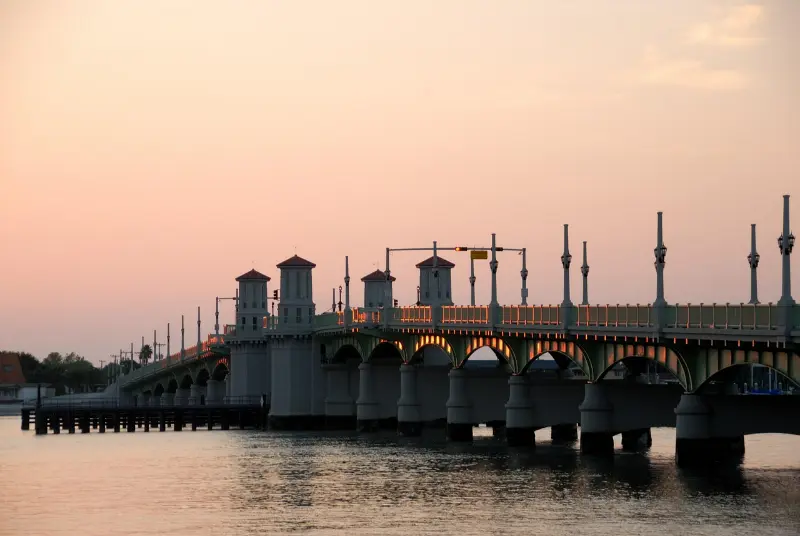
    Bridge of Lions Saint Augustine at Sunset

    The historic core includes uneven surfaces and narrow areas that can be difficult for some wheelchairs or strollers. Choose the route by actual comfort rather than attempting to cover every photogenic lane. A family member can stop in a shaded place while others browse a nearby shop. If your group is interested in the city’s complicated history, begin with a few questions about the Spanish colonial period, Indigenous communities and how the town changed over centuries.

    Evenings can be lively. If you prefer quiet rooms, don’t assume an accommodation in the heart of the district will offer complete silence. Ask about the room’s location and nearby activities before booking.

    Day two: a thoughtful visit to Castillo de San Marcos

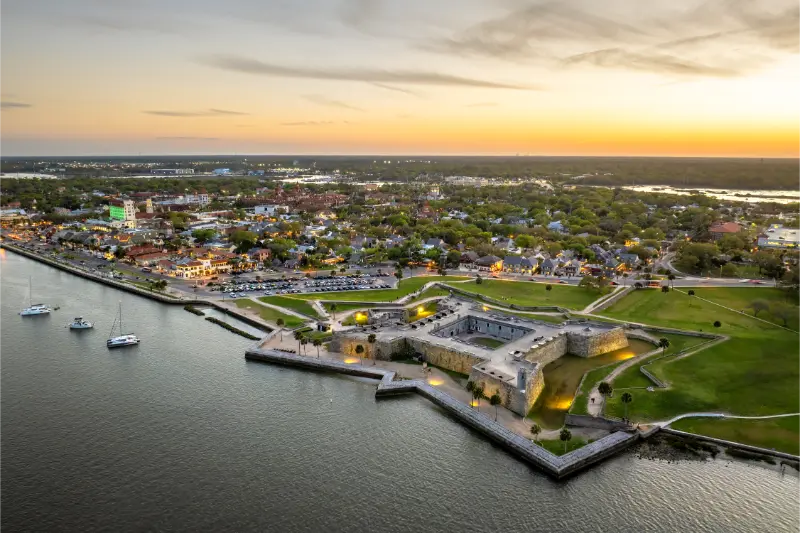
    Castillo de San Marcos National Monument is an excellent place to understand why this coast mattered to colonial powers. The fort’s thick walls, defensive design and waterfront position invite questions that interest adults and children alike. Check operating hours, entry arrangements and any ranger programs on the National Park Service website. The monument is a historic structure, so access to different levels may not be equally easy.

    Before the visit, explain that forts were built in a period of conflict and that their stories involve soldiers, civilians, enslaved people and Indigenous communities, not just dramatic battles. Encourage children to ask what life inside the fort might have been like and why controlling a harbor mattered. A guided interpretive talk can make the visit more meaningful than moving quickly between rooms for photographs.

    Follow this with lunch and a relaxed afternoon. Do not schedule another major attraction across town unless everyone is enthusiastic and the heat is manageable. A short waterfront look and time to rest are enough for day two.

    Day three: coastal scenery and a slower afternoon

    Use the third day to enjoy the shore near St. Augustine rather than adding another long historic site. Anastasia Island offers beaches and natural areas, including Anastasia State Park, whose current park page is the correct source for access and conditions. Choose a designated public route and remain outside protected dune areas. A beach day can mean an hour of looking for birds, a picnic and a quiet return to town; it need not require swimming.

    If swimming appeals to your group, check flags and surf conditions. Atlantic waves and rip currents can be serious, and being a confident pool swimmer does not make a person immune. Active supervision is essential for children. If someone has limited mobility, investigate the specific access point instead of assuming a public beach will have an accessible route across soft sand.

    For an indoor alternative, choose a St. Augustine museum or historic venue that genuinely interests the family. A rainy day can still feel well spent if you avoid crossing the city repeatedly in traffic.

    Day four: drive south with a Flagler Beach stop

    Check out after breakfast and head south toward Flagler Beach using the most appropriate coastal route for the day’s conditions. A1A offers attractive stretches, but roadworks, storm repairs and traffic patterns can change travel times. Make the drive part of the day rather than a race. Choose one public stop in Flagler Beach and explore the local atmosphere, perhaps around a downtown café or beach viewpoint.

    The town’s character differs from a high-rise resort destination. That’s part of its appeal. Enjoy a short walk, take a break for lunch and leave time to notice the coast. Do not assume every access point has ample parking or that all features of the historic pier are open; repair work can change access, and the city is the appropriate authority for updates.

    For curious children, talk about how coastal communities respond to storms and why dunes matter. For adults, the stop can simply be a peaceful pause between two lodging bases. After lunch, continue to New Smyrna Beach, check in and spend the evening close to the hotel.

    Day five: New Smyrna Beach at your own pace

    New Smyrna Beach allows an enjoyable combination of coastal scenery, art and local businesses. Start in the morning with a beach or inlet-area viewpoint suited to your group’s interests, then plan a downtown visit or lunch. Some nearby state recreation areas protect coastal habitats and provide scenic outlooks, but access rules, hours and parking can vary; check official park information rather than driving to a random point shown on a map.

    If your children enjoy ocean science, bring an inexpensive wildlife identification booklet or make a list of questions about dune plants, seabirds and tidal changes. Teenagers may prefer a supervised beach activity or free time to photograph the town. Older adults might choose a shorter outing followed by a long lunch. There is no obligation to remain together every minute; the family can separate for an hour and meet at an agreed safe location.

    Be especially careful around inlets and fishing structures. Current and boat traffic can be dangerous, and attractive photographs are not a reason to cross barriers or enter restricted zones. The Florida State Parks safety guidance is useful background for a coastal day.

    Day six: finish with a relaxed breakfast and one small choice

    A holiday often feels shorter when the final morning becomes a struggle to fit in one more must-see attraction. Enjoy breakfast and choose between a brief local walk and a comfortable departure. If you’re flying from Orlando or another airport, allow for the drive, fuel, car return and security. Road conditions can change; check the actual route before setting out.

    If you have a late departure, choose a nearby art space, safe public waterfront or lunch stop. Avoid a remote beach or a ticketed attraction that could keep you away from the car longer than expected. Families should check chargers, beach toys, medication and wet swimsuits before leaving. A calm ending is worth more than a final photograph taken in a hurry.

    Travelers continuing farther south can extend their trip along the coast in a separate itinerary. This six-day plan is deliberately complete without adding Daytona Beach, the Space Coast or the Palm Beaches.

    What makes this route good for different ages?

    You can adjust the emphasis without changing the overnight stops. For younger children, focus on short beach visits, a fort story told at their level and plenty of rest. For teenagers, give them a role in choosing an art stop, restaurant or activity. For couples, longer historic walks and quiet coastal meals may be the highlights. Older travelers often value predictable parking, benches and a route that can be shortened at any point.

    Be honest about mobility differences. A tour described as “easy walking” may still cross cobblestones, sandy approaches or uneven historic surfaces. Ask museums and parks about accessible entrances and the location of seating. If you are bringing a stroller, try a route with paved portions and carry only what is necessary for the outing. Don’t expect a wheel-based device to work well on loose sand without appropriate adaptations.

    Allow different interests to coexist. One person may want to visit another historic exhibit while another is content watching the Atlantic from a shaded bench. The best travel day is the one in which everyone feels included without being forced into the same pace.

    Timing, storms and local road conditions

    Spring and fall can be comfortable for a coastal road trip, though weather remains variable. Summer brings humid conditions and afternoon thunderstorms. Winter may be excellent for historic sightseeing and outdoor meals, but ocean swimming may not appeal to everyone. School holidays and local events can make parking and accommodations busier than expected.

    Florida’s Atlantic hurricane season runs from June through November. Follow the National Hurricane Center and local public safety instructions during any tropical threat. Barrier islands and coastal highways are particularly sensitive to severe storms and erosion. Even after skies clear, access may be limited by damage or repairs. Choose refundable arrangements when the risk or your flexibility calls for them.

    Fuel up before starting a longer drive and keep the itinerary on a phone that works offline. A1A is scenic in sections but is not always the fastest route. If someone needs a restroom stop or becomes tired, take a break in an established public place rather than stopping unsafely along a narrow road.

    A quick budget and route planner

    Day Overnight Main visit
    1 St. Augustine Historic district and easy dinner
    2 St. Augustine Castillo de San Marcos
    3 St. Augustine Anastasia Island or indoor history
    4 New Smyrna Beach Flagler Beach coastal stop
    5 New Smyrna Beach Beach, local art and relaxed lunch
    6 Departure Short favorite stop or straight home

    Budget for two sets of lodging charges, parking in historic and beach areas, state or national park admissions and meals. Because many memorable activities are public walks, the route need not be expensive. However, beachfront lodging and holiday weekends can raise prices considerably. Compare complete room costs and read cancellation rules before booking.

    A trip along this part of A1A is most rewarding when you choose to notice rather than rush. The historic stones of St. Augustine, a low-key afternoon in Flagler Beach and the ordinary sounds of a seaside morning create a satisfying Florida vacation without requiring a single theme park ticket.

    Frequently asked questions

    Is A1A the quickest way to drive between these towns?

    Not always. It is often chosen for scenery rather than speed. Check current roadworks and compare with inland alternatives on your travel day.

    Can we travel without changing hotels?

    Yes, but you will spend more time repeating the north–south drive. Two lodging bases usually make this six-day itinerary more comfortable.

    Is the trip appropriate for someone who cannot swim?

    Yes. Historic sites, coastal viewpoints, local dining and wildlife watching are worthwhile without swimming. Confirm exact access conditions for each stop.

  • Orlando to Miami in Seven Days: A One-Way Florida Road Trip That Actually Works

    Orlando to Miami in Seven Days: A One-Way Florida Road Trip That Actually Works

    A one-way road trip from Orlando to Miami can combine theme-park country, the Space Coast, relaxed Atlantic towns and the energy of South Florida without retracing the same highway. The problem is that a route which looks simple on a map can become expensive once you add rental-car drop-off charges, airport transfers, tolls and an ambitious list of coastal stops. This seven-day plan is designed for a first-time visitor who wants a real vacation rather than seven days of packing. You can reverse it if flights make that more economical, but compare both directions before buying tickets.

    First decision: open-jaw flights or a round trip?

    Look for flights arriving at Orlando International Airport and departing from Miami International Airport, then compare that total with return flights through a single airport. Airlines may price an open-jaw itinerary differently from two independent one-way tickets. When booking internationally, review baggage conditions, the time allowed for connections and the cancellation rules across the whole trip. Saving a small amount on airfare makes little sense if the cheaper journey requires an expensive overnight airport stay or a second rental car.

    Consider Fort Lauderdale-Hollywood International Airport as another possible departure point if your final nights will be north of central Miami. It may reduce ground transport for some hotels, though the best choice depends on the actual flight and hotel locations. Do not base the decision only on the airport name: from Miami Beach, downtown Fort Lauderdale and the Palm Beaches, transfers vary considerably. Price flights, one-way rental cars and the last hotel together. A useful comparison sheet shows the total cost, not separate headline bargains.

    A one-way rental car is a contract choice, not merely a route

    Many rental companies permit pickup at one Florida location and return at another, but the quoted rate may include a drop charge, mileage conditions, airport fees or a restriction on certain vehicle groups. Search using the exact pickup and return branches with your real dates; a quote for returning to the same office is not a valid comparison. Take a screenshot of the confirmed destination and times before traveling, and read the fuel and toll clauses instead of assuming they match another rental company’s policy.

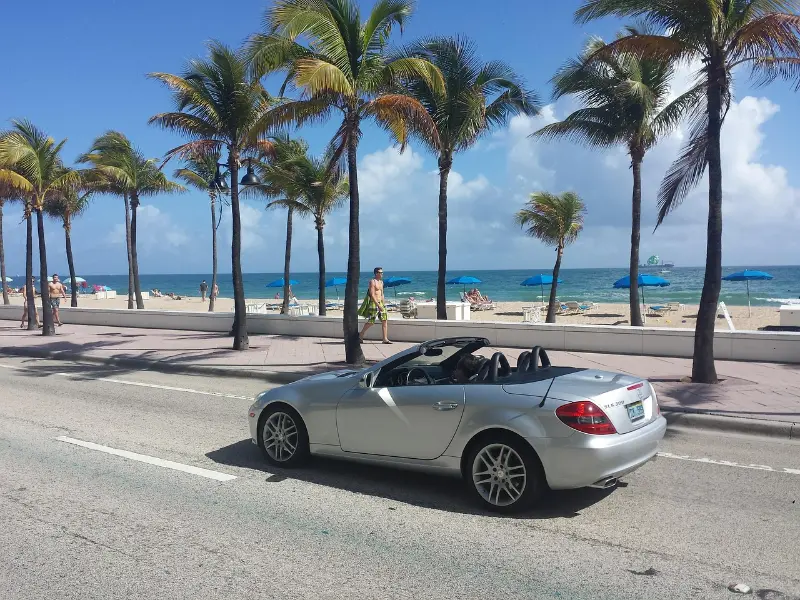
    White Sports Car on Miami Palm Lined Street

    International travelers should verify driving-license requirements directly with the rental provider, especially when a license is not written in English. The state’s rules and a particular company’s documentation requirements are not necessarily identical. Check credit-card deposit requirements, age-related surcharges and the price of additional drivers. A larger SUV may seem convenient for luggage but increase parking and fuel costs. If the party includes small children, reserve appropriately sized child seats or plan a compliant alternative before reaching the airport counter.

    Day one: land in Orlando and make it easy

    Treat arrival as a day of settling in. Collect the car after reading the vehicle condition report and photographing visible damage; test the air-conditioning, windshield wipers, lights and phone navigation before leaving the rental area. Pick a hotel in a district that makes sense for the following morning rather than choosing the cheapest property far from your route. If a late flight arrives with tired children, an airport-area hotel can be more useful than driving to a distant resort simply to say you slept in Orlando.

    Eat somewhere straightforward, confirm your first hotel parking rules and put the next day’s destination into a navigation app while you still have reliable Wi-Fi. Florida roads often use electronic tolling. Follow your rental agreement’s toll program and do not stop in a high-speed toll lane to attempt a cash payment. A relaxed first evening is especially valuable for travelers coming from Europe or arriving across several time zones. There is no need to squeeze a theme park into a day already shaped by immigration, baggage and car pickup.

    Practical comparison at a glance

    ConsiderationChoice or stopWhat to know
    Day 1–2Orlando and Space CoastArrival and main attraction
    Day 3–4Treasure CoastVero Beach, Fort Pierce, Stuart
    Day 5Palm BeachesGarden or museum stop
    Day 6–7Miami regionReturn car and relaxed departure

    Day two: Orlando to the Space Coast

    Drive east toward the Space Coast and choose a main attraction based on your group’s interests. Kennedy Space Center Visitor Complex works well for people enthusiastic about human spaceflight, historic spacecraft and interactive exhibits. Cocoa Beach offers a more coastal alternative for families that prefer a relaxed lunch and time outdoors. They are not interchangeable experiences, and visiting both properly may require more than a short morning. Choose one anchor and keep a second stop only if everyone still has energy.

    If your trip includes a planned launch, remember that launch dates can move or be canceled for weather or technical reasons. Never make the entire night’s accommodation depend on seeing a rocket depart. Stay around Cocoa Beach, Cape Canaveral or Titusville depending on what you want to do the next morning. Check bridge and beach parking rules, especially during holidays. If anyone in the party does not enjoy swimming, a boardwalk, museum or waterfront café can be just as satisfying as a long session on the sand.

    Day three: choose a gentle Atlantic stop

    Continue south on or near the Atlantic side with a modest number of stops. Sebastian Inlet State Park, Vero Beach and other coastal locations give a choice of inlets, local museums and seaside meals, but the best stop depends on the weather and on whether any park areas are affected by repairs. Inlets may have strong currents and are not automatically good swimming areas. If you’re traveling with a toddler, consider a quiet inland museum or shaded lunch rather than promising that every scenic beach will be suitable for wading.

    Stay near Vero Beach or Fort Pierce if you want to minimize the day’s driving. Make the lodging choice based on the actual entrance, parking and restaurant options rather than assuming all oceanfront hotels offer easy beach access. Some have stairs, dune crossings or restricted public facilities. A one-night stop can be worthwhile when it allows a comfortable afternoon; if changing hotels becomes stressful, choose two nights in one Treasure Coast base and make a short side trip instead. The purpose of the route is to enjoy different places, not to collect hotel keys.

    Day four: Fort Pierce, Stuart and the Treasure Coast

    Spend this day around Fort Pierce, Jensen Beach or Stuart. Museums and waterfront areas provide choices when Atlantic surf is too rough for swimming. Fort Pierce’s historic downtown and Stuart’s riverfront offer a contrast to Orlando’s resort corridors, while natural areas can be visited in smaller doses. If you are interested in the Indian River Lagoon, select a visitor center or a guided educational program rather than assuming that every roadside shoreline provides safe access to the water.

    Give teenagers a role in choosing the day’s priority: local history, marine science, a café stop or a beach. For older relatives, choose a walk with seating and toilets nearby. Do not drive between Fort Pierce and Stuart repeatedly simply because both appear in a travel guide; group destinations geographically. A leisurely lunch can become an essential rest break. If you intend to sleep farther south in Palm Beach County, leave before the afternoon traffic thickens and check the time needed to reach the hotel’s parking entrance.

    Day five: the Palm Beaches without rushing

    West Palm Beach and Palm Beach County provide a varied day of gardens, museums, waterfront walking and cultural stops. Choose one admission attraction and one relaxed outdoor activity. A garden such as Mounts Botanical Garden or the Morikami Museum and Japanese Gardens requires checking its specific operating calendar and its location, as these places are not side by side. Plan the order on a map before setting off. Travelers who prefer air-conditioning can substitute a museum for a long outdoor visit.

    Miami Beach Palm Lined Waterfront with Car

    Staying in West Palm Beach or nearby may be less tiring than continuing all the way to Miami after a full day, but it adds another hotel change. Compare the comfort of a final two-night Miami stay with an extra intermediate night. If the group includes a traveler who needs regular medication, a predictable meal schedule or long rest periods, reduce stops before reducing sleep. An enjoyable Florida itinerary should adapt to the people using it instead of following a rigid online timetable that was designed for someone else’s energy level.

    Day six: enter South Florida and return the car thoughtfully

    Drive toward the city where you plan to finish, allowing extra time for urban traffic. If Miami is the final destination, decide whether you still need a vehicle once you reach your hotel. Parking can be expensive in some areas, and a car is often more trouble than help for a short stay around Brickell, downtown Miami or parts of Miami Beach. Returning it early may save a day’s rental and hotel parking, but only if you have a practical plan for reaching the hotel and later the airport with luggage.

    Check the return office hours and whether it is located at the airport or a neighborhood branch. Take the final fuel reading and photographs as required by the agreement, inspect the vehicle for forgotten belongings and keep the receipt. Airport return facilities may be separate from the passenger terminal, so build in time for internal transport when leaving on the following day. Avoid trying to return the car during rush hour just as a child needs dinner and everyone is exhausted. A simple hotel check-in is worth more than an extra attraction after a complicated travel day.

    Day seven: Miami at a human pace

    A short final day can include a walk through a neighborhood, a museum, or a stretch of waterfront, depending on your flight. Little Havana, the bayfront and Miami Beach feel different and may require separate transfers. Choose one rather than crossing the metropolitan area several times. Travelers flying internationally should allow appropriate time for their airline’s check-in and airport security requirements. Don’t commit to a prepaid excursion that finishes near your flight departure time.

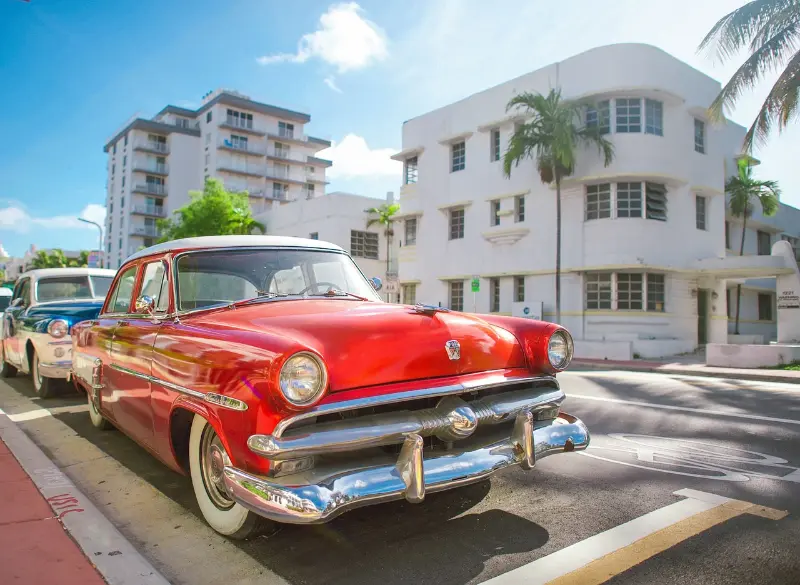
    Miami Beach Palm Lined Street with Red Car

    If you fly from Fort Lauderdale instead, arrange the transfer before the final evening and confirm the hotel pickup time. A ride that seems cheap without luggage may require a larger vehicle for a family and car seats. Brightline and local rail can be useful for some routes, but station access, luggage rules and the transfer at the end matter as much as the train journey itself. The last day of a vacation should feel like a calm ending rather than an endurance test through traffic.

    Choosing hotels, tolls and a sensible total budget

    For a seven-day trip, the most useful hotel features often include parking clarity, an elevator, a place to dry swimwear and a predictable breakfast. A self-catering room may reduce meal costs for families, while a central hotel may save more money in urban transportation. Compare the complete price including taxes, parking, destination fees and cancellation conditions. Changing accommodation every night can also cost time: packing, checking out and waiting for access to the next room make a supposedly cheap road trip surprisingly tiring.

    Budget the journey in categories: flights, seven nights of lodging, rental car including a possible one-way charge, fuel, toll program fees, parking, attractions, food and a contingency allowance. Avoid claiming a fixed statewide price, because rental quotes vary by season, car class and airport. Price a second version with six days of car rental instead of seven, then check whether a taxi or rail transfer compensates for the savings. The decision should match your actual locations, not a blanket rule that every visitor needs a car for every Florida day.

    A shorter route for seniors and families with babies

    If you cannot comfortably change hotels three or four times, use two bases: two or three nights near Orlando or the Space Coast, followed by three or four nights around the Palm Beaches or greater Miami. Select a single Treasure Coast stop during the transfer day. This retains the experience of moving south without repeatedly loading a car. A baby may require feeding, diaper changes and naps that do not align with the next scenic attraction; an older traveler may simply want more time between outings.

    For travelers with mobility needs, review the actual door-to-door routes and parking surfaces before booking. A beach listed as accessible might have a long dune crossing or require advance arrangements for equipment. Choose museum destinations with confirmed accessible entrances and restrooms when that matters. If two people in the party disagree about pace, let the slower itinerary set the baseline and offer optional short detours. Seven enjoyable days are more valuable than ten rushed locations.

    Final checks before committing to the route

    Book the rental with the real return location entered, verify the toll and insurance conditions, and save all hotel parking information in one place. Check state-park alerts and any beach-restoration closures on the week of travel, not just when planning months ahead. Build alternatives for thunderstorm afternoons. Keep a printed or offline copy of the first and last hotel addresses in case mobile connectivity fails. International visitors should verify entry requirements and documentation independently from the car-rental rules.

    Orlando to Miami works particularly well when the trip is treated as a series of distinct regions rather than one enormous attraction checklist. A theme-park morning, a Space Coast visit, a small waterfront town and a Miami neighborhood can belong to the same vacation while still allowing time to sit down and enjoy them. Once the flight direction and vehicle costs make sense, the most important remaining task is to leave enough empty space in the schedule to appreciate where you are.

    Frequently asked questions

    Do Florida rental cars allow drop-off in another city?

    Many do, but prices, drop charges and eligible vehicle categories vary. Search and book using the exact pickup and return locations.

    Is Orlando to Miami too far for a seven-day road trip?

    Not if you spread the journey over several stops. Driving straight through would miss the very coastal areas this itinerary is designed to explore.

    Should I keep my rental car in Miami?

    That depends on your hotel neighborhood and planned activities. Compare parking and extra rental costs with transit or rideshare before deciding.

    Official information and useful maps

  • Florida Open-Jaw Flights: A Seven-Day Orlando-to-Tampa Vacation Without Backtracking

    Florida Open-Jaw Flights: A Seven-Day Orlando-to-Tampa Vacation Without Backtracking

    Flying into Orlando and home from Tampa can turn a Florida vacation into a comfortable journey rather than a loop designed around returning to an airport. It is especially useful when your interests are split between central Florida attractions and the Gulf Coast. But an open-jaw trip only works if the flight prices, one-way car rental, hotel locations and actual driving days make sense together. A cheap flight combination can become an expensive mistake if the rental car carries an unexpected return charge or your final hotel is an hour from the departure terminal.

    This seven-day Orlando-to-Tampa plan combines city neighborhoods, gardens, lakes and a Gulf Coast stay. You can add theme parks if they matter to your group, but the route does not depend on buying several theme-park tickets. Families, couples and older travelers can follow the same general direction while changing the length of each stop. The strongest advantage is simple: you keep moving toward your departure airport rather than retracing the whole route.

    At a glance: the route and who it suits

    Part of the vacation Suggested base Main reason to stay Watch for
    Nights 1–2 Orlando or Winter Park Easy arrival and central Florida sights Resort fees and parking
    Nights 3–4 Lakeland or nearby Lakes, gardens and a slower inland interlude Weekend event traffic
    Nights 5–6 Tampa or St. Petersburg Museums, waterfront and airport access Bridge traffic and hotel location
    Day 7 Depart from Tampa International Airport No long return drive to Orlando Rental-car return and flight time

    This route is best with a rental car, although someone who prefers rail and local transfers could build a more limited city-focused variation. Do not assume every town on the route has frequent public transportation or an inexpensive rideshare service. For a family with a stroller and luggage, three hotels in six nights may be too many. In that case, stay three nights in Orlando and three nights in Tampa, making Lakeland a stop en route.

    Tampa Florida 16th Street Sign

    First, compare the airfare as a complete trip

    When searching flights, select a multi-city itinerary instead of two unrelated one-way tickets: home to Orlando International Airport (MCO), then Tampa International Airport (TPA) to home. Compare this with a conventional round trip into Orlando and another into Tampa. The result depends heavily on your departure city, connections and airline rather than an automatic rule that open-jaw fares are cheaper. Check baggage allowances on both legs. An international journey may also involve different connection airports on the outward and return flights.

    Look beyond the displayed fare. Add the cost of changing airports, fuel, parking, tolls and any one-way rental charge. Confirm that the exact rental category and return station permit collection at MCO and return at TPA. Some companies include the one-way arrangement in the final quote; others show a separate fee or different daily rate. Save a screenshot of the total booking terms before paying.

    A late arrival in Orlando should not be paired with a demanding first morning. Likewise, do not schedule a long Gulf beach excursion on the morning of your flight home. This plan gains value through flexibility, not by squeezing a seventh full sightseeing day out of six hotel nights.

    Day 1: arrive in Orlando and choose one neighborhood

    After landing, follow the terminal-specific instructions for baggage claim and ground transportation. MCO has multiple terminals, and the rental-car route differs by terminal and provider; use the airport’s current terminal maps rather than a screenshot from an old travel article. If you arrive tired, use the afternoon for your hotel, a nearby meal and an easy walk. The point is to learn the roads and settle into Florida time.

    A downtown Orlando hotel works for people interested in Lake Eola, restaurants and city culture. Winter Park suits visitors who want attractive streets, museums and café time. The International Drive or resort corridor can be sensible if a park visit is planned, but location names do not guarantee easy walking. Look carefully at street crossings, traffic and the distance from your room to the places you expect to use.

    If you are traveling with an older adult, request the exact room features needed before arrival, including an elevator, step-free entrance or suitable shower. With children, confirm the bedding and crib arrangements instead of relying on a request field in the reservation.

    Day 2: Winter Park, lakes and an adaptable cultural day

    Spend the morning in Winter Park, with time for Park Avenue and the surrounding streets. A boat tour on the lakes can be a memorable way to understand the area’s waterways, but check operating schedules, weather and boarding conditions before treating it as the day’s anchor. Those who prefer to remain on land can choose a museum visit or take shorter walks near the shopping district. Avoid building a strict appointment schedule around an outdoor attraction in Florida’s thunderstorm season.

    For a family, choose one child-friendly stop and leave time for lunch and a swim in the hotel pool if conditions are suitable. For adults, the best afternoon might be a leisurely museum followed by dinner without needing to drive across Orlando. If you are adding a theme park, replace most of this day’s activities with the park itself. Trying to do both a full theme-park day and city sightseeing is a reliable way to exhaust younger and older guests alike.

    The overnight choice matters: stay a second night in your original hotel instead of moving hotels merely to save a few miles the following morning. Packing and checking out can consume more vacation time than a short drive.

    Day 3: move west through central Florida

    Travel toward Lakeland at a relaxed pace, checking navigation for the correct destination and not just assuming that interstate traffic will be light. A morning stop in the lakes district provides an introduction to central Florida beyond theme parks. Lakeland has an established downtown, waterfront landscapes and architectural interest. Walk part of Lake Mirror’s surroundings if the weather and mobility of your group allow, then settle in for lunch.

    You can use the afternoon for local cultural attractions, gardens or simple downtown exploration. Some historic buildings offer tours only on selected dates; reserve those separately when available rather than arriving and hoping for entry. The day should have a clear endpoint: check into the next hotel while there is daylight, especially if someone in the group is uncomfortable driving at night.

    If you want fewer hotel changes, keep the Orlando hotel and visit Lakeland for the day before relocating directly to Tampa on Day 4. The longer drive back that evening is a trade-off, but some families would rather unpack once fewer.

    Day 4: lakes, gardens and a flexible indoor backup

    Give central Florida a full day rather than treating it only as a corridor between airports. Consider a garden visit around Lake Wales, an architectural stop in Lakeland or a relaxing lake-oriented morning. Bok Tower Gardens offers garden and landscape experiences, but check the official calendar for hours, events and accessibility before buying tickets. Its grounds are extensive, and the amount of walking is a personal choice, not a requirement to cover every trail.

    A traveler using a walker might enjoy shorter paved sections and a peaceful shaded stop, while an energetic school-age child may prefer a route with exploration breaks. Carry drinking water and plan for direct sun even outside midsummer. If thunderstorms are forecast, choose an indoor stop earlier and keep the garden visit optional.

    Spend your second night in the Lakeland area. Do not try to drive to an attraction near Tampa, return to Lakeland and drive back the next morning; that defeats the purpose of moving steadily west. Check the location of tomorrow’s hotel so that the next transfer is easy.

    Day 5: Tampa's waterfront and museums

    Head for Tampa Bay after breakfast and arrive early enough to park once if possible. Tampa’s Riverwalk area makes a useful orientation point, but a waterfront path can be longer than it looks on a map. Select a short section that connects the sights important to you rather than feeling compelled to complete the entire route. For a museum-focused day, choose one main institution and perhaps a nearby café or waterfront stop.

    Welcome to Tampa Florida Colorful Mural

    The Florida Aquarium and other family attractions are worth considering when younger children are traveling, but opening hours, special experiences and ticket prices should be checked directly. Adults may prefer historic Ybor City or an arts-focused itinerary. If you are staying across the bay in St. Petersburg, allow for bridge traffic at busy times instead of assuming the two downtowns are next door.

    This is also a sensible day to buy grocery basics for the last nights. By now you know your family’s pace and can decide whether Day 6 should be active or almost entirely devoted to the beach.

    Day 6: choose Tampa, St. Petersburg or the Gulf beaches

    There are three sound ways to finish. City lovers can explore St. Petersburg’s art museums and waterfront parks; beach lovers can choose a Gulf Coast beach area with appropriate facilities; history-minded visitors can return to Tampa neighborhoods. Do not attempt all three in a single afternoon. The beaches west of St. Petersburg require crossing busy urban roads and causeways, and parking demand can be considerable on weekends.

    For a beach outing, consult the latest marine forecast and local flags. The National Hurricane Center’s safe-swimming guidance recommends checking rip-current risk and using lifeguarded beaches when entering the water. A gentle Gulf shoreline does not remove the possibility of dangerous conditions. Families may enjoy a shore-based day without swimming at all.

    Choose the final hotel with tomorrow’s departure in mind. A night near TPA can reduce departure-day uncertainty, but a distant airport hotel may also require an extra transfer. Compare the real driving time from your chosen neighborhood early in the morning.

    Day 7: leave without a last-minute cross-state drive

    Return the rental vehicle to the correct Tampa airport location and allow time for fuel, a final inspection and the walk or shuttle to your terminal. Keep photographs of the car’s condition, the fuel receipt and confirmation of return. International departures require a suitable buffer for airline check-in and security. Do not base the plan solely on the minimum time shown by a mapping app.

    If your flight departs late in the day, breakfast and a short nearby activity may fit. But account for hotel checkout and luggage storage. An extra admission ticket is poor value if it makes the whole group anxious about the airport. For a very early flight, an airport-area hotel on the last night may be the most comfortable way to conclude the trip.

    What to budget before you reserve

    Use five separate lines: multi-city air tickets; accommodation including taxes and parking; car rental including one-way charges, insurance and child restraints; admissions; and meals. Add a small margin for tolls and an unexpected travel-day change. Booking a larger rental car because there are four people may still leave insufficient luggage capacity; check the model class and actual bag sizes.

    The lower-cost itinerary is not always the one with the fewest hotel nights. Saving one night can require longer drives, extra parking, restaurant meals on the road and less time to enjoy what you came to see. Compare the overall package. A couple who enjoys museums might spend more on centrally located lodging and less on a vehicle; a family may be better served by a breakfast-included hotel and two paid activities all week.

    Adjustments for different ages and abilities

    For toddlers, reduce the number of hotel changes and stop after two hours of sightseeing. For older children, give each person one choice between gardens, museums, parks or the Gulf beaches. Adults who dislike driving in rain should set arrival targets well before sunset. Seniors with limited mobility can follow the same route with carefully selected accommodation, shorter walks and planned accessible parking.

    Do not assume that a facility described as accessible has the exact feature your companion needs. Phone museums, hotels and tour operators about slopes, wheelchair dimensions, roll-in showers or accessible boarding. A comfortable vacation is built through precise questions, not broad labels.

    Frequently asked questions

    Is it always cheaper to fly into Orlando and out of Tampa?

    No. Compare multi-city fares, return flights, car rental and transfers together. The value often lies in avoiding backtracking rather than obtaining the lowest airfare.

    Do I need to book three hotels?

    No. Orlando and Tampa can be your only bases, with Lakeland or Lake Wales visited during the drive between them. Choose fewer moves when traveling with children or mobility equipment.

    Can I reverse the itinerary?

    Yes. Arriving at Tampa and departing from Orlando can work just as well. Reverse the hotel sequence and check the actual one-way rental terms and flight times before paying.

  • Florida Without Theme Parks: A Seven-Day Route Through St. Augustine, the Space Coast and Winter Park

    Florida Without Theme Parks: A Seven-Day Route Through St. Augustine, the Space Coast and Winter Park

    A Florida vacation can be full without a single roller coaster or resort character breakfast. Historic streets, coastal wildlife, space exploration, gardens, old towns and natural springs are all compelling reasons to visit. The mistake is trying to see them all in one long drive. This one-week route uses three manageable areas: St. Augustine, the Space Coast and the northern Orlando region. It suits adults, families and curious first-timers who want variety without a park-ticket budget. A rental car is the easiest way to follow the complete route, although short sections can be adapted into separate stays.

    On this page

    The route and the best airports

    A practical starting point is Jacksonville International Airport for St. Augustine, with an exit through Orlando International Airport after exploring Central Florida. An open-jaw flight can reduce backtracking, but sometimes costs more than a round-trip fare. Compare the complete expense, including any one-way rental-car charge, before committing. If you fly in and out of Orlando, reverse the sequence or accept extra driving at the start or finish. Do not schedule an important attraction on the same afternoon as a long international arrival.

    The week can be split into two nights in St. Augustine, two on the Space Coast and two or three around Winter Park or the northern Orlando suburbs. Three bases are enough to create different experiences without changing hotels daily. Travelers with toddlers or limited stamina may prefer dropping an excursion and adding a rest day; travelers who love museums might stay longer in St. Augustine. The route is a framework that can be adjusted, not a promise that every attraction is open regardless of the date.

    Day 1: Historic St. Augustine at an easy pace

    Arrive, check in and make the historic district the focus. Start around the Castillo de San Marcos waterfront, then choose a few streets to explore rather than attempting to cover the whole old town. Shops, courtyards, cafés and historic buildings are close together, but the area’s surfaces and sidewalks are not uniformly smooth. People using mobility devices should consult the National Park Service’s accessibility information for the Castillo and check the paths to any privately operated museum.

    After lunch, choose one small museum or a relaxed trolley-style sightseeing tour if it serves the places you actually want to visit. These tours vary in stops and access arrangements, so compare operator details. Aim for a harbor view or an early dinner rather than another long attraction. St. Augustine is atmospheric after dark, but there is no reason to stay out late if you are recovering from travel. Keep the first day soft and give the city its proper time tomorrow.

    Day 2: History, architecture and a coastal option

    Visit the Castillo de San Marcos in the morning, when the sun and crowds may be easier to manage. The fort is a National Park Service property with changing admission procedures and weather-related restrictions. Its upper level requires stairs, so visitors who cannot climb them should confirm what is accessible on the lower level. Allow time to understand the site’s history instead of treating it as a photograph stop. Later, explore a second historic attraction, such as the Lightner Museum, if the exhibitions appeal to your group.

    If the weather is pleasant, make the afternoon a short drive to St. Augustine Beach or Anastasia State Park. The park is not simply a beach parking lot; check entrance fees, hours and access details before arriving. At the water, obey warning flags and avoid exposing yourself to thunderstorms. Travelers who do not swim can enjoy dune scenery, a seaside walk or a relaxed meal. In rainy weather, stay in the historic district for museums and galleries. A full day is possible without rushing between unrelated parts of town.

    Flagler College Saint Augustine Spanish Architecture

    Day 3: Drive south toward the Space Coast

    Leave St. Augustine after breakfast and travel south along the Atlantic side of Florida. Choose one stopping point on the journey, not several. New Smyrna Beach can offer a coastal break, while a quieter lunch stop may be preferable for families carrying luggage. Plan the drive using current traffic conditions rather than a fixed online mileage estimate. Arrival on the Space Coast should leave time to settle in, get food and review tomorrow’s Kennedy Space Center hours.

    Cocoa Beach is a familiar choice for a beach-oriented stay, while Titusville can be convenient for some space and wildlife attractions. The best hotel depends on whether sunrise at the shore or the Kennedy Space Center drive matters most. Compare accommodation parking, access to food and realistic travel times. Rocket launches are exciting, but dates and viewing restrictions can change even after tickets have been booked. Treat a launch as a possible bonus, never as an event guaranteed for your particular day.

    Day 4: Kennedy Space Center Visitor Complex

    Kennedy Space Center Visitor Complex is a major day on this route, even though it is not a conventional theme park. Exhibitions about human spaceflight, the Space Shuttle Atlantis and launch operations can appeal to travelers who are interested in engineering, history and exploration. Review the official visitor complex’s current attraction list, bus-tour procedures, admission prices, security requirements and opening hours. Some experiences may have separate timed entry or special rules, so choose priorities before arrival.

    Spend a substantial portion of the day here rather than trying to add a distant attraction in the evening. Families may want to divide attention between interactive exhibits and quieter displays. Older visitors or anyone who tires with extended standing should plan seating and food breaks. If a launch is scheduled, understand that launch traffic, security and weather can change access to surrounding roads. When you return to your base, keep dinner simple. One excellent space-history day is enough to make the trip memorable without packing in more miles.

    Day 5: Coastline, wildlife and Canaveral decisions

    Use this day to see the area’s natural side. Merritt Island National Wildlife Refuge provides opportunities to appreciate coastal habitats and birdlife, but certain roads or areas can be affected by wildlife management, launches or temporary closures. Consult the U.S. Fish and Wildlife Service’s current alerts before entering. A guided outing may suit travelers unfamiliar with the environment. Keep distance from alligators and other wildlife, remain on designated routes and plan around heat and mosquito conditions.

    Another possibility is Canaveral National Seashore, whose protected beaches offer a different atmosphere from a developed resort strip. Access points, parking and launch-related closures vary, and some sections have limited facilities. Do not arrive expecting showers, food stands or guaranteed parking. Bring supplies, confirm what is open and decide how long the group can comfortably remain. If the weather is poor, substitute a museum or indoor attraction near Cocoa or Titusville. The day’s purpose is to slow down and observe rather than drive from stop to stop.

    Day 6: Move inland to Winter Park

    Drive to the greater Orlando area, but bypass the urge to fill every hour with attractions. Winter Park’s Park Avenue, museums, lakes and historic neighborhoods offer a slower introduction to Central Florida. Browse the downtown area, choose a museum such as the Charles Hosmer Morse Museum of American Art if its current exhibitions interest you, and allow an unrushed lunch. A scenic boat tour can be lovely in suitable weather, but verify its schedule, seating and boarding access before making it essential.

    Winter Park Florida Shaded Garden Waterway

    For accommodation, decide whether to sleep in Winter Park, downtown Orlando or another northern suburb depending on the next day’s plans and your airport. Not all places labeled “Orlando area” are close to one another. Restaurants, parking and hotel access are important for the last stretch of a trip. Keep the evening open for packing or a relaxed dinner. Visitors traveling with children may enjoy a lakefront park, while adults interested in design can spend more time in the local galleries.

    Day 7: Choose springs, gardens or an easier departure

    If departure is late enough, a Central Florida nature outing can finish the week. Silver Springs State Park offers a classic Florida landscape and glass-bottom boat experiences, with reservations and conditions to check on the official site. Wekiwa Springs State Park is another option in the region, but busy periods, parking limits and swimming rules demand advance research. Blue Spring State Park has a day-use reservation program that began in July 2026, so it should never be treated as a spontaneous guaranteed-entry substitute.

    Select only an outing that fits the actual airport timing. A drive to a spring is not a quick stop when traffic, parking and walking are added. Visitors who prefer an easier end can enjoy a Winter Park café or a garden closer to the accommodation. Protect time for car return, fuel, baggage and airport security. It is better to leave one spring for a future Florida visit than to end an otherwise relaxed trip with a missed flight.

    Costs and booking priorities

    A no-theme-park holiday is not automatically cheap. Kennedy Space Center admission, museums, guided tours, hotel parking, rental-car insurance and state-park fees still add up. Compare the combined cost of the itinerary rather than assuming every nature stop is free. Some state parks charge per vehicle, while others have different admission or special reservation rules. Book the main space attraction and accommodation first, then build flexible nature days around weather and local conditions.

    The greatest saving may come from fewer hotel changes and a sensible route. Avoid paying for expensive beach rooms on nights you expect to arrive late or spend the whole day inland. Use grocery-store picnic supplies where permitted, but do not underestimate Florida’s heat: food safety and cold storage matter. International drivers should review licensing and rental requirements, while all drivers should understand toll billing and how to check traffic alerts. Leave a modest reserve for a rainy-day museum or an unexpected transfer.

    Travel with different ages and interests

    For young children, Kennedy Space Center and the fort may need shorter visits than adults expect. Alternate museum days with beaches or playgrounds and preserve nap time when necessary. For teens, engineering exhibits, guided history and wildlife photography can be more engaging than a generic sightseeing bus. Older guests may appreciate the museums and scenic boat options but need confirmed seating, restroom access and short walking routes. Travelers who cannot swim are not missing the essential appeal of this itinerary.

    A visitor with mobility or sensory needs should check individual attractions rather than relying on city-wide labels such as “family-friendly” or “accessible.” Some historic buildings have stairs, natural paths have uneven surfaces and boat boarding differs by operator. If an excursion cannot fit everyone, splitting for a few hours is preferable to forcing the group into discomfort. A well-paced trip leaves enough energy to enjoy dinners and conversations, not just the headline attractions.

    Quick planning snapshot

    Planning pointWhat to know
    RouteSt. Augustine → Space Coast → Winter Park
    TransportRental car usually the simplest option
    Best forHistory, space exploration, coast and nature
    Booking prioritiesHotels, Kennedy Space Center and park access

    Frequently asked questions

    Can I follow this route without a car? The entire seven-day combination is difficult without a vehicle. Consider booking a single region and guided outings if you prefer not to drive.

    Is Kennedy Space Center a theme park? It is an educational visitor complex focused on space exploration, with exhibits and experiences; it differs from an amusement-park-centered vacation.

    Is the route suitable for travelers who do not swim? Yes. Beaches are optional scenic stops, and museums, historic sites and wildlife viewing provide the main experiences.

    Can I replace a Space Coast day with Disney World? You can, but that changes the focus and may introduce a large additional ticket cost. Keep the schedule realistic.

    Official planning resources

    Use the National Park Service’s Castillo de San Marcos visitor information, Canaveral National Seashore, Florida State Parks and the Florida 511 travel-information system for current access and road conditions. Check the Kennedy Space Center Visitor Complex directly for admission, exhibit changes and launch-related operations.

  • Florida Black History Road Trip: Seven Days From Fort Mose to Miami

    Florida Black History Road Trip: Seven Days From Fort Mose to Miami

    Florida’s Black history is too often reduced to a single museum stop between beaches. In reality, the state holds stories of freedom under Spanish rule, slavery and resistance, emancipation, the growth of independent communities, civil-rights organizing, literature, performance and the development of modern cities. This seven-day route connects St. Augustine, Jacksonville, the Orlando area and Miami, with an emphasis on sites visitors can approach respectfully and research using local institutions. It is a cultural journey rather than an entertainment checklist. You will encounter difficult subjects, and some sites represent living communities rather than attractions created for tourists. Plan time to read exhibition materials, support local cultural organizations and let each place tell its own story.

    Start with the Florida Black Heritage Trail

    The Florida Department of State maintains the Florida Black Heritage Trail, which documents sites and stories across the state. Use it as a research framework instead of assuming all historic buildings are open to the public. Some entries are memorials, former schools, churches or neighborhoods without visitor centers; others are operating institutions where worshippers, students or residents have priority. Check current access directly. A thoughtful visit may mean attending a public program or reading interpretation outside a building, not entering every site or taking pictures of strangers.

    Consider how to discuss difficult history with children. Avoid descriptions that gloss over violence or suggest freedom arrived evenly everywhere. A museum’s educational approach may be suitable for older students but distressing for some younger children; consult exhibit descriptions in advance. Give adolescents a chance to choose an object, person or story to investigate independently. For adults, resist the urge to turn a complex history into a rapid succession of commemorative photographs. The reason to travel is to understand the people and places more deeply.

    Day 1: St. Augustine and the significance of Fort Mose

    Begin north of central St. Augustine at Fort Mose Historic State Park. Established as Gracia Real de Santa Teresa de Mose in 1738, this site represents the first legally sanctioned free African settlement in what is now the United States, formed under Spanish Florida’s particular political and religious conditions. The story is not that Spain operated without slavery or inequality; it is that people escaped English colonies and negotiated a route toward freedom in the contested borderlands. The official Fort Mose history provides essential context. The modern park includes interpretation, marsh views and a reconstructed fort, whose details reflect archaeological and historical work.

    Allow at least a substantial morning rather than treating Fort Mose as a photo stop. Look at exhibits, walk the designated trail and consider how marshland and military geography shaped the settlement. Accessibility details are listed on the park page. Afterwards, return to St. Augustine to explore its wider Spanish colonial history and discuss the different communities whose stories shaped the town. Historic streets can be crowded and uneven; plan an accessible route if necessary. An evening meal is a good time to reflect on what the settlement meant, and what happened to its residents as imperial control changed.

    Day 2: Lincolnville and later Black life in St. Augustine

    Spend day two learning about Lincolnville, a neighborhood whose history connects emancipation-era settlement to the civil-rights movement. Research the Lincolnville Museum and Cultural Center’s current exhibitions and hours before arriving. The purpose is not simply to compare the district with the tourist streets north of it, but to recognize a place where residents built institutions, businesses, social networks and movements for equal rights. Interpretive markers and local organizations can introduce visitors to histories that do not appear prominently in some conventional St. Augustine itineraries. Avoid photographing private houses as if the neighborhood were an open-air set.

    Pair a museum or guided educational visit with a quiet walking segment, stopping at publicly interpreted sites. Not all streets or sidewalks are equally suitable for wheelchairs or strollers; use the museum and official heritage resources to identify a manageable route. In the afternoon, allow time for broader context at a local historical venue rather than adding an unrelated beach simply to fill the schedule. A family with very young children can focus on one exhibit and a short shaded stroll, while older students may appreciate the contrasting stories of Fort Mose and Lincolnville across different centuries.

    Miami Beach Vintage Blue Classic Car

    Day 3: Jacksonville's LaVilla heritage and a major city museum

    Drive north to Jacksonville. LaVilla was a major center of Black cultural, business and entertainment life, and the neighborhood’s history reaches far beyond surviving buildings. Research the Ritz Theatre and Museum’s current exhibitions, scheduled performances and visitor arrangements. Institutions of Black cultural memory are not interchangeable: the Ritz’s setting can illuminate music, performance and civic life, whereas other heritage sites may focus on schooling, business or faith communities. Do not claim every former theater or significant building is still standing or open. Urban redevelopment has changed the landscape, making interpretation especially important.

    Leave room to explore a nearby central district and eat at a locally owned restaurant chosen on its current merits, not on unsupported claims about who owns it. If a public performance is available, it may be the most memorable part of the visit; check age suitability and ticket prices. Jacksonville is geographically large, and distances between neighborhoods should not be underestimated. A car is useful, but urban parking and event traffic require planning. Families can shorten the day by choosing one museum and one short walking stop. Overnight in Jacksonville or near the route south, depending on the next day’s schedule.

    Day 4: Eatonville and the work of Zora Neale Hurston

    Head toward Eatonville, a historic self-governing Black municipality associated with the childhood of writer and anthropologist Zora Neale Hurston. The community’s history invites a different discussion from a fort or civil-rights site: residents’ local governance, cultural identity, literature and everyday social life all matter. Check the Zora Neale Hurston National Museum of Fine Arts and relevant local heritage programming before making plans. The museum’s schedule and programming may vary, and an annual festival should not be assumed to occur during your visit. Engage with cultural interpretation instead of treating Eatonville as a mere roadside name recognition stop.

    Reading an excerpt from Hurston’s writing before arriving can deepen the visit, especially for teens learning about African American literature. Discuss the difference between a writer’s fictional portrayal and the historical community that informed her work. Consider an afternoon in nearby Winter Park or Orlando, but keep the cultural theme in focus if you choose another museum. Avoid connecting unrelated attractions only because they share a metropolitan area. Stay around greater Orlando for an evening and prepare for the longer drive to South Florida on day five.

    Vintage Car on Ocean Drive Miami Beach at Night

    Day 5: the long southbound transfer should remain a travel day

    The route from Central Florida to Miami is substantial. Driving can be affected by expressway traffic, weather and construction; train travel offers a different way to reach South Florida, but transporting a rental vehicle or choosing one-way reservations requires decisions made earlier. Resist booking two museums on this transfer day. Stop for food and rest, then settle into a hotel positioned for Miami’s central cultural districts. A central location may cost more, yet repeated long rides after dark can erase the apparent savings of distant accommodation. Check parking fees and safe pedestrian routes before confirming a property.

    Use the evening to read background material about Black Miami, including neighborhoods shaped by segregation, economic opportunities and artistic activity. A current community calendar can help you choose a public program for the next day. Keep your camera in your bag when entering a functioning neighborhood or gathering until you know photography is appropriate. The travelers’ comfort is not the only consideration: these are places where people work, worship, commute and live ordinary lives, not exhibits assembled for visitors.

    Day 6: Historic Overtown, music and community history

    Devote the day to Historic Overtown and related cultural interpretation. The Lyric Theater is an important historic performance venue, but access to the interior depends on events and programming. Research the institution’s current visitor information and look for exhibitions or tours run by established organizations. Overtown’s history includes jazz, hotels, civic leadership and the effects of transportation projects that altered the neighborhood. An honest guide should not describe it solely through a nostalgic entertainment lens or treat present-day residents as background scenery for tourism.

    Take care with route planning. A place’s proximity on a map does not guarantee a comfortable or accessible pedestrian journey, particularly near busy roads. Choose daylight for walking, use appropriate local transit or a reputable ride service and identify a specific destination rather than wandering into private spaces. A guided heritage visit led by a local institution can be valuable, especially if it gives the community a voice in how its history is shared. Support museums and cultural organizations when possible, and avoid purchasing “authentic” experiences from operators unable to explain their community relationships.

    Day 7: reflect, explore one final institution and depart

    Use the final day for a second Miami cultural stop if your departure allows, or reserve it entirely for a relaxed journey to the airport. One meaningful museum visit is more useful than a rushed list of landmarks. Travelers with older children could revisit notes from Fort Mose, LaVilla, Eatonville and Overtown and ask which forms of freedom, culture and community building were shared and which were specific to each period. The objective is not to flatten their histories into one simple narrative. Different sites illuminate different pressures, successes and legacies.

    If leaving from Miami International Airport, consider luggage, road traffic and security time before booking anything else. A family may wish to extend the vacation with a beach day afterward, but that should be a separate choice rather than a substitute for the historical purpose of the trip. Ask how your travel spending supported the organizations preserving the stories you encountered. Responsible cultural tourism is partly about how we listen and learn, not only where we go.

    Practical route, accommodation and timing

    This itinerary works best by car because the historic places are spread across regions and not all connect conveniently by public transit. A one-way itinerary entering near Jacksonville or St. Augustine and departing Miami avoids backtracking, but check rental return fees and flight availability. Another option is arriving in Orlando, driving north for the first three days and returning south, which adds travel. Book approximately two nights in St. Augustine, one in Jacksonville, one in greater Orlando and two in Miami; adapt to flight timing. No single hotel base can serve the whole journey comfortably.

    Red Vintage Car outside Miami Beach Hotel

    Winter and spring may offer more pleasant walking conditions, but holidays and school calendars affect accommodation prices. Summer heat and thunderstorms require indoor alternatives. Historic properties sometimes have restricted opening days, tours by appointment or special closures. Call ahead for any place that is essential to your itinerary. If traveling with people with limited mobility, verify parking, entrances, toilet facilities and the extent of exhibits actually reachable, rather than assuming an accessible parking symbol guarantees a complete visit.

    Traveling with children and visiting respectfully

    For children under eight, one carefully chosen story and a short trail may be enough. Middle-school students can compare historical timelines; teens can research individuals and consider how community institutions endured. Adults should prepare age-appropriate discussions about enslavement, racism and violence instead of skipping those topics or presenting them as mere obstacles in a feel-good narrative. Libraries, museums and public historical organizations often provide educational material written by specialists. Use those materials rather than improvising unsupported stories about individual families.

    Follow posted photography rules and treat places of worship as functioning communities. Ask permission before photographing a person, especially during an event. Do not enter private properties connected with a heritage trail simply because the building appears on a historic map. When selecting a guide, prefer people or organizations with a demonstrated connection to the community or the subject. Give museums enough time to speak in their own terms rather than using their exhibits as proof of a predetermined travel theme.

    Route at a glance

    DayAreaHistorical focusPlanning note
    1St. AugustineFort Mose and Spanish FloridaReview park exhibits
    2St. AugustineLincolnville and civil rightsConfirm museum opening
    3JacksonvilleLaVilla and Ritz cultural historyAllow city travel time
    4EatonvilleZora Neale Hurston and community lifeConfirm local programming
    5Southbound transferBackground readingAvoid timed tours
    6MiamiHistoric Overtown and performance historyPrefer established guides
    7MiamiFinal cultural stop or departureProtect airport time

    Frequently asked questions

    Is the Florida Black Heritage Trail one continuous walking trail?

    No. It is a state historical resource documenting significant sites across many regions. Visitors create their own route and must check which institutions currently welcome the public.

    Is Fort Mose a reconstructed historic site?

    The park preserves the site and interprets its settlement history, including a reconstructed fort. Its national significance relates to the historic community formed in 1738, not merely the physical structure on view today.

    Is this itinerary suitable for children?

    Yes, with age-appropriate preparation and time for discussion. Some exhibitions address traumatic history, so educators’ resources and advance review can help families decide what suits each child.

    Do I need a car?

    A car is the most practical way to combine all these stops in one week. Rail may cover major regional transfers, but local heritage locations still require careful last-mile planning.

    Can I enter all heritage trail buildings?

    No. Some are private, active places of worship or sites viewed from public streets. Always follow institution rules, posted hours and privacy expectations.

    Official planning resources

    Start with the Florida Department of State Black Heritage Trail, the history of Fort Mose and official Fort Mose visitor details. Confirm current institution schedules before traveling; this route reflects information reviewed in October 2026.

  • Florida EV Road Trip: Five Days from Orlando to Sarasota with Charging Stops

    Florida EV Road Trip: Five Days from Orlando to Sarasota with Charging Stops

    Driving an electric rental car from Orlando to Florida’s Gulf Coast can be easy, but it is not wise to plan the trip as if charging stations were identical to gas pumps. A five-day route from Orlando through Lakeland toward Sarasota gives first-time EV drivers enough variety to enjoy the journey while keeping distances manageable. The real challenge is not reaching a distant destination; it is understanding the rental car’s connector, the actual charging speed and what to do if the charger you expected to use is busy or broken.

    This is a practical itinerary rather than a promise that every station will be available on your travel dates. The Florida Department of Agriculture and Consumer Services regulates public charging-station registration, and charging networks publish changing details through their own apps. You should verify your car, payment method and proposed chargers shortly before departure and again on the day. A little planning makes an EV vacation feel like an ordinary road trip rather than a test of battery percentages.

    Before booking, confirm the exact vehicle class

    A rental listing that says ‘electric or similar’ does not tell you the battery size, connector type, real highway range or supported fast-charging system. Contact the rental company to ask which models are usually supplied and what substitutions may occur. An EV with a suitable fast-charging port can work well for a multi-stop route; one limited to slower charging may be frustrating if you expect to add substantial range during a quick lunch. Ask whether necessary adapters are included and permitted.

    Check how the car must be returned. Some rental agreements charge fees if the vehicle arrives below a specified battery level. Others have different rules for prepaid charging packages. Read the contract, not only the promotional page, and take photographs of the battery level and the vehicle at collection. Ask how to get help if the charge port fails or you cannot operate the equipment. The most useful rental desk question is: ‘Which network and connector can I use for rapid charging in this specific car?’

    Day 1: collect the car in Orlando and learn its controls

    Do not start with an immediate long drive after a late flight. Use the arrival day to learn the dashboard, charging controls and navigation system. Set the car to show nearby compatible stations. If you have not driven an EV before, practice parking, selecting regenerative braking modes and unlocking the charge port safely before you are tired or in a hurry. Look up the rental provider’s roadside-assistance number and save it offline.

    Stay near your first Orlando-area hotel and confirm whether its charging is genuinely available to guests, whether reservations are necessary and whether the price is separate from parking. A listing that mentions charging may refer to one shared slow charger, not a bank of rapid units. Ask if the charger is accessible overnight and whether moving the car is required after a session. You may prefer a hotel without charging if it is near a dependable public fast-charging site.

    Universal Orlando Resort Entrance Road

    Use the first evening for an easy meal and a relaxed walk. The goal is to start Day 2 with enough battery reserve that an unexpectedly busy charger does not dictate your sightseeing. Avoid leaving luggage or valuables visible in a parked car while exploring unfamiliar neighborhoods.

    Day 2: Orlando to Lakeland, with a purposeful stop

    Travel west toward Lakeland, allowing for normal traffic and unpredictable congestion on major roads. Lakeland has lakes, gardens and architecture that reward a short city visit. Park once where possible and spend a morning walking or visiting a confirmed-open attraction, rather than making several short drives that consume time. An EV does not make congestion disappear; it simply changes how the vehicle is fueled.

    Before leaving Orlando, identify a preferred charger near the route and a second independently operated option. Check live status and connector compatibility. A fast-charging station shown on a map may be out of service, reserved for particular vehicles or operating at reduced power. If you arrive and find a queue, decide whether to wait or move to your backup based on your remaining range. Do not run the battery near empty while chasing a theoretically cheaper location.

    Lakeland makes a good overnight stop if you want to explore architecture or local parks without rushing. Choose a lodging option with easy parking and confirm how overnight charging is billed. During a hot Florida afternoon, a shaded indoor attraction can be more comfortable than another walk beside an exposed lake.

    Day 3: Lakeland to Sarasota

    Continue toward Sarasota using a route selected for convenience rather than maximum scenic mileage. Choose one main activity after arrival: an art museum, a garden or a public waterfront walk. Before departure, assess remaining range against the route, current weather and air-conditioning use. Highway speeds, passengers, luggage and climate control can all affect energy consumption. The range number on the dashboard is an estimate, not a guarantee.

    If you have a hotel that offers overnight charging, call directly to confirm whether the equipment is functioning and which connector it has. A Level 2 charger may be perfectly adequate for an overnight stay but not for a brief 20-minute stop. Conversely, rapid charging may make more sense if your hotel cannot guarantee an available space. The ideal charging stop is one that fits an activity you already want to do, such as lunch—not one that forces the whole family to sit in a hot car park.

    Keep children, older passengers and pets comfortable while a vehicle charges. Never leave a child or animal alone in the car, even if a climate-control feature appears to be running. If the charger is occupied, choose a nearby indoor place to wait together rather than improvising an unsafe roadside stop.

    Day 4: Sarasota at a slower pace

    Avoid turning Day 4 into a charging scavenger hunt. You are now based in Sarasota, with opportunities for gardens, cultural visits and waterfront dining. Park in one location for a morning and travel only where the group wants to go. This is an important advantage of designing the route around a few bases rather than switching hotels every night: you can spend a day enjoying Florida instead of constantly navigating highways.

    If you plan a beach visit, check parking costs and any local water-quality advisories. Charging infrastructure near a beach may not be plentiful, and the closest unit may have usage restrictions. Do not occupy an EV charging bay after a session is complete if site rules require cars to move. For travelers with mobility needs, check accessible parking and path surfaces separately from the availability of charging spaces; one does not imply the other.

    Before dinner, check tomorrow’s return route and weather. Decide whether it is more sensible to charge in Sarasota, during the transfer, or near the rental return point. Leave enough buffer for a full station or a charger that is not operating as expected.

    Day 5: return toward Orlando or choose an open-jaw departure

    If you return the car in Orlando, keep the departure day simple. Allow for traffic, charging time and airport rental procedures. The route may look short enough for a relaxed morning, but flight times are strict and charging a car adds an extra variable. Aim to satisfy the rental company’s return-battery requirements before entering the airport approach area, unless it explicitly offers another arrangement.

    Orlando Florida Interstate Intersection Aerial

    An alternative is to fly out of the Tampa or Sarasota area, but one-way rental availability and charges vary. Compare the complete cost of that option against the extra drive to Orlando. A cheap outbound airfare can be offset by a high vehicle-drop charge. If you choose different airports, confirm that the rental agreement actually permits the intended return station.

    Charging basics without the technical overload

    There are meaningful differences among home-style alternating-current charging, public Level 2 charging and high-power DC fast charging. For a visitor, the practical questions are how long the stop will take, how much energy the car can accept, how the provider charges you and whether you can connect at all. A charging station advertised as extremely powerful does not guarantee your specific car will receive energy at that speed. Battery temperature and state of charge also affect charging performance.

    Most drivers do not need to charge to 100 percent at every rapid-charging stop. Charging can slow substantially as the battery approaches full, and the rental vehicle may recommend a different routine. Follow the car and rental company’s guidance. Think in terms of arriving with a reasonable reserve at the next reliable location, not squeezing every possible mile out of the battery.

    Public network accounts, fees and payment holds

    Some charging networks require an app or account; others support direct payment. Download the network apps you might need while you have a stable connection, and make sure your chosen card is accepted. International visitors should test their payment options before leaving the airport area. A charger may authorize a temporary hold or impose an idle fee after charging ends. Read posted terms so an apparently inexpensive stop does not produce an unexpected charge.

    Florida’s public charging framework is described by the state consumer-services agency. That information explains regulation but is not a live station-availability map. The Florida Turnpike service plaza information is useful if your route uses that road, but not every listed plaza will suit your journey. A network app or current operator listing is more useful for deciding whether a particular plug works right now. Keep a screenshot of your backup locations in case phone service drops.

    Heat, storms and power outages

    Florida heat increases the importance of air conditioning, but it does not require avoiding EVs. Plan for additional energy use when passengers need strong cooling. During thunderstorms, never approach damaged equipment, use flooded charging areas or handle connectors exposed to unsafe conditions. If a tropical system threatens, follow official emergency instructions and avoid an itinerary that depends on a single charging location in a potentially affected area.

    Do not use a storm evacuation as an opportunity to test maximum range. Charge early when possible and reassess your route according to public safety guidance. Gas stations can also fail during outages, so the sensible lesson is redundancy and advance planning rather than assuming one fuel type is always immune to disruption.

    Compare route costs honestly

    An EV can save on energy, but the total vacation price includes vehicle rental, insurance, charging, parking, tolls and any one-way return charge. Some rapid chargers are expensive, and paid hotel parking can offset energy savings. Make a simple spreadsheet with estimated charging sessions and actual provider prices after you know the car’s likely efficiency. Avoid publishing one universal cost per mile, because prices and equipment vary widely.

    If the trip includes many short local drives, a slower charger at the accommodation may be convenient. If you plan a full day’s drive, a reliable DC stop is more valuable. Families can make charging a natural meal break, while travelers who want to minimize waiting may prefer a vehicle with a stronger supported rapid-charging rate. Choose based on the whole itinerary.

    Five-day route summary

    Day Main activity Charging priority
    1 Orlando arrival and vehicle orientation Verify car, account and first reliable station
    2 Drive to Lakeland Use a confirmed charging backup if needed
    3 Continue to Sarasota Match charge type to lunch or hotel stay
    4 Sarasota culture or beach Keep enough reserve for next day’s route
    5 Return or one-way departure Meet rental return requirements with buffer

    A final pre-departure checklist

    Confirm connector compatibility, two charging options per transfer, rental battery-return rules, payment method, reliable mobile data and weather alerts. Check live status before each long move. Once those basics are in place, a five-day EV holiday can focus on lakes, art and Gulf Coast scenery instead of worrying about every percentage point.

    Frequently asked questions

    Must I book hotels with chargers?

    No. A nearby reliable public charger can work well, but verify access and cost. Hotel charging is convenient only if the equipment is compatible and available when you need it.

    Can a non-Tesla EV use every Tesla charger?

    No. Access varies by vehicle, adapter, charger generation and network permissions. Verify compatibility for the exact rental model and location.

    Is it wise to rely on one fast charger on a Florida road trip?

    No. Always identify a backup, leave reasonable battery reserve and reassess the plan during storms or outages.

  • Florida by Electric Car: An Eight-Day Road Trip from Orlando to the Keys

    Florida by Electric Car: An Eight-Day Road Trip from Orlando to the Keys

    Driving an electric vehicle in Florida can work beautifully, but it is not simply a matter of replacing gas stops with a charging icon on a map. Distance, charger connectors, hotel parking arrangements, unfamiliar payment apps and summer thunderstorms all influence a real vacation. This eight-day route starts in Orlando, follows the Atlantic side toward Miami and continues through the Florida Keys before returning north. It favors overnight charging and a manageable daily pace rather than maximum mileage. Travelers who prefer not to visit the Keys can stop in Miami and use their extra days for the Space Coast or Palm Beaches. The plan is designed for people who have never rented an electric car as well as experienced EV owners arriving from elsewhere. It does not promise that any individual public charger will be available, working or compatible on the date you travel.

    On this page

    Choose the rental vehicle before planning the itinerary

    The important detail on a rental listing is not merely the vehicle’s advertised maximum range. Confirm the precise model or likely model group, charging-port type, whether the rental includes any adapter and which cables are actually supplied. Ask whether the battery should be returned at a specified state of charge and whether returning it below that level creates a surcharge. Some networks or models can use particular fast chargers without additional equipment; others cannot. If you arrive after a long flight, an unfamiliar car with a low battery is a poor introduction to Florida. Build the first night around collecting the car, learning its navigation and charging menus, eating dinner and sleeping. Children and older passengers benefit from this calm start too. A vehicle with more luggage room may serve a family better than a nominally longer-range model with cramped seating.

    Use live tools, not a static list of chargers

    Before departure consult the U.S. Department of Energy’s Alternative Fueling Station Locator and the relevant charging network’s own app. The federal map is a discovery and route-planning resource; a network app may give more immediate operational details, but neither can guarantee that a stall will be free when you arrive. Search each charging stop by connector, DC fast-charge capability, payment procedure, hours and nearby toilets. Keep two feasible options for longer legs and check recent user reports where available. A charger shown inside a parking garage may carry a parking fee or close overnight. A station at a hotel might be restricted to registered guests, and a nominally public site could require an access code. Save addresses offline because cell reception can deteriorate on remote roads and during storm conditions.

    Day 1: Settle into Orlando

    After picking up the car at Orlando International Airport, drive only as far as your accommodation. The ideal hotel offers written confirmation of an EV charging space rather than a vague claim that electric vehicles are welcome. Ask whether parking is first-come, first-served, whether idle fees apply and whether the station can be reserved. Use the evening to identify the nearest second option in case the hotel’s unit is occupied. Orlando is a practical introduction because groceries, pharmacies and alternative charging sites are readily available. Families with an infant should confirm a properly installed child seat before leaving the garage. Travelers managing pain, fatigue or limited mobility should choose accommodation with an elevator and short parking-to-room distance. Avoid beginning with a lengthy theme-park day after a transatlantic flight.

    Orlando Retro Diner with Vintage Car at Night

    Day 2: The Space Coast without range anxiety

    Drive east toward Cocoa Beach and the Kennedy Space Center area. A Kennedy Space Center visit can absorb most of the day, so choose either the visitor complex or a beach-focused afternoon rather than racing between every stop. Check official access rules and any launch-related traffic restrictions before departing. Electric cars consume energy while cooling the cabin, especially when parked and restarting repeatedly on hot afternoons. Charging during a substantial lunch or museum visit can be more convenient than interrupting an attraction halfway through. Overnight in the Cocoa Beach or Cape Canaveral area if the lodging fits your budget and has verified charging, or return to Orlando if that works better for your route. Do not assume a launch will occur simply because one is tentatively scheduled; weather and mission requirements frequently alter the plan.

    Day 3: Indian River Lagoon and the Treasure Coast

    Continue south with time for a gentle stop around Sebastian, Vero Beach or Fort Pierce. The purpose of this day is to appreciate barrier islands and lagoon landscapes instead of treating the Atlantic coast as an interstate transfer. Choose a short publicly accessible boardwalk or a waterfront promenade, keeping pets and children away from fragile vegetation and posted wildlife areas. Charging opportunities are more uneven outside metropolitan centers, so decide on a primary stop before entering a low-service stretch. If a charger does not work, do not repeatedly restart the session while the battery is becoming critically low. Drive to your planned alternative while a safe margin remains. For a quieter itinerary, base yourself in Vero Beach and use one walkable area for dinner rather than crossing bridges repeatedly.

    Day 4: Palm Beaches, Jupiter and an overnight with charging

    The Jupiter and West Palm Beach area offers museums, parks and waterfront neighborhoods without requiring a strenuous walking day. Select one anchor attraction and one shorter outdoor stop. A morning on a shaded path makes sense in summer; an afternoon museum is a useful backup for lightning or heat. This is a good night to charge toward a comfortable level before driving farther south. Verify the hotel price including resort fees and parking, which can outweigh a modest difference in room rate. If you use mobility aids, ask about the physical placement of EV chargers: some are installed away from accessible entrances, and accessible parking does not automatically mean accessible charging. An overnight with predictable charging reduces next-day stress significantly more than an ambitious list of sightseeing stops.

    Day 5: Arrive in Miami and avoid unnecessary driving

    Choose accommodation in a neighborhood that matches your plans. Miami Beach may reduce beach transfers but parking can be expensive; mainland areas near transit may work for museums and food excursions. Miami’s traffic makes short-distance driving feel much longer than a route app initially suggests. Leave the vehicle parked for a full afternoon if possible and explore a defined neighborhood on foot, by transit or by a prearranged ride. Confirm whether the hotel valet will handle EV charging and whether it charges an extra service fee. Treat curbside chargers as options, not a reservation system. A single parking location with overnight access is much easier for families with strollers, visitors in wheelchairs or guests who cannot comfortably walk from distant municipal garages.

    Day 6: Miami, Homestead and the entrance to the Keys

    Leave Miami with a high enough charge to deal with road congestion, air-conditioning and an unexpected detour. Consider an early drive to Homestead, where you can collect supplies before committing to the Overseas Highway. Keep snacks, drinking water, medication and charging cables accessible. The Upper Keys are a sensible overnight for travelers who want to spend time snorkeling or viewing coastal scenery without driving to Key West in one day. Check that the lodging’s charging description refers to an actual working plug available to your room category. If there is no credible charging plan in the Upper Keys, remain farther north and make a day trip instead. A dependable shorter journey is preferable to arriving at a remote accommodation with very little charge remaining.

    Day 7: The Overseas Highway to Key West

    Travel slowly south through Islamorada, Marathon and the lower islands. Many drivers focus on the Seven Mile Bridge, but the practical challenges are bridge traffic, limited turn-around options and periods when roadside stops are inappropriate. Pull over only in designated areas. Plan one meaningful stop for marine ecology or Keys history and leave generous time for meals and restroom breaks. Key West is compact, and an EV can become a parking liability rather than an advantage. If you stay overnight, favor a property with explicitly confirmed parking and charging or plan to leave the car at a legal lot and walk or use local transport. Travelers with reduced mobility should review actual distances and surfaces in the historic district rather than rely on a generic claim that downtown is walkable.

    Day 8: Return route and flight logistics

    The drive from Key West back toward mainland airports is substantial, particularly with school-holiday traffic or a storm forecast. Do not combine a long Keys return, an uncertain fast-charge stop and a tight same-day international departure. A safer plan adds a night near Miami or Fort Lauderdale before flying home. Photograph the vehicle condition, verify the rental company’s requested battery level and allow time for the charging receipt to appear in the app. If the rental agency offers prepaid charging, compare the written terms with your expected use rather than assuming it is economical. Travelers continuing north can spread the return over two days. The principal luxury of electric-car travel is not saving a few minutes at each stop; it is arriving with enough energy, information and patience to enjoy the coast.

    Weather, tolls and practical cost controls

    Summer heat and fast highway speeds can reduce effective range compared with a dashboard estimate, and heavy rain requires slower driving regardless of propulsion type. Avoid standing near chargers when lightning is present. Ask how toll-by-plate charges are administered by your rental company and whether daily service fees are added. Charging prices can include energy, time, parking or idle components, so compare the total rather than an advertised per-kilowatt-hour rate alone. Record the address and network of every charge session for expense checking. Consider the needs of children, older adults and anyone using medical equipment: a planned restroom break and climate-controlled waiting space matter more than squeezing the lowest possible battery percentage out of a long stretch. Recheck routing before every significant leg.

    Who should choose a different Florida route?

    This route is not ideal for every traveler. Someone who wants only Orlando theme parks may be happier with a hotel shuttle and no rental vehicle at all. An international visitor who cannot use the necessary charging payment apps should resolve that problem before renting. A household with several children and mobility equipment might prioritize a van over a small electric sedan, even if that changes the fuel choice. People staying mostly in the Keys need to look closely at accommodations, parking and available charging before committing. You can still enjoy much of this itinerary by taking a train for Orlando to South Florida and renting a vehicle only for the coast or the Keys. The best choice is the one that simplifies the holiday rather than turns every day into a transport experiment.

    Planning at a glance

    Planning itemRecommendation
    Typical paceOne substantive activity each day; avoid stacking distant stops
    Getting aroundCheck regional distances and accessible transport before committing
    ReservationsVerify actual tours, rentals, gate times and cancellation rules
    Weather backupKeep one indoor alternative for lightning, heat or heavy rain
    Before travelReconfirm official operating notices, local rules and access needs

    Frequently asked questions

    Can I drive an electric rental car from Orlando to Key West?

    Yes, with compatible charging, planned stops and a sensible reserve; verify actual infrastructure and vehicle capabilities before departure.

    Orlando Retro Diner and Classic Car

    Should I charge to 100 percent every night?

    Not necessarily. Follow the rental vehicle guidance and your next day’s mileage needs; avoid occupying a public charger after a session is finished.

    Is an EV a good idea for a family with young children?

    It can be, especially with dependable hotel charging, sufficient luggage space and predictable restroom stops.

    Can I rely only on hotel charging?

    No. Confirm access and have a public backup; a hotel listing may not guarantee an available working connector.

    What if a hurricane warning is issued?

    Follow local official advice, reconsider travel and evacuation plans, and do not rely on charging stations staying operational during an outage.

    Reliable sources and further reading

    Travel planning note: opening hours, fees, access rules and local conditions may change. Recheck official sources before making reservations. This guide does not claim firsthand experience.

  • Florida Gulf-to-Atlantic Road Trip: Six Days from Sarasota to Vero Beach

    Florida Gulf-to-Atlantic Road Trip: Six Days from Sarasota to Vero Beach

    A Gulf-to-Atlantic Florida road trip is a different way to understand the state. Between the white-sand beaches and resort cities lie citrus ridges, freshwater lakes, historic downtowns, ranch country and wetlands that visitors often cross without stopping. Driving from Sarasota toward Vero Beach through the interior takes you through a Florida shaped by agriculture, small communities, and inland landscapes—not merely by theme parks and coastal hotels.

    This six-day itinerary travels east at a deliberately modest pace, using Sarasota, Lake Wales, Sebring and Vero Beach as anchors. It is best for travelers who enjoy cultural stops, scenic roads, gardens and manageable outdoor activity. It is not a rapid cross-state shortcut: the journey is meant to include stops, and the driving should always be adjusted for weather, traffic and personal comfort.

    Six days from the Gulf to the Atlantic

    Day Main area Main idea Suggested overnight
    1 Sarasota Gulf-side arrival and cultural afternoon Sarasota
    2 Sarasota to Lake Wales Inland scenery and Bok Tower Gardens Lake Wales or nearby
    3 Lake Wales Town history and lakeside landscape Lake Wales
    4 Sebring and Avon Park Highlands County lakes and downtowns Sebring
    5 Sebring to Vero Beach Eastward drive and lagoon arrival Vero Beach
    6 Vero Beach Garden, art or Atlantic shore Vero Beach or departure

    Why travel across rather than along the coast?

    Many first-time Florida itineraries remain on Interstate 75, Interstate 95, or the tourist districts around Orlando. A cross-peninsula journey shows how the terrain changes inland: coastal bays give way to higher sandy ridges, citrus heritage, interconnected lakes and working landscapes before the terrain descends toward the Indian River Lagoon and Atlantic Ocean. You do not have to be a committed nature enthusiast to appreciate the contrast.

    The Florida Scenic Highways program provides background on designated routes, including the Ridge region. Use that information for context, but choose each actual road based on current navigation, traffic advisories, and your vehicle’s needs. Scenic roads are public roads serving residents and businesses. Never stop in a traffic lane to photograph farmland or enter private orchards without permission.

    Six days allow real stops and two-night stays. If you have only two days, travel straight across and select one major garden or heritage stop. Trying to reproduce a six-day itinerary over a weekend defeats the purpose.

    Day one: begin beside Sarasota Bay

    Sarasota offers a comfortable first base when arriving from the Gulf Coast side of Florida. Choose a cultural afternoon rather than attempting beaches, museums and a distant drive at once. The Ringling complex is an option for visitors interested in art and the history of the Ringling family, while Sarasota’s downtown waterfront is an easier alternative for travelers who prefer short walks and a meal overlooking the bay. Check each institution’s admission arrangements and opening hours before choosing.

    Sarasota Bay Marina and Downtown Buildings at Sunset

    If you arrive after a long flight, focus on a short orientation. Buy snacks and water for the inland drive, collect necessary medication, and confirm that your rental vehicle suits your luggage and any mobility equipment. Sarasota traffic and causeway journeys can take longer at busy times. Do not plan a trip to a distant barrier island solely because you want a sunset on the first evening.

    For families, a hotel with breakfast and an accessible parking area can simplify the morning departure. For couples, a more central location may make the first night enjoyable on foot. Pick the accommodation that matches your intended activities rather than the broad location label.

    Day two: enter the Lake Wales Ridge

    Leave Sarasota after breakfast and drive toward Lake Wales via a route suited to current traffic and the day’s stops. Expect inland agricultural and suburban landscapes, not a continuous wilderness road. Bring snacks and allow for a rest break. The best destination is Bok Tower Gardens, known for its landscaped grounds and landmark singing tower in the Lake Wales area. Visit the official Bok Tower Gardens website to check admission, seasonal hours, musical programs and mobility-access information.

    Set aside enough time to enjoy the gardens at your own pace. Families with small children can focus on a manageable loop and resting areas rather than the entire property. Older adults may prefer shady paths and seating; confirm current routes if using a wheelchair or scooter because natural grades and garden surfaces can affect access.

    After the visit, check into a Lake Wales-area hotel and have dinner without another long drive. This day introduces the higher sandy ridge landscape that differs from Florida’s low coastal areas. There is no need to cram a second major attraction into the evening.

    Day three: a slower Lake Wales day

    Stay near Lake Wales for a second night. Explore its downtown, local heritage and the lakeside setting. The area’s identity includes citrus culture and a long history of inland development. Look for open local museums or historic points of interest, but do not assume small museums operate every weekday. Check their individual websites or contact them before traveling.

    A second visit to a garden or a relaxed outdoor stop can be more satisfying than a lengthy detour. Families might select a playground or short nature walk; photographers may enjoy early or late light across the lakes. Be careful around freshwater edges: alligators can inhabit suitable Florida waterways, and water should never be treated as safe for swimming simply because it looks calm.

    This is also a good day to refresh supplies, check the car’s fuel and tires, and look at the weather for the next stage. Longer road trips become much more pleasant when everyday logistics are handled during a quiet afternoon rather than when everyone is tired.

    Day four: the Highlands County lake district

    Drive south toward Sebring, with an optional stop around Avon Park if its downtown or local history interests you. The region is known for lakes and its inland Florida character. Sebring’s circular downtown is distinctive and works well for a short orientation, coffee and local exploration. Do not assume the city is organized like a resort: restaurants and shops may have varied hours, and a car remains useful for reaching nature sites.

    The Highlands Hammock State Park area can provide a natural contrast if park access and conditions are suitable. Check the Florida State Parks listing for current hours, trail conditions, fees and accessibility information. Some forest trails include boardwalks or uneven terrain, so choose according to your group’s ability. If the weather is oppressive, substitute a short drive and an indoor visit rather than pressing on with a long hike.

    Spend the night in Sebring to avoid a tiring two-hour onward drive after sightseeing. A one-night stay can work, but allow sufficient time to appreciate the small-town atmosphere and meal options.

    Day five: continue east to the Atlantic

    The route toward Vero Beach crosses working landscapes that can feel far removed from oceanfront Florida. The exact road should be selected with live navigation rather than following a rigid scenic label. In rural stretches, fuel and dining options may be farther apart than in Orlando or coastal cities. Refuel before running low, keep water in the car and avoid driving when tired. Observe lower speed limits through towns and watch for agricultural vehicles.

    Arrive at Vero Beach with enough daylight to orient yourself. Decide whether your accommodation is closer to the ocean, downtown, or the Indian River Lagoon. These parts of the region are not all interchangeable for walking. A beachside hotel can be delightful, but if you are primarily interested in gardens or museums, an inland base might offer more convenience.

    An evening near the lagoon can be a gentle introduction to the Atlantic side without swimming. Choose a public viewing area and observe wildlife at a respectful distance. Do not enter mangrove habitat or obstruct access to private docks.

    Day six: Vero Beach’s art, gardens and coast

    Spend the last full morning on one major activity. McKee Botanical Garden offers distinctive tropical plant collections and designed garden spaces; check its official visitor information for hours, admission and access conditions. Travelers who prefer art can look into the Vero Beach Museum of Art and its current exhibitions. Choose based on the interests and stamina of your party.

    An Atlantic beach visit can fit later in the day, but it is not a guaranteed safe swimming opportunity. Watch local surf conditions and warning flags, use staffed beaches when appropriate, and respect any water-quality advisories. The Atlantic shoreline behaves differently from Sarasota Bay or an inland lake. Even experienced swimmers should not treat it as a casual extension of the museum day without checking conditions.

    Sarasota Florida Bayfront Sunset Skyline

    If you are departing by air the same day, consider travel time to the actual airport and do not book a morning attraction that leaves no check-in margin.

    What kind of traveler will enjoy this route?

    The itinerary is particularly appealing to repeat Florida visitors who already know Orlando and the major beach resorts, couples looking for smaller cultural attractions, families with school-age children curious about landscapes, and older travelers who value two-night bases. It is less suitable if your main goal is daily nightlife or beachfront swimming, because several of the six days are inland.

    Travelers with limited mobility should confirm every accommodation and attraction individually. A beautiful ridge garden can include sloping paths, while a historic downtown may have irregular pavement and limited crossings. Use shorter visits and direct parking where appropriate. For young children, break the trip into regular stops and include one physical activity each day rather than expecting them to enjoy continuous driving and museum visits.

    A solo traveler can take the journey comfortably by staying in established hotels and avoiding isolated overnight parking. Share a simple itinerary with someone trusted, especially if exploring rural nature areas without reliable mobile reception.

    Food and cultural context along the way

    The inland portion reveals connections with citrus production, cattle, lakeside settlements and local food businesses. Stop at operating farm stands when permitted, but check seasons: fruit varieties and availability change throughout the year. Do not assume that every roadside orange sign represents a working visitor center. Respect private property and never photograph workers closely without consent.

    Seek out cafés and locally owned restaurants when they are open, while remaining realistic about service hours in smaller towns. If traveling with food allergies, call ahead and carry safe snacks rather than relying on the next stop to have suitable options. The pleasure of this route lies partly in noticing regional differences without turning people who live there into a tourist spectacle.

    Climate and seasonal choices

    Autumn through spring generally provides more comfortable conditions for inland sightseeing than the hottest summer afternoons, but temperatures and rain still vary. Winter cold fronts can be more noticeable around lakes and inland towns than visitors expecting constant tropical heat might anticipate. Summer introduces high humidity and thunderstorm risk. Schedule gardens and short walks earlier, keeping museums and driving for the hottest hours.

    Hurricane season can affect both coasts and the interior. Check weather advisories and road conditions rather than assuming an inland hotel is immune to heavy rain or power outages. The official Florida 511 traffic service can help with major road advisories. If flooding or severe weather makes a segment unsafe, change the route or remain an extra night in a secure location.

    Cost and logistics for a one-way trip

    A six-day road trip has a different cost profile from a six-night single-hotel vacation. Include rental-car one-way drop fees if collecting and returning at different airports, fuel, tolls, hotel parking, attraction tickets, and the time required to check in at multiple places. Car rental can be cheaper when returned to the same location, so compare a loop itinerary if airfares allow.

    Do not drive directly from the final Vero Beach attraction to a distant airport without a clear margin. On a map, the entire state may appear compact compared with the United States as a whole, but long highway transfers are tiring after a week of sightseeing. A final overnight near your departure airport might be the most practical choice.

    A sample plan can be adapted to four nights by cutting the second Lake Wales day and one night in Sarasota. With eight days, add one more night near Sebring or Vero Beach rather than inventing distant detours.

    Frequently asked questions

    Can I drive from the Gulf Coast to the Atlantic in one day?

    Yes, depending on the route and traffic. This six-day plan is designed for sightseeing and overnight stops, not the shortest possible cross-state transfer.

    Do I need a rental car for Lake Wales and Sebring?

    For this itinerary, a car is the practical choice because inland attractions and hotel bases are spread apart and public transport does not connect every stop conveniently.

    Is the route suitable for families and older travelers?

    Yes, when days are kept short and individual attraction access is checked. It is better to choose one main activity daily than to drive and sightsee without breaks.