Category: Miami Florida

  • Miami Airport Transportation: MIA to South Beach, Downtown and PortMiami

    Miami Airport Transportation: MIA to South Beach, Downtown and PortMiami

    Planning miami airport transportation can be surprisingly different depending on the length of your trip, your budget, and the people traveling with you. This guide focuses on concrete decisions rather than a perfect-looking itinerary: how to choose an option, which details to verify, and when a simpler alternative may be more comfortable. Conditions, timetables and prices may change, so always check the relevant official operator before booking.

    Explore this guide

    Know where you land

    Miami International Airport is inland, not on Miami Beach. South Beach, Brickell, Downtown Miami and PortMiami are separate destinations; transportation choices differ substantially. Put the exact hotel or cruise terminal address into your plan before booking.

    Before committing to this part of the trip, compare at least two realistic options using the exact dates, starting point and destination you will use. Record both the quoted price and any practical restrictions. The right choice for a solo visitor traveling light may not be the right choice for a family with a stroller, a group of friends, or someone who needs a slower pace. Keep your plan flexible enough to absorb a delay without spoiling the next activity.

    A simple way to test the plan is to picture the busiest hour of your trip: where will you wait, where are the restrooms, and what will you do if the weather turns? This is particularly important in Florida, where sun, heavy rain and air-conditioned interiors may all feature on the same day. For a more reliable decision, check the latest information directly with the relevant airport, transit company, attraction, hotel or official authority. Pay particular attention to the last step of the journey, because a convenient main connection can still leave an expensive or uncomfortable transfer. If information is unclear, ask the provider a specific question and save the reply alongside your reservation. Avoid assuming that a service described in an older review is unchanged today.

    MIA Mover and rental center

    The MIA Mover connects the terminal area with the Rental Car Center and Miami Intermodal Center. Airport guidance explains that the Mover entrance is on Level 3 near the parking garages. Allow time for the walk or moving walkways and luggage handling.

    Before committing to this part of the trip, compare at least two realistic options using the exact dates, starting point and destination you will use. Record both the quoted price and any practical restrictions. The right choice for a solo visitor traveling light may not be the right choice for a family with a stroller, a group of friends, or someone who needs a slower pace. Keep your plan flexible enough to absorb a delay without spoiling the next activity.

    Try writing down the walking distance, expected waiting time and number of changes needed. This reveals costs that a basic fare comparison misses, including a late dinner, a second taxi or an extra day of rental-car parking. For a more reliable decision, check the latest information directly with the relevant airport, transit company, attraction, hotel or official authority. Pay particular attention to the last step of the journey, because a convenient main connection can still leave an expensive or uncomfortable transfer. If information is unclear, ask the provider a specific question and save the reply alongside your reservation. Avoid assuming that a service described in an older review is unchanged today.

    Miami Beach transfer

    A direct taxi or rideshare is often convenient with suitcases, while public transport can be economical if your bags are light and the arrival time works. Remember that Miami Beach traffic can be heavy on event weekends and during peak beach hours.
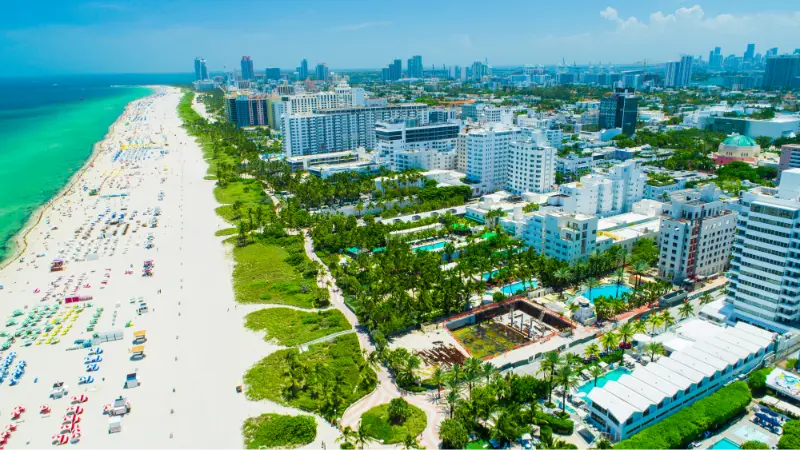
    Miami Beach South Beach Aerial and Skyline

    Before committing to this part of the trip, compare at least two realistic options using the exact dates, starting point and destination you will use. Record both the quoted price and any practical restrictions. The right choice for a solo visitor traveling light may not be the right choice for a family with a stroller, a group of friends, or someone who needs a slower pace. Keep your plan flexible enough to absorb a delay without spoiling the next activity.

    If several people travel together, give everyone a chance to identify one non-negotiable need. Families may prioritize naps or car seats, older visitors may value shade and seating, and other travelers may want freedom to change plans at short notice. For a more reliable decision, check the latest information directly with the relevant airport, transit company, attraction, hotel or official authority. Pay particular attention to the last step of the journey, because a convenient main connection can still leave an expensive or uncomfortable transfer. If information is unclear, ask the provider a specific question and save the reply alongside your reservation. Avoid assuming that a service described in an older review is unchanged today.

    Downtown and Brickell

    Rail and other transit connections can make sense for hotels near suitable stations, but the last portion of a journey may involve walking in heat or rain. Compare the total door-to-door journey with the simplicity of a direct ride.

    Before committing to this part of the trip, compare at least two realistic options using the exact dates, starting point and destination you will use. Record both the quoted price and any practical restrictions. The right choice for a solo visitor traveling light may not be the right choice for a family with a stroller, a group of friends, or someone who needs a slower pace. Keep your plan flexible enough to absorb a delay without spoiling the next activity.

    Build a fallback that does not rely on a single supplier. Know where to find official service updates, keep your accommodation address offline and retain access to essential documents if mobile data fails. For a more reliable decision, check the latest information directly with the relevant airport, transit company, attraction, hotel or official authority. Pay particular attention to the last step of the journey, because a convenient main connection can still leave an expensive or uncomfortable transfer. If information is unclear, ask the provider a specific question and save the reply alongside your reservation. Avoid assuming that a service described in an older review is unchanged today.

    PortMiami connections

    Cruise departures create an unusual timing requirement: missing an embarkation window is costly. The airport notes different options including taxis, rideshare, cruise-line transfers and public transportation. Verify the correct terminal and consider arriving the day before your sailing.

    Before committing to this part of the trip, compare at least two realistic options using the exact dates, starting point and destination you will use. Record both the quoted price and any practical restrictions. The right choice for a solo visitor traveling light may not be the right choice for a family with a stroller, a group of friends, or someone who needs a slower pace. Keep your plan flexible enough to absorb a delay without spoiling the next activity.

    A simple way to test the plan is to picture the busiest hour of your trip: where will you wait, where are the restrooms, and what will you do if the weather turns? This is particularly important in Florida, where sun, heavy rain and air-conditioned interiors may all feature on the same day. For a more reliable decision, check the latest information directly with the relevant airport, transit company, attraction, hotel or official authority. Pay particular attention to the last step of the journey, because a convenient main connection can still leave an expensive or uncomfortable transfer. If information is unclear, ask the provider a specific question and save the reply alongside your reservation. Avoid assuming that a service described in an older review is unchanged today.

    Ride-app pickup

    MIA’s published guidance identifies designated ride-app pickup areas and notes that pickup levels or doors can vary. Always follow the instructions displayed in the app and posted airport signs rather than accepting unsolicited offers inside the terminal.

    Before committing to this part of the trip, compare at least two realistic options using the exact dates, starting point and destination you will use. Record both the quoted price and any practical restrictions. The right choice for a solo visitor traveling light may not be the right choice for a family with a stroller, a group of friends, or someone who needs a slower pace. Keep your plan flexible enough to absorb a delay without spoiling the next activity.

    Try writing down the walking distance, expected waiting time and number of changes needed. This reveals costs that a basic fare comparison misses, including a late dinner, a second taxi or an extra day of rental-car parking. For a more reliable decision, check the latest information directly with the relevant airport, transit company, attraction, hotel or official authority. Pay particular attention to the last step of the journey, because a convenient main connection can still leave an expensive or uncomfortable transfer. If information is unclear, ask the provider a specific question and save the reply alongside your reservation. Avoid assuming that a service described in an older review is unchanged today.

    Taxi safety and rates

    Use the authorized taxi stand and current airport fare guidance. Miami International Airport warns against solicitors offering rides in the terminal. Ask about surcharges or waiting charges if a quote sounds unusually low.

    Miami Airport Terminal Entrance Building

    Before committing to this part of the trip, compare at least two realistic options using the exact dates, starting point and destination you will use. Record both the quoted price and any practical restrictions. The right choice for a solo visitor traveling light may not be the right choice for a family with a stroller, a group of friends, or someone who needs a slower pace. Keep your plan flexible enough to absorb a delay without spoiling the next activity.

    If several people travel together, give everyone a chance to identify one non-negotiable need. Families may prioritize naps or car seats, older visitors may value shade and seating, and other travelers may want freedom to change plans at short notice. For a more reliable decision, check the latest information directly with the relevant airport, transit company, attraction, hotel or official authority. Pay particular attention to the last step of the journey, because a convenient main connection can still leave an expensive or uncomfortable transfer. If information is unclear, ask the provider a specific question and save the reply alongside your reservation. Avoid assuming that a service described in an older review is unchanged today.

    Transfers with children

    For small children, confirm suitable car seats before committing to a private ride. A long transfer immediately after a flight is easier when a change of clothes, water and medication are accessible without opening checked suitcases.

    Before committing to this part of the trip, compare at least two realistic options using the exact dates, starting point and destination you will use. Record both the quoted price and any practical restrictions. The right choice for a solo visitor traveling light may not be the right choice for a family with a stroller, a group of friends, or someone who needs a slower pace. Keep your plan flexible enough to absorb a delay without spoiling the next activity.

    Build a fallback that does not rely on a single supplier. Know where to find official service updates, keep your accommodation address offline and retain access to essential documents if mobile data fails. For a more reliable decision, check the latest information directly with the relevant airport, transit company, attraction, hotel or official authority. Pay particular attention to the last step of the journey, because a convenient main connection can still leave an expensive or uncomfortable transfer. If information is unclear, ask the provider a specific question and save the reply alongside your reservation. Avoid assuming that a service described in an older review is unchanged today.

    Miami Airport Departure Hall with Shops

    Mobility and luggage

    Accessible taxis may be available on request, but arranging needs ahead is safer. Count the number of larger suitcases as well as people: a vehicle may have sufficient seats and inadequate luggage space.

    Before committing to this part of the trip, compare at least two realistic options using the exact dates, starting point and destination you will use. Record both the quoted price and any practical restrictions. The right choice for a solo visitor traveling light may not be the right choice for a family with a stroller, a group of friends, or someone who needs a slower pace. Keep your plan flexible enough to absorb a delay without spoiling the next activity.

    A simple way to test the plan is to picture the busiest hour of your trip: where will you wait, where are the restrooms, and what will you do if the weather turns? This is particularly important in Florida, where sun, heavy rain and air-conditioned interiors may all feature on the same day. For a more reliable decision, check the latest information directly with the relevant airport, transit company, attraction, hotel or official authority. Pay particular attention to the last step of the journey, because a convenient main connection can still leave an expensive or uncomfortable transfer. If information is unclear, ask the provider a specific question and save the reply alongside your reservation. Avoid assuming that a service described in an older review is unchanged today.

    Late flight planning

    A late arrival may change whether you prefer public transport, a prepaid transfer or an airport-area hotel. Check the current schedule for any chosen service and do not plan a tight connection to a cruise or long-distance train.

    Before committing to this part of the trip, compare at least two realistic options using the exact dates, starting point and destination you will use. Record both the quoted price and any practical restrictions. The right choice for a solo visitor traveling light may not be the right choice for a family with a stroller, a group of friends, or someone who needs a slower pace. Keep your plan flexible enough to absorb a delay without spoiling the next activity.

    Try writing down the walking distance, expected waiting time and number of changes needed. This reveals costs that a basic fare comparison misses, including a late dinner, a second taxi or an extra day of rental-car parking. For a more reliable decision, check the latest information directly with the relevant airport, transit company, attraction, hotel or official authority. Pay particular attention to the last step of the journey, because a convenient main connection can still leave an expensive or uncomfortable transfer. If information is unclear, ask the provider a specific question and save the reply alongside your reservation. Avoid assuming that a service described in an older review is unchanged today.

    Budget comparisons

    Compare the final taxi price, transit fares per person, and ride-app fare estimates at the actual arrival time. Include hotel parking if you are considering a rental car; in Miami the daily parking expense can exceed what travelers expect.

    Before committing to this part of the trip, compare at least two realistic options using the exact dates, starting point and destination you will use. Record both the quoted price and any practical restrictions. The right choice for a solo visitor traveling light may not be the right choice for a family with a stroller, a group of friends, or someone who needs a slower pace. Keep your plan flexible enough to absorb a delay without spoiling the next activity.

    If several people travel together, give everyone a chance to identify one non-negotiable need. Families may prioritize naps or car seats, older visitors may value shade and seating, and other travelers may want freedom to change plans at short notice. For a more reliable decision, check the latest information directly with the relevant airport, transit company, attraction, hotel or official authority. Pay particular attention to the last step of the journey, because a convenient main connection can still leave an expensive or uncomfortable transfer. If information is unclear, ask the provider a specific question and save the reply alongside your reservation. Avoid assuming that a service described in an older review is unchanged today.

    Official resources

    Use the Miami International Airport ground transportation pages for the MIA Mover, taxi rules and pickup zones. Cross-check public transit timetables with the operators on the day of travel.

    Before committing to this part of the trip, compare at least two realistic options using the exact dates, starting point and destination you will use. Record both the quoted price and any practical restrictions. The right choice for a solo visitor traveling light may not be the right choice for a family with a stroller, a group of friends, or someone who needs a slower pace. Keep your plan flexible enough to absorb a delay without spoiling the next activity.

    Build a fallback that does not rely on a single supplier. Know where to find official service updates, keep your accommodation address offline and retain access to essential documents if mobile data fails. For a more reliable decision, check the latest information directly with the relevant airport, transit company, attraction, hotel or official authority. Pay particular attention to the last step of the journey, because a convenient main connection can still leave an expensive or uncomfortable transfer. If information is unclear, ask the provider a specific question and save the reply alongside your reservation. Avoid assuming that a service described in an older review is unchanged today.

    Frequently asked questions

    How far ahead should I plan?

    Book arrangements with limited capacity as soon as your dates and priorities are firm, but check policies for changes or cancellations. Leave some flexibility for weather and travel delays.

    Is this suitable for children and older visitors?

    It often can be with the right pace, shorter walking distances and reliable transportation. Check accessibility and age restrictions with each service rather than relying on general descriptions.

    What should I double-check just before departure?

    Confirm operating hours, the exact destination address, pickup instructions, prices, any current restrictions and the local weather forecast. Save copies of essential details offline.

  • Choosing Where to Stay in Miami: Brickell, Downtown, Coconut Grove or Coral Gables?

    Choosing Where to Stay in Miami: Brickell, Downtown, Coconut Grove or Coral Gables?

    Choosing a hotel in Miami can feel like choosing between several different cities. Brickell is glass towers, late dinners and a useful transit network. Coconut Grove has leafy streets, waterfront parks and a slower pace. Coral Gables offers elegant avenues and restaurants around Miracle Mile, while Downtown puts museums and event venues near your door. None of these areas is the same as Miami Beach, which sits across Biscayne Bay on a barrier island. The most useful decision is not whether an address says “Miami,” but what you want to reach on an ordinary vacation day. This guide concentrates on mainland bases and explains when each is convenient, where it introduces extra transport costs, and how to check a hotel before committing.

    At a glance: compare the areas

    Where to stayBest forCheck before booking
    BrickellUrban dining and transitBusy blocks and parking
    Downtown MiamiMuseums and eventsNot an ocean beach
    Coconut GroveQuiet leafy routinesLonger beach transfers
    Coral GablesArchitecture and restaurantsCar useful for some sights

    Brickell: a lively base with dining and urban transport

    Brickell works for travelers who like being able to leave the hotel after dinner and still find activity nearby. Around Brickell City Centre and the surrounding streets, restaurants, cafés and shopping are clustered among high-rise towers. It is a good starting point for a first Miami city break, especially if you do not want to drive every evening. Metromover provides free circulation around much of Brickell and Downtown, and Metrorail connects selected areas farther south and west. That does not make Brickell a beach neighborhood: reaching South Beach or other Atlantic beaches still requires a deliberate trip across the bay. Some blocks can feel intensely busy, with construction or traffic noise at certain times. Compare an actual room’s position and window insulation, particularly when traveling with young children or when uninterrupted sleep is more important than nightlife. A balcony view is not a substitute for a restful bedroom.

    Downtown Miami: museums, events and a practical connection point

    Downtown is a smart choice when your schedule includes the Pérez Art Museum Miami, Frost Science, Kaseya Center events, waterfront walks or onward rail travel. The neighborhood combines daytime offices, high-rise hotels and major attractions rather than a traditional beach-town atmosphere. Being near Bayfront Park is different from being closer to MiamiCentral or the river, so do not treat every downtown address as equivalent. For travelers arriving without a car, the combination of the Metromover, nearby rail and rideshare can be useful, although you will still need to plan the last stretch to some sights. Look at whether the hotel provides food options late in the evening and whether nearby streets feel comfortable for your intended walks. Event nights can change traffic and noise patterns. Someone taking an early flight may prefer straightforward airport access over the cheapest downtown rate, especially when traveling with multiple bags.

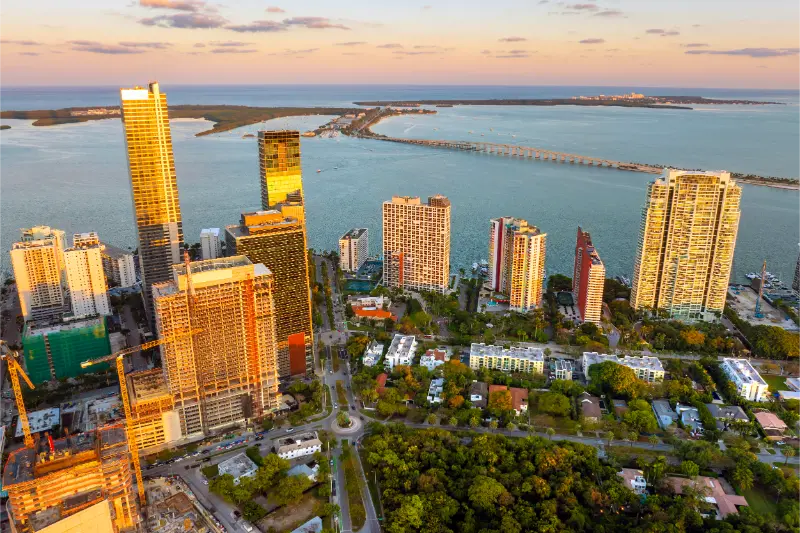
    Miami Brickell Downtown Towers Illuminated at Night

    Coconut Grove: slower mornings and greener surroundings

    Coconut Grove suits travelers who picture a morning coffee, shade from mature trees and dinner without an exhausting schedule. The Grove’s waterfront parks, village streets and historic character feel quite different from the towers of Brickell. It can be particularly appealing for couples, extended stays and families who want a calmer home base between excursions. You may enjoy spending a half day nearby rather than heading across the city every morning; Vizcaya Museum & Gardens and neighborhood waterfront spaces can fit into that rhythm. However, the neighborhood is not one compact hotel district. A listing described as “Coconut Grove” may sit beyond the walkable village core, and distance to the Metrorail station may be significant on a hot day. Check walking routes carefully, including sidewalks and intersections, before promising older relatives or stroller users an easy car-free holiday. If you plan daily beach visits, factor in the additional eastward travel.

    Coral Gables: restaurants, architecture and a quieter setting

    Coral Gables is a strong option for people who enjoy an evening stroll around Miracle Mile, attractive streets and cultural outings without expecting a beachfront hotel. It often suits guests meeting friends locally, attending a celebration or exploring gardens and historic sites. The Venetian Pool and Fairchild Tropical Botanic Garden are regional attractions worth considering, but neither is automatically a short walk from every Coral Gables property. This is an area where a map is essential: a hotel close to Miracle Mile has different daily logistics from one on the edge of the city. Driving may be practical for a varied itinerary, while transit and rideshare can work for selected journeys. Do not assume a quiet-looking avenue has easy, free parking. Ask the accommodation about overnight parking, accessibility from the street and any charges that only appear at checkout. The right base should support your intended pace, not merely look attractive in photographs.

    Wynwood and the Design District: worth visiting, but check the sleeping location

    Wynwood is memorable for large-scale street art, galleries, restaurants and a busy social scene. The neighboring Design District offers architecture, art installations and upscale shopping. Both can make an excellent afternoon or evening, but choosing to sleep there requires more research than visiting for a few hours. Hotel supply and street atmosphere change from one block to another, and some streets are geared toward nightlife or commercial activities rather than quiet residential routines. Consider noise, pedestrian routes after dark and how you will travel to the beach, airport or a family-friendly daytime attraction. If you mainly want museums and murals, a Brickell or Downtown hotel may offer easier connections while still allowing a dedicated Wynwood outing. If the creative energy is central to your trip, select a specific property after reading recent comments about the immediate location—not just reviews of the wider district.

    Miami Beach versus mainland Miami: decide what kind of mornings you want

    If your ideal first hour involves swimming or sitting beside the Atlantic Ocean, staying in Miami Beach may be worth the higher total price or smaller room. On the mainland, even a waterfront hotel on Biscayne Bay is not necessarily beside a sandy ocean beach. South Beach places the Art Deco District and a lively restaurant scene nearby; Mid-Beach and North Beach can offer different rhythms, but individual blocks matter. Mainland Miami, by contrast, often makes city museums, urban transport and wider regional excursions easier. Both choices have trade-offs in parking, traffic, and resort or amenity fees. A useful test is to write down your first three mornings: “beach before breakfast” points toward the barrier island, while “museum, neighborhood café, transit to a concert” may favor the mainland. Avoid paying a premium for a beach address when you only expect to visit the shore once.

    Arriving from Miami International Airport without surprises

    Miami International Airport is connected to the broader public-transport network, but the easiest final transfer depends on the hotel’s actual address, arrival time and luggage. For some Downtown and Brickell hotels, rail and Metromover can form a reasonable route; elsewhere a direct taxi or prearranged transfer will be more comfortable. Do not confuse the free Metromover with a train that runs all the way into airport terminals. Travelers with strollers, wheelchairs or large suitcases should check elevators and the final walk rather than relying on a journey planner’s optimistic timing. On a late arrival, a staffed check-in desk can be more valuable than a fashionable address. Confirm whether your booking includes the full night when your flight lands after midnight, and keep the hotel phone number offline. Families should arrange suitable child restraints for road transfers and not assume every rideshare vehicle will provide one.

    Miami Brickell Glass Skyscraper Architecture

    How much walking is realistic in Miami heat?

    Miami looks walkable in photographs, but the combination of humidity, strong sun and sudden rain can make even modest distances tiring. The compact dining core of Brickell may be manageable on foot; a day linking separate neighborhoods usually needs a transport plan. Think especially carefully if a companion uses a mobility aid, requires regular sitting breaks or has a stroller. Ask hotels for details of step-free access, entrance slopes, elevators and bathroom features. A vague “accessible room” label does not confirm the layout you need. For seniors or multigenerational groups, choosing an area with a dependable café and restaurant near the entrance can be more valuable than one extra attraction. Plan indoor periods around the hottest part of the day and check for severe-weather warnings before walking long stretches. Florida thunderstorms are not an invitation to shelter beneath trees or open beach structures.

    Parking, resort fees and the real cost of a Miami hotel

    A hotel that appears economical may change rank once overnight parking, destination fees, taxes, breakfast and rideshare journeys are included. Mainland high-rise hotels can charge for valet parking, and entering a garage may involve a separate operator. Some properties offer only limited self-parking, while others permit vehicle access only through valet service. Compare two realistic scenarios rather than only nightly rates: one with a rental car and daily parking, one without a car and a handful of planned transfers. For a city-centered break, the second may be both cheaper and simpler. For visits to the Everglades, multiple beaches or remote coastal neighborhoods, a car can become useful. Read the current hotel fee disclosure and cancellation terms, especially if you are traveling during hurricane season. Keep a small flexibility margin because weather may change your plans.

    Families, couples and solo travelers: three different home-base decisions

    A family with small children may value a suite, microwave, predictable breakfast and room for naps more than a rooftop bar. Coconut Grove and selected Coral Gables properties can suit relaxed evenings, but a family near Brickell’s transport and dining may do just as well. Couples interested in restaurants and nightlife may enjoy Brickell, while art-focused visitors may gravitate toward Downtown and short rides to Wynwood. Solo travelers should prioritize a convenient location, arrival arrangements and the ability to return comfortably after an evening activity. Do not let “best neighborhood” rankings overrule individual needs. Ask whether the hotel offers quiet rooms, luggage storage, an elevator and convenient access to food. A well-positioned midrange room can create a better holiday than a luxurious property that forces long journeys after every activity.

    A three-day mainland-based itinerary that avoids unnecessary crossings

    On day one, explore the area around your hotel and make one neighborhood the focus. From Brickell, that might mean a late breakfast, a relaxed afternoon along the waterfront and dinner within walking distance. Day two can center on Downtown museums, with time for both PAMM and Frost Science only if your group genuinely enjoys a full museum day; otherwise choose one and leave the afternoon open. For day three, visit Coconut Grove and perhaps Vizcaya, or make a separate beach trip rather than combining everything into one rushed circuit. This framework keeps most movements within related areas. If the beach is the highlight, reverse the emphasis and consider whether sleeping on the beach side would be easier. Reserve essential attractions and restaurants when needed, but avoid scheduling every meal. The freedom to stop for a long coffee is part of a comfortable city trip.

    Booking checklist: what to verify before choosing an address

    Check the actual neighborhood and the route to the places you intend to visit, then look at the final price for identical dates and occupancy. Confirm parking rules, breakfast, additional fees, bedding, elevator access, check-in hours and cancellation conditions. Read recent reviews for noise, building works, cleanliness and the accuracy of the listing. If a room faces a busy street, ask whether a quieter position is available rather than assuming all rooms are identical. Save the property’s exact address, not only its marketing name. For international visitors, verify passport and U.S. entry requirements separately from hotel reservations. Finally, choose the neighborhood in which you would happily spend an unscheduled morning. That is often the strongest clue that the location fits you rather than simply looking good on a map.

    Frequently asked questions

    Is Miami Beach the same as Downtown Miami?

    No. Miami Beach is on a barrier island across Biscayne Bay. Downtown is a mainland urban area near museums and event venues. Choose by how often you want the Atlantic shore at your doorstep.

    Can I stay in Brickell without renting a car?

    Yes for many city-centered plans. Metromover and Metrorail serve relevant corridors, while reaching beaches and more distant sites usually requires additional transport.

    Which area is best for a quieter evening?

    Coconut Grove or parts of Coral Gables may suit a calmer routine, but room location, nearby businesses and recent noise reviews are more reliable than a neighborhood-wide promise.

    Official resources for checking local details

  • Key Biscayne Florida Travel Guide: Crandon Park, Bill Baggs, Beaches, Families and Where to Stay

    Key Biscayne Florida Travel Guide: Crandon Park, Bill Baggs, Beaches, Families and Where to Stay

    Key Biscayne feels surprisingly separate from Miami even though the skyline is visible across the bay. The island’s strength is a simple combination: broad parks, beaches, the historic Cape Florida Lighthouse and enough village services to make a multi-night stay comfortable. It is an excellent choice when you want South Florida nature without giving up quick access to museums and restaurants on the mainland.

    I would choose Key Biscayne for families, couples and senior travelers who value morning beach walks, parks and a calm evening rhythm. It can also work as a restorative final stop after a busier Miami or Keys itinerary. The trade-off is price and the fact that almost every mainland excursion uses the same causeway.

    A good Key Biscayne trip does not need every hour reserved. Book only the experience that would be difficult to replace, then let weather and energy decide the rest. That approach makes the destination work for travelers from toddlers to grandparents because everyone gets a clearer pace and fewer unnecessary transitions.

    Quick planning summary

    • Recommended stay: 2–4 nights for a first visit.
    • Best first stop: Bill Baggs Cape Florida State Park.
    • Best for: travelers who want a mix of local character, outdoor time and realistic day-to-day logistics.
    • Transport: choose lodging by the places you will visit most often, not only by the advertised destination name.
    • Planning rule: one priority activity in the morning, one flexible afternoon option and an easy evening close to the hotel.

    In this guide

    Why visit Key Biscayne?

    Key Biscayne feels surprisingly separate from Miami even though the skyline is visible across the bay. The island’s strength is a simple combination: broad parks, beaches, the historic Cape Florida Lighthouse and enough village services to make a multi-night stay comfortable. It is an excellent choice when you want South Florida nature without giving up quick access to museums and restaurants on the mainland.

    Miami Beach Biscayne Bay Aerial View

    I would choose Key Biscayne for families, couples and senior travelers who value morning beach walks, parks and a calm evening rhythm. It can also work as a restorative final stop after a busier Miami or Keys itinerary. The trade-off is price and the fact that almost every mainland excursion uses the same causeway.

    Key Biscayne is most rewarding when you give it enough time to change pace during the day. Early morning is often the best window for beaches, gardens, trails, wildlife or water activities; lunch and the hottest hours are better for museums, shaded districts or a real rest; late afternoon can bring a second outdoor window. Staying at least a few nights also gives you a backup day if wind, storms, capacity limits or traffic interfere with the original plan.

    I would not judge the destination only by the number of famous attractions. The quality of the trip usually comes from the combination of a good base, short transfers, one or two signature experiences and unstructured time for a neighborhood, park, café or sunset that was not on the original checklist.

    Where to stay

    Village center

    Best for restaurants, groceries and a more practical stay. You may not wake up directly on the sand, but daily logistics are simple.

    Resort and oceanfront properties

    A strong choice when pool, beach and spa time are part of the vacation rather than just amenities. Compare resort, parking and dining costs rather than looking only at the nightly rate.

    Mainland Miami with Key Biscayne day trips

    Often better value if you want only one beach day here. It makes less sense if sunrise walks and repeated park visits are central to the trip.

    Before booking, compare the full trip rather than the nightly rate. Look at parking, resort fees, breakfast, kitchen and laundry facilities, beach or park access, elevator availability and the first drive of the morning. If anyone in the group has limited mobility, confirm the route from the room to the parking area, pool, beach or restaurant instead of relying on a generic accessibility icon.

    Family tipFor families, a slightly larger room with a refrigerator can make mornings much easier. Couples may prefer a smaller but walkable property near dinner. Senior travelers often benefit from avoiding properties where every meal, attraction and sunset requires another car trip. The best area is the one that removes friction from the part of the day your group values most.

    Best things to do

    Bill Baggs Cape Florida State Park

    The island’s signature nature-and-history destination, with beach, trails, fishing areas and the historic lighthouse. Check current lighthouse-tour availability and park capacity.

    Crandon Park

    A large beach-and-park complex with family facilities, nature and room to spend most of a day. Accessibility features are particularly useful for travelers who need beach mats or wheelchairs; verify current availability before arrival.

    Cape Florida Lighthouse

    The historic lighthouse creates one of the most recognizable views in the Miami area. Climb schedules and access can be weather-dependent.

    Biscayne Nature Center and coastal ecology

    A useful educational stop for families who want to understand dunes, marine life and the ecosystems surrounding the island.

    Cycling and waterfront time

    Key Biscayne is popular with cyclists, but road conditions and traffic matter. Families and casual riders should favor separated or low-stress routes rather than assuming the entire causeway is comfortable for every skill level.

    Do not try to fit all of these into one day. Choose the two experiences that define the destination for you, then use the others as weather alternatives or shorter additions. If a boat tour, guided activity or timed attraction is important, reserve that first and keep nearby flexible stops around it rather than creating a chain of nonrefundable bookings.

    Nature, beaches and outdoor time

    Key Biscayne’s beaches can look calm, but heat, lightning and marine conditions still deserve attention. Start longer walks and bike rides early. If accessibility is important, Crandon Park and Bill Baggs both have documented features, yet it is worth calling ahead because equipment availability can change day to day.

    Outdoor planning in Florida works best by conditions rather than by a rigid clock. Check heat, lightning, wind, tides, surf flags and local alerts before leaving the hotel. Carry water and sun protection even when the morning feels comfortable. On beaches and waterways, follow lifeguard or ranger guidance and never assume that calm-looking water means there is no current or marine risk.

    Wildlife should stay wild. Do not feed animals, block their movement, approach nests or turn a close photograph into the goal of the encounter. Ethical viewing usually produces a better experience anyway because animals behave more naturally when people give them space.

    Getting there and around

    Key Biscayne is reached via the Rickenbacker Causeway from Miami. A car or rideshare is convenient, but weekend traffic and event congestion can slow the return trip. Miami International Airport is the natural air gateway. If you stay on the island, group mainland sightseeing into one or two days instead of crossing back and forth repeatedly.

    For rental cars, add tolls, parking and fuel to the budget before pickup. If part of the stay is meant to be car-free, verify the exact walking route from the hotel rather than only the distance. A mile in humidity, across a multi-lane road or with a stroller can feel very different from a mile on a shaded pedestrian street.

    Arrival day should stay intentionally light. Flights, baggage, rental-car lines and traffic can consume more time than expected, so I would avoid placing the most expensive tour on the first afternoon. Use arrival day to learn the area, buy water or groceries and have an easy dinner near the hotel.

    Best time to visit

    Winter and spring offer the easiest weather for beaches, cycling and parks, with higher lodging demand. Summer brings hot water and family travel but also strong heat, afternoon storms and hurricane-season uncertainty. Shoulder periods can be excellent when hotel rates soften and you are comfortable with flexible plans.

    Prices and crowds can be driven by school calendars, festivals, sporting events and holiday weekends as much as by weather. If a specific event is not the reason for the trip, check the calendar before choosing dates. Shoulder periods can provide excellent value, but flexible cancellation terms are worth more than the absolute lowest rate when tropical weather is part of the season.

    Families, teenagers, seniors and accessibility

    For multigenerational groups, do not force everyone through the same pace. Choose one shared morning anchor, then split for a few hours if needed and regroup for dinner. Parents can use nap or pool time, teenagers can add an activity, and older travelers can choose a museum, café or shaded walk without feeling that they are slowing the group down.

    Accessibility should be checked at the exact attraction or beach access you plan to use. A destination may advertise itself as accessible while individual boardwalks, boat docks, sand paths or historic buildings have limitations. Confirm accessible parking, restrooms, ramps, beach mats or wheelchairs, elevator access and boarding procedures when those details are essential.

    Heat management matters across every age group. Build shade, indoor time and hydration into the schedule before anyone feels exhausted. A good vacation day does not have to last from breakfast until midnight; one memorable experience plus an easy evening can be more successful than three attractions completed by force.

    A practical 3-day itinerary

    Day 1: orientation and an easy local evening

    Check in, learn the immediate area and choose Bill Baggs Cape Florida State Park or another short signature stop that does not require a long transfer. Keep dinner close to the hotel. Arrival day is for understanding the destination, not proving how much can fit into six hours.

    Day 2: the signature experience

    Use the coolest part of the morning for Crandon Park or the most weather-sensitive activity on your list. Take a real midday break, then add Cape Florida Lighthouse if energy and conditions are good. Finish with a sunset, waterfront walk or neighborhood dinner instead of another long drive.

    Day 3: nature, culture or a selective excursion

    Choose Biscayne Nature Center and coastal ecology, spend more time at the beach or park you liked most, or make one of the day trips below. If the weather turns poor, use a museum, shopping district, historic site or long lunch as the backup. Leave enough space at the end of the day to pack and prepare for departure without ruining the final evening.

    If you have 2–4 nights, slow this itinerary down rather than adding more distant places. Repeat a favorite beach, schedule a second water activity, add a rest morning or take one full regional day trip. Repetition is often what turns a checklist vacation into an actual holiday.

    Food and evening planning

    Village restaurants make Key Biscayne easier than a remote beach resort, while waterfront dining on the island can turn sunset into the main event. For families, a room with a refrigerator or kitchen helps reduce the cost of breakfasts and beach lunches. Reserve only the most important meal so a perfect beach afternoon does not have to end early.

    For mixed-age groups, dinner location matters almost as much as the restaurant. A twenty-minute drive after a full beach or park day can feel much longer than it did on the map. Choose at least half of your evening meals close to the hotel and save the longer drive for one restaurant that is genuinely worth it.

    Budget and booking strategy

    To control costs, decide which experiences are worth paying for and let parks, beaches, walking districts and scenic drives fill the rest of the schedule. Families can save significantly with a refrigerator or kitchen, while couples may prefer to spend more on one memorable dinner and keep lunches casual.

    The real budget is larger than the room rate. Add parking, resort or destination fees, tolls, equipment rentals, breakfast, beach gear and the cost of getting from the airport. A more expensive hotel can be the better value when it includes parking, a kitchen or a location that eliminates repeated rideshare trips.

    Reserve popular lodging and one must-do experience first. Everything else can be layered around those anchors. Avoid paying in advance for multiple outdoor activities on consecutive days unless cancellation policies are generous; one windy or stormy period can otherwise affect several reservations at once.

    Best day trips

    Downtown Miami and Brickell

    Easy for museums, waterfront walks and a more urban evening.

    Coral Gables

    A strong architecture, garden and dining day without going all the way to Miami Beach.

    Coconut Grove and Vizcaya

    Ideal for tropical gardens, bayfront parks and historic Miami atmosphere.

    A day trip should add contrast, not simply duplicate what you can do near the hotel. Pick one destination and spend enough time there to understand it. If the round-trip drive is long, an overnight may be a better use of vacation time—especially with young children, senior travelers or anyone who dislikes repeated packing and early starts.

    Mistakes to avoid

    The biggest mistake is trying to use Key Biscayne only as a sleeping base for distant attractions every day. If most mornings begin with a long drive, the hotel location is working against the trip. Protect enough local time to enjoy the destination you actually booked.

    Another common mistake is planning by map distance instead of real Florida travel time. Bridges, beach traffic, school breaks, thunderstorms, road work and limited parking can turn a short-looking transfer into the most tiring part of the day. Leave buffer time and avoid stacking fixed reservations back to back.

    Do not assume every waterfront hotel has a usable beach, every beach has lifeguards, or every nature attraction operates the same way year-round. Read the current access rules and official alerts shortly before the visit, especially when parking, capacity, weather or wildlife protections can change the plan.

    Finally, do not overbook the final day. Weather delays, traffic and longer-than-expected meals are normal parts of Florida travel. Leaving one open block protects the experiences that came before it and gives you somewhere to move an activity that had to be postponed.

    Use these guides to expand the trip without repeating the same research:

    Official resources to check before you go

    Hours, parking rules, capacity limits, tours and weather-related closures can change. Check the official sources shortly before travel:

    Frequently asked questions

    Is Key Biscayne worth visiting?

    Yes, if the experiences in this guide match the way you like to travel. Key Biscayne is strongest when you allow enough time for its local character rather than using it only as a stop between two more famous places.

    How many days should I spend in Key Biscayne?

    2–4 nights is a useful first-trip range. Shorter stays work when you have one clear goal; longer stays are better for water activities, families, slower travelers and anyone who wants a weather backup day.

    Do I need a car?

    For most itineraries, a car is helpful even when one neighborhood is walkable. The answer depends on the hotel location and whether your plans include parks, beaches, day trips or airports outside the immediate center.

    Is Key Biscayne good for families and senior travelers?

    Usually yes. The key is matching activity length, heat exposure and accommodation location to the group. Confirm accessibility details directly when ramps, beach access, boat boarding or elevators are essential.

    What should I book first?

    Book the accommodation and the one experience that would be difficult to replace. Then keep enough flexibility for weather, traffic and changes in energy. A vacation with a little empty space is usually easier to enjoy.

    Final advice

    Key Biscayne works best when the itinerary reflects the place rather than fighting it. Stay close to what matters, use mornings intelligently, respect Florida weather and wildlife, and let one or two excellent experiences carry each day. That approach works just as well for a couple as it does for a family with children or a multigenerational group.

  • Coral Gables Florida Travel Guide: Miracle Mile, Fairchild, Venetian Pool, Architecture and Where to Stay

    Coral Gables Florida Travel Guide: Miracle Mile, Fairchild, Venetian Pool, Architecture and Where to Stay

    Coral Gables is one of the best places in Greater Miami to slow the pace without leaving the metropolitan area. Mediterranean Revival architecture, tree-lined streets, Miracle Mile, historic landmarks and major gardens create a destination that rewards walking and looking rather than rushing from attraction to attraction.

    I would choose Coral Gables for couples, culture-focused travelers, senior visitors and families who want beautiful public spaces and good restaurants without staying on a dense beach strip. It is also a practical base between Miami International Airport, Coconut Grove and South Dade, especially when nightlife is not the main priority.

    For a first visit to Coral Gables, I would build the schedule around one priority experience each morning, then keep the afternoon flexible. Florida heat, marine conditions and short-lived storms can change the order of the day quickly. The best itineraries leave enough room to move a beach, boat, garden or wildlife activity without losing a prepaid reservation.

    Quick planning summary

    • Recommended stay: 2–3 nights for a first visit.
    • Best first stop: Miracle Mile and downtown streets.
    • Best for: travelers who want a mix of local character, outdoor time and realistic day-to-day logistics.
    • Transport: choose lodging by the places you will visit most often, not only by the advertised destination name.
    • Planning rule: one priority activity in the morning, one flexible afternoon option and an easy evening close to the hotel.

    In this guide

    Why visit Coral Gables?

    Coral Gables is one of the best places in Greater Miami to slow the pace without leaving the metropolitan area. Mediterranean Revival architecture, tree-lined streets, Miracle Mile, historic landmarks and major gardens create a destination that rewards walking and looking rather than rushing from attraction to attraction.

    I would choose Coral Gables for couples, culture-focused travelers, senior visitors and families who want beautiful public spaces and good restaurants without staying on a dense beach strip. It is also a practical base between Miami International Airport, Coconut Grove and South Dade, especially when nightlife is not the main priority.

    Coral Gables is most rewarding when you give it enough time to change pace during the day. Early morning is often the best window for beaches, gardens, trails, wildlife or water activities; lunch and the hottest hours are better for museums, shaded districts or a real rest; late afternoon can bring a second outdoor window. Staying at least a few nights also gives you a backup day if wind, storms, capacity limits or traffic interfere with the original plan.

    I would not judge the destination only by the number of famous attractions. The quality of the trip usually comes from the combination of a good base, short transfers, one or two signature experiences and unstructured time for a neighborhood, park, café or sunset that was not on the original checklist.

    Where to stay

    Miracle Mile and downtown Coral Gables

    Best for walkable restaurants, shops and an easy evening routine. It is the most practical area for a short city break.

    Biltmore and residential Coral Gables

    A quieter, more architectural experience with access to historic streets, golf and upscale lodging. You will rely more on a car or rideshare.

    South Gables near Fairchild and Matheson Hammock

    Useful for travelers prioritizing gardens, parks and Biscayne Bay nature. Verify distance to dinner because the area is less concentrated than downtown.

    Before booking, compare the full trip rather than the nightly rate. Look at parking, resort fees, breakfast, kitchen and laundry facilities, beach or park access, elevator availability and the first drive of the morning. If anyone in the group has limited mobility, confirm the route from the room to the parking area, pool, beach or restaurant instead of relying on a generic accessibility icon.

    Family tipFor families, a slightly larger room with a refrigerator can make mornings much easier. Couples may prefer a smaller but walkable property near dinner. Senior travelers often benefit from avoiding properties where every meal, attraction and sunset requires another car trip. The best area is the one that removes friction from the part of the day your group values most.

    Best things to do

    Miracle Mile and downtown streets

    The easiest introduction to the city, mixing shops, restaurants, galleries and Mediterranean-inspired civic spaces.

    Venetian Pool

    A historic coral-rock swimming complex unlike a conventional hotel pool. Entry rules, seasonal hours and age or height requirements can change, so check the official city page before taking children.

    Florida Private Backyard Pool and Tropical Palms

    Fairchild Tropical Botanic Garden

    One of South Florida’s major botanical destinations, with tropical plant collections, conservation work and enough space to justify several hours.

    Coral Gables Museum and Merrick House

    Together they explain how the planned city developed and why its architecture looks so different from much of Miami.

    The Biltmore and Matheson Hammock area

    Historic architecture, green space and bayfront scenery create a strong half-day even if you are not staying at the hotel.

    Do not try to fit all of these into one day. Choose the two experiences that define the destination for you, then use the others as weather alternatives or shorter additions. If a boat tour, guided activity or timed attraction is important, reserve that first and keep nearby flexible stops around it rather than creating a chain of nonrefundable bookings.

    Nature, beaches and outdoor time

    Coral Gables is greener than many visitors expect, but South Florida heat changes how far a shaded walk feels. Put gardens and long walks in the morning, then use museums, lunch or a hotel break in the hottest hours. Matheson Hammock and nearby coastal areas add water and mangrove environments without requiring a full beach-resort day.

    Outdoor planning in Florida works best by conditions rather than by a rigid clock. Check heat, lightning, wind, tides, surf flags and local alerts before leaving the hotel. Carry water and sun protection even when the morning feels comfortable. On beaches and waterways, follow lifeguard or ranger guidance and never assume that calm-looking water means there is no current or marine risk.

    Wildlife should stay wild. Do not feed animals, block their movement, approach nests or turn a close photograph into the goal of the encounter. Ethical viewing usually produces a better experience anyway because animals behave more naturally when people give them space.

    Getting there and around

    Miami International Airport is close enough to make Coral Gables convenient for short trips. A rideshare can work well for a downtown-focused stay, while a car is useful for Fairchild, Key Biscayne, Homestead and other spread-out attractions. Metrorail serves parts of the broader area, but always check the last-mile walk from the station to the exact hotel or attraction.

    For rental cars, add tolls, parking and fuel to the budget before pickup. If part of the stay is meant to be car-free, verify the exact walking route from the hotel rather than only the distance. A mile in humidity, across a multi-lane road or with a stroller can feel very different from a mile on a shaded pedestrian street.

    Arrival day should stay intentionally light. Flights, baggage, rental-car lines and traffic can consume more time than expected, so I would avoid placing the most expensive tour on the first afternoon. Use arrival day to learn the area, buy water or groceries and have an easy dinner near the hotel.

    Best time to visit

    Late fall through spring offers the easiest walking weather, while summer is hotter, wetter and often better approached with shorter outdoor blocks. Cultural events and University of Miami dates can influence hotel demand. Tropical-weather flexibility is important during hurricane season even when the forecast looks quiet at booking time.

    Prices and crowds can be driven by school calendars, festivals, sporting events and holiday weekends as much as by weather. If a specific event is not the reason for the trip, check the calendar before choosing dates. Shoulder periods can provide excellent value, but flexible cancellation terms are worth more than the absolute lowest rate when tropical weather is part of the season.

    Families, teenagers, seniors and accessibility

    Accessibility should be checked at the exact attraction or beach access you plan to use. A destination may advertise itself as accessible while individual boardwalks, boat docks, sand paths or historic buildings have limitations. Confirm accessible parking, restrooms, ramps, beach mats or wheelchairs, elevator access and boarding procedures when those details are essential.

    Families with babies or toddlers usually do best with one major outing and one easy reset—pool, playground, beach or hotel rest—rather than three ticketed stops. Teenagers often enjoy the trip more when at least one activity feels active or independent, such as paddling, cycling, shopping, photography or a boat excursion. Senior travelers benefit from the same principle: shorter outdoor blocks, reliable seating and fewer hotel changes.

    Florida Resort Swimming Pool with Parasols

    Heat management matters across every age group. Build shade, indoor time and hydration into the schedule before anyone feels exhausted. A good vacation day does not have to last from breakfast until midnight; one memorable experience plus an easy evening can be more successful than three attractions completed by force.

    A practical 3-day itinerary

    Day 1: orientation and an easy local evening

    Check in, learn the immediate area and choose Miracle Mile and downtown streets or another short signature stop that does not require a long transfer. Keep dinner close to the hotel. Arrival day is for understanding the destination, not proving how much can fit into six hours.

    Day 2: the signature experience

    Use the coolest part of the morning for Venetian Pool or the most weather-sensitive activity on your list. Take a real midday break, then add Fairchild Tropical Botanic Garden if energy and conditions are good. Finish with a sunset, waterfront walk or neighborhood dinner instead of another long drive.

    Day 3: nature, culture or a selective excursion

    Choose Coral Gables Museum and Merrick House, spend more time at the beach or park you liked most, or make one of the day trips below. If the weather turns poor, use a museum, shopping district, historic site or long lunch as the backup. Leave enough space at the end of the day to pack and prepare for departure without ruining the final evening.

    If you have 2–3 nights, slow this itinerary down rather than adding more distant places. Repeat a favorite beach, schedule a second water activity, add a rest morning or take one full regional day trip. Repetition is often what turns a checklist vacation into an actual holiday.

    Food and evening planning

    Coral Gables has one of Greater Miami’s strongest restaurant concentrations, especially around Miracle Mile and Giralda Plaza. It is a good destination for one planned dinner, but daytime meals can stay casual so museums and gardens do not have to fit around reservations. Families can use the area’s cafés and bakeries to keep breakfast quick.

    For mixed-age groups, dinner location matters almost as much as the restaurant. A twenty-minute drive after a full beach or park day can feel much longer than it did on the map. Choose at least half of your evening meals close to the hotel and save the longer drive for one restaurant that is genuinely worth it.

    Budget and booking strategy

    The real budget is larger than the room rate. Add parking, resort or destination fees, tolls, equipment rentals, breakfast, beach gear and the cost of getting from the airport. A more expensive hotel can be the better value when it includes parking, a kitchen or a location that eliminates repeated rideshare trips.

    Luxury Florida Home and Blue Swimming Pool

    To control costs, decide which experiences are worth paying for and let parks, beaches, walking districts and scenic drives fill the rest of the schedule. Families can save significantly with a refrigerator or kitchen, while couples may prefer to spend more on one memorable dinner and keep lunches casual.

    Reserve popular lodging and one must-do experience first. Everything else can be layered around those anchors. Avoid paying in advance for multiple outdoor activities on consecutive days unless cancellation policies are generous; one windy or stormy period can otherwise affect several reservations at once.

    Best day trips

    Coconut Grove and Vizcaya

    An easy pairing for gardens, bayfront history and a more bohemian neighborhood atmosphere.

    Key Biscayne

    A natural beach-and-lighthouse day when you want to leave the city streets behind.

    Homestead and the Redland

    A very different South Florida day built around farms, tropical fruit and national-park gateways.

    A day trip should add contrast, not simply duplicate what you can do near the hotel. Pick one destination and spend enough time there to understand it. If the round-trip drive is long, an overnight may be a better use of vacation time—especially with young children, senior travelers or anyone who dislikes repeated packing and early starts.

    Mistakes to avoid

    The biggest mistake is trying to use Coral Gables only as a sleeping base for distant attractions every day. If most mornings begin with a long drive, the hotel location is working against the trip. Protect enough local time to enjoy the destination you actually booked.

    Another common mistake is planning by map distance instead of real Florida travel time. Bridges, beach traffic, school breaks, thunderstorms, road work and limited parking can turn a short-looking transfer into the most tiring part of the day. Leave buffer time and avoid stacking fixed reservations back to back.

    Do not assume every waterfront hotel has a usable beach, every beach has lifeguards, or every nature attraction operates the same way year-round. Read the current access rules and official alerts shortly before the visit, especially when parking, capacity, weather or wildlife protections can change the plan.

    Finally, do not overbook the final day. Weather delays, traffic and longer-than-expected meals are normal parts of Florida travel. Leaving one open block protects the experiences that came before it and gives you somewhere to move an activity that had to be postponed.

    Use these guides to expand the trip without repeating the same research:

    Official resources to check before you go

    Hours, parking rules, capacity limits, tours and weather-related closures can change. Check the official sources shortly before travel:

    Frequently asked questions

    Is Coral Gables worth visiting?

    Yes, if the experiences in this guide match the way you like to travel. Coral Gables is strongest when you allow enough time for its local character rather than using it only as a stop between two more famous places.

    How many days should I spend in Coral Gables?

    2–3 nights is a useful first-trip range. Shorter stays work when you have one clear goal; longer stays are better for water activities, families, slower travelers and anyone who wants a weather backup day.

    Do I need a car?

    For most itineraries, a car is helpful even when one neighborhood is walkable. The answer depends on the hotel location and whether your plans include parks, beaches, day trips or airports outside the immediate center.

    Is Coral Gables good for families and senior travelers?

    Usually yes. The key is matching activity length, heat exposure and accommodation location to the group. Confirm accessibility details directly when ramps, beach access, boat boarding or elevators are essential.

    What should I book first?

    Book the accommodation and the one experience that would be difficult to replace. Then keep enough flexibility for weather, traffic and changes in energy. A vacation with a little empty space is usually easier to enjoy.

    Final advice

    Coral Gables works best when the itinerary reflects the place rather than fighting it. Stay close to what matters, use mornings intelligently, respect Florida weather and wildlife, and let one or two excellent experiences carry each day. That approach works just as well for a couple as it does for a family with children or a multigenerational group.

  • Where to Stay in Miami Beach: South Beach, Mid-Beach or North Beach?

    Where to Stay in Miami Beach: South Beach, Mid-Beach or North Beach?

    Miami Beach is not one uniform resort strip. The city has distinct neighborhoods with very different atmospheres, lodging styles, nightlife levels and daily transport needs. A hotel two blocks from a lively South Beach entertainment street can feel far removed from a calmer North Beach apartment, even though both sit on the same barrier island. Choosing a neighborhood that fits your travel companions can make a greater difference than choosing a hotel with the highest star rating. This guide focuses on the practical tradeoffs for families with babies, couples, solo visitors and travelers who prioritize walkability, rest or accessible beach access.

    At-a-glance comparison

    AreaGeneral feelConsider if
    South BeachLively, cultural and walkableDining and iconic sights
    Mid-BeachResort and beach focusedQuiet pool and beach days
    North BeachMore residential and relaxedLonger stays and local rhythm

    South Beach: walkable excitement and higher stimulation

    South Beach is the area’s most recognizable visitor neighborhood, with Art Deco architecture, Ocean Drive, Lincoln Road, South Pointe and a concentration of restaurants, hotels and nightlife. It suits people who want to explore on foot, enjoy an energetic atmosphere and have a wide range of dining choices without relying on a car for every outing. Yet the exact street matters. Rooms near late-night venues may be noisy, and parking or traffic can make a short-looking journey surprisingly tedious.

    Visitors who prefer culture and early evenings can still enjoy South Beach by choosing a quieter inland or residential block and reading recent noise reviews carefully. Compare the path from the hotel’s entrance to the part of the beach you actually want to use. A property marketed as ‘South Beach’ may be an inconvenient walk for a person with reduced mobility. Check whether chairs, umbrellas, beach access or parking carry separate charges instead of assuming every high-priced room includes them.

    Mid-Beach: a quieter hotel-centered holiday

    Mid-Beach offers a different rhythm: many travelers choose it for larger resort properties, beach proximity, pools and a setting that can feel more relaxed than the busiest southern blocks. It can work well for families planning substantial hotel time, couples seeking a beach-oriented break, and visitors who enjoy a quieter base while still exploring Miami. However, fewer nearby casual dining options may be within easy walking distance of a particular hotel, and a full-service property may encourage spending on meals and amenities onsite.

    Before booking, examine the walking route to a grocery store, pharmacy and bus or trolley stop. A magnificent beachfront property can become expensive if everyone needs a taxi every evening. For travelers managing accessibility, ask about the actual route from the room to the pool and beach, which may involve elevators, boardwalks or separate entrances. The hotel’s advertised ‘beachfront’ status does not answer whether a beach wheelchair or step-free access is available at that location.

    North Beach: a more residential coastal base

    North Beach tends to appeal to visitors seeking a less intense environment, a neighborhood feel and access to beach areas away from the center of South Beach nightlife. The mix of accommodation may include apartments and smaller properties alongside hotels. It can be a practical choice for longer stays, a trip centered on daily beach time, or a family that expects to prepare some meals. Still, quieter should not be confused with having no activity, and particular blocks vary in traffic, restaurants and noise.

    Miami Beach South Beach Coastal Buildings Aerial

    If you do not rent a car, verify the exact transport stop and walking distance from the property. The city’s free trolley network includes a North Beach Loop and a Collins Express connection, but real-world journey times, crowding and operating patterns vary. Staying farther north can add meaningful travel time to South Pointe, museums and nightlife. For visitors who expect to spend every evening in the southern neighborhood, a nominally cheaper room may not save money once transport is counted.

    Which neighborhood suits your travel style?

    For a first-time couple seeking restaurants, classic architecture and a lively evening walk, South Beach is the obvious starting point. For parents with a preschooler who want a pool and a calm beach-focused base, Mid-Beach may be an excellent fit if the total hotel cost works. For a longer family stay with self-catering and a slower pace, North Beach is worth comparing. Solo travelers may prefer a central, walkable property with well-reviewed security and transport. Older visitors may prioritize a lift, manageable crossings and a quiet room over proximity to late-night activity.

    These are tendencies rather than fixed rules. A quiet South Beach hotel can be more restful than a busy Mid-Beach resort, and a modern North Beach apartment may be less accessible than a purpose-built hotel farther south. Compare the precise property against the needs of your travel party instead of assuming the neighborhood name guarantees a particular atmosphere.

    Understand Miami Beach versus downtown Miami

    Miami Beach is its own city on a barrier island, separated from mainland Miami by waterways and bridges. Downtown Miami, Brickell, Wynwood and Little Havana are not simply neighborhoods you can casually walk to from the beach. A visitor who wants mostly museums, mainland dining and business appointments may prefer accommodation on the mainland, with an occasional beach day. A visitor who dreams of sunrise walks and sand nearby may prefer Miami Beach, even if it involves crossing the causeways for an attraction elsewhere.

    Think about your planned activities in groups. If you will spend three days at the beach and one afternoon in Wynwood, a Miami Beach base makes sense. If you will visit several mainland districts and leave very early for a road trip, staying in a mainland hotel may reduce repeated bridge crossings. Build realistic travel time into airport transfers, cruises from PortMiami and evening reservations rather than measuring the route in straight-line distance.

    Miami Beach South Beach Aerial and Skyline

    Parking, car-free travel and the trolley network

    Miami Beach can be workable without a car for many visitors, especially when beach, restaurants and local walks are the priority. The City of Miami Beach operates free trolley routes serving South Beach, Mid-Beach and North Beach, with published stop maps and operating information. Use the official trolley tracker and allow extra time for connections. The city also offers other mobility options in certain service zones, but do not assume every address has a direct ride at every hour.

    Rental cars bring flexibility for Everglades outings and regional day trips, yet hotel parking, public garages, traffic and tolls may offset that benefit. Before paying for a rental car over a week, calculate how many days actually require one. The cost of several local taxis may be lower than seven days of parking. If you need a wheelchair-accessible transfer or child restraint, book the correct option rather than assuming standard rideshare vehicles will be suitable.

    Beach access, lifeguards and the daily experience

    A beautiful beach view does not guarantee the easiest beach day. Inspect the specific access point for ramps, walkways, restrooms, lifeguard coverage and the distance to shaded facilities. Review current flags and local warnings before entering the water. Atlantic surf can be stronger than a small child or inexperienced swimmer expects; shallow-looking water and crowded conditions do not eliminate rip-current risk. Choose a guarded swimming area and ask the lifeguard about conditions rather than deciding from a photo or an old review.

    For infants, shade and timing are essential. Begin early, leave the sand for the hottest part of the day and avoid assuming a beach umbrella offers complete UV protection. For older visitors, a short route from hotel to beach facilities may be much more valuable than a picturesque mile-long promenade. Ask in advance about public beach mobility equipment where needed, because location, availability and reservation procedures can vary.

    Hotel fees, short-term rentals and the real nightly rate

    Look at the full nightly cost, including taxes, resort or destination fees, parking, beach equipment, cleaning charges and any required security deposit. A resort with several added charges can cost more than a larger room nearby, even when the headline rate looks cheaper. If booking a private apartment or short-term rental, confirm that the building allows the stay and that the listing complies with local rules. Beware of requests to send payment outside the protected booking platform or to transfer money before seeing clear cancellation terms.

    For multigenerational families, check bed configuration and sofa bed comfort rather than trusting a maximum occupancy number. A two-bedroom layout may be ideal for adults and children only if there is enough sound separation for naps and early bedtimes. If a family member uses a mobility device, confirm door widths, bathroom layout, lift reliability and parking access directly with the property.

    Food and groceries by neighborhood

    South Beach offers broad dining variety, but an appealing restaurant photograph tells you little about noise, queue length or kid-friendly seating. In Mid-Beach, full-service hotels can make meals convenient at a higher cost; compare nearby cafes and supermarkets before arrival. North Beach may work well for travelers who enjoy neighborhood eateries and simple self-catering. For food allergies, vegetarian needs or a strict diet, shortlist a few practical options near your actual accommodation.

    Set aside time for a first-day grocery or pharmacy stop. A family arriving with a baby may need familiar snacks, water and basic supplies before sightseeing begins. Older adults who take medication at regular times should not depend on an unpredictable restaurant opening hour for every meal. If using public transport, choose groceries near the accommodation rather than buying more than your group can comfortably carry.

    A four-day Miami Beach plan without rushing

    On day one, explore your immediate beach and neighborhood, identify the closest reliable restaurant and watch the sunset or enjoy a quiet evening. Day two can focus on South Beach architecture, Lincoln Road and South Pointe, with a midday break. Day three might be reserved for a mainland visit to museums, Wynwood or another district, carefully allowing bridge travel time. Day four is best kept flexible for a long beach morning, pool time or an optional nearby excursion rather than forcing another complicated cross-city route.

    Families with toddlers can divide these ideas into shorter outings around nap time. Couples may add a special dinner, while friends can plan nightlife without expecting every person to participate. A visitor with limited mobility can substitute a scenic short drive or accessible waterfront stop for long walking routes. This style of itinerary feels less crowded and makes it easier to adjust to weather.

    FAQ: is South Beach a good choice with children?

    It can be, particularly when a quieter block is chosen and the family values being close to attractions and restaurants. Look carefully at street noise, the room layout and the route to a guarded section of beach. Families who want substantial pool and resort time may prefer comparing Mid-Beach properties.

    FAQ: is North Beach too far from the main sights?

    It depends on your priorities. North Beach works well for a slower beach holiday, but repeated trips to southern nightlife or mainland attractions add time. Check the specific trolley route and your preferred evening transport before booking.

    FAQ: should I stay in Miami or Miami Beach?

    Choose Miami Beach when daily beach access is a primary purpose. Choose a mainland neighborhood when most activities are in Downtown, Brickell or other parts of Miami. Compare airport, cruise port and onward-driving journeys rather than relying on a map’s apparent proximity.

    Official visitor and transport information

    The City of Miami Beach describes the distinct South, Mid and North Beach neighborhoods at https://www.miamibeachfl.gov/visit-miami-beach/ and its free trolley routes at https://www.miamibeachfl.gov/city-hall/transportation/trolley/ . Check current street conditions, property-specific fees and beach safety alerts close to the date of travel.

  • Florida Botanical Gardens Road Trip: Seven Days From Lake Wales to Miami

    Florida Botanical Gardens Road Trip: Seven Days From Lake Wales to Miami

    Florida’s gardens reveal a side of the state that theme parks and beaches cannot show. Tropical collections, flowering plants, conservation projects, historic estates and quiet shaded paths can form an entire vacation, especially for travelers who enjoy photography, horticulture or slower days outdoors. This seven-day route begins at Bok Tower Gardens in Lake Wales, continues to Sarasota, reaches Naples and ends at Fairchild Tropical Botanic Garden in the Miami area. It works best by car and is easier as a one-way trip than as a loop. Gardens are living places: flower displays change with seasons, outdoor conditions affect comfort and special exhibitions may alter ticket prices. A beautiful garden vacation begins with accepting that the experience will not look identical on every visit.

    Who will most enjoy this route

    Garden enthusiasts will appreciate the contrast between subtropical native landscapes, carefully designed display gardens and international plant collections. Couples can turn each stop into a slow morning followed by a relaxing meal; families with children can look for interactive garden areas and trails where kids can explore without long queues. Older adults may find the frequent seating and opportunities to take breaks appealing, although accessibility varies between gardens and even between paths on the same property. Photographers should consider light and weather rather than chasing every location at midday. People with severe pollen sensitivities should investigate bloom conditions and speak with a clinician about their individual needs.

    The itinerary assumes seven calendar days and six nights, with arrival in Central Florida and departure from the Miami area. Overnight distribution is flexible: one night around Lake Wales, two around Sarasota, one near Naples and two around Miami will minimize some driving. A traveler who wants fewer hotel changes could stay longer in Sarasota and treat nearby places as day trips. Do not assume all sites permit pets, tripods, drones or commercial photo sessions. Read visitor guidance before bringing special equipment; plant collections require protection from accidental trampling and equipment placed off paths.

    Miami Road Intersection with Palm Trees

    Day 1: arrive near Lake Wales and protect the afternoon

    Travel toward Lake Wales and settle into accommodation close enough to allow an early garden visit next morning. Bok Tower Gardens is south of the Orlando metropolitan area, but it should not be treated as a casual extra stop after an overnight international flight. The surrounding Lake Wales Ridge has a landscape and ecology distinct from coastal Florida. Use the arrival afternoon for an easy meal, a nearby walk and familiarizing yourself with the next day’s route. If you have a rental car, understand toll options, the fuel policy and how parking works before you drive into a rural area after dark.

    Research the official Bok Tower visitor information, including current admissions, accessibility, garden etiquette and events. Weather may influence the timing of a planned music or outdoor experience. Look at distances between the entrance, gardens and other features rather than expecting a compact city park. For families, prepare a scavenger-hunt idea involving leaves, flower shapes or birds without collecting plant material. For anyone who uses a mobility device, identify which garden routes and facilities work with the equipment that will actually be used.

    Day 2: Bok Tower Gardens and the Lake Wales Ridge

    Spend the morning at Bok Tower Gardens. The tower and its surrounding designed landscape create a setting where the soundscape, plants and paths all matter. Rather than walking directly to the best-known photo spot, notice the vegetation and how the garden frames long views. Visitors interested in horticulture can study planting combinations; children may enjoy comparing different textures and spotting wildlife from designated paths. Check any posted restrictions on entering lawn or conservation areas. Protect a substantial morning for the site rather than moving on after a single photograph.

    After lunch, travel toward Sarasota with a rest stop. Do not add a second major garden attraction on the same day: driving, hotel check-in and meals take longer than map estimates suggest. If you want a small additional outing, consider a manageable waterfront stroll near your Sarasota accommodation. Sarasota’s hotel geography matters: downtown may be convenient for the botanical garden, whereas barrier-island lodging can involve bridge traffic and beach-related premiums. Decide whether garden access or an ocean view is the core priority and book accordingly.

    Day 3: Marie Selby Botanical Gardens' downtown campus

    The Downtown Sarasota campus of Marie Selby Botanical Gardens focuses on a remarkable collection of tropical plants, particularly plants that grow on other plants without taking nourishment from them, known as epiphytes. The conservatory is worth time for orchids, bromeliads and the feeling of entering a very different environment from coastal Sarasota. The official Selby Gardens visitor page identifies the downtown campus and its separate Historic Spanish Point site, along with current practical details. Do not book one campus believing admission automatically includes every program at the other.

    Miami Downtown Bridge over River and High Rises

    The Ann Goldstein Children’s Rainforest Garden can make this day engaging for families, while serious plant enthusiasts may prefer extra time in display areas and interpretation. Keep camera bags compact and respect paths and plant protection barriers. Rain can change the atmosphere of a garden, but lightning and severe storms should send visitors indoors according to venue guidance. After the visit, choose a nearby lunch and a quiet afternoon. A day devoted to one garden is not an underused vacation day; it gives visitors time to notice details that disappear during a rushed tour.

    Day 4: Historic Spanish Point and a second kind of landscape

    Travel to Osprey for Selby Gardens’ Historic Spanish Point campus. Its interest is not identical to the downtown site’s collection. The campus combines native Florida environments, waterfront setting and interpretation of people who lived on this land across different periods. It is especially suited to visitors who enjoy learning how landscapes and human history interact. The grounds can require more outdoor walking and exposure than a conservatory. Check specific trail conditions and accessible routes, particularly following rain. A tranquil location can still have uneven paths and insects.

    Leave the remainder of the day flexible, possibly with a Sarasota museum or an early dinner before a subsequent transfer. If you want to visit a beach, choose one close enough to avoid a lengthy detour and check public access. The presence of tropical gardens does not mean every nearby waterfront is appropriate for swimming. Families with small children may enjoy collecting observations about plants and birds in a notebook; never remove shells, plants or historic material from protected settings. Stay a further night around Sarasota if the transfer to Naples would be tiring; the itinerary can be adapted by shifting the next day’s start.

    Day 5: Naples Botanical Garden with enough time to linger

    Travel south to Naples and visit Naples Botanical Garden, a destination in its own right rather than a minor stop on the way to Miami. The cultivated gardens explore plant life from different tropical and subtropical regions, with carefully designed visitor paths. Review the official Naples Botanical Garden information for opening times, wheelchair and scooter availability, ticket rules and current exhibitions. The garden publishes accessibility information covering its buildings and cultivated routes, but special areas may still have individual conditions. Visitors requiring a mobility device should confirm availability rather than arriving on the assumption that a limited rental fleet will be free.

    Choose a visit in the morning if temperatures are high. Families can compare different garden environments and make a game of noticing how leaves adapt to wet or dry conditions. Photographers should allow time for changing light instead of blocking narrow paths with equipment. Do not try to cover every trail if the party includes people who tire easily. Afterward, spend the rest of the day around a Naples hotel or local dining area. A sunset walk can be pleasant, but Gulf beach conditions, seasonal water quality and storms require the same attention as any other coastal outing.

    Day 6: drive across South Florida and select one Miami-area experience

    The trip from Naples toward Miami crosses a region with unique wetland ecosystems. It is tempting to schedule an Everglades excursion as a quick stop, but access roads, protected habitats, weather and the scale of the region make that unrealistic without planning. If a national-park visit is important, research the exact entrance and give it dedicated time on another day. This garden route instead prioritizes an unhurried transfer and an afternoon that can be adjusted around traffic. Never stop on a highway shoulder for wildlife photographs or approach animals along waterways.

    In Miami, stay somewhere that makes the final garden day straightforward. Fairchild Tropical Botanic Garden lies in Coral Gables, not in the center of Miami Beach, so a beach hotel may add a significant journey. Compare accommodation near Coral Gables with downtown or another location based on your departure airport and remaining interests. A neighborhood dinner or a short shaded walk is sufficient after driving. Prepare for the following morning by reviewing admission, accessible facilities and any exhibition closures. Parking and hotel costs can vary sharply by location.

    South Beach Miami Oceanfront Road and Palm Trees

    Day 7: Fairchild Tropical Botanic Garden and departure planning

    Finish the route at Fairchild Tropical Botanic Garden, where living collections and conservation work offer a fitting finale. The official Fairchild visit page introduces its tropical plant collections, butterfly experiences and visitor details. Focus on a few collections that connect with earlier stops: orchids seen in Sarasota, broad tropical foliage, native habitats and horticultural displays. The contrasts show that Florida’s garden institutions do not offer interchangeable experiences. Ask staff about seasonal highlights rather than assuming any particular tree or flower is at peak bloom year-round.

    If your flight departs on the same day, plan the garden visit around the airport journey rather than the reverse. Car returns and international security requirements may demand more time than a late morning outing allows. Families might prefer a brief garden visit followed by lunch near the airport; others should stay an extra night to enjoy Fairchild properly. Travelers with limited mobility should allow time for rest and accessible routes. A final calm morning can be more memorable than a frantic attempt to see every acre before departure.

    Weather, seasons and what will actually be in bloom

    A botanical-garden trip can succeed in every season, but its character changes. Cooler months often feel more comfortable for outdoor walking; summer brings lush growth, humidity and regular thunderstorms. Flowering periods vary by species, rainfall and temperature, so a generic claim that “spring is peak bloom” across all collections would be misleading. Consult each garden’s current calendar and ask what is flowering or featured in the month of travel. Special events can increase attendance and change admission procedures. During severe weather alerts, follow each venue’s instructions and do not remain outdoors for photographs.

    Mosquito protection is useful near wooded and wet areas, while shade and hydration matter even in winter. Carry drinking water and footwear appropriate for paths that may be damp. Garden cafés, restrooms, wheelchairs and shuttle arrangements should be checked before arrival when these are essential. For guests with sensory needs, choose quieter arrival periods and allow time to step away from crowded conservatory areas. The route is designed for lingering, so there is no reason to force a long visit when heat or fatigue makes it unpleasant.

    What the journey costs and where to stay

    The main expenses are accommodation, car rental, fuel, possible tolls, paid admissions and meals. Check whether children qualify for reduced tickets and whether any membership reciprocal benefits are available, but do not assume a membership at one garden admits you automatically to all others. Special exhibitions or events may require separate tickets. Families should calculate costs using each child’s actual age, not a generic “family” price. Avoid publishing a fixed full-trip total because hotel rates and tickets can change considerably across dates and booking channels.

    One-night stays are sometimes unavoidable on a one-way route, but packing can become tiring. A pair of nights in Sarasota and one around Naples can balance sightseeing and driving. If the group prefers less movement, remove the Naples stop or add an extra day rather than forcing every garden into one week. A refundable booking is especially useful in hurricane season. Choose rooms with convenient parking and step-free access when needed; the cheapest rate is not necessarily the best value if the garden day begins with a stressful commute.

    Garden route at a glance

    DayBase or regionMain garden focusPace
    1Lake WalesArrival and preparationEasy
    2Lake Wales to SarasotaBok Tower GardensHalf-day plus transfer
    3SarasotaSelby Downtown campusGarden morning
    4OspreyHistoric Spanish PointGarden and history
    5NaplesNaples Botanical GardenGarden and rest
    6Naples to MiamiScenic transferFlexible driving day
    7Coral GablesFairchild Tropical Botanic GardenVisit or departure

    Frequently asked questions

    Can I complete this garden route without a car?

    It would be difficult in its present form because Lake Wales, Osprey and Naples require separate ground transfers. A shorter city-based garden vacation may work better without driving.

    Are all four gardens suitable for children?

    Families can enjoy them, but play features, walking demands and rules differ. Look for the children’s areas and activities at each institution rather than assuming the entire property is a playground.

    Can wheelchair users enjoy the gardens?

    Many cultivated areas provide accessible facilities or paths, but conditions vary. Check each garden’s current accessibility guidance and equipment availability for your specific needs.

    Will I see orchids blooming at every stop?

    No particular bloom is guaranteed. Conservatories and living collections can offer interest year-round, but plant displays change with season and maintenance.

    Should I visit a beach on the same day as a large garden?

    Only if travel distances and everyone’s energy make it practical. A slower afternoon often adds more value than rushing to a beach with difficult parking.

    Official planning resources

    Consult Bok Tower Gardens, Marie Selby Botanical Gardens, Naples Botanical Garden and Fairchild Tropical Botanic Garden. Visitor conditions were reviewed in October 2026 and may change.

  • Florida Black History Road Trip: Seven Days From Fort Mose to Miami

    Florida Black History Road Trip: Seven Days From Fort Mose to Miami

    Florida’s Black history is too often reduced to a single museum stop between beaches. In reality, the state holds stories of freedom under Spanish rule, slavery and resistance, emancipation, the growth of independent communities, civil-rights organizing, literature, performance and the development of modern cities. This seven-day route connects St. Augustine, Jacksonville, the Orlando area and Miami, with an emphasis on sites visitors can approach respectfully and research using local institutions. It is a cultural journey rather than an entertainment checklist. You will encounter difficult subjects, and some sites represent living communities rather than attractions created for tourists. Plan time to read exhibition materials, support local cultural organizations and let each place tell its own story.

    Start with the Florida Black Heritage Trail

    The Florida Department of State maintains the Florida Black Heritage Trail, which documents sites and stories across the state. Use it as a research framework instead of assuming all historic buildings are open to the public. Some entries are memorials, former schools, churches or neighborhoods without visitor centers; others are operating institutions where worshippers, students or residents have priority. Check current access directly. A thoughtful visit may mean attending a public program or reading interpretation outside a building, not entering every site or taking pictures of strangers.

    Consider how to discuss difficult history with children. Avoid descriptions that gloss over violence or suggest freedom arrived evenly everywhere. A museum’s educational approach may be suitable for older students but distressing for some younger children; consult exhibit descriptions in advance. Give adolescents a chance to choose an object, person or story to investigate independently. For adults, resist the urge to turn a complex history into a rapid succession of commemorative photographs. The reason to travel is to understand the people and places more deeply.

    Day 1: St. Augustine and the significance of Fort Mose

    Begin north of central St. Augustine at Fort Mose Historic State Park. Established as Gracia Real de Santa Teresa de Mose in 1738, this site represents the first legally sanctioned free African settlement in what is now the United States, formed under Spanish Florida’s particular political and religious conditions. The story is not that Spain operated without slavery or inequality; it is that people escaped English colonies and negotiated a route toward freedom in the contested borderlands. The official Fort Mose history provides essential context. The modern park includes interpretation, marsh views and a reconstructed fort, whose details reflect archaeological and historical work.

    Allow at least a substantial morning rather than treating Fort Mose as a photo stop. Look at exhibits, walk the designated trail and consider how marshland and military geography shaped the settlement. Accessibility details are listed on the park page. Afterwards, return to St. Augustine to explore its wider Spanish colonial history and discuss the different communities whose stories shaped the town. Historic streets can be crowded and uneven; plan an accessible route if necessary. An evening meal is a good time to reflect on what the settlement meant, and what happened to its residents as imperial control changed.

    Day 2: Lincolnville and later Black life in St. Augustine

    Spend day two learning about Lincolnville, a neighborhood whose history connects emancipation-era settlement to the civil-rights movement. Research the Lincolnville Museum and Cultural Center’s current exhibitions and hours before arriving. The purpose is not simply to compare the district with the tourist streets north of it, but to recognize a place where residents built institutions, businesses, social networks and movements for equal rights. Interpretive markers and local organizations can introduce visitors to histories that do not appear prominently in some conventional St. Augustine itineraries. Avoid photographing private houses as if the neighborhood were an open-air set.

    Pair a museum or guided educational visit with a quiet walking segment, stopping at publicly interpreted sites. Not all streets or sidewalks are equally suitable for wheelchairs or strollers; use the museum and official heritage resources to identify a manageable route. In the afternoon, allow time for broader context at a local historical venue rather than adding an unrelated beach simply to fill the schedule. A family with very young children can focus on one exhibit and a short shaded stroll, while older students may appreciate the contrasting stories of Fort Mose and Lincolnville across different centuries.

    Miami Beach Vintage Blue Classic Car

    Day 3: Jacksonville's LaVilla heritage and a major city museum

    Drive north to Jacksonville. LaVilla was a major center of Black cultural, business and entertainment life, and the neighborhood’s history reaches far beyond surviving buildings. Research the Ritz Theatre and Museum’s current exhibitions, scheduled performances and visitor arrangements. Institutions of Black cultural memory are not interchangeable: the Ritz’s setting can illuminate music, performance and civic life, whereas other heritage sites may focus on schooling, business or faith communities. Do not claim every former theater or significant building is still standing or open. Urban redevelopment has changed the landscape, making interpretation especially important.

    Leave room to explore a nearby central district and eat at a locally owned restaurant chosen on its current merits, not on unsupported claims about who owns it. If a public performance is available, it may be the most memorable part of the visit; check age suitability and ticket prices. Jacksonville is geographically large, and distances between neighborhoods should not be underestimated. A car is useful, but urban parking and event traffic require planning. Families can shorten the day by choosing one museum and one short walking stop. Overnight in Jacksonville or near the route south, depending on the next day’s schedule.

    Day 4: Eatonville and the work of Zora Neale Hurston

    Head toward Eatonville, a historic self-governing Black municipality associated with the childhood of writer and anthropologist Zora Neale Hurston. The community’s history invites a different discussion from a fort or civil-rights site: residents’ local governance, cultural identity, literature and everyday social life all matter. Check the Zora Neale Hurston National Museum of Fine Arts and relevant local heritage programming before making plans. The museum’s schedule and programming may vary, and an annual festival should not be assumed to occur during your visit. Engage with cultural interpretation instead of treating Eatonville as a mere roadside name recognition stop.

    Reading an excerpt from Hurston’s writing before arriving can deepen the visit, especially for teens learning about African American literature. Discuss the difference between a writer’s fictional portrayal and the historical community that informed her work. Consider an afternoon in nearby Winter Park or Orlando, but keep the cultural theme in focus if you choose another museum. Avoid connecting unrelated attractions only because they share a metropolitan area. Stay around greater Orlando for an evening and prepare for the longer drive to South Florida on day five.

    Vintage Car on Ocean Drive Miami Beach at Night

    Day 5: the long southbound transfer should remain a travel day

    The route from Central Florida to Miami is substantial. Driving can be affected by expressway traffic, weather and construction; train travel offers a different way to reach South Florida, but transporting a rental vehicle or choosing one-way reservations requires decisions made earlier. Resist booking two museums on this transfer day. Stop for food and rest, then settle into a hotel positioned for Miami’s central cultural districts. A central location may cost more, yet repeated long rides after dark can erase the apparent savings of distant accommodation. Check parking fees and safe pedestrian routes before confirming a property.

    Use the evening to read background material about Black Miami, including neighborhoods shaped by segregation, economic opportunities and artistic activity. A current community calendar can help you choose a public program for the next day. Keep your camera in your bag when entering a functioning neighborhood or gathering until you know photography is appropriate. The travelers’ comfort is not the only consideration: these are places where people work, worship, commute and live ordinary lives, not exhibits assembled for visitors.

    Day 6: Historic Overtown, music and community history

    Devote the day to Historic Overtown and related cultural interpretation. The Lyric Theater is an important historic performance venue, but access to the interior depends on events and programming. Research the institution’s current visitor information and look for exhibitions or tours run by established organizations. Overtown’s history includes jazz, hotels, civic leadership and the effects of transportation projects that altered the neighborhood. An honest guide should not describe it solely through a nostalgic entertainment lens or treat present-day residents as background scenery for tourism.

    Take care with route planning. A place’s proximity on a map does not guarantee a comfortable or accessible pedestrian journey, particularly near busy roads. Choose daylight for walking, use appropriate local transit or a reputable ride service and identify a specific destination rather than wandering into private spaces. A guided heritage visit led by a local institution can be valuable, especially if it gives the community a voice in how its history is shared. Support museums and cultural organizations when possible, and avoid purchasing “authentic” experiences from operators unable to explain their community relationships.

    Day 7: reflect, explore one final institution and depart

    Use the final day for a second Miami cultural stop if your departure allows, or reserve it entirely for a relaxed journey to the airport. One meaningful museum visit is more useful than a rushed list of landmarks. Travelers with older children could revisit notes from Fort Mose, LaVilla, Eatonville and Overtown and ask which forms of freedom, culture and community building were shared and which were specific to each period. The objective is not to flatten their histories into one simple narrative. Different sites illuminate different pressures, successes and legacies.

    If leaving from Miami International Airport, consider luggage, road traffic and security time before booking anything else. A family may wish to extend the vacation with a beach day afterward, but that should be a separate choice rather than a substitute for the historical purpose of the trip. Ask how your travel spending supported the organizations preserving the stories you encountered. Responsible cultural tourism is partly about how we listen and learn, not only where we go.

    Practical route, accommodation and timing

    This itinerary works best by car because the historic places are spread across regions and not all connect conveniently by public transit. A one-way itinerary entering near Jacksonville or St. Augustine and departing Miami avoids backtracking, but check rental return fees and flight availability. Another option is arriving in Orlando, driving north for the first three days and returning south, which adds travel. Book approximately two nights in St. Augustine, one in Jacksonville, one in greater Orlando and two in Miami; adapt to flight timing. No single hotel base can serve the whole journey comfortably.

    Red Vintage Car outside Miami Beach Hotel

    Winter and spring may offer more pleasant walking conditions, but holidays and school calendars affect accommodation prices. Summer heat and thunderstorms require indoor alternatives. Historic properties sometimes have restricted opening days, tours by appointment or special closures. Call ahead for any place that is essential to your itinerary. If traveling with people with limited mobility, verify parking, entrances, toilet facilities and the extent of exhibits actually reachable, rather than assuming an accessible parking symbol guarantees a complete visit.

    Traveling with children and visiting respectfully

    For children under eight, one carefully chosen story and a short trail may be enough. Middle-school students can compare historical timelines; teens can research individuals and consider how community institutions endured. Adults should prepare age-appropriate discussions about enslavement, racism and violence instead of skipping those topics or presenting them as mere obstacles in a feel-good narrative. Libraries, museums and public historical organizations often provide educational material written by specialists. Use those materials rather than improvising unsupported stories about individual families.

    Follow posted photography rules and treat places of worship as functioning communities. Ask permission before photographing a person, especially during an event. Do not enter private properties connected with a heritage trail simply because the building appears on a historic map. When selecting a guide, prefer people or organizations with a demonstrated connection to the community or the subject. Give museums enough time to speak in their own terms rather than using their exhibits as proof of a predetermined travel theme.

    Route at a glance

    DayAreaHistorical focusPlanning note
    1St. AugustineFort Mose and Spanish FloridaReview park exhibits
    2St. AugustineLincolnville and civil rightsConfirm museum opening
    3JacksonvilleLaVilla and Ritz cultural historyAllow city travel time
    4EatonvilleZora Neale Hurston and community lifeConfirm local programming
    5Southbound transferBackground readingAvoid timed tours
    6MiamiHistoric Overtown and performance historyPrefer established guides
    7MiamiFinal cultural stop or departureProtect airport time

    Frequently asked questions

    Is the Florida Black Heritage Trail one continuous walking trail?

    No. It is a state historical resource documenting significant sites across many regions. Visitors create their own route and must check which institutions currently welcome the public.

    Is Fort Mose a reconstructed historic site?

    The park preserves the site and interprets its settlement history, including a reconstructed fort. Its national significance relates to the historic community formed in 1738, not merely the physical structure on view today.

    Is this itinerary suitable for children?

    Yes, with age-appropriate preparation and time for discussion. Some exhibitions address traumatic history, so educators’ resources and advance review can help families decide what suits each child.

    Do I need a car?

    A car is the most practical way to combine all these stops in one week. Rail may cover major regional transfers, but local heritage locations still require careful last-mile planning.

    Can I enter all heritage trail buildings?

    No. Some are private, active places of worship or sites viewed from public streets. Always follow institution rules, posted hours and privacy expectations.

    Official planning resources

    Start with the Florida Department of State Black Heritage Trail, the history of Fort Mose and official Fort Mose visitor details. Confirm current institution schedules before traveling; this route reflects information reviewed in October 2026.

  • Coconut Grove Florida Travel Guide: Biscayne Bay, Vizcaya, Parks, Dining and Where to Stay

    Coconut Grove Florida Travel Guide: Biscayne Bay, Vizcaya, Parks, Dining and Where to Stay

    Coconut Grove offers a side of Miami that feels older, greener and more connected to Biscayne Bay than the city’s famous beach districts. Historic homes, waterfront parks, sailing culture, shaded streets and a strong restaurant scene make the Grove a destination in its own right rather than only a neighborhood to visit for dinner.

    I would choose Coconut Grove for couples, families and travelers who want walkable cafés and parks with easier access to Coral Gables and South Miami. It is especially appealing for a first or final Miami stay when you want tropical atmosphere without the nonstop energy of South Beach.

    The easiest way to enjoy Coconut Grove is to decide what deserves your freshest hours. Put the activity that matters most first, use midday for lunch, shade or an indoor stop, and keep sunset or dinner close to the hotel. This simple rhythm is especially useful for families, senior travelers and anyone who does not want a vacation dominated by driving.

    Quick planning summary

    • Recommended stay: 2–4 nights for a first visit.
    • Best first stop: Vizcaya Museum and Gardens.
    • Best for: travelers who want a mix of local character, outdoor time and realistic day-to-day logistics.
    • Transport: choose lodging by the places you will visit most often, not only by the advertised destination name.
    • Planning rule: one priority activity in the morning, one flexible afternoon option and an easy evening close to the hotel.

    In this guide

    Why visit Coconut Grove?

    Coconut Grove offers a side of Miami that feels older, greener and more connected to Biscayne Bay than the city’s famous beach districts. Historic homes, waterfront parks, sailing culture, shaded streets and a strong restaurant scene make the Grove a destination in its own right rather than only a neighborhood to visit for dinner.

    I would choose Coconut Grove for couples, families and travelers who want walkable cafés and parks with easier access to Coral Gables and South Miami. It is especially appealing for a first or final Miami stay when you want tropical atmosphere without the nonstop energy of South Beach.

    Coconut Grove is most rewarding when you give it enough time to change pace during the day. Early morning is often the best window for beaches, gardens, trails, wildlife or water activities; lunch and the hottest hours are better for museums, shaded districts or a real rest; late afternoon can bring a second outdoor window. Staying at least a few nights also gives you a backup day if wind, storms, capacity limits or traffic interfere with the original plan.

    I would not judge the destination only by the number of famous attractions. The quality of the trip usually comes from the combination of a good base, short transfers, one or two signature experiences and unstructured time for a neighborhood, park, café or sunset that was not on the original checklist.

    Where to stay

    CocoWalk and village center

    Best for restaurants, shops and a walkable evening. You can keep several days partly car-free if most plans stay within the Grove.

    Waterfront hotels

    A good option when Biscayne Bay views, pools and sailing atmosphere are part of the vacation. Compare parking and resort costs carefully.

    Edge of the Grove toward Coral Gables

    Useful for combining both neighborhoods and keeping road access simple. Confirm how comfortable the walk is at night rather than judging only by map distance.

    Before booking, compare the full trip rather than the nightly rate. Look at parking, resort fees, breakfast, kitchen and laundry facilities, beach or park access, elevator availability and the first drive of the morning. If anyone in the group has limited mobility, confirm the route from the room to the parking area, pool, beach or restaurant instead of relying on a generic accessibility icon.

    Family tipFor families, a slightly larger room with a refrigerator can make mornings much easier. Couples may prefer a smaller but walkable property near dinner. Senior travelers often benefit from avoiding properties where every meal, attraction and sunset requires another car trip. The best area is the one that removes friction from the part of the day your group values most.

    Best things to do

    Vizcaya Museum and Gardens

    A major Miami cultural site where architecture, decorative arts, formal gardens and Biscayne Bay come together. Go early if you want cooler outdoor time and fewer people in the gardens.

    The Barnacle Historic State Park

    A small but meaningful window into old Miami, with a historic home and shaded bayfront grounds.

    Peacock Park and waterfront green spaces

    These parks make the Grove work for families and slower itineraries. They also give you an easy reset between a museum and dinner.

    CocoWalk and village streets

    The commercial center is most enjoyable as part of a wider walk rather than a standalone attraction. Use it for meals, shopping and an easy evening.

    Sailing and Biscayne Bay

    Coconut Grove is closely tied to sailing. Beginners can look for lessons or guided experiences, while non-sailors can simply enjoy the marinas and waterfront atmosphere.

    Miami Downtown Skyline and Biscayne Bay at Sunset

    Do not try to fit all of these into one day. Choose the two experiences that define the destination for you, then use the others as weather alternatives or shorter additions. If a boat tour, guided activity or timed attraction is important, reserve that first and keep nearby flexible stops around it rather than creating a chain of nonrefundable bookings.

    Nature, beaches and outdoor time

    The Grove’s tree canopy helps, but humidity is still real. Morning is the best time for long walks, Vizcaya gardens and waterfront parks. Afternoon storms can arrive quickly in summer, so keep one indoor option nearby. Around the bay, wildlife and shallow-water habitats deserve the same respectful distance you would use in a state or national park.

    Outdoor planning in Florida works best by conditions rather than by a rigid clock. Check heat, lightning, wind, tides, surf flags and local alerts before leaving the hotel. Carry water and sun protection even when the morning feels comfortable. On beaches and waterways, follow lifeguard or ranger guidance and never assume that calm-looking water means there is no current or marine risk.

    Wildlife should stay wild. Do not feed animals, block their movement, approach nests or turn a close photograph into the goal of the encounter. Ethical viewing usually produces a better experience anyway because animals behave more naturally when people give them space.

    Getting there and around

    Metrorail and rideshare can make Coconut Grove more car-light than many Florida destinations, though station-to-hotel distances matter in heat. Miami International Airport is convenient, and Coral Gables is nearby. If you rent a car, choose lodging with clear parking terms because daily hotel parking can change the real cost of the stay.

    For rental cars, add tolls, parking and fuel to the budget before pickup. If part of the stay is meant to be car-free, verify the exact walking route from the hotel rather than only the distance. A mile in humidity, across a multi-lane road or with a stroller can feel very different from a mile on a shaded pedestrian street.

    Arrival day should stay intentionally light. Flights, baggage, rental-car lines and traffic can consume more time than expected, so I would avoid placing the most expensive tour on the first afternoon. Use arrival day to learn the area, buy water or groceries and have an easy dinner near the hotel.

    Best time to visit

    Winter and spring bring the most comfortable walking weather and a busy event calendar. Summer is lush and tropical but demands heat-aware pacing and storm flexibility. Major art, sailing and holiday weekends can raise hotel prices, so check the calendar before committing to nonrefundable rates.

    Prices and crowds can be driven by school calendars, festivals, sporting events and holiday weekends as much as by weather. If a specific event is not the reason for the trip, check the calendar before choosing dates. Shoulder periods can provide excellent value, but flexible cancellation terms are worth more than the absolute lowest rate when tropical weather is part of the season.

    Families, teenagers, seniors and accessibility

    Families with babies or toddlers usually do best with one major outing and one easy reset—pool, playground, beach or hotel rest—rather than three ticketed stops. Teenagers often enjoy the trip more when at least one activity feels active or independent, such as paddling, cycling, shopping, photography or a boat excursion. Senior travelers benefit from the same principle: shorter outdoor blocks, reliable seating and fewer hotel changes.

    For multigenerational groups, do not force everyone through the same pace. Choose one shared morning anchor, then split for a few hours if needed and regroup for dinner. Parents can use nap or pool time, teenagers can add an activity, and older travelers can choose a museum, café or shaded walk without feeling that they are slowing the group down.

    Heat management matters across every age group. Build shade, indoor time and hydration into the schedule before anyone feels exhausted. A good vacation day does not have to last from breakfast until midnight; one memorable experience plus an easy evening can be more successful than three attractions completed by force.

    A practical 3-day itinerary

    Day 1: orientation and an easy local evening

    Check in, learn the immediate area and choose Vizcaya Museum and Gardens or another short signature stop that does not require a long transfer. Keep dinner close to the hotel. Arrival day is for understanding the destination, not proving how much can fit into six hours.

    Day 2: the signature experience

    Use the coolest part of the morning for The Barnacle Historic State Park or the most weather-sensitive activity on your list. Take a real midday break, then add Peacock Park and waterfront green spaces if energy and conditions are good. Finish with a sunset, waterfront walk or neighborhood dinner instead of another long drive.

    Day 3: nature, culture or a selective excursion

    Choose CocoWalk and village streets, spend more time at the beach or park you liked most, or make one of the day trips below. If the weather turns poor, use a museum, shopping district, historic site or long lunch as the backup. Leave enough space at the end of the day to pack and prepare for departure without ruining the final evening.

    If you have 2–4 nights, slow this itinerary down rather than adding more distant places. Repeat a favorite beach, schedule a second water activity, add a rest morning or take one full regional day trip. Repetition is often what turns a checklist vacation into an actual holiday.

    Food and evening planning

    Dining is one of the Grove’s strongest reasons to stay overnight. Brunch, cafés, waterfront restaurants and newer chef-driven spots create enough variety for several days. Reserve one priority dinner but keep the rest flexible; an afternoon at Vizcaya or a perfect sunset is worth more than racing the clock for every meal.

    For mixed-age groups, dinner location matters almost as much as the restaurant. A twenty-minute drive after a full beach or park day can feel much longer than it did on the map. Choose at least half of your evening meals close to the hotel and save the longer drive for one restaurant that is genuinely worth it.

    Budget and booking strategy

    To control costs, decide which experiences are worth paying for and let parks, beaches, walking districts and scenic drives fill the rest of the schedule. Families can save significantly with a refrigerator or kitchen, while couples may prefer to spend more on one memorable dinner and keep lunches casual.

    The real budget is larger than the room rate. Add parking, resort or destination fees, tolls, equipment rentals, breakfast, beach gear and the cost of getting from the airport. A more expensive hotel can be the better value when it includes parking, a kitchen or a location that eliminates repeated rideshare trips.

    Reserve popular lodging and one must-do experience first. Everything else can be layered around those anchors. Avoid paying in advance for multiple outdoor activities on consecutive days unless cancellation policies are generous; one windy or stormy period can otherwise affect several reservations at once.

    Best day trips

    Coral Gables

    Very close for Miracle Mile, Venetian Pool, Fairchild and Mediterranean Revival architecture.

    Key Biscayne

    An easy beach-and-park day with Crandon Park and Bill Baggs Cape Florida State Park.

    Downtown Miami and Little Havana

    A good urban contrast with museums, culture and dining.

    A day trip should add contrast, not simply duplicate what you can do near the hotel. Pick one destination and spend enough time there to understand it. If the round-trip drive is long, an overnight may be a better use of vacation time—especially with young children, senior travelers or anyone who dislikes repeated packing and early starts.

    Mistakes to avoid

    The biggest mistake is trying to use Coconut Grove only as a sleeping base for distant attractions every day. If most mornings begin with a long drive, the hotel location is working against the trip. Protect enough local time to enjoy the destination you actually booked.

    Another common mistake is planning by map distance instead of real Florida travel time. Bridges, beach traffic, school breaks, thunderstorms, road work and limited parking can turn a short-looking transfer into the most tiring part of the day. Leave buffer time and avoid stacking fixed reservations back to back.

    Do not assume every waterfront hotel has a usable beach, every beach has lifeguards, or every nature attraction operates the same way year-round. Read the current access rules and official alerts shortly before the visit, especially when parking, capacity, weather or wildlife protections can change the plan.

    Finally, do not overbook the final day. Weather delays, traffic and longer-than-expected meals are normal parts of Florida travel. Leaving one open block protects the experiences that came before it and gives you somewhere to move an activity that had to be postponed.

    Use these guides to expand the trip without repeating the same research:

    Official resources to check before you go

    Hours, parking rules, capacity limits, tours and weather-related closures can change. Check the official sources shortly before travel:

    Frequently asked questions

    Is Coconut Grove worth visiting?

    Yes, if the experiences in this guide match the way you like to travel. Coconut Grove is strongest when you allow enough time for its local character rather than using it only as a stop between two more famous places.

    How many days should I spend in Coconut Grove?

    2–4 nights is a useful first-trip range. Shorter stays work when you have one clear goal; longer stays are better for water activities, families, slower travelers and anyone who wants a weather backup day.

    Do I need a car?

    For most itineraries, a car is helpful even when one neighborhood is walkable. The answer depends on the hotel location and whether your plans include parks, beaches, day trips or airports outside the immediate center.

    Is Coconut Grove good for families and senior travelers?

    Usually yes. The key is matching activity length, heat exposure and accommodation location to the group. Confirm accessibility details directly when ramps, beach access, boat boarding or elevators are essential.

    What should I book first?

    Book the accommodation and the one experience that would be difficult to replace. Then keep enough flexibility for weather, traffic and changes in energy. A vacation with a little empty space is usually easier to enjoy.

    Final advice

    Coconut Grove works best when the itinerary reflects the place rather than fighting it. Stay close to what matters, use mornings intelligently, respect Florida weather and wildlife, and let one or two excellent experiences carry each day. That approach works just as well for a couple as it does for a family with children or a multigenerational group.

  • Best Day Trips from Miami: Everglades, Keys, Palm Beach, Fort Lauderdale and More

    Best Day Trips from Miami: Everglades, Keys, Palm Beach, Fort Lauderdale and More

    Miami is big enough to keep travelers busy for days, yet its location makes it one of Florida’s most rewarding bases for short escapes. Within a day you can move from Art Deco streets to the Everglades, follow the Overseas Highway into the Upper Keys, ride a water taxi in Fort Lauderdale, walk elegant Palm Beach streets or spend time in tropical gardens and wildlife areas. The challenge is not finding options. It is choosing a route that does not turn South Florida traffic into the main event.

    I would build a Miami day trip around contrast. If the city portion of the vacation has been nightlife, restaurants and beaches, choose wetlands or the Keys. If you have already spent days outdoors, Palm Beach or Fort Lauderdale can provide an easier urban change of scene. Distances can look modest on a map, but congestion around Miami-Dade and Broward County makes timing unpredictable, so one major destination is usually enough.

    Quick planning summary

    • Best nature day: Everglades National Park or a nearby Everglades experience chosen for your interests.
    • Best island atmosphere: Key Largo or Islamorada rather than trying to reach Key West and back.
    • Best easy urban escape: Fort Lauderdale for waterways, beaches and Las Olas.
    • Best polished change of scene: Palm Beach and West Palm Beach.
    • Best rule: avoid planning a long northbound and southbound excursion on the same day.

    In this guide

    Everglades National Park: the essential nature contrast

    The Everglades is the day trip that most clearly shows how different South Florida can feel only a short distance from Miami. From the Miami area, the Homestead entrance is useful for routes toward Royal Palm, Anhinga Trail, Pa-hay-okee and Flamingo, while Shark Valley lies farther west along the Tamiami Trail. These are separate access points; trying to cover both extensively in one day wastes time.

    For first-time visitors, choose the entrance based on the experience you want. Shark Valley is known for its tram and cycling route, while the Homestead side offers a sequence of short trails and a deeper drive through changing habitats. Airboat experiences are generally outside the national park itself, so decide whether an airboat or a park-focused wildlife day is the priority instead of assuming they are the same activity.

    Upper Keys: Key Largo and Islamorada without overreaching

    The Florida Keys begin close enough to Miami for a satisfying day trip, but Key West is not a sensible casual out-and-back for most travelers. Key Largo and Islamorada are much better targets. You can choose snorkeling, a glass-bottom or wildlife-oriented boat trip, waterfront lunch, small galleries or a relaxed drive with time to stop rather than spending the entire day on the Overseas Highway.

    Traffic in and out of the Keys can be slow, especially on weekends and holiday periods. Reserve any boat-based activity with a realistic arrival buffer and check weather and marine conditions. If the Keys are a major priority, I would still prefer at least one overnight stay; a day trip is best as a taste of the Upper Keys rather than an attempt to claim the whole island chain.

    Fort Lauderdale: waterways, beach and an easier pace

    Fort Lauderdale is close enough to Miami to work as a flexible day rather than a high-stakes excursion. The beach, Las Olas Boulevard and the city’s canals can be combined without driving between distant regions. A water-taxi day is particularly appealing for visitors who want to see the city from a different perspective and reduce parking changes.

    Fort Lauderdale Beach Pedestrian Promenade

    Do not assume that Miami Beach and Fort Lauderdale Beach will feel identical. Fort Lauderdale can be a calmer fit for multigenerational groups, while Las Olas adds restaurants and shops away from the sand. If the weather turns poor, museums and indoor attractions make it easier to adapt than on a remote nature day.

    Palm Beach and West Palm Beach

    Palm Beach and West Palm Beach create a polished day with architecture, gardens, waterfront walking and shopping. The two communities sit across the Intracoastal Waterway but have different personalities. Palm Beach is quieter and more residential in feel, while West Palm Beach provides a broader downtown and cultural base.

    This trip works especially well for couples, senior travelers and anyone who wants a day that does not require swimsuits or long hikes. Use one parking location where possible, keep the pace gentle and add a museum or garden only if it fits naturally. The point is to experience a different side of South Florida, not to move from one expensive address to another.

    Biscayne, gardens and closer nature options

    Not every nature day needs the long drive into the Everglades. Biscayne National Park protects a largely water-based landscape south of Miami, and the best experiences often involve boats, paddling or snorkeling rather than a traditional road loop. Closer gardens, preserves and coastal parks can also deliver tropical vegetation and wildlife with less driving.

    These alternatives are valuable for families with young children or travelers who have a fixed dinner in Miami. A half-day outdoors followed by a relaxed return can be more satisfying than forcing a distant destination. Always check whether a park experience depends on a boat reservation, weather or tide before treating it as a spontaneous stop.

    Why Key West is usually not a Miami day trip

    Key West is frequently described as reachable from Miami, which is true, but reachable does not mean enjoyable as a day trip. The Overseas Highway is scenic and can also be slow. Driving to Key West, spending meaningful time there and returning the same day creates a very long schedule with little flexibility for traffic, weather or stops.

    If Key West matters, stay overnight. If the goal is simply to experience the Keys, stop in Key Largo or Islamorada. This single decision improves safety, reduces fatigue and gives you time to enjoy the water and food instead of watching the clock. The Keys reward a slow pace more than a mileage challenge.

    How to combine Miami day trips with a longer South Florida route

    A Miami day trip can become the first leg of a longer route. Key Largo makes sense as the start of a Keys overnight, while Palm Beach can lead into the Treasure Coast. Everglades National Park can connect with Homestead or the Upper Keys rather than forcing a return to Miami. This is often more efficient than using one hotel for every regional excursion.

    If Miami remains the base, alternate directions. Do not drive south to the Keys one day, north to Palm Beach the next and west to the Everglades the following morning without a recovery day. South Florida looks compact on a state map, but urban traffic turns repeated long drives into vacation fatigue.

    What to pack for a South Florida day trip

    Carry water, sunscreen, insect repellent, a hat, portable phone power and a light rain layer. For Everglades or Keys days, add binoculars and secure footwear. For urban trips, keep the bag lighter and focus on comfortable shoes. A small cooler can be valuable for families, but check attraction rules before arriving with food.

    Keep valuables out of sight in the vehicle and take passports or essential documents only when you actually need them. Summer humidity can soak clothing quickly, so a spare shirt can improve the return drive. If a boat trip is planned, protect electronics in a waterproof pouch.

    Families, seniors and accessibility

    Families should choose a day with one main activity: a short Everglades trail and wildlife focus, a boat trip in the Upper Keys, or Fort Lauderdale beach and water taxi. Toddlers need shade and predictable meals; teenagers often enjoy snorkeling, cycling, kayaking or wildlife photography. In the Everglades, keep children close and never approach or feed wildlife.

    Fort Lauderdale Beach during Spring Break Aerial

    Senior travelers and visitors with mobility needs may find tram tours, boat tours and developed waterfront districts easier than long boardwalks in heat. Accessibility differs by trail, vessel and beach access. Confirm boarding, restroom and mobility-device arrangements directly when a feature is essential.

    Best time to go

    November through April usually provides the most comfortable combination of lower humidity and outdoor weather, though it is also South Florida’s busiest season. Summer is hot, humid and storm-prone, but early mornings can still be excellent. The wet season changes wildlife, insects and trail conditions in the Everglades.

    For Keys and boat trips, wind and marine conditions matter as much as temperature. Tropical-weather season extends through much of summer and fall, so use flexible booking terms and watch official forecasts. A Miami day trip should always have a simpler backup that does not depend on perfect water conditions.

    Budget and booking

    Everglades fees, boat tours, parking and tolls can make day-trip costs vary widely. Fort Lauderdale can be relatively simple if you spend most of the day walking and at the beach; a Keys snorkeling charter costs much more. Decide whether the day’s value comes from a paid experience or the destination itself.

    Fuel and parking are easy to underestimate in South Florida. If you do not want to drive, rail can help for selected northbound urban trips, but it will not replace a car for the Everglades or most Keys itineraries. Compare the whole route before choosing transportation.

    How to build a realistic day

    Leave Miami after an early breakfast, reach the main destination before late-morning traffic and heat, and keep lunch near the activity rather than driving across the region for a famous restaurant. If everyone still has energy, add one nearby stop on the return.

    Do not make the day depend on returning at an exact minute. South Florida traffic is variable. A casual dinner near your hotel is a better follow-up than a prepaid show that turns every delay into stress.

    Common mistakes to avoid

    • Trying to visit Key West from Miami as a casual same-day drive.
    • Assuming all Everglades entrances lead to the same places.
    • Booking a boat trip without a traffic buffer.
    • Planning both a long northbound and southbound excursion in one day.
    • Leaving valuables visible in a parked rental car.
    • Ignoring heat, thunderstorms, mosquitoes or marine conditions.

    Miami and Miami Beach travel guide, Everglades National Park guide, Florida Keys and Key West guide, Fort Lauderdale travel guide, The Palm Beaches travel guide.

    Official resources to check

    Hours, fees, access rules, wildlife conditions, weather impacts and reservation requirements can change. If a particular experience is essential to your trip, check the responsible agency, destination or operator again shortly before you travel.

    Final advice

    Miami is a superb base because a single day can reveal wetlands, islands, waterways or a quieter coastal city. Pick the contrast you want most, keep the driving direction simple and leave enough margin for South Florida traffic. A focused day trip will show you more of the region than an overloaded route ever will.

  • Homestead and Florida City Travel Guide: Everglades, Biscayne, Redland, Farms and Where to Stay

    Homestead and Florida City Travel Guide: Everglades, Biscayne, Redland, Farms and Where to Stay

    Homestead and Florida City are much more than places to pass through on the way to the Keys. Together they form one of South Florida’s most useful nature bases, with the main road toward Everglades National Park, access to Biscayne National Park, tropical agriculture in the Redland and a local food scene that feels very different from central Miami.

    I would choose this area for travelers who want national parks, farms and road-trip practicality more than nightlife. It is especially strong for families and photographers because you can combine wildlife, fruit stands, botanical experiences and big landscapes while keeping lodging and parking simpler than in Miami Beach.

    I would plan Homestead and Florida City by geography rather than by a long attraction checklist. Group nearby places together, protect one half-day with no fixed booking and choose lodging that shortens the drives you will repeat. In Florida, a hotel that saves twenty minutes twice a day can be more valuable than a slightly cheaper rate farther away.

    Quick planning summary

    • Recommended stay: 2–4 nights for a first visit.
    • Best first stop: Everglades National Park from the Homestead entrance.
    • Best for: travelers who want a mix of local character, outdoor time and realistic day-to-day logistics.
    • Transport: choose lodging by the places you will visit most often, not only by the advertised destination name.
    • Planning rule: one priority activity in the morning, one flexible afternoon option and an easy evening close to the hotel.

    In this guide

    Why visit Homestead and Florida City?

    Homestead and Florida City are much more than places to pass through on the way to the Keys. Together they form one of South Florida’s most useful nature bases, with the main road toward Everglades National Park, access to Biscayne National Park, tropical agriculture in the Redland and a local food scene that feels very different from central Miami.

    I would choose this area for travelers who want national parks, farms and road-trip practicality more than nightlife. It is especially strong for families and photographers because you can combine wildlife, fruit stands, botanical experiences and big landscapes while keeping lodging and parking simpler than in Miami Beach.

    Homestead and Florida City is most rewarding when you give it enough time to change pace during the day. Early morning is often the best window for beaches, gardens, trails, wildlife or water activities; lunch and the hottest hours are better for museums, shaded districts or a real rest; late afternoon can bring a second outdoor window. Staying at least a few nights also gives you a backup day if wind, storms, capacity limits or traffic interfere with the original plan.

    I would not judge the destination only by the number of famous attractions. The quality of the trip usually comes from the combination of a good base, short transfers, one or two signature experiences and unstructured time for a neighborhood, park, café or sunset that was not on the original checklist.

    Where to stay

    Homestead near downtown and major roads

    A practical base for restaurants, groceries and access toward both national parks. Choose the exact hotel carefully because walkability varies block by block.

    Florida City

    Often convenient for travelers continuing to the Florida Keys or the Everglades. It is functional rather than resort-like, which can be an advantage on a road trip.

    Redland and rural-style stays

    Best for travelers who want agricultural scenery and a quieter atmosphere. Confirm driving time, nighttime road conditions and exactly what services are nearby.

    Before booking, compare the full trip rather than the nightly rate. Look at parking, resort fees, breakfast, kitchen and laundry facilities, beach or park access, elevator availability and the first drive of the morning. If anyone in the group has limited mobility, confirm the route from the room to the parking area, pool, beach or restaurant instead of relying on a generic accessibility icon.

    Family tipFor families, a slightly larger room with a refrigerator can make mornings much easier. Couples may prefer a smaller but walkable property near dinner. Senior travelers often benefit from avoiding properties where every meal, attraction and sunset requires another car trip. The best area is the one that removes friction from the part of the day your group values most.

    Best things to do

    Everglades National Park from the Homestead entrance

    The Ernest F. Coe side provides access to classic freshwater and coastal Everglades landscapes. Start early and choose only a few stops rather than trying to cover the entire park in one day.

    Sunset over Everglades National Park Landscape

    Biscayne National Park

    A mostly marine national park where the best experience often involves a boat, paddle or guided activity. The visitor center is useful even when weather cancels a water trip.

    Fruit & Spice Park and Redland agriculture

    A memorable way to understand South Florida’s tropical growing region. Seasonal fruit changes the experience throughout the year.

    Coral Castle

    An unusual roadside-historic attraction that fits well into a half-day with Redland stops.

    Local farms, fruit stands and tropical flavors

    This is one of the few parts of a Florida vacation where agriculture itself can be a major attraction. Verify seasonal opening days because some well-known farm stops are not year-round.

    Do not try to fit all of these into one day. Choose the two experiences that define the destination for you, then use the others as weather alternatives or shorter additions. If a boat tour, guided activity or timed attraction is important, reserve that first and keep nearby flexible stops around it rather than creating a chain of nonrefundable bookings.

    Nature, beaches and outdoor time

    The Everglades and Biscayne are fundamentally different parks, so do not treat them as interchangeable. One is driven by wetlands, road stops, trails and wildlife observation; the other is largely water-based. Heat, mosquitoes, thunderstorms and sun exposure affect both. Carry more water than you think you need and protect camera gear and electronics from sudden rain.

    Outdoor planning in Florida works best by conditions rather than by a rigid clock. Check heat, lightning, wind, tides, surf flags and local alerts before leaving the hotel. Carry water and sun protection even when the morning feels comfortable. On beaches and waterways, follow lifeguard or ranger guidance and never assume that calm-looking water means there is no current or marine risk.

    Wildlife should stay wild. Do not feed animals, block their movement, approach nests or turn a close photograph into the goal of the encounter. Ethical viewing usually produces a better experience anyway because animals behave more naturally when people give them space.

    Getting there and around

    A car is close to essential for this itinerary. Miami International Airport is the most common gateway, with Fort Lauderdale also possible. Homestead works well as the final mainland stop before the Keys, but leave early for U.S. 1 because weekend traffic can build quickly. Fuel up before entering long park sections where services are limited.

    Waterfront Resort Buildings in Florida

    For rental cars, add tolls, parking and fuel to the budget before pickup. If part of the stay is meant to be car-free, verify the exact walking route from the hotel rather than only the distance. A mile in humidity, across a multi-lane road or with a stroller can feel very different from a mile on a shaded pedestrian street.

    Arrival day should stay intentionally light. Flights, baggage, rental-car lines and traffic can consume more time than expected, so I would avoid placing the most expensive tour on the first afternoon. Use arrival day to learn the area, buy water or groceries and have an easy dinner near the hotel.

    Best time to visit

    The cooler dry season is usually the easiest time for Everglades hiking, wildlife observation and lower humidity, while summer is hotter, wetter and more demanding. The wet season also changes water levels and wildlife patterns, so it is not simply ‘bad weather’—it is a different ecosystem experience. Tropical systems can disrupt travel from summer into fall.

    Prices and crowds can be driven by school calendars, festivals, sporting events and holiday weekends as much as by weather. If a specific event is not the reason for the trip, check the calendar before choosing dates. Shoulder periods can provide excellent value, but flexible cancellation terms are worth more than the absolute lowest rate when tropical weather is part of the season.

    Families, teenagers, seniors and accessibility

    Families with babies or toddlers usually do best with one major outing and one easy reset—pool, playground, beach or hotel rest—rather than three ticketed stops. Teenagers often enjoy the trip more when at least one activity feels active or independent, such as paddling, cycling, shopping, photography or a boat excursion. Senior travelers benefit from the same principle: shorter outdoor blocks, reliable seating and fewer hotel changes.

    For multigenerational groups, do not force everyone through the same pace. Choose one shared morning anchor, then split for a few hours if needed and regroup for dinner. Parents can use nap or pool time, teenagers can add an activity, and older travelers can choose a museum, café or shaded walk without feeling that they are slowing the group down.

    Heat management matters across every age group. Build shade, indoor time and hydration into the schedule before anyone feels exhausted. A good vacation day does not have to last from breakfast until midnight; one memorable experience plus an easy evening can be more successful than three attractions completed by force.

    A practical 3-day itinerary

    Day 1: orientation and an easy local evening

    Check in, learn the immediate area and choose Everglades National Park from the Homestead entrance or another short signature stop that does not require a long transfer. Keep dinner close to the hotel. Arrival day is for understanding the destination, not proving how much can fit into six hours.

    Day 2: the signature experience

    Use the coolest part of the morning for Biscayne National Park or the most weather-sensitive activity on your list. Take a real midday break, then add Fruit & Spice Park and Redland agriculture if energy and conditions are good. Finish with a sunset, waterfront walk or neighborhood dinner instead of another long drive.

    Day 3: nature, culture or a selective excursion

    Choose Coral Castle, spend more time at the beach or park you liked most, or make one of the day trips below. If the weather turns poor, use a museum, shopping district, historic site or long lunch as the backup. Leave enough space at the end of the day to pack and prepare for departure without ruining the final evening.

    If you have 2–4 nights, slow this itinerary down rather than adding more distant places. Repeat a favorite beach, schedule a second water activity, add a rest morning or take one full regional day trip. Repetition is often what turns a checklist vacation into an actual holiday.

    Food and evening planning

    Homestead and Florida City are excellent places to look beyond resort dining. Mexican, Caribbean and barbecue options sit alongside farm-focused stops and tropical-fruit products. Redland wineries and breweries can be interesting for adults, but the most distinctive experience may be as simple as a fruit shake made with something that was grown nearby.

    For mixed-age groups, dinner location matters almost as much as the restaurant. A twenty-minute drive after a full beach or park day can feel much longer than it did on the map. Choose at least half of your evening meals close to the hotel and save the longer drive for one restaurant that is genuinely worth it.

    Budget and booking strategy

    The real budget is larger than the room rate. Add parking, resort or destination fees, tolls, equipment rentals, breakfast, beach gear and the cost of getting from the airport. A more expensive hotel can be the better value when it includes parking, a kitchen or a location that eliminates repeated rideshare trips.

    Florida Resort with Circular Building Aerial View

    To control costs, decide which experiences are worth paying for and let parks, beaches, walking districts and scenic drives fill the rest of the schedule. Families can save significantly with a refrigerator or kitchen, while couples may prefer to spend more on one memorable dinner and keep lunches casual.

    Reserve popular lodging and one must-do experience first. Everything else can be layered around those anchors. Avoid paying in advance for multiple outdoor activities on consecutive days unless cancellation policies are generous; one windy or stormy period can otherwise affect several reservations at once.

    Best day trips

    Key Largo

    The easiest Keys extension for reef, mangrove and wildlife experiences.

    Key Biscayne

    A good contrast with beaches, lighthouse history and easy access back toward Miami.

    Miami and Coral Gables

    Useful for museums, dining and architecture after several nature-heavy days.

    A day trip should add contrast, not simply duplicate what you can do near the hotel. Pick one destination and spend enough time there to understand it. If the round-trip drive is long, an overnight may be a better use of vacation time—especially with young children, senior travelers or anyone who dislikes repeated packing and early starts.

    Mistakes to avoid

    The biggest mistake is trying to use Homestead and Florida City only as a sleeping base for distant attractions every day. If most mornings begin with a long drive, the hotel location is working against the trip. Protect enough local time to enjoy the destination you actually booked.

    Another common mistake is planning by map distance instead of real Florida travel time. Bridges, beach traffic, school breaks, thunderstorms, road work and limited parking can turn a short-looking transfer into the most tiring part of the day. Leave buffer time and avoid stacking fixed reservations back to back.

    Do not assume every waterfront hotel has a usable beach, every beach has lifeguards, or every nature attraction operates the same way year-round. Read the current access rules and official alerts shortly before the visit, especially when parking, capacity, weather or wildlife protections can change the plan.

    Finally, do not overbook the final day. Weather delays, traffic and longer-than-expected meals are normal parts of Florida travel. Leaving one open block protects the experiences that came before it and gives you somewhere to move an activity that had to be postponed.

    Use these guides to expand the trip without repeating the same research:

    Official resources to check before you go

    Hours, parking rules, capacity limits, tours and weather-related closures can change. Check the official sources shortly before travel:

    Frequently asked questions

    Is Homestead and Florida City worth visiting?

    Yes, if the experiences in this guide match the way you like to travel. Homestead and Florida City is strongest when you allow enough time for its local character rather than using it only as a stop between two more famous places.

    How many days should I spend in Homestead and Florida City?

    2–4 nights is a useful first-trip range. Shorter stays work when you have one clear goal; longer stays are better for water activities, families, slower travelers and anyone who wants a weather backup day.

    Do I need a car?

    For most itineraries, a car is helpful even when one neighborhood is walkable. The answer depends on the hotel location and whether your plans include parks, beaches, day trips or airports outside the immediate center.

    Is Homestead and Florida City good for families and senior travelers?

    Usually yes. The key is matching activity length, heat exposure and accommodation location to the group. Confirm accessibility details directly when ramps, beach access, boat boarding or elevators are essential.

    What should I book first?

    Book the accommodation and the one experience that would be difficult to replace. Then keep enough flexibility for weather, traffic and changes in energy. A vacation with a little empty space is usually easier to enjoy.

    Final advice

    Homestead and Florida City works best when the itinerary reflects the place rather than fighting it. Stay close to what matters, use mornings intelligently, respect Florida weather and wildlife, and let one or two excellent experiences carry each day. That approach works just as well for a couple as it does for a family with children or a multigenerational group.