If you are planning a Florida vacation and deciding whether Gatorland Orlando belongs in your itinerary, this guide focuses on the decisions that actually change your visit: what is worth doing, who will feel comfortable, what to book, and when to reconsider. It is written for independent travelers and families of different ages, including guests who need a more relaxed pace. It does not claim a personal visit or invent first-hand experiences.
The practical starting point is simple: Official site lists the attraction at 14501 S. Orange Blossom Trail; confirm current show times rather than copying a fixed schedule. This matters because a frequently photographed attraction can change hours, access or activities between the time you read an article and the date you arrive.
At a glance
- Location: 14501 S. Orange Blossom Trail, Orlando, FL 32837
- Best for: families curious about Florida reptiles, photographers who want a different attraction from the huge theme parks, and visitors with a half-to-full day available
- Key experiences: alligator habitats, Gator Jumparoo, Alligators: Legends of the Swamp, aviary and optional zipline
- Travel style: wildlife
Main attractions and experiences
Alligator habitats: watch without treating the animals as props
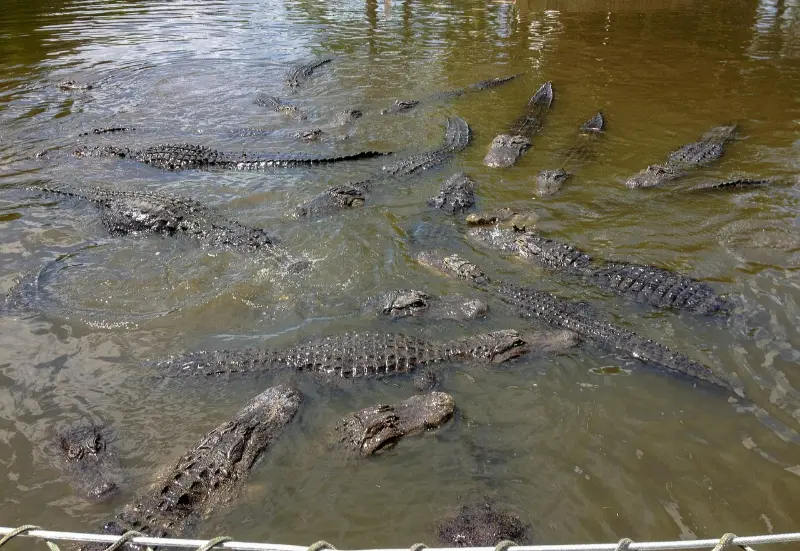
Seeing powerful reptiles at close range is the central reason to visit. Read the interpretive signs and notice how animals rest, move and respond to the environment. There is no need to provoke movement or expect every alligator to perform on demand. Teaching children to remain behind barriers is an opportunity to reinforce the same wildlife boundaries that matter in Florida’s wetlands.
Gator Jumparoo as a memorable scheduled presentation
The park lists the Gator Jumparoo among its live experiences. It helps to check show times upon entering and plan a shaded pause beforehand. These presentations can be energetic and loud, which may be exciting for older children but overwhelming for sensitive guests. Viewing a scheduled show should never prevent the group from taking water and rest breaks in heat.
Alligators: Legends of the Swamp and learning about the animals
This educational show focuses on alligators and their capabilities. Use it as a starting point for questions about habitat, feeding behavior and conservation, not as proof that handling wild alligators is safe. Keep the difference between trained staff in a controlled exhibition and ordinary wildlife encounters in the Everglades very clear, especially for children.
Screamin’ Gator Zipline and other optional upgrades
Adventure attractions may involve extra charges, height and weight conditions, harnesses and physical demands. They are not automatically part of a standard family visit. If a zipline is essential to one traveler but others prefer animal exhibits, agree on a meeting time and check whether the rest of the party can comfortably wait in shade. Confirm age and accessibility eligibility directly.
Aviary, petting areas and slowing down
Smaller-scale animal areas can make the visit more varied, particularly for young visitors who cannot attend an intense show for long. Check which encounters are operating, whether feeding requires a purchase and how hands should be cleaned afterward. A curious child may remember a few careful observations more vividly than an hour spent rushing between every attraction.
Planning your visit step by step
Who will most enjoy this attraction?
Gatorland Orlando is A long-established wildlife attraction in south Orlando focused on alligators, crocodiles, birds, educational presentations and optional paid adventures. It is particularly suited to families curious about Florida reptiles, photographers who want a different attraction from the huge theme parks, and visitors with a half-to-full day available. That description does not mean every member of a party will enjoy every attraction or exhibit. Ask what each traveler wants from the day before booking: energetic rides, calm water, observing animals, a young child's first park or a comfortable indoor break. If your group contains different ages or mobility needs, agreement on two shared highlights usually matters more than an ambitious checklist.
The experiences worth prioritizing
The main attractions to research are alligator habitats, Gator Jumparoo, Alligators: Legends of the Swamp, aviary and optional zipline. The details below explain what makes them different, including the reasons some visitors might choose to skip them. Attraction names, line-up and operating availability can change; check the operator's current map and notices before promising an exact program. Pick two priorities and one backup. This avoids spending the morning walking between distant highlights whenever queues or weather disrupt the plan.
A realistic route through the day
Arrive reasonably early, look at the live performance board and choose one show to anchor the day. Explore outdoor habitats first if the weather is comfortable, take a substantial shaded break and visit the aviary or smaller animal areas afterward. Add a paid adventure only for someone who explicitly wants it. Keep the final departure flexible if small children have had enough.
Tickets, reservations and the real budget
General admission and premium animal encounters or ziplines are different spending categories. Check whether the ticket you are considering includes parking, activities or photo packages. Group savings advertised online can have conditions; calculate the total for your actual party instead of assuming all upgrades are worthwhile.
Accessibility and sensory considerations
Paths, outdoor heat, presentation seating and activity access deserve consideration for wheelchair users and travelers who cannot stand for long. Contact the park about current accessible routes, service-animal rules and optional adventure eligibility. A guest may enjoy the animal habitats even when physically unable to participate in a zipline.
Getting there and staying in a practical location
Gatorland is on South Orange Blossom Trail rather than inside the Disney or Universal resort districts. It is a realistic south-Orlando outing by car or ride-share; check the door-to-door travel time from your hotel and return pickup area. Do not assume a free theme-park shuttle will serve the attraction.

Visiting with children, teenagers and grandparents
Children often love the idea of huge alligators but react differently when they see one up close. Explain that staff-led demonstrations occur behind appropriate safety procedures. Young visitors should not lean over rails or imitate feeding practices seen during a show. Families can select quieter wildlife zones if someone becomes frightened.
Meals, hydration and optional upgrades
Outdoor snack and meal arrangements may be more limited than at a major resort, so verify food options, opening hours and any dietary needs before arrival. Bring water and sun protection and look for shaded seating early. If an older family member needs a full meal or rest at a precise time, plan around the presentation schedule.
Weather, seasonal patterns and timing
Florida humidity and thunder can change an outdoor visit quickly. The park describes itself as open rain or shine, but individual shows and adventures may depend on conditions. Avoid exposed areas during lightning, follow staff instructions and wear practical closed-toe shoes if you plan an adventure activity.
Should you choose a different Florida attraction?
Gatorland is more focused on Florida reptiles and nature education than a conventional roller-coaster theme park. A person mainly interested in diverse mammals and a large zoological collection may prefer ZooTampa or Zoo Miami; a thrill-seeker who wants major coasters may prefer Universal or Busch Gardens.
What to do afterward?
A relaxed meal in the Kissimmee or south-Orlando area makes a sensible finish without adding another admission-heavy attraction.
Further practical advice for this type of attraction
How to view animals respectfully
Animals may rest, hide or stay out of view, and that is normal rather than a defect in the visitor experience. Read conservation information instead of expecting a constant performance. Never tap on viewing surfaces, cross barriers, feed animals unless staff explicitly supervise a permitted program, or use flash where prohibited. Adults can encourage children to notice habitat features, diets and protective adaptations. A slower visit often produces more insight than moving rapidly between famous species.
Building a good walking route
Animal parks often involve more walking than maps suggest, especially if a family repeatedly returns to the same area. Mark water, bathrooms, shaded seating and a practical exit before you begin. Use a route that follows connected habitat regions and leave optional additions until after lunch. Guests managing pain, mobility limitations or fatigue should decide a maximum comfortable distance and check any available rentals before arrival. Taking frequent breaks is not a failure to see the whole zoo; it is part of visiting well.
Photographing wildlife responsibly
Use a normal lens or approved zoom rather than reaching over barriers or trying to influence an animal. Avoid flash if rules forbid it and do not assume a staff-led encounter permits touching or close photography. A child can record observations in a notebook or draw a favorite animal if photography becomes frustrating. The most interesting images often show habitat and behavior, not just a tightly framed face. Never leave a stroller unattended near enclosures to improve a photograph.
Teaching conservation without preaching
A family zoo day becomes more meaningful when it connects one animal to an understandable real-world challenge. Habitat loss, polluted waterways, road hazards and invasive species are tangible Florida examples. Ask one question per habitat: where does the animal live, what does it need, and which threats affect it? Younger children respond better to short discussions than long lectures. The goal is curiosity and respect, not a sense that tourists must become experts during one afternoon.
Questions to ask before booking
How long should I spend at Gatorland?
A few hours can cover selected animal habitats and a show; add time if booking a separate adventure.
Does admission include the zipline?
Do not assume it does. Check the actual ticket and add-on terms.
Is Gatorland the same as the Everglades?
No. It is a managed wildlife attraction, not a self-guided encounter with animals in the wild.
Final checks: choosing the right day
Treat the opening calendar, official ride restrictions, animal care requirements and admission terms as live information. Save your ticket and booking confirmation somewhere you can access offline. Check the weather alert forecast, transport time, parking costs and the return journey before committing to a packed afternoon. If the group includes anyone who needs medication, mobility equipment, a quiet rest space or an early meal, decide how that need will be met before leaving the hotel. A successful day is the one people can enjoy safely and remember positively—not the one that covers the greatest number of advertised experiences.
For accurate dates, current admission and visitor rules, use the official Gatorland Orlando website. For another operator resource, consult the official planning information. The external links are informational, not affiliate advertisements. Editorial research check: 9 October 2026. Prices, animal experiences, ride line-ups, seasonal openings and access arrangements can change; this article makes no claim of a first-hand visit.