Northeast Florida is a rewarding choice for travelers who want historic streets, Atlantic beaches and small coastal towns in the same vacation. A week allows more than a hurried visit to the fort in St. Augustine or an afternoon on Amelia Island. These places tell different stories, and the roads between them take longer than a single regional map can suggest. This itinerary uses St. Augustine for the first part of the trip and Amelia Island for the last, with a beach day and a stop around Ponte Vedra in between. Families with school-age children, couples and older travelers can use the same outline by adjusting walking distances and selecting accessible alternatives to stairs or sand.
Seven-day overview
| Day | Where to focus |
|---|---|
| 1 | Historic St. Augustine arrival |
| 2 | Castillo de San Marcos and waterfront |
| 3 | St. Augustine Lighthouse or history museums |
| 4 | St. Augustine Beach and Ponte Vedra |
| 5 | Drive to Fernandina Beach on Amelia Island |
| 6 | Fort Clinch and Amelia beaches |
| 7 | Final morning and departure |
Day one: arrive in St. Augustine and explore a small area
St. Augustine's historic center is best approached on foot in manageable sections. After arrival, choose one short route through the older streets rather than trying to see every landmark before dinner. The town's appeal lies in its layered history, architecture and walkable public spaces, but narrow sidewalks, uneven paving and busy crossings can make a long tour more demanding than it appears. Identify convenient parking or hotel access before setting out. If your lodging is on the beach rather than near downtown, remember that these are distinct areas connected by road.
Choose one historic lane, an open square or a waterfront viewpoint and leave the larger attractions for the following days. A family may enjoy simply seeing the buildings and hearing a short account of the city's past; a keen history enthusiast can return for a guided visit. Avoid treating the term 'oldest city' as an explanation of everything on display. Indigenous, Spanish, British, African American and later American histories all shaped the place. A thoughtful week provides time to see some of those perspectives without rushing through a succession of ticket booths.
Day two: Castillo de San Marcos and the waterfront
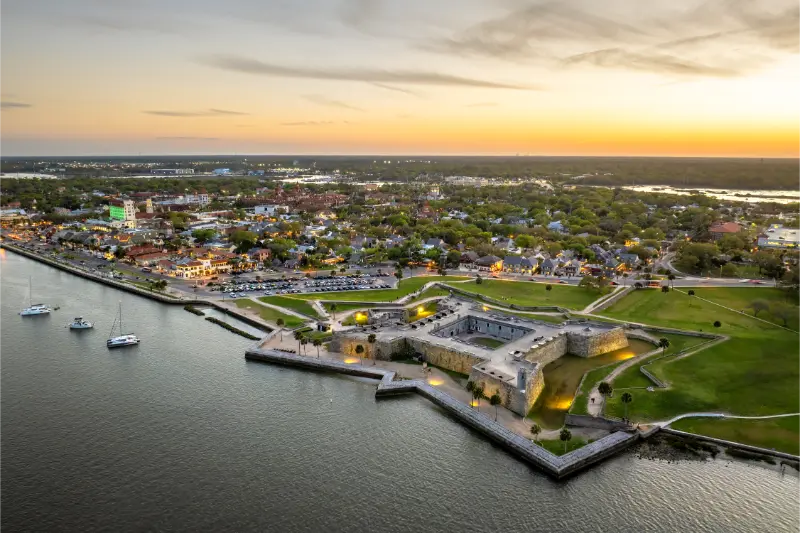
Give the Castillo de San Marcos National Monument a focused morning. The coquina fort is central to St. Augustine's history and a valuable starting point for understanding the military and colonial landscape. National Park Service information should be checked for entry arrangements, demonstrations, current access restrictions and accessibility. Historic masonry, stairs and uneven surfaces make some areas different from modern museum spaces. Even visitors who do not use the upper parts of the fort can gain something from the lower levels and the surrounding waterfront, subject to current arrangements.

Continue with a modest walk along the bayfront and lunch within the historic district. Avoid booking another long guided activity immediately afterward; children may be tired after reading exhibits and standing outdoors. In warm weather, stone surfaces and exposed spaces can feel hot even when a breeze comes from the bay. Keep water and sun protection close. If rain arrives, a suitable indoor museum can replace the afternoon stroll. For a group with different interests, a good strategy is to agree on one shared historic visit and then allow some members to rest while others continue exploring nearby streets.
Day three: St. Augustine Lighthouse or a quieter historic alternative
The St. Augustine Lighthouse & Maritime Museum brings coastal history and an impressive viewpoint into the itinerary, but climbing the tower involves many stairs and may not suit everyone. Check eligibility, weather closures and the exact accessible features before purchasing tickets. The museum grounds and maritime exhibits can still provide an interesting visit for someone who does not climb. Families with young children should verify height and age policies rather than assuming every member can reach the top. A photograph of the lighthouse does not communicate how much exertion the ascent requires.
If the group prefers a less demanding day, choose another small museum, a guided historical experience or time around Anastasia Island instead. Do not assume two lighthouse-related stops automatically make an interesting day for a reluctant teenager. Pair the main attraction with lunch and a flexible afternoon, perhaps stopping at a public viewpoint near the Matanzas River. St. Augustine's history becomes more approachable when there is time to discuss one place rather than collecting admissions to five. This day is also the natural location to recover anything missed on day two due to weather or closures.
Day four: beach time and the Ponte Vedra coast
Spend a day away from the densest historic streets. St. Augustine Beach and the shoreline around Anastasia Island offer familiar Atlantic beach pleasures, while the Ponte Vedra area farther north has coastal dunes and quieter stretches near public beach access points. Choose only one primary beach, because transferring between beaches just to compare them often wastes the best part of the morning. Mickler's Landing is a recognizable Ponte Vedra access, but parking, construction and beach conditions should be checked with the relevant local authority.
Swimming safety deserves attention. The Atlantic can produce waves and rip currents, and the presence of a sandy beach does not imply calm water. Follow local flags and lifeguard directions, especially with young children. People with limited mobility should check accessible boardwalks and the distance from the parking lot to firm sand; an accessible parking space is not a guarantee of an easy beach crossing. Dune vegetation and wildlife areas need protection. If wind or rain makes the sea unpleasant, choose a short coastal scenic drive or an indoor visit rather than forcing a long afternoon outdoors.
Day five: travel north to Amelia Island with a realistic buffer
Move toward Amelia Island, ideally after a relaxed breakfast rather than as the last step of a long attraction day. The drive passes the broader Jacksonville area, and traffic around interchanges and coastal access roads varies by time of day. If you wish to stop in Ponte Vedra or Jacksonville, choose one deliberate stop; do not convert a hotel-transfer day into a circuit of unrelated attractions. Amelia Island lodging may be in Fernandina Beach's historic district or near the ocean, and each option gives the trip a different rhythm.
After checking in, take a short walk through downtown Fernandina Beach. Its harbor, historic storefronts and compact streets provide a contrast to St. Augustine without trying to imitate it. The Amelia River waterfront is not an Atlantic swimming beach, so save that for another day. Keep luggage safe in the vehicle if you arrive before room availability, and ask whether parking is included at the accommodation. A calm transfer day allows travelers who dislike constant packing to settle comfortably into the second half of the week. Two bases are useful here because the region is large enough that daily return drives would be tiring.
Day six: Fort Clinch and Amelia's beaches
Fort Clinch State Park is a highlight for visitors interested in military history, coastal habitats and nature. The historic fort and wooded park have different surfaces and activity levels, so decide in advance which experience suits the group. Verify fees, living-history programs, opening hours and any restrictions directly with Florida State Parks. Visitors who have difficulty climbing, walking on uneven ground or standing in the sun may prefer shorter routes or a more selective visit. Children can enjoy the fort's setting without needing every historical detail explained at once.
Amelia Island also has Atlantic beach access that can be enjoyed in a shorter session after the park or on a separate morning. Pick a public entrance where restrooms and parking arrangements fit the group. Follow posted turtle-nesting and dune-protection rules, especially during warmer months. Swimming conditions can change, and not every stretch has lifeguards. If someone wants to rest rather than visit the beach, a downtown café or a shaded accommodation break makes a good alternative. Leave enough time for dinner in Fernandina Beach rather than making the last full day another exhausting excursion.
Day seven: a slow Fernandina Beach morning and departure
Use the final day for a favorite street, waterfront view or manageable beach walk close to lodging. Check any airport plan carefully: Jacksonville International Airport can be more convenient for Amelia Island than an airport much farther south, but flight options and car rentals vary. A traveler leaving from Orlando or another distant airport should treat the morning primarily as a travel day. Confirm fuel and toll arrangements, the rental-car return location and any route changes before checking out.
If the departure time allows, make one short revisit to Fort Clinch's surroundings or Fernandina Beach rather than adding a new destination that needs a ticket and fixed arrival time. Pack travel documents separately from sandy beach bags and allow for extra loading time with a stroller or mobility aid. The northern end of this route feels quieter when travelers have time to see the harbor again without hurrying. That is a better farewell than spending the morning calculating whether one more museum can fit before airport security.
Two bases, transport choices and budgeting
The strongest practical choice for this route is three or four nights around St. Augustine and the remainder on Amelia Island. A single St. Augustine base works for travelers focused on the historic city and nearby coast but adds repeated long drives to the northern sights. A single Amelia Island base does the reverse. Compare the inconvenience of unpacking twice with the time saved on the road. In St. Augustine, choosing a beach hotel means driving to the historic district; downtown lodging gives walking access to landmarks but may bring parking charges and nighttime activity.
A car is generally the simplest way to connect these communities, with local walking possible after you park. The region is not a continuous car-free resort strip. Before booking, examine the total nightly costs, cleaning and resort fees where applicable, attraction admission, paid parking and meals. Plan one or two restaurant evenings worth looking forward to, then use simpler breakfasts and picnic lunches to keep the budget comfortable. Historic tours, boat rides and extra lighthouse experiences are choices, not obligations. The strongest paid attraction for one family may be a fort; another family may prefer a guided ecology visit.
Season, mobility and the value of a slower plan
Spring and fall can be pleasant for walking and history-focused travel, though holiday periods may bring crowds. Summer creates the practical challenges of heat, thunderstorms and frequent need for indoor breaks. The Atlantic hurricane season requires monitoring official alerts and knowing the lodging's cancellation and safety policies. Cooler weather may make the beach better for strolling than swimming. Avoid assuming every attraction follows the same opening hours during a holiday weekend.
Travelers who need step-free access should check every major stop separately. Historic streets, coquina fortifications, lighthouse stairs, sandy crossings and state-park trails each pose different challenges. Ask about actual room dimensions and accessible bathroom configurations instead of relying on vague marketing labels. Families with children will appreciate agreeing on one main outing per day and allowing snack or rest stops. The route's greatest advantage is the contrast between St. Augustine's layered history, Ponte Vedra's dunes and Amelia's small-town coast. Give each of those places enough attention to feel different, and seven days will seem rich without being overcrowded.
Frequently asked questions
Should you stay in one hotel for this whole route?
Two bases—St. Augustine and Amelia Island—usually reduce repeated driving, although one base works for a shorter version.
Is St. Augustine fully accessible on foot?
The historic center contains uneven surfaces and some attractions with stairs; check accessible paths and choose shorter routes.
Is Fort Clinch worth visiting without a long walk?
Many visitors enjoy select park views and historic interpretation, but exact fort access and surfaces should be checked with the park.