You do not have to swim, snorkel, or kayak to experience Florida’s rivers and coastal waters. Several parks and tour operators offer guided passenger experiences that let visitors enjoy springs, wildlife, and coral reefs while staying aboard. However, a boat trip is not automatically comfortable or accessible: boarding steps, rocking motion, restroom availability, vessel capacity, and the distance from the dock all matter. This guide suggests a flexible six-day combination of Silver Springs, Wakulla Springs, the Gulf Coast, and Key Largo. Because the locations are far apart, treat the sequence as a menu of regional experiences rather than a promise of short daily transfers. It is especially suitable for mixed-age families, non-swimmers, and travelers who want to understand wildlife without entering the water.
Day 1: See the underwater world at Silver Springs
Silver Springs State Park near Ocala is famous for its glass-bottom boats. The clear spring water and the history of boat sightseeing make this one of Florida’s most unusual visitor experiences. Rather than committing immediately to a long ride, first check the available tour lengths, seating, and boarding assistance. The concession advertises short tours that can suit children and adults who do not want a full afternoon on the water. A boat’s transparent viewing panels reveal underwater springs and fish, but wildlife and water clarity vary. Secure phones and bags, follow the crew’s instructions, and keep small children seated. Spend the rest of the day on park paths or at an appropriately accessible interpretive area.
Day 2: Extend the Silver Springs visit without overdoing it
If the previous day’s boat was a success, consider a longer tour or a second nature-focused stop in the Ocala region. The point is not to buy multiple similar tickets for every family member; it is to compare a spring-fed river with a forested landscape and give everyone time to notice details. Ask the park which tour type can accommodate a wheelchair or a visitor who cannot step into a low boat. A wheelchair-accessible park building does not guarantee every excursion vessel has an accessible boarding route. On a particularly hot day, a short early outing followed by an indoor lunch works better than a lengthy exposed afternoon. Guests prone to motion sickness may prefer the calmer spring environment to offshore trips.
Day 3: Wakulla Springs as a conditional option
Edward Ball Wakulla Springs State Park near Tallahassee has historically offered river boat rides through a cypress-lined spring ecosystem. As of October 12, 2026, the park’s official website says its boat tours are unavailable, and overnight accommodations are affected by storm conditions. Do not build a prepaid tour day around this service until a reopening notice appears. If the park is open for day use when you visit, check which trails, picnic spaces, and visitor facilities are accessible. You can instead spend the day at Tallahassee museums or a shaded public garden. The broader lesson is that a well-designed itinerary should work even when the most attractive boat experience is cancelled.
Day 4: Pick a sheltered Gulf Coast sightseeing cruise
On the Gulf Coast, towns such as Tarpon Springs, Clearwater, and St. Petersburg offer various commercial boat experiences, but not all are equally appropriate for non-swimmers or people with limited mobility. Choose by vessel and route rather than marketing phrases like ‘family friendly.’ Ask whether the boat stays in protected water, how long it is underway, whether shade and toilets are available, and what happens if the weather turns. Some dolphin cruises offer no guarantee of sightings; ethical crews keep a distance and do not pursue animals aggressively. Avoid a trip advertising swimming stops or snorkeling unless you genuinely want that activity. A calm sightseeing cruise and a waterside lunch are enough for one relaxed day.
Day 5: Key Largo’s glass-bottom reef experience
John Pennekamp Coral Reef State Park near Key Largo offers glass-bottom boat trips toward the offshore reef, providing a way to see coral without entering the water. These excursions differ significantly from Silver Springs: they operate on open coastal water, can be affected by waves and visibility, and are weather dependent. The park’s official information describes scheduled trips, but departures may be cancelled for safety. Before booking ask how the vessel behaves in rough seas, whether passengers prone to motion sickness should avoid a particular day, and what refund terms apply. The park has also reported construction-related restrictions to certain boat ramps and facilities in 2026, making an advance check sensible. Offshore coral viewing is rewarding, but a comfortable passenger matters more than an ambitious ticket.
Day 6: Create a non-boat fallback in the Keys
Reserve the final day for a visitor center, aquarium-type exhibition, waterside walk, or a second boat departure if conditions improve. A non-swimmer need not prove bravery by boarding in high winds after a cancelled trip. Reef interpretation can be meaningful in a museum or park exhibition, especially for children who want to learn about coral bleaching, seagrass, mangroves, and marine habitats. If staying in Key Largo, choose lodging based on access to restaurants and the park rather than assuming a waterfront room includes convenient swimming. Older travelers may prioritize shaded seating, elevators, and parking. Keep the morning flexible: a sea state suitable for a larger vessel is not necessarily comfortable for every passenger.
Choosing a vessel: the questions that actually matter
Call the operator rather than relying only on an online ‘accessible’ label. Ask about step-free access from parking to pier, tidal changes at the dock, gangway angle, doors, seating width, and whether a mobility device can remain secured on board. A person who can transfer with assistance may have more options than someone who must stay in a power wheelchair, but the operator needs accurate information in advance. Check if small children require age-specific life jackets or if personal equipment is permitted. A shaded upper deck may still require stairs, while the lower deck can have limited views. If a visitor cannot manage an evacuation route, request a clear explanation before paying.
Wildlife ethics from a passenger seat
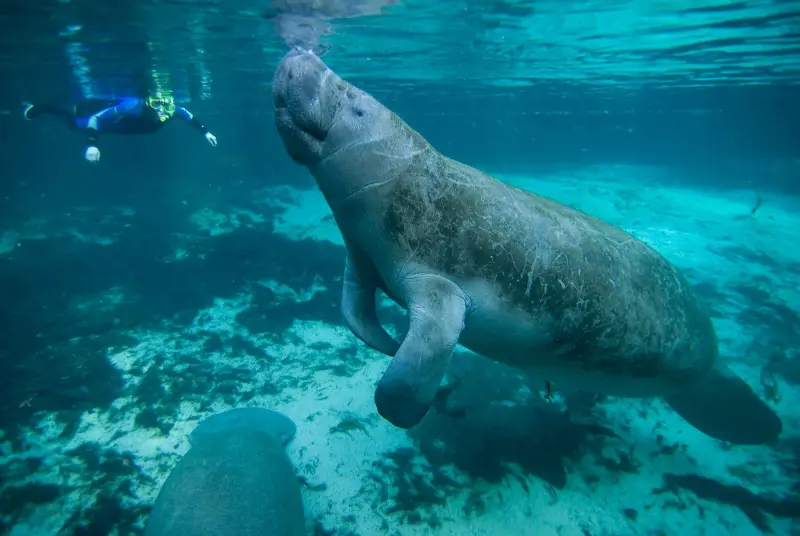
Florida boats travel through habitats used by dolphins, manatees, sea turtles, sharks, and birds. Watching responsibly means accepting that animals may not appear. Operators should respect speed restrictions, avoid feeding wildlife, and maintain appropriate distance rather than treating animal interactions as a guaranteed show. Passengers should not throw snacks, chase birds with food, or request a captain to approach a resting manatee. A respectful guide can explain how tides, freshwater flow, and seagrass shape the ecosystem even when sightings are sparse. This is useful for young children because it reframes a trip from ‘collecting animals’ to observing a living environment.
Costs and cancellations
The lowest advertised tour fare rarely describes the complete cost. Add park entrance fees, tax, parking, reservation surcharges, food, and transport to the dock. Some tickets are refundable only when an operator cancels, not when a passenger gets nervous after seeing waves. Ask about no-show rules, accessible boarding requirements, and the exact meeting time. A regional vacation with one prepaid boat tour and two no-cost shore days is usually less risky than booking an activity every day. Keep booking confirmations offline in case cellular coverage fails. If traveling in hurricane season, choose flexible reservations and follow local emergency guidance rather than relying on average weather statistics.
Decide whether offshore water is right for your party
Before booking a reef excursion, ask each participant a more useful question than ‘Do you like boats?’: have you traveled for an hour in rolling open water, and how did you feel afterward? Silver Springs’ river environment and John Pennekamp’s offshore reef approach present different motion conditions. A person who enjoys a calm freshwater tour may still become nauseated in ocean swell. Explain that glass-bottom viewing panels do not eliminate pitching or rolling. Choose a protected-water route for passengers who are uncertain, and ask about suitable medical precautions from a clinician or pharmacist if motion sickness is a recurrent problem.
Another important distinction is the location of the activity relative to the dock. A brochure may describe ‘two hours on the water’ but include a lengthy passage before the actual viewing portion begins. Ask how long it takes to reach the destination, whether the boat returns by the same route, and if a passenger can disembark before departure when conditions look uncomfortable. Once offshore, there may be no easy option to cut the trip short. Travelers who cannot tolerate a long ride should prioritize a shorter glass-bottom program at Silver Springs or a dockside interpretive exhibit. Being a non-swimmer is not a reason to avoid all boats; it is a reason to choose carefully.
For a family with a baby, the operator’s life-jacket rules and age minimums are critical. A stroller may not fit on a crowded deck and cannot replace a suitable infant flotation device. Older passengers may find a fixed seat and stable handrail more valuable than an upper-deck view. A wheelchair user needs answers about the entire transfer from parking to boat, not merely a claim that a vessel is accessible. These choices can be verified before paying and will have a much larger impact on the vacation than an extra hour spent comparing attraction reviews.
Practical planning table
| Experience | Water setting | Best for | Important caveat |
|---|---|---|---|
| Silver Springs glass-bottom boat | Freshwater springs | Short underwater views | Boat-specific accessibility |
| Wakulla Springs river boat | Freshwater river | Wildlife interpretation | Tours currently unavailable in October 2026 |
| Gulf Coast passenger cruise | Bays and coastal channels | Casual sightseeing | Operator quality and vessel differ |
| John Pennekamp glass-bottom boat | Offshore reef | Coral viewing without swimming | Waves, seasickness, weather cancellation |
Frequently asked questions
Do passengers have to know how to swim? Normally not on a sightseeing boat, but follow the operator’s safety rules and ask about life jackets.
Is a glass-bottom boat always calm? No. Silver Springs is freshwater, while a Key Largo reef excursion can reach rougher ocean water.
Can a wheelchair user board every tour? No. Boat accessibility must be confirmed for the specific vessel and dock.
Are Wakulla Springs boat tours operating? The official October 2026 notice says they are unavailable. Check for reopening before making plans.
Should I reserve ahead? Yes for popular timed trips, but read weather cancellation terms carefully.