Category: Florida Itineraries

  • Three Days in Key Largo and Islamorada: Reefs, Mangroves and a Slow Upper Keys Road Trip

    Three Days in Key Largo and Islamorada: Reefs, Mangroves and a Slow Upper Keys Road Trip

    Key Largo and Islamorada are often treated as places to pass on the way to Key West, yet the Upper Keys can easily fill a three-day vacation. Coral reef excursions, mangrove waterways, Florida Bay sunsets, and low-rise island accommodation create a very different pace from Miami. The first thing to understand is that these islands do not have endless public sandy beaches. Much of the shoreline consists of marinas, mangroves, private properties, and shallow coastal habitat. This itinerary focuses on the water responsibly while preserving enough land-based options for children, seniors, and travelers who do not snorkel.

    Three-day itinerary at a glance

    DayRecommended focusEasy alternative
    Day 1Key Largo and John PennekampReef or land-based marine discovery
    Day 2Islamorada waterfront and mangrovesChoose a calm backcountry trip
    Day 3Weather-based favorite activityLeave time for Overseas Highway

    Decide on Key Largo or Islamorada as your base

    Key Largo is a practical base for reef excursions and a shorter drive from mainland South Florida. Islamorada is appealing for fishing traditions, waterfront dining, and a relaxed village atmosphere spread along several keys. Neither destination should be judged solely by a hotel's claim of “private beach.” A small imported-sand area beside a resort lagoon is not the same as an expansive Atlantic bathing beach. Study the actual property photos, shoreline, parking, pool, and distance to restaurants before choosing.

    Three-night vacation rentals can add significant cleaning charges, and roadside addresses can be less walkable than they appear. On the Overseas Highway, shops and attractions may be separated by stretches without comfortable pedestrian connections. If you are traveling with a stroller or walker, ask specifically about elevator access, steps down to docks, pool entry, and ground-floor rooms. A resort with an easy on-site dinner option may be convenient for older visitors who prefer not to drive after dark. Choose one base for all three nights rather than moving luggage between two nearby islands.

    Day one morning: John Pennekamp and Key Largo's marine environment

    John Pennekamp Coral Reef State Park is an important introduction to the marine ecology of the Upper Keys. Begin by checking the official park information for admission, boat activities, weather policies, and available facilities. Reef boat trips and snorkeling are not guaranteed on every day, and some experiences may require advance booking. If you are unfamiliar with snorkeling, ask whether the trip is appropriate for beginners and what swimming ability is expected. A coral reef is a protected habitat, not a place to stand or collect souvenirs.

    Travelers who prefer to remain ashore can still learn about the park's coastal environment and enjoy an approved land-based activity. The experience should be framed around marine conservation and conditions on the day, not the promise of turquoise water in every season. Families with small children may be happiest with a shorter visit and a quiet lunch rather than a long offshore trip. Check restroom locations and accessible options in advance. If weather makes offshore conditions unsafe, do not pressure a captain to depart; the Keys have plenty of alternatives on land.
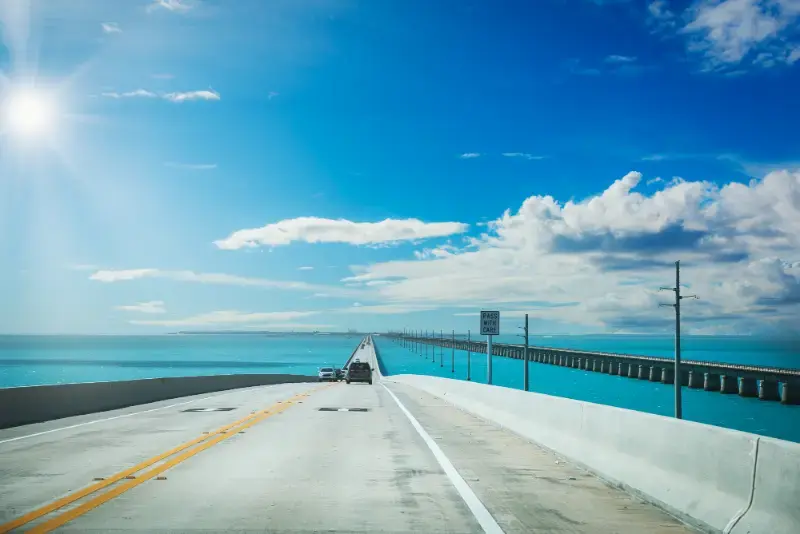
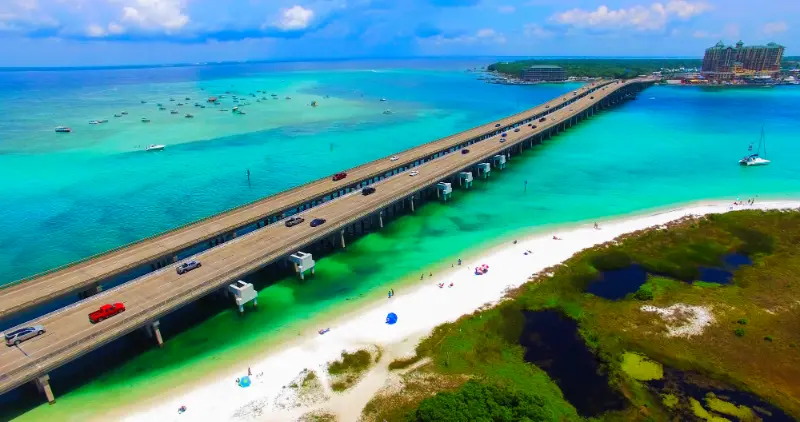
    Seven Mile Bridge Florida Keys in Turquoise Sea

    Day one afternoon: a low-pressure Key Largo evening

    After the state park, give the group a long break, especially if anyone has been on a boat. A dockside meal or a modest stroll near your accommodation is enough for the first evening. The best sunset viewpoints are generally toward Florida Bay on the western side, whereas many reef trips depart from the ocean side. Check whether a restaurant genuinely overlooks the sunset direction instead of trusting a generic “ocean view” label.

    If your accommodation has a pool, enjoy it without feeling the need to drive back onto U.S. 1 for another attraction. Parents can let children recover from travel, and older visitors may prefer to sit by the water. Evenings in the Keys are not always cool; carry drinking water and be prepared for insects near mangroves. A calm first day keeps the next morning available for an early boat excursion if the forecast improves. Staying in one place matters more than adding every postcard stop on the highway.

    Day two morning: Islamorada's island character

    Drive south toward Islamorada at a relaxed pace. The village includes several islands and a series of waterfront businesses rather than one compact old town. Fishing, boating, and Florida Bay views are part of its identity. A morning visit might include a local historical stop, a gallery, or a walk in an approved public area before lunch. Check any museum's current open days and respect private marinas and docks. The absence of a broad public boardwalk is not a flaw; it is part of the place's working waterfront character.

    A family may enjoy learning about how fishing and coral ecosystems shape the local economy. Couples can linger over breakfast and look for a quiet viewpoint. Those with limited mobility should decide in advance how far they are comfortable walking, since roadside routes can be exposed to sun and traffic. Do not attempt to cross U.S. 1 casually for a photograph. Choose a parking location on the correct side of the road and stay within designated pedestrian areas. A small number of meaningful stops beats repeatedly loading and unloading the car.

    Day two afternoon: mangroves, a boat ride, or a restful shore

    A guided eco-tour through mangrove-lined waters can show a different environment from a coral reef trip. The shallow backcountry and Florida Bay support birds and marine life, but wildlife is never guaranteed. Choose an operator with clear safety practices, appropriate flotation equipment, and a route matched to the group's abilities. Ask about shade and bathroom facilities on longer boat tours, minimum ages for children, and whether the vessel has steps that could be difficult for a passenger with a mobility aid.

    Alternatively, spend the afternoon at the accommodation or explore a land-based nature stop. Do not book offshore snorkeling and a backcountry boat trip on the same day merely because both are advertised as “must do.” Time in strong sun and wind can be tiring, particularly for children and older travelers. If rain or high wind disrupts the trip, use the afternoon to learn about local history, enjoy a restaurant, or rest beside a pool. This island landscape invites careful observation, not constant movement.

    Day three: one signature activity chosen by the weather

    Use the final full day for the activity that best matches the forecast and the group's energy. A calm morning might support a reef tour for confident swimmers, while another day may favor a protected mangrove excursion. For visitors who have already enjoyed boating, choose an easy nature stop or a longer meal with a view. A three-day Keys trip is not incomplete because it lacks a dive or fishing charter. You can appreciate these islands fully without entering deep water.
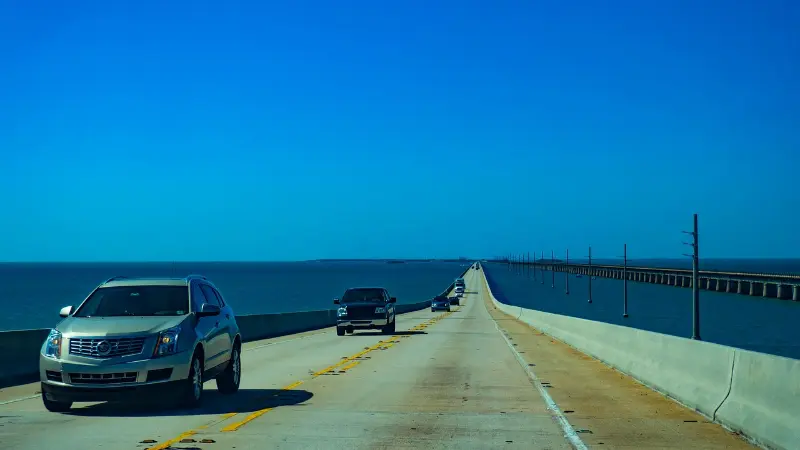
    Bahia Honda State Park Florida Keys Beach and Bridge

    If someone in your group hopes to see wildlife, explain in advance that dolphins, manatees, rays, and reef fish are wild. Respect distance limits, never feed animals, and do not touch coral or seagrass. Bring reef-appropriate sun protection and follow local environmental guidance. If your departure involves a drive to Miami, keep the last afternoon close to your hotel and allow plenty of time on the Overseas Highway. This is a two-lane corridor in many places, with slowdowns that can be significant after incidents or during busy travel periods.

    The beach question: what families should expect

    Key Largo and Islamorada are not equivalents of Siesta Key or Clearwater Beach. Some accommodation provides a small private sand area or a sheltered pool, and certain parks offer designated shoreline recreation. Other sites face seawalls or mangroves, which are beautiful but not suited to traditional beach swimming. Before booking, ask exactly where guests can enter the water, whether footwear is advisable, and whether the property offers supervised swimming facilities. Water clarity varies with weather and wind.

    For younger children, a safe shallow pool and an easy room return may be more useful than a demanding boat tour. Older children and teenagers may enjoy a beginner-appropriate snorkeling trip with instruction, but minimum age and swimming ability rules matter. Visitors with sensory sensitivities may prefer a private morning by the water over a crowded charter. Seniors should consider whether the vessel has handrails, stable boarding, and convenient seating. The family vacation works best when nobody is forced into an activity simply because it is famous.

    Driving, food, and accommodation costs

    A car is the most practical way to experience both island areas and reach boat departure points. Roads are straightforward but traffic can be slow, particularly during weekends, holidays, and incidents on the highway. Build extra time for checking in to a charter, because arriving late may mean missing the departure. Choose meal stops near the route rather than driving back and forth repeatedly. Confirm parking at your hotel and at any operator's marina; some have limited spaces.

    Accommodation ranges widely, with resort fees, taxes, and required charges that may surprise first-time visitors. Compare the final price for the entire stay and consider whether included breakfast or beach gear is genuinely valuable. One water excursion may be the main paid highlight, while sunset views and gentle walks cost little. Check the refund policy carefully before purchasing weather-sensitive trips. A less expensive rental far from restaurants can also lead to additional driving and groceries. If you intend to eat out each evening, a location near several options may improve the vacation more than a slightly larger room.

    Heat, hurricane season, and marine safety

    The Keys can be warm and humid, and open-water activity exposes visitors to sun and wind even when air temperatures seem comfortable. Keep drinking water available and avoid a full day without shade. Afternoon thunderstorms and rough-water periods may cancel cruises or snorkeling trips. During hurricane season, follow official forecasts and local evacuation instructions and never assume that a hotel can remain open if a serious storm threatens. Flexible booking terms are especially important for island travel.

    Marine safety deserves explicit attention. Coral reefs are fragile and can be damaged by standing, kicking, or touching. Boat propellers and channels are hazards, and the currents near some bridges and inlets may be strong. Children should wear suitable flotation when required, and adults should know their own swimming limits. A scenic dock does not authorize entering the water. If you are unfamiliar with a location, ask an experienced operator rather than relying on what other visitors appear to be doing.

    An all-ages alternative without getting on a boat

    Not everyone wants an offshore adventure. You can structure all three days around an easy state-park visit, waterfront meals, a local museum or gallery, a short mangrove or birdwatching viewpoint, and relaxing at the accommodation. Choose a place to stay with a view, pool, and dining nearby. Spend day one exploring Key Largo's coastal environment, day two enjoying Islamorada's village atmosphere and history, and day three revisiting your favorite spot. This is particularly comfortable for travelers who tire easily or prefer photography to swimming.

    If you do want more activity, substitute exactly one suitable excursion without altering the rest of the plan. A trip with young children can be successful through familiar routines and time together, while a couple might spend more on a memorable dinner. There is no need to continue all the way to Key West to have an authentic Keys vacation. The Upper Keys have their own distinct character and deserve unhurried attention.

    Before departure: five practical checks

    Confirm the property's real shoreline and any resort charges, the operator's meeting address and weather policy, official state-park access conditions, and the road time back to the mainland. If you require mobility accommodations, request specific photos or measurements of doors, steps, docks, and bathrooms. Verify the swimming rules rather than guessing from a rental listing. During turtle or other wildlife-sensitive periods, respect posted closures and lighting restrictions.

    This three-day route is built around Key Largo's marine conservation landscape and Islamorada's bayfront culture. A single good boat outing, two comfortable evenings, and a few hours of simply watching the water often reveal more than racing down the Overseas Highway from attraction to attraction. Let the weather decide the day's water activity, and let the people traveling decide the pace.

    Frequently asked questions

    Are there wide public sand beaches throughout the Upper Keys?

    No. Shoreline is often mangrove, marina, canal or private waterfront; verify the exact approved swimming area.

    Is a reef trip suitable for all ages?

    It depends on boat conditions, minimum ages, swimming ability, and the specific operator.

    Do we need to drive to Key West?

    No. Key Largo and Islamorada can fill a comfortable three-day vacation themselves.

    Official visitor information

  • Women Who Shaped Florida: A Seven-Day History Road Trip from Jacksonville to Miami

    Women Who Shaped Florida: A Seven-Day History Road Trip from Jacksonville to Miami

    Florida’s history is often told through explorers, developers and military campaigns, but women helped shape its schools, journalism, literature, environmental movements, neighborhoods and public institutions. Their stories are visible in museums, historic houses, libraries, college campuses and landscapes where preservation became a civic cause. This seven-day route links Jacksonville, St. Augustine, Daytona Beach, Eatonville, central Florida and Miami. It is an interpretive itinerary, not a list of buildings where every interior is guaranteed open. Some historically significant homes have limited tour schedules, and some stories are best encountered through a museum exhibition or a public archive. Check current access and be willing to change a stop while keeping the historical theme intact.

    Begin with the right approach to women's history

    A meaningful historical trip asks whose work was recognized at the time, whose work was ignored and what sources survive. Florida’s women were never one group with one story. Enslaved women, Indigenous women, wealthy settlers, migrant workers, educators and environmental advocates faced very different opportunities and constraints. Avoid presenting every historic house as an inspiring success story while ignoring labor and inequality. When visiting a museum, read about the cooks, seamstresses, teachers and organizers as well as prominent owners. For children, focus on a concrete question: who was allowed to attend school, vote, own property or publish a book, and when did those possibilities change? The route includes nationally known figures but encourages attention to the local women whose stories appear on plaques and in community collections.

    Day 1: Jacksonville and the world of Harriet Beecher Stowe

    Begin in Jacksonville with the broader historical context of the St. Johns River and the Mandarin area, which became associated with writer Harriet Beecher Stowe during winters in Florida. She is best known for her antislavery novel Uncle Tom’s Cabin, but her Florida experiences also included observing and writing about landscapes and local life. Be cautious about turning her story into proof that one person’s activism resolved the injustices of slavery and segregation. Look for public historical interpretation and libraries rather than assuming an old private address admits visitors. Use the rest of the day for a waterfront walk or a local history collection that situates Stowe in the Reconstruction era. From Jacksonville, an overnight in St. Augustine can shorten the next morning‘s drive. Travelers with limited mobility can emphasize museums and riverfront viewpoints instead of uneven walking trails.

    Jacksonville Main Street Bridge Illuminated Blue at Night

    Day 2: St. Augustine and women in historic households

    St. Augustine offers a different entry to women’s history: boardinghouses, household work, commerce and the everyday labor behind the oldest European-established city in the continental United States. The Ximenez-Fatio House Museum presents the history of a nineteenth-century boardinghouse managed by women at different times. Its exhibits can make the invisible work of maintaining lodging tangible: supplies, meals, hospitality and the economic choices of women operating within the restrictions of their period. Verify the museum’s tour schedule, admission and step-free access before traveling; a historic property can have stairs and narrow spaces. Pair this visit with a short waterfront walk rather than an exhausting afternoon of unrelated attractions. Ask children to compare the work of running a boardinghouse in the 1800s with a modern hotel. Finish with a discussion of who cleaned, cooked and served, not only who owned the rooms.

    Day 3: Daytona Beach and Mary McLeod Bethune

    The most important anchor of day three is the legacy of educator and civil-rights leader Mary McLeod Bethune. She founded a school for African American girls in Daytona Beach in 1904 that eventually developed into Bethune-Cookman University. Her home on the university campus is a National Historic Landmark; access should be checked through the university or managing institution rather than assumed from its listing on a historic register. Bethune’s work combined education, organizing and national public service. Present her as a sophisticated political and educational leader, not simply as a comforting story about one remarkable teacher. A campus visit may require advance arrangements, identification or restrictions during university events. If the home is unavailable, an exterior or institutional history stop supplemented by National Park Service interpretive material can still anchor the day. Overnight near Daytona or Orlando depending on your next morning‘s plans.

    Day 4: Eatonville and Zora Neale Hurston's literary legacy

    Travel toward Eatonville, a historically significant Black municipality associated with writer, anthropologist and folklorist Zora Neale Hurston. Her fiction and collections of oral traditions illuminate Black life, language and culture without requiring the people she documented to serve as stereotypes. Eatonville’s historic identity deserves more attention than a brief author photograph. Seek current information about the Zora Neale Hurston National Museum of Fine Arts and any public cultural programming, because exhibitions and seasonal festivals do not run on the same schedule every week. This is an ideal day for a teenager interested in writing: compare a historic building or street with a literary description, then ask how a storyteller decides whose voice is heard. If you visit during a festival, allow extra time for traffic and crowd management. The town remains a community, not just a literary landmark.

    Day 5: Sarasota and Mable Ringling's role in a cultural estate

    Travel from Eatonville toward Sarasota, giving this day a clear purpose at The Ringling estate. Mable Ringling’s interests are visible in the design of Ca’ d’Zan and the gardens, not merely in the museum’s famous surname. The institution’s education materials explain that she influenced the Venetian-inspired home’s design and loved cultivating roses; the estate preserves a named rose garden associated with her. Visit the public grounds and a tour of the house if currently offered, checking the particular access level beforehand. A ticket for the grounds or art museum does not necessarily include every interior. The surviving evidence of Mable’s personal life is comparatively limited, which is itself a useful historical lesson: wealth and public visibility did not guarantee equal documentation of women and men. Ask who made decisions, who performed maintenance and which records historians can actually use. Sarasota also offers a restful waterfront evening before the trip continues south.

    Day 6: South Florida and Marjory Stoneman Douglas

    Continue toward South Florida, where journalist and environmental advocate Marjory Stoneman Douglas is closely associated with modern understanding of the Everglades. Her book The Everglades: River of Grass helped recast the region as an interconnected ecological system rather than disposable swamp. A visit to the Everglades or a museum with environmental-history material provides a way to explore that influence in the landscape itself. Select a visitor-center stop instead of undertaking a risky or strenuous hike merely to be close to the wetlands. The ecological story should include Indigenous stewardship, scientists, farmers and communities affected by changing water management; Douglas was influential but not the sole voice. At a boardwalk, study how the water surface, vegetation and birds demonstrate the connected system described in the literature. Avoid approaching wildlife or leaving paved paths for a photograph.

    Day 7: Miami and Julia Tuttle's part in the city's founding

    End with the story of Julia Tuttle, whose landownership and involvement in efforts to bring the railroad were important to Miami’s development. This is a good place to challenge the traditional idea that cities were created by one founder. Rail connections, labor, land promotion, environmental changes and the decisions of many groups shaped modern Miami. Choose a history museum or public interpretation that covers early settlement rather than searching for a privately owned building associated with her name. Compare a map of nineteenth-century Biscayne Bay with today’s dense street network and discuss what urban growth gained and what it displaced. Families may prefer an hour indoors followed by a waterfront stop. Travelers arriving directly in Miami can reverse the route, though the long drives still need to be planned realistically.

    The seven-day route at a glance

    DayBase or regionWoman or theme
    1Jacksonville / MandarinHarriet Beecher Stowe and Reconstruction-era writing
    2St. AugustineWomen in lodging, work and commerce
    3Daytona BeachMary McLeod Bethune and education
    4EatonvilleZora Neale Hurston and cultural storytelling
    5SarasotaMable Ringling, gardens and estate history
    6Everglades / South FloridaMarjory Stoneman Douglas and conservation
    7MiamiJulia Tuttle, railroads and city formation

    Driving distances and sensible overnight bases

    This is a north-to-south road trip, not seven days of strolling around one neighborhood. Jacksonville to St. Augustine is manageable, and St. Augustine to Daytona is a logical next segment, but the move south toward Miami is substantial. Overnight near the actual next day’s stop rather than continually returning to one central hotel. Build in extra time for I-95 traffic, breaks, parking, hurricane-season detours and fatigue. Avoid making day six a full Everglades excursion after a late-night intercity drive. A rental car is the easiest way to link the destinations, though visitors could adapt parts using intercity trains and local transport. A mixed-age group benefits from one museum, one short outdoor activity and one rest period per day, not three major attractions and a long drive.

    What to verify before making reservations

    Historic-place listings establish significance but do not guarantee normal visitor access. The Bethune home is connected with a working university; the Eatonville museum may have exhibition-specific schedules; and old houses can close for preservation projects. Confirm the day and time of each intended tour directly with the venue. Read descriptions of historical content so a sensitive visitor can prepare for discussions of slavery, racism and violence. Check current admission charges and whether children require advance tickets. A venue’s accessibility page may apply to modern galleries but not upper floors of a preserved building. International visitors should allow extra time for identification requirements at institutional campuses. Make reservations refundable where possible and avoid promises that a particular interpreter or docent will be available on arrival.

    How to make the stories useful for children and teens

    Give younger children an age-appropriate question each day: what did people learn at school, how did a boardinghouse feed guests, or what does a writer collect from a community? Ask teenagers to build a timeline with education, voting rights, publishing and environmental protection milestones. The aim is to recognize agency while understanding structural barriers, not to turn history into a competition of famous names. A teen might compare Bethune’s organizing with Douglas’s environmental campaigning and ask what tools each used to influence policy. For grandparents, let personal memories and experiences contribute if they wish, but do not demand emotional disclosure. After an especially demanding museum, choose a quiet café or park, not another site with heavy historical content. Learning requires space to think.

    Accessibility, weather and costs

    As with any statewide trip, hotel and transport costs are more predictable if you compare entire itineraries, not just advertised nightly prices. Museum admissions are a smaller share of the budget than rental cars, parking and multi-city accommodation. In warm months, put outdoor interpretation early and schedule air-conditioned museums at midday. Before booking, request details about accessible paths, seating, captions and restrooms at the exact venue. Many older buildings have constraints that cannot be inferred from a generic accessible-site symbol. If someone cannot manage the driving, reduce the itinerary to a three-day cluster such as St. Augustine–Daytona–Eatonville, or Sarasota–Everglades. A shorter, thoughtful visit is not a lesser version of history.

    Primary sources for deeper reading

    Start with the National Park Service Mary McLeod Bethune Home profile, the Ringling estate and museum visitor information, and the National Park Service Everglades planning pages. Supplement these with the actual operating institution’s current calendar, especially before requesting tours. For a broader context, a public library catalog can identify writings by Hurston, Bethune and Douglas, allowing their own words to accompany the trip. Treat secondary tourist summaries as starting points, not as evidence of specific opening hours or access. The itinerary succeeds when visitors leave with a richer sense of who shaped Florida and why many achievements took collective effort.

    Frequently asked questions

    Are all historic homes on this route open daily?

    No. Some require pre-booked tours, are managed by universities or have limited exhibition access. Verify each operating institution’s calendar.

    Can I do the itinerary by public transportation alone?

    Not easily in seven days. Intercity links exist but several heritage sites require local transfers and advance coordination.

    Is the itinerary suitable for teenagers?

    Yes. Literature, civil rights, education and environmental history offer strong discussion topics, especially if each day has one focused question.

    How do I shorten the journey to three days?

    Choose one regional cluster: St. Augustine, Daytona and Eatonville in Central/Northeast Florida, or a Miami and Everglades focus in the south.

    Does this route cover every important woman in Florida history?

    No. It introduces selected figures and themes. Indigenous women, migrant workers and many community leaders deserve further research and representation.

  • Jacksonville to Pensacola in Nine Days: A North Florida Road Trip Beyond the Resorts

    Jacksonville to Pensacola in Nine Days: A North Florida Road Trip Beyond the Resorts

    Most travelers imagine Florida as a choice between Orlando rides and warm southern beaches. The northern part of the state tells another story: river towns, longleaf-pine forests, natural springs, state parks, old downtown streets and a Gulf Coast with deep maritime history. This nine-day route travels from Jacksonville to Pensacola, crossing the state at a pace that allows time for places many visitors pass without stopping.

    It is a road trip for people who like mixing outdoor scenery with small-town culture. Families can focus on nature centers and easy parks; couples can enjoy local restaurants and historical streets; senior travelers can choose scenic drives and shorter walks. The route is not intended to include every Panhandle beach or national forest. Rather, it links a handful of distinctive locations and leaves enough room for afternoon storms and unplanned discoveries.

    Essential route choices before booking

    Begin in Jacksonville and finish in Pensacola. With flights into Jacksonville International Airport and out of Pensacola International Airport, check potential one-way rental fees before finalizing. If airfares make that impractical, arrange a return leg using a separate driving day; do not pretend the distance back to Jacksonville is a quick detour. A car is essential for this route, as rural public transport is limited and park entrances are spread apart.

    For a comfortable balance, stay two nights near Jacksonville or Amelia Island, two around Gainesville or High Springs, two around Tallahassee or Monticello, and two around Pensacola. The ninth day is departure. This avoids changing hotels every night and gives the trip a clear shape. Driving across Florida’s north often involves two-lane highways and small communities; look at actual road conditions rather than using straight-line distances.

    Day 1: Jacksonville’s river setting and an easy arrival

    Jacksonville is a large city with neighborhoods spread along the St. Johns River and the Atlantic coast. Arriving here gives you access to a major airport without immediately plunging into resort traffic. Once you collect the car, choose one manageable area for the afternoon. Riverside and the downtown riverfront offer different views of the city, but you do not need to drive between them repeatedly on your first evening.

    Jacksonville Main Street Bridge Illuminated Blue at Night

    If your group likes museums, consider a visit to the Cummer Museum of Art & Gardens when it fits current opening hours. Its combination of artwork and gardens makes an approachable introduction for adults and older children. Families arriving after a long flight may prefer a simple riverfront stroll and an early dinner. Jacksonville’s distances can be deceptive; an attraction that appears ‘in town’ may still be a lengthy drive from your chosen hotel.

    Pack a small day bag with water, sunscreen, medicines and snacks before setting off. This routine is especially useful for later rural days when facilities may be widely spaced. Do not leave luggage exposed in the car while exploring a busy urban area.

    Day 2: Amelia Island, Fernandina Beach and Fort Clinch

    Travel north toward Amelia Island, where Fernandina Beach has a walkable historic core and nearby Fort Clinch State Park offers a different perspective on the Atlantic coast. Choose between a full historic fort visit and a combination of short town and beach stops. A family with younger children can make a game of spotting old buildings and learning why the island’s port history mattered, while adults interested in military history may want more time at the fort.

    Fort Clinch is a state park, so review current park hours, entrance fees, fort access and any event programs before driving. Some historic sections contain uneven surfaces or stairs. Travelers with limited mobility should ask which portions of the site can be visited comfortably and plan a shorter route. Beach activities also depend on weather and surf; a beautiful shoreline is not an invitation to swim in unsafe conditions.

    Return to your Jacksonville-area hotel or stay near Amelia Island if your budget permits. Avoid packing an ambitious evening into the same day. Between beach traffic, parking and museum time, this can easily become a full outing even with relatively short geographic distances.

    Day 3: inland through Micanopy and Gainesville

    Head west and south toward Gainesville, using Micanopy as an optional historic-town stop. Its small-scale streets, old storefronts and antiques make a pleasant change from Jacksonville’s broader urban landscape. A short visit is enough to appreciate the atmosphere; there is no need to invent a full day of attractions in a village. Opening hours for local shops vary, so arrive with the understanding that some may be closed.

    Gainesville provides a convenient base with restaurants, hotels and access to nature attractions. Depending on your timing, visit the Florida Museum of Natural History or enjoy a short walk around a designated green space. Check current museum galleries and any ticketed exhibits before arrival. If the children have been sitting for a long drive, allow some time outside rather than taking them straight into another building.

    Stay in Gainesville or nearby High Springs for the next two nights. This base makes the following day’s springs visit much less stressful. A hotel pool can be a welcome amenity, but compare the rate after parking charges and local taxes rather than choosing accommodation on pictures alone.

    Day 4: North Florida springs with safety and environmental respect

    This is your freshwater day. Consider a managed spring park such as Ichetucknee Springs State Park or another appropriate site near High Springs, depending on seasonal access and what your group wants to do. Tubing, swimming and paddling are not interchangeable activities, and some parks control capacity or require reservations for particular experiences. Read official state park information and choose the simplest option for the youngest, oldest or least confident person in the group.

    Non-swimmers should not be pressured into a river or spring run. Instead, enjoy visitor facilities, scenic viewing and approved short walks where available. Clear water can appear deceptively shallow, currents can be strong and water temperatures may feel cold even in summer. Wear suitable footwear, follow designated access points and never feed wildlife. Tubing is not a substitute for swimming ability or proper supervision.

    Arrive early on busy weekends, since popular springs can reach capacity. Pack a change of clothes, waterproof storage and snacks while observing park rules. If a thunderstorm develops, leave the water and follow staff instructions. A quiet dinner after a nature day is often more enjoyable than another long drive to a distant attraction.

    Day 5: Suwannee country and the road toward Tallahassee

    Drive west through Suwannee River country, choosing a route that suits your interest in state parks, river overlooks or small historic communities. The landscape becomes a major part of the day’s appeal: oak-shaded roads, agricultural fields and stretches of forest reveal a side of Florida that feels far from the coast. Stop only where there is lawful parking and a designated viewpoint; a narrow rural shoulder is not a safe place for photographs.

    One optional stop is a state park near the Suwannee River where trails or river viewpoints are currently open. Check which facilities suit your group; an easy picnic area may be more useful than a long hike. Rural food options are less frequent than around Orlando, so know where you intend to eat and carry basic supplies. Mobile service may also be patchy in some forest areas. Download directions rather than depending solely on live navigation.

    Continue to Tallahassee or Monticello for the night. Tallahassee is the state capital and has the most extensive hotel and dining choices in this portion of the route. Monticello offers a smaller-town atmosphere but requires more attention to restaurant hours and services. Both can work well; choose the base that best meets everyone’s practical needs.

    Day 6: Tallahassee history or Wakulla Springs nature

    Make a deliberate choice today rather than trying to do every site in the region. For history-minded visitors, the Florida Historic Capitol Museum and selected downtown landmarks help explain state government and the region’s past. For nature lovers, Edward Ball Wakulla Springs State Park offers a dramatic spring setting and, when operating, guided boat tours. Tours depend on conditions and capacity; never promise a specific manatee or alligator sighting.

    Wakulla’s natural setting is appealing for children and grandparents because the experience can be structured around a boat trip rather than a strenuous hike. However, boat boarding, seating and accessibility should be confirmed before booking. Swimming rules and wildlife conditions are separate from sightseeing access. A guided tour can be canceled due to water level, weather or other operational factors, so keep a local museum or short Tallahassee activity as backup.

    If you choose the city day, consider a quiet lunch and shaded walking route. Historic sites may have limited weekend hours or special-event closures. The point is to enjoy either history or nature properly, with enough time to absorb what you see.

    Day 7: toward the Gulf through Apalachicola and the Forgotten Coast

    The coastal option from Tallahassee toward Pensacola can be scenic but considerably longer than a direct interstate transfer, especially with stops. If you have energy and time, travel south through the St. Marks or Apalachicola region before working west. Apalachicola’s working waterfront and historic character reward an unhurried meal and stroll. Conditions affecting coastal roads, bridges or public beaches should be checked before traveling, particularly after major storms.

    Do not treat seafood stops as guaranteed bargains. Prices, availability and restaurant opening days change. Visitors with food allergies should ask detailed questions about ingredients and shared cooking equipment; traditional fried seafood places may not meet every dietary need. Families traveling with toddlers may be happiest with a shorter waterfront break and a picnic rather than a long restaurant wait.

    If your group dislikes extra driving, take the more direct route to Pensacola and reserve the afternoon for a beach or a hotel rest. That is a perfectly legitimate alternative. North Florida is too large to explore well in a single week, and the best route is the one that leaves everyone able to enjoy the destination.

    Day 8: Pensacola history, beaches and Fort Pickens

    Pensacola makes a satisfying final stop because it combines historic downtown streets, a naval and maritime story, and nearby Gulf beaches. Choose between a museum-based city day and a visit to the Fort Pickens area of Gulf Islands National Seashore. The fort and surrounding landscape are fascinating, but do not assume all structures are accessible or safe to enter. Check the National Park Service’s current Gulf Islands planning information, including operating hours, weather alerts and entrance fees.

    For a family beach afternoon, choose a designated access point with appropriate facilities and observe warning flags. Gulf water can look calm while dangerous currents remain present. Do not enter closed areas or leave children unsupervised near surf. Bring shade, water and a realistic plan for rest. If the weather is poor, Pensacola has enough historical and cultural options to create a worthwhile indoor-focused day.

    This last full day should not end with another exhausting drive. Enjoy dinner near your hotel and pack calmly. A traveler’s satisfaction with a road trip depends as much on comfortable transfers as on scenic highlights.

    Day 9: departure and optional extras

    If you fly from Pensacola, leave time for hotel checkout, rental-car return and airport procedures. If returning to Jacksonville, do not underestimate the journey: it is a lengthy transfer that deserves its own driving day and appropriate rest stops. For travelers extending their vacation, nearby Gulf beach communities can provide a few relaxing nights without disrupting the route’s logic.

    You could also add a stop around Marianna or the Florida Caverns region on a longer trip, but check tour availability and weather-sensitive access beforehand. The best optional extension is not necessarily another famous attraction. It may be two nights in one comfortable hotel near the water, particularly for families with very young children or older travelers who prefer fewer packed days.

    Planning costs, timing and comfort across ages

    Accommodation rates vary considerably between inland towns and beach areas. Compare parking, breakfast, taxes and any resort fees, and consider weekday stays near popular Gulf beaches. State parks may charge entrance and separate activity fees. A rental car with enough luggage space is important when multiple generations travel together; verify child-seat requirements and who is allowed to drive before collecting the keys.

    Late fall and spring often provide comfortable sightseeing weather, but specific spring operations and park activities vary seasonally. Summer offers long days with significant heat, storms and strong demand at popular freshwater springs. Pack layers for variable inland winter temperatures and expect fewer services in rural areas outside peak periods. For medical needs, carry essential supplies and plan breaks before fatigue becomes a problem.

    Frequently asked questions

    Is this road trip good for families? Yes, provided you choose modest daily activities and treat water safety seriously. Spring activities and historic forts should be matched to each child’s ability.

    Can we drive directly from Jacksonville to Pensacola? Yes, but this guide is intended to reveal the places between them, not just transport you across the state.

    Will every state park have swimming? No. Parks have different facilities, rules and seasonal closures. Check the individual park page before arrival.

    Where should we spend an extra night? Gainesville/High Springs works for spring lovers; Tallahassee for history and nature; Pensacola for beaches and a gentler finale.

    Do we need cash everywhere? Cards are widely used, but payment arrangements and cell reception vary. Carry an alternative payment method and check park-specific requirements.

    Reliable trip resources

    Use Florida State Parks, Gulf Islands National Seashore, the Florida Museum of Natural History and official city or attraction websites for current openings, fees and access conditions.

  • One Day in Panama City Beach: A Realistic First-Time Itinerary from Beach Morning to Sunset

    One Day in Panama City Beach: A Realistic First-Time Itinerary from Beach Morning to Sunset

    One day in Panama City Beach is enough to understand the destination if you resist the urge to do everything. The most efficient first visit combines one real beach session, one nature or attraction choice, a relaxed meal and a sunset or evening area that does not require crossing the resort strip several times. Start early, because the morning gives you cooler temperatures, easier parking and more flexibility if weather develops later. The itinerary below is intentionally modular: choose St. Andrews State Park for nature, a family attraction for indoor or high-energy time, or Pier Park for a lighter afternoon.

    Explore this guide

    Quick planning summary

    • Best for: First-time visitors, road-trippers and travelers staying in Panama City or elsewhere in the Panhandle who have only one full day for Panama City Beach.
    • Ideal trip length: One full day, ideally with an overnight nearby so you are not combining the itinerary with a long late-night drive.
    • Getting around: A car gives the most flexibility across Panama City Beach, state parks and Panama City, but a resort-focused stay near one activity cluster can reduce driving.
    • Safety priority: Check current beach warning flags before entering the Gulf and move indoors early when thunderstorms approach.

    How to use this guide

    First-time visitors, road-trippers and travelers staying in Panama City or elsewhere in the Panhandle who have only one full day for Panama City Beach. The goal is not to create a schedule that looks impressive on paper. Panama City Beach is easiest when the most weather-dependent activity happens early, the middle of the day includes shade or indoor time, and the evening stays flexible. Travel time along Front Beach Road can be longer than the mileage suggests during busy periods, so group activities by area.

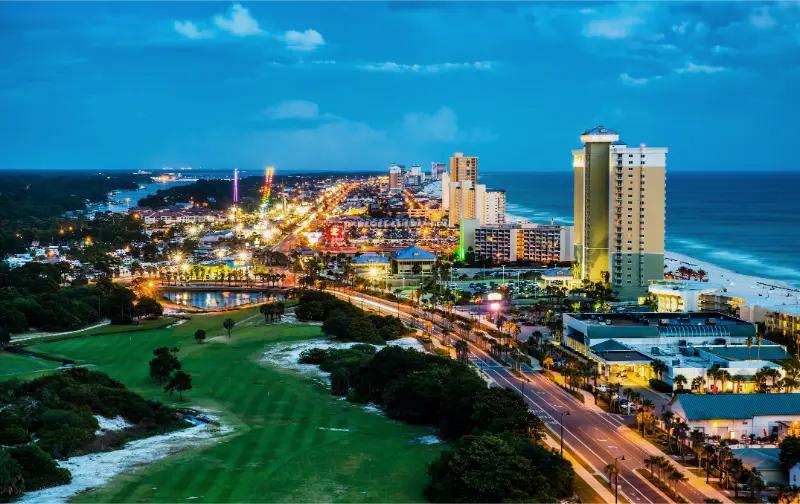
    Panama City Beach Skyline and Shoreline Aerial

    7:30–10:00 a.m.: start on the beach

    Begin with the reason most travelers come: the Gulf. If your accommodation has easy beach access, use it and avoid an unnecessary drive. Day visitors can choose a public access or make St. Andrews State Park the morning anchor. Check the beach warning flags before entering the water, even when the surface looks calm. Keep the morning simple—walk, swim if conditions allow, take photos and enjoy the sand. Leaving before midday heat gives the rest of the day far more energy.

    10:30 a.m.–12:30 p.m.: choose nature or one attraction

    Planning tipFor a first visit, do not schedule two major attractions before lunch. Nature-focused travelers can continue at St. Andrews State Park or visit Conservation Park. Families may choose WonderWorks or another attraction that matches their children’s ages. If this is a romantic or adult trip, a slow drive through the quieter west side can be more satisfying than forcing a ticketed stop. Build in travel and parking time rather than treating map mileage as the only measure of distance.

    12:30–2:00 p.m.: take a real lunch break

    Lunch should reset the day. Choose a restaurant near your morning activity or near the place you plan to visit next; do not drive across the entire destination only for a highly rated meal. Hydrate, cool down and check the weather before committing to the afternoon. Families with toddlers may use this block for a nap at the hotel, while senior travelers can extend the meal and shorten the next activity. A one-day itinerary feels better when lunch is allowed to be part of the experience.

    2:00–5:00 p.m.: Pier Park or an indoor backup

    Pier Park is an easy afternoon choice because it offers shops, food, entertainment and proximity to Russell-Fields Pier. It also works if clouds or a brief shower make a second beach session less appealing. If the weather is very hot, use more indoor time and save the pier for later. Families who chose an indoor attraction in the morning may instead return to the beach for a shorter second session. The point is to avoid duplicating the same kind of activity all day.

    5:00–sunset: slow down instead of adding another attraction

    The final hours are best used for a pier walk, beach time, an early dinner or a sunset viewpoint close to where you already are. Russell-Fields Pier is convenient when you have spent the afternoon near Pier Park. If you are on the east side, staying closer to St. Andrews can reduce traffic. Sunset times change significantly through the year, so check the actual time and arrive early enough to park. Do not build the entire day around reaching a distant sunset spot at the last minute.

    After sunset: decide whether the day is finished

    If everyone still has energy, take a short walk, get dessert or have dinner. If the group is tired, end the day. One common vacation mistake is assuming that every open hour must be filled because you only have one day. A relaxed finish makes the day feel more coherent and reduces the chance of a late drive when children or the driver are exhausted. Travelers continuing to another town should know their route before dark.

    Families, age groups and different travel styles

    Families with toddlers should shorten the midday itinerary and protect nap time. Teenagers may prefer more Pier Park or water-activity time. Senior travelers can replace a long beach block with a pier, scenic drive or seated waterfront experience. The structure matters more than the exact stops: outdoor morning, one anchor activity, real lunch, flexible afternoon and easy sunset.

    For a mixed-age group, decide which activity everyone truly wants to share and let the rest of the day be modular. A vacation becomes easier when a toddler can nap, a teenager can choose an activity and an older traveler can skip a long exposed walk without the group treating those choices as problems.

    Where to stay

    For a one-night stay, convenience matters more than exploring every neighborhood. Choose lodging close to the half of Panama City Beach that contains your main morning activity. Staying near Pier Park simplifies the evening; staying closer to St. Andrews or Grand Lagoon helps with east-side nature and boating. Avoid changing hotels for such a short visit.

    Panama City Beach Florida Pier over Turquoise Sea

    Compare the total accommodation cost rather than only the first nightly rate shown. Parking, resort fees, cleaning charges, taxes and cancellation rules can materially change the value. For families and longer stays, laundry and a kitchen may save time as well as money. For travelers with mobility needs, confirm the route from parking to room to beach or pool directly with the property.

    Beach safety: the rule that should shape every itinerary

    Panama City Beach uses a beach warning flag system. A green flag still means use caution; yellow indicates a medium hazard; red signals high hazard; purple warns of dangerous marine life; and double red means the water is closed to the public. Conditions can look calm from a balcony while currents remain dangerous. Check the current flag status before entering the Gulf and follow lifeguard and local-authority instructions.

    Rip currents are a major Gulf hazard. Swim near lifeguarded areas when possible, keep children within direct reach appropriate to their ability and do not use inflatable toys as safety devices. If lightning develops, leave the water and beach early and move to a safe indoor location. A trip can be rearranged; water and thunderstorm warnings should not be negotiated with an itinerary.

    Weather, heat and the best daily rhythm

    In warm months, an early outdoor block followed by lunch, indoor time or a hotel break usually works better than staying exposed through the hottest hours. Afternoon thunderstorms can be localized and fast-moving, so keep one indoor alternative available. In cooler months, mornings may require a light layer even when the afternoon is pleasant. Check the actual forecast shortly before travel instead of relying on long-term climate averages.

    Sun, humidity and saltwater add fatigue gradually. Drink water throughout the day, reapply sun protection and schedule recovery time after long beach or boat sessions. This matters for children, senior travelers and visitors arriving from cooler climates, but it also affects healthy adults who underestimate how much energy a full day outside requires.

    Driving, parking and getting around

    Panama City Beach is long rather than compact. Before leaving, enter the exact parking area or attraction—not only the destination name—into navigation. Group stops on the same side of town, and avoid driving from east to west and back again for minor errands. During busy seasons, add buffer time for Front Beach Road and popular access points. Never park on dunes, landscaped areas or private property because a map pin appears close to the beach.

    If you are flying into ECP and plan to explore state parks, Panama City, the West End or other Panhandle destinations, a rental car is usually the most flexible choice. Resort-focused travelers may be able to combine transfers or rideshare with walking, but compare the real cost against parking and rental fees before deciding.

    Food and budget planning

    Use geography to control both cost and stress. Eat near the activity you are already doing instead of driving across the city for every meal. A condo kitchen can make breakfast, snacks and one simple dinner inexpensive, leaving more budget for a boat trip or attraction that matters. Families should keep water and familiar snacks available, while travelers with dietary restrictions should identify a few reliable options before arriving.

    Ticket prices and operating schedules can change, so compare current official prices shortly before travel. Do not assume a multi-attraction day is automatically better value. One well-chosen paid experience plus free beach time, a park walk and sunset can create a stronger day than several rushed admissions.

    Common mistakes to avoid

    • Trying to visit both Shell Island and several major attractions in one day
    • Crossing Panama City Beach back and forth for restaurants
    • Starting the beach at midday in summer
    • Ignoring traffic and parking time between short-looking distances
    • Adding a late activity when the driver is already tired
    • Leaving no flexibility for Gulf weather, traffic or a tired traveler.

    Useful Wonderful Florida guides to combine with this article

    Depending on your itinerary, continue with Panama City Beach travel guide, St. Andrews State Park guide, Conservation Park guide, Pier Park guide and Russell-Fields City Pier guide.

    Official information to check before travel

    Opening hours, access conditions, beach flags, parking arrangements, attraction restrictions and transportation services can change. Use official or primary sources shortly before travel when a specific feature is essential to your day.

    Final planning advice

    Panama City Beach is easiest to enjoy when the beach is treated as part of the schedule rather than the entire schedule. Choose one anchor experience, leave room for weather and rest, and keep the final hours of the day simple. That approach works for families, couples, teenagers, senior travelers and visitors with accessibility needs because it gives the trip enough structure to be useful without turning a Florida vacation into a sequence of deadlines.

  • The US 27 Florida Road Trip: Seven Days Through Lakes, Citrus Country and the Everglades Edge

    The US 27 Florida Road Trip: Seven Days Through Lakes, Citrus Country and the Everglades Edge

    Florida road trips are often designed around the ocean. US Highway 27 offers a different way to understand the state: inland lakes, former citrus landscapes, cattle country, small-town storefronts and long views over agricultural land. This seven-day journey follows a manageable section from the western Orlando area toward South Florida, with time off the main highway for places that reward a slower visit. It is not a claim that every attraction sits directly beside US 27. That distinction matters: the best experiences may require a carefully chosen detour, and some stretches of the route are busy commercial corridors rather than scenic country roads.

    At a glance

    Stop or themeWhat to doCheck before traveling
    ClermontLakes, first nightCheck park access
    Lake WalesGardens, historic ridgeConfirm programs
    SebringHammock landscapesCamping restrictions
    Lake PlacidPublic muralsAvoid storm hours
    ClewistonLake and agricultureCheck public dike access

    Choose this trip if you have already seen Florida’s famous beaches, if you enjoy local history or birdwatching, or if your family needs a trip with flexible stopping points. It works particularly well with a rental car, but not as a public-transportation itinerary. A traveler with limited mobility can substitute scenic drives and short museum visits for trails. Families with small children should plan around playgrounds, snacks and predictable restroom stops; wildlife photographers may want to reverse some morning and evening activities.

    Who should take this route and when

    The route works best when you are happy to spend more time exploring communities than collecting attractions. Seven days is generous for this section of highway, but the slower rhythm is intentional. In a rush, you could drive through in much less time and miss the difference between the rolling lakes near Clermont, the Lake Wales Ridge and the broad fields around Clewiston. Do not judge your itinerary by miles alone: a museum closure, afternoon downpour or unexpected roadside discovery can alter a day more than an extra twenty minutes of driving.

    Late fall through spring usually gives the most comfortable temperatures for exploring inland Florida, while winter mornings can be cooler than visitors expect. Summer means strong heat, regular afternoon thunderstorms and more difficult midday walking. Wildlife activity and agricultural operations depend on season and current conditions; there is no single month when all citrus groves, gardens and boat tours operate identically. For children or older travelers, plan one indoor or shaded alternative each afternoon and keep drinking water inside the vehicle rather than relying on the next shop.

    Day 1: Clermont and the rolling lake country

    Begin near Clermont, west of Orlando, where hills and lake views challenge the assumption that Florida is entirely flat. Make the first morning an orientation day, not a strenuous drive. Walk a manageable section of downtown Clermont and the waterfront around Lake Minneola. The South Lake Trail and connected cycling paths are attractive, but choose a short out-and-back section if you have children, a wheelchair user or a mixed-age group. Trail surfaces, street crossings and restroom locations matter more than distance on a map.

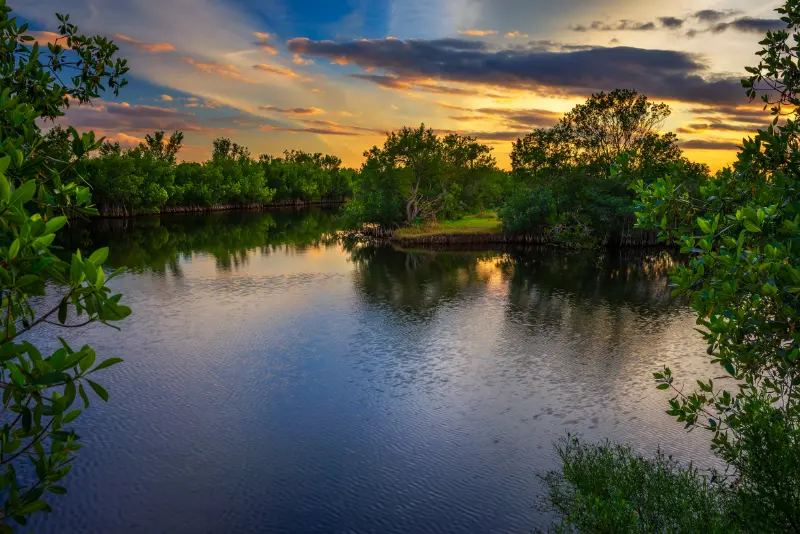
    Florida Everglades Calm Lake at Sunset

    Lake Louisa State Park, a short drive south, introduces sandhills, lakes and less-developed landscapes. It is a good place to observe how dramatically the environment changes away from the Atlantic and Gulf coasts. Check the park’s official alerts for trail closures, rental availability and entry procedures. Not every lake is intended for swimming, and wildlife means keeping a respectful distance from water edges. In the evening, stay around Clermont or the southern Orlando area if you need a large choice of hotels and restaurants. Avoid assuming a lake-view property includes direct public access to the shore.

    Day 2: Lake Wales and the historic ridge

    Drive south toward Lake Wales, using your morning for the historic downtown or a visit to Bok Tower Gardens. The gardens are a landmark of the Lake Wales Ridge and offer a very different experience from beach tourism: formal landscapes, quiet garden paths and the Singing Tower. Check timed programming and any garden access restrictions before choosing your day. The tower is an outdoor visual landmark, not a promise that visitors can climb it, and the garden paths are not identical in length or grade.

    Lake Wales is also a useful place to discuss Florida’s former citrus economy with children. Instead of advertising a random grove as open for picking, look for a verified visitor operation or an interpretive exhibition and confirm the harvest season in advance. Plan lunch before the afternoon drive; rural restaurants may keep shorter hours than an Orlando shopping district. If you have time, explore a short scenic portion of the ridge, where the higher, sandier terrain supports plant communities different from coastal mangroves. Stay in Lake Wales or continue to Sebring if you prefer a two-night base for the next section.

    Day 3: Sebring, Avon Park and Highlands Hammock

    This is the nature-and-small-towns day. Begin with Avon Park or Sebring, comparing their downtown character and public parks. Sebring’s circular downtown layout makes a distinctive stop, while nearby Highlands Hammock State Park preserves ancient hammock landscapes and boardwalk sections. Do not promise a particular boardwalk will be open: check posted conditions and recent maintenance notices. The park has reported restrictions affecting regular overnight camping in 2026, so a campsite must not be treated as a guaranteed lodging option.

    For visitors with reduced stamina, select one short route and a scenic drive rather than multiple walks in humid weather. For energetic teenagers, an interpretive visit can become a photography challenge: look for changes in tree canopy, epiphytes, birds and the color of light under the hammock. Do not approach alligators or feed wild animals. In town, allow time for a relaxed meal and an early night; the next stages cover open agricultural landscapes where night driving can be less pleasant. Accommodation choices are more practical than resort-oriented, so check elevator access and step-free bathrooms carefully before booking.

    Day 4: Lake Placid and its murals

    Lake Placid is known for public murals and its small-town setting among lakes. This is a rewarding day for travelers who enjoy outdoor art without standing in museum lines. Rather than racing through every mural, select a cluster near the town center and explore the stories depicted. Some celebrate agriculture and local wildlife, and others reflect community history. Take pictures from public sidewalks without blocking businesses or stepping into traffic; Florida’s midday sun can wash out wall colors, so morning and later-afternoon light are often kinder.

    A mural scavenger hunt is an easy activity for children: assign themes such as birds, early settlers, farming or water, then let each person explain a favorite. Older adults may prefer shorter walks between parking stops. A long lunch and a rest break are perfectly appropriate, because the next stage becomes more remote. Use this day to check the weather ahead and refill supplies. If a rainstorm makes outdoor art impractical, rearrange stops rather than trying to sightsee during lightning. You can overnight in Sebring again or make Lake Placid a simple one-night stop, depending on available accommodations.

    Day 5: Clewiston and the Lake Okeechobee region

    Follow the highway south toward Clewiston and the southwestern side of Lake Okeechobee. The landscape becomes broader, with agricultural fields, canals and huge skies. This is not a drive beside continuous lakefront scenery: dikes, water-control infrastructure and road alignments often separate the highway from open lake views. A stop in Clewiston makes sense for learning about sugar-country history and for arranging any guided experience available during your dates. Respect the difference between public viewpoints and working industrial or agricultural property.

    Florida Everglades River and Swamp Landscape

    If you are interested in the Herbert Hoover Dike trail, check U.S. Army Corps of Engineers notices and local access before counting on a specific segment. Construction, maintenance and weather can change which areas are accessible. Fishing, boating or an airboat excursion are separate activities with different costs and safety requirements, not automatic parts of a highway trip. For families, focus on a simple waterside viewpoint, an educational stop and an early dinner. The lake and surrounding wetlands have ecological and water-management stories worth learning even without a boat ride.

    Day 6: The agricultural transition toward South Florida

    Continue toward the greater South Florida metropolitan area. This day is as much about changing land use as it is about named attractions: the countryside gives way to more traffic, large roads and dense neighborhoods. Make a carefully planned detour if you want to explore a public preserve, but do not improvise on narrow agricultural roads or stop on highway shoulders to photograph birds. A wetland viewpoint with proper parking is safer than any photograph taken beside fast-moving traffic.

    There is also a practical decision to make: do you want your holiday to finish near Miami, or would you prefer to loop back toward Central Florida? An open-jaw rental car return may save time but add costs. Compare one-way fees, airport options and the burden of arriving in Miami rush-hour traffic. Travelers with limited energy should avoid scheduling a major urban museum immediately after a long driving day. Choose a hotel close to the places you intend to visit tomorrow, not one that looks near them on a map but requires crossing a congested interchange.

    Day 7: Finish in Miami or add a quiet buffer day

    If finishing in Miami, treat the final day as a city day rather than one more highway milestone. Little Havana, a waterfront public space or a neighborhood museum can provide an engaging contrast with the interior. Select one district for the morning and one optional afternoon activity. Parking rules vary significantly, and a car that felt liberating in Highlands County may be a burden in a dense urban neighborhood. Return it early if your plans and rental terms permit; use local transport for the last stretch.

    Alternatively, keep day seven as a buffer in the Lake Okeechobee region, especially if your group includes someone who needs a recovery day after walking, driving or outdoor heat. Many good vacations are improved by leaving time unassigned. If returning north, remember that the journey back still requires energy and fuel even if it is less interesting as sightseeing. A fair comparison of routes should include total driving hours, hotel checkout times, tolls, parking, rest stops and the cost of changing your vehicle return city.

    Where to stay and how to manage the budget

    Clermont offers convenient first-night choices, Sebring or Lake Wales makes a practical central base, and Clewiston provides a simple final inland stop. Book an actual accessible room rather than relying on a hotel’s generic accessibility icon; request a roll-in shower, bed height information or connecting rooms directly when relevant. A kitchen or refrigerator helps families and travelers who need to eat on a regular schedule. The inland route can be less resort-driven than Florida’s beach cities, but gas, meals, admission and one-way rental charges still accumulate.

    Build a daily allowance with four separate categories: accommodation, transport, attractions and food. Do not invent one universal daily price; rates swing with school holidays, big regional events and local supply. State parks may use vehicle-based admission rather than person-based admission, while gardens or guided activities price tickets individually. Leave money for a rainy-day indoor plan. Pack insect protection, footwear suitable for occasional sandy paths, sun protection and a printed itinerary in case reception fails.

    Accessibility, road safety and environmental respect

    US 27 is a working highway with commercial stretches, high-speed segments and changing traffic. Follow posted speeds, never stop on a shoulder for a scenic photo and use designated rest areas. Monitor weather alerts: lightning in Central Florida can develop rapidly, and flooded roadways should never be crossed. A wildlife drive is not a substitute for careful driving; animals may move at dawn or dusk, while reduced light makes road hazards harder to see.

    For young children, confirm the correct car seat or booster before arrival. For older travelers, schedule morning activities with afternoon rest and ask about restroom distances rather than advertising every park as accessible. Mobility aids may perform very differently on paved paths, gravel and soft sand. Nature protection is part of the itinerary: leave plants and stones in place, stay on designated trails and choose operators who do not harass wildlife. A successful inland road trip is one in which visitors encounter different Floridas without causing damage to any of them.

    Frequently asked questions

    Is US 27 in Florida scenic all the way?

    No. It includes interesting landscapes and small towns but also busy commercial and ordinary highway segments. Plan purposeful detours instead of expecting continuous scenic overlooks.

    Can I do the itinerary without a car?

    Not comfortably as written. Public transportation is limited between many of these inland stops, and the itinerary relies on moving between parks and towns at flexible times.

    Is a week too long for this section?

    Seven days is ideal for a slow trip. If you prefer a faster journey, combine Lake Wales and Sebring or spend less time near the lake while keeping adequate breaks.

    Will I see alligators near Lake Okeechobee?

    You may, but sightings are never guaranteed. Watch from designated public areas and never approach, feed or corner wildlife.

    Is this suitable for travelers over 80?

    Yes, with adaptations: shorter walks, step-free lodging, frequent breaks and fewer daily stops. Evaluate individual needs rather than assuming that age alone determines capability.

    Official planning resources

  • Miami to Naples on the Tamiami Trail: A Two-Day Big Cypress Road Trip

    Miami to Naples on the Tamiami Trail: A Two-Day Big Cypress Road Trip

    Most travelers crossing southern Florida choose the quickest major route and barely notice the transition from the Atlantic side of the state to the Gulf. US 41, better known as the Tamiami Trail, offers another approach. It crosses a landscape of sawgrass, cypress, roadside canals, Indigenous cultural history and places where wildlife watching can be as simple as standing quietly on a short boardwalk. The drive between Miami and Naples need not be an endurance event. This two-day plan deliberately slows down the crossing so you can learn about Big Cypress National Preserve while avoiding a rushed series of roadside photo stops.

    This is an itinerary for a private vehicle. There is no practical assumption that a tourist bus will stop at every visitor center or trailhead. If you are traveling with a stroller, wheelchair or older relative, identify accessible stops before departure and confirm that restrooms are open. A two-day schedule allows one night near the Everglades City area or on the Naples side, but staying in either Miami or Naples and making a long day trip is possible for those who prefer one hotel.

    The route and what makes it different from the interstate

    Segment What to do Time-saving choice
    Miami to western suburbs Buy water, fuel and snacks Start after morning commuter peak
    Eastern Tamiami Trail Watch the wetlands change Stop only where parking is designated
    Oasis Visitor Center Accessible canal boardwalk and wildlife Brief visit without a long hike
    Nathaniel P. Reed Visitor Center Exhibits and ranger advice Prioritize visitor information
    Everglades City area Overnight and local history Stay in Naples if lodging is limited
    Naples End with Gulf Coast park or beach Finish early for a relaxed dinner

    The two Big Cypress visitor centers are separate facilities. The National Park Service lists Oasis at 52105 Tamiami Trail East and Nathaniel P. Reed at 33000 Tamiami Trail East, both in Ochopee. Save each address independently; entering only “Big Cypress” into your navigation app can route you to a different destination than intended. Open hours and road advisories deserve a check shortly before travel.

    Day 1 morning: leave Miami with provisions already packed

    Start on the Miami side with fuel, a full water bottle for every passenger, sun protection and an offline map. You will pass through areas with fewer shops and restrooms than in the city, so do not assume a convenient stop is minutes away whenever a child needs a bathroom. Visitors from abroad should familiarize themselves with local traffic signs and the fact that wildlife crossing a road is not a reason to stop suddenly in a travel lane. Tamiami Trail is a real public highway, not a drive-through animal exhibit.

    Plan your first official pause for a visitor center rather than a random shoulder. A safe stop with a marked parking area offers a better experience than stopping beside an unfamiliar drainage canal. The landscape may appear flat and repetitive at first, yet water levels, plant communities and birdlife shift dramatically with the seasons. In the drier months, concentrated water can bring wildlife into view; during wetter periods, reflections and clouds are beautiful but mosquitoes and storms may be more intrusive.

    Oasis Visitor Center: a short wildlife stop with genuine value

    Oasis is especially useful for visitors who cannot manage a long trail. The National Park Service describes its boardwalk as roughly 200 yards, with ramps, handrails and no meaningful elevation gain, and notes that wildlife may include alligators, fish, turtles and birds. Sightings are not guaranteed. Never lean over rails, toss food or attempt to coax an alligator toward a camera. The goal is to watch wild animals in their own habitat without changing their behavior.

    Families should give children a simple challenge: watch for one bird using the canal edge, one turtle resting near water, and differences between cypress and the open marsh. These observations turn a ten-minute pause into a memorable introduction to the ecosystem. Older visitors may appreciate that the route is comparatively short, but warm pavement and direct sun can still cause fatigue. A wheelchair user should check present boardwalk conditions before arrival, especially after heavy rain or maintenance work.

    Understand Big Cypress beyond the wildlife photos

    Big Cypress National Preserve is not simply the northern edge of Everglades National Park. It is a federally protected landscape with its own habitats, water systems, history and visitor facilities. A good visit considers fire, seasonal flooding, Indigenous presence and the role of water moving through South Florida, not just how many alligators appear on a boardwalk. The visitor center exhibits and films help put those relationships into context without requiring an off-road tour.

    Some guided operators use airboats or off-road vehicles in permitted areas, but do not assume all excursions are suitable for a mixed-age group. Ask what kind of seating is provided, how loud the equipment is, whether hearing protection is included, whether there is a restroom, and how the operator handles lightning or rough conditions. For many groups, the visitor centers plus one supervised short activity will be more rewarding than booking multiple motorized experiences on a single afternoon.

    Day 1 afternoon: Nathaniel P. Reed and the western side of the preserve

    Continue west to Nathaniel P. Reed Visitor Center. The National Park Service describes indoor and outdoor natural-history exhibits, an introductory film and visitor assistance. It is a useful stop when the heat or rain makes a long walk unattractive, and the staff can suggest current options based on trail conditions, accessibility needs and the season. This is also a good opportunity to ask about temporary closures; what worked in an online itinerary last year may not be suitable during this visit.

    Avoid treating the surrounding roads as unrestricted wildlife trails. Side roads, the Loop Road area and backcountry destinations can involve changing surfaces, water, limited cell service or vehicle restrictions. A paved highway road trip and a backcountry expedition are different activities with different preparation. If you intend to leave the main road, research the specific route with the park rather than relying on a general rental-car navigation instruction. Keep a firm latest arrival time for your overnight accommodation.

    Where to spend the night: Everglades City or Naples

    Everglades City makes sense if you want a small-town base near waterside activities and do not mind a narrower selection of lodging and dining. It allows a slower second morning and is convenient for some ranger information and boat operators. Naples is better for travelers who prioritize a wider range of accommodation, accessible rooms, grocery stores, medical services and restaurants. The difference matters with children, older visitors or anyone who may be uncomfortable in a more remote hotel setting.

    Naples Florida Historic Shopping Street with Blue Car

    Book lodging based on cancellation terms, not a romantic description of wilderness. Ask whether reception is staffed for late arrival, whether restaurants nearby are open on your dates, and whether your room is reached by steps. A hotel with a kitchenette or refrigerator can solve simple dietary needs. If an evening storm delays the drive, having an accommodation contact number and a guaranteed check-in arrangement prevents an uncomfortable finish to the day.

    Day 2 morning: choose one nearby activity, not three

    For an early start around Everglades City, consider a properly permitted boat-based nature tour or an interpretation-focused visitor center stop. Verify weather and conditions before paying; inland wetlands, coastal mangroves and the Ten Thousand Islands environment are distinct, and operators may offer different routes. A traveler who prefers stable ground can skip the boat and enjoy breakfast, photography from public access points and a gentle drive toward Naples instead.

    If traveling with grandchildren, explain why no wildlife should be fed and why a photograph is not worth getting too close. Birds, reptiles and mammals may appear calm while still being wild. Those using binoculars or a telephoto lens gain a better view without disturbing them. Encourage children to keep voices low during observations; quiet attention tends to produce better wildlife moments than rushing between attractions or calling animals toward the road.

    Day 2 afternoon: arrive in Naples without an overloaded agenda

    The Gulf Coast side provides a pleasant contrast to the inland wetland crossing. Depending on weather, energy and local access, finish with a short visit to a public waterfront area, a garden, a coastal park or an early dinner. Do not assume beaches are available for swimming every day: red tide reports, water quality advisories, thunderstorms and wave conditions can require a different plan. After two days in the sun, a shaded cafe may be the better ending for a tired family.

    If your next destination is Fort Myers or Sarasota, keep Naples as a stopping point rather than adding the full onward drive after a long morning excursion. Conversely, if returning to Miami, decide whether you genuinely want to retrace the scenic trail or use a more direct major highway where appropriate. Drivers should avoid fatigue at dusk, particularly after a day involving wildlife viewing and exposed walking areas. Leave the road before darkness becomes a stressor.

    Naples Florida Pier Silhouette at Sunset

    Accessibility, restrooms and heat management

    The route works best when each day includes at least one established facility. Oasis offers a short boardwalk; Nathaniel P. Reed provides exhibits and visitor services. Neither should be assumed to have every amenity functioning at all times. Anyone who needs a restroom urgently or regularly should build stops around confirmed facilities, not isolated turnouts. Ask about mobility equipment, service animals and the terrain of any extra excursion before leaving your hotel.

    Children and adults alike can become dehydrated in humid conditions. Carry more water than you think necessary, wear hats, and avoid unnecessary long walks around noon. Never leave a child or a pet in a parked vehicle, even for what seems like a quick stop. Lightning is a reason to return to an enclosed building or car, not to wait beneath an isolated tree. If severe weather is forecast, treat the highway transfer as the day’s only essential activity.

    Cost planning and useful booking questions

    This is a relatively economical sightseeing route if you prioritize free interpretive facilities and self-guided viewpoints. The main costs are the rental vehicle, fuel, food, lodging and any optional paid activity. Tours often charge by passenger and may have minimum ages, weather cancellation rules or restrictions related to mobility and pregnancy. Read the conditions in advance rather than at a roadside ticket desk. A family can save money by selecting one shared tour rather than buying several activities that offer similar wildlife experiences.

    Before booking a boat or airboat, ask exactly where to check in, whether parking is included, how long you are actually on the water, what type of life jacket is available for each child, and whether guests can remain seated throughout. Before reserving a room, check travel time from the last visitor center and whether breakfast is available. These concrete questions matter more than marketing labels such as “ultimate adventure” or “best wildlife safari.”

    For current conditions, use the National Park Service directions, Oasis boardwalk description, and Big Cypress visitor centers guide. Official information is especially valuable if rain, a wildfire, maintenance or tropical weather changes the normal visitor experience.

    Frequently asked questions

    Is Tamiami Trail safe for a family road trip?

    It can be a rewarding paved highway journey with proper driving care. Use designated parking, keep children within supervision near canals, watch for wildlife and do not attempt backcountry roads without separate planning.

    Can I see alligators without taking an airboat?

    Yes, wildlife sometimes appears near the Oasis boardwalk and other permitted observation areas. Nothing is guaranteed, but a short respectful stop may be enough for an interesting view.

    Should I do the drive in one day or two?

    One day suits travelers simply crossing the state. Two days are better if you want to understand the preserve, avoid rushing, and combine short walks, exhibits and a comfortable overnight stay.

  • Five Days in the Florida Keys: A Slow Road Trip from Key Largo to Key West

    Five Days in the Florida Keys: A Slow Road Trip from Key Largo to Key West

    The Florida Keys invite two opposite mistakes: assuming you can see everything between Key Largo and Key West in one day, and assuming the whole chain feels like a continuous tropical beach resort. The Overseas Highway is beautiful, but it is also a vital road through working island communities, with speed changes, limited passing and occasional congestion. Beaches are not everywhere, coral reef trips depend on sea conditions, and the places you remember may be a small harbor or wildlife stop rather than the most photographed milestone. Five days gives you time to experience the Upper, Middle and Lower Keys without driving the length of the islands on every morning.

    This itinerary begins in the Miami area with a rental car and ends in Key West. For a round trip, allow the return drive separately; don’t schedule an international flight from Miami immediately after a morning departure from Key West. If you prefer to fly out of Key West, compare one-way rental terms and flight connections before committing. The route works for swimmers, non-swimmers, families, friends and older travelers because it includes optional land-based alternatives to boating.

    Understand the islands and mile markers first

    The official Florida Keys tourism site uses the green mile markers on U.S. 1 to orient travelers. Key Largo is in the Upper Keys, Islamorada follows, then Marathon and the Middle Keys, then Big Pine Key and the Lower Keys, and finally Key West near mile marker zero. Those markers are practical for navigating businesses and turnoffs. Do not use them as a substitute for travel-time forecasts: traffic, roadworks and a single incident can add significant delay to a one-road journey.

    DaySuggested baseMain experiencesOvernight choice
    1Key LargoArrival, mangroves, waterfrontKey Largo
    2IslamoradaMaritime culture, galleries and water viewsIslamorada or Marathon
    3MarathonSea turtle learning, bridges and a relaxed coast dayMarathon
    4Key WestOld Town, history, harbor and sunsetKey West
    5Key WestForts, gardens or a reserved boat dayKey West or depart

    You can reduce hotel changes by sleeping the first two nights in Key Largo or Islamorada and the last three in Marathon or Key West, but that creates some backtracking. Couples may like the flexibility; families with bulky luggage often prefer fewer hotels. Whatever you choose, confirm parking because space on some islands is limited.

    Day 1: Enter the Keys slowly at Key Largo

    Leaving Miami, drive south through Florida City and continue along U.S. 1. Build the afternoon around Key Largo rather than making the entire journey an anxious race to Key West. John Pennekamp Coral Reef State Park protects mangrove and marine environments and offers different water-related activities. Its official page notes that facilities and services can be limited during infrastructure work; check current boat-ramp restrictions, tour availability and park capacity before arriving. You can still enjoy an island arrival without booking a reef excursion on the same day as a long flight.

    Key West Ocean View from Beach

    For an easy first afternoon, select a short approved nature experience or a waterfront meal. Snorkeling trips require adequate swimming ability and a sea-state check; glass-bottom or other sightseeing options may be more appropriate for non-swimmers, but they can still encounter waves. Ask operators about boarding, duration and cancellations. Avoid touching coral or collecting marine life. If a child or older companion becomes seasick easily, make the boat a separate decision rather than an obligation the whole group must endure.

    Day 2: Islamorada's galleries, fishing heritage and island pace

    Move toward Islamorada, where waterfront businesses and fishing culture coexist with art and small galleries. Rather than driving from one advertised photo stop to another, plan a morning around one meaningful activity: a guided fishing experience with an appropriately licensed operator, a marine-education visit, or a self-paced browse through gallery areas. The destination is not just for people who fish. A shaded lunch overlooking the water and a walk through a local neighborhood can provide an authentic sense of the islands’ everyday pace.

    Many coastal activities are weather-dependent. Do not book a rigid sequence of two boat trips plus a timed dinner without room for delays. If you rent a kayak, ask about currents, wind, protected zones and the route back. Boat traffic and shallow seagrass areas require care even on apparently sheltered water. For a group with young children, choosing a simple shore-based wildlife outing may be both cheaper and more enjoyable. Onward travel to Marathon can be done later in the day if that is your next hotel base.

    Day 3: Marathon, the Turtle Hospital and the Seven Mile Bridge area

    Marathon offers a helpful midpoint between the busier Upper Keys and Key West. The Turtle Hospital is known for educational tours explaining treatment and rehabilitation of sea turtles; reservations, access rules and the nature of the experience should be checked with the organization in advance. Approach it as conservation education rather than an interactive animal encounter. Pair it with one more stop in the Marathon area—a museum, nature trail or an authorized viewpoint toward the Seven Mile Bridge—depending on temperature and stamina.

    The Old Seven Mile Bridge access to Pigeon Key is a separate historic experience that may offer tours or transportation under current operating arrangements. Verify booking and allowed use rather than assuming you can drive or walk the whole bridge. Afternoon is well spent with a long meal or an easy coastal walk. If visiting in hot, humid weather, keep long exposed bridge walks to safer conditions. Use designated crossing and parking areas; stopping on the active Overseas Highway for photographs is hazardous.

    Day 4: Lower Keys wildlife and the arrival in Key West

    On the way south, the Lower Keys provide a change of scenery from marina developments to lower-density island landscapes. Big Pine Key is associated with the small Key deer, which are protected wildlife. Drive carefully, observe posted speed limits and never feed, approach or attempt selfies with deer. Wildlife sightings are never guaranteed and should not determine whether a day was successful. A short stop in an approved public location is preferable to driving around residential roads looking for animals.

    Once in Key West, park at your accommodation or an authorized facility and explore Old Town on foot if you can. The compact historic core rewards slow walking, with colorful wooden buildings, maritime landmarks, museums and shaded side streets. Choose a historical site such as the Hemingway Home or an architectural walking route, but check current opening and accessibility details. A sunset waterfront visit can be memorable; the most crowded spots are not mandatory. For a quieter evening, find a legal view and an unhurried dinner away from peak crowds.

    Day 5: Key West history or a carefully booked island excursion

    Spend your final full day in Key West. A history-focused plan might include Fort Zachary Taylor Historic State Park and its coastal setting, a maritime museum and a relaxed Old Town walk. Choose sites that suit your physical comfort: some historic buildings have stairs, while a park or waterfront route may offer easier alternatives. Keep the schedule flexible so you can browse local shops or revisit a favorite neighborhood without constantly checking the clock.

    The big optional excursion is Dry Tortugas National Park, located far west of Key West and accessible only by boat or seaplane. This is an entire-day commitment, not an extra stop between breakfast and lunch. The National Park Service explains that ferry and seaplane transport must be arranged, and seats can be limited. Check vessel motion, sun exposure, restroom facilities, snorkeling conditions and personal mobility requirements carefully. If availability or weather does not suit your group, you can have an excellent day staying on Key West itself.

    Key West Florida Harbor and Sailboat

    The reality of Keys beaches and snorkeling

    People often picture uninterrupted white-sand beaches along the Keys, but much of the shore is rocky, mangrove-lined or privately developed. Identify actual public beach access points instead of assuming every scenic shoreline is suitable for swimming. Coral reef snorkeling can be outstanding in suitable conditions, yet a rough-sea day is not the time to force it. Tour operators may cancel or change routes for safety, and water clarity varies naturally. Protect coral by keeping fins and hands off the reef and keeping an appropriate distance from marine animals.

    For first-time snorkelers, decide whether to try a calm, supervised swimming area before booking an offshore boat. Children need consistent adult supervision and suitable flotation under the operator’s requirements. Travelers unable or unwilling to swim can choose maritime museums, land-based wildlife opportunities or certain sightseeing vessels. “Everyone can do everything” is an unhelpful promise; matching the activity to the group is what makes the trip successful.

    Hotels, prices and everyday costs

    The Keys are an expensive destination in many popular periods, and different islands offer different accommodation markets. A waterfront hotel with a marina or resort facilities may have additional fees; a smaller inn may have fewer services but a more personal location. Check the complete rate, cancellation conditions, parking and the distance to food. Budget for fuel, meals, excursions and the possibility that a weather cancellation will require a new plan. If staying in Key West, a centrally located hotel may let you leave the car parked for most of your visit.

    Do not save a little on a room by accepting an excessive daily commute between islands. Spending two nights in a comfortable base can be more economical than repeatedly paying for car parking and gasoline. For food, try local seafood when it suits your budget, but confirm where fish is sourced if that matters to you; a waterfront location alone does not guarantee a locally caught menu. Groceries and casual lunch stops make the larger ticketed experiences easier to afford.

    Weather, hurricanes and marine safety

    The dry season is often attractive for road touring, though popular periods bring heavier visitor demand. Warmer and wetter seasons may mean stronger afternoon thunderstorms and tropical-weather risk. Hurricane season runs for part of the year, and island evacuations can affect everyone; read official alerts, understand refundable booking terms and never ignore local instructions. Because U.S. 1 is the principal road through the islands, giving yourself a buffer before a flight is particularly important.

    Boat trips have additional risks: wind and sea state can be different from the pleasant conditions at the hotel pool. Never assume a forecast for Miami automatically represents conditions offshore. Watch for heat illness, stay hydrated, carry sun protection and respect protected habitats. If a member of your group uses an adaptive device, confirm vessel boarding measurements with the operator well before booking. An accessible-sounding tour is not necessarily usable with every wheelchair or mobility aid.

    How to adapt the five days to your group

    For families with very young children, shorten outings and select one accommodation with a reliable cooling option rather than changing rooms nightly. School-age children often love sea turtle conservation, bridge history and a gentle reef-education activity. Teens may enjoy a supervised snorkeling tour or photography walk. Older travelers might prefer quiet harbors, gardens and historic buildings; there is no reason to assume they need only passive sightseeing. Ask each person which two experiences matter most before reserving the costly items.

    If you have only three days, choose one region of the Keys rather than racing all the way down and back. For seven days, add extra nights in Islamorada and Marathon so weather-dependent water activities can move around. The best Keys road trip deliberately leaves gaps in the schedule. You will enjoy the water and changing island landscapes much more when you are not watching the clock at every mile marker.

    Frequently asked questions

    Is five days enough for the Florida Keys?

    Yes for an introductory journey, especially with one or two main hotel bases. It is not enough for every island activity and a Dry Tortugas day on top of them all.

    Should we drive from Miami to Key West in one day?

    It can be done, but this itinerary recommends spending time in the Upper and Middle Keys instead of using them only as a road to the endpoint.

    Do we need to book snorkeling ahead?

    Book popular operator departures in advance when necessary, but check cancellation and rescheduling policies because weather can change the plan.

    Can non-swimmers enjoy the Keys?

    Absolutely. Historic sites, wildlife education, harbors, galleries and shore-based nature outings provide many alternatives.

    Can we drive to Dry Tortugas?

    No. Dry Tortugas is reached by authorized boat or seaplane transport, which requires separate planning.

    Official planning sources

  • South Florida Birdwatching Road Trip: Five Days from Miami to the Palm Beaches

    South Florida Birdwatching Road Trip: Five Days from Miami to the Palm Beaches

    A birdwatching vacation in South Florida can include city parks, wetland boardwalks and protected Everglades habitat without requiring long hikes or expert equipment. The region’s appeal comes from variety: herons and egrets in shallow water, ibis moving across lawns, raptors overhead and the possibility of seasonal migrants. This five-day trip begins near Miami, includes a western wetland day and continues to the Palm Beaches. It is designed for beginners, keen photographers, families and older travelers who prefer established viewing facilities over isolated trails.

    Birding is never a guarantee. The number and location of birds change with water levels, season, time of day and disturbance. You may have a lively morning on a boardwalk and a much quieter afternoon at another site. Plan to enjoy the habitats and interpretation as much as the species count. Carry binoculars if you have them, but a comfortable pair of shoes, water and patience matter more than buying expensive equipment before your first outing.

    A five-day route with two hotel bases

    Day Main area Birding focus Easier alternative
    1 Miami area Settle in and visit a local park Short shaded evening walk
    2 Shark Valley / Everglades Wetland birds and ranger interpretation Visitor center and booked tram
    3 Broward / Palm Beach transfer Coastal and neighborhood birdwatching Single short park stop
    4 Delray Beach / Boynton Beach Wakodahatchee and Green Cay wetlands One boardwalk only
    5 Loxahatchee NWR Cypress and marsh habitat Visitor center and short accessible boardwalk

    Choose one base in Miami for the first two nights and another around Delray Beach or Boynton Beach for the last two. This reduces repeated travel and lets you start early at wetland sites when wildlife viewing may be more rewarding. A larger camera kit and a stroller do not always fit comfortably in the same rental vehicle; check your luggage requirements before reserving the smallest car.

    South Beach Miami Oceanfront and Hotel Towers

    Day 1: begin with common birds and learn to look carefully

    Many visitors are surprised by the variety of birds visible near Florida’s ordinary urban parks, ponds and tree-lined streets. You do not need to go immediately into the Everglades. After arriving, take a short walk in a suitable public park or watch from an established waterfront viewpoint. Observe how birds use different parts of the landscape: an ibis probing grass, a heron standing still at a pond, or a smaller songbird moving between branches. This is a practical way to practice observation while recovering from a flight.

    Keep the first outing short and do not photograph private homes or enter restricted landscaping for a better view. Some city water bodies have alligators or other wildlife, so keep children well back from the edge and never feed birds. If traveling with someone who needs accessible paths, check the park’s published amenities rather than improvising along an unpaved bank. A pleasant dinner near your hotel is enough to complete day one.

    Day 2: Shark Valley, where the landscape is the attraction

    Shark Valley is part of Everglades National Park and provides a well-known opportunity to learn about wetland ecology. The visitor center sits beside a long loop route, with a tram concession available as an alternative to cycling or walking the entire distance. Do not assume tram availability: book ahead when appropriate and confirm the route, seating, wheelchair provisions and weather policy. A family with young children may get much more from exhibits and a guided seated tour than from attempting a strenuous long walk in the heat.

    Birds may include wading species using shallow-water edges, with observations changing by season. Alligators and other wildlife can also be present; maintain separation and follow park instructions. Avoid blocking shared pathways to take photographs and never leave the official route to approach an animal. Early hours may offer a calmer experience, but entry procedures and seasonal crowds must be considered. The goal is to understand the habitat, not to record a fixed number of species before lunch.

    Build a useful bird list without turning it into a competition

    A basic notebook can include five columns: place, time, habitat, bird description and behavior. If you do not know a species name, record what you actually observed rather than guessing. A tall white bird with a dark bill is not always the same species as another white wader. Compare size, bill shape, leg color and feeding style only when you can do so safely. Families can make one page per child, encouraging sketches and simple questions.

    Birding apps can help, but avoid relying entirely on automatic identification. Sound-based tools may hear birds you never see; photograph-based tools can misclassify similar species. A local ranger, reputable field guide or official refuge checklist is a better cross-check when an identification matters. Keep your voice down near nests, and do not play repeated recorded calls to lure birds closer. Respecting their normal behavior leads to better wildlife experiences over time.

    Day 3: move north with one gentle stop

    Drive from Miami toward the Palm Beaches and choose a single short stop depending on your energy and traffic. Broward County and southern Palm Beach County have parks, coastal viewpoints and wooded areas, but you do not need to visit three of them in one day. The drive can take longer in busy conditions, especially around metropolitan interchanges. Aim to reach your new hotel with enough daylight to become familiar with the neighborhood and find dinner.

    South Beach Miami Lifeguard Tower against Blue Sky

    A comfortable hotel near Delray Beach or Boynton Beach makes the next day’s wetland visits easier. Ask for parking arrangements and check how early breakfast is served. Birdwatchers who start at sunrise need a realistic food plan; a hotel breakfast that starts late may be of little use. If you are traveling with children, older relatives or a photographer carrying heavy equipment, consider a second afternoon of rest rather than an additional boardwalk when everyone is already tired.

    Day 4 morning: Wakodahatchee Wetlands

    Wakodahatchee Wetlands in Delray Beach is known for an elevated boardwalk through wetland habitat. Palm Beach County explains that there are restrooms by the parking area, but no visitor center inside the site. This matters for people who need climate-controlled space or regular breaks: once on the boardwalk, the route offers open sections exposed to sun. Bring a hat, water, sunglasses and a willingness to turn around before completing every possible section.

    You may see nesting birds in some seasons, along with turtles and alligators. Be especially respectful during breeding periods. Keep children close, stay on the boardwalk and never reach toward nests or vegetation to improve an image. Photographers should avoid occupying the full width of a narrow observation area with tripods. A successful morning can consist of one slow circuit or part of it; more time does not automatically produce more or better sightings.

    Day 4 afternoon: Green Cay Nature Center and Wetlands

    Green Cay in nearby Boynton Beach offers another elevated boardwalk, described by Palm Beach County as approximately 1.5 miles long, and a nature center with educational exhibits. The two sites are close enough to combine, but that does not mean everyone should walk both full routes in the same day. If you visited Wakodahatchee thoroughly, enjoy the Green Cay exhibit area or only a short segment of the boardwalk. Families with small children may appreciate the educational interpretation and the ability to discuss wetland habitats indoors when the center is open.

    Confirm the nature center’s current schedule independently from the outdoor boardwalk hours; the indoor facility does not necessarily open daily. The boardwalk can be exposed, so choose morning or late-afternoon conditions thoughtfully. Green Cay has specific site rules including restrictions on pets, food and recreational activity. Follow posted signs and do not treat the wetland as a picnic area or a place to jog. This is a protected observation environment as well as a pleasant visitor destination.

    Day 5: Arthur R. Marshall Loxahatchee National Wildlife Refuge

    The Loxahatchee refuge near Boynton Beach adds a different habitat experience. Its visitor center provides interpretation, recent-sighting information and access to a short cypress swamp boardwalk. The U.S. Fish and Wildlife Service describes the Cypress Swamp Boardwalk as a mostly flat route suitable for wheelchair users, while cautioning that it can become slippery when wet. Ask whether the visitor center and chosen trail are open, particularly following severe weather.

    The refuge includes longer levee walks and paddling areas, but these are optional. A beginner can have a valuable visit by exploring exhibits and completing the short boardwalk. Look for woodpeckers, wetland birds and changes in vegetation, understanding that actual sightings depend on the day. A traveler who cannot walk the boardwalk may still enjoy the visitor center and garden areas subject to individual access. Leave enough time for the drive to your next destination or airport; do not end a relaxed wildlife holiday with a rushed transfer.

    When to go and how the seasons change sightings

    The drier, milder part of the year often makes long outdoor periods more comfortable and concentrates wildlife near remaining water in some wetland habitats. Seasonal migrants can add interest, but different species appear at different times and a windy cold front may change a day’s activity. During summer, humidity, insects and lightning frequently shorten exposed observation windows. Morning and late afternoon can offer attractive light, yet park hours and safety always come first.

    Check local forecasts and the National Weather Service before leaving. Do not continue along an elevated boardwalk when thunderstorms approach. Rain may make wooden surfaces slick, and heavy rainfall can affect parking or access. On sunny days, reflected light from water can be intense, so protect eyes and skin. Bring binoculars with a comfortable strap, not a heavy case that makes a relaxed walk difficult.

    Equipment for beginner birdwatchers

    A basic pair of binoculars, field guide or identification app, water and a small notebook are enough. Photographers can use a modest zoom without approaching wildlife. Avoid carrying a large tripod unless site rules and crowded conditions permit one. A phone can capture habitat photos and audio notes even when a bird is too distant for a clear image. For older adults or people with limited grip strength, lighter binoculars may be more useful than powerful heavy models.

    Wear shoes suited to potentially wet boardwalks, not slippery beach sandals. Include insect repellent and a long-sleeved shirt if needed, plus a dry bag during rainy periods. Families should bring snacks for breaks outside areas where eating is prohibited. A stroller may fit on some elevated paths, but turning width and crowded conditions matter; check site guidance and prioritize the child’s comfort. In remote sections, keep a fully charged phone and do not leave valuables visible inside the parked car.

    Etiquette that protects wildlife and other visitors

    Stay on marked paths, never feed birds or alligators, and give nesting birds extra distance. A bird that changes behavior when you approach is telling you that you are too close. Move away. Do not use flash at night near wildlife or play recorded calls repeatedly to provoke a response. Be considerate of other people waiting for a viewpoint, especially those who need a railing or accessible space. Wildlife refuges are shared environments, not photography studios.

    Do not publish precise locations of sensitive nests simply to attract attention online. If a refuge restricts a section temporarily, respect the closure. Families can teach children that conservation sometimes means deciding not to take a photograph. Use the Everglades visitor information, Wakodahatchee Wetlands, Green Cay Nature Center and Loxahatchee NWR to check site rules.

    Budget and accessibility questions to ask

    Birdwatching can be less expensive than ticket-heavy attractions, but the budget still includes lodging, car, fuel, parking and any refuge entrance pass. Check current fee rules: a federal refuge pass may apply even when nearby county boardwalks are free to visit. If you plan multiple federal sites, review which pass products your group can actually use instead of assuming one local pass covers every park. Do not spend heavily on gear before deciding whether you enjoy the activity.

    If mobility is a concern, ask each site about parking proximity, restrooms, boardwalk surface, shade and available seating. Some paths are relatively flat but long and exposed. A short visitor center plus partial boardwalk may be more accessible in practice than a destination marketed as a long easy walk. If your group includes people with different stamina levels, agree to separate for a while and meet at an obvious location; nobody should feel pressured to finish every route.

    Frequently asked questions

    Do you need to be an experienced birder for this itinerary?

    No. Visitor centers, short boardwalks and common wetland birds make it suitable for beginners. A notebook and simple binoculars are enough to start.

    Can you see birds throughout the year?

    Yes, but species, numbers and viewing comfort change with season, water levels and weather. There are no guaranteed sightings on a particular day.

    Is it possible to do this itinerary with a wheelchair?

    Many sites offer accessible facilities or sections, but not every path or boarding option meets everyone’s needs. Verify exact surfaces, distances and current conditions directly with each park or refuge.

  • St. Augustine to New Smyrna Beach in Six Days: A Relaxed Atlantic Coast Road Trip

    St. Augustine to New Smyrna Beach in Six Days: A Relaxed Atlantic Coast Road Trip

    Florida’s Atlantic coast feels very different when you stop trying to see every major city. Between St. Augustine, Flagler Beach and New Smyrna Beach, you can create a six-day road trip built around historic streets, coastal parks, casual meals and beach mornings. The route is short enough to avoid constant hotel changes, yet varied enough to give each day its own character. It suits couples, families with school-age children and older travelers who prefer comfortable stops to marathon driving.

    The idea is simple: start in St. Augustine for history, follow sections of the coastal highway south, slow down near Flagler Beach, then finish around New Smyrna Beach. You won’t be racing toward Miami or attempting to visit Orlando theme parks between beach stops. The interest lies in the details: maritime history, protected dunes, birds near an inlet and the different rhythms of small Atlantic towns.

    Two lodging bases are enough for six days

    Book the first three nights in or near St. Augustine, then move to the New Smyrna Beach area for the final three. This arrangement limits packing while making the most of the route. Families who dislike hotel changes could stay in one central area, but that creates more repeated driving, particularly if you want several short outings at opposite ends of the corridor.

    Historic St. Augustine accommodation may put you close to major sights but introduce parking charges, older-building stairs and noise on busy evenings. A property slightly outside the old town may offer easier car access. New Smyrna Beach has hotels and rentals with very different locations: some are close to the beach, some near downtown and others in quieter areas requiring a car for each meal. Check exact addresses, not just the town name.

    For older guests, ask about elevators, shower access and distance from parking. For families, a kitchenette can simplify breakfasts. Review the total costs, especially parking, resort fees and cleaning charges, before choosing a rental on the strength of a low headline price.

    Day one: arrive in St. Augustine and focus on its streets

    Use the first afternoon for a short walk through the historic district. Look at the old street pattern, pause outside notable buildings and find a café that suits your group. St. Augustine has many attractions, but the first day works better without a timed ticket. If you’re arriving after a flight, an unhurried dinner provides a more comfortable start than racing to fit in one last museum.

    Bridge of Lions Saint Augustine at Sunset

    The historic core includes uneven surfaces and narrow areas that can be difficult for some wheelchairs or strollers. Choose the route by actual comfort rather than attempting to cover every photogenic lane. A family member can stop in a shaded place while others browse a nearby shop. If your group is interested in the city’s complicated history, begin with a few questions about the Spanish colonial period, Indigenous communities and how the town changed over centuries.

    Evenings can be lively. If you prefer quiet rooms, don’t assume an accommodation in the heart of the district will offer complete silence. Ask about the room’s location and nearby activities before booking.

    Day two: a thoughtful visit to Castillo de San Marcos

    Castillo de San Marcos National Monument is an excellent place to understand why this coast mattered to colonial powers. The fort’s thick walls, defensive design and waterfront position invite questions that interest adults and children alike. Check operating hours, entry arrangements and any ranger programs on the National Park Service website. The monument is a historic structure, so access to different levels may not be equally easy.

    Before the visit, explain that forts were built in a period of conflict and that their stories involve soldiers, civilians, enslaved people and Indigenous communities, not just dramatic battles. Encourage children to ask what life inside the fort might have been like and why controlling a harbor mattered. A guided interpretive talk can make the visit more meaningful than moving quickly between rooms for photographs.

    Follow this with lunch and a relaxed afternoon. Do not schedule another major attraction across town unless everyone is enthusiastic and the heat is manageable. A short waterfront look and time to rest are enough for day two.

    Day three: coastal scenery and a slower afternoon

    Use the third day to enjoy the shore near St. Augustine rather than adding another long historic site. Anastasia Island offers beaches and natural areas, including Anastasia State Park, whose current park page is the correct source for access and conditions. Choose a designated public route and remain outside protected dune areas. A beach day can mean an hour of looking for birds, a picnic and a quiet return to town; it need not require swimming.

    If swimming appeals to your group, check flags and surf conditions. Atlantic waves and rip currents can be serious, and being a confident pool swimmer does not make a person immune. Active supervision is essential for children. If someone has limited mobility, investigate the specific access point instead of assuming a public beach will have an accessible route across soft sand.

    For an indoor alternative, choose a St. Augustine museum or historic venue that genuinely interests the family. A rainy day can still feel well spent if you avoid crossing the city repeatedly in traffic.

    Day four: drive south with a Flagler Beach stop

    Check out after breakfast and head south toward Flagler Beach using the most appropriate coastal route for the day’s conditions. A1A offers attractive stretches, but roadworks, storm repairs and traffic patterns can change travel times. Make the drive part of the day rather than a race. Choose one public stop in Flagler Beach and explore the local atmosphere, perhaps around a downtown café or beach viewpoint.

    The town’s character differs from a high-rise resort destination. That’s part of its appeal. Enjoy a short walk, take a break for lunch and leave time to notice the coast. Do not assume every access point has ample parking or that all features of the historic pier are open; repair work can change access, and the city is the appropriate authority for updates.

    For curious children, talk about how coastal communities respond to storms and why dunes matter. For adults, the stop can simply be a peaceful pause between two lodging bases. After lunch, continue to New Smyrna Beach, check in and spend the evening close to the hotel.

    Day five: New Smyrna Beach at your own pace

    New Smyrna Beach allows an enjoyable combination of coastal scenery, art and local businesses. Start in the morning with a beach or inlet-area viewpoint suited to your group’s interests, then plan a downtown visit or lunch. Some nearby state recreation areas protect coastal habitats and provide scenic outlooks, but access rules, hours and parking can vary; check official park information rather than driving to a random point shown on a map.

    If your children enjoy ocean science, bring an inexpensive wildlife identification booklet or make a list of questions about dune plants, seabirds and tidal changes. Teenagers may prefer a supervised beach activity or free time to photograph the town. Older adults might choose a shorter outing followed by a long lunch. There is no obligation to remain together every minute; the family can separate for an hour and meet at an agreed safe location.

    Be especially careful around inlets and fishing structures. Current and boat traffic can be dangerous, and attractive photographs are not a reason to cross barriers or enter restricted zones. The Florida State Parks safety guidance is useful background for a coastal day.

    Day six: finish with a relaxed breakfast and one small choice

    A holiday often feels shorter when the final morning becomes a struggle to fit in one more must-see attraction. Enjoy breakfast and choose between a brief local walk and a comfortable departure. If you’re flying from Orlando or another airport, allow for the drive, fuel, car return and security. Road conditions can change; check the actual route before setting out.

    If you have a late departure, choose a nearby art space, safe public waterfront or lunch stop. Avoid a remote beach or a ticketed attraction that could keep you away from the car longer than expected. Families should check chargers, beach toys, medication and wet swimsuits before leaving. A calm ending is worth more than a final photograph taken in a hurry.

    Travelers continuing farther south can extend their trip along the coast in a separate itinerary. This six-day plan is deliberately complete without adding Daytona Beach, the Space Coast or the Palm Beaches.

    What makes this route good for different ages?

    You can adjust the emphasis without changing the overnight stops. For younger children, focus on short beach visits, a fort story told at their level and plenty of rest. For teenagers, give them a role in choosing an art stop, restaurant or activity. For couples, longer historic walks and quiet coastal meals may be the highlights. Older travelers often value predictable parking, benches and a route that can be shortened at any point.

    Be honest about mobility differences. A tour described as “easy walking” may still cross cobblestones, sandy approaches or uneven historic surfaces. Ask museums and parks about accessible entrances and the location of seating. If you are bringing a stroller, try a route with paved portions and carry only what is necessary for the outing. Don’t expect a wheel-based device to work well on loose sand without appropriate adaptations.

    Allow different interests to coexist. One person may want to visit another historic exhibit while another is content watching the Atlantic from a shaded bench. The best travel day is the one in which everyone feels included without being forced into the same pace.

    Timing, storms and local road conditions

    Spring and fall can be comfortable for a coastal road trip, though weather remains variable. Summer brings humid conditions and afternoon thunderstorms. Winter may be excellent for historic sightseeing and outdoor meals, but ocean swimming may not appeal to everyone. School holidays and local events can make parking and accommodations busier than expected.

    Florida’s Atlantic hurricane season runs from June through November. Follow the National Hurricane Center and local public safety instructions during any tropical threat. Barrier islands and coastal highways are particularly sensitive to severe storms and erosion. Even after skies clear, access may be limited by damage or repairs. Choose refundable arrangements when the risk or your flexibility calls for them.

    Fuel up before starting a longer drive and keep the itinerary on a phone that works offline. A1A is scenic in sections but is not always the fastest route. If someone needs a restroom stop or becomes tired, take a break in an established public place rather than stopping unsafely along a narrow road.

    A quick budget and route planner

    Day Overnight Main visit
    1 St. Augustine Historic district and easy dinner
    2 St. Augustine Castillo de San Marcos
    3 St. Augustine Anastasia Island or indoor history
    4 New Smyrna Beach Flagler Beach coastal stop
    5 New Smyrna Beach Beach, local art and relaxed lunch
    6 Departure Short favorite stop or straight home

    Budget for two sets of lodging charges, parking in historic and beach areas, state or national park admissions and meals. Because many memorable activities are public walks, the route need not be expensive. However, beachfront lodging and holiday weekends can raise prices considerably. Compare complete room costs and read cancellation rules before booking.

    A trip along this part of A1A is most rewarding when you choose to notice rather than rush. The historic stones of St. Augustine, a low-key afternoon in Flagler Beach and the ordinary sounds of a seaside morning create a satisfying Florida vacation without requiring a single theme park ticket.

    Frequently asked questions

    Is A1A the quickest way to drive between these towns?

    Not always. It is often chosen for scenery rather than speed. Check current roadworks and compare with inland alternatives on your travel day.

    Can we travel without changing hotels?

    Yes, but you will spend more time repeating the north–south drive. Two lodging bases usually make this six-day itinerary more comfortable.

    Is the trip appropriate for someone who cannot swim?

    Yes. Historic sites, coastal viewpoints, local dining and wildlife watching are worthwhile without swimming. Confirm exact access conditions for each stop.

  • Florida’s US 1 Road Trip: Fourteen Days from Jacksonville to Key West

    Florida’s US 1 Road Trip: Fourteen Days from Jacksonville to Key West

    U.S. Highway 1 is an unusually useful framework for a long Florida holiday because it connects multiple versions of the state. In the north it passes urban corridors and coastal communities; farther south it becomes part of South Florida’s dense street network; beyond the mainland it forms the famous Overseas Highway through the Florida Keys. This fourteen-day itinerary is not a claim that every attraction is directly on the highway or that US 1 offers an uninterrupted ocean view. In many places, especially metropolitan areas, the highway is a busy commercial road. The rewards come from carefully chosen side trips and overnight stops.

    At a glance

    Stop or themeWhat to doCheck before traveling
    Days 1–2Jacksonville–St. AugustineHistoric sites and urban traffic
    Days 3–4Flagler–Daytona–New SmyrnaBeach access changes
    Days 5–6Space CoastLaunch schedule may change
    Days 7–10Treasure Coast–MiamiCongestion, parking
    Days 11–14Keys–Key WestLimited road alternatives

    This route is distinct from a fast drive between two airports. The objective is to explore the Atlantic-facing side of the state without changing hotels every night or exhausting a family with long driving days. It suits first-time international visitors, returning travelers, photography enthusiasts and mixed-age groups willing to keep a measured pace. A rental car is strongly recommended, although portions of the larger cities have transit alternatives. Before booking, decide whether you will return the car in Key West or drive back north, because that choice can transform the real mileage and cost.

    Route design: where US 1 excels and where it does not

    Plan the route as seven broad sections: Jacksonville and northeast Florida; St. Augustine and the northern beaches; the Daytona and New Smyrna region; the Space Coast; the Treasure Coast and Palm Beaches; greater Fort Lauderdale and Miami; and the Florida Keys. Your fourteen days will not allow an in-depth visit to every community. Pick one meaningful activity each morning and an optional second stop if conditions cooperate. Drive the longer segments in daylight, especially when you are unfamiliar with local roads or have older relatives in the car.

    You will frequently see the A1A coastal route nearby. US 1 and A1A are not interchangeable: A1A often hugs beaches and barrier islands, while US 1 functions as a more continuous inland or urban corridor. Use a short A1A detour when a particular beach or historic district justifies it, then return to the main route. In South Florida, take traffic seriously and do not schedule a museum opening immediately after a drive through commuter congestion. The final Keys section becomes slower and more vulnerable to incidents because the roadway has limited alternatives.

    Days 1 and 2: Jacksonville to St. Augustine

    Begin in Jacksonville with a St. Johns River-focused orientation, an appropriate museum or a historic neighborhood visit. The city is geographically large; choose a sensible hotel base and avoid describing everything with a Jacksonville address as close together. If you enjoy history, use the first day to understand river trade and the Atlantic coast rather than squeezing in several distant beaches. Travelers with children may enjoy one museum and one short waterfront walk, leaving the rest of the afternoon unscheduled. Verify facility accessibility, parking and any special-event closures.

    On day two, continue toward St. Augustine. The historic district rewards walking, but its oldest areas can include uneven paving, crowded sidewalks and limited convenient parking. Park once where permitted, choose the Castillo de San Marcos or another central site if open, and take time for shaded breaks. Families can explore colonial history with an age-appropriate Junior Ranger activity when available, while visitors who dislike crowds may prefer an early start and a quieter neighborhood lunch. Spending the night near St. Augustine creates a much better experience than arriving after a long drive and leaving before the city wakes up.

    Days 3 and 4: Flagler, Daytona and New Smyrna Beach

    Continue south through the Flagler Beach and Palm Coast region, selecting a public coastal overlook or short nature walk rather than stopping at every beach access road. Coastal driving offers beautiful light, but tide, storm effects and beach erosion can change practical access. Observe posted rules and never drive onto a beach unless the specific local jurisdiction permits it and you understand the conditions. A day with young children should include predictable restrooms and a simple lunch stop, not a chain of remote pull-offs.

    The following day can focus on Daytona Beach or New Smyrna Beach according to interest. Daytona’s motorsports heritage attracts some travelers, while New Smyrna offers a different blend of beach and small-town arts. They do not require an identical itinerary. Check museum and racetrack tour schedules if those are priorities. Non-swimmers can enjoy a promenade or gallery, and travelers with limited mobility should confirm whether a particular shoreline has beach-mobility equipment or suitable access mats. Stay in the area for a second night to avoid turning two different destinations into a drive-through checklist.

    Days 5 and 6: Space Coast and the Indian River Lagoon

    The Space Coast introduces aerospace history, barrier-island ecology and the Indian River Lagoon. Choose an overnight base near Titusville, Cocoa or another part of Brevard County depending on your priorities. These names cover a large area; lodging near the lagoon may not be convenient for an early Kennedy Space Center visit. If space history is your main interest, reserve a full day for the visitor complex and review its current ticketing and accessibility information. Launch visibility is never guaranteed, and an advertised mission date can shift at short notice.

    On the second Space Coast day, choose a lagoon-focused activity or a beach stop rather than another all-day attraction. Wildlife boat excursions must respect manatees, dolphins and bird habitat; ask operators about their practices before booking. Boardwalks and public parks can be rewarding alternatives for those who cannot or do not want to enter a boat. Thunderstorms and strong winds can change coastal plans quickly. A quieter afternoon is useful preparation for the next leg, especially when traveling with a baby or an older relative who needs regular rest.

    Days 7 and 8: Treasure Coast to the Palm Beaches

    Follow US 1 through communities such as Fort Pierce, Stuart and the Treasure Coast, keeping your stops clustered. A waterfront historic district, regional museum or local nature preserve can explain the Atlantic side of Florida beyond resort advertising. If a public market or small museum is important, confirm the day of operation rather than assuming weekend schedules apply midweek. Avoid promoting commercial boatyards as freely accessible attractions. Stay near the part of the Treasure Coast you most want to explore and make time for a relaxed evening.

    Continue south toward the Palm Beaches. West Palm Beach can provide a good arts-and-waterfront day, while Jupiter and other coastal communities offer nature options. Do not assume that a Jupiter beach and a West Palm museum are a short walking pair; the region is spread out. Choose a beach or an indoor institution according to heat and weather. Travelers using wheelchairs should verify specific accessible routes and the entrance to each attraction. A car becomes useful again between towns, but parking costs may rise in denser districts. Avoid unnecessary backtracking by selecting an overnight base after choosing your main morning activity.

    Key West Waterfront Neighborhood Aerial

    Days 9 and 10: Fort Lauderdale and Miami

    As the highway crosses Broward and Miami-Dade counties, urban travel becomes the central challenge. Leave time for congestion and decide whether you still want the rental car in the most pedestrian-oriented districts. Fort Lauderdale’s Riverwalk and beach can fit into one full day if you choose a compact plan. Its free local shuttles or Water Trolley may be useful once you have parked, but services have different routes and hours. Check current municipal maps rather than relying on a general claim that a trolley circles every attraction.

    Use the next day for Miami, selecting Little Havana, a downtown cultural stop, a beach neighborhood or another focused area. Do not attempt all of them in one afternoon. Miami Beach, central Miami and southern neighborhoods are separate planning zones linked by traffic-prone roads. An urban hotel with parking may be significantly more expensive than a comparable inland room, so include the full cost when making a reservation. People with young children should limit transfers and prioritize shade; seniors may prefer one good museum and a long lunch over a crowded evening district.

    Days 11 and 12: Upper and Middle Florida Keys

    The Overseas Highway is the part of US 1 where the road-trip framework becomes unmistakable. Leave Miami early enough to avoid starting the Keys drive in heavy congestion. The route passes through Key Largo, Islamorada and other island communities, but speed limits and narrow road alternatives make driving slower than the mile count suggests. Do not stop on bridges or road shoulders for photographs, even when the water looks spectacular. Use designated parks, piers or roadside businesses with lawful parking.

    Spend two days in the Upper and Middle Keys rather than rushing to Key West. Key Largo is useful for a marine-focused experience, while Islamorada and Marathon offer different kinds of boat tours, cultural stops and public waterfront areas. Not every traveler wants to snorkel; glass-bottom boats, museums and shore-based nature experiences can be good alternatives when properly available. If you book a reef excursion, understand weather cancellation and swimming requirements. For a family group, keep one day lightly scheduled. The ocean will still be there tomorrow, and a missed boat should not ruin the entire vacation.

    Days 13 and 14: Lower Keys and Key West

    Continue through the Lower Keys toward Key West, enjoying the drive rather than simply aiming for a landmark photograph at the road’s end. The bridges and water views are impressive, but traffic, construction and storms can change the journey. Wildlife areas and shorelines should be observed from authorized public access points. If a restaurant, museum or state park is central to your day, verify its opening conditions before leaving Marathon. Use the afternoon to check in and explore a walkable part of Key West rather than immediately committing to a long list of activities.

    Smathers Beach Key West Palm Trees and Blue Ocean

    For the final day, choose one historic Key West site, a waterfront walk and a relaxed meal. A sunset gathering may be enjoyable, but it is often busy, and the city’s commercial center can be noisy at night. Travelers with limited mobility should consider the distance across uneven or crowded sidewalks. If your flight departs from Key West, keep a substantial airport buffer. If you must drive back to Miami, do not underestimate the full return journey; it should ideally be its own travel day rather than an add-on after hours of sightseeing. End the trip with time to enjoy the destination you spent two weeks reaching.

    Where to stay, driving costs and weather contingencies

    Use two-night stays wherever practical: St. Augustine, the Daytona area, Space Coast, a Treasure Coast/Palm Beaches base, South Florida and the Keys. That rhythm reduces packing and makes storms less disruptive. Compare one-way rental fees and overnight parking charges; some resorts advertise attractive room rates that do not include substantial parking or mandatory property fees. Toll transponders and rental-car toll programs also deserve review, especially when leaving US 1 for expressways or bridge routes.

    Hurricane season runs through November, and tropical systems can disrupt the route, particularly in the Keys. No travel guide can guarantee access during a forecast event. Track National Hurricane Center advisories and local emergency instructions, and never drive into floodwater. For everyday summer thunderstorms, move outdoor stops to mornings and keep a flexible indoor alternative. Pack medications, a basic first-aid kit, drinking water and printed reservation details. Families should verify the right car seat, and older passengers should have room to rest in the vehicle. Driving responsibly is more important than completing every mileage marker.

    Frequently asked questions

    Does US 1 run directly beside Florida’s beaches?

    Not consistently. Much of the road is inland or urban; use selected legal coastal detours rather than expecting continuous water views.

    Can I finish the route in less than fourteen days?

    Yes, but you will need to drop destinations or shorten your time in each region. Seven to ten days is possible for a faster drive.

    Do I need a rental car for the whole route?

    Yes for the road trip as written. City sections have local transport options, but the multi-region itinerary relies on flexible driving.

    Is the Overseas Highway difficult to drive?

    The route is straightforward but can be busy and slow, with limited alternatives if a major incident occurs. Drive in daylight and allow generous time.

    Is the route suitable for a multigenerational family?

    Yes, with two-night stays, early departures, short walking days and appropriate lodging. Individual accessibility needs must be checked separately.

    Official planning resources